As Part Of The August Festivals
The Grasshopper
The grasshopper was proud fella, and he had a grand temper. He was staring in the pond at his reflection. Dreaming that one day he would be immortalized by the world’s most beloved and greatest painter. The morning sun had scarcely lifted the dew from the clover before he had adjusted his stance upon the reed, ensuring his silhouette cast the longest possible shadow across the glass-like water of the pond. He played his music and all fell silent. The world grew quit, he smiled.
He began thinkin, to his mind, it was not a matter if the master’s brush would find him, but when; for surely, a creature of such magnificent green vestments, grand talent and haughty carriage could not be permitted to fade into the common dust of the meadow.
He tilted his head, admiring the sharp angle of his great jumping thigh in the reflection, then chided the nearby water-beetles for shifting too close and rippling his portrait.
“Too many creatures around,” he huffed. “I need a painter to immortalize me in a portrait. A painting that will last for centuries, so that all can admire my magnificence and see my prowess through its majesty.” He signed, “The world is missing so much from me. I dare say I am such a beloved and benevolent grasshopper that I would give up my soul so that the world could take joy in my being.”
As he slowly sat, like a king upon the throw, admiring himself, he grabbed a weed, stuck it between his jaw and his cheek and began to chew. When, out of nowhere, a scruffy man approached. He had horns, a goatee and his complexion was that of bronze and red. In the sun, the man’s skin would catch the light and shine like the scales of a snake.
The scruffy stranger did not step with the soft, cautious rustle of the field-mice, but rather with a dry, clicking precision that made the grasshopper’s antennae twitch with an unaccustomed chill. He smelled faintly of old iron and scorched summer earth, a slight vapor fell over the pond, a scent that did not belong to the cool morning dew of the pond.
He crouched low at the water’s edge, his shadow instantly swallowing the grasshopper’s delicate reflection. The creature’s eyes bulged as he watched those bronze scales shimmer in the glare, shifting colors with a hypnotic, oily grace that belonged more to a deep fissure in the rock than to the open light of day.
The grasshopper, determined not to lose his haughty composure before such a rustic vagabond, paused his rhythmic chewing and spat a dark drop of tobacco juice directly onto a floating leaf between them.
The man spoke to the Grasshopper. His voice was low, but sweet. He began a conversation about the weather. Grasshoppers like to speak about the weather. Especially this time of year. Not too wet. Not too dry. Could be perfect. Could be disastrous. It’s just that time of year.
The stranger leaned closer, his scruffy chin resting upon a hand that seemed entirely too heavy for his thin wrist. The sweetness of his voice was like honey left out in the sun, warm, slow, and thickening with a faint hint of decay.
“Aye,” the man murmured, his slit pupils narrowing as he looked from the sky down to the grasshopper’s elegant perch.
“A delicate balance, is it not? The clouds hang high and hollow today. A single breath of wind could bring rain to swell the clover, or a cruel sun could scorch the pasture to cinders before the moon is full. It is a season of great consequence for a musician who lives entirely upon the leaf.”
“The grasshopper puffed out his chest, the tobacco-juice burning bitter against his tongue, but his pride swelled at being recognized as a maker of music, this form of flattery was unprecedented..
He shifted his long, polished legs, letting the jointed armor click together in a brief, arrogant rhythm.
“We of the meadow do not fear the consequence,” the grasshopper replied, pitching his voice to match the stranger’s formal cadence.
“Let the sun bake or the rain drench; my tune shall remain the marvel of the valley. A perfect day is merely the stage I require.”
The stranger’s bronze-scaled skin rippled as he let out a quiet, whistling laugh. He then drew a small, black pipe from his rags, though he did not light it, using the stem instead to gently trace a circle in the water right beneath the grasshopper’s reed.
“A magnificent sentiment,” the stranger whispered. “But a stage without an audience is a lonely theater, my fine friend. Tell me… do you know what the ants are whispering in the shadows of the stone and mud wall this morning? They are saying your music is too proud, and your tobacco too bitter.”
The grasshopper began chewing faster, he was shaking, then he spit.
The man said, “Do not bother with jealous ants, focus on something worthwhile. You are, after all, a great artist. What are ants? Mere busybodies.”
“A great artist, that I am,” the grasshopper thought. Then he said out loud, “If only I could find a great painter to paint me in an honorable way.” Then lowering his voice, he said, “That would show them!”
The man said, “Well, isn’t that something? I know a great painter who could paint your portrait and make you great and remembered forever.”
The grasshopper’s expression changed from bitter and angry to naïve and innocent, “Really?” he said. “immortalized forever?”
“Yes, indeed.,” The man replied.
The grasshopper asked, “Is he a good painter?”
The man said, “The best painter to have ever lived.” 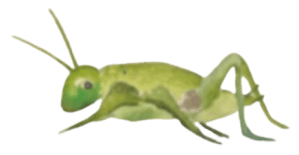
“What will it cost?” The grasshopper meekly asked.
The man said, “Not a penny or a leaf.”
The grasshopper’s eyes opened wide — “Not a thing?”
The man said, “I have it all taken care of, everything. I would just want a little something trivial from you.
“What would that be?” the grasshopper asked.
The man said with an air of indifference, “Just your soul.”
“My what?” The grasshopper said with an air if incredulity.
“See!” said the man, “You have never even heard of it. Most people don’t even believe it exists. Your soul, what is a soul? A soul is nothing, because it means nothing, you can’t taste it, see it, touch it, smell it. How something insignificant, made up, compare to the greatest painter painting your portrait? The most honorable grasshopper, who plays the most beautiful music, and chews the sweetest tobacco.”
The grasshopper smiled. He closed his eyes and puffed up his chest, he began chewing and playing his music once more.
The man winced and quickly said, “Save your talent, we need to get you to the painter quickly! Do we have a deal?”
The grasshopper said, “He is the greatest painter, yes?”
The man said, “Yes, of course!” He whispered, “Do we have a deal?”
The grasshopper thought for a moment, he saw his reflection in the pond, then thought about the ants, and then decisively said, “Yes!”
The man said, “Good, let’s shake on it!”
The man then extended his index finger as the grasshopper stretched his thin little front leg forward. They shook.
Before he knew it, the grasshopper arrived just outside the town of Saint-Rémy-de-Provence at the monastery of Saint Paul de Mausole.
He landed on a large rock behind what appeared to be a frail sickly man seated outdoors in front of a blank canvas. His back was turned.
“Ah,” the Grasshopper thought, “that must be the painter…” He noticed the painter was wearing a straw hat and had a white wrap around his head.
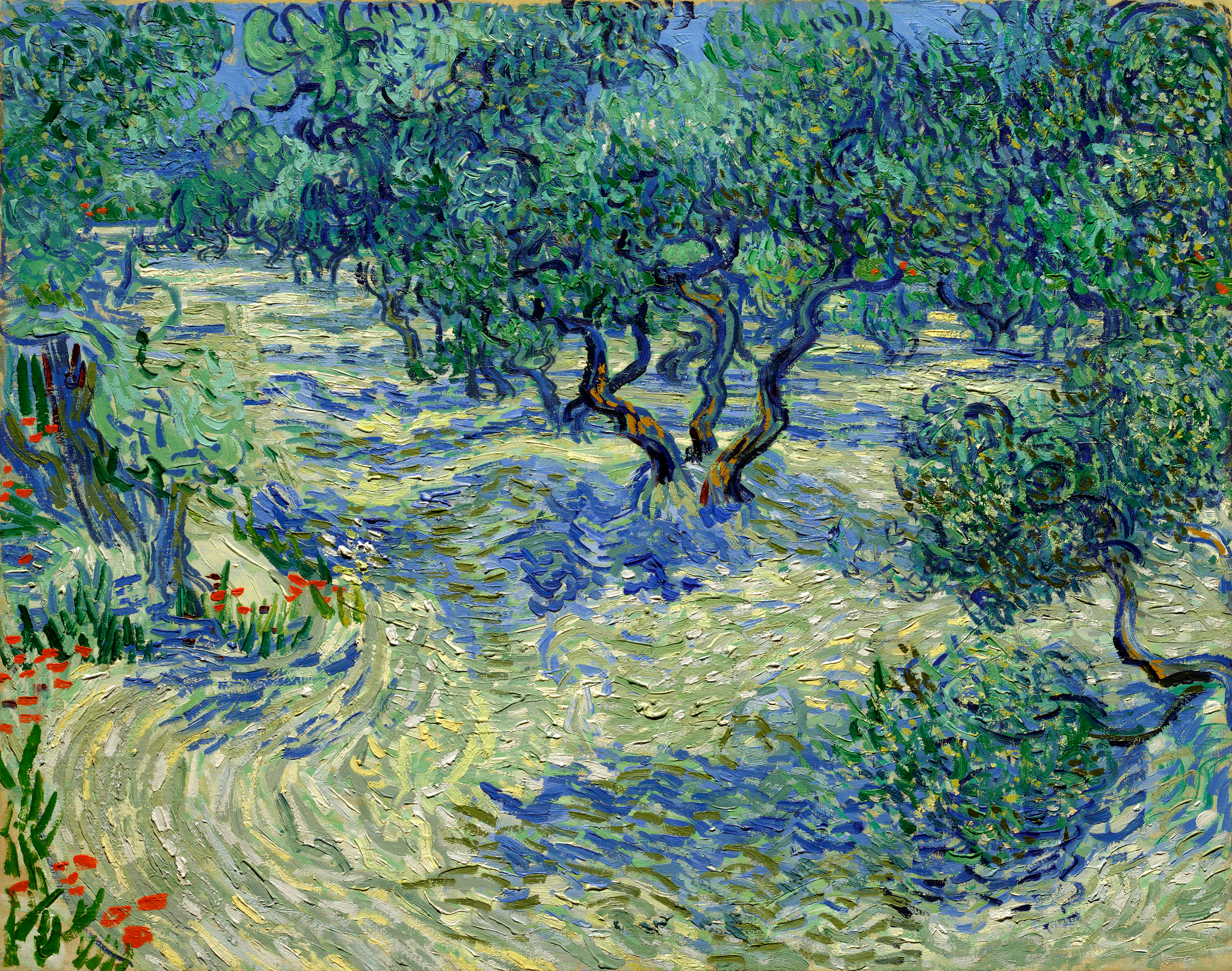
Still, the painter sat quietly looking at the blank canvas. Every now and again, the painter would tilt ever so gently to the right, he looked at what appeared to be an old olive grove.
The grasshopper adjusted his legs upon the warm stone, his heart hammering with a frantic, triumphant rhythm. He was truly excited.
He thought, “This must be the great artist. The man kept his word.” Then he wondered, “What is this place?”
He looked around, there was a white building behind him — it looked like an official institution of some sort. There was no one else around. He turned back to look at the artist.
He thought, “Here is the solitary genius, the most beloved eye of the age, ready to translate this beloved meadow-musician into eternal color.”
A low breeze blew past him. It had the essence of wild rosemary, turpentine, and a heavy copper tang that came directly from the man’s head.
The grasshopper took a deep breath and said to himself, “Let the cowards crawl into the mud; a true king stays on his stage.”
As the painter stared at his empty canvas the grasshopper stared at the thick wrap of white layers around the painters head. These layers looked to be made of gauze, and there was a dark star-shaped crimson stain that had bloomed over the right ear, but still fresh enough to draw a lone fly.
Yet, the painter remained motionless, his brush poised like a spear against the blinding square of the canvas. His gaze was anchored upon the twisting, silver-green trunks of the olive grove just beyond the short wall. Every few moments, his torso would sway ever so slightly, mirroring the desperate, wind-bent rhythm of the trees.
The grasshopper puffed out his chest, striking his grandest pose, waiting for the painter to turn around and behold his magnificent vestments.
“Begin, master,” the grasshopper thought to himself, his voice silent but he was bursting with arrogance. “Why doesn’t he capture the one who silenced the valley!”
The tension was absolute. The canvas is blank, the olive trees are swaying, and the bleeding painter seems frozen.
The painter once again, leaned to his right, looking round the canvas, then moving back facing it once again. He then leaned to his left, tilting his head down. Then he sat back up. Staring once again at the blank canvas.
The grasshopper adjusted his stance, but as the minutes dragged on, he was becoming more and more perturbed. He started to wonder if the genius was being disrespectful or simply insane? “Does he not know I am here waiting for him to turn around and at least acknowledge my presence? What sort of master painter is this? Have I been tricked? Is this some sort of joke?” He began to think of the old man who brought him. He wasn’t wearing such fine vestments, nor was he clean-shaven, and he had the mild scent of sulfur which filled the air surrounding the pond. He began to recollect that the old man had a tear in his pants and that the pocket of his jacket was recently sewn. He mumbled, “I think this lunatic isn’t really worth my time. Where is that old man? Perhaps it is time to leave?”
As he was recounting the situation, the painter moved forward, his calloused hands picked up a steel knife. He grabbed his pallet and filled it using his knife. He began mixing thick mounds of chrome yellow, deep zinc green and titanium white. His wooden pallet and his knife began scraping the board and mixing the paints. The grasshopper astonished as this change set aside his contemplation of the scruffy old man. He immediately adjusted his stance, puffed out his chest, held his head up and struck his most distinguished pose. Once again, the minutes dragged on. The sun was rising high in the sky and his brow began to sweat. His haughty patience began to curdle into a hot, biting fury.
The morning sun kept climbing, and the painter kept mixing, while the grasshopper’s shadow was shrinking.
This supposed “master” had not turned even once to behold the magnificent green vestments or the noble carriage of the valley’s greatest musician.
Doubt flared through his pride like a spark on dry leaves —was this frail, bandaged lunatic truly the greatest artist to have ever lived? Or had that bronze-scaled vagabond made a fool of him?
Unable to endure the insult of being ignored for a moment longer, the grasshopper puffed out his chest to its absolute limits. He shook with rage, abandoned his regal posture, and yelled at the top of his lungs, his voice shrill and piercing, “Look upon me, you blind fool! I am the marvel of the valley! Capture the one who silenced the fields!”
The painter scraped the pallet and filled his knife with paint. He flung the mound onto the bottom of the canvas when all of a sudden there was a loud bang coming from the building behind.
At that exact moment, the painter’s torso flinched. In the distance was a loud thud. It was the sound of a thunderous bang, a heavy wooden door slammed shut closing somewhere within the monastery walls—it caught the painters’ fractured attention.
He began to slowly turn his head toward the sound, his hollow, exhausted eyes drifting away from the olive grove. He began to turn.
In great anticipation, the grasshopper thought for a moment, at last, their eyes would meet.
As the painter turned round, a huge gust of wind blew into the grove. Before his gaze could even find the rock, a sudden, violent mistral wind tore through the grove.
It howled against the stone wall, bending the silver olive branches while throwing a blinding cloud of dust and wild rosemary through the air.
This fierce wind caught the grasshopper mid-breath, ripping him clean off his feet on the rock and throwing his fragile body through the air, casting him directly against the mound of paint on the canvas.
The painter closed his eyes as debris, dust, and sand blew into his face.
He lifted his arm up to fight the wind, as he snapped his head back toward his work.
His hand lashed forward to save the paint he just applied from blowing off. The painter pressed it firmly with the knife so that it would hold fast to the canvas, thus covering the grasshopper almost entirely with mounds of paint.
The wind hastening the drying.
Entr’acte
After the wind subsides, the artists left, and the scruffy stranger emerged. Using a pair of silver tweezers he extracted the grasshopper’s glowing emerald-green soul from its painted prison. He then pulled a leather coin purse from his coat pocket, he opened the clasp, it was filled with other captured, colorful souls all glowing with different intensity, some dull, some bright. The man deposited the vain creature’s spirit into the pouch. Securing the purse, the devil whispered, “Immortalized in color. After all, a deal is a deal.”
FYI – This is how things actually happened, but others believe otherwise

