Greece
The Olympics
Citius, Altius, Fortius
The third weekend of July, the Olympic Games begin. The beautiful ceremony begins at 10 AM on Saturday. The ceremony is conducted entirely by members of the community, and the roles are taken with great care and seriousness.
The Original Olympics
The Olympic Games were for men and the high priestess alone. The Games were initially performed in the nude. We have altered this practice so that everyone can participate in our modern age. The Modern Games are organized by age and gender rather than by weight. Though we do not take on the exact traditions of the Games, we encourage participants to dress appropriately in the style of the Greeks; togas are worn over white shorts and a t-shirt. We also encourage entrants to make their own toga. The Priestess and the Maidens are dressed in flowing pleated gowns, and the Gods are draped in airy silks, representing their spirit bodies.
The Games begin with the traditional ceremony, the lighting of the torch from the fiery eyes of Apollo. His flame draws the Gods forward into the field. They will judge and watch over the athletes. Their goal is to find the best and most honorable competitors in each class.
Sign up for the Summer and Winter Olympics is on May Day. For more information, see Myles Humble and Coach Stone.
The Ritual
The Stone Maiden steps onto the steps of the temple of Hera. A sign that the ceremony is about to begin. She taps the stones three times. The two other Maidens step out of the temple. They form a crescent and dance in unison to honor the elements of water, air, earth, and fire. The dance is complete when the Maidens again create a crescent behind the altar.
The Stone Maiden taps the stones again three times.
Three Maidens step out of the temple. They each take a position around the altar.
The First Maiden holds an unlit cauldron. She walks to the western edge of the sacred ground, facing east.
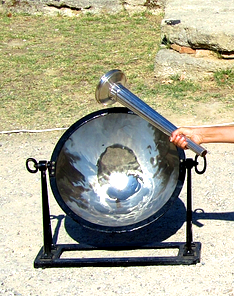 The Second Maiden carries the skaphia (parabolic mirror), places it on the sacred stone at the southern edge of the holy ground. She directs the mirror towards the eyes of Apollo.
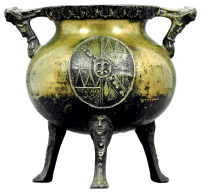
The Third Maiden stands at the far east end of the altar, holding the sconce (torch). The sconce bears a deep well, the inside wrapped in linen, soaked in oil and sulfur.
The Stone Maiden taps the stones again three times. The High Priestess emerges from the temple, carrying a cauldron with the eternal flame of Apollo. The Priestess places the flame of Apollo on the altar. From this sacred place, we connect with the ancients. All present feel the energy of the sun fall upon them, its light embracing. The Priestess carries the warmth and light of the God Apollo.
The Stone Maiden taps the stones again three times.
The Priestess then stands in front of the altar.
The Stone Maiden taps the stones again three times.
The Maiden with the sconce comes forward and hands the sconce to the high priestess.
The Stone Maiden taps the stones again three times.
The Priestess receives the sconce as the maiden returns to the fold.
The Stone Maiden taps the stones again three times.
The Priestess holds the sconce forward and then high above her head.
She does this in all directions in silence.
The Stone Maiden taps the stones again three times.
The Priestess walks in the path of a lemniscate three times before the altar. She is blessing the sacred ground and all who stand upon it.
She then stands again at the altar.
The Stone Maiden taps the stones again three times.
The Priestess approaches the skaphia and speaks the words of the Sacred Silence:
Let the sky, the earth, the sea, and the winds sound.
Mountains fall silent.
Sounds and birds’ warbles cease.
For Phoebus, son of Zeus, light bearer King, shall keep us company.
Apollo, King of the sun and the idea of light,
Send your rays and light this sacred torch.
The Stone Maiden taps the stones again three times.
The Priestess then kneels in front of the skaphia. All the sun’s rays, sent down by Apollo, are captured in the mirror. As she places the sconce towards the center of the skaphia, Apollo sends down a spark from his fiery eyes, and the torch ignites, capturing a piece of the Sun. The torch is set alight.
The flame is lit. The Priestess holds the sconce high above her head.
The Stone Maiden taps the stones again three times.
The Priestess walks the path of a lemniscate once again. All can see the glory of the flame. The Maidens look upon the flame and bow their heads in thanks to God Apollo for his divine light.
The Priestess stands in front of the altar once more.
The Stone Maiden taps the stones again three times.
 The Priestess approaches the Maiden with the cauldron. The Maiden bows and kneels before her. Her arms outstretched, she raises the cauldron as a gesture to set it alight with the torch bearing the divine flame of Apollo.
The Priestess speaks,
“Apollo, God of the sun, the idea of light, send your divine rays and light to this humble place. And you, Zeus, give peace to all people on earth and wreath the winner of the Sacred Race.”
The Stone Maiden taps the stones again three times.
The Priestess lights the cauldron. “Behold the flame that will burn throughout the Games as a sign of purity, reason, and peace.”
The Stone Maiden taps the stones again three times.
The Torch Maiden approaches the Priestess and takes the sconce from her, she then places it outside the door of the temple.
The Stone Maiden taps the stones again three times.
The Priestess returns to the altar and extinguishes the cauldron she initially brought from the temple and placed on the altar.
The Stone Maiden taps the stones again three times.
The procession begins. The Cauldron Maiden will lead the others to the field, where the games will transpire. Behind her is the Priestess, followed by the Stone Maiden. The Sconce and Skaphia Maidens accompany them as the remaining Maidens join the procession. Most of the athletes follow in kind as the spectators make their way to the seats at the Games.
Approaching the sacred tree.
The Stone Maiden taps the stones again three times.
The Cauldron Maiden and procession stop. A child, age 9, comes forth. He climbs the tree and cuts two branches from the sacred tree. He brings the branches to the High Priestess. She receives the gift and takes hold of his hand.
The Stone Maiden taps the stones again three times.
They proceed to the Field.
When they arrive on the field, the spectators take their seats. The athletes surround the edges of the field, standing stoically. The Priestess approaches the stone altar at the edge of the field.
The Stone Maiden taps the stones again three times.
The Maidens once again dance to consecrate the field. Once they leave the field, they are followed by the Athletes who will perform the ritual symbols of the games. They will depict all the areas of sport and honor through gesture and movement, capturing the essence of the Games.
While they complete the movements, the winner of last year’s games will approach the Athletes. He will stand in front of them and blow through the conch several times in all directions. He calls to the Gods in need of their help and assistance.
The Stone Maiden taps the stones again three times.
The youngest Maiden runs to the athlete. She then trades him the sconce for the conch. She returns, then places the conch in a box near the altar.
The Athlete walks to the Priestess, he bows. She sings the praises of Apollo and a song of thanks, peace, and harmony for the games.
“I am the scion of Zeus, and the name I claim is Apollo;
now I have guided you hither across the great gulf of the deep sea,
not as intending you harm—instead, my sumptuous temple
here you will keep, that among all people so greatly is honored;
then you will know the immortals’ purposes; so at their pleasure
all of your days and forever, unceasingly, you will be honored.”
The Priestess speaks, “Take the flame of inspiration and strength.”
She offers him the flame in the cauldron. He lights the sconce and is now the Bearer of the Sacred Flame.
The Priestess speaks, “The light of Apollo brings energy and life to the heart.”
She hands him the olive branch.
The Priestess speaks, “Apete! I Summon the Gods. Let them judge in reasoned mind, benevolent heart, in good faith.”
The Young Maiden then reaches into the box. She discovers that the conch has transformed into a dove. She sets the dove free.
The Flame Bearer, astonished, bows to the Priestess, and in his joy, he begins to run with the flame and branch of peace in hand. He circles the periphery of the field. Five Gods come forth from the brush as he runs past them. They move to the center of the field.
As the Flame Bearer approaches the Athletes, they follow as he runs the field again. The Flame Bearer stops at the bottom of the field while the Athletes continue to the full circle. Meanwhile, the Gods move to surround the large cauldron, forming a crescent. The Flame Bearer walks up the middle of the field with his torch and lights the large cauldron. The Gods sing in unison as the flame takes hold, “Let The Games Begin. Apete!”
The Flame Bearer bows to each of the Gods.
The Gods then move to their positions on the field of the games and watch with a careful eye.
The Flame Bearer walks backward nine paces before turning. He places the sconce on the side of the altar near the small cauldron. He hands the olive branch to the Priestess for safekeeping and bows. He then joins the other Athletes. The Priestess and Maidens retire.
The Games
When the Athletes line up for their turn in each sport, they bow to God, who is watching and judging the game. They bow again and walk backward nine paces when they have completed their skill. This final bow ensures that if they should die on this day, their spirit will be carried by the dove directly to the throne of Apollo.
Winners & Closing Ceremony
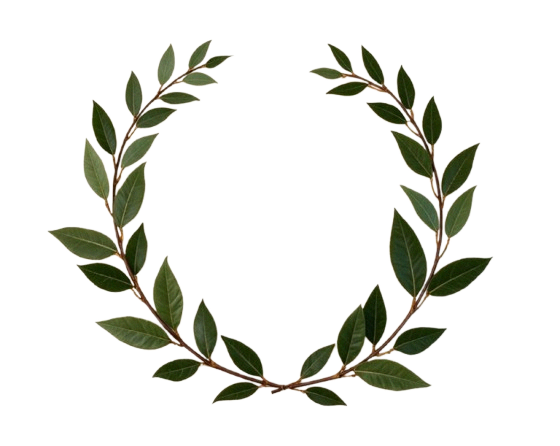
Before the final race, the sound of the cornucopia-keras-bykani horn is trumpeted. Zeus then arrives. All the winners are celebrated with a sprig of laurel or willow when the race has been run. Zeus places the laurel wreaths, with ribbons, on the heads of the two winners. The Athletes are then carried around the track on their teammates’ shoulders. The winners each give a short speech full of grace and honor. Together they extinguish the large flame at the center of the field. The gods depart with Zeus to their heavenly home.
The champions return the small lit cauldron and sconce to the temple. They are met at the door by the Priestess. The torch is placed outside the temple door, and the cauldron on the altar. The Priestess hands them each an olive branch, and they burn it in the cauldron as an offering to the Gods. The smoke rises to the heavens. They celebrate with a glass of wine and water. The Priestess then brings the cauldron inside, where it will be cared for and tended to as it burns until next year. The following day, at dawn, the sconces outside the temple will be extinguished.
Overview, Rules
There are five games, and the winner is not measured in gold or silver, but through sportsmanship and honor.
To be in the procession of the Priestess, Maidens and Athletes, you must be at least 14 years old. There is, however, one 9-year-old male who is chosen to fetch an olive or willow sprig from the sacred tree. His task is to climb the tree and cut two sprigs as a gesture of peace.
Since we are in the modern era, there are now five men and five women who represent the same sports. Though the genders are separated, the women join the men in standing upright and invoking the spirit and gesture of the mission.
It is highly recommended that men wear cups, women wear sports bras, and wrestlers wear headgear.
Games Rules
Phayllos of Kroton — Long-Jump
The long-jump is performed with weights, and you must land upright.
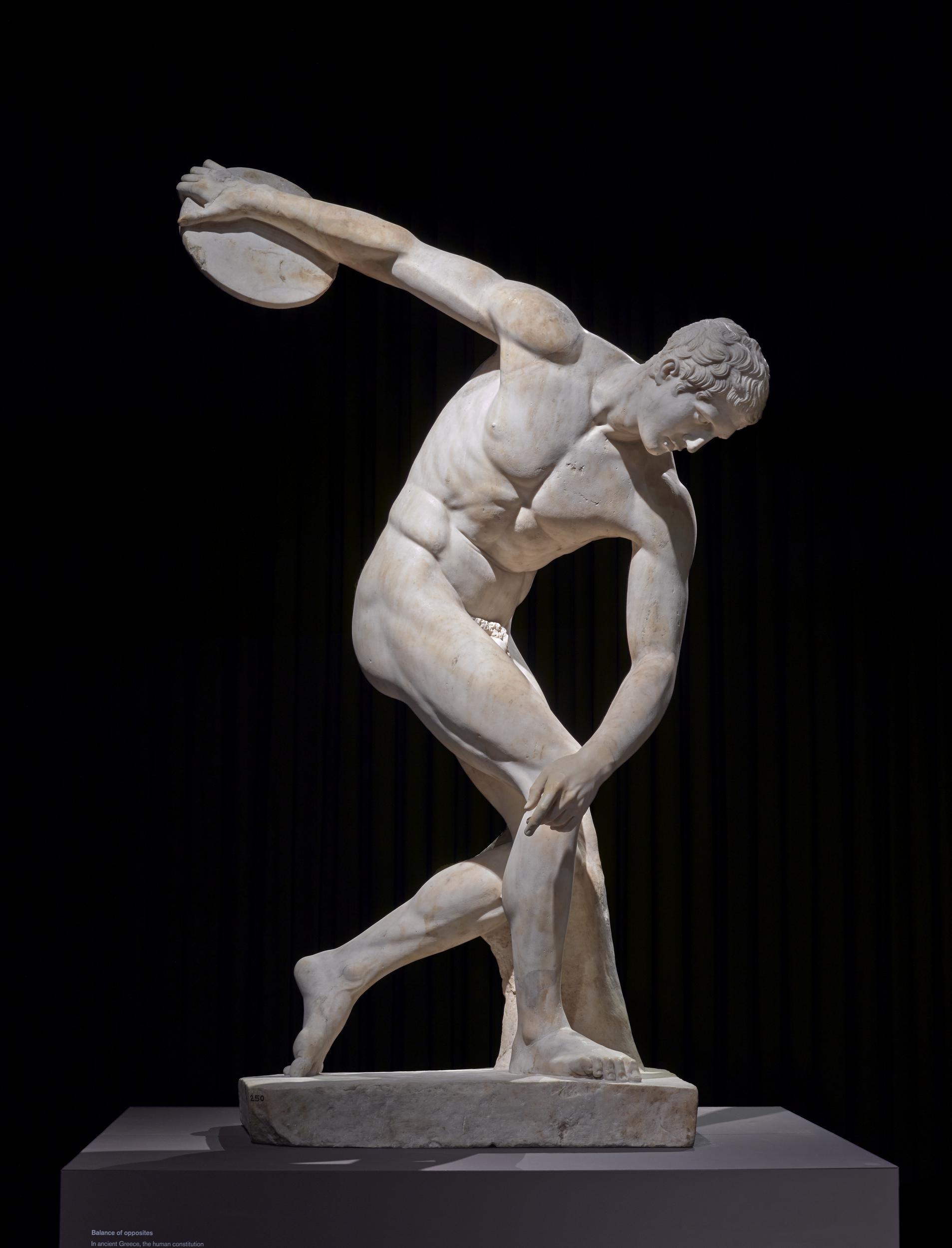
Hyacinthus — Discus
For the discus, you must stand inside the circle, and if you cross over the line, you are disqualified.
Antaeus — Wrestling
In wrestling, the winner is the one who is successful at getting his opponent’s hip or shoulder soiled in the dirt, though displaying elegance in your movements is essential.
Athena — Javelin
This weapon is thrown for both distance and accuracy. The contestant runs 120 feet and throws the weapon as far as possible. The javelin must land upright.
Hermes — Running
The runner who wins this competition is given the honor of the Calendar. The year becomes his and her namesake. He is treated like a king, adorned in ribbons and wears the Grand Wreath.
Each sport has its winner. Each winner receives a Palm leaf, a sprig of Laurel or Willow.
You will hear the word “Apete” throughout the games. This word means “GO!” The contestant can not move until the word is uttered by the Gods.
Game Of Ages
Since this is a family-friendly event, we have expanded the ages of the competitors and limited some by activity based on age and gender.
Ages 9 and under, both male and female. All events except wrestling and javelin with a point. The children will make and toss their own sticks. Instruction regarding size and weight will be available at the Post Office and in the Newsletter.
For those over the age of 49, there will be NO wrestling.
Both males and females between the ages of 10 and 12 may compete against each other. Wrestling at this age will be based on weight for safety concerns.
Groups in each competition are males and females according to age.
13/16, 17/ 21, 22/28, 29/35, 36/42, 43/49, 50/63. Wrestling, based on weight.
Please make sure you are healthy and fit if you wish to enter. For the games to be well-rounded, you are expected to compete in all the Games unless otherwise designated.
There is an orientation and sign-up at the May Day Festival in order to enter the games. Myles Humble and Coach Stone will have a sign-up table at the Fair. Early or late entries, based on their approval. It is advised to begin a workout plan the next day. They will have a packet full of tips on how to get in shape. There will also be an orientation and demonstration on Decoration Day Weekend covering the rules and a chance to throw a few things around.
There will be tips and a chance to practice offered from May through July.
Wrestling in the gym: Wednesday, 7PM – 9PM. Saturday, 11AM – Noon.
Javelin and Discus at the Track: Wednesday, 6PM – 7PM.
If you wish to spend additional hours on the property, you must have an adult spotter with you at all times. Please, bring a walkie or a cellphone.
History of the Games
This cultural event strives to keep the spirit of the original games, wishing to make grace and honor paramount to the experience. Even though additional events were added over time, from chariot races to skateboarding, we strive to invoke the original form and balance of the games. We have changed a few things from the original. We have kept the games family friendly, allowing women and children to participate, and required that everyone is fully clothed.
The competition is divided by age, save wrestling, rather than weight, as it was in ancient times. The rules for the Games in Greece were as follows: To enter, one must have worked the entire year. One must have also trained every day for that year. One must be worthy, not indolent, nor based, low or lazy. If you are caught cheating, you will be flogged.
Some people often wonder, why do the Greek Olympic Statues have small genitals? The Greeks believed that idealizing large genitals meant you were of low character and possessed bad traits. If you had a large penis, you are considered more animal than man. A circumcised penis was a sign of slavery or that you were a barbarian. A balanced, proportional genitalia meant you were rational, intellectual, and authoritative.
In the past, other than the High Priestess, women were not allowed at the Games. The men entered the competition naked. Special olive oil was rubbed on their skin as protection from the sun, and their genitals were tied back with leather sinew.
In 1894, the Latin words Citius, Altius, Fortius [Faster, Higher, Stronger] were added as the motto for our modern-day Olympics. These words have stuck with the games ever since.
Our People
Our Dance and Spatial Dynamics Instructor choreographed all the dances and movements.
The hands of the Maidens construct the Laurel Wreaths and Headdresses through the Folk Arts Club, and the materials collected are from our gardens and the perma forest.
The Sewing and Theatre Clubs make and repair all the costumes.
The Sconce, Cauldron, Parabolic Mirror, were constructed by our Blacksmyth.
Our Stone Mason built the Altars.
Our Carpenter built the Five Godly chairs.
The Wine Goblets were made by our potter
Our Glassblower made the Wine Decanter.
The handmade paper, pen, ink, and scribe for the Year-long Calendar were designed and created by our Printmaker.
All of these relics are kept safe in the Temple.
epekeina tes ousia
.
.