.

.
.
.
.
Fine Arts Clubs
Come master an art.
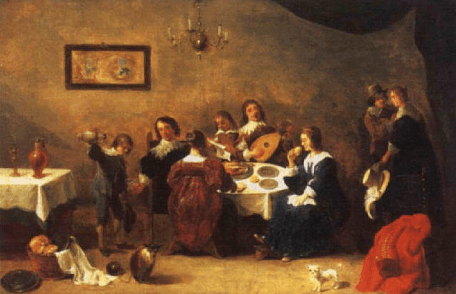 Each Club in the Fine Arts has a common purpose. To hone one’s skills, to learn something new in order to grow and to be a role model to others, especially young people. The Fine Arts Clubs are also a place to socialize, share common interests, enjoy pastime and lifelong hobbies, and the opportunity to practice regularly in the pursuit of excellence.
Some Clubs have age requirements along with expectations and the responsibility of being consistent and prepared. Depending on the Club, there are opportunities to show up and just sit in.
The Fine Arts Clubs are open to all residents, members and generally the broader community.
Some Clubs require a certain level of proficiency for advanced activities, while others are designed for those who have always wanted to explore a new area of the Fine Arts.
Below is a description of each of the Fine Arts Clubs, the activities offered throughout the year, along with requirements and fees. Each club also has a set of by-laws and policies not to be used as weapons, but designed for clarity just in case Common Sense loses its way.
“Fine art is knowledge made visible.” — Gustave Courbet
.
.
Dance & Movement Club
The Dance and Movement Club is one of the busiest Clubs in the PEACH Community. The variety of activities this club offers touches almost every area and everyone in the Community. This is why we have a core group, a board, of people who work as a team in order to manage all the activities offered by this club. Coordinating and scheduling is very important, which is why the board meets twice a month, but a few of the Members are in constant communication.

The Dance and Movement Club offers a number of ways to participate. There are lessons offered for the Theatre, every Celebration and Festivals, along with the weekly Contra Dancing, Studio and Movement Activities.
For those who are interested in Historical Dance Lessons, meetings are held in conjunction with the Theatre Performances. Dance Lessons for Festivals and Celebrations meet every evening 2 or 3 weeks prior to the performance or event. Check your calendar and the schedule.
There are also dance lessons for individuals or groups of couples in conjunction with the Holiday dances: New Year’s Eve Ball, Mozart’s Masque Ball, Valentine’s Day Dance, The President’s and Sadie St. Patrick’s Dance, May Day Dance and The Bloomsday Strawberry Lilac Dance. These are coordinated by our dance instructor Manx Baryshnikov.
While we patiently wait for the building of our new dance studio, Manx offers weekly dance classes twice a week throughout the year. These meetings will take place in the small gym. Emphasis and focus will be on the current Holiday Dance approaching. Check the Festival Calendar.
Dance Club members will assist as additional instructors and role models on the dance floor. They will also be highlighted in costume during the Festivals, Plays and Celebrations. Special classes will be offered to those in the Club, and those who participate will pay no entry costs for the Festival or Celebration they perform in. Instructions include: Waltz, Foxtrot, Tango, Quick Step, Cha-Cha, Contra Dancing, Clogging, Carole, Farandole, Gavotte, Menuett, Polka, Ländler, Schuhplattler, as well as, Basic Line, Barn, Irish-Jig and May-Pole Dancing. Manx also uses Basic Ballet and Gesture through Spatial Dynamics as part of his warm-up and stretching routine.
Practice takes place every week and, if available, the studio is always open to residents and members (see studio scheduling). Manx offers private and small group lessons as well for those interested in refining their skills and learning new dances. Men, if you are worried or concerned about how to dance in this fashion, a little instruction goes a long way. Manx and his wife Heidi will teach you how to lead your fair lady and guide her to step in all the right directions.
Saturday morning movement classes are available for tiny dancers, followed by Spatial Dynamics for those 16 and older. More classes will be added if the need and participation arises.
Festivals and Dances
The Greeks in July and The Romans in August will feature movement gestures and Spatial Dynamics during the Olympics and the Greco-Roman Outdoor Theater along with the Roman Circus during the Celebration of Ferragosto on August 15th. Circus rehearsals begin after the Olympics. Bring your unicycle and juggling balls. All acrobats and fire-breathers welcome.
In September, during the Medieval Harvest Festival, Members will be part of the actor’s troupe during the Play of St. George and the Dragon. Dancers will enter as Monks and leave as Carole dancers. Costumes will be provided.
In February and June, during the Renaissance plays, the Carols and Farandole will be featured at the opening and closing of each play or celebration.
In December and late January, the New Year’s Eve Dance and Mozart’s Masked Ball will feature a number of Waltzes, Carole, the Gavotte and Menuett Dances. Included for The Masked Ball is the Montagues and Capulets Dance.
In January the basic steps and practice of Slavic Dancing – This course runs for 6 weeks with performances throughout the year, groups meet independently for practice weekly, check studio schedule. Friday Evening 6PM – 10PM – Dance Studio or Gym. Music studio TBA. At the end of 6 weeks both groups will join together to perform on stage in the theatre.
Ukrainian — Hopak, Yablochko Prisiadki, Yablochko, Zaporozhye Cossacks (men only).
Russian — Barynya, Kamarinskaya, Beyoska, Troika, Tropak.
Greek — [Choreia] & Russian [Khorovod] (women only).
Russian Folk Music -Introduction to Rhythm, Balalaikas and Domras.
In February and March, during the President’s Day and Valentine’s Day Dances the Tango and French Menuett will be featured along with the traditional Waltz, Quick Step and Cha-Cha.
Also in February and March, for the Sadie St. Patrick’s Day Dance we will offer the Virginia Reel, an Irish Jig, and Spiral Twisting will be featured. Weather permitting, a race to the altar will commence (FEB 29th only). The Dance Club will also kick off its season for Contra-Dancing, which happens every Saturday evening from 6PM until 9PM through the Thanksgiving Holiday, in the large gym. Check the Festival Schedule for any changes to the dates.
During our May Day Celebration, we will have the traditional May-Pole Dance for the children and later for the adults. The Polka, Ländler and de Schuhplattler will also be enjoyed during the festivities.
In June after the reading on the steps we Celebrate the Bloomsday Strawberry Lilac Dance there will be the traditional Waltz, Foxtrot, Two-Step along with Dancing Cheek to Cheek.
Lastly, Instructions on limbering-up and traditional basic Ballet classes will be offered 40 minutes before each dance class unless otherwise scheduled.
Dance activities are open to all Residents and Members by age, and to the Public by invitation only.
Movement Schedule
Spatial Dynamics.
Saturday Mornings tiny dancers ages 9 – 10:30 AM.
(Ages 6 through 9 and 12 through 15).
Saturday Morning 11:00 AM – 12:30 PM.
(Ages 16 and up)
Historical Dance Lessons
Saturday Afternoon at 2 – 4 PM.
Thursday Evening at 7 – 9 PM.
Historical Dances are held in conjunction with Theatre Performances.
Festivals and Celebrations meet every evening 2 or 3 weeks prior to the performance or event, check the schedule when signing up.
Couples Dancing Lessons
Manx and Heidi offer weekly dance classes by appointment every Tuesday and Friday throughout the year, check schedule.
Community Dancing
Contra Dancing from May through Thanksgiving Weekend,
Every Saturday 6 – 9 PM.
May Day Celebration – Maypole Dance Start of Contra Dancing. Potluck, Punch, Sima and Lemon Beer will be served.
Thanksgiving Celebration – Old St. Clem’s Night, Thanksgiving weekend, End of Contra Dancing. Homemade Mead and Sarsaparilla will be served.
.
“Dancing is like dreaming with your feet.” — Constanza Mozart
.
.
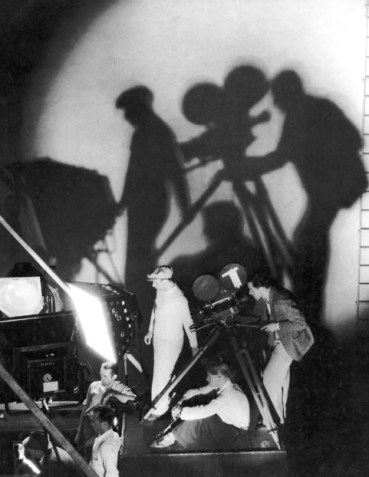 Film & Photography Club
The Film Club explores an array of topics, from historical films that illuminate Western Civilization to great opera performances, along with the history and development of photography and motion pictures.
The Club meets weekly throughout the PEACH calendar. Films are shown in either the Lecture Hall or the Theatre. Each presentation begins with a brief historical introduction and timeline. Following the screening, members are invited to discuss the film, its historical significance, artistic merit, and lasting influence. Conversations often explore what was historically accurate, what was dramatized, the symbolism, artistic license, and how our understanding of the subject may have changed over time. These discussions are led by our resident film scholars and historians, Stan Keaton and Dr. James Burke.
Lessons and Studio
The Film Club also offers instruction in photography and filmmaking. Learn everything from building a simple pinhole camera to working with analog and digital photography. Students may also explore stop-motion animation and traditional 8mm filmmaking, culminating in a short film to be showcased during the all-night French Film Festival in July as part of the Bastille Day Celebration.
These lessons will take place in the Studio on Sunday Afternoon at 4 PM. The Dark Room is open 24/7 to residents and Members. Those between the ages of 13 and 17 must have parental consent and travel in pairs. The Broader Public may use the facilities for a fee and by invitation only.
Film Club
Every Friday night, Saturday matinée and on the occasional Sunday evening, the Film Club celebrates the great works of the cinema. Their monthly calendar is posted on the board outside the theatre, and you will find it in the members’ newsletter. The films are selected classics, and they are coordinated with the seasons, holidays, lectures, and cultural meaning. Many of the films are presented with a brief lecture introducing its historical or artistic significance, followed by an open discussion for those who wish to remain. The goal is not simply to watch films, but to experience and appreciate them as one of the great artistic achievements of our modern civilization.
The films are open to all residents and members. Some of the films may require parental consent. Those between the ages of 10 and 18 must be accompanied by a related adult. This activity is also open to the Broader Public. Treats are for sale: popcorn, Hansen sodas and bottled water.
The Film Club is a group of volunteers who make sure the cameras are rolling, the popcorn is popping, the soda-pop is cold, and they also clean up. If you’d like to be part of this Community let us know. We’d love to have more volunteer members on hand to help. If you are working at the concession, screening, or clean up, all films & popcorn are free.
“I have not failed. I’ve just found 10,000 ways that don’t work.” —Thomas Edison
.
.
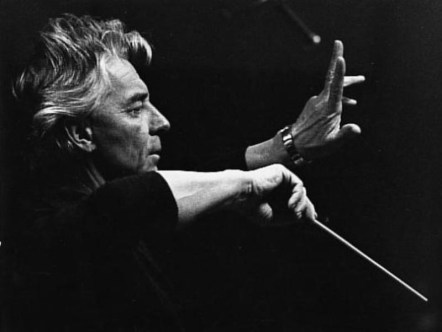 Music Club
Music is truly one of the greatest gifts humanity has ever created, the history and evolution of western music is beyond measure and evaluation. We welcome anyone who is interested in the variety of genres that have evolved through the influence of western civilization, and hope you will share your talents with us. We have been blessed with a large orchestra room with built-in lockers for percussion and instrument storage, a smaller room with risers and a baby grand that would accommodate a choir or ensemble. There are also 4 soundproof practice studios, two with upright pianos. There is a room filled with built-in filing cabinets to store sheet music, along with a copy machine.
Membership is open to anyone who can play an instrument with reasonable proficiency or who is willing to rehearse and improve. The music room is also open to singers and musicians who wish to rehearse for any of the festivals and celebrations.
Please check the room schedule. If there are any scheduling conflicts, we will do our best to make other arrangements for rehearsals
Music Throughout The Year
Fine Arts Wind and String Ensembles perform every Sunday in January. Concerts are in the theatre at 2 PM. Rehearsals begin in September in the Orchestra Room. Winds, Every Thursday and Strings Monday at 7 PM. All others who need a place to practice, please make arrangements with the Room Scheduler.
Summer Patio Concert Band: Performances July 4th and 14th. August 1st and 15th. September, Labor Day. Always on the patio, weather permitting, otherwise in the large gym. Bring a blanket, wine, crackers and cheese. Homemade Ice Cream, Italian Ice or Gelato will be available at the co-op or tearoom.
Fife and Drum Corps, July 4th. Royal Huntsmen — Hunting Horn, Bugle, Trumpets, French Horns, Sacqueboute, September 21st.
American Folk Singers, July 4th, French Folk Singers, July 13th. Vestal Singer, August 14th.
Russian Folk Music — An Introduction to the Rhythm of Russian Music, the Balalaikas and the Domras through the month of January. Check the schedule for time and location.
Greco-Roman Traditional Instruments: Aulos, Cornu, Lyre, Cymbala, Tympanum, Reeds. Visiting Musicologist and Historian, Dr. Spyros Poieo.
Rehearsals and Sight Reading every Tuesday from 7 to 9:30 PM. All intermediate-level musicians are welcomed.
Sunday Café and Saturday Tea Room String or Wind Duets and Trios. See Performance Schedule.
Rambouillet String Ensemble — Bloomsday Strawberry—Lilac Dance and Salon Rambouillet Book Club Events.
Traditional-period instruments and voices are featured in conjunction with the Theatre Arts, Festivals, Celebrations, and our Lecture Series. See the Lecture Series schedule.
Jim’s Fun Time Accordion and Concertina will perform at the great race & follies, Farmer’s Market, and during contra dancing.
Uri Kai — vielle à roue, a.k.a. hurdy-gurdy, wheel fiddle — Farmer’s Market, Harvest Fest, Christmas Fair, Oberufer Play, Renaissance Plays.
Banjo Cat n’ Fiddle de dee stroll at will during the summer months, catch them playing folk tunes at the Farmer’s Market, the Artist Fairs and during contra dancing.
JW Malaki, wandering minstrel man, plays guitar, strolls the grounds whenever the sun is shining or a fire is lit. He lives in the back woods, in a cabin built before this place. He walks around the grounds, through the workrooms, studios, and often stops in the café and co-op. Someone always has a delight for a song. He’ll sit in the lobby and strum a bit, sometimes with the pianist Gieseking. They always find a little “something-something” that sounds like something that’s really something. He then strolls over to the farm, collects the eggs and milk, sings to the bees, takes what he needs, leaves the rest on the porch. In the freezer there is always bacon and sausage. His knapsack, now filled, he makes his way back through the garden, grabs an onion, some garlic, and whatever looks ripe. Then through the forest, singing to the birds, sometimes mocking, he makes his way back home. He sings for his supper.
“In a deep hole is a messenger of God, a king.”
Elliot Gieseking — Pianist, plays at will in the lobby, and is for hire to play at your event or will perform a concert or dinner music in the Salon Rambouillet. He also has a harpsichord.
If you are interested in the music performed by our strolling musicians and would like to take music lessons with them, please contact the Scheduling Office. Also, remember to donate into their hats or coffers generously.
We have two beautiful Steinway Baby Grand Pianos, one in the Main Lobby and the other in Salon Rambouillet. After lunch and dinner, retired concert pianist Elliot Gieseking will often sit and play the piano. When he’s not tickling the ivories, feel free to have a seat and play. Make sure to throw open the sash before you do so that the music you play can waft through the air.
Finally, for the Valentine’s Day Dance, we would like to form a Live Bandstand to play popular tunes written in the first half of the 20th century.
Music is woven throughout life at the PEACH. It is heard in our concerts, festivals, theatre productions, dances, lectures, cafés, markets, and quiet corners where friends gather. Whether performed on stage, around a campfire, or while strolling through the gardens, music reminds us that beauty is something best shared.
“Without music, life would be a mistake.” — Friedrich Nietzsche
.
.
..
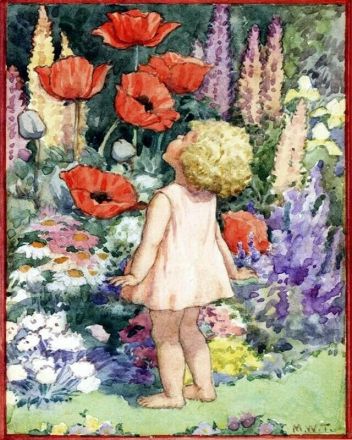
Painting Club
Painting teaches us to slow down and truly observe the world around us. Whether working in watercolor, oil, pastel, or affresco, every artist begins by learning to see—light, color, form, shadow, and beauty. Our studio provides a place where beginners and experienced painters alike can practice, experiment, and grow together.
This particular building designed in the 1940s, Brutalist style. It is nearly indestructible. Although being a bit out of sync with the rest of the property, this structure was built with slabs of poured concrete and heavy thick plate glass. The most striking features of course are the windows, along with the simplicity and elegance of the Art Deco black iron railings with maple trimming throughout the building, this creates an atmosphere of warmth and beauty.
On the first floor is a large open area surrounded by slatted oak benches, along with a few cozy corners, and an elegant Art Deco style fireplace. On the other side of the room is a soapstone wood burning stove surrounded by several black Barcelona lounge chairs and a low oval oak and cast iron coffee table created by our Master Woodworker Rose Clear and our blacksmith Seppo Cain. Along the North and South walls are several sliding glass doors that open onto a flower and ivy draped patio, Córdoba. There are several picnic and umbrella tables and plenty of room to set up easels and chairs. Behind the large fireplace is a small utility kitchen, and behind the kitchen is a storage area and very practical coat check.
The painting studio on the 2nd floor boasts and disports a wall full of large windows, all facing north. Fifty yards away from the building are a row of thick densely populated conifers teeming with wildlife while the canvas of a beautiful blue sky hovers above, most days. At the far end of the row of trees is a lovely fountain in the center of a shallow concrete pond full of carp. There is never nothing to paint or photograph on this sight. The South wall is lined with cupboards and narrow storage closets. Behind this wall is a room full of counters, sinks and more cupboards. Across the room are more windows with an attached bar and a row of tall chairs. We do not suggest eating in this area, it is meant for mixing plant and mineral pigments and paint and for cleaning brushes and palettes. Along the East wall of this studio is a very large closet full of shelves for supplies; paints, brushes, chemicals, canvases and aprons. In front of that wall are three small stages, perfect for a still life set-up. There are rules and policies for using two of these stages, make sure you read those and use the sign-up sheet a week in advance. Behind the center stage is a service elevator for supplies and to manage large pieces of artwork. Across the room along the West wall is the area that hosts the entrance to the studio, with two very large windows, a desk, a few comfy chairs and a small round table. Above the stairway is a beautiful stained-glass window created by our master Glassmyth, Michael Owens. When the sun is shining, the colors reflecting through the glass fills the stairway with color, on the way up and on the way down. At night, from outside the building it is something to behold. Pure inspiration.
The third floor is beset with a very low ceiling, surrounded by evenly spaces windows, creating the illusion that the building is round rather than a giant rectangle. Currently, most of this area is being used as storage and houses several printing presses. However, we are discussing using a large portion of the area as a glass-works studio with hopes of converting all the windows to stained-glass with a particular theme embracing the arts and history of our culture.
Painting Rules & Schedule
The painting studio is open 24/7, but you must sign up for any particular hours. This way, everyone can use the studio efficiently and effectively.
When your scheduled time is complete, you must return your work to the closet before you leave. However, you are free to stay longer if the schedule is unoccupied.
All participants must take a one-hour safety class each year to gain access to the studio. This includes fire prevention and emergency procedures. You will also receive a tour and get the lay of the land, studio rules and applicable state laws. You will also have to sign the document that you were given these instructions.
Clean-up: each member is given no more than three warnings. After the third warning, the member will automatically be suspended from studio privileges.
The Schedule: How it works and how to sign up to use the space, along with conflict resolution.
No studio time is allotted during any scheduled class time, lectures and demonstrations.
Painting outside is at your leisure. However, Clean-up Rules apply. Leaving a canvas alone for more than an hour without good reason, will fall into the policy of the Clean-up Rules. Any violation of the Clean-up Rules will see your work locked in the closet and must be released by an Elder. We take clean-up seriously at The PEACH. Some materials are highly toxic, even plant and mineral paints.
Members who use the studio often, 2/3 of the year, are expected to be part of the Bastille Day Artisan Fair. Beret, aprons, canvas, brush and easel will be provided, or feel free to bring your own and make sure you brush up on your French, or at least your accent. You may choose to paint anywhere on the grounds. Keep in mind, you are also part of the theatre performance. We ask that you participate for at least 2 hours, but all are welcome to spend the entire day in costume.
Classes
Each class is roughly 3 hours, three days a week. You will learn the history of the materials you are painting with and the care of those materials. You will be given a locker and a list of tools and mediums you will need for these classes. Most of the supplies are sold in the co-op and library. Member and Resident prices apply. The class size is limited and the topics vary. The goal is to help you manage the materials you are using and how to get the most out of each medium. Practice is how you become a master at the skills of painting. This sets you on the road to becoming a great artist. Instruction in matting and presentation will also be given, as well as several class critiques.
Spring — Watercolor, Pastels
Summer — Oil, Gouache
Autumn — Oil, Affresco
Winter — Watercolor, Encaustic, Decorative
.
.
Theatre Club
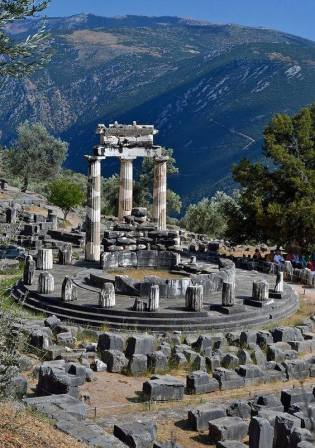 The Theatre Arts Club is one of the most active and rewarding Clubs in the PEACH Community. Whether your interests lie in acting, directing, costume design, stagecraft, lighting, music, or simply enjoying great theatre, there is a place for everyone to participate, not just the theatre kids. The itinerary of theatrical plays is vast and endless. Our resident director, along with visiting directors and guest instructors, guides members through the history of the theatre and the productions they undertake. Productions are staged according to the readiness of the company. Some performances are presented to the public, while others are shared with Residents, Members, and their families as part of the learning experience. We hope to develop a committed troupe of artisans in the years to come.
For the June Schedule under Theatre Club
Each year the University Theatre Department and The PEACH Theatre Club collaborate for our annual Theatre in the Woods outdoor production — June 21st through 23rd, 7PM. Outdoor Theatre. The company rotates annually between Shakespeare’s A Midsummer Night’s Dream, Shaw’s Pygmalion, and Wilde’s The Importance of Being Earnest. Members vote at the close of each run.
The areas of study are as follows
Theatre Schedule
July — Founding Father. Bastille Day, The Greeks, Temple of Apollo, The Greco-Roman Theatre, Comedy and Tragedy.
August — The Romans, The Stoics and the Roman Circus.
September — Medieval Play and Harvest Festival.
October — The Scottish Play, Ghost Stories from the Hebrides to Limerick.
November — St. Martin, Children’s Theatre.
December — St. Nicholas Day, Santa Lucia Festival, Oberufer Trilogy.
January — Reading of the Poetic Edda, in Costume.
February — Renaissance Weekend — Chaucer and the Birth of English Literature.
March — European Plays: 1600–1800.
April — American Plays: Of Good and Evil, Blood and Soil.
May — Late 19th through early 20th centuries Plays: Modernity.
June — Joyce, Ulysses on the Steps — Shakespeare’s A Mid-Summer’s Night’s Dream.
.
“All the world’s a stage,
And all the men and women merely players;
They have their exits and their entrances,
And one man in his time plays many parts.” — William Shakespeare
Additional Areas Of Focus
Plays — Classical, medieval, Renaissance, modern, and original productions presented throughout the year.
Circus — Acrobatics, juggling, clowning, stage movement, and traditional circus arts.
Spatial Dynamics — Movement, gesture, posture, and theatrical expression.
Workshops — Acting, directing, costuming, props, stagecraft, lighting, makeup, and voice.
.
.
.
.
.
.
.
.
.
.
.
.
.
.
.
.
.
.
.
.
.
.
Living Pan-European and American Cultural and Heritage Community Center

.
EMAIL: peachcommunity yahoo.com
.
.
.
.
.
.
.
.
.
.
.
.
.
.
quicklinks

