.
.
HISTORY — SEPTEMBER
Early Christianity Through Early Medieval
c. 35 AD – 650 AD
.
.

.
 Early Christianity Through The Dark Ages
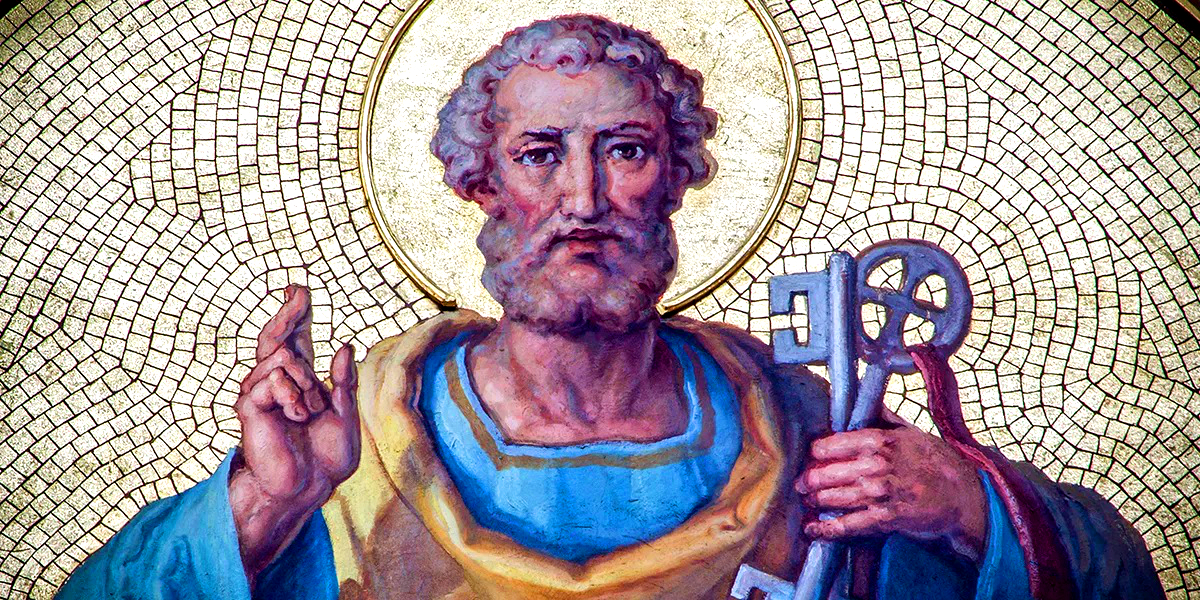
Throughout September, October, November, and December, many of the events and topics in the lecture series cover pre-Christian Celts as it seeps into Rome, developing what is known as the Medieval Period. Often called the Dark Ages, we experience this darkness during the seasonal changes, as nature falls asleep into winter.
From the establishment of the Roman Catholic Church, Christendom spread into the South and Western edges of the Roman Empire. With the crowning of Constantine the Great, 310 AD, he became the first Christian Emperor of Rome, creating what we now know as the Holy Roman Empire. As the power of Rome began to fall, in 376 AD, the Celtic Barbarians defeated Rome once and for all. Yet, despite Rome’s defeat Theodosius The Great, 379 AD to 395 AD, emerged as Emperor of Rome. He solidified Christianity, pushing forward Constantine’s dream of making Constantinople the seat of Christendom. His religion spread seeping throughout all the Celtic lands, thus converting the Barbarian tribes in the north to Christianity, where we find ourselves at the door just short of Charlemagne..
.
.
SECTION I
PERSECUTION, RESILIENCE & THE RISE OF THE CHURCH
37 AD — 305AD
Nero and the First Persecution
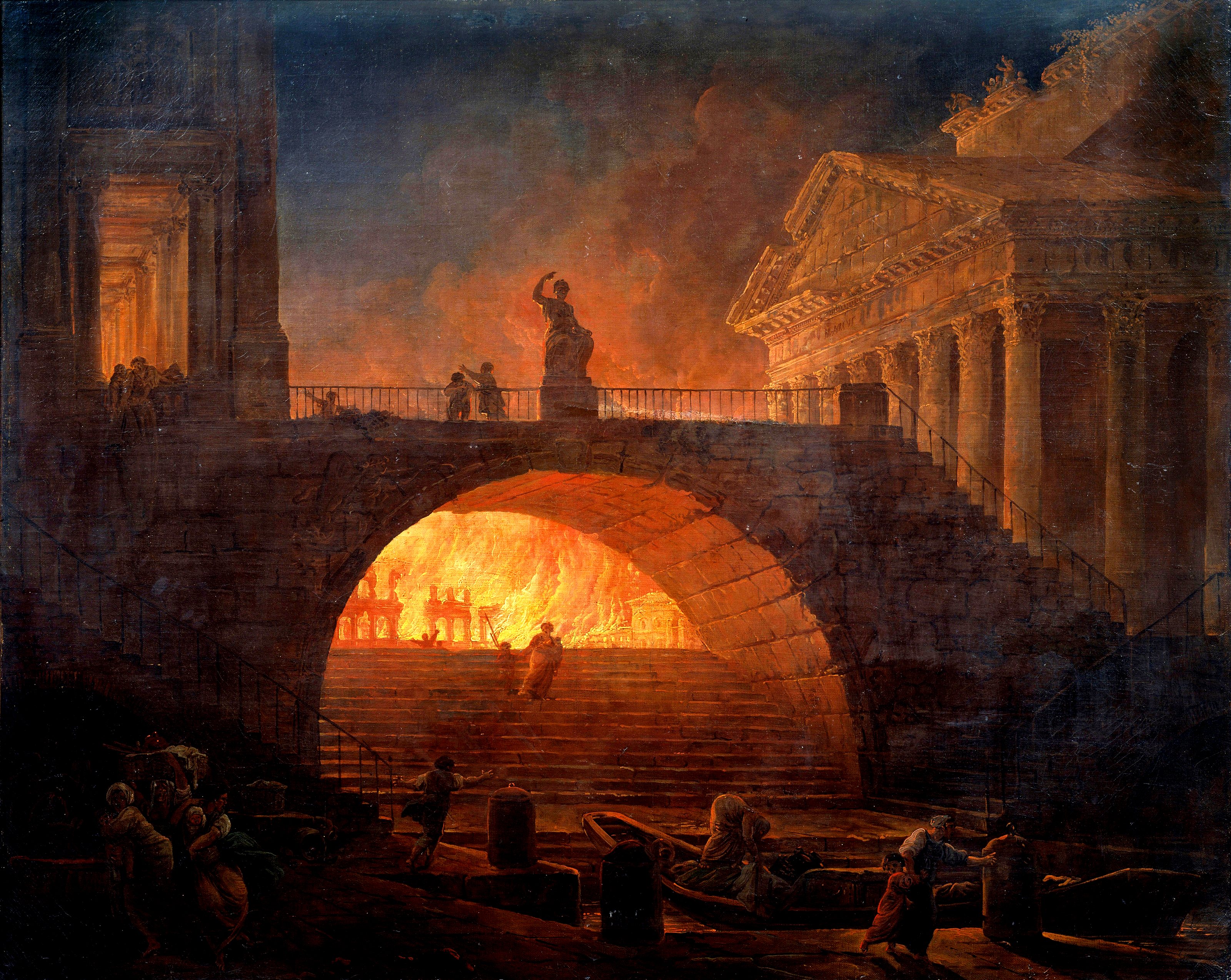
The Great Fire of Rome burned for six days and seven nights in July of 64 AD. Nero required someone to blame, and the Christians — a small, peculiar sect who spoke of the destruction of the world and the coming of a new age — were a convenient choice. The persecution that followed was local to Rome and brief in duration, but its effects rippled outward for centuries. It established the template: Christians were enemies of the state, practitioners of a dangerous superstition, fit subjects for the arena.
.
.
 Nero Claudius Caesar Augustus Germanicus — 37–68 AD.
Title: Roman Emperor; 5th Emperor of Rome; Last of the Julio-Claudian Dynasty.
Born: 15 December 37 AD — Antium, Latium.
Died: 9 June 68 AD — Rome (suicide).
Ethnicity/Background: Roman / Italic Tribe.
Parents & Siblings: Father: Gnaeus Domitius Ahenobarbus (died when Nero was ~3).
Mother: Agrippina the Younger (great-granddaughter of Augustus).
Emperor Claudius (adopted Nero as heir).
Wives & Consorts: Claudia Octavia (divorced, then executed). Poppaea Sabina (died 65 AD, allegedly kicked to death by Nero). Statilia Messalina.
Children: Fathered a daughter, died in infancy. Stepfather to a son from his second wife’s previous marriage.
Faith: Traditional Roman Paganism. Christians later cast him as the Antichrist and a forerunner of the Beast of Revelation.
Vocation: Roman Emperor. Poet, musician, actor.
Key Works & Achievements: Domus Aurea (the Golden House); early diplomatic settlement with Parthia; suppression of Boudicca’s revolt in Britain; rebuilding of Rome after the Great Fire.
Other Achievements & Failures: Ordered the persecution of Christians as scapegoats for the Great Fire of 64 AD (the first Roman persecution. Murdered his mother Agrippina. Executed first wife Octavia. Allegedly kicked his pregnant second wife Poppaea to death. Declared a public enemy by the Senate and driven to suicide.
Legacy: Archetypal tyrant, narcissist, who initiated the first Roman persecution of Christians following the 64 AD Great Fire. His persecution of Christians made him a lasting symbol of evil in the Church. The “Nero Redivivus” legend held he would return from the dead. Modern historians have partially rehabilitated him, noting genuine early reforms and popular support.
Memorable Quotes: “What an artist dies in me!” — reported last words.
Cogitatio: Nero is the great paradox of the Roman imperial age — a boy-emperor who began with genuine promise and ended in paranoid ruin. He longed to be remembered as an artist, however, history remembered him as a monster. Whether or not he truly fiddled while Rome burned, the image captures something real: a man so lost in his own performance that he could not see his empire collapsing around him.
.
.
.
c. 35 – 108 AD — Ignatius of Antioch
Bishop, martyr, and theologian. Ignatius wrote seven letters on his way to his execution in Rome — letters that rank among the earliest Christian documents outside the New Testament, and the first to use the term Catholic Church. He walked toward the arena with a clarity of purpose that astonished his contemporaries and has never quite ceased to astonish those who read him. His seven letters are among the earliest documents of the institutional Church. He wrote to communities in Ephesus, Magnesia, Tralles, Rome, Philadelphia, Smyrna, and to his friend Polycarp. His consistent theme was unity — unity around the bishop, unity around the Eucharist, unity against the Gnostic teachers who were already, in the early second century, offering an alternative Christianity.
.
.
c. 64 – 313 AD — The Church
The Church did not grow despite persecution. It grew because of it. This is the central paradox of the second and third centuries, and it confounded every Roman official who attempted to apply the ordinary instruments of imperial power to an ordinary provincial cult, only to find that the cult was neither ordinary nor provincial, and that the instruments had the opposite of their intended effect.
64 – 100 AD — The Martyrs
The first generations of Christian martyrs were not remote figures of legend but neighbours and family members of the communities that remembered them. Their deaths were public spectacles — the arena was entertainment and governance simultaneously, and a Christian dying for a refusal to offer incense to the emperor’s image was a lesson Rome intended for everyone watching. The lesson Rome did not anticipate was the one the Christians drew from it: that their faith was worth dying for, and therefore worth living for.
Every martyr became a witness — the word martyr means, in Greek, simply witness — and every witness drew curious eyes. The faith spread along the roads Rome had built to govern its empire, carried by merchants and soldiers and wandering teachers, arriving in every city where the empire’s own contradictions had left people hungry for something the empire could not provide.
c. 64 – 325 AD — Apostates and Heresies
Not everyone held firm. The apostates — those who renounced the faith under pressure — became one of the most contentious questions the early Church faced. What was to be done with them when the persecution passed and they wished to return? Rigorists said nothing; the lapsed were lost. Moderates said penance and re-admission. The argument split communities and produced a theological literature of remarkable depth and bitterness. As Christianity grows under persecution, it also fractures internally. Apostates renounce the faith under pressure. Heresies multiply — Gnosticism, Marcionism, Arianism, Donatism. The early church is not a monolith. It is a conversation, often a fierce one, about what Christ actually meant.
Alongside apostasy, heresy multiplied. Gnosticism offered salvation through secret knowledge rather than faith and grace, and attracted some of the finest minds of the age. Marcionism rejected the Hebrew scriptures entirely and proposed a Christianity wholly severed from its Jewish roots. Arianism — which would occupy the Church for the better part of two centuries — denied the full divinity of Christ, arguing that the Son was a created being, subordinate to the Father.
These were not trivial disputes. Every heresy forced the Church to define more precisely what it actually believed, and in that sense the heresies were as formative as the persecutions. The Church that emerged from the third century knew its own mind in a way the Church of the first century did not.
The Gnostics.
Ancient rivals to orthodox Christianity. They believed salvation came through secret knowledge — gnosis — rather than faith and grace. Saw the material world as a prison created by a lesser god. Their influence runs deep — through Manichaeism, through Neoplatonism, through every mystical tradition that followed. Gnosticism will be covered more fully in January — Great Mysteries.
Tertullian of Carthage, writing in the late second century, gave the episode its most famous commentary: the blood of the martyrs is the seed of the Church. He wrote from experience. By his time the seeds had been growing for a hundred and thirty years.
.
.
.
Clement of Rome Unknown — 100 AD
Title: Pope Clement I — Latin: Clemens Romanus. Ancient Greek: Κλήμης Ῥώμης (Klēmēs Rōmēs).
Born: Unknown.
Died: 100 AD. Martyred under the Roman Emperor Trajan.
Parents: Father: Faustinianus . Mother: Mattidia .
Siblings: Faustinus and Faustus.
Wives: None Known.
Children: None Known.
Faith: Hebrew. Christian.
Vocation: Bishop of Rome. Pope of the Catholic Church. Wrote the First Letter to the Corinthians.
Key Works & Achievements: Built a Christian community while in exile in Crimea.
Other Achievements: Prayed for water in the dry wasteland of his exile, whereupon a miraculous spring appeared. He defended orthodox teaching against early Gnostic divisions. He is historically listed as the fourth Bishop of Rome.
Legacy: Ordained by Saint Peter. First of the Apostolic Fathers of the Church. Recognized as a co-laborer of Saint Paul. Sentenced to death by Caesar for refusing to make a pagan sacrifice.
Memorable Quotes: “We should be obedient unto God, rather than follow those who in arrogance and unruliness have set themselves up as leaders in abominable jealousy… For Christ is with them that are lowly of mind, not with them that exalt themselves over the flock.”
Cogitatio: St. Clement served as Pope between 90 AD and 100 AD. Early records regard him as mild and merciful. He was the third successor to St. Peter. His feast day is celebrated on November 23rd. Emperor Trajan had him executed by tying him to an anchor [his symbol] and casting him into the Black Sea. Emperor Trajan had him executed. He was tied to an anchor and cast into the Black Sea. Legend states that when the tide recedes, his miraculous underwater shrine is revealed. This is why he is considered the patron saint of stonecutters, masons, sailors, and blacksmiths and his symbol is the anchor.
Polycarp of Smyrna (c. 69 – 155 AD)
He is one of the three chief Apostolic Fathers, alongside Clement and Ignatius. He was the bridge between the original Apostles and the next generation of the Church. He spent his life disputing early Gnostic heresies.
Polycarp was a disciple of John the Apostle. St. John spent his final years in Ephesus, mentoring him and he ordained him as the Bishop of Smyrna.
At age 86 the Roman authorities demanded Polycarp swear by the fortune of Caesar and curse Christ. He famously responded:“Eighty-six years have I served Him, and He has done me no wrong. How can I blaspheme my King who saved me?” He was then tied to a stake to be burned alive. When lit, the flames arched over his head without touching him, he would not burn. So in the end the guards stabbed him with their spears. This is the earliest documented witness account of a Christian martyrdom.
Justin Martyr (c. 100 – 165 AD)
Justin was known as a defender of the faith and a trained pagan philosopher. He was born in Samaria to pagan parents, he wore the traditional philosopher’s cloak even after his conversion to Christianity. He argued that Christianity was the ultimate, true philosophy and that classical Greek thinkers like Socrates were unknowingly searching for.
Justin was also considered the ultimate Apologist. He wrote the First Apology and Second Apology directly to the Roman Emperor Antoninus Pius and the Roman Senate. He sought to prove that Christians were not cannibalistic, treasonous, nor atheists, but were actually the empire’s most peaceful, loyal, and tax-paying citizens.
In 150 AD Justin moved to Rome and resided near the baths of Timothy where he debated pagans and Jewish critics. He founded a school of Christian philosophy. Here he trained students until his arrested caused by a rival cynical philosopher Crescens. He was tried before the Roman prefect, and beheaded alongside his students for refusing to sacrifice to idols. His legal trial records survived, making “Martyr” his permanent historical surname.
.
Tertullian of Carthage c. 155–220 AD
Title: Christian Apologist; Theologian
Born: c. 155 AD — Carthage, Roman Africa (modern Tunisia)
Died: c. 220 AD — Carthage
Vocation: Lawyer, later Christian writer and theologian
Key Works: Apologeticus; De Praescriptione Haereticorum; Adversus Marcionem
Faith: Christian, later Montanist (a stricter, charismatic sect)
Legacy: First major Christian writer in Latin; pioneered Latin theology, coined the term Trinity (Trinitas); shaped the vocabulary of Western Christian theology
Memorable Quotes: “The blood of the martyrs is the seed of the Church.”
.
.
.
.
Commodus — Lucius Aelius Aurelius Commodus — 161–192 AD
Title: Roman Emperor; 17th Emperor of Rome; last of the Nerva–Antonine Dynasty.
Born: 31 August 161 AD — Lanuvium, near Rome (the first emperor born to a reigning emperor).
Died: 31 December 192 AD — Rome (strangled by a wrestler, aged 31, after a poisoning attempt failed).
Parents & Siblings: Father: Emperor Marcus Aurelius; Mother: Faustina the Younger (daughter of Emperor Antoninus Pius); the tenth of fourteen children and the only son to survive infancy; twin brother died in childhood.
Wives: Bruttia Crispina (married c. 178 AD, later exiled and executed on charges of adultery); reputedly kept a harem of 300 concubines.
Vocation: Roman Emperor; wished to be a gladiator and living god.
Key Works/Achievements: Concluded his father’s Danubian wars by negotiating peace (widely criticised as premature); renamed Rome “Colonia Lucia Annia Commodiana” after himself; renamed the months of the year after his own titles; claimed to have fought 735 bouts in the arena as a gladiator.
Faith: Traditional Roman paganism; identified himself personally and obsessively with Hercules, dressing in a lion skin and carrying a club; declared himself a god during his own lifetime.
Legacy: Regarded by ancient historians as one of Rome’s worst emperors; his death triggered the Year of the Five Emperors and a long era of instability.
Other Achievements or Failures: Survived multiple assassination attempts, including a conspiracy involving his own sister Lucilla. Executed senators and officials on a whim. His paranoid misrule ended 84 years of imperial stability. Ultimately killed by a conspiracy of his own household — poisoned by his mistress Marcia and then strangled by a wrestler named Narcissus.
Memorable Quotes: “The Emperor Caesar Lucius Aelius Aurelius Commodus Augustus… the Roman Hercules, Pacifier of the Whole Earth, Invincible…” — this was his own official full title.
In 177 through 192, served as nominal co-emperor under his father Marcus Aurelius and then ruling alone from 180 until his death 192. Commodus’s reign marks the end of the Pax Romana, a golden age of peace and prosperity in the history of the Roman Empire. Commodus had a twin brother, Titus Aurelius Fulvus Antoninus, who died in 165. In 166AD, Commodus was made Caesar together with his younger brother, Marcus Annius Verus, who latter died in 169 having failed to recover from an operation.
Commodus was assassinated on December 31, 192 AD, because his erratic behavior, tyranny, and severe megalomania alienated both the Roman Senate and his inner circle. His obsession with participating in gladiatorial combat and his demands to be worshipped as a living god—specifically the reincarnation of Hercules—deeply humiliated the Roman elite.
.
.
.
.Origen of Alexandria
The most daring theologian of the early Church and one of the most controversial figures in all of Christian history. Origen believed in the pre-existence of souls, in the ultimate salvation of all beings — including, in some readings, the devil — and in the allegorical interpretation of scripture as a discipline more demanding and more rewarding than its literal reading. He was brilliantly gifted, furiously productive, and constitutionally incapable of staying within the lines others drew for him. He was later declared heretical by the Emperor Justinian, three centuries after his death — which tells us something both about Origen and about Justinian. The Church could not contain him in life; it attempted to undo him in death. Neither effort fully succeeded. His shadow falls across every subsequent mystical tradition in Christianity.
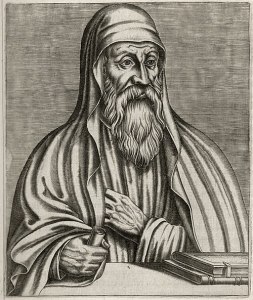 Origen of Alexandria 184–253 AD
Title: Christian Scholar; Theologian; Biblical Commentator.
Born: c. 184 AD — Alexandria, Egypt.
Died: c. 253 AD — Tyre (modern Lebanon); died of injuries from Decian persecution.
Faith: Christian, later condemned as heretical posthumously by Justinian I.
Vocation: Teacher; head of the Catechetical School of Alexandria.
Key Works: De Principiis (On First Principles); Contra Celsum; Hexapla (six-column comparative Old Testament).
Mentors: Clement of Alexandria; later influenced by Neoplatonism.
Legacy: Founder of systematic Christian theology. He pioneered allegorical biblical interpretation. Influenced The The Fathers of the Church; Jerome, Ambrose, and Gregory of Nyssa.
Memorable Quotes: “In souls, there is no illness caused by evilness [ἀπὸ κακίας] that is impossible to cure [ἀδύνατον θεραπευθῆναι] for God the Logos, who is superior to all.”
.
.
.life crisis
In Search of Spiritual and Philosophical Truth
At the age of 28 Plotinus was desperately searching for spiritual and philosophical truth. His journey from a frustrated student to the founder of Neoplatonism unfolded over a period of time. In the year 232 AD, Plotinus arrived in Alexandria, Egypt—the intellectual capital of the Mediterranean. Regardless, he was unsatisfied and hated every prominent teacher he heard. He found their lectures and methods pedantic, dry, and superficial, leaving his lecture halls in complete despair.
Seeing his frustration, a friend recommended he check out a mysterious, self-taught dockworker and philosopher named Ammonius Saccas. Plotinus walked into Ammonius’s lecture hall, listened to him speak on the deep, hidden meaning of Plato’s dialogues, and was instantly transfixed. Plotinus turned to his friend and famously declared: “This is the man I was looking for!” He stayed by Ammonius’s side for the next 11 years, deeply absorbing a mystical, unified interpretation of Plato.
Plotinus soaked up his lessons, and was determined to turn Plato’s messy conversational dialogues into a clean, logical system. Plotinus did not think he was creating a new philosophy (the word “Neoplatonism” was actually invented by modern 19th-century historians). He genuinely believed he was just a faithful follower explaining what Plato actually meant.
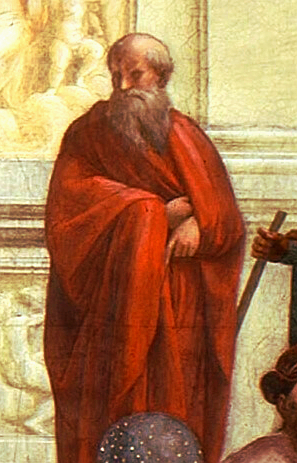 Plotinus c. (204 – 270 AD)
Title: Father of Neoplatonism
Born: c. 204 AD in Lycopolis, Delta region of Egypt
Died: c. 270 AD in Campania, Italy
Parents: Father unknown. Mother unknown. Siblings unknown
Wives: None – never married
Children: None
Faith: Hellenic Monism / Mystical Platonism (Belief in “The One” as the absolute source of all reality)
Vocation: Philosopher, mystic, head of a prominent school of philosophy in Rome.
Key Works/Greatest Achievement: Systematized the scattered dialogues of Plato into a unified, cohesive metaphysical system (Neoplatonism). His dense lectures were compiled by his student, Porphyry, into the definitive massive text known as the Enneads.
Other Achievement: Spent 11 years studying under the legendary, mysterious Alexandria teacher Ammonius Saccas to master the inner depths of philosophy.
Failure & Adventures: Joined a Roman military expedition to Persia under Emperor Gordian III solely to study Eastern philosophy first-hand, but the campaign collapsed when the Emperor was assassinated, forcing Plotinus to flee for his life to Antioch.
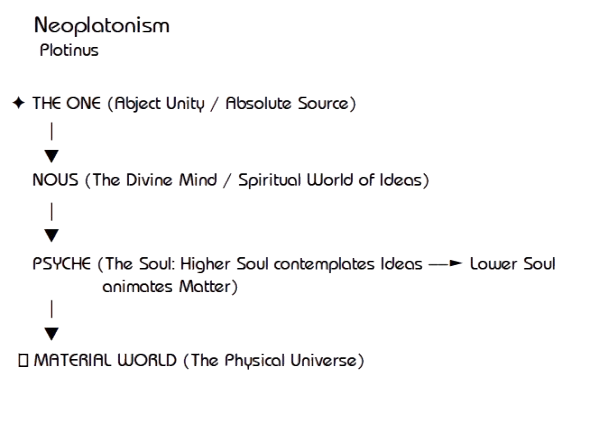
Legacy: Revolutionized Western mysticism. His vertical architecture of reality [The One ──► Ideas ──► Soul ──► Matter] profoundly shaped early Christian theology, serving as the primary intellectual framework that St. Augustine of Hippo used to convert to Christianity and defeat major church heresies.
.
Memorable Quotes: “This is the man I was looking for!” (Upon first hearing his teacher Ammonius Saccas speak).
Cogitatio: Arrived in Alexandria at age 28 in a deep existential crisis, hating the dry and pedantic teachers of his era until stumbling into Ammonius. He was deeply ashamed of having a physical body—viewing it as a leaky vessel trapping the soul—and refused to ever sign his name, celebrate his birthday, or allow anyone to paint his portrait. He was a brilliant, clean-minded contrast to the chaotic madness of figures like Commodus.
Why Plotinus Needed to Clarify Plato – The Fight Against Rival Sects: By the 200s AD, rival groups like the Gnostics, the Stoics, and early Christians were gaining massive popularity. Plotinus felt these groups were reading Plato incorrectly, hijacking his ideas, or unfairly criticizing him. By stepping in to clean up the ambiguities of the past: Plato wrote his philosophy in the form of dramatic dialogues (conversations between characters) rather than a structured textbook. Because of this, Plato often contradicted himself or left major concepts open to interpretation. Plotinus took all of Plato’s scattered poetic metaphors and organize them into a tight, logical, vertical blueprint of reality. He began writing his essays strictly as classroom defenses to protect Plato’s legacy from being distorted by many outside movements. What he actually did was accidentally revolutionized Western mysticism and handed people like St. Augustine the exact philosophical map he would use yo define the Catholic Church a century later.
.
.

.
.
Influential Theologian and Martyr
Lucian he took a starkly different approach than Origen. Rather than using allegories, Lucian founded the School of Antioch, which emphasized a highly rational, historical, and literal reading of scripture. Arius was one of Lucian’s most famous students.
Lucian of Antioch (240–312 AD)
Title: Christian Presbyter, Teacher, Founder of the School of Antioch, Biblical Scholar, Associated Martyr.
Born: c. 240 AD — Samosata, Syria
Died: 7 January 312 AD — Nicomedia (martyred)
Ethnicity: Syrian & Greek
Parents & Siblings: Records of his immediate lineage are lost to history.
Wives/Consorts: Never married
Faith: Christian pre-Nicene – Homoousian
Education & Mentors: Educated in classical Greek rhetoric and Christian exegetical traditions of the Eastern Roman Empire. By earlier Antiochene and Syrian scholarly traditions.
Vocation: Christian presbyter, teacher, and biblical scholar. Head or leading figure associated with a scriptural study circle in Antioch.
Key Acts: Founded the School of Antioch. Developed a disciplined, text-focused method of biblical interpretation. Emphasized literal, grammatical, and historical reading of Scripture. Associated with the formation of the Antiochene exegetical tradition. Taught students who later became influential in early theological disputes (including Arius, in later tradition).
Other Achievements or Failures: Helped shift Christian interpretation away from dominant Alexandrian allegorical methods. His precise theological positions are debated due to limited surviving writings. Later controversy: his legacy was retrospectively tied to Arian theology, though the exact connection is indirect and disputed.
Affable Opponent: No well-documented direct opponent is preserved in surviving sources, though his interpretive method stands in contrast to the Alexandrian school, especially Origen and his intellectual successors.
Memorable Quotes: “Lucian of Antioch, a man of great learning and piety, was crowned with martyrdom.” -Eusebius
“Lucian, a most learned man, suffered martyrdom at Nicomedia.” -Jerome
Jerome also mentions that Lucian was highly influential in scriptural studies and textual correction of biblical texts.
Writers during and after the Arian controversy refer to him as, “A man of great learning and strict life.”
By the 4th century, Lucian is sometimes referred to as, “The most distinguished presbyter of Antioch.”
and in some traditions: “Teacher of many who became learned in Scripture.”
Legacy: Lucian is remembered as a foundational figure in the development of the Antiochene school of biblical interpretation. His approach emphasized grammatical precision, historical context, and textual clarity over allegorical reading. He truly admired the Greeks and because of this he was considered a traditionally intellectual influence. He shifted theology away from Origen’s mystical clairvoyance and pioneered strict, literal, grammatical logic. He served as the direct master of the people who later trained the minds of Arius and the Northern Goths, who legacy was Arianism. He was also venerated as a martyr in later Christian tradition.
Martyrdom: – Lucian was killed during the final wave of the Diocletianic Persecution, under Emperor Diocletian c. 312 AD . He was arrested at Nicomedia, an important imperial center where Christians were often tried.
Traditional Account:
- Lucian was arrested during the persecution of Christians.
- He was taken to Nicomedia, where imperial authorities were active.
- He was interrogated for refusing to renounce his faith.
- He endured imprisonment, harsh confinement.
- He ultimately died in custody, traditionally regarded as a martyr’s death.
- How did he died? Unknow, however many died through starvation and deprivation in prison or execution after confession.
His own writings are lost. Unfortunately, early historians gave only summary notices. Later Church tradition often stylizes martyr stories rather than documenting them precisely. His importance grew more from his theological influence than from the specifics of his death.
Cogitatio: He transformed mystical intuition into hard grammatical logic. Some saw his works long after his death as a contributions to doctrinal disputes. He also served as a key intellectual bridge in Eastern Christian thought. His influence is what lead to the First Council of Nicaea
.
.
.
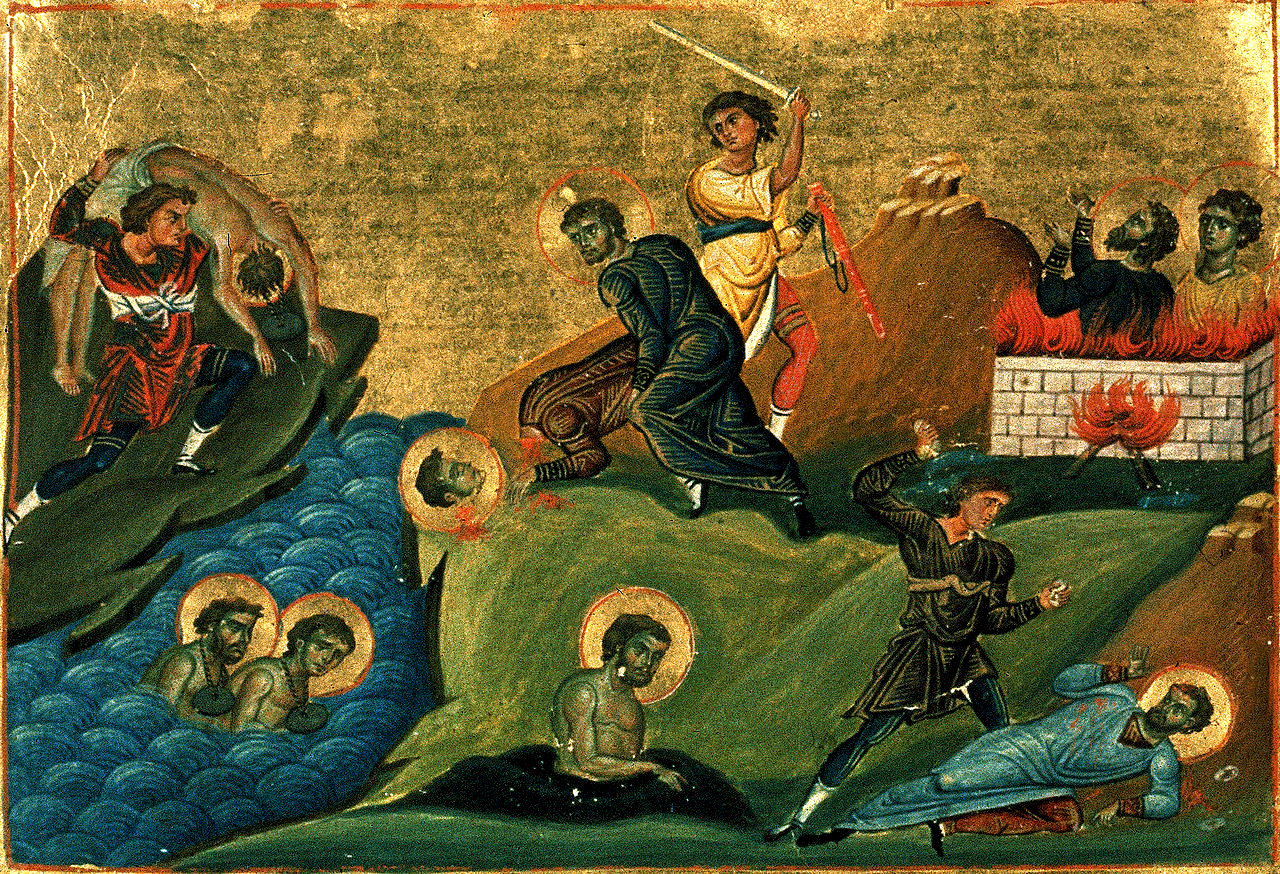
.The Great Persecution of Diocletian
The last and most systematic attempt to destroy Christianity was ordered by the Emperor Diocletian, beginning in 303 AD. Churches were burned. Scriptures were seized. Christians were stripped of legal rights, tortured, and executed across the breadth of the empire. The persecution continued under his successors for a decade. It failed. The faith emerged from it not weakened but harder, more organised, and more certain of its own identity than it had ever been. The martyrs of the Great Persecution were remembered, venerated, and counted. Their stories were written down. Their bones became holy. A faith that could survive Diocletian could survive anything. It would not have long to wait.
Diocletian 244–311 AD
Name: Gaius Aurelius Valerius Diocletianus
Title: Roman Emperor
Born: 244 AD — Dalmatia (modern Croatia)
Died: 311 AD — Split, Dalmatia
Ruled: 284–305 AD
Key Acts: Reformed the Roman Empire; created the Tetrarchy (rule of four); initiated the Great Persecution of Christians (303–313 AD)
Legacy: One of the most capable administrators in Roman history — and the last emperor to attempt the systematic destruction of Christianity. He abdicated voluntarily, the only emperor before Constantine to do so, and spent his final years growing cabbages in Dalmatia.
Memorable “I grew cabbages with these hands.” (On being urged to return to power)
Cogitatio: Diocletian reformed a crumbling empire with extraordinary skill, then spent ten years trying to destroy Christianity, he failed. Dalmatian died knowing that the faith he tried to erase has just been legalised by his successor.
.
.
.
.
.
.
.
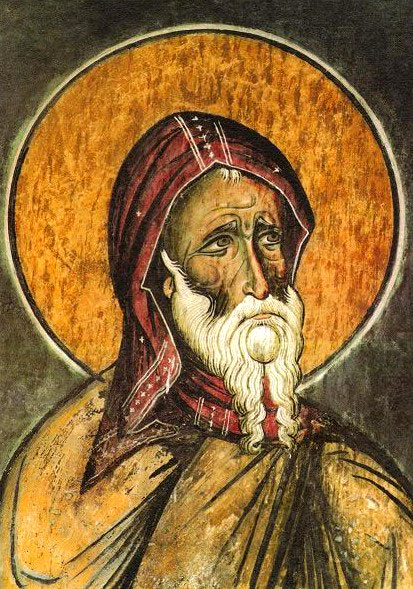 Anthony the Great
Title: Anthony of Padua, Anthony of Egypt, Anthony the Abbot, Anthony of the Desert, Anthony the Anchorite, Anthony the Hermit, Anthony of Thebes, Father of All Monks.
Born: c. 12 January 251 – Coma, Lower Egypt
Died: 17 January 356 – Mount Colzim, Egypt (Aged 105)
Ethnicity: Egyptian (Coptic)
Parents: Names Unknow. However we known they were wealthy, independent Christian landowners .
Siblings: One younger sister. Name Unknown.
Wife and Children – Never Married, No Known Children
Faith: Christian
Vocation: Desert Hermit; Ascetic Monk; Abbot
Education & Mentors: Uneducated in classical Greek letters; spoke only Coptic. Mentored briefly by an elderly local hermit on the outskirts of his village.
Key Works & Greatest Achievement: Founded Christian Monasticism. He walked out into the absolute isolation of the Egyptian desert, initiating the mass movement of the “Desert Fathers.”
Other Achievements or Failures: Ventured back into Alexandria twice: first to encourage Christian martyrs during the Maximin Persecutions, and later to publicly preach against Arianism.
Affable Opponents: The desert demons and wild beasts; whom he fought in visions. Athanasius of Alexandria was his closest ally.
Legacy: His biography, written by Saint Athanasius, spread across the Roman world and single-handedly inspired thousands of citizens, including Saint Augustine, to abandon urban life for a spiritual focus.
Memorable Quotes: “The devils are nothing but weakness; they can do nothing but threaten.”
Cogitatio: Anthony placed his sister in a house of virgins before moving to the desert. Practiced lifelong, absolute ascetic celibacy. He fathered the global monastic movement.
.
.
..
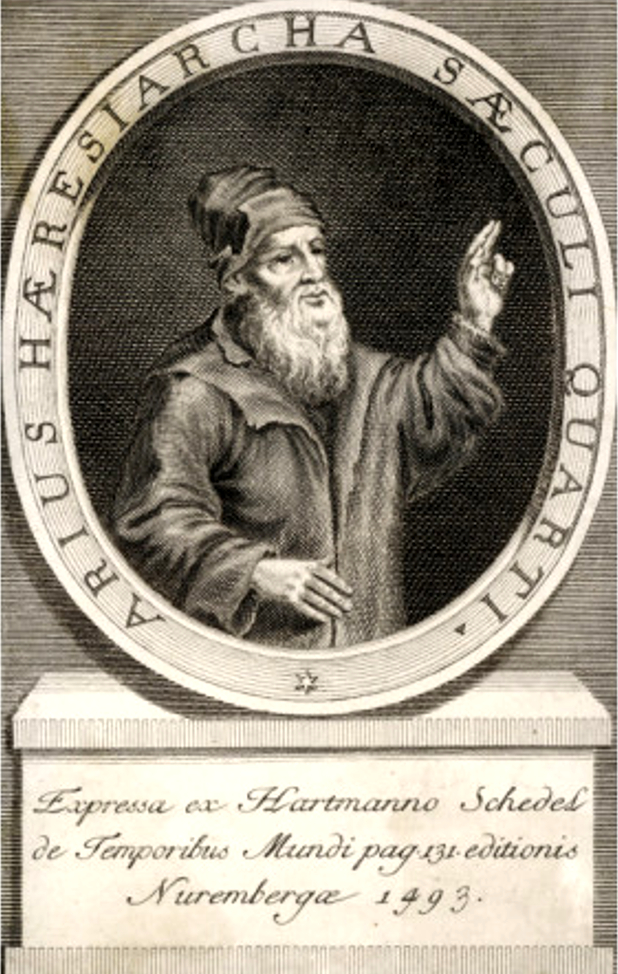
Arius – Ἄρειος, Áreios (256 – 336)
Title: Presbyter (priest) in Alexandria
Born: c. 256, Ptolemais, Cyrenaica (Libya)
Died: 336, Constantinople, Thracia (Eastern Roman Empire)
Ethnicity: Berber
Father: Ammonius.
Mother: Unknown
Siblings: Unknown
Wives: None attested
Children: None attested
Faith: Early Christianity (Alexandrian Church context)
Vocation: Subordinationism. Served under Bishop Achilleas and later Bishop Alexander of Alexandria
Education & Mentors: Lucian of Antioch. Origen of Alexandria.
Key Works/Greatest Achievement: Thalia – Arianism holds that Jesus Christ was not coeternal with God the Father, but was rather created directly by God the Father before anything else, as the true Firstborn. Taught that: The Son (Logos/Christ) was created by the Father. The Son was not co-eternal or of the same essence as the Father. “There was a time when the Son was not” (later attributed summary)
Other Achievements or Failures: Known for subordinationist Christology. Condemned at the First Council of Nicaea (325 CE). Exiled under imperial order, later briefly recalled before his death.
Affable Opponent: Athanasius of Alexandria.
Legacy: Sparked the Arian Controversy, a major theological conflict in early Christianity. Influenced later Christological debates across the Roman and post-Roman worlds. Contributed indirectly to the formulation of Nicene orthodoxy and the doctrine of the Trinity.
Memorable Quotes: “There was a time when He was not.”
Cogitatio: Arius was the foundational catalyst, igniter of the cosmic controversy.. Transformed the raw, tacit cosmic warrior-monk perspective of the Northern Goths into an explicit theological challenge against institutional centralization. He represented Arianism, but he was not the founder. Historically, he was more of a controversial theologian than the architect of a full movement. He wrote in Koine Greek, and his personal system was later expanded, systematized, and labeled “Arianism” by opponents and later historians. He died suddenly in Constantinople, which occurred shortly before formal reconciliation with the church authorities.
.
.
.
.
.
.
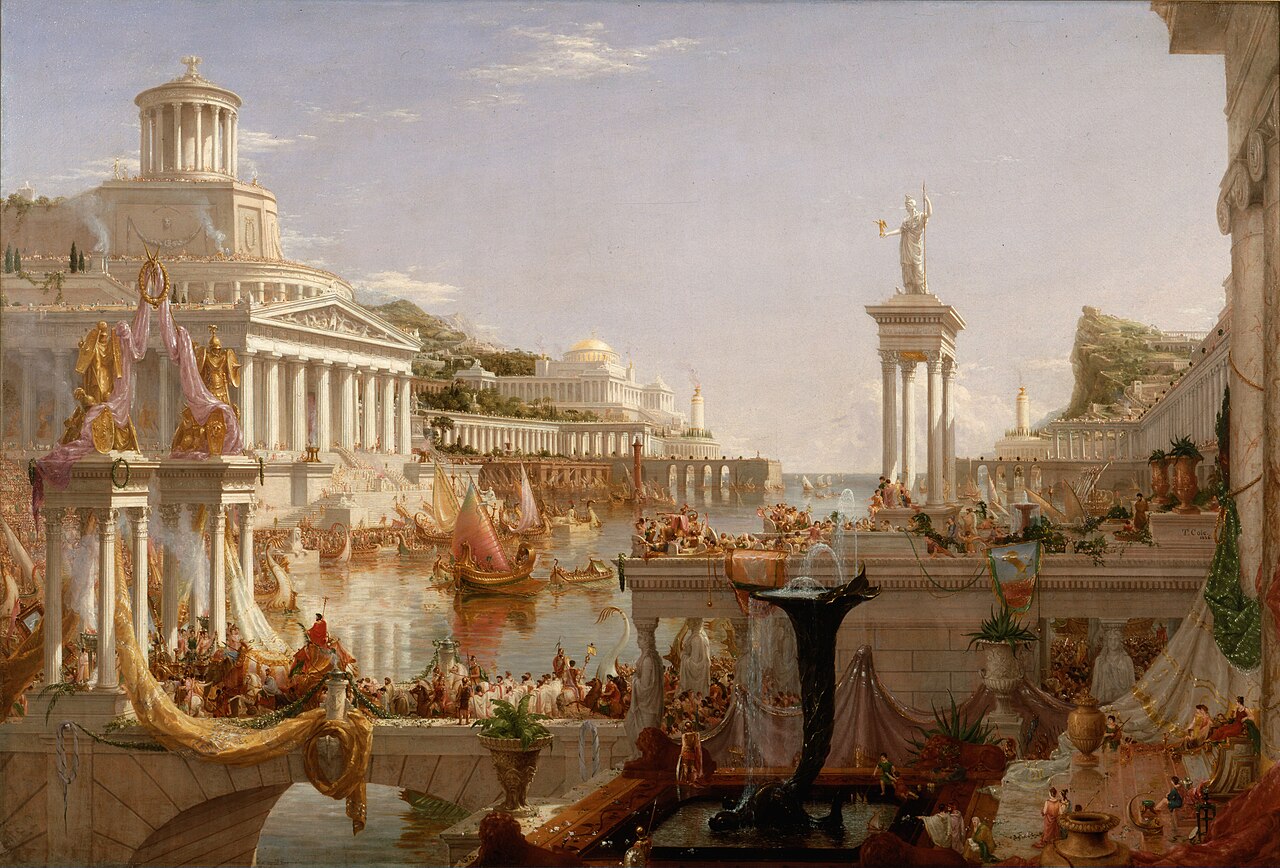
“The Golden Age“
What Could Have Been Preserved
.
SECTION II
The Healer The Builder The Philosopher
Titus (79–81 AD) — The Healer
Name: Titus Flavius Caesar Vespasianus Augustus
Title: Imperator Titus Caesar Vespasianus Augustus
Born: Rome, Italy
Died: Castel Gandolfo (Aquae Cutiliae), Italy
Ethnicity: Italic- Sabine roots
Father: Emperor Vespasian
Mother: Domitilla the Elder
Siblings: Domitian, Domitilla the Younger
Wives: Arrecina Tertulla, Marcia Furnilla
Children: Julia Flavia
Faith: Roman Polytheism; deified after death
 Education & Mentors: Educated at the imperial court alongside Emperor Claudius’s son, Britannicus. He mastered Greek and Latin literature, rhetoric, and military arts under elite private tutors.
Battles: The Great Revolt (66–73 AD): The First Jewish-Roman War, was an uprising by Jewish factions against Rome. Culminating in the destruction of Jerusalem and Herod’s Temple, it resulted in vast casualties, enslavement, and the shifting center of Jewish religious life. Commanded Legion XV Apollinaris under his father. Siege of Jerusalem (70 AD): Led the final, brutal breach and destruction of the city and the Second Temple.
Affable Opponents: Simon bar Giora / John of Giscala: Jewish rebel leaders. Princess Berenice of Cilicia: His foreign lover and queen of Judea. She acted as a diplomatic bridge, though Roman public outcry forced him to dismiss her.
Key Works/Greatest Achievement: Completed and inaugurated the Flavian Amphitheater (The Roman Colosseum) in 80 AD with 100 days of grand games.
Other Achievements or Failures: Handled the eruption of Mount Vesuvius (79 AD), and the Great Fire of Rome (80 AD) with unprecedented generosity, personally funding the relief efforts out of his own pocket.
Legacy: Remembered by Roman historians as “the delight and darling of the human race” due to his profound generosity and refusal to execute senators.
Successor: Domitian – younger brother.
Memorable Quotes: “Friends, I have lost a day.” (Uttered when he realized he had not done a single good deed for anyone all day).
Cogitatio: How fragile is a legacy of kindness when built upon a foundation of conquest? Titus proved that power can soften rather than corrupt, spending his short rule healing wounds rather than inflicting them. Funded relief after Vesuvius and the Great Fire.
.
.
.
Hadrian (117–138 AD)— The Builder
Name: Publius Aelius Hadrianus Augustus
Title: Imperator Caesar Traianus Hadrianus Augustus
Born: Italica -Spain / Rome
Died: Baiae, Italy
Ethnicity: Roman-Hispanic
Father: Publius Aelius Hadrianus Afer
Mother: Domitia Paulina
Siblings: Aelia Domitia Paulina
Wives: Vibia Sabina
Children: Adopted – Lucius Aelius; later adopted Antoninus Pius
Faith: Roman Polytheism – initiated into the Greek Eleusinian Mysteries.
 Education & Mentors: Schooled in Rome and fanatically devoted to Greek literature, earning him the nickname “The Greekling.” Mentored heavily by his guardian, Emperor Trajan, and Trajan’s wife, Empress Plotina.
Battles: Served as a military tribune and legionary commander in the First and Second Dacian Wars (101–106 AD). Defeated the uprising of the Bar Kokhba Revolt (132–136 AD).
Affable Opponents: Chosroes I (Parthian Empire): Hadrian chose diplomacy over war, returning Mesopotamian lands to Parthia to secure stable Eastern borders. Simon bar Kokhba. The fierce leader of the Judean revolt whose guerrilla tactics caused heavy Roman casualties before being broken.
Key Works/Greatest Achievement: Designed and built Hadrian’s Wall in Britain to secure the empire’s northern frontier, and completely rebuilt the architectural masterpiece, the Pantheon, in Rome.
Other Achievements or Failures: The brutal suppression of Judea, resulting in the renaming of the province to Syria Palaestina and the banishment of Jews from Jerusalem.
Achievement: Traveled to nearly every single Roman province during his reign, unifying local bureaucracies and funding civil projects. Built the wall across Britannia
Legacy: Redefined Rome from an aggressive, expanding empire into a consolidated, fortified commonwealth focused on cultural preservation and infrastructure.
Successor: Antoninus Pius (on the condition that Antoninus adopt Marcus Aurelius).
Memorable Quotes: “Animula vagula blandula…” (Little soul, gentle and drifting, guest and companion of my body, where will you go now?).
Cogitatio: Strength does not always mean pushing forward; sometimes it means knowing where to draw the line. True endurance lies in reinforcing what you hold rather than exhausting yourself to claim what you cannot keep. Stopped expansion, built the Pantheon and Hadrian’s Wall.
.
.
.
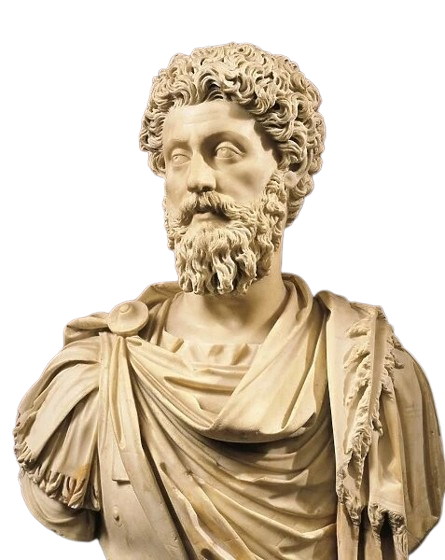 Marcus Aurelius (161–180 AD) — The Philosopher-King
Name: Marcus Aurelius Antoninus
Title: Imperator Caesar Marcus Aurelius Antoninus Augustus.
Born: Rome, Italy.
Died: Vindobona (modern Vienna, Austria) or Sirmium.
Ethnicity: Roman (with deep roots in Spain and Italy).
Father: Marcus Annius Verus.
Mother: Domitia Lucilla.
Siblings: Annia Cornificia Faustina.
Wives: Faustina the Younger.
Children: Had 14 children, including Commodus, Lucilla, and Fadilla.
Faith: Roman Polytheism / Stoic Philosophy.
Education & Mentors: Mentored in philosophy by Junius Rusticus (who introduced him to Epictetus) and Gaius Claudius Maximus, and in rhetoric by Herodes Atticus and Marcus Cornelius Fronto. Marcus was instructed by the best minds of antiquity.
Battles: Parthian War (161–166 AD) – Managed the Eastern campaigns via his co-emperor Lucius Verus.
Marcomannic Wars (166–180 AD) Spent his final years commanding the bloody, frozen campaigns along the Danube river against Germanic tribes.
Affable Opponents: Avidius Cassius, A trusted Roman general who rebelled and declared himself emperor in the East. Marcus reacted with sorrow rather than rage, seeking to capture him alive to pardon him (though Cassius was assassinated by his own men first). Ballomar, King of the Marcomanni tribe, a formidable frontier enemy whom Marcus respected for fighting to protect his tribe’s sovereignty.
Key Works/Greatest Achievement: Wrote the Meditations, a collection of deeply personal, private journals detailing Stoic philosophy, duty, and resilience while on campaign.
Achievement: Successfully held the empire together through the devastating Antonine Plague and constant economic and frontier crises.
Failure: Named his biological son, Commodus, as his successor, which ultimately shattered the peace of the Pax Romana and led to political instability.
Successor: Commodus (his biological son). The pinnacle of Stoic duty, holding the Danube frontier.
Memorable Quotes: “You have power over your mind — not outside events. Realize this, and you will find strength.”
Legacy: Venerated as the historical embodiment of Plato’s ideal “Philosopher-King”—a ruler who prioritized duty, virtue, and self-restraint above absolute power.
Cogitatio: Marcus Aurelius was one of the most highly regarded Stoic philosophers. Remembered as the last of the Five Good Emperors, he successfully defended the empire against Germanic tribes while writing his personal journal, Meditations, a foundational text on Stoic philosophy

.
.
.
.
.
.
.
.
.
Rome Leadership: Nero to Constantine
Block A: The Year of the Four Emperors (69 AD)
- Galba (68–69 AD) — First emperor chosen outside Rome; murdered by the Praetorian Guard.
- Otho (69 AD) — Ruled for only three months; committed suicide after losing a battle.
- Vitellius (69 AD) — Known for extreme extravagance; executed by Vespasian’s victorious troops.
Block B: The Flavian Dynasty (69–96 AD)
- Vespasian (69–79 AD) — Restored financial stability and began construction on the Colosseum.
- Titus (79–81 AD) — Completed the Colosseum and provided relief after Mount Vesuvius erupted.
- Domitian (81–96 AD) — An autocrat who strengthened border defenses but executed many senators.
Block C: The Nerva-Antonine Dynasty / Five Good Emperors (96–192 AD)
- Nerva (96–98 AD) — Selected by the Senate; introduced the system of adopting a qualified heir.
- Trajan (98–117 AD) — Great military conqueror who expanded the Roman Empire to its maximum size.
- Hadrian (117–138 AD) — Traveled the empire extensively and built the famous wall across Britain.
- Antoninus Pius (138–161 AD) — Governed during Rome’s most peaceful period with minimal military conflicts.
- Marcus Aurelius (161–180 AD) — Famous Stoic philosopher-emperor who spent his reign fighting Germanic tribes.
- Commodus (180–192 AD) — Megalomaniacal ruler who fought as a gladiator; his assassination ended the golden age.
.
.
.
.
SECTION III
THE CHRISTIAN EMPEROR – CONSTANTINE
c. 306 – 337 AD
In the autumn of 312 AD, on the road to Rome, a general looked at the sky and saw something that changed the world. What exactly he saw — a vision, a meteor, a trick of the light, a calculated political fiction — historians have argued about ever since. What is beyond argument is what he did next, and what the consequences were.
Constantine the Great is the pivot on which September turns. Before him, Christians were persecuted. After him, they were emperors. The transformation took less than a generation.
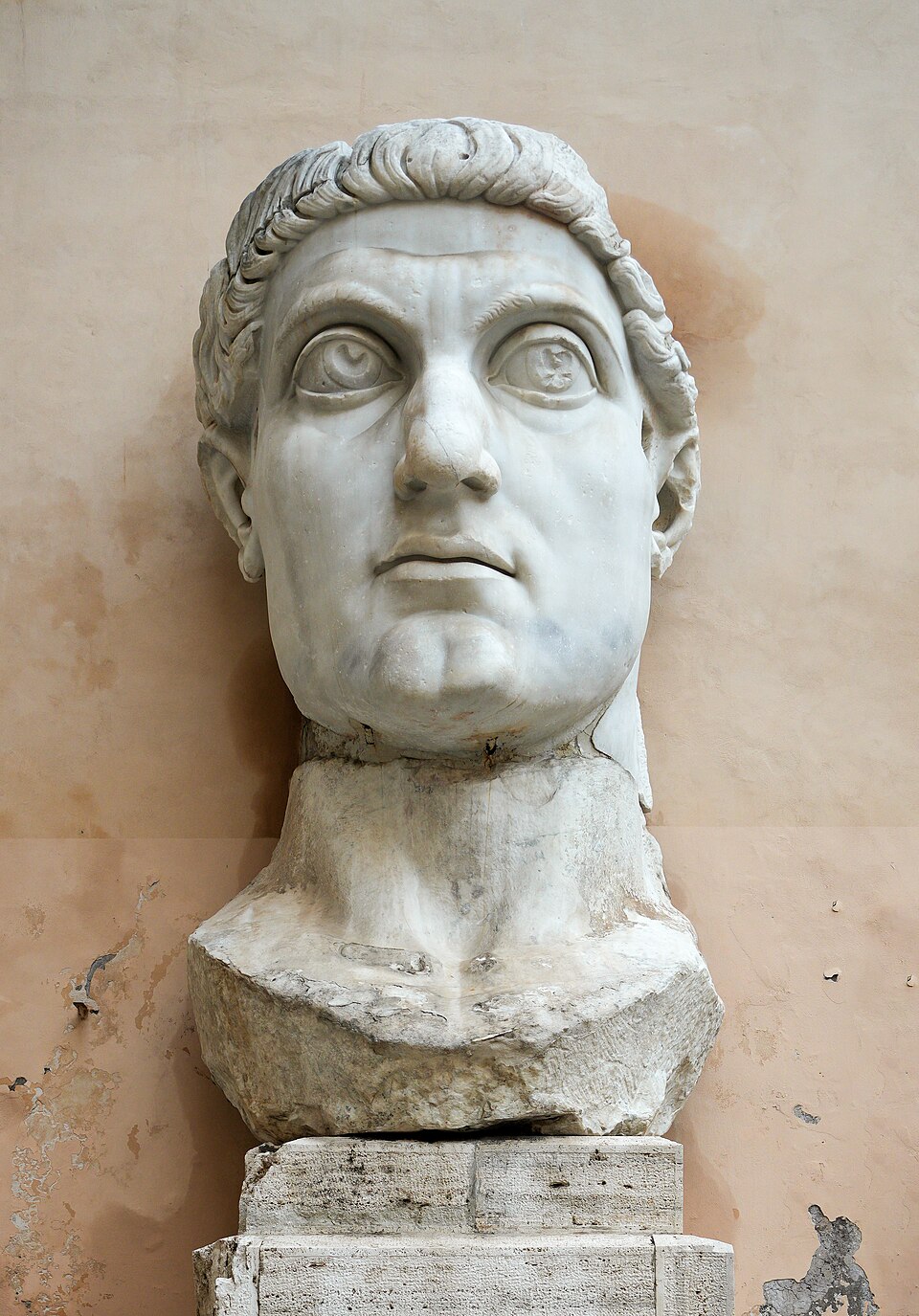 Constantine the Great 272–337 AD
Name: Flavius Valerius Constantinus
Title: Roman Emperor. First Christian Emperor of Rome
Born: 27 February 272 — Naissus (modern Niš, Serbia)
Died: 22 May 337 — Nicomedia (modern Izmit, Turkey)
Parents — Father: General Constantius Chlorus. Mother: Helena, St. Helen.
Wives / Consorts: Minervina (First wife/concubine)
Children: Fausta (Daughter of Emperor Maximian), Crispus, Constantine II, Constantius II, Constans, Constantina, Helena
Ethnicity / Background: Illyro-Roman
Faith: Pagan, converted to Christianity. Baptised on his deathbed.
Ruled: 306–337 AD (sole emperor from 324)
Key Acts: Battle of Milvian Bridge (312); Edict of Milan (313); Council of Nicaea (325); founded Constantinople (330)
Successors: Constantine II, Constantius II, Constans (sons)
Legacy: The transformation of the Roman Empire from pagan to Christian state. His decisions shaped Western civilisation for the next fifteen centuries.
Memorable Quotes: “In this sign, conquer.” — In hoc signo vinces
Cogitatio: He grew up in the courts of the tetrarchy, was educated in the arts of war and governance, and understood from his earliest years that power in the Roman world was not inherited but seized. His mother Helena was from humble origins and her faith would prove consequential. She became one of the great pilgrims of the ancient world, travelling to Jerusalem in search of the True Cross. She was later made Saint Helena.
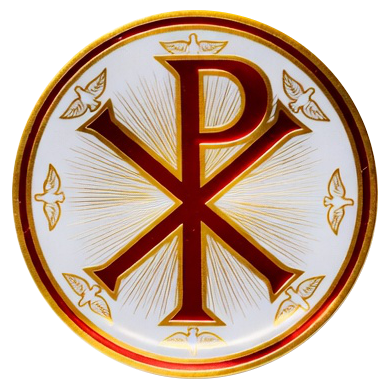
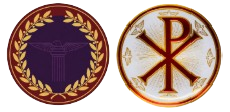
At the Battle of the Milvian Bridge on 28 October 312 AD, Constantine faced his rival Maxentius at the gates of Rome. The night before the battle, according to the accounts that survive — first from Lactantius, writing within a decade, and later from Eusebius of Caesarea, who claimed to have heard it from Constantine himself — he received a vision. The details vary between sources: a cross of light in the sky, the Greek letters Chi and Rho superimposed, a voice or a dream commanding him to mark his soldiers’ shields with the sign. He obeyed. He won.
Whether the vision was genuine revelation, strategic inspiration, or a story shaped in the telling, Constantine acted upon it with complete consistency for the rest of his life. He did not merely tolerate Christianity; he promoted it, funded it, presided over its councils, and built its greatest churches. He moved his capital to Constantinople — a new Rome, deliberately unburdened by the pagan history of the old one. Constantine is one of the most consequential human beings who ever lived — yet his inner life remains almost entirely opaque.
.
CONSTANTINE’S LEGACY
313 AD — The Edict of Milan
In February 313 AD, Constantine and his co-emperor Licinius issued what has come to be called the Edict of Milan — a proclamation granting religious tolerance throughout the empire and specifically legalising Christianity. The persecutions ended. Confiscated church property was returned. Christians could worship openly, build churches, hold public office.
The faith that had survived lions and fire now had the protection of the most powerful state on earth. It was not an unambiguous blessing. Protection brought complication; imperial favour brought politics; and a Church that had been shaped by persecution now had to learn what it meant to hold power rather than endure it. The adjustment was not always graceful.
325 AD — The Council of Nicaea
Constantine convened the first ecumenical council of the Christian Church at Nicaea in May 325 AD. More than three hundred bishops gathered from across the empire — many of them bearing the scars of the recent persecution — to settle, once and for all, the question of Arianism: was Christ fully divine, co-equal with the Father, or was he a created being, the first and greatest of God’s creations, but subordinate and secondary?
The council hammered out the Nicene Creed — the core statement of Christian doctrine that is still spoken in churches of every denomination to this day. Arianism was condemned. The formulation was precise to the point of ferocity: the Son was homoousios, of the same substance, with the Father. One word, in Greek, that the council chose over its rival by a margin that would have been comfortable in no modern parliament.
Constantine presided. He had no formal theological training and may not have fully understood the distinction he was adjudicating. He understood the political necessity of unity. He got unity, of a kind, for a while.
The Holy Spirit (or Holy Ghost) was defined as the third person of the Trinity at the First Council of Constantinople in 381 AD.
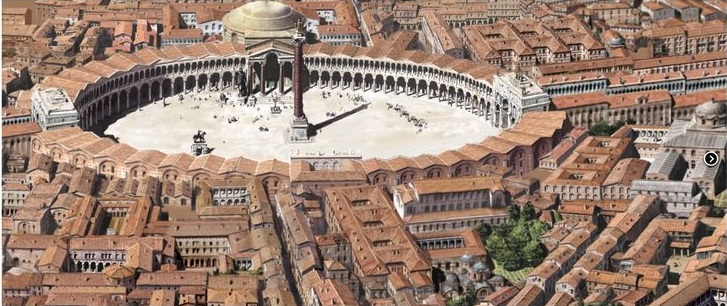
The Column of Constantine – Στήλη του Κωνσταντίνου Α΄ – Columna Constantini — a monumental column commemorating the dedication of Constantinople by Roman emperor Constantine the Great on 11 May 330 AD. Completed c. 328 AD, it is the oldest Constantinian monument to survive in what is now called Istanbul. The column stood in the centre of the Forum of Constantine, on the second-highest of the seven hills of Nova Roma, and was midway along the Mese odos, the ancient city’s main thoroughfare.
Emperor Constantine physically transferred the ancient, prophetic, pagan Palladium statue from Rome to Constantinople, burying it directly beneath the Column of Constantine; where we are told that it remains sealed underground to this day. He did this to symbolically lock down the destiny of his new empire.
The Athenian Palladium: Legend holds that Constantine relocated the Palladium, a sacred wooden statue of Athena from Troy to Rome, to Constantinople and buried it beneath the Column of Constantine. Hear the story of how it was made and understand its magic powers.
Constantine’s Christian Pivot
.
Çemberlitaş Sütunu & Palladium
.
.
.
.
.
361 – 363 AD — Julian the Apostate
Constantine’s nephew. The last pagan emperor of Rome. Julian had been raised as a Christian but underwent a private conversion to the old religion — specifically to Neoplatonic paganism — and when he became emperor in 361 AD he set about reversing the Christianisation of the empire with methodical energy. He restored pagan temples, removed Christian privileges, banned Christians from teaching in schools, and made a serious attempt to rebuild the Jewish Temple in Jerusalem as a deliberate counterweight to Christian claims.
He died in battle against the Persians in June 363 AD, after a reign of only two years. History did not give him enough time to discover whether his programme could have worked. He is one of the great might-have-beens of the ancient world — a man of genuine intellectual distinction.
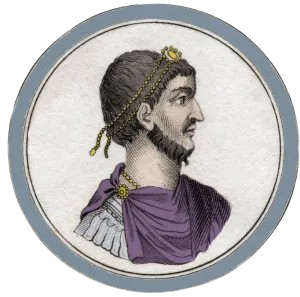 Julian the Apostate 331–363 AD
Name: Flavius Claudius Julianus
Title: Roman Emperor. Called ‘The Apostate’ by Christians.
Born: 331 — Constantinople.
Died: 363 — Samarra, Persia (killed in battle).
Parents — Father: Julius Constantius (Half-brother of Constantine). Mother: Basilina.
Ethnicity / Background: Greek / Roman.
Wives / Consorts: Helena, Daughter of Constantine the Great.
Children: None / Lineage ended.
Faith: Raised Christian. Converted to the old Paganism.
Ruled: 361–363 AD
Key Acts: Attempted restoration of paganism. Banned Christian teachers. Tried to rebuild Jerusalem Temple. Died before programme could take hold.
Legacy: The last serious attempt to reverse the Christianization of Rome. Respected as a philosopher and administrator by those who disagreed with him entirely. His short life is a study in the collision of private conviction and historical momentum.
Memorable Quote: “You have conquered, O Galilean.” — dying words.
Cogitatio: Julian was raised in the palace of the empire his uncle had made Christian, watched his family slaughtered in its political intrigues, and concluded that the old gods — and the old philosophy — were truer than the new faith.
.
.
.
.
Constantinople 381 AD — Second Ecumenical Council
This council expanded the Nicene Creed. It firm the full divinity of the Holy Spirit, describing the Spirit as:
“The Lord and Giver of Life”
“Who proceeds from the Father”
“Who with the Father and the Son is worshiped and glorified”
“Who spoke through the prophets”
The official doctrine establishes the Holy Spirit as fully God, equal with the Father and the Son. Later developments (such as the filioque clause — “and the Son” — was added in the West, thus creating an East-West difference. However, the core affirmation of the Spirit’s divinity is set in 381 AD. Much of this was in response to the Pneumatomachians (“Spirit-fighters”) who denied the Spirit’s full divinity. Further, the Holy Spirit’s Christian symbol was incorporated and would be represented as a dove, flame, or the wind symbolism forever. The Niceno-Constantinopolitan Creed 381 AD became the standard statement that is still used by Christians today.
.
.
.
.
379 – 395 AD — Theodosius I
The man who finished what Constantine began. Theodosius I — Theodosius the Great — was born on 11 January 347 and died on 17 January 395, the last emperor to rule both East and West simultaneously. His Edict of Thessalonica in 380 AD declared Nicene Christianity the sole legitimate religion of the Roman Empire. Pagan practice was banned. The transformation Constantine had begun was now complete.
Theodosius is arguably the most consequential emperor after Constantine, yet he lives almost entirely in Constantine’s shadow. One episode alone would secure his place in history: when he ordered the massacre of thousands of civilians in Thessalonica in 390 AD in reprisal for a riot. The Bishop Ambrose of Milan — the greatest churchman of the age — barred him from receiving communion until he performed public penance. An emperor knelt before a bishop. The age had changed entirely.
At his death, the empire was divided permanently between his sons Arcadius and Honorius. The two halves would never reunite. The West had perhaps eighty years left. The East would endure for another thousand.
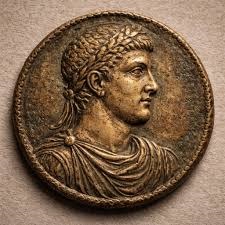 Theodosius I 347–395 AD
Name: Flavius Theodosius Augustus.
Title: Roman Emperor; Theodosius the Great.
Born: 11 January 347 — Cauca, Hispania (modern Spain).
Died: 17 January 395 — Milan..
Parents — Father: Count Theodosius (Theodosius the Elder). Mother: Thermantia.
Ethnicity / Background: Hispano-Roman.
Wives / Consorts: Flaccilla (First wife); Galla (Daughter of Emperor Valentinian I).
Children: Arcadius, Honorius, Pulcheria, Galla Placidia.
Faith: Nicene Christian (Catholic).
Ruled: 379–395 AD (East from 379; sole emperor 392–395).
Key Acts: Edict of Thessalonica (380) — Christianity becomes state religion. Banned paganism. Final ruler of the United Empire. Submitted to public penance before Ambrose of Milan — the first time an emperor bowed to a bishop.
Legacy: Completed the Christianisation of Rome. His death divided the empire permanently. Everything that followed — the fall of the West, the rise of Byzantium — flows from this moment.
Memorable Quotes: The emperor who made Christianity compulsory — and then knelt in the nave of a church to ask forgiveness.
Cogitatio: Theodosius banned the old gods, made Christianity the law of the empire, and was still humble enough to do public penance when his bishop demanded it.
.
.
.
.
.
Our hearts are made for you oh lord, and they are restless, until they rest in you.
– St. Augustine
SECTION IV
THE FOUR LATIN FATHERS
c. 340 – 604 AD
In the wreckage of the Western Empire, four men gave the Church its intellectual and spiritual architecture. They wrote in Latin, thought in Latin, and argued in Latin at a moment when Latin was ceasing to be the language of government and becoming instead the language of God.
What they built in theology, in biblical translation, in pastoral care, and in the governance of the institutional Church lasted a thousand years without significant revision. They are called the Four Latin Fathers.
They did not always agree. Ambrose and Augustine shaped each other’s ideas across the distance of a generation. Jerome and Augustine conducted a vigorous argument by letters across the Mediterranean for years, on points of biblical translation and the interpretation of Paul that were, by the standards of the fourth century, urgent and consequential. These three were alive to each other, part of the same intellectual world, reading the same texts, wrestling with the same questions.
The fourth, Gregory the Great, belongs to a different century entirely. Arriving nearly two hundred years later, he did not know the others in life; he looked back at them across the definitive chasm of the Western Empire’s collapse. Yet history connects him tightly with them because Gregory was the administrator who took the raw monastic blueprint of Anthony, the Latin linguistic standardization of Jerome, Ambrose’s established legal precedent that the Church was morally superior to the State, and the dense theology that Augustine defined as God’s unmerited grace and how it rescues broken humans from the corrupting weight of original sin, and he did this by synthesizing the biblical revelation through Platonic philosophy that explored the inner workings of the Trinity, the problem of evil, and the ultimate victory of God’s kingdom.
Gregory united them all to rebuild human society from the ruins of old Rome. While the first three Fathers forged the intellectual mind of Western Christendom, Anthony, who was not of the Latin stream, none-the-less, carried the living will of the church. Gregory forged its physical reality, proving that when the secular state failed, the Church was ready to govern, feed, and organize the now medieval world.
The formalization of their supreme status was officially settled centuries later in 1298 AD, when Pope Boniface VIII issued a sweeping decree declaring these four men as the preeminent, singular “Doctors of the Church” (from the Latin docere, meaning “to teach”). Their teachings survived the fall of the empire, serving as the universal intellectual blueprint that medieval universities and rulers utilized to build a new world out of the dark
Morality Language Grace Structure
.
c. 340 – 397 AD — Ambrose of Milan
Doctor of the Church
Ambrose was the governor of Liguria and Aemilia — a Roman administrator of the old school — when the people of Milan demanded he become their bishop in 374 AD. He had not yet been baptized. He was baptized, ordained, and consecrated within eight days, and proceeded to become the most formidable bishop of the fourth century: theologian, composer, preacher, and political force of the first order.
He barred the Emperor Theodosius from communion after the Thessalonica massacre and did not relent until the most powerful man in the world had performed public penance. He shaped the liturgy of the Western Church — Ambrosian chant bears his name to this day. And in 386 AD, he baptized a young North African professor of rhetoric named Augustine, who had come to Milan in spiritual crisis and who would leave it transformed. The teacher and the student, Ambrose, gave Augustine the door; Augustine walked through it and built a cathedral on the other side.
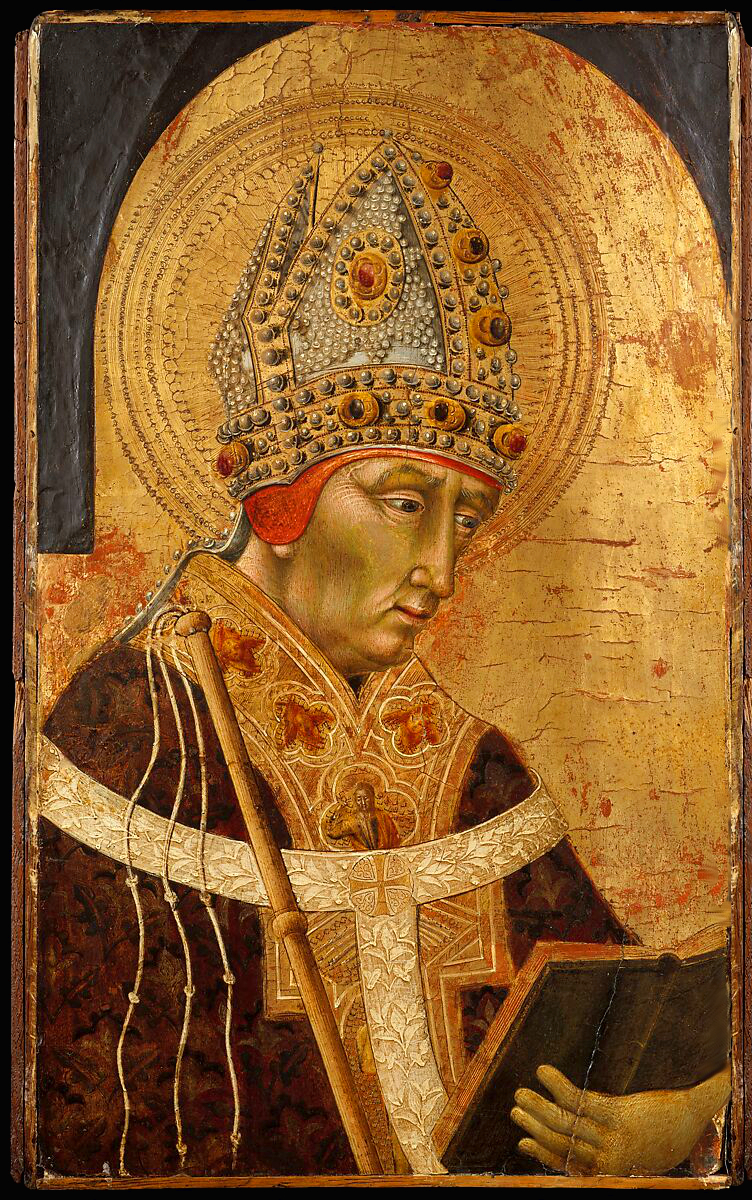 Ambrose of Milan c. 340–397 AD
Name: Aurelius Ambrosius
Title: Bishop of Milan; Doctor of the Church
Born: c. 339 AD — Augusta Treverorum, Belgica (Modern Trier, Germany)
Died: 4 April 397 AD — Milan, Italy
Ethnicity: Roman
Father: Aurelius Ambrosius (High-ranking Roman Praetorian Prefect of Gaul)
Mother: Name unrecorded
Wives: None / Practiced absolute ascetic celibacy
Children: None
Faith: Nicene Christian (Catholic)
Vocation: Roman Governor turned Bishop / Theologian: Bishop of Milan (374–397)
Education and Mentors: Elite Roman education in Rome; mastered classical jurisprudence, rhetoric, and Greek literature to enter imperial administrative service.
Key Works or Greatest Achievement: Bodily barred Emperor Theodosius I from entering Milan Cathedral in 390 AD, forcing the absolute master of the Roman world to strip his imperial robes and perform public penance before the Church. De Officiis Ministrorum; De Sacramentis; Ambrosian Hymns.
Key Acts Barred Theodosius I from communion (390 AD); baptized Augustine of Hippo (387 AD); established the Ambrosian rite of liturgy.
Other Achievements or Failures: Successfully composed foundational Latin hymns that transformed early Church liturgy; heavily mentored and baptized Saint Augustine of Hippo.
Affable Opponents: Emperor Theodosius I (Whom he disciplined but deeply respected); Empress Justina (An Arian regent who tried to seize his basilicas).
Legacy: The definitive historical architect who established the independent moral authority of the Church over the physical power of the state. He proved that an emperor is inside the Church, not above it. One of the architects of Church authority over secular power. His confrontation with Theodosius established a precedent that shaped European politics for a thousand years.
Memorable Quotes: “The emperor is within the Church, not above it.”
Cogitatio: Ambrose was a Roman bureaucrat who became the most powerful bishop of his age in eight days. He stood down an emperor, baptized Augustine, and wrote some of the earliest Christian hymns still sung today. According to ancient church hagiography, when Ambrose was an infant sleeping in his cradle, a swarm of bees suddenly landed on his face. Instead of stinging the child, the bees crawled into his open mouth and left behind a single drop of sweet honey before flying away completely unharmed. His father witnessed the event and declared it a divine omen that the boy was destined for supreme eloquence and a “honeyed-tongue”. Because of this miracle and his persuasive voice, history crowned him The Honey-Tongued Doctor (Doctor Mellifluus), and he remains the patron saint of beekeepers to this day The writings of Ambrose cover topics such as: How does a man make that transformation? What did he understand about power — both the power he had as governor and the power he chose as bishop? What does it mean to be moral, what is morality? Read his writing to understand.
.
.
..
c. 347 – 420 AD — Jerome
Doctor of the Church
Eusebius Sophronius Hieronymus — Jerome — was the greatest biblical scholar of the early Church and one of its most difficult personalities. He translated the entire Bible from Hebrew and Greek into Latin — the Vulgate, which became the standard Bible of the Western Church for fifteen hundred years — while living in a cave in Bethlehem, surrounded by a community of devout women who had followed him from Rome, and conducting fierce epistolary arguments with virtually everyone he had ever met.
He was brilliant, acerbic, enormously learned, and constitutionally unable to suffer fools. His letters are among the finest Latin prose of the fourth century — and among the most entertainingly savage. He described his opponents with a precision that left marks. He drove himself with an ascetic ferocity that frequently broke his health. And he produced, in the Vulgate, a work of such quality and durability that it shaped the very sound of Christianity in the Western world.
Jerome c. 347–420 AD
Name: Eusebius Sophronius Hieronymus.
Title: Priest, Biblical Scholar, Translator, Doctor of the Church.
Born: c. 347 AD — Stridon, Dalmatia (Croatia/Slovenia).
Died: 420 AD — Bethlehem.
Ethnicity: Illyro-Roman.
Father: Name unrecorded (Born to wealthy Christian parents).
Mother: Name unrecorded.
Wives: None / Practiced absolute monastic celibacy.
Children: None.
Faith: Nicene Christian (Catholic).
Vocation: Ascetic Monk, scholar, secretary to Pope Damasus I, Master Translator and Philologist, Hermit in Bethlehem.
Education and Mentors: Educated in classical rhetoric and Latin literature in Rome under the famous grammarian Donatus; mastered Hebrew under Jewish scholars in the Syrian Desert. He spoke Latin, Greek, Hebrew, Aramaic.
Key Work: The Vulgate — Latin translation of the entire Bible (382–405 AD).
Other Achievements or Failures: Authored *De Viris Illustribus* (On Illustrious Men) to catalog early Christian literature; struggled with a notoriously fierce, volcanic temper that alienated many contemporary churchmen.
Affable Opponents: Rufinus of Aquileia (A close childhood friend turned bitter theological rival over the works of Origen); Saint Augustine (With whom he shared an intense, respectful academic correspondence). Jerome had a fiery temper, he was brilliantly learned and ferociously argumentative. Argued by letter with Augustine for years. Drove his opponents to distraction and himself to ill health.
Legacy: The Vulgate was the Bible of the Western Church for 1,500 years. Hard-coded the linguistic and intellectual foundations of medieval European Christendom. By anchoring the Latin language to the Holy Scriptures, he ensured that classical literacy survived the collapse of the Roman state. Jerome gave the Latin-speaking world its scripture.
Memorable Quotes: “The face of God is the beginning of knowledge.”
On hearing of the sacking of Rome: “The city which had taken the whole world was itself taken.”
On the Vulgate: “Ignorance of Scripture is ignorance of Christ.”
Cogitatio: Jerome spent decades in a cave translating the Bible while conducting arguments by letter with half the Christian world. He spoke and understood many languages. He was definitely opinionated, ferociously argumentative, with a hot temper, yet, brilliantly learned. He argued by letter with Augustine for years. Drove his opponents to distraction and himself to ill health. That a single scholar living in a cave in Bethlehem accomplished so much remains astonishing.
..
c. 354 – 430 AD — Augustine of Hippo
Doctor of Grace
Of all the figures in September — of all the figures in Western history — Augustine of Hippo stands alone. He is not the most powerful, nor the most saintly, nor the most consistent. He is the most human, and therefore the most universal. His life contains everything: the restless youth, the mistress, the illegitimate son, the brilliant career, the long spiritual crisis, the sudden conversion, the decades of pastoral service, the furious intellectual productivity, and the death in a besieged city, listening to the Vandals at the gates, having spent his last months writing a letter of consolation to a friend. He thought harder about what it means to be a human being than almost anyone before or after him, and he wrote it all down.
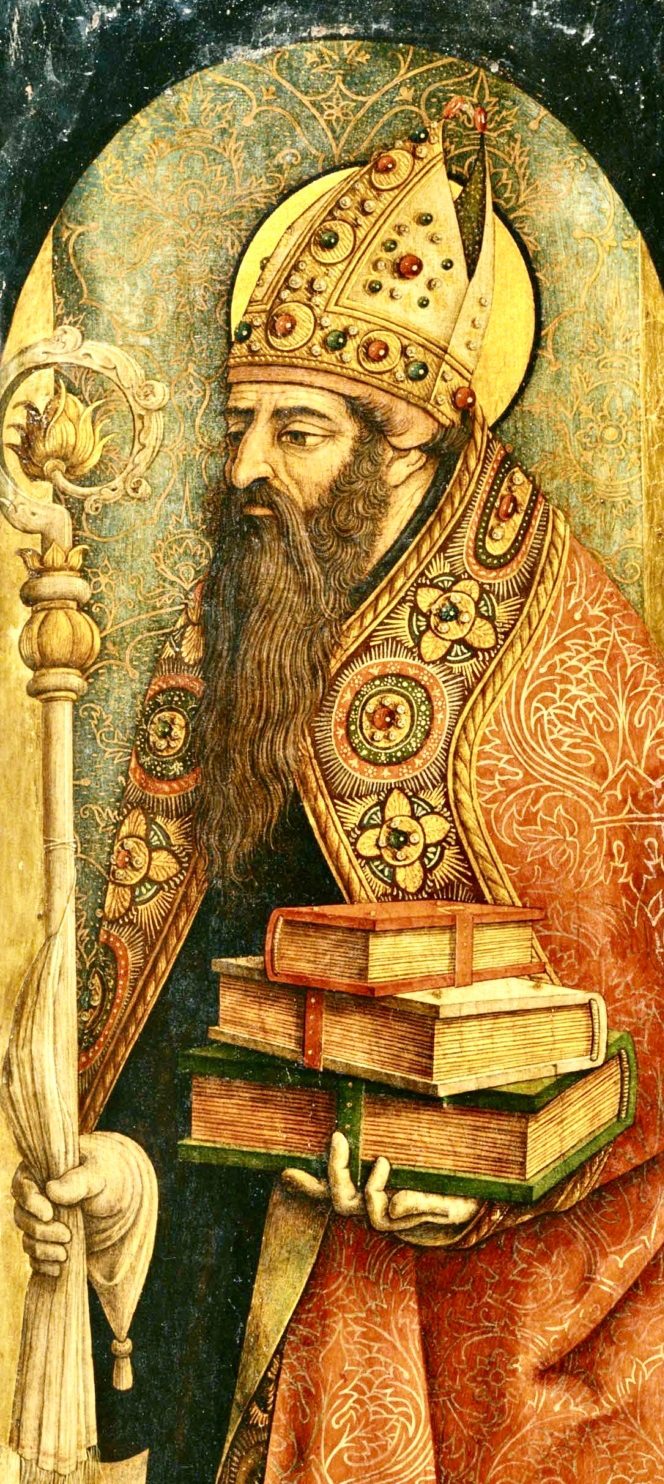 Augustine of Hippo – c. 354 – 430 AD
Born: 13 November 354, Thagaste, Numidia (Algeria)
Died: 28 August 430 AD, Hippo Regius, North Africa (Algeria)
Father: Patricius Augustinus Aurelius (Pagan, Roman official)
Mother: Monica (Saint Monica)
Siblings: Brother, Navigius & Sister, Perpetua
Wife: Name Kept Secret (Mistress).
Children: Son – Adeodatus.
Education: Elite education in Carthage, mastering classical Latin literature, rhetoric, and philosophy
Mentor: Ambrose of Milan (conversion); Cicero and Plato (intellectual formation)
Faith journey: Manichaean → Neoplatonist → Catholic Christian (baptized 387 AD by Ambrose)
Vocation: Rhetorician turned Bishop, Philosopher, and Master Dogmatist
Key Works: Authored The City of God (De Civitate Dei) and Confessions—On Free Will, 150+ other works. The two monumental texts that provided the entire philosophical framework for Western Christian theology and early medieval psychology.
Achievements or Failures: Successfully dismantled the massive Donatist and Pelagian heresies, establishing the foundational doctrines of original sin, grace, and predestination.
Legacy: Augustine wrote the Doctrine and Foundation of the Catholic Church. Shaped Western theology, philosophy, and political thought for fifteen centuries. Luther, Calvin, Aquinas, Descartes, Wittgenstein — all begin, in some sense, with Augustine.
Memorable Quote: “The reward for patience is, patience.” Veritas, Unitas, Caritas, Truth, Unity, Love”
Cogitatio: Augustine was baptized and appointed the Bishop of Hippo by Ambrose, Bishop of Milan. When he arrived in Milan, he brought with him the understanding of philosophy, particularly Neoplatonism, along with his late practices and ideas regarding Manichaeism. This spiritual evolution for Augustine combining the material with the logical and the spirit living in Christianity is what helped him create the foundation and theology of the Latin Catholic Church, of which any parts we still practice today. Throughout his life he wrote, taught, argued, and organized within the church and his monastery. He corresponded across the breadth of the Latin world, especially with another Founding Father, Jerome in Bethlehem, until the Vandals laid siege to the city gates of Hippo in 430 AD.
.
.
c. 540–604 AD — Gregory the Great
Doctor of Desire
Pope Gregory was the son of an aristocratic, senatorial family with a tradition of public service. He began a very promising career in politics. At age 30, he became a prefect. However, after his father’s death in 574 AD, he felt a profound need to reform his life. When he did, it was monumental, he renounced all his worldly goals and sold all of his possessions. He then distributed the proceeds to the poor and still had enough remaining for the construction of seven monasteries. Six were built on his family’s estates in Sicily and the seventh was dedicated to St. Andrew and established on Mt. Celio in Rome. This latter dedicated to the rule of St. Benedict is the one he joined and practiced an ascetic life so rigorous that it ruined his health and actually endangered his life.
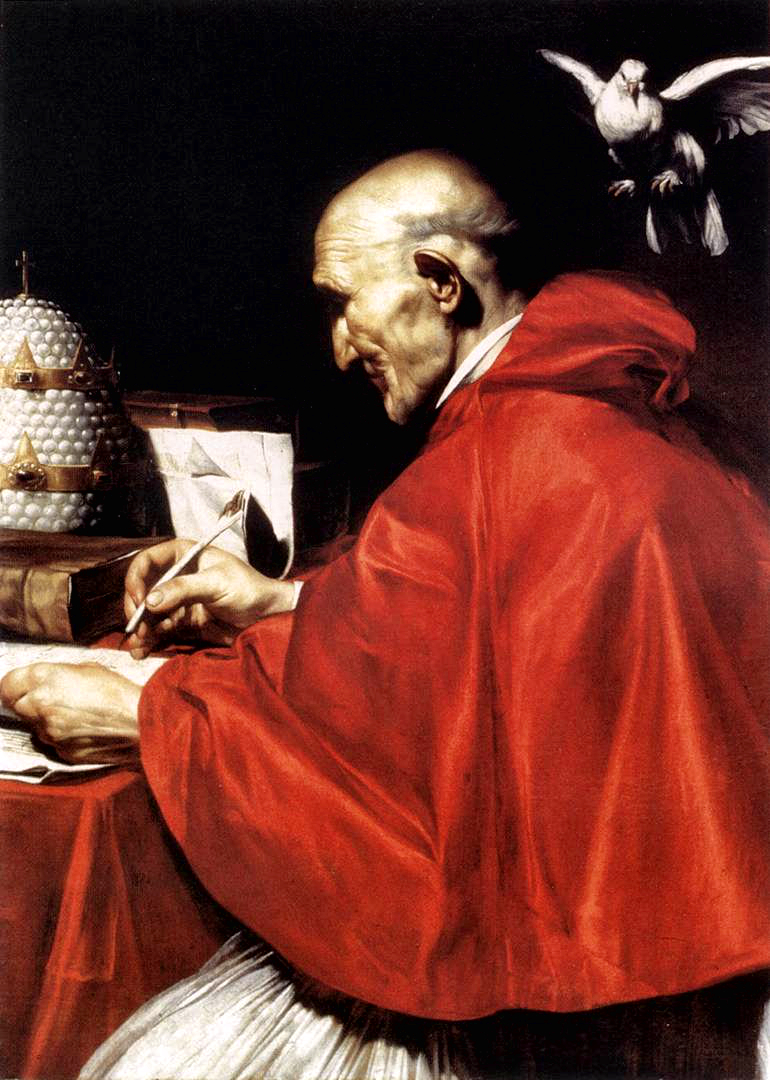 Gregory I — Gregory the Great c. 540–604 AD
Name: Gregorius (Flavius Anicius Gregorius)
Title: Gregorius I, Pope and Bishop of Rome; Doctor of the Church; “The Father of Christian Worship”
Born: c. 540 AD — Rome, Italy.
Died: 12 March 604 AD — Rome, Italy.
Ethnicity: Roman – Born into the noble, senatorial Anicii family.
Father: Gordianus (A wealthy Roman Senator and regionary prefect).
Mother: Saint Silvia.
Wives: None. Practiced absolute monastic celibacy.
Children: None.
Faith: Nicene Christian (Catholic) 590–604.
Vocation: Roman Urban Prefect turned Benedictine Monk and Pope. Religious Leader; Reformer.
Education and Mentors: Classical Roman education; theology. Expertly trained in classical Roman jurisprudence, grammar, and rhetoric; deeply formed by the monastic Rule of Saint Benedict.
Key Works & Acts: Instigated the Gregorian Mission in 596 AD, sending Augustine of Canterbury to England to convert the Anglo-Saxons, which permanently expanded the boundaries of Western Christendom deep into Northern Europe. Reformed liturgy (Gregorian chant); defined the role of the papacy in the early medieval world; reorganized Church lands to feed Rome during famine. Moralia in Job; Pastoral Rule; Dialogues; extensive correspondence.
Achievements or Failures: Revolutionized early Church administration, charity networks, and liturgy; heavily codified the system of plainchant that bears his name—Gregorian Chant. Major church reforms; strengthened papal authority; sent missionaries to convert Anglo-Saxons. Various sermons, letters, and church instructions.
Contemporary / Rivals / Affable Opponents: The Lombard kings (Whom he actively kept from sacking Rome through independent diplomacy and paying tributes out of church funds); John IV (Patriarch of Constantinople). Byzantine Emperor Maurice, Lombard Kings
Symbol / Emblems: Papal cross and keys.
Successor: Sabinian.
Legacy: Missionary work shaped European Christianity. The definitive historical link is who took the raw monastic lifestyle of Saint Anthony and used its structure to rebuild human society from the rubble of old Rome. He proved that when the secular state collapsed, the Church was ready to govern, feed, and organize the medieval world. Defined the medieval papacy. His Pastoral Rule was read by every bishop in Europe for five centuries. He understood that Rome was finished as an empire and built the Church as its successor institution. He is the bridge between the ancient world and the medieval.
Memorable Quotes: “Not Angles, but Angels.” (Non Angli, sed Angeli).
“It is not titles that honour men, but men who honour titles.”
“The pastures of the Lord are rich beyond all telling.”
Cogitatio: Gregory was the Prefect of Rome — essentially the city’s mayor — who gave everything up to become a monk, was dragged back into public life, and became the most consequential pope of the early Middle Ages. He sent missionaries to England, fed the poor of Rome, and defined what a bishop should be. Gregory was well-educated, learning grammar, rhetoric, the sciences, literature, and law; he excelled in all these fields. He knew Latin authors, natural science, history, mathematics and music and was noted as having a “fluency in imperial law, as a preparation for a career in public life” In 579, Pelagius II chose Gregory as his apocrisiarius (ambassador to the imperial court in Constantinople). In music, the mainstream form of Western Plainchant, standardized in the late 9th century, three centuries after the pope’s death, was attributed to Pope Gregory I and so the form took the name of Gregorian chant. The chant that bears his name is the result of the fusion of Roman and Frankish elements which took place in the Franco-German empire under Pepin, Charlemagne and their successors.
“God is called jealous, angered, repentant, merciful and foreknowing. These simply mean that because He guards the chastity of every soul, He can, in human fashion, be called jealous, although He is not subject to any moral torment. Because He moves against faults, He is said to be angered, although He is moved by no disturbance of equanimity. And because He that is immutable changes what He willed, He is said to repent, although what He changes is a thing and not His counsel. And when He remedies our misery, He is called merciful, although He can remedy miseries, but can never have a commiserating heart. And because He sees those things that are future to us, but which to Him are always present, He is called foreknowing, although He in no way foresees a future; for what He sees is present. Moreover, whatever things are, are not seen in His eternity because they are; rather, they are, because they are seen.”
Vocation Roman Prefect of Rome → monk → papal ambassador to Constantinople → Pope (590–604)
The Fable of St Gregory The Great
“Servus Servorum Dei” — (“Servant of the servants of God”)
It was a troubled time. The Mediterranean was about to collapse, and Byzantium was pulling back. It looked as if they would soon be an isolated Eastern power. The church and the parishioners were in great distress. Pope Gregory is left standing in the ruins of Rome. Since Constantine, would we see an empire and the church divided? Pope Gregory needed to work and figure out a way to save, strengthen and build a bridge that would hold the church together.
As usual, Pope Gregory was in his office. As you can imagine, he was a very busy man. When he worked he wished not to be disturbed. However, one day Peter the Deacon peeked through the curtains to see if the pontiff was busy, and as he looked he was astonished. There he saw an incredible sight. As he peeked through the curtains, he couldn’t believe his eyes, he saw a dove, the Holy Spirit regurgitating words into Pope Gregory’s mouth.
May I say the early medieval mind is expressing itself in a terrifyingly literal concept of inspiration. In the ancient world, “breath” (pneuma) and “spirit” were the same thing. To them, Gregory is a total empty vessel. He isn’t a clever author writing a book; he is a biological pipe being filled up with the actual breath of God.
Letters — He wrote over 1000 letters, books, commentaries and homilies.
The Hungry — He used Papal lands to farm, and help feed the hungry of Rome.

Music —
The Gregorian Chant
Pope Gregory developed a way of singing —a gift from a dove— it was called, plainchants. Legend states that a holy dove sat on Gregory’s shoulder, whispering the divine melodies directly into his ear. In reality Gregory was a master cultural aggregator. He took the existing, beautifully raw, monophonic (single-line) singing styles from Roman and Northern Pagan traditions and fused them with sacred church texts. Because there was no written music system, this new plainchant was kept alive entirely through memory. Monks and clergy had to memorize hundreds of chants, passing them down strictly by mouth, ear, and know them by heart for four centuries.
This form of music was written down, but 400 years later, well after Pope Gregory died, by another Monk named Guido Arezzo, 1000AD. They are called Gregorian Chants because Pope Gregory the Great developed the songs and the method. Guido Arezzo developed the four lines, the hand as a symbol and the solfège.
The Christian Church was not only an empire, but along with time and power, it was evolving. By 1000 AD, it had immersed deeply into the ideas of maths, astronomy, engineering, medicine, preservation, the technologies of the age. A monk by the name of Guido Arezzo was obsessively drawn into the mathematics of sound. He realized that relying solely on oral memory was causing the music to warp, change, and decay across different regions. He wanted a foolproof system to spread uniform music across the Christian world on paper.
Guido invented the lines and spaces we use in music today, giving notes a concrete, visual home on a page so a singer could look at a sheet of paper and know exactly how high or low to sing.
He took a well-known hymn to St. John and used the first syllable of each line to create the musical ladder: Ut, Re, Mi, Fa, Sol, La. This evolved into our modern day, do, re, mi.
In short, Gregory standardized the mono chants he learned from the pagans. 400 years later, Guido figured out a system to write them down. He was a nerd-monk.
.
.
.
.
I Rome Leadership: Constantine to Valens
Block D: The Year of the Five Emperors (193 AD)
- Pertinax (193 AD) — Tried to reform the military budget; murdered by guards after three months.
- Didius Julianus (193 AD) — Literally bought the throne at an auction held by the Praetorian Guard.
- Pescennius Niger (193–194 AD) — Rebel general in the East; defeated and executed by Severus.
- Clodius Albinus (193–197 AD) — Rebel general in Britain; initially allied with Severus before being defeated.
Block E: The Severan Dynasty (193–235 AD)
- Septimius Severus (193–211 AD) — Transformed Rome into a military dictatorship and expanded the army.
- Caracalla (198–217 AD) — Granted Roman citizenship to all free people and built massive public baths.
- Geta (209–211 AD) — Co-ruled with his brother Caracalla, who promptly had him murdered.
- Macrinus (217–218 AD) — First emperor who was a praetorian prefect rather than a senator.
- Diadumenian (218 AD) — Child co-emperor; executed with his father Macrinus after a rebellion.
- Elagabalus (218–222 AD) — Replaced traditional Roman gods with a Syrian sun deity; highly controversial.
- Severus Alexander (222–235 AD) — Well-meaning but weak ruler; his murder triggered the imperial collapse.
Block F: The Crisis of the Third Century (235–284 AD)
- Maximinus Thrax (235–238 AD) — Giant barbarian-born general who never set foot in Rome during his rule.
- Gordian I & Gordian II (238 AD) — Father and son co-rulers; reigned for just 21 days before dying.
- Pupienus & Balbinus (238 AD) — Chosen by the Senate to resist Maximinus; both murdered by guards.
- Gordian III (238–244 AD) — Became emperor at age 13; died on a military campaign in Persia.
- Philip the Arab (244–249 AD) — Celebrated Rome’s 1,000th anniversary with massive, lavish secular games.
- Decius (249–251 AD) — Launched the first empire-wide, systematic persecution of early Christians.
- Herennius Etruscus (251 AD) — Co-ruled with his father Decius; killed alongside him in battle.
- Trebonianus Gallus (251–253 AD) — Bought peace with invading Goths and ruled during a devastating plague.
- Volusianus (251–253 AD) — Co-ruled with his father Trebonianus Gallus; murdered by their own soldiers.
- Aemilian (253 AD) — Ruled for less than three months before being assassinated by his troops.
- Valerian (253–260 AD) — Captured alive by the Persian King Shapur I; died in humiliating captivity.
- Gallienus (253–268 AD) — Excluded senators from military commands and successfully held the fractured empire together.
- Claudius Gothicus (268–270 AD) — Won decisive victories against invading Gothic tribes; died of the plague.
- Quintillus (270 AD) — Brother of Claudius Gothicus; ruled for a few weeks before being abandoned.
- Aurelian (270–275 AD) — The “Restorer of the World” who reunited breakaway territories and built Rome’s walls.
- Tacitus (275–276 AD) — Elderly senator chosen by the army; died of fever on campaign.
- Florianus (276 AD) — Seized power after Tacitus’s death; murdered by his own troops after two months.
- Probus (276–282 AD) — Strict disciplinarian who used soldiers to plant vineyards and drain swampland.
- Carus (282–283 AD) — Successfully invaded Persia; allegedly struck and killed by lightning in his tent.
- Carinus (283–285 AD) — Co-ruled in the West; famous for debauchery and abandoned by his officers.
- Numerian (283–284 AD) — Co-ruled in the East; found dead in his traveling litter from unknown causes.
Block G: The Tetrarchy / Rule of Four (284–305 AD)
- Diocletian (284–305 AD) — Saved the empire from collapse by dividing administration among four rulers.
- Maximian (286–305 AD) — Appointed by Diocletian to serve as the Western Augustus; co-retired with him.
- Galerius (305–311 AD) — Served as Eastern Emperor; fiercely persecuted Christians before issuing an edict of toleration.
- Constantius Chlorus (305–306 AD) — Western Emperor and father of Constantine the Great; died in Britain.
- Constantine II (337–340) — Invaded his brother’s territory to claim more land; killed in ambush.
- Constans I (337–350) — Ruled the West fiercely but was assassinated by his own general, Magnentius.
- Constantius II (337–361) — Outlived his brothers to reunite the empire; deeply involved in Arian theological disputes.
- Vetranio (350) — An elderly general who took the title briefly to protect the throne from rebels.
- Julian the Apostate (361–363) — Attempted to strip Christian privileges and restore paganism; killed invading Persia.
- Jovian (363–364) — Surrendered vital territories to secure peace with Persia; died of accidental carbon monoxide poisoning.
- Valentinian I (364–375) — Hardheaded military emperor who successfully defended the Western Rhine frontiers from Germans.
- Valens (364–378) — Co-ruled the East; completely destroyed by Goths at the catastrophic Battle of Adrianople.
.
.
.
.
.
The Lay of the Shattered Shield
As Sung by Homer
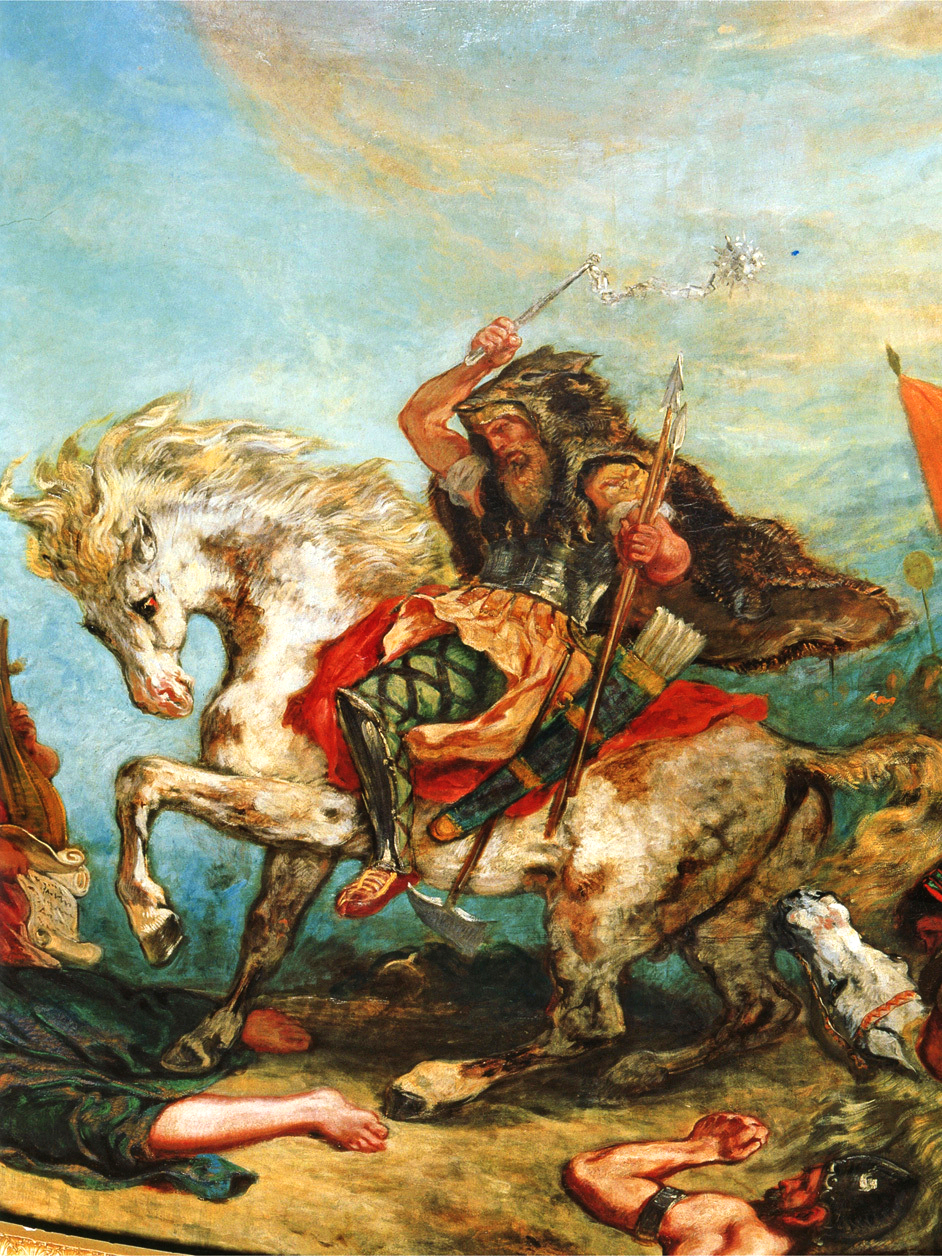
Sing to me, O Muse, of the great and terrible undoing. Sing of an Empire of gold and iron that forgot the heavy shield of duty, and of the wild, unnumbered hosts driven across the wine-dark rivers by the fury of a shifting world.
For the gods on high Olympus do not grant eternal noon to any kingdom of mortal men.
Act I: The Scourge from the Sunrise
From the vast and trackless steppes of the hidden East, where the wind howls like a wounded hound, there arose a people terrible to behold. The Huns they were called—men who lived upon the backs of swift-hoofed stallions, whose faces were scarred from infancy by the cold blades of their own fathers.
They flew across the earth like a shadow cast by a storm cloud. Their bows were not of simple wood, but of horn and sinew, sending down a rain of iron that whistled with the sound of death. They knew no city walls, no plowed fields, and no mercy. Before them marched terror; behind them lay only black ash and the unburied bones of kings.
Like a stone cast into a placid pond, the Huns struck the great Gothic peoples of the north. And the Goths, though brave and fierce in battle, looked upon these riders from the sunrise and saw not an enemy they could fight, but a flood that would swallow the world.
Act II: The Cry at the Wine-Dark River
Turn your eyes now, O reader, to the mighty Danube, where the waters run deep and gray. There, upon the muddy banks, a great cry arose—the weeping of unnumbered thousands. The Goths had fled the Hunnic spear, dragging their elders and their weeping infants to the very edge of the Roman world.
They cried out to Valens, the Emperor of the East, who sat within his high-walled palace of Constantinople. “Receive us!” they begged, their hands stretched across the foam. “The demons of the steppe are at our backs! Let us cross beneath the shadow of your eagles, and we shall plow your fields and bleed for your defense!”
But Valens, whose heart was weighed down by vanity and the grinding war with distant Persia, looked upon the multitude and saw only a prize. He opened the gates, yet his governors were men of hollow souls and itching palms. They took the Goths’ silver, they took their gold, and when the food was spent, they forced the desperate fathers to trade their own children into bitter slavery just to buy the flesh of mangy dogs.
Hunger is a fiercer master than any king. Pushed past the brink of mortal endurance, the Goths drew their iron swords. In the valley of Adrianople, the skies turned red with slaughter. The Roman legions were broken like brittle glass, and Valens himself vanished into the crimson dust of the field, his body never to be found by those who loved him.
Act III: The Bridge of Ice
When the news of the Eastern slaughter echoed through the forests of the West, the ancient borders of the Rhine began to tremble. The armor of Rome had grown thin; her youth no longer wished to bear the heavy bronze or freeze on the night watch.
Then came the Great Winter—a frost so deep that the breath of horses turned to ice in mid-air. In the dark of night, the mighty Rhine River, which for centuries had served as Rome’s liquid wall against the wild clans, froze solid. It became a road of gleaming, unbreakable glass.
Look there, through the swirling snow! The Vandals and their fierce allies stand upon the northern bank. They do not come as a disciplined phalanx of old, but as an entire civilization on the march. Tens of thousands of boots crunch upon the river’s icy spine. Behind them roll the heavy wooden wagons, carrying their wives, their household gods, and their hunting spears.
The ice did not break. The wall had become a highway.
They poured into the fertile lands of France and Spain like a torrent, and none were left with the stomach to stand against them. From there, the Vandals built great ships of pine, crossing the salt-sea to conquer Carthage, until at last they sailed up the Tiber River to strip the city of Rome bare—plucking the very gold from the roofs of the temples, leaving the ancient Queen of Cities hollowed out and weeping in her ruins.
.
.
SECTION V
THE LAW OF ROME
c. 337 – 476 AD
Rome did not fall in a day, or a year, or even a century. It fell the way a great tree falls — slowly at first, almost imperceptibly, and then all at once. The Western Roman Empire had been decaying from within for two hundred years before a Germanic general sent the last emperor’s crown to Constantinople in 476 AD and declared the formality concluded. What the date marks is not a catastrophe but an acknowledgment — the admission, at last, that the catastrophe had already happened.
The causes are still debated. The endless wars and the deaths of too many Caesars. The corruption and waste of the later imperial court. The raising of taxes to fund a military that could no longer be paid, until the soldiers refused to fight and sided instead with whatever general offered them grain and land. The cost of an empire too large to administer, too diverse to unify, too old to reform. And then, from beyond the Danube, the pressure that turned a slow decline into a rout.
.376 AD — The Gothic Wars Begin
The Visigoths had lived along the edges of the Roman world for generations — trading with it, fighting for it, absorbing its culture in fragments. Then the Huns arrived from the east, and everything changed. A nomadic people of extraordinary ferocity and mobility, the Huns drove the Gothic tribes westward in a wave of displacement that the Roman frontier was not built to absorb.
In 376 AD, the Visigoth leader Fritigern led his people to the banks of the Danube and asked the Emperor Valens for permission to cross into Roman territory. Valens admitted them — and then Roman officials, seeing an opportunity, exploited and abused the refugees with a thoroughness that amounted to organized cruelty. They were sold rotten food at extortionate prices. Their children were taken as slaves. When the Goths revolted, no one who understood the situation was surprised.
.In 364 AD, brothers Valentinian I and Valens became co-emperors, the former in the west and the latter in the east. Despite managing to maintain stability and control over both halves of the empire in the face of ongoing invasions from barbarian marauders, the Roman Empire was on a path of slow, painful decline. Nothing demonstrated this fact more than Emperor Valens’ abject humiliation at the Battle of Adrianople, one of the most embarrassing and disastrous military defeats in Roman history.
.
.
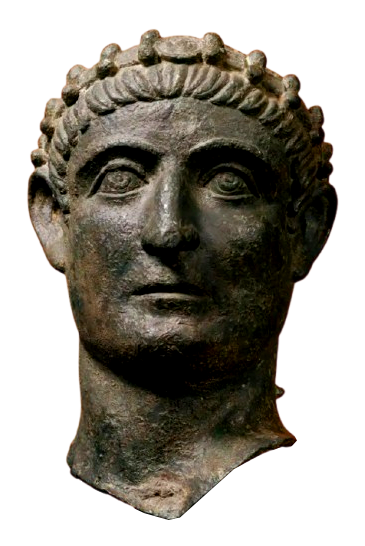
.
.
.
Emperor Valens 328–378 AD
Full Name: Flavius Julius Valens Augustus.
Title: Roman Emperor of the East.
Born: 328 AD — Cibalae, Pannonia (modern Vinkovci, Croatia).
Died: 9 August 378 AD — Adrianople (body never found).
Ruled: 364–378 AD.
Father: Gratianus Funarius (Gratian the Elder, prominent Roman general).
Mother: Name unrecorded.
Ethnicity: Illyrian.
Wives: Albia Domnica.
Children: Valentinianus Galates, Carosa, Anastasia.
Faith: Semi-Arian Christian.
Vocation: Roman Emperor / Military Commander.
Education and Mentors: Raised on imperial military estates in Britain and Africa; trained in administrative logistics and classical Roman infantry tactics.
Key Act: Admitted the Visigoths across the Danube in 376 AD; killed at the Battle of Adrianople two years later. Commissioned the monumental Aqueduct of Valens in Constantinople; defended the eastern borders from early Gothic incursions.
Other Achievements or Failures: Suffered a catastrophic defeat and lost his life at the Battle of Adrianople (378 AD) against the rebel Goths after rushing into combat without waiting for western reinforcements.
Affable Opponents: Fritigern – Visigothic chieftain. Shapur II – Sasanian King of Persia.
Memorable Quotes: “Sovereign power is nothing if it does not care for the welfare of others.”
Legacy: The emperor whose fatal administrative and military decisions opened the Roman frontier permanently. His annihilation at Adrianople shocked contemporary historians and marked the definitive collapse of Roman border security in the East. He is thought of as,“The Last True Roman.”
Cogitatio: Valens made a decision that seemed reasonable at the time and proved catastrophic in the execution. According to the Latin historians Ammianus Marcellinus and Paulus Orosius, on 9 August 378, Valens and most of his army were killed fighting the Goths near Hadrianopolis in Thrace – Adrianople, Edirne. Refused to listen to prophecies of a cruel death before marching into the Thracian campaigns.
.
.

.
Valentinian I Valentinianus 321 – 375 AD
Ruled 364 to 375. Appointed his brother Valens to rule over the Eastern half the empire, as he control the West. He was the founder of the Valentinian dynasty. He is noted for his successful campaigns on the Rhine and Danube frontiers.
.
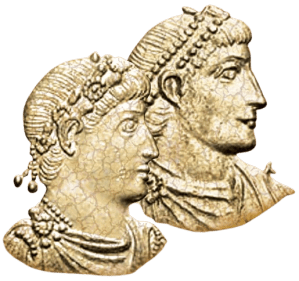
The Great Divide 364–378 AD
Valentinian I (364–375 AD) — The Western Shield – A tough, quick-tempered soldier who took the Western half of the empire. He spent his entire reign living in military camps along the Rhine and Danube rivers, building massive stone fortresses to keep the Germanic tribes out of France and Italy.
Valens (364–378 AD) — The Eastern Watchman – The younger brother who was handed the Eastern half of the empire (modern-day Turkey, Greece, and Egypt). He governed from the rising capital of Constantinople, constantly juggling a cold war with Persia and growing instability on the Danube river.
.
.
.
.
Visigoths
378 AD — The Battle of Adrianople
On 9 August 378 AD, at Adrianople in Thrace, the Visigoth cavalry annihilated a Roman army. The Emperor Valens was killed — his body never recovered. Two-thirds of the Roman force died on the field. It was the worst defeat the Roman military had suffered since Cannae, six hundred years before, and unlike Cannae, it was not followed by recovery.
Adrianople announced something the empire was not ready to hear: that the barbarians had learned how to beat Rome. The psychological effect was as significant as the military one. The border of the empire, which had always been a line Rome drew and others respected, was now a line that could be crossed.
410 AD — Alaric and the Sack of Rome
Alaric, King of the Visigoths, sacked Rome on 24 August 410 AD. For the first time in eight hundred years, the city fell to a foreign enemy. The shock that ran through the Roman world was not primarily military — Rome had ceased to be the seat of government decades earlier — but psychological and spiritual. The city that had believed itself eternal had been violated. The empire that had defined civilization for five centuries had proved mortal.
Jerome, translating the Bible in his cell in Bethlehem, heard the news and wrote: ‘The city which had taken the whole world was itself taken.’ Augustine, in Hippo, began writing The City of God — partly as a response to pagans who blamed Christianity for Rome’s weakness. If Rome had abandoned the old gods for the new faith, they argued, then Rome’s humiliation was divine punishment. Augustine’s answer would reshape Christian political theology for a thousand years.
.
Alaric I c. 370–410 AD
Title: King of the Visigoths
Born: c. 370 AD — Peuce Island, Danube Delta
Died: 410 AD — Cosenza, southern Italy (shortly after the sack of Rome)
Ruled: c. 395–410 AD
Faith: Arian Christian
Key Acts: Sacked Rome in 410 AD — the first foreign enemy to take the city in 800 years
Legacy: Alaric spent years trying to negotiate a legitimate place for his people within the Roman system. When that failed, he took Rome. He died within months, and was buried — legend says — beneath a diverted river, his grave hidden so that no one could desecrate it.
Memorable Quote: “The thicker the hay, the easier it is mowed.” — Alaric I
Cogitatio: Alaric wanted to be a Roman general. He was turned down, repeatedly, and eventually sacked the city he had asked to serve. And all the treasure he collected, has never yet been found.
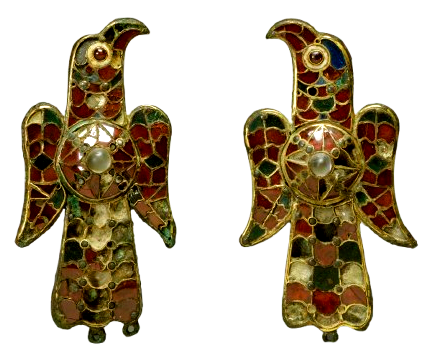
.
.
.
The Second Sack of Rome – 410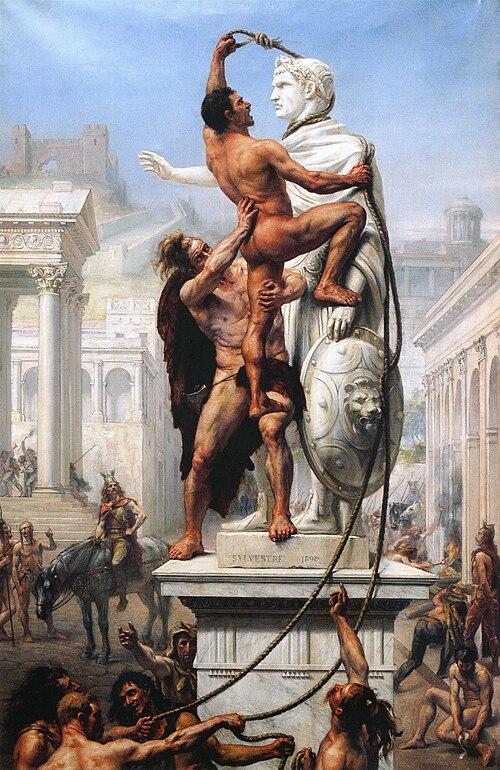
On 24 August 410 AD, the Visigoths, led by their king Alaric, sacked Rome. The irony was that he tried to make his way up the ranks in the Roman Army and was constantly refused. The Visigoths were not trying to destroy the Roman Empire, but were demanding land and official recognition within.
It was the first time in 800 years that Rome had fallen to a foreign enemy. It was a great shock. However, Rome was no longer the administrative capital of the Western Roman Empire, replaced in 286 AD by Mediolanum (Milan), and again by Ravenna in 402 AD. Regardless, it was seen as “the eternal city” and the spiritual center of the Empire.
“The city which had taken the whole world was itself taken.” — St. Jerome
Emperor Honorius continuously stalled and refused Alaric’s demands. After failed diplomatic negotiations and multiple blockades, the exasperated Alaric besieged the city multiple times, eventually leading a rebellion of slaves. With the help of the slaves, they opened the Salarian Gate. Alaric led the siege. The Visigoths famously attacked the city. Methodically plundered the palaces, emptied the treasury, and looted the Roman Forum of massive wealth. However, Alaric ordered his troops to respect Christian sanctuaries, allowing many Romans who fled to the churches to be spared.
These events hastened the decline of the Western Roman Empire and prompted prominent contemporary figures, like Saint Augustine, to re-evaluate history through his extended work, The City of God.
.
.
.
.
.
.Attila, Flagellum Dei— the Scourge of God – God’s Punishment
Attila, was also known as Flagellum Dei— the Scourge of God — God’s Punishment.
He was ruler of the Huns from 434 to 453. He commanded a vast nomadic empire stretching from the Volga to the Rhine. He terrorized both Eastern and Western Rome, and before he was stopped his reach extended to the gates of Constantinople, and the plains of Gaul. There is no record of his childhood, not even his birth. It is said he and his brother were raised by their uncles after both parents died young. When they passed the boys inherited the tribe. It is also said that the boys learned to ride before they learned to walk, and that he killed his brother.
As a man, Attila was short, broad-chested, flat-nosed, had a thin beard sprinkled with grey. He had a haughty walk and rolling beady eyes. He was a lover of war, yet restrained in action. His tribe was said to be over 500,000 men, and that he was always gracious to those under his protection, and feared by everyone else. Their exploits were shockingly numerous, but in the end, Attila did meet his match, and his death was not pretty.
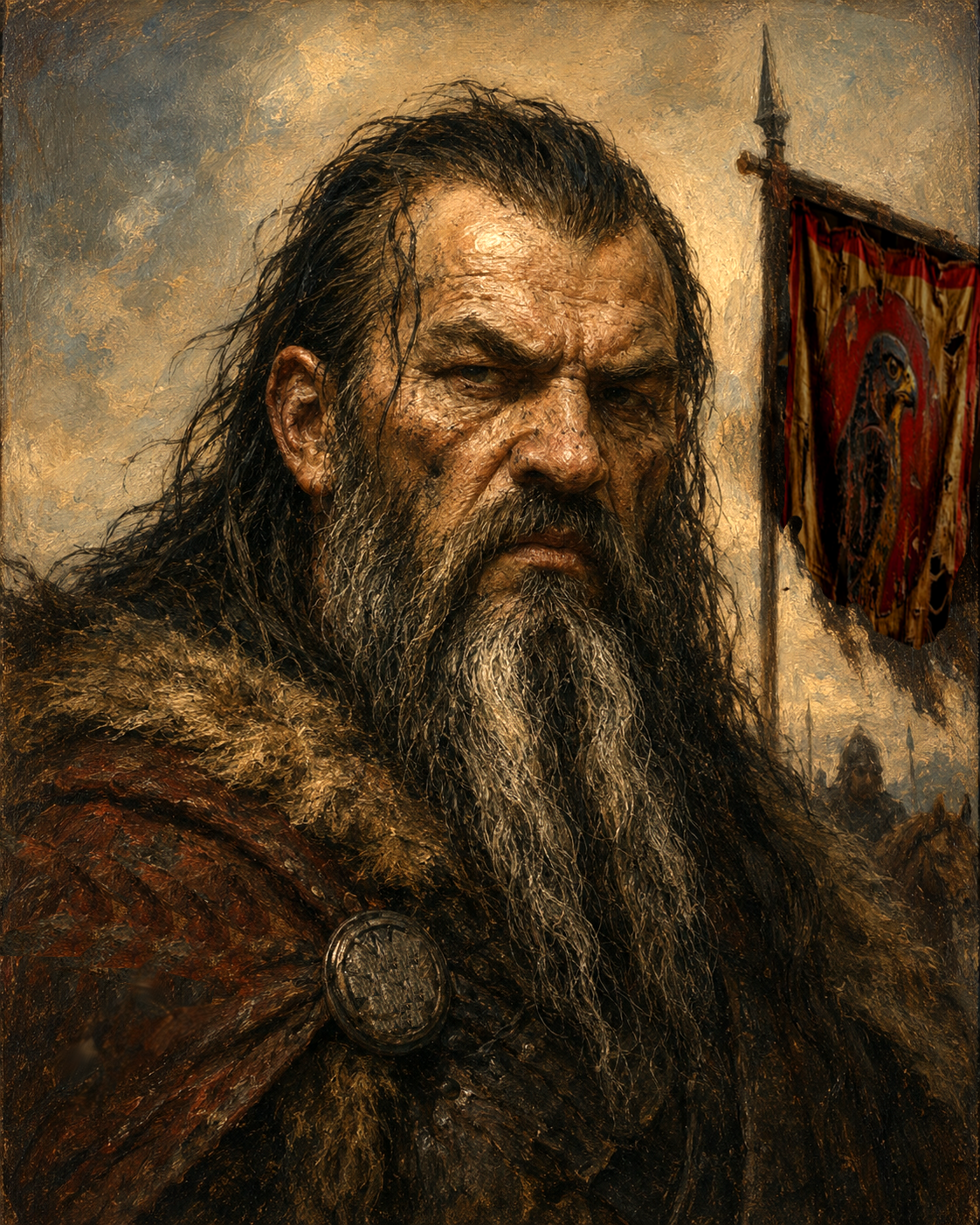 Attila the Hun 406–453 AD
Name: Attila
Title: King of the Huns
Born: 406 AD — Hungary
Died: March 453 AD — Hungary
Ethnicity: Hunnic
Parents: Father: Mundzuk. Mother: Name unrecorded. Raised by uncles Rugila & Octar
Siblings: Brother Bleda
Wives: Kreka, Ildico
Children: Ellac, Dengizich, Ernak
Faith: Tengriism
Vocation: Ruler and Military Commander
Education and Mentors: Nomadic military training and Roman diplomatic exchange
Key Works or Greatest Achievement: Unified the Hunnic tribes and created a massive empire stretching from Germany to the Caspian Sea.
Other Achievements or Failures: Invaded both the Eastern and Western Roman Empires, but suffered a major defeat at the Battle of the Catalaunian Plains in 451 AD.
Affable Opponents: Roman General Flavius Aetius and Pope Leo I.
Key Battles
- 441 AD — Siege of Margus: Attila breaches the Danube frontier, using a local bishop’s grave-robbing dispute as a pretext to sack Roman border cities.
- 443 AD — Siege of Naissus: The Huns devastate the birthplace of Constantine the Great, successfully employing heavy battering rams and advanced siege engines.
- 447 AD — Battle of the Utus: A massive clash where Attila completely destroys the Eastern Roman field armies in the Balkans, despite sustaining brutal casualties.
- 451 AD — Battle of the Catalaunian Plains: Attila’s only major military defeat, where a combined Roman and Visigothic coalition halts his deep invasion of Gaul.
- 452 AD — Sack of Aquileia: Attila invades northern Italy, entirely erasing the prosperous city from the map and forcing refugees to flee into the lagoons, founding Venice.
Legacy: Known as the Scourge of God. His campaigns forced the massive migration of Germanic tribes into Roman territory, causing the collapse of the Western Empire. Though he is often remembered as a terrifying ruler, his death caused his empire to completely collapse.
Memorable Quotes: “There where I have passed, the grass will never grow again.”
Cogitatio: He was the scourge of God and suffered only one defeat.
.
.
Atilla The Hun 406–453
Ruler of the Huns,
God’s Punishments, Flagella Dei –
Atilla was leader of a nomadic warrior tribal cultural empire. His people were called Huns, Hunie. Anyone willing to fight could join his tribe. Ostrogoths, Alans, Bulgars, anyone who lived in Central and Eastern Europe. During his reign, he was the most feared enemy of Western and Eastern Rome and the Northern Barbarian Empires. All knowledge of Attila and his people comes from the accounts of his enemies. He, and those who followed were thought of as the most savage men that ever lived, feral, while beasts. They were known as Nomads. The reputation of the Huns and their horses was legendary. Most people who encountered them thought they were part man, part horse because they seldom dismounted. They ate, slept, carved their arrows and bowed on their horses. Their horses were also larger, stronger, faster and healthier than all other tribes they encountered. The women of the tribe were pulled in wagons, they had no permanent home and the camp moved every few days. They also took what they wanted, whenever they wanted, wherever they went. Raids were frequent, people fled further west or south and eventually, deals were made to pay off the Hun and his men.
Childhood — There are no records of his birth, but it was thought he was born in the Volga Region. His mother died during birth and his father two years later. He and his brother Bleda were raised by their uncle Rugila, known as Rua, or Ruga and Octar, also spelled Uptaros). It is said Atilla learned to ride a horse before he learned to walk. When their uncles died, the Tribe was ruled by both brothers. However, that did not last long. It is rumored that he killed Bleda in his sleep.
Leader of the Huns — He was a man born into the world to shake the nations, the scourge of all lands, who in some way terrified all mankind by the rumors noise abroad concerning him. He was haughty in his walk, rolling his eyes hither and thither, so that the power of his proud spirit appeared in the movement of his body. He was indeed a lover of war, yet restrained in action; mighty in counsel, gracious to, and lenient to those who were once received under his protection. He was short of stature, with a broad chest and a large head; his eyes were small, his beard was thin, straggly and sprinkled with gray. He had a flat nose and a swarthy complexion, revealing his origin.
He took control over the tribe, which was said to be over 500,000 men. Once Attila crossed the Danube, the terror never stopped. He and his men swept across what is now Western Europe, and he even reached as far south as Constantinople. He and his tribe settled into what is now called Hungry.
The Banquet
The Roman diplomat Priscus visited Attila the Hun’s camp on the Great Hungarian Plain in 449 AD as part of an embassy from the Eastern Roman Empire. He attended a lavish state dinner hosted by the Hunnic king. He writes, ‘The guests were treated to extravagant, multi-course meals served on luxurious silver and gold platters. Attila was served separately. He ate nothing but meat on a wooden trencher”. While guests drank from ornate gold and silver goblets, Attila’s cup was carved from simple wood. Despite having the riches of pillaged empires at his feet, Attila dressed in plain, unadorned clothing that affected only cleanliness.’
The Battle of the Catalonian Planes 451 AD
On the Catalaunian Plains of Gaul is where Atilla meets his match. Though the exact site is still disputed by historians, the story is told that a combined Roman and Visigoth force under the Roman general Flavius Aetius stopped Attila’s army. It was the last great victory of the Western Roman military, and one of the most consequential battles in European history. Had Attila broken through into the heart of Gaul, the nascent Frankish and Gothic kingdoms that would eventually become France and Germany might never have formed in the shapes they did. Attila’s retreated did not stop him, the next summer he attacked Italy, however, not with the strength he had often displayed.
Death – 453 AD
After Catalaunian and the jaunt in Italy a year later Atilla was found dead. While some historians debate a political assassination, it is widely accepted that on his wedding night to his new wife, Ildico, his heavy drinking caused a severe nosebleed in his sleep and in a drunken stupor, he choked to death on his own blood. This was not an honorable or a pretty death.

Legacy His empire almost immediately after his death
Upon the news of his death the empire collapsed almost immediately. He left no successor, note anyone capable of holding it. It was all held together by his personality and his terror. The Hunnic Empire vanished within a generation. The Hunnic threat that had driven the great migrations dissolved as suddenly as it had appeared. Europe began, very slowly, to reorganize itself.
Yet, Attila is one of the most vivid personalities in all of ancient history. However, everything we know about him come from his enemies, his victims, or the diplomats he received, there is where we lay our truth. What was the Hunnic world like from the inside? Who were these people, where did they come from, and where did they go? From his perspective we know nothing at all about him. His story is a doorway into a world almost entirely lost.
entr’acte
Cogitatio: The Bavarians had allied themselves with the Avars, a people who may be called the successors of the Huns. Charles was victorious in this struggle and fortified a strip of land as a boundary against the Avars, the original Avarian limit of the land which to-day is Austria. In the same way he had protected himself also against the Danes.
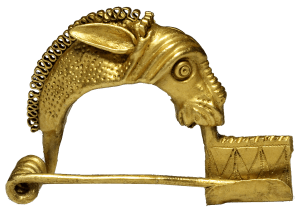
.
.
378 AD — The Battle of Adrianople
On 9 August 378 AD, at Adrianople in Thrace, the Visigoth cavalry annihilated a Roman army. The Emperor Valens was killed — his body never recovered. Two-thirds of the Roman force died on the field. It was the worst defeat the Roman military had suffered since Cannae, six hundred years before, and unlike Cannae, it was not followed by recovery.
Adrianople announced something the empire was not ready to hear: that the barbarians had learned how to beat Rome. The psychological effect was as significant as the military one. The border of the empire, which had always been a line Rome drew and others respected, was now a line that could be crossed.
.
.
455 AD — The Vandals Sack Rome, Again
The assassination of Emperor Valentinian III, and the invalidation of a royal marriage treaty, triggered the second sack of Rome. The Vandals, under their king Gaiseric, entered Rome on 2 June 455 AD, and spent fourteen days in systematic looting. However, they were, by the standards of ancient sacking, relatively restrained — there was very little killing. Regardless, the Vandals stripped the city of immense wealth and abducted imperial hostages, permanently cementing their reputation for destruction, and the thoroughness of their plunder gave the language a word it has never lost, vandal. Ironically, Empress Eudoxia had invited them in. The details of that invitation are among the stranger episodes of the late empire.

.
.
 Gaiseric c. 389–477 AD
Gaiseric, The Corsair King
He was a ruthlessly brilliant Vandal leader who conquered North Africa, built a pirate empire, and systematically liquidated the city of Rome’s wealth in 455 AD. Then he outlived the Western Roman Empire itself. Undefeated!
Gaiseric was known as, ‘The Architect of Rome’s Doom.’ Gaiseric was an, unlikely Giant. He was not a towering, golden-haired warrior. He was short, walked with a severe limp (fell off his horse), spoke very little, and deeply despised luxury. Yet, he possessed a cold, calculating administrative genius that outmatched every Roman emperor he faced.
The Great Migration (429 AD)
He realized his people, the Vandals, were trapped in Spain by rival tribes. He pulled off a logistical miracle, ferrying 80,000 men, women, and children across the Straits of Gibraltar into North Africa using a patchwork fleet.
The Stranglehold on Rome
Gaiseric marched across Africa and captured Carthage. He didn’t burn it, instead he used its massive shipyards to build a formidable Vandal Navy. By capturing North Africa, he seized Rome’s primary grain supply. He could literally starve the city of Rome whenever he wanted by blocking the shipping lanes.
The 455 Masterstroke
When the Western Roman Emperor broke a marriage treaty, Gaiseric sailed his fleet straight up the Tiber River. Thanks to his deal with Pope Leo I, he stripped the city of its centuries-old wealth with corporate efficiency over 14 days, without burning a single church.
The Undefeated King
The Eastern and Western Roman Empires once spent a staggering fortune to launch a combined fleet of over 1,100 ships to destroy him. Gaiseric outsmarted them using “fire-ships”—sending burning, unmanned vessels drifting into the packed Roman fleet, completely annihilating their navy.
He died peacefully in his bed at Carthage in 477 AD, undefeated.
.
Gaiseric c. 389–477 AD
Title: King of the Vandals and Alans; The Corsair King; Architect of Rome’s Doom.
Born: c. 389 AD — Pannonia (modern Hungary).
Died: January 25, 477 AD — Carthage, North Africa.
Parents: Father — King Godigisel. Mother — Unknown.
Siblings: Half-brother, King Gunderic — Germanic tribe originally located near the Oder River. 379-428. Helped his Brother Gaiseric. Ruled Hasding Vandals from 407 to 418. United Vandals and Alans until his death in 428.
Ethnicity: Germanic (Vandal – Hasdingi clan).
Wives & Consorts: Name unrecorded, she was a Visigothic princess. She was later mutilated and exiled.
Children: Huneric & Theodoric.
Successor: Huneric
Faith: Arian Christianity
Key Act & Achevements: Ferried 80,000 people across Gibraltar to found the Vandal Kingdom of North Africa (429 AD). seized Rome’s grain supply at Carthage; built a dominant Mediterranean pirate navy; engineered the total destruction of a 1,100-ship Roman armada using fire-ships. Established Vandal kingdom in North Africa. Sacked Rome in 455 AD. Executed a systematic, non-violent 14-day liquidation of Rome’s imperial treasures in 455 AD by cutting a deal with Pope Leo I. Ruthlessly purged his own Vandal nobility to protect his lineage. Outlived the Western Roman Empire entirely.
Legacy: The premier geopolitical catalyst of Rome’s collapse. One of the most capable military and political minds of the fifth century. He held North Africa for nearly fifty years and made the Vandal kingdom a Mediterranean power. His highly organized, calculated looting permanently transformed his tribal name into a lasting common noun—vandalism. Vandal become the name used as a common noun – vandalism. That is a particular kind of immortality. He proved that whoever controlled the Mediterranean shipping lanes controlled the fate of the Western world.
Memorable Quotes: He spoke very little and despised luxury, preferring his iron sword to a silver goblet.
Cogitatio: Gaiseric built a kingdom in North Africa that lasted longer than the Western Roman Empire itself. He was cunning, patient, and ruthless — and almost entirely unknown to general audiences. Yet, he was the principal catalyst in the collapse of the Western Roman Empire. What was left of Rome he brought down. Gaiseric was the ultimate pragmatist of the migration era. While other kings chased empty Roman military titles, or died in glory on the battlefield, he quietly seized Rome’s breadbasket, built a navy out of nothing, and economically suffocated an empire from across the sea. He didn’t want to destroy Roman civilization; he wanted to handle its bankruptcy. note: The Empress Eudoxia’s role in the 455 sack deserves investigation — a fascinating episode of late Roman court politics.
.
.
.
.
 The Rise of the Skull Knight
The Golden Exile – In the shadowed twilight of the Western Roman Empire, when the old world cracked under the weight of invasion and faith, there arose a leader among the Vandals and Alans who would be remembered as both savior and scourge. His name was Gaiseric—called Gia by those closest to him—and he led his people not as a mere warlord, but as a hero forged in exodus.
Driven from their lands by pressure from the Huns and Roman intrigue, Gaiseric guided 80,000 souls—warriors, families, and the faithful—across the Strait of Gibraltar into North Africa in 429 AD. It was a perilous migration, harried by elements and imperial forces, yet under his command they carved a new home from the rich provinces of Roman Africa. Where others saw only conquest, Gaiseric envisioned refuge and rebirth. He brought his people to safety, securing Carthage as their capital and establishing a kingdom that would dominate the western Mediterranean for generations.
At his side through every trial stood Weisheit, his sworn companion and brother-in-arms. They were closer than blood—two souls bound like Gilgamesh and Enkidu, legendary companions who together dared to claim kingship in a hostile world. Weisheit, a high-ranking Millenarius (a commander of thousands), was a master builder and strategist whose vision complemented Gaiseric’s unyielding will. Together they had walked the paths of the Mystery Schools, delving into Arian truths and Gnostic insights that rejected the rigid hierarchies of the emerging Catholic orthodoxy. Both men saw the Trinity as a corruption, a veil drawn over the pure light of the divine. They viewed the Catholic Church’s bishops and emperors as hypocrites—preaching mercy while wielding earthly power like tyrants. This shared conviction forged their bond in fire: they would build a realm guided by wisdom (Weisheit), not Roman dogma.
In the early years of their exile, a Golden Era dawned in Vandal Africa. Weisheit oversaw the raising of aqueducts, fortifications, and grand halls that blended Roman engineering with the hardy spirit of their people. Granaries overflowed. Trade flourished across the sea. The faithful practiced their Arian Christianity openly, free from persecution, while whispers of deeper Gnostic mysteries circulated among the initiated. Gaiseric ruled with purpose, not yet consumed by luxury. He was no decadent emperor lounging in silk; he remained a man of the saddle and the council fire, though self-righteous fire burned in his eyes. “We were chased like dogs,” he would say, “yet God—or the true Light—delivered us. Now let the hypocrites tremble.” But the world does not let golden ages endure unchallenged. Old wounds festered. Gaiseric had fallen from his horse years earlier during the North African campaigns, shattering his leg. He walked with a limp thereafter, a constant reminder of frailty amid his strength. The injury did not break him outwardly, but it deepened a bitterness that Weisheit alone could soothe—for a time.
As Roman treachery mounted—broken treaties, threats to their hard-won haven—Gaiseric’s anger hardened into arrogance. He seized control of the grain shipments, the lifeblood of Rome’s starving cities. “Let them feel the hunger we knew in exile,” he declared. His people ate while the empire’s belly ached. It was calculated, self-righteous vengeance. Weisheit counseled restraint, reminding his friend of the higher wisdom they had studied in the Mystery Schools, but Gaiseric’s edge grew sharper.
The breaking point came at sea. A massive Roman fleet gathered to crush the Vandal kingdom once and for all. Under cover of night, Gaiseric ordered his ships—laden with pitch and flame—to be set ablaze and sent drifting into the crowded Roman galleys at Cape Bon. The wind-whipped inferno devoured the imperial navy in a cataclysm of fire and panic. Vandal warriors followed, ramming and boarding amid the smoke. It was a legendary victory, securing their naval dominance. Yet it was also the moment something in Gaiseric twisted. His face, once noble and resolute, took on a harsher cast. He grew “uglier” in spirit—more isolated, more convinced of his own righteousness, quicker to see enemies even among allies.
Weisheit watched with growing sorrow. The brother who had led 80,000 to safety, who had built a golden realm alongside him, was changing. The boats burned, the Romans scattered—and with the flames, the first true fracture appeared in their unbreakable bond. Weisheit, ever the voice of wisdom, began to question whether the path of vengeance would consume the light they once sought to protect.
Little did either man know how far that fracture would lead: betrayal, downfall, an empire’s collapse into branded ruin, and a transformation that would bind Gaiseric’s soul to armor and eternal war against the darkness he helped invite.
.
.
461 – 476 AD — Romulus Augustulus
Flavius Romulus Augustus — called Augustulus, ‘little Augustus,’ a diminutive that history has never allowed him to escape — was the last Emperor of the Western Roman Empire. He was approximately fifteen years old when his father Orestes placed him on the throne in 475 AD. He ruled for ten months.
In September 476 AD, the Germanic general Odoacer — commander of the troops that Orestes had been unable to pay — deposed him. There was no great battle. Romulus was sent into comfortable exile in Campania, where he apparently lived out his days in a seaside villa. Odoacer sent the imperial insignia to Constantinople and informed the Eastern Emperor Zeno that the West no longer required an emperor. Zeno accepted the message, retained the insignia, and the Western Roman Empire ceased to exist. He bore the names of Rome’s founder and her first emperor and wielded none of their power. History is rarely so pointed in its ironies.
.
Romulus Augustulus c. 461–after 476 AD
TITLE: Last Western Roman Emperor
PRIMARY OCCUPATION: Monarch (Puppet Emperor)
FULL NAME: Flavius Romulus Augustus
BIRTH: c. 460 – Western Roman Empire
DEATH: As Emperor: 476 – as human, possibly c. 507 – Campania, Italy.
PARENTS: Orestes (father, placed him on the throne), mother unknown.
SIBLINGS: Unknown.
SPOUSES: None recorded
CHILDREN IN WEDLOCK: None recorded.
OUT OF WEDLOCK: None recorded.
EDUCATION: Roman traditional.
PHILOSOPHY/RELIGION: Roman Paganism transitioning to Christianity.
ACCOMPLISHMENTS: Last nominal emperor of the The Western Roman Empire; his deposition marks the traditional end of ancient Rome.
AFFILIATIONS: Western Roman Empire.
YEARS OF RULE OR VOCATION: 475–476
NAME OF SUCCESSOR: None. Deposed: Odoacer, Germanic general. Western Empire ended; Eastern Roman Emperor Zeno nominally ruled.
WORKS/BOOKS: None known.
SYMBOL/EMBLEM: Imperial Roman insignia.
CONTEMPORARIES/RIVALS: Odoacer & Emperor Zeno.
INFLUENCE: None documented.
Legacy: Symbol of the fall of the Western Roman Empire and beginning of the Middle Ages. He was a teenager, a puppet, and banished to exile. He gave his name at the end of an age he was too young to understand. It is said he helped to fund a monastery dedicated to Saint Severinus of Noricum during the 480s or 490s.
Memorable Quotes: “He bore the name of Rome’s founder and her first emperor — and wielded none of their power.” -Edward Gibbon, 1788
Cogitatio: Romulus Augustulus was fifteen years old when he became the last emperor of Rome. He did nothing to earn the throne and nothing to defend it. However, he was a boy at the center of a collapsing world. He was sent into exile by the new king, Flavius Odoacer. His home was now in southern Italy, Castellum Lucullanum, with a 6,000 solidi [gold] pension. His remaining days were with his relatives, while history moved on without him as he faded into historical obscurity.

.
.
The Prophecy and the Blade
In the rugged hills of Noricum, where the wind carried the bite of the Alps and the distant scent of Roman decay, a towering young barbarian trudged along a muddy track. Odoacer, son of Edeko, was little more than a mercenary then—broad-shouldered, clad in rough animal hides stitched crudely together, his sword notched from petty skirmishes. Hunger gnawed at him, and ambition burned hotter than any fire he had known.
Word had reached the camps of a holy man, a Christian hermit named Severinus, who dwelt in a humble cell and spoke truths that cut deeper than iron. Odoacer found the saint’s dwelling: a low, stone shelter barely tall enough for a child. He ducked inside, forced to bow his head so low that his tangled hair brushed the ceiling. The hermit, frail yet piercing-eyed, studied the giant before him. “You bend your neck even here, in this poor house…” Severinus said softly. “Go to Italy, go—though now clad in wretched hides. Soon you shall bestow rich gifts upon many. ”The words lingered in Odoacer’s mind like a brand as he continued south. Italy. The dying heart of the Western Empire.
Years of war forged him. He rose through the ranks of the foederati, the barbarian allies who now propped up what remained of Roman power. In 476, the boy-emperor Romulus Augustulus—little more than a puppet adorned with purple silk—sat uneasily on the throne in Ravenna. His father, the patrician Orestes, had promised the barbarian troops land and gold, but he could not deliver.
Odoacer’s army marched on the city. He defeated Romulus’s father Orestes, army, the real power behind the throne, in a battle near Placentia/Piacenza. Orestes was captured and executed on August 28, 476. A few days later, on September 4, Odoacer captured Ravenna.
Resistance crumbled. When the young emperor was brought before him, trembling in his imperial robes, Odoacer felt no hatred—only weary contempt for the hollow theater of Rome. “You are no Caesar,” he told the boy. “You are a child playing at the gods while the world burns.” He forced the young Romulus to abdicate. Odoacer saw he was a pusio (young lad). He showed mercy. Romulus Augustulus was spared death, but stripped him of power. Odoacer sent him into quiet exile with his family.
The Western Empire, already a ghost, received its quiet burial. Rather than crown himself emperor, Odoacer turned to the Senate. “There is no need of a separate empire,” the envoys declared to Emperor Zeno in distant Constantinople, carrying the Western imperial robes and crown. “A single emperor is sufficient for both ends of the earth. We have chosen Odoacer, a man of military and political experience, to preserve our affairs.” Odoacer became King of Italy.
Not Augustus, not Caesar—just Rex. He ruled with pragmatic brutality and unexpected respect for Roman forms. He repaired aqueducts, minted coins, patronized churches, and kept the Senate’s hollow dignities alive. For seventeen years the West had a strong hand at the helm, even if that hand belonged to a barbarian who still remembered the sting of Severinus’s low doorway.
But power in Italy drew wolves. Theodoric the Great, king of the Ostrogoths, marched south at the bidding of Constantinople. Years of war followed. Cities bled. At last, after a grinding three-year siege of Ravenna, hunger and exhaustion forced terms. The two kings would share rule. A grand reconciliation banquet was proclaimed to seal the peace. The hall glittered with torchlight and looted silver. Musicians played. Toasts were raised. Odoacer, older now, his hair streaked with grey but his frame still imposing, took his seat beside his rival.
Theodoric rose smiling, as if to offer a brotherly embrace. Instead, he drew his broadsword in one fluid motion and drove it downward with terrible force. The blade sheared through Odoacer from collarbone to waist. Blood sprayed across the feasting table. For a heartbeat, Odoacer stared in shock, his mouth working silently, before collapsing in two halves. Theodoric stood over the ruin, breathing hard. He looked almost astonished at how easily the steel had passed through flesh and bone. A harsh laugh escaped him. “The wretched man had no bones in his body!”
The hall fell deathly silent. The prophecy of Saint Severinus had come true in full and terrible measure. The man who once bowed his head in a hermit’s cell had bestowed rich gifts upon many—lands, titles, safety—and in the end had been cut down by treachery in the very Italy he had claimed.
Outside Ravenna’s walls, the wind whispered over the marshes as it had for centuries. Empires rose and fell, but the game of power remained the same: prophecy, conquest, betrayal, and the final silence of the blade.

.
476 AD — Odoacer
Flavius Odoacer — Odovacer in older sources — was a Germanic general of uncertain origin who commanded the mixed barbarian troops that had formed the backbone of the Western Roman military in the 5th century, its final decades. When his men were denied the land grants they had been promised, he led them in revolt, deposed the boy-emperor, and declared himself King of Italy. He then governed with considerable competence, preserving Roman administrative structures, respecting the Senate, and maintaining the legal framework his predecessors had built.
He ruled Italy for seventeen years. Then in 493 AD he was killed by Theodoric the Great’s own hand, following a treaty he never intended to honor. This is the story of the Germanic Odoacer, a man between a Roman General and Barbarian King.
.
.
 Odoacer 433–493 AD
TITLE: King of Italy (Rex Italiae) / Patrician of the Roman Empire.
PRIMARY OCCUPATION: Germanic Barbarian warlord, Roman military officer (magister militum), and ruler of Italy.
FULL NAME: Flavius Odoacer (also spelled Odovacer).
BIRTH: c. 433 AD in the Danubian region (modern-day Central Europe).
DEATH: March 15, 493 AD in Ravenna, Italy (assassinated by Theodoric the Great).
ETHNISITY: Scirian, Hunnic, or Germanic mix (all disputed).
PARENTS: Father: Edeko (a prominent chieftain, likely Scirian or Hunnic, who served Attila the Hun). Mother – Unknown.
SIBLINGS: Onoulphus (a general who served the Eastern Roman Empire and later joined Odoacer).
SPOUSES: Sunigilda.
CHILDREN IN WEDLOCK: Thela (appointed Caesar near the end of Odoacer’s reign).
OUT OF WEDLOCK: None recorded in historical texts.
EDUCATION: Raised in the tribal cultures of the Danube; primarily educated in Germanic warrior traditions, military tactics, and Roman military protocol through his service in the imperial army.
INFLUENCE: He proved that Italy could be governed autonomously by a non-Roman ruler using existing Roman administrative structures. His reign set the political template for future medieval European barbarian kingdoms.
PHILOSOPHY/RELIGION: Arian Christianity (the common denomination among contemporary Germanic tribes, though he practiced high religious tolerance toward mainstream Orthodox/Nicene Christians in Italy).
ACCOMPLISHMENTS: Deposed Romulus Augustulus, effectively ending the Western Roman Empire. Refused to appoint a puppet emperor, instead choosing to rule Italy directly. Restored administrative order, recovered Sicily from the Vandals, and successfully stabilized Italy’s economy and senate for over a decade.
KEY ACTS: Deposed Romulus Augustulus in 476; sent the imperial insignia to Constantinople; ruled Italy as king without the title of emperor
AFFILIATIONS: The Scirian/Rugian tri.bes, the Roman Imperial Foederati (barbarian mercenary troops), the Roman Senate, and the Eastern Roman Emperor Zeno (initially).
YEARS OF RULE OR VOCATION: 476–493 AD (17 years)
NAME OF SUCCESSOR: Theodoric the Great (King of the Ostrogoths)
WORKS/BOOKS: None (he was a military ruler, not an author or scholar).
SYMBOL/EMBLEM: The Solidus and Nummus coins minted during his reign featuring his profile—notably depicting him with a mustache and long hair rather than the traditional clean-shaven look of Roman emperors.
CONTEMPORARIES/RIVALS: Romulus Augustulus — The last Western Roman Emperor. Orestes – Roman general and Romulus’s father. Emperor Zeno — the Eastern Roman Emperor, who tolerated, then betrayed him. Theodoric the Great — His ultimate rival and conqueror.
MEMORABLE QUOTES: When Odoacer forced the child-emperor Romulus Augustulus to abdicate in 476 AD, he chose not to take the imperial title. Instead, he forced the Roman Senate to send an official embassy to Eastern Emperor Zeno in Constantinople. The envoys delivered the Western Imperial robes and crown along with this historic declaration, which serves as the ultimate quote defining Odoacer’s political shift:
“There is no need of a separate empire; a single emperor is sufficient for both ends of the earth. We have chosen Odoacer, a man of military and political experience, to preserve our affairs.”— The Roman Senatorial Embassy to Emperor Zeno (476 AD)
Legacy: Odoacer is remembered as the historical “bridge” between antiquity and the Middle Ages. By sending the Western imperial insignia back to Constantinople, he officially closed the chapter on the Western Roman Empire. Rather than destroying Roman culture, his reign preserved it by cooperating closely with the Roman Senate and maintaining Roman law. Governed Italy more competently than many of his Roman predecessors. Preserved the administrative machinery of Rome. Was killed by the man who succeeded him.
Cogitatio: Odoacer’s rule represents a fascinating paradox: he is famous for destroying the Western Roman Empire, yet he spent his entire reign trying to preserve its administrative machinery.
First King of Italy after Rome. Before Odoacer became king, he was a poor barbarian soldier traveling through Noricum (modern Austria).
Odoacer ended the Western Roman Empire not with a war but with a letter to Constantinople. He did not see himself as the destroyer of Rome, but rather as its savior from internal chaos.
Odoacer stopped to see the Christian hermit Saint Severinus. Because Odoacer was so remarkably tall, he had to bow his head just to stand in the saint’s low-ceilinged cell. Looking at the youth dressed in poor animal skins, Severinus famously prophesied: “Go to Italy, go, though now clad in wretched hides; soon you shall bestow rich gifts upon many.” — Saint Severinus of Noricum (c. 470 AD)
Odoacer was, in many ways, more Roman than the Romans he replaced. His tragic end—tricked and murdered at a “peace banquet” by Theodoric on the same day as the death of Julius Caesar over 500 years before, highlights the brutality and shifting alliances that defined the dawn of the dark ages.
His malicious end was set in motion by the Bosporus. The Eastern Roman Emperor Zeno, eager to punish Odoacer for backing rebellions and desperate to redirect Theodoric’s threatening Ostrogoths away from Constantinople, officially endorsed the invasion of Italy. Zeno effectively used Theodoric as an imperial proxy to reclaim the West, promising him rule over Italy until the Emperor himself could arrive. Ironically, Zeno died before the war ended.
After a three-year siege of Ravenna, Odoacer agreed to a peace treaty, to co-rule Italy with his rival, Theodoric the Great. To celebrate, Theodoric invited Odoacer to a massive “reconciliation banquet.” As Odoacer sat down, Theodoric stepped forward and sliced him in half with a broadsword from his collarbone to his loins, whilst his soldiers massacred Odoacer’s loyalists and family members. Stunned by how effortlessly his blade cut through his rival, Theodoric mockingly exclaimed, “The wretched man had no bones in his body!” — Theodoric the Great (15th March 493 AD).
Odoacer was the first barbarian king of Italy. He ruled for 17 years in near peace. His brutal death marked the definitive transition from Roman to Gothic sovereignty.
.
.
.
.
.
.
III Rome Leadership: East & West
The Eastern Roman Emperors (Constantinople)
This is the side of the empire that successfully survived the Barbarians, eventually transitioning into the standalone Byzantine Empire.
- Theodosius I “The Great” (379–395 AD) — The Temple Destroyer: Appointed after Valens died; he made Nicene Christianity the sole state religion, banned the Olympic games, and was the last man to rule a unified East and West.
- Arcadius (395–408 AD) — The Closet Emperor: Son of Theodosius who inherited the East; a weak, easily manipulated ruler who spent his reign dominated by his wife, Eudoxia, and court politicians.
- Theodosius II (408–450 AD) — The Wall Builder: Famously constructed the legendary, impregnable Theodosian Walls that protected Constantinople from the Huns for 1,000 years.
- Marcian (450–457 AD) — The Defiant: Refused to pay further financial tribute to Attila the Hun; he called the Council of Chalcedon to stabilize Church theology.
- Leo I “The Great” (457–474 AD) — The Kingmaker: First emperor to be crowned by the Patriarch of Constantinople; he systematically purged Germanic influence from the Eastern military.
- Leo II (474 AD) — The Child: Grandson of Leo I; ruled for only ten months as a child before dying of an illness. ]
- Zeno (474–491 AD) — The Last Anchor: Father of Leo II; he survived multiple internal coups and was the Eastern Emperor who officially accepted the total fall of the Western court.
.
.
The Western Roman Emperors (Rome / Ravenna)
This is the tragic side of the timeline—the emperors who watched the empire rot from within and get aggressively chipped away by the Barbarians until the West ceased to exist.
- Gratian (367–383 AD) — The Pagan Cleanser: Co-ruled with Valens; he famously refused the traditional pagan title of Pontifex Maximus and removed the Altar of Victory from the Roman Senate.
- Valentinian II (375–392 AD) — The Puppet Child: Crowned as a 4-year-old child; spent his entire life caught in power struggles between barbarian generals and usurpers before being found hanged in his palace.
- Honorius (395–423 AD) — The Chicken Keeper: Son of Theodosius I; a spectacularly incompetent ruler who panicked and moved the capital to Ravenna, leaving the Visigoths to sack the city of Rome in 410 AD.
- Valentinian III (425–455 AD) — The Jealous Executioner: Reigned during the height of the Hunnic invasions; he foolishly assassinated his own brilliant general, Flavius Aetius (the man who beat Attila), destroying the West’s last competent defender.
- The Puppet Finale (455–476 AD) — During these final 21 years, a rapid succession of short-lived rulers sat on a dying throne. Most were assassinated or placed into office by barbarian warlords:
- Petronius Maximus (455 AD) — Ruled 75 days; stoned to death by an angry mob while trying to flee a Vandal invasion.
- Avitus (455–456 AD) — A Gallic-Roman aristocrat deposed by the military and forced to become a bishop.
- Majorian (457–461 AD) — The Last Hero: The final Western emperor to launch a fierce military counter-offensive to reclaim lost provinces; tortured and executed by his own barbarian general, Ricimer.
- Libius Severus (461–465 AD) — A literal puppet ruler who signed whatever documents Ricimer handed him.
- Anthemius (467–472 AD) — Sent by the East to save the West; failed to stop the Vandals and was executed.
- Olybrius (472 AD) — Placed on the throne during a civil war; died of dropsy after seven months.
- Glycerius (473–474 AD) — Another short-lived placeholder; abdicated and was forced into the priesthood.
- Julius Nepos (474–475 AD) — The last legally recognized Western emperor; fled to Dalmatia where he ruled in exile until 480 AD.
- Romulus Augustulus (475–476 AD) — The End: A teenager placed on the throne by his rebellious father; he was quietly deposed by the Germanic chieftain Odoacer, officially ending the Western Roman Empire.
.
.
.
.
476 The End Of Roman Empire
.
.
.SECTION VI
FALL OF ROME – BARBARIAN KINGDOMS & THE DARK AGES
(395 AD — 476 AD)
c. 476 – 600 AD
The word ‘barbarian’ is Roman. It comes from the Greek barbaros — a word that mimicked the sound of foreign speech, the ‘bar-bar’ of those who did not speak Greek. It was a term of contempt that became, in time, a term of analysis, and eventually a term of nostalgia. The peoples Rome called barbarians were not savages. They were farmers, craftsmen, warriors, traders, and poets who had lived alongside the empire for centuries, fighting for it and against it, absorbing its culture and transforming it, inheriting its ruins and building something new.
The Dark Ages were dark primarily from Rome’s point of view — from the perspective of a civilization that had lost the habit of writing things down in Latin and distributing them along maintained roads. Looked at from other angles, the fifth and sixth centuries were intensely creative: new kingdoms forming, new identities emerging, new syntheses of Roman, Germanic, and Christian culture taking shape that would eventually produce what we call Europe.
c. 454 – 526 AD — Theodoric the Great
King of the Ostrogoths and ruler of Italy, Theodoric is one of the most remarkable figures of the post-Roman world. He had been sent hostage as a child to Constantinople, where he spent ten years being educated in the Roman manner — learning its language, its law, its culture — before returning to lead his people. He defeated Odoacer in 493, took Italy, and proceeded to govern it with a sophistication that astonished his contemporaries on both sides.
He preserved Roman law. He kept the Senate. He employed Romans in the highest administrative positions — including Boethius and Cassiodorus, two of the most consequential scholars of the age. He built churches and mausoleums in Ravenna whose mosaics still survive. His reign was, by the standards of any era, a model of what good governance looks like when it is not afraid of the culture it has inherited. He also, late in life, had Boethius executed on charges of treason. The shadow that act cast over his legacy has never entirely lifted, and perhaps it should not.
.
 Theodoric the Great — 454 – 526 AD
TITLE: King of the Ostrogoths. Ruler of Italy. Patrician of the Roman Empire.
VOCATION: Sovereign Monarch and Military Commander
FULL NAME: Flavius Theodoricus
PRIMARY OCCUPATION: Warrior-King; Administrator.
BIRTH: c. 454 – Pannonia (Hungary/Austria) it is said he was a bastard child.
DEATH: 526 – 30 August, Ravenna, Italy.
PARENTS: Father, Ostrogothic King Theodemir. Mother, Ereleuva
SIBLINGS: Sister, Amalafrida.
ETHNICITY: Gothic — Amali Dynasty.
PHILOSOPHY/RELIGION: Arian Christianity.
SPOUSES: SPOUSES: Audofleda — Sister of Clovis I, King of the Franks.
CHILDREN IN WEDLOCK: Amalasuntha, Theodegotha, Ostrogotho.
OUT OF WEDLOCK: None recorded.
EDUCATION: Hostage in Constantinople 10 years, educated in Roman tradition. He received an elite Byzantine education in statecraft, diplomacy, and Roman law. Tribal Traditions, Military & Gothic Ostrogothic .
ACCOMPLISHMENTS: Reunified Italy after the fall of Rome. Preserved Roman culture and law. Built monuments in Ravenna.
AFFILIATIONS: Ostrogothic Kingdom of Italy.
YEARS OF RULE OR VOCATION: 493–526.
KEY ACTS: Defeated Odoacer (493). Established the prosperous Ostrogothic Kingdom of Italy, successfully maintaining a peaceful, dual system of Roman law for citizens and Gothic military rule for his soldiers. Preserved Roman law and The Senate. He patronized Boethius the philosopher, and Cassiodorus the Christian writer. Built monuments in Ravenna. He had Boethius executed for treason. Unfortunately, this act defined how history has remembered him.
NAME OF SUCCESSOR: Athalaric (grandson, through Amalasuntha).
WORKS/BOOKS: None known.
SYMBOL/EMBLEM: Gothic insignia; Ravenna mosaics.
CONTEMPORARIES/RIVALS: Emperor Justinian I, Odoacer, Emperor Anastasius I.
LEGACY/INFLUENCE: Theodoric — wields the sword to build a kingdom defending it. He was a barbarian king who loved what Rome had built, and he maintained Roman traditions throughout Italy. Thus, he stabilized post-Roman order and preserved more of it than all of Rome’s emperors had since Nero. He celebrated the Germanic legend of Dietrich von Bern. He proved that a barbarian monarch could successfully preserve classical Roman administrative structures, serving as the definitive bridge between antiquity and the early Middle Ages. He was the bridge. However, he stained his legacy as he slowly became paranoid, thus executing brilliant Roman philosopher Boethius on disputed charges.
MEMORABLE QUOTE: “Nothing in the world is more honorable than loyalty.” –Theodoric
“The poor Roman imitates the Goth, and the rich Goth imitates the Roman.” – Theodoric
COGITATIO: Theodoric spent his childhood as a hostage in Constantinople learning to be Roman, then spent his life ruling Italy as a Goth. He loved Roman culture, employed Roman scholars, and then killed one of them. His tomb in Ravenna is still standing. Teodorico the Great. The ultimate executioner. He took the abstract, cosmic spiritual impulse of Northern Arianism and wielded the sword to build what was to become a functional European imperium power out of Ravenna. He successfully proved that Goths and Romans could coexist under state neutrality. He was a controversial leader.
THEODORIC THE GOTH – THE BARBARIAN CHAMPION OF CIVILISATION – BY THOMAS HODGKIN
.
.
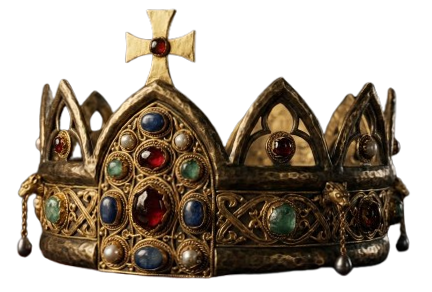 The Paradox of the Gothic King
Theodoric spent 30 years trying to outrun the ghost of the Odoacer banquet. He spent millions rebuilding Roman aqueducts, protecting Catholic churches, funding the Senate, and fostering philosophers like Boethius. He wanted history to remember him as a wise, classical emperor.
But that hidden “evil” never truly left him. When he grew old, paranoid, and fearful that his empire was slipping away, the exact same ruthless warlord who chopped Odoacer in half at a dinner table re-emerged—and this time, his target was the Philosopher and Senator Boethius.
Theodoric’s legacy is a tragic lesson. You cannot build a truly civilized golden age when the foundation of your throne is anchored in a slaughterhouse.
Byzantine court in Constantinople reacted to the brutal news of the Barbarian King, Odoacer’s assassination with calculated silence, hidden relief, and cold diplomatic strategy. Rather than expressing moral outrage over the betrayal, Emperor Anastasius I used the power vacuum to resolve a massive geopolitical problem for the Eastern Empire. Keeping the Goths from the West pacified he could crush the Isaurian Rebellion in the East.
On the matter of brutal execution of Boethius and his aged father-in-law, Symmachus, the imperial court in Constantinople reacted to the news with outrage, diplomatic hostility, and a definitive pivot toward military invasion.
It is believed this is where Theodoric’s paranoia, begins.
Heavy is the head… This is where it starts.
The dark legend of Theodoric’s own agonizing death, which many at the time claimed was divine punishment for murdering Boethius, falls into a number of ends.
Death – The Alternative Legends
The Ghostly Fish – few days before his death, a large fish was served to Theodoric at a palace dinner. As the King looked down at the platter, his mind fractured. The scales, gills, and jaw of the fish morphed into the furious, staring face of Symmachus; Boethius father-in-law. Terrified and shivering from a sudden fever, Theodoric ran to his bedchamber, wept bitterly to his physician about his crimes against Boethius and Symmachus, and died of overwhelming guilt..
The Demon – – While riding on horseback he was kidnapped by a demon who took possession of his horse, dragging him along with the horse into the crater of a volcano.
Regardless of his certain death history made sure that the man who broke his word to Boethius never found peace in his memory.
.
.
.

.
.
.
c. 480 – 524 AD — Boethius
Anicius Manlius Severinus Boethius was a Roman philosopher, senator, and translator who served under Theodoric, and who was accused of treason — the charges were almost certainly false — imprisoned, and executed in 524 AD. While awaiting death in his cell at Pavia, he wrote The Consolation of Philosophy: a dialogue between himself and the figure of Lady Philosophy, in which he examined the nature of fortune, the good, and what a man might hold onto when everything else has been taken from him.
It became one of the most widely read books of the entire Middle Ages. Alfred the Great translated it into Old English. Chaucer translated it. Dante references it. It was copied in every scriptorium in Europe for a thousand years. A man writing in a prison cell, awaiting an execution he knew was coming, produced a work that outlasted the empire he served, the king who condemned him, and the civilization that collapsed around him.
“Nothing is miserable unless you think it so; and on the other hand, nothing brings happiness unless you are content with it.” — Boethius
 Boethius c. 480–524 AD
NAME: Anicius Manlius Severinus Boethius.
TITLE: Philosopher, Translator & Roman Senator.
PRIMARY OCCUPATION: Philosopher, Theologian, Translator.
BIRTH: c. 480 – Rome, Italy.
DEATH: c. 524 – Pavia, Italy – executed.
PARENTS: Manlius Boethius – father. Mother – unknown.
SIBLINGS: Unknown.
SPOUSES: Rusticiana – daughter of the Senator Symmachus.
CHILDREN IN WEDLOCK: Two sons – both became Roman Consuls
OUT OF WEDLOCK: None recorded
PHILOSOPHY/RELIGION: Christian & Neoplatonism
EDUCATION: Classical Roman education; studied philosophy and rhetoric. Spoke both Greek and Latin, self taught.
ACCOMPLISHMENTS: Author of The Consolation of Philosophy; translated Aristotle’s works into Latin; bridged classical and medieval philosophy.
AFFILIATIONS: Roman Senate; advisor under Ostrogothic rule
YEARS OF RULE OR VOCATION: Early 6th century
NAME OF SUCCESSOR: N/A
SYMBOL/EMBLEM: Roman senatorial insignia
CONTEMPORARIES/RIVALS: Theodoric the Great- ruler who ordered his execution.
WORKS/BOOKS: The Consolation of Philosophy – written in prison awaiting execution. There are a total of five books.
- BOOK I. THE SORROWS OF BOETHIUS.
- BOOK II. THE VANITY OF FORTUNE’S GIFTS.
- BOOK III. TRUE HAPPINESS AND FALSE.
- BOOK IV. GOOD AND ILL FORTUNE.
- BOOK V.FREE WILL AND GOD’S FOREKNOWLEDGE.
LEGACY/INFLUENCE: Influential in medieval Christian philosophy and scholasticism; regarded as a key transitional thinker. He was self taught in Greek and Latin and so proficient he spoke as if a native. He translated both Aristotle and Plato into Latin — preserving Greek philosophy for a Western world that had lost the language. His book, The Consolation was among the most copied books of the Middle Ages. He bridged the classical world and the medieval with a single prison manuscript.
MEMORABLE QUOTE: “Nothing is miserable unless you think it so.”
In regards to the wheel of fortune and virtue – “God is above all – God is good – God is the concept of goodness. The Wheel is not in your control, but Virtue is. To be at your best you must arrive at the realization that God is goodness, and you must cultivate virtue from and for that, because virtue unifies with God. Therefor cultivating virtue unifies you with God, this is what happiness is.”
On change – “Good time pass, so do the bad. Mutability is our tragedy, but is also hope. Both the worst and the best pass away.
COGITATIO: Boethius knew he was going to die. He had weeks, perhaps months. He spent them writing one of the greatest books of Western literature — a conversation with Philosophy about what matters when everything else is gone. Boethius stands as the tragic martyr of the Ostrogothic court. Awaiting a brutal execution by Theodoric, he wrote The Consolation of Philosophy in his prison cell—bridging classical Greek thought and the medieval future, proving that true sovereignty lives in the content of the soul rather than external fortune.
.

.
.
Trial and Death of the Beloved Philosophy Boethius
Introduction
The absence of court transcripts from Boethius’s trial is one of the most frustrating gaps in late antique history. King Theodoric, who had him prosecuted, bypassed the standard, open senatorial hearing, and instead used a handpicked, pocketed tribunal in Pavia. No official legal records or testimonies were ever preserved for the public.
However, we can piece together exactly how they “proved” his crime from the furious defense Boethius writes in Book 1 of The Consolation of Philosophy.
The Fabricated “Evidence” Against Boethius
To destroy a man of Boethius’s staggering reputation, his political enemies couldn’t just call him a traitor; they had to manufacture a trail of paper and religious paranoia.
-
- Forged Letters to Constantinople — Boethius explicitly states that his accusers produced forged documents bearing false signatures. These letters alleged that he was conspiring with the Eastern Roman Emperor Anastasius I to overthrow King Theodoric’s Gothic rule in Italy and restore complete Roman governance.
- The Defense of Albinus — The crisis originally triggered when another senator, Albinus, was accused of treasonous correspondence with Constantinople. Boethius, operating with pure Roman patrician honor, stood up in court and declared: “If Albinus did it, I and the whole Senate did it together.” His enemies instantly used this blanket defense as a confession of collective guilt.
- Charges of “Sacrilege” and Sorcery — Because Boethius was a master mathematician, astronomer, and builder of advanced gears, his enemies convinced the suspicious, aging King Theodoric that his calculations were actually black magic. They claimed he was using astrology and sorcery to predict or plot the king’s death.
The Arian vs. Catholic Divide
King Theodoric and his Gothic ruling class were Arian Christians, a sect that rejected the Trinity and believed Jesus was a subordinate entity to God the Father. Boethius, the Senate, and the Eastern Emperor were Nicene (Catholic) Christians who championed Trinitarian orthodoxy.
Paranoia Over a Holy Alliance
In the years leading up to 523 AD, the religious schism between Rome and Constantinople was suddenly healed. King Theodoric became absolutely terrified that a secret alliance was forming against him, suspecting his Catholic senators were plotting a holy war with the Catholic East to purge the “heretic” Goths.
A Execution Defying Christian Mercy
Despite pretending to lead a highly civilized, civil society, Theodoric succumbed to absolute paranoia. Boethius was not given a Christian burial or an honorable statesman’s end. He was isolated, heavily tortured, and ultimately executed by having a cord twisted around his head until his skull fractured, before being beaten to death with a club.
In Book I, The Consolation of Philosophy. The reader experiences his raw human scream against this exact lack of a transcript—before Lady Philosophy forces him to look past his executioners in Book II, focusing on the eternal judge of the universe.
Theodoric’s Legacy
The Dark Mirror of King Theodoric is the ultimate historical irony. Theodoric spent thirty years building a legacy as a wise, tolerant, and grand ruler who melded Roman law with Gothic strength. Yet, by murdering Boethius and his father-in-law Symmachus, without a fair trial, he shattered his own golden image. He allowed political fear to overwrite Christian mercy, transforming himself into the exact archetype of the tyrannical monster Lady Philosophy warns against in the text.
.
.

.
.
.c. 485 – 585 AD — Cassiodorus
Where Boethius is the martyr of the Ostrogothic court, Cassiodorus is its survivor — a man who served Theodoric and his successors with equal distinction, outlived the kingdom entirely, and then, in his old age, did something that proved more consequential than all his years of government service. He founded the Vivarium monastery in Calabria and dedicated it specifically to the copying and preservation of classical texts.
The monastery as library. The monk as guardian of civilization. Cassiodorus did not invent the idea — Benedict of Nursia had already established the template for the Western monastery — but he gave it an intellectual ambition it had not previously possessed. The Vivarium was not merely a house of prayer. It was a scriptorium with a mission: to ensure that what the classical world had known would not be lost in the darkness that was visibly descending. He was approximately a hundred years old when he died. He had seen everything.
.
.

Cassiodorus 485 – 585 AD
FULL NAME: Flavius Magnus Aurelius Cassiodorus Senator.
TITLE: Roman Statesman; Scholar; Writer, Monastic Founder.
PRIMARY OCCUPATION: Politician, Writer, Monastic Founder.
BIRTH: c. 485 – Scylletium, Calabria, Italy.
DEATH: c. 585 – Vivarium monastery, Italy. HE lived to 100.
PARENTS: Unknown.
SIBLINGS: Unknown.
SPOUSES: Unknown.
CHILDREN IN WEDLOCK: Unknown.
OUT OF WEDLOCK: None known.
PHILOSOPHY/RELIGION: Christianity.
EDUCATION: Classical Roman education; law and rhetoric.
ACCOMPLISHMENTS: Served as a high-ranking official under Ostrogothic kings; founded the Vivarium monastery; preserved Roman literary tradition; promoted copying and study of classical texts.
AFFILIATIONS: Ostrogothic Kingdom; Vivarium Monastery.
YEARS OF RULE OR VOCATION: Early to mid-6th century.
NAME OF SUCCESSOR: N/A.
VOCATION: Senior minister under Theodoric and successors; later monastic founder & scholar.
KEY WORKS: Developed the thirteen marginal notae. Curriculum for monastic education; Variae — collected government correspondence
Foundation Vivarium monastery, Calabria — dedicated to copying and preserving classical texts.
BOOKS: Institutiones divinarum et saecularium literarum (Institutions of Divine and Secular Learning).
SYMBOL/EMBLEM: Roman senatorial insignia.
CONTEMPORARIES/RIVALS: Boethius, Theodoric the Great.
LEGACY: The man who turned the monastery into a library. His Vivarium model influenced every scriptorium that followed. He preserved what survived. Key figure in preserving classical knowledge during early Middle Ages; influenced medieval monastic scholarship.
MEMORABLE QUOTES: “Let nothing be preferred to the service of the soul.”
COGITATIO: Cassiodorus spent fifty years governing a barbarian kingdom in the Roman manner, and then spent fifty more years in a monastery copying books. His Vivarium was the first institution in Western history deliberately founded to preserve classical knowledge.
Thirteen Marginal Notae
I. The Core Concept — Following the execution of Boethius and the utter collapse of the Ostrogothic Kingdom, Cassiodorus abandoned politics to build Vivarium—a fortified monastery in southern Italy designed as a literal “ark” to save classical civilization from the incoming Dark Ages. To help future generations navigate massive, dense walls of Latin parchment, Cassiodorus invented a revolutionary visual tagging system. He created a precise code of shorthand symbols (notae) written directly into the margins of his manuscripts. This acted as the ancient world’s first functional search engine and index system.
II. The Thirteen Shorthand Symbols to Map Out — Scribes were ordered to drop these specific symbols into the margins to flag key subjects:
- Mc (Music): Flags deep passages analyzing the mathematical harmony of sound, acoustics, and cosmic intervals.
- Geo (Geometry): Identifies sections dealing with earth-measurement, lines, and spatial dimensions.
- RA (Arithmetic): Marks the sacred, numeric calculations of numbers.
- ✳ (Astronomy): A small, hand-drawn star used strictly to label sections exploring the cosmos, the orbits of planets, and the movements of the heavens.
- PP (Dogma/Propria): Hand-selected to flag critical, unyielding definitions of faith and orthodox theology.
- CHR (Chreston / Useful): A notation marking a highly valuable quotation or a brilliant rhetorical sentence worth memorizing.
- ID (Idioms): Used to draw a scribe’s eye to unique linguistic patterns, translations, or Greek phrases hidden in the Latin text.
Note: The remaining six symbols cover specific grammatical corrections, definitions of classical idioms, and rhetorical structures used to win legal debates.
III. The Master Key of the Ark — The story of Cassiodorus handing the original ink legend to his chief copyist, instructing him to stamp the star (✳) next to the heavens.
IV. The Language of the Margin — A tracking piece showing how these symbols survived the fires of the Lombard invasions and migrated north across the Alps.
Note: Centuries later, when Charlemagne’s scholars ride south to gather texts for the Carolingian Renaissance, they find these exact marked manuscripts. The monks in Aachen will copy Cassiodorus’s codes, using his marginal notae to quickly extract the lost science, arithmetic, and philosophy of the ancient world to build the intellectual foundation of the Holy Roman Empire.
.
.
.
The Franks — Who Were They?
The Franks were Germanic tribes who had lived along the northern edges of the Roman world — in the lower Netherlands and along the Rhine — for centuries before Rome’s fall. Many had fought in the Roman legions. As Rome faded, their power grew. The future of Europe would be written by them.
c. 437 – 481 AD — Childeric I
Childeric I was the Frankish king who fought alongside Rome in its final years — defeating the Visigoths at the Battle of Orléans and the Saxons at the Battle of Angers in 469 AD. He was, in the truest sense, a Roman ally in the last generation of the Western Empire. When he died in 481 AD, he was buried with Roman military insignia alongside Frankish grave goods — a man poised exactly between two worlds. His son would choose one of them.
.
.
Childeric I c. 437–481 AD
TITLE: King of the Salian Franks.
PRIMARY OCCUPATION: Warrior-king and tribal chieftain.
FULL NAME: Childeric I.
BIRTH: c. 437 AD.
DEATH: 481 AD Tournai (modern Belgium).
PARENTS: Merovech.
SIBLINGS: Unknown.
SPOUSES: Basina of Thuringia.
CHILDREN IN WEDLOCK: Clovis I, Audofleda, Albofleda, Lanthild.
OUT OF WEDLOCK: Several (names unrecorded).
HOUSE: Merovingian.
EDUCATION: Germanic warrior training.
ETHNICITY: Half Roman, half Frankish.
PHILOSOPHY/RELIGION: Germanic paganism.
BATTLES: Campaigns against Visigoths, Saxons, and rival Frankish tribes; alliances with Roman general Aegidius
ACCOMPLISHMENTS: Consolidated Salian Frankish power in northern Gaul; maintained relations with the Western Roman Empire; father of Clovis I.
AFFABLE OPPONENTS: Aegidius (Roman general).
YEARS OF RULE OR VOCATION: c. 457–481 AD
NAME OF SUCCESSOR: Clovis I – son.
KEY WORKS: Allied with Rome against Visigoths and Saxons in the 460s–70s Burial Discovered in 1653 in Tournai. —
BOOKS: None.
SYMBOL/EMBLEM: Golden bees (found in his tomb).
CONTEMPORARIES/RIVALS: Aegidius, Euric (Visigoths), Odoacer.
INFLUENCE: Founder of the Merovingian dynasty through his son Clovis.
LEGACY: The last Frankish king to fight for Rome. His tomb, discovered in 1653, in Tournai, revealed significant wealth and power of the early Franks. He laid the groundwork for the Frankish kingdom that became France. His son would build what Rome left behind.
MEMORABLE QUOTES: “I know your worth, and that you are very strong, and therefore I have come to live with you. For let me tell you that if I had known of any one more worthy than you in parts beyond the sea I should certainly have sought to live with him.” -Basina of Thuringia (wife)
COGIGTIO: A successful pagan warlord who preserved and expanded Frankish power during the collapse of Roman rule in Gaul. Father of Clovis I. Burial Discovered in 1653 in Tournai — Roman insignia, Frankish weapons, contained three golden bees (later used by Napoleon as imperial symbol)
.

.
.
c. 466 – 511 AD — Clovis I
The son of Childeric became the first great king of a unified France — though the word France did not yet exist, and neither did the concept of a nation in any modern sense. Clovis became leader of the Franks at fifteen years of age. He defeated the last Roman governor of Gaul at the Battle of Soissons in 486 AD, and proceeded to unite all of Gaul under Frankish rule through a combination of military genius and political ruthlessness that his contemporaries noted with a mixture of admiration and terror.
In 496 AD, at age 30, at the urging of his wife Clotilde, he converted to Catholicism — not to Arian Christianity, as most of the other Germanic kings had done, but to the Nicene faith of Rome. He was baptized on Christmas Day 508 AD at age 42. The alliance between the Frankish crown and the Roman church was sealed. The people he conquered did not rise against him. They accepted his name. The land became Frankia. In time, it became France.
.
.

.
.
Clovis I c. 466–511 AD
TITLE: King of the Franks; first King of all the Franks.
PRIMARY OCCUPATION: Conqueror and King,
FULL NAME: Clovis I (Chlodovechus)
BIRTH: c. 466 AD.
DEATH: 27 November 511 AD.
RULED: 481–511 AD.
PARENTS: Childeric I Basina of Thuringia.
SIBLINGS: Audofleda, Albofleda, Lanthild.
SPOUSES: Princess Clotilde of Burgundian. Also Saint Clotilde.
CHILDREN IN WEDLOCK: Theuderic I, Chlodomer, Childebert I, Chlothar I.
OUT OF WEDLOCK: Several.
ETHNICITY / FAITH: Half Roman, half Frankish. Converted from Germanic paganism to Catholic Christianity, 496–508 AD.
HOUSE: Merovingian
EDUCATION: Germanic warrior training with exposure to Roman customs.
INFLUENCE: Founder of the medieval French kingdom and the Merovingian dynasty’s golden age.
PHILOSOPHY/RELIGION: Converted to Catholicism c. 496 AD.
BATTLES: Battle of Soissons (486) conquest, campaigns against Burgundians and Visigoths. The Battle of Tolbiac (496), defeated the last Roman governor, converted after a victory attributed to Christian God. Battle of Vouillé (507).
ACCOMPLISHMENTS: Unified the Frankish tribes, conquered most of Gaul, converted the Franks to Catholicism, issued the Salic Law, made Paris his capital.
CONTEMPORARIES/RIVALS: Alaric II, Gundobad, Theodoric the Great, Anastasius.
YEARS OF RULE OR VOCATION: 481–511 AD.
NAME OF SUCCESSOR: Kingdom divided among his four sons: Theuderic I, Chlodomer, Childebert I, Chlothar I
KEY WORKS: Salic Law (Pactus Legis Salicae)
BOOKS: None
SYMBOL & EMBLEM: Fleur-de-lis (later symbol)
LEGACY: Considered the founder of France. His conversion to Catholicism linked the Frankish kingdom with the Roman Church and shaped the European Monarchy into the European Christian Church. Charlemagne, Father of Europe, is his direct heir in everything but blood.
Memorable Quotes: “Let me see what this Christ of yours can do.” (before Tolbiac, per Gregory of Tours)
COGITATIO: He was fifteen when he became king, by forty-five, he had created France. Clovis was a ruthless pagan warrior who became a Christian king. He converted to Christianity in the middle of a battle, promising the Christian God that if he won he would spread Christianity. He won and kept his word. He united military conquest with religious strategy. His wife Clotilde had been urging conversion for years...
.
.
Franks, Pagans and Christians
From the beginning of the Dark Ages, the Pagan religion of the Germanic tribes flourished among the Franks until the conversion of King Clovis I to Nicene Christianity (c. 500 AD). There were a good number of Frankish Christians growing at that time. However, after Clovis I, Frankish Paganism was gradually replaced by the process of Christianization. Even so, in the late 7th century there were still Pagan Communities.
.
.
.
.
.
SECTION VII — BYZANTINE — ROMAIOI — NEW ROME
c. 395 – 565 AD
They did not call themselves Byzantines. That name was given to them by later historians — taken from Byzantium, the old Greek name for Constantinople. They called themselves Romans. Romaioi. The Roman Empire, they insisted, had not fallen; it had merely moved east. A thousand years after the last Western emperor sent his crown to Constantinople, they were not entirely wrong.
The Eastern Empire preserved Roman law, Roman administration, Roman coinage, and Greek scholarship, while the West was reorganizing itself among the rubble. Its capital, Constantinople, was the largest and richest city in Christendom throughout the early medieval period — a city of four hundred thousand people, of libraries and aqueducts and gold-domed churches, at a time when Rome itself had shrunk to a town of perhaps twenty thousand huddled among ruins they could no longer maintain. It endured, this Eastern remnant, until 1453. When we speak of the preservation of the classical world, the Eastern Empire is half the story — the half that never quite broke.
.
.395 – 408 AD — The Permanent Division
When Theodosius I died in 395 AD, the empire was divided between his two sons: Arcadius in the East, Honorius in the West. This was not intended as a permanent division — such divisions had been made before and reversed. This one was not reversed. The two halves developed separately, spoke increasingly different languages (Latin in the West, Greek in the East), faced different threats, and produced different civilizations. They shared a name and an idea. Everything else diverged.
.

.
527 – 565 AD — Justinian I & 497 – 548 AD — Theodora
Flavius Petrus Sabbatius Justinianus — Justinian I — was born the son of a peasant in Dacia (modern Serbia) and rose, through the patronage of his uncle the Emperor Justin I, to become the most ambitious ruler in the history of the Eastern Empire. He dreamed of restoring the old Roman Empire in its entirety — reconquering North Africa, Italy, and part of Spain from the barbarian kingdoms — and came closer to achieving it than anyone had a right to expect.
He is inseparable from Theodora. She was the daughter of a bear-keeper at the Constantinople hippodrome, had worked as an actress and courtesan in her youth, and became, as empress, the most powerful woman in the Byzantine world — and arguably in the entire early medieval period.
The Nika Riot
Tuesday, January 13, AD 532.
When the Nika Riots threatened to overthrow the regime, and Justinian’s advisors counseled them to take flight, Theodora stopped them with a speech that has echoed through the centuries: ‘Those who have worn the crown should never survive its loss. I will never see a day when I am not saluted as Empress. If you wish to flee, Caesar, well and good — you have the money, the ships are ready. As for me, I shall stay.’ He stayed. They crushed the revolt. Thirty thousand people died in the hippodrome. Yet the empire endured.
.
Justinian I (483–565 AD)
FULL NAME: Flavius Petrus Sabbatius Justinianus – Justinian the Great
TITLE: Byzantine Emperor of the Eastern Roman Empire
PRIMARY OCCUPATION: Emperor, lawmaker, and conqueror
BIRTH: 483 AD, Dacia Mediterranean – modern Serbia & North Macedonia
DEATH: 14 November 565 AD – Constantinople.
PARENTS: Sabbatius and Vigilantia (nephew of Justin I)
SIBLINGS: Unknown
SPOUSES: Empress Theodora (c. 500–548 AD) — co-ruler in all but title
CHILDREN IN WEDLOCK: None
OUT OF WEDLOCK: None recorded
PHILOSOPHY/RELIGION: Chalcedonian Christian
EDUCATION: Well educated in law, theology, and administration
ACCOMPLISHMENTS: Rebuilt Constantinople after the Nika Riots. Constructed Hagia Sophia. Attempted to restore the Western Roman Empire.
AFFABLE OPPONENTS: Belisarius (his greatest general)
BATTLES: Reconquests of North Africa, Italy, and parts of Spain under generals Belisarius and Narses
YEARS OF RULE: 527–565 AD
NAME OF SUCCESSOR: Justin II
KEY WORKS: Codified Roman law (Corpus Juris Civilis)— Codification of Roman law (529–534). The Justinian Code. Construction of Hagia Sophia (532–537). Condemned Origen of Alexandria posthumously.
BOOKS: None personally authored
SYMBOL/EMBLEM: Hagia Sophia
CONTEMPORARIES/RIVALS: Theodora, Belisarius, Khosrow I of Persia
INFLUENCE: One of the most important rulers in Byzantine history
LEGACY: His legal code — the Corpus Juris Civilis — is the foundation of most European legal systems to this day. His reconquests did not survive him, but his law did. His building program and reconquests marked the last great attempt to restore Roman glory. The Hagia Sophia still stands.
MEMORABLE QUOTES: “Solomon, I have surpassed thee.” — on entering the completed Hagia Sophia, 537 AD.
COGITATIO: Ambitious dreamer who nearly restored the Roman Empire, but left it financially exhausted. His reign was both a high point and the beginning of Byzantium’s long transformation. Justinian was a peasant’s son who rebuilt the Roman Empire, codified its law, and built one of the greatest buildings in human history — all in one reign. His wife Theodora was a bear-keeper’s daughter who became the most powerful woman of the age. Their story together is one of the great partnerships in history.
.
The Justinian Code
The Code was a collection of laws and interpretations of the law that condensed and simplified the legal code. It was vitally important because it created new importance for religious laws, it removed old and unnecessary laws that complicated legal matters, and acted as a source by which people could argue their cases. It also served as a training tool for students who wished to join the legal system.
.
532 – 537 AD — The Hagia Sophia
The Church of Holy Wisdom — Hagia Sophia — was built in Constantinople between 532 and 537 AD, a period of five years that strains credulity even now. Justinian employed ten thousand workers and brought materials from across the empire: marble from Thessaly, porphyry from Egypt, gold from every quarter. The dome — thirty-one meters in diameter, raised on pendentives in a solution of structural engineering so elegant it had never been attempted before — seemed to its contemporaries to float in the air, suspended from heaven by a golden chain.
Procopius wrote that the light within it did not appear to enter from without but to be generated from inside. For nine hundred years, it was the largest cathedral in the world. It was then converted to a mosque, and then to a museum, and then to a mosque again. It still stands. The dome still floats.
.
.
.
.
Empress Theodora c. 500–548 AD
TITLE: Crowned Augusta of the Eastern Roman Empire; co-ruler with Justinian I.
PRIMARY OCCUPATION: Empress and political advisor.
FULL NAME: Theodora.
BIRTH: c. 500 AD, Constantinople
DEATH: 28 June 548 AD, Constantinople (Cancer).
PARENTS: Acacius (bear keeper at the Hippodrome).
SIBLINGS: Comito, Anastasia.
SPOUSES: Justinian I, 525 AD — He changed Roman law to permit the marriage.
CHILDREN IN WEDLOCK: One daughter from a previous marriage.
OUT OF WEDLOCK: One daughter from a previous relationship.
FAITH: Miaphysite Christian Supported non-Chalcedonian views.
EDUCATION: Self-taught, highly intelligent.
PHILOSOPHY/RELIGION: Dedicated protector of Miaphysite Christians within a Chalcedonian empire.
ACCOMPLISHMENTS: Saved Justinian’s throne during the Nika Riots with her famous speech. Advocated for women’s legal and property rights and anti-corruption measures. Influenced imperial religious policy, religious policy and supported Miaphysites.
KEY ACTS & WORKS: Suppressed the Nika Riots (532). Held the court together during crises. Reformed the laws legally protecting women and children from exploitation. Miaphysite sympathies.
BOOKS: None.
SYMBOL/EMBLEM: Imperial Purple Robes / Mosaics of San Vitale.
INFLUENCE: One of the most powerful women in Byzantine history.
CONTEMPORARIES/RIVALS: Justinian I, General Belisarius, John the Cappadocian, Court officials.
BATTLES: Political battles during the Nika Riots (532).
AFFABLE OPPONENTS: Court factions and orthodox clergy opposing her religious influence.
YEARS OF RULE: 527–548 AD — Empress and Co-Ruler.
NAME OF SUCCESSOR: She died before Justinian.
LEGACY: One of the most powerful women in the history of the ancient world. Governed as a true co-ruler. Remembered as a fiercely strong, intelligent partner to Justinian who helped stabilize his reign and championed the rights of women and the poor.
MEMORABLE QUOTES: “Royal purple is the noblest shroud.” and “Royalty is a fine burial shroud. Spoken during the Nika Riots.
COGITATIO: Theodora rose from the lowest rung of Byzantine society to its very summit. From actress to Empress, Theodora showed remarkable intelligence and courage. She was far more than Justinian’s wife — she was a true co-ruler. Origins Daughter of Acacius, bear-keeper at the Hippodrome; worked as an actress and courtesan before conversion and meeting Justinian. She was brilliant, ruthless, compassionate — she built shelters for women forced into prostitution, and utterly indispensable to the most powerful emperor of her age. Historian Procopius praised her in his official history and savaged her in his Secret History.
.
.
.
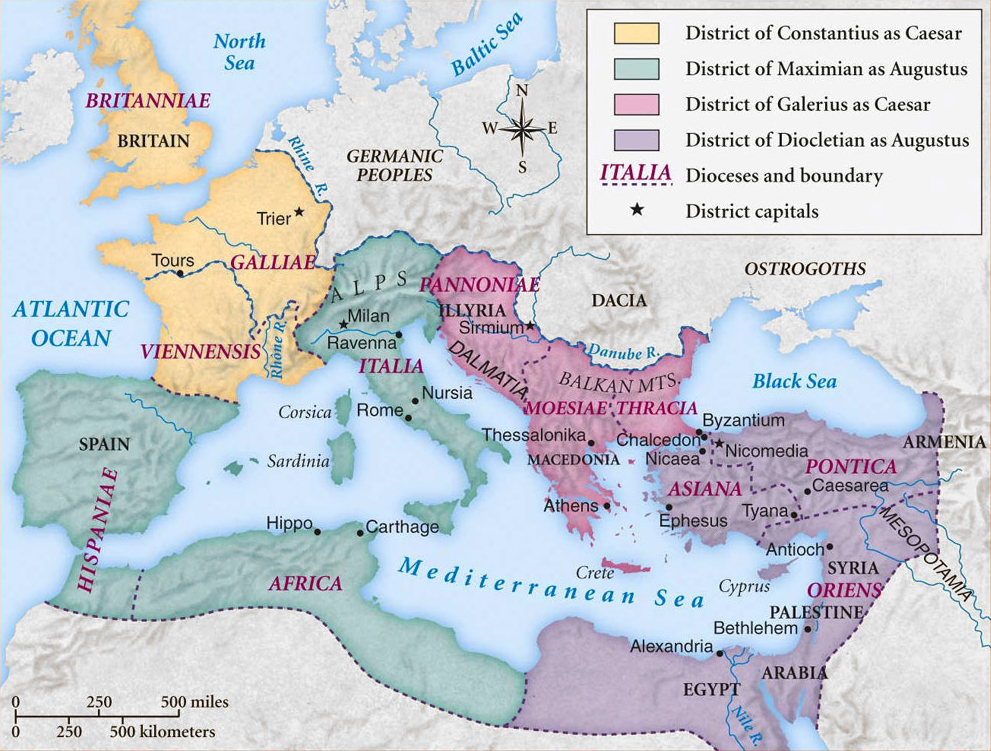
The Byzantine — From Constantine to Columba
The history of the Eastern Roman Empire is not a tale of a slow death; it is a masterclass in aggressive adaptation. While the Western provinces fractured into a patchwork of muddy barbarian kingdoms, Constantinople transformed itself into a hyper-centralized, gold-encrusted superpower.
To understand why Europe looks the way it does by the time Charlemagne arrives, one must look at the five critical pillars who built, saved, and weaponized the East.
I. Constantine the Great (c. 330 AD)
The Genesis of the Blueprint.
The story of Byzantium begins with an act of strategic desertion. Emperor Constantine looked at the city of Rome—bloated, politically corrupt, and militarily exposed—and abandoned it.
On the shores of the Bosporus, he founded New Rome: Constantinople. Constantine did not just move the capital; he completely re-engineered what it meant to be Roman. He welded the military might of the empire to the absolute moral authority of a newly legalized Christian Church. By the time he died, he had created a city that was a fortress of water and stone, an economic choke-point for global trade, and the self-proclaimed center of God’s kingdom on Earth.
II. Anastasius (c. 11 April 491 – 9 July 518)
The Quiet Architect
Anastasius understood that armies cost money. While the West bled cash, he radically overhauled the tax system, aggressively rooted out corruption, and intentionally played the Goths against the Isaurians. By maintaining a policy of calculated non-intervention in Italy, he hoarded wealth. He died leaving an astronomical 320,000 pounds of pure gold in the imperial vaults. He is the quiet architect who built the launchpad for the superpower’s apex.
The Trap
Anastasius collected and saved the gold, Justinian launched the war, and Italy was ruined—leaving Rome completely vulnerable to collapse.
.
III. Justinian I & Empress Theodora (c. 527–565 AD)The Apex and the Fire
This is the direct aftermath of Boethius’s execution. Justinian, a hyper-ambitious workaholic from a peasant background, inherited Anastasius’s mountain of gold and used it to set the world on fire. Beside him sat Empress Theodora, a brilliant, ruthless former actress who wielded equal power.
Justinian used the murder of Boethius as his Casus Belli (act of war). He unleashed his mechanical genius of a general, Belisarius, to launch a violent, apocalyptic reconquest of the West. Belisarius completely erased the Vandals in North Africa and launched a devastating, decades-long war that grounded Italy into rubble.
Justinian rebuilt Constantinople on a staggering scale, raising the golden dome of the Hagia Sophia to show that the shifting empire had surpassed Solomon himself. But his triumph was tragic: the devastating Justinian Plague and the sheer financial cost of his wars left the empire visually magnificent but structurally exhausted.
The Fold
From the Mediterranean to the Irish Monks, before Saint Patrick ever set foot on the Emerald Isle to baptize kings, an invisible intellectual current was already flowing directly from the Eastern Mediterranean to the Atlantic fringe.
Following the construction of the Hagia Sophia, the monastic movement pioneered by the Desert Fathers of Egypt, Syria, and Greece began to travel along maritime trade routes. While Justinian’s brutal Gothic War pushed Italy into structural collapse, Eastern Christian asceticism bypassed continental chaos entirely. It folded neatly into Ireland via early trading ports. These early, pre-Patrick ascetics brought a distinct Eastern structure: self-contained, fortress-like rural monasteries focused on extreme discipline, continuous prayer, and the fanatic preservation of literacy.
.
IV. Columba of Iona (c. 521–597 AD)
The Parallel Mirror in the West — As you close this section and prepare the road for Charlemagne, you pivot to a figure operating at the exact same time as Justinian’s wars, but on the absolute edge of the known world: Saint Columba.
While Justinian was trying to preserve the Roman Empire through iron spears and gold mosaics in the Mediterranean, Columba was building a completely different kind of empire in the cold Atlantic mist of Scotland. Exiled from Ireland, Columba founded the monastery of Iona. From this isolated rock, Irish monasticism spread, preserving literacy, copying classical texts, and converting the Picts and Scots.The Narrative Fold into Charlemagne: Columba represents the intellectual “backup drive” of Europe. While Byzantium and Italy were tearing each other to pieces in the 6th century, the embers of knowledge were secretly kept alive by Monks in the far West. Centuries later, when Charlemagne decides to launch his Carolingian Renaissance in November, he will actively import scholars trained in the direct lineage of Columba’s monasteries to rebuild the intellect of his new Holy Roman Empire.
HRE
Columba shows exactly where the intellectual seeds of Europe were hiding while the Mediterranean burned, perfectly preserved and ready to be harvested by Charlemagne later on.
.
V. Pope Gregory the Great (c. 590–604 AD)
Pope Gregory I, also know as Gregory the Great Lived 540 – 604 AD. As a child he was classically educated in the Roman tradition and his attention focused on Latin and Christianity. Although heh was considered a Roman aristocrat, he became a monk and due to his reforms he became Pope. His reforms bridged the ancient world and the medieval Church. He was concerns where spiritual, liturgy and administrative Church reforms. As an Administrator he sent Augustine of Canterbury to convert the Anglo-Saxon, wrote extensively on theology and pastoral care, and strengthened the papacy’s role in the West. He ruled the church from 590–604 AD. Many of his works focused on pastoral care, dialogues, moralia in Job culminating through several major theological works. He developed the papal tiara. He is one of the Four Doctors of the Church. He strengthened the Western Church during a time of chaos and sent missions that helped convert the English, Scottish and Irish. He once said of the Engle’s, “They are not Angles, but angels.”
The Sovereign Servant of the West — If Heraclius saved the Eastern core, Pope Gregory I built the independent administrative identity of the Western Church. Born into Roman aristocracy, he abandoned secular office to become a monk, only to be reluctantly thrust into the Papacy as Rome faced famine, plagues, and barbarian invasion. The Story to Tell: Gregory looked across a fractured Europe and realized the Papacy could no longer rely on the distant Byzantine Emperor for survival. He systematically transformed the vast estates of the Church into a massive humanitarian supply network, earning him the permanent title “Servant of the Servants of God. “To reclaim the continent, he launched the Gregorian Mission in 596 AD, sending St. Augustine of Canterbury to convert the pagan Anglo-Saxons in Britain. This Roman mission marched directly into the sphere of the fiercely independent Irish Monks, sparking a grand, century-long geopolitical rivalry.
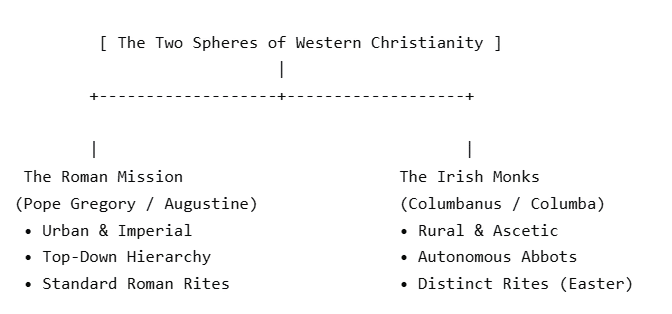
The Lombards — This family sought to take advantage of Rome’s decline and the disinterest of the Byzantine leadership. However, Pope Gregory was able to settle things out with the Lombards. The Lombard king’s death, creating a power vacuum among the tribes — many wanted to attack Rome and take the lands for themselves. Gregory was faced with heresy, paganism, and a great schism among the Lombards, thus complicating his leadership. However, his authority and skills not only found solutions for the church, but for the Lombards — or was it the Holy Spirit?
These events helped Pope Gregory become an excellent reconciler. The problems he tackled, and the techniques used aided and supported him through the negotiation. It honed his skills, later used as the groundwork for the papacy’s political and spiritual authority. This would set the stage and the foresight that would be greatly needed and used in medieval Europe to come.
The Irish Collision
Gregory’s centralizing authority ran head-first into legendary Irish missionaries like St. Columbanus. The Irish monks deeply respected Rome as a holy site, but completely rejected Papal oversight regarding their unique local traditions, particularly how they calculated the date of Easter. Columbanus famously wrote letters directly to Gregory, addressing him with elaborate respect while stubbornly refusing to back down from Irish custom.
The Legacy for Popes to Come
Gregory set the ultimate blueprint for the medieval Papacy. By launching state-like missionary campaigns and establishing structural independence from Constantinople, he created the spiritual and political platform that future popes would use to crown Charlemagne two centuries later.
.
VI. Heraclius (c. 610–641 AD)
The Trauma and the Metamorphosis — If Justinian represents the ancient peak, Heraclius represents the brutal birth of the true medieval Byzantine state. He inherited an empire under siege from all sides.
The Persian Empire marched right to the walls of Constantinople, stealing the True Cross from Jerusalem. In a desperate, holy-war crusade, Heraclius gambled everything, took the army deep into the Persian heartland, and won a miraculous victory. But as he celebrated, an entirely new explosion emerged from the Arabian deserts: the early Muslim conquests.
Byzantium was permanently stripped of Egypt, Syria, and its richest lands. Heraclius had to strip away the old Roman provincial laws and invent the Theme System—turning Byzantium into a lean, militarized, Greek-speaking survivalist state.
The “Ancient Roman” was dead; the “Medieval Byzantine” was born.
The Shift
Heraclius shows how Byzantium stopped trying to act as a universal Western protector and accepted its destiny as an isolated Eastern power.
The Break — 620 AD
By the 7th century, the Western Roman Empire had completely collapsed, and the Eastern Roman Empire lost its territories in Egypt and the Levant to Arab conquests. Byzantium was reduced to its core territories in Greece and Anatolia—regions that were exclusively Greek-speaking. Recognizing reality, Emperor Heraclius decreed in 620 AD that Greek was now the sole language of the Empire’s administration, law, and military. He even dropped the Latin title Augustus and replaced it with the Greek word for king, Basileus.
.
.
.
.
SECTION VIII — THE MONKS AND THE PRESERVATION OF KNOWLEDGE
c. 480 – 615 AD
The Monks, the Manuscripts & the Irish
While Rome fell and the barbarian kingdoms settled and Justinian dreamed of restoration, something quieter was happening in the margins of the known world. In monasteries on hilltops and islands, in scriptoria lit by candles and heated by the body-warmth of the monks who worked in them, books were being copied. The works of Virgil and Cicero, of Plato and Aristotle as rendered by Boethius, of the Church Fathers and the historians and the poets — all of it moving, one page at a time, from fragile papyrus scrolls to durable vellum, in the careful hands of men who understood that they were doing something necessary, even if the world outside the walls had temporarily forgotten why.
This is the period that gave the Western world its future back.
.
c. 480 – 547 AD — Benedict of Nursia
Benedict was born at Nursia in Umbria, sent to Rome for his education, was appalled by what he found there, and withdrew to a cave at Subiaco to live as a hermit. He was followed. Communities formed around him.
He eventually established twelve monasteries and, at Monte Cassino, wrote the document that would govern monastic life in the Western Church for the next fifteen hundred years.
The Rule of Saint Benedict.
The Rule is a masterpiece of practical wisdom. It is not an ascetic manifesto demanding impossible austerities. It is a balanced, humane, detailed guide to living well in community — prayer and work in measured proportion, the abbot as father rather than tyrant, provision for the sick and the elderly and the young, hospitality to strangers as a religious duty. The monastery as a complete community — self-sustaining, ordered, purposeful, open.
Ora et labor — pray and work. “Idleness is the enemy of the soul.” — Benedict of Nursia
The Benedictine monastery became the model for every similar institution that followed — and, in its organization of housing, work, learning, hospitality, and seasonal rhythm, it remains the most durable template for intentional community that Western civilization has produced.
.
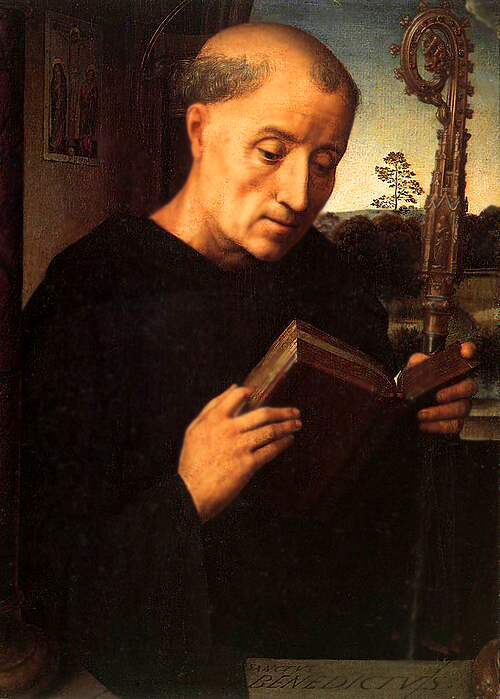 Benedict of Nursia c. 480–547 AD
TITLE: Father of Western Monasticism; Patron Saint of Europe.
BIRTH: c. 480 AD, Nursia (modern Norcia, Italy).
DEATH: c. 547 AD, Monte Cassino.
VOCATION: Monk; hermit; founder of twelve monasteries; author of the Rule.
PRIMARY OCCUPATION: Monk and abbot.
PARENTS: Unknown, but noble family.
SIBLINGS: Scholastica — twin sister.
SPOUSES: None.
CHILDREN IN WEDLOCK: None.
OUT OF WEDLOCK: None.
PHILOSOPHY/RELIGION: Christian monk.
EDUCATION: Roman liberal arts education.
KEY WORKS: Regula Benedicti — The Rule of Saint Benedict (c. 516 AD). Foundation Monte Cassino — 529 AD. Motto Ora et Labora — Pray and Work.
INFLUENCE: Father of Western monasticism.
ACCOMPLISHMENTS: Founded Monte Cassino monastery. Wrote the Rule of Saint Benedict. Established the model for Western monasticism.
BOOKS: Rule of Saint Benedict.
SYMBOL/EMBLEM: The Benedictine cross and raven.
AFFABLE OPPONENTS: None — focused on spiritual life.
YEARS OF RULE OR VOCATION: c. 529 — 547 AD (as abbot).
NAME OF SUCCESSOR: His disciples continued the Benedictine tradition.
CONTEMPORARIES/RIVALS: Justinian I, Cassiodorus
BATTLES: Spiritual battles against temptation and disorder.
LEGACY: The Rule of Saint Benedict governed Western monastic life for 1,500 years and still does. It was the foundation for monastic life in Europe for centuries, and helped preserve learning and culture during the early Middle Ages. The Benedictine monastery was a self-sustaining community of prayer, work, learning, and hospitality. They preserved classical civilization and re-seeded Europe. Benedict is the patron saint of Europe for good reason.
MEMORABLE QUOTES: “Ora et labora” — Pray and work. “Always we begin again.”
COGITATIO: Benedict studied law and rhetoric in Rome, however, observing the immorality in the city among people who claimed to be Christians. He joined and started other local monastic groups, but all of these ended badly. Benedict walked away from Rome, he decided to withdraw from society and live by himself. However, he was followed by crowds. This is when he wrote the Rule for living together. Gregory the Great made the Rule of St. Benedict widely known, and he is today considered the father of Western Monasticism. The Rules have governed thousands of communities for fifteen centuries. The Order is often recognized for its black habits.
.
.
.
..
.
.
c. 521 – 597 AD — Columba of Iona
While Benedict was organizing the monasteries of central Italy, the Irish Church — which had developed in magnificent isolation from Rome during the darkest years of the fifth century — was producing its own extraordinary tradition. The Irish monks had preserved and studied the classical texts with a passion that continental Europe had largely lost, and they were now carrying them back.
Columba — Colm Cille, Dove of the Church — was an Irish prince and monk who founded the monastery of Iona off the western coast of Scotland in 563 AD. From Iona, Irish missionaries fanned out across northern Britain and into the Frankish heartland, carrying manuscripts and learning and the particular fierce gentleness of the Irish Christian tradition into the places the Roman Church had not yet reached. They walked. They sailed in small boats. They went where they were sent and further.
The Book of Kells was made, most likely, in Iona or its daughter’s houses. One of the supreme achievements of human hands is a gospel book whose illuminations are so intricate and so beautiful that scholars have speculated, with only slight exaggeration, that they could not have been made by human hands at all. They were made by monks. Irish monks, on a windswept island, working by candlelight, they were convinced that beauty was a form of prayer.
.
.
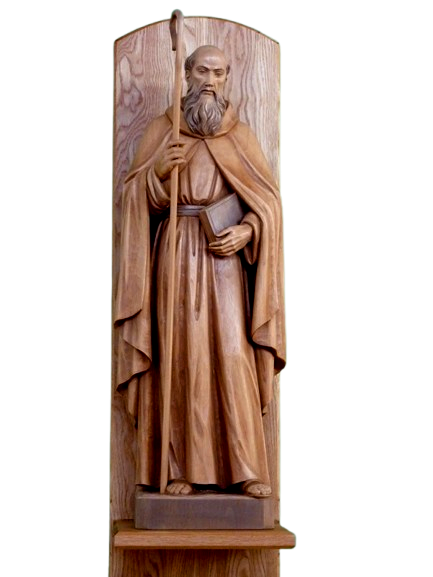 Columba of Iona (c. 521–597 AD)
NAME: Also Known As Colm Cille (Irish) — Dove of the Church.
TITLE: Abbot and Missionary.
BIRTH: 7 December 521 AD, Gartan, Ireland — County Donega.
DEATH: 9 June 597 AD, Iona, Scotland.
PARENTS: Fedlimid mac Fergus and Eithne.
SIBLINGS: Unknown.
SPOUSES: None.
CHILDREN IN WEDLOCK: None.
OUT OF WEDLOCK: None.
PHILOSOPHY/RELIGION: Irish Celtic Christianity.
EDUCATION: Trained under Irish monastic teachers.
INFLUENCE: Major figure in the Christianization of Scotland.
VOCATION: Irish Prince. Monk. Missionary. Abbot. Founder of Iona Monastery (563 AD).
MISSION: Brought Christianity and classical learning to Scotland and northern Britain Monk.
ACCOMPLISHMENTS: Founded the monastery on Iona. Converted many Picts to Christianity. Helped spread Irish monasticism to Scotland.
BATTLES: Spiritual battles and missionary work among the Picts.
AFFABLE OPPONENTS: Pagan Pictish kings.
CONTEMPORARIES/RIVALS: Pictish kings, other Irish saints.
YEARS OF RULE OR VOCATION: 563–597 AD — abbot of Iona.
NAME OF SUCCESSOR: Baithéne mac Brénainn.
KEY WORKS: None personally authored.
BOOKS: None.
SYMBOL/EMBLEM: The dove.
LEGACY: One of the most important early missionaries who helped bring Christianity to northern Britain. Iona became a major center of learning and faith in early medieval Europe. The Lindisfarne Gospels and the Book of Kells trace their tradition directly to Columba’s community. He re-seeded Europe with books.
MEMORABLE QUOTES: “Be a bright flame before me, O God — a guiding star above me.” — from his prayer Bí i mo choinneal.
COGITATIO: Columba was an Irish prince who gave everything up to live on a windswept island and send monks into the darkness with manuscripts and faith. Few know that the Irish monks are one of the most extraordinary stories in all of Western history. The Iona scriptorium was a powerhouse of scholarship. These monks and this scriptorium are widely credited by historians with originating the Book of Kells. This community produced some of the most beautiful books ever made. These Monks showed the power of Irish Christianity that shape the British Isles.
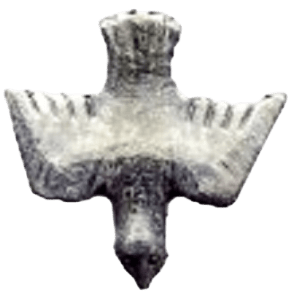
.
.
c. 560 – 615 AD — Columbanus
If Columba re-seeded northern Britain, Columbanus carried the Irish tradition back into the heart of the Continent. Born in Leinster around 560 AD, he crossed to Gaul with twelve companions in approximately 590 AD — deliberately echoing the twelve apostles — and founded monasteries at Annegray, Luxeuil, and Fontaine in the Vosges mountains of what is now eastern France. From these foundations, the Columban monastic tradition spread across the Frankish kingdom and into northern Italy.
He argued with bishops, argued with kings, argued with Pope Gregory the Great himself over the dating of Easter and the proper form of penance — and was right often enough that even his opponents admitted it. He died at Bobbio in northern Italy in 615 AD, having walked further and argued more productively than almost anyone of his generation. The monasteries he founded continued for centuries after him. The books he brought were copied and distributed. The dark was not absolute. The light moved.
Columbanus c. 560–615 AD
Born c. 560 AD — Leinster, Ireland.
Died 615 AD — Bobbio, northern Italy.
Vocation Irish monk; missionary; monastic founder.
Journey Ireland → Gaul → Burgundy → Alemannia → northern Italy.
Foundations Annegray; Luxeuil; Fontaine (Gaul); Bobbio (Italy) — all major centres of learning.
Character Brilliant, argumentative, tireless. Debated popes, kings, and bishops and usually had the better of the argument.
Legacy Spread Irish monastic culture across continental Europe. His foundations became some of the most important intellectual centres of the early Middle Ages. He is the man who brought the Irish books back to Europe.
Memorable “It is the fate of old age to complain and of youth to disregard the complaints.”
Columbanus walked from Ireland to Italy, founding monasteries and arguing with everyone he met. He crossed mountains, navigated royal courts, and debated with the Pope — in writing, at length, and with considerable force. His story is one of the great journeys of the early medieval period. Where did he go? What did he find? And why did a monk from the far edge of Ireland end up transforming the intellectual life of continental Europe?
.
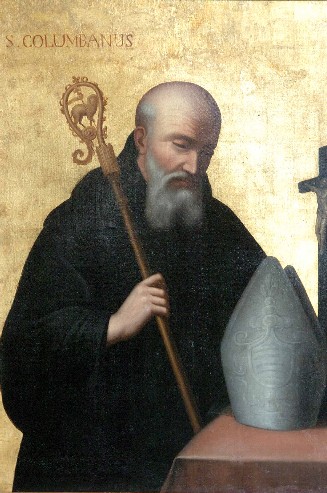 Columbanus (c. 560–615 AD)
TITLE: Missionary and Monk.
FULL NAME: Columbanus.
VOCATION: Monk and missionary.
BIRTH: c. 560 AD, Leinster, Ireland.
DEATH: 23 November 615 AD, Bobbio, Italy.
PARENTS: Unknown.
SIBLINGS: Unknown.
SPOUSES: None.
CHILDREN IN WEDLOCK: None.
OUT OF WEDLOCK: None.
PHILOSOPHY/RELIGION: Irish Celtic Christianity.
EDUCATION: Irish monastic education.
INFLUENCE: Brought Irish monastic fervor to continental Europe.
ACCOMPLISHMENTS: Founded monasteries in Gaul and Italy (including Bobbio). Wrote monastic rules and letters, Helped spread Irish monasticism across Europe.
KEY WORKS: Monastic Rule, letters, sermons.
BOOKS: Rule of Columbanus.
BATTLES: Conflicts with Frankish kings and local bishops.
AFFABLE OPPONENTS: Frankish kings and bishops.
YEARS OF RULE OR VOCATION: c. 590–615 AD.
NAME OF SUCCESSOR: His disciples continued his work.
SYMBOL/EMBLEM: The Irish peregrinus (wandering monk).
CONTEMPORARIES/RIVALS: Frankish royalty, Pope Gregory the Great.
LEGACY: One of the most important Irish missionaries on the continent. His monasteries preserved learning and faith during turbulent times.
MEMORABLE QUOTES: None widely recorded.
COGITATIO: A fiery Irish monk who challenged kings and bishops alike, showing the independent spirit of early Irish Christianity.
.
.
.
.CATHOLIC POPES
St. Peter (c. 30–67 AD) — The foundation and first martyr of Rome.
St. Clement I (c. 88–99 AD) — The fourth bishop, martyred with an anchor.
St. Miltiades (311–314 AD) — The pope who witnessed Constantine’s conversion and the Edict of Milan.
St. Damasus I (366–384 AD) — Commissioned St. Jerome to translate the Latin Vulgate Bible.
St. Leo I (The Great) (440–461 AD) — Personally faced down Attila the Hun and protected Rome from total slaughter.
John II (533–535 AD) — The famous “Mercury” who invented the papal name change.
St. Gregory I (The Great) (590–604 AD) — The final bridge builder who organized the medieval world.
For a complete chronological directory of early papal successions, birth coordinates, and administrative service timelines, visit our archival: Papal Succession Matrix
.
.

.
.
.
.
.
.
.
.
.
.
History Lectures Series
Week 1 — The Fall of Rome, Constantine & Christianity, Theodosius, Julian the Apostate. Fridays 7PM
Week 2 — Philosophy History Of Western Civilization Early Christianity Dark Ages — Persecution, Resilience, Rise of the Church. Augustine of Hippo — Life, Theology, and the Confessions. Mondays 7PM
Weeks 3 & 4 — The Dark Ages, the Barbarian Kingdoms & the Preservation of Knowledge. Fridays 7PM
Festival Lecture Series
Week 3 — Harvest Dinner — Outdoor Festival [TBA]
Week 3 — Parsifal & Question of the Grail — Sunday Afternoon Lecture. Lecture & Film.
Week 4 — Michaelmas — Last Weekend of September. — Outdoor Festival
Week 4 — Mission of Michael — Michaelmas — Lecture. September 29th.
.
.Lecture Hall 1 Lobby
.
.
.
.
.
.
.
.
.
.
.
.
.
.
 .
.

GLOSSARY
- Ambrosia — Divine sustenance; the literal food of the gods representing immortality and heavenly love.
- Arianism — 4th-century theological framework pioneered by Arius arguing that Jesus Christ was a created, subordinate entity to God the Father rather than co-eternal.
- Arianism vs. Homoousian — The ultimate ideological clash of the 4th century dividing those who believed Christ was a created being (Arian) from those who believed He was of the exact same divine substance as the Father (Homoousian).
- Ascetic — A person who practices severe self-discipline and abstains from all physical pleasures, often isolating in deserts or monasteries to achieve spiritual purity.
- Athanasianism — The orthodox theological position asserting that the Father, Son, and Holy Spirit are homoousios (of the exact same divine substance) and completely co-eternal.
- Burnt Column (Çemberlitaş) — The modern name for the Column of Constantine in Istanbul; named for the severe scorch damage it sustained during catastrophic historic city fires.
- Byzantine-Sasanian War — The apocalyptic, final conflict (602–628 AD) between the Eastern Roman Empire and the Persian Empire that left both superpowers completely exhausted right before the early Muslim conquests. (New Recommendation)
- Camelaucum — A white, conical cloth cap worn by Byzantine court officials that early popes adopted, which eventually evolved into the multi-tiered Papal Tiara.
- Clement’s Spring — The miraculous freshwater spring that allegedly burst forth from the ground when Saint Clement I was exiled and forced to work in the stone quarries of Crimea.
- Coptic — The ancient Christian culture, language, and lineage of Egypt that preserved a unique art style and pioneered early desert monasticism.
- Concupiscence — The inherent human orientation or visual pull toward worldly, material desires instead of spiritual truth; a core concept in Saint Augustine’s theological writings explaining why humanity requires Christ’s grace.
- Council of Carthage — The crucial series of church assemblies (most notably in 397 and 419 AD) that officially settled, finalized, and locked in the canonical list of books that make up the Christian Bible.
- Dark Ages — A traditional (though modernly contested) historical term used to describe the early Medieval period following the collapse of the Western Roman Empire, characterized by decentralized power and shifting literacy networks.
- Death & Patron Saint — The transition of a holy figure from the earthly world to the spiritual world, where they become the permanent spiritual guardian and protector of a specific profession, lineage, or country.
- Diminuendo Effect — The revolutionary scribal technique pioneered in the Cathach of St. Columba where the first giant letter of a text page gradually shrinks down line-by-line to match the regular script.
- Doctrine of the Trinity — The foundational Christian dogma defining God as one absolute divine essence existing simultaneously as three distinct, co-eternal persons: Father, Son, and Holy Spirit.
- Doctor of Grace — The official church title awarded to Saint Augustine of Hippo for his massive, definitive theological writings on the mechanics of divine grace and human salvation.
- Faith and Power of God — The foundational theological premise that human history is guided by divine sovereignty and spiritual alignment rather than the material strength of worldly empires.
- Foederati — The barbarian mercenary troops who formed the structural skeleton of the late Western Roman army, which Odoacer rose through to depose the last emperor.
- Folk Soul (Volksseele) — The collective, evolving spiritual essence, identity, and inner blueprint of a distinct cultural lineage or ancestral line.
- Frankia — The shifting geopolitical territory ruled by the Franks (modern France and Germany) that rose to dominance out of the ashes of the Western Roman Empire.
- Gnostics — A diverse group of early dualistic religious movements that claimed salvation was achieved not through faith, but through secret, mystical knowledge (gnosis) regarding the material world’s true nature.
- Homoousios — The Greek theological term meaning “of the same substance,” used by the Council of Nicaea to legally define the absolute divinity of Christ.
- HRC — Holy Roman Empire / Holy Roman Church; the massive political and spiritual alliance that formally combined Germanic imperial muscle with Roman ecclesiastical authority.
- Iconoclasm — The radical theological movement, peaking in the Byzantine Empire, that banned and physically destroyed religious images and icons, viewing them as pagan idolatry. (New Recommendation)
- Lady Philosophy — The allegorical, maternal personification of wisdom who appears to the imprisoned statesman Boethius in his famous 6th-century text, The Consolation of Philosophy.
- Nectar — The divine drink of the ancient gods, representing the sweetness of spiritual abundance and immortality.
- Manicheism — A highly popular, dualistic religion founded in Persia that viewed the entire universe as a literal cosmic battlefield locked between the forces of absolute Light and absolute Darkness.
- Monophysitism — The fierce 5th-century theological position arguing that Christ possessed only one single, divine nature rather than being simultaneously fully divine and fully human. (New Recommendation)
- Neoplatonism — The major philosophical system founded by Plotinus that sought to merge Plato’s core ideas into a single spiritual framework, viewing the entire universe as a series of mystical flows originating from “The One.”
- Nicene Orthodoxy — The legal and theological standard established by the early ecumenical councils asserting the co-eternal, equal status of the Trinity against Arianism.
- Original Sin — The foundational Christian doctrine asserting that the moral fall of Adam and Eve in the Garden of Eden permanently fractured human nature, passing a spiritual debt down to every subsequent generation.
- Palladium — A legendary, prophetic wooden statue of Pallas Athena believed to hold the ultimate protective destiny and sovereignty of empires.
- Pallas Athena — The ancient Greek goddess of wisdom, strategic warfare, and handicraft, whose sacred artifacts were hidden by Constantine beneath his monumental column.
- Pneumatomachians — The “Spirit-Fighters” mentioned in the 381 AD Council of Constantinople who fiercely denied the divinity of the Holy Spirit.
- Pignora Imperii — The Latin phrase meaning “pledges of empire”—sacred relics or artifacts held by ancient Rome to guarantee its divine protection and survival.
- Procopius — The premier 6th-century Byzantine historian who recorded the public triumphs of Emperor Justinian while secretly writing a scandalous exposé called The Secret History.
- Subordinationism — The early heretical framework that treated the Son and the Holy Spirit as secondary, lesser entities structurally inferior to God the Father.
- Symbols, Christian & Pagan — The visual language of early medieval culture, where ancient pagan motifs (like solar wheels and metalwork spirals) were absorbed, repurposed, and baptized for Christian utility.
- Theme System — The lean, militarized provincial administrative model invented by Heraclius to save the Byzantine state after the early Muslim conquests.
- Tonsure — The sacred practice of shaving a monk’s head upon entering a monastery; the unique shape used by Irish monks (ear-to-ear) became a major point of conflict with Rome. (New Recommendation)
- Vexillum — A classic Roman military standard consisting of a square banner hanging from a horizontal crossbar, later transformed into a Christian symbol of victory.
- Xoanon — A primitive, ancient Greek wooden cult statue carved by hand, typically believed to have originally fallen directly from heaven.
.
.
.
.
.
.
Living Pan-European and American Cultural and Heritage Community Center

.
EMAIL: peachcommunity yahoo.com
.
.
.
.
.
.
.
.
.
.
.
.
.
.
.
quicklink

