October History
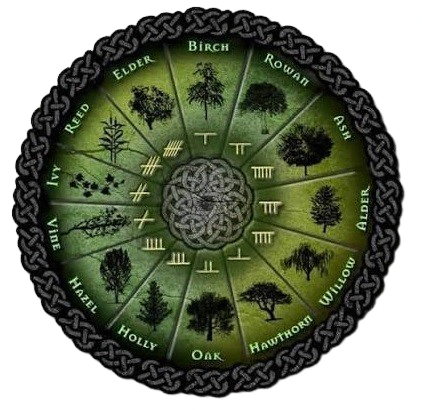
Cultural & Historical Foundations Outline – Druid & Celtic Mysteries. The Arthurian Dawn.
The Before Time, Druids, Celts, Picts, Monks, Arthur —
SECTION I: Ancient Celtic Roots, c. 1200–54 BC Archaeology: La Tène Cultures: iron-innovation, Proto–Celtic: Hallstatt: c. 1200 BC. Unitika Culture, Western Bell Culture, Tumulus Culture, Urnfield Culture.
- Advanced art, migrations across Europe, trade with Etruscans & Greeks, family values, iron innovations.
SECTION II: Tuatha Dé Danann — The Ancient Gods.
- Time — Before the Little People.
- Legends — Nuada, Dana, Morrigu, Lugh, Manannan mac Lir, Dagda, Brigid, Ogmé, Dian Cecht, Macha, Goibniu, Aengus Óg.
- The Battles of Moytura
SECTION III: The Celts & Druid Culture — Daughters and Sons of Albion.
- Myths — Book of Invasions, Book of Lismore
- Legends & Laochra — Heroes: Cú Chulainn, Fionn mac Cumhaill, Queen Boudica of Iceni, Queen Medb, Diviciacus of the Aedui.
- Two Beginning — The Ancient God & Christian God
SECTION IV: The Druids — The Priests & Druidic Wisdom
- Bards, Ovates, Vates.
- Soul immortality, oak & mistletoe rituals, shape-shifting lore, mystical sight.
SECTION V: The Roman Encounter & Accounts c. 54 BC–410 AD — Rome’s raw & unvarnished.
- Caesar’s invasions (54 BC); Roman withdrawal leaves Celtic tribes resisting invaders.
- Cicero’s De Divinatione.
SECTION VI: The Chieftain Rift — The intense geopolitical history.
- Divitiacus, Dumnorix, and the Aedui campaign in Burgundy.
- Boudicca, the fierce Celtic queen and her rebellion 60–61 AD.
SECTION VII: Celts & Druid Culture & Christianity—Symbols.
- Seasons — Wheel of the year is divided into eight seasonal turning points made up of four quarter days (solstices and equinoxes) and four cross-quarter days (fire and harvest festivals).
- Stories — The Christian Adam
- Threshold Realms — Samhain veils thin—spirits, fairies (aes sídhe, banshee),
SECTION VIII: From Pagan to Christ — The Dark Ages – 376
- The Institutional Shift — The historical annals of St. Patrick (432 AD)
- The Before Time – Tuatha Dé Danann
- Irish Monks
- Saint Patrick and the of spread Christianity, c. 385–461 AD
- High King Lugaid, and the Synod of Whitby (664 AD).
SECTION IX: The Legend of King Arthur: Arthur’s Legend, c. 410–600 AD
- Arthur, c. 400/500 AD, son of Uther, raised by Merlin.
- Merlin Mysteries — Birth of Arthur.
- Arthur’s Childhood — Illegitimate son of King Uther who used Merlin’s magic to disguise himself in order to seduce a married woman. The child was given to Merlin in exchange for the magic.
- Knights of the Round Table — legendary fellowship of the elite warriors who served King Arthur’s court.
- Camelot — King Arthurs legendary castle. However, it did not appear in the telling until the 12th-century.
- Unites Britons against Saxons & Picts.
- Quest for Holy Grail in Christ’s name – Immortal Soul & Grail Seeds: Druid rebirth beliefs echo in Arthur’s Avalon sleep and Holy Grail quest; Last Supper vessel.
- Fatal battle at Camlann, mystical Avalon burial—”once and future king.”
- Parsifal — Finds the grail heals the Fisher King.
SECTION X: Eschenbach’s Parsifal — The Hero’s Journey.
- Legend of the Grail & The Fisher King
SECTION X: Samhain — Hallowe’en Key Pillars
Harvest Perils: As light fades, legends preserve ancient fires—mirrored in our forest challenges, pyre rituals, Celtic tales radio, and Merlin’s mysteries.
From oak groves to Avalon’s mist, October opens the veil: Celtic endurance births Arthur’s eternal dream, guiding us through Samhain’s shadows.
======
The Before Time — Tuatha Dé Danann
Nuada – The Silver Hand (Sun God of the Tuatha Dé Danann)
Dana the Great Mother Goddess
Morrigan (or Morrigu) the Phantom Queen
Lugh of the Long Arm
Manannan mac Lir, Son of the Sea
Dagda – The Good God
Brigid the Fiery Arrow
Ogma (or Ogmé) the Sun-Faced
Dian Cecht the Healer
Macha the Vengeful
Goibniu the Smith
Aengus Óg the Young
Α Ω
The True Daughters and Sons of Albion
The development of language among the Celts, and all the other tribes, can best be summarized as, ‘the locals on a slow burn.’ Their writings, even more so. To come to some language uniformity, with the help of the church and, of course, the Normans, the original Celts, were driven from a system of pictures and symbols, dating back before the founding of Rome. These words, or ideas of words, were full of imagination. Non-verbal communication was really the best way to express a conversation with these folk. The Celts, it was said, could read another’s mind. Found were old tablets, many of them full of curses, with similar symbols developed by the Vikings. However, recent discoveries of much older artifacts may prove otherwise. What makes this topic even more convoluted are the different artifacts found, the local dialects, and imaginative stories passed down for generations.
As time moved forward, along with the development of Greco-Roman Society, modern words, symbols, and writings were added to specific locations. This has helped to understand and identify where and when these different ethnic cultures met or collided. What we know is, the Celts were originally and predominately in Central Europe, Indo-European. Over great periods of time, they spread out, becoming: Juts, Picts, Saxons, Anglo, and Belgae. Still, all Celts. Eventually, they all ended up butting heads with the Vikings in the north and coastal areas, the Greeks, and Latins to the South, save one tribe in northwestern Ireland, and those wee folk have yet to be explained. Perhaps they were leprechauns?
Α Ω The Veil Thins — Celts, Saints, Kings, and the
Throughout October, November, and December the History Lecture Series moves through the world of the Celts — their gods, their druids, their language, and their long collision with Rome, Christianity, and the Viking north. October is the threshold month. The veil thins. The harvest ends. The fires are lit. It is the right time to sit with the ancestors.
What led to the Dark Ages
The culture of the Northern Tribes
Rome’s Perspective
Druid Religion shines the light on Christianity
The Dark Ages
The Celtic Monks
Arthur King of the Brits – Arthur was a Briton not a Sax
Arthur’s Childhood
The scandalous fruit of King Uther’s magically disguised affair with a married duchess, Arthur was born a royal bastard. To protect the infant from political fallout and the vengeful wrath of his mother’s jilted family, the wizard Merlin immediately swept Arthur away into total secrecy. He was raised in the rugged countryside by a humble foster father, Sir Ector, completely unaware of his royal Pendragon bloodline or the tragic web of family secrets that would one day return to haunt his throne.
Arthur King of the Brits – Arthur was a Briton not a Sax
Arthur’s Childhood
The scandalous fruit of King Uther’s magically disguised affair with a married duchess, Arthur was born a royal bastard. To protect the infant from political fallout and the vengeful wrath of his mother’s jilted family, the wizard Merlin immediately swept Arthur away into total secrecy. He was raised in the rugged countryside by a humble foster father, Sir Ector, completely unaware of his royal Pendragon bloodline or the tragic web of family secrets that would one day return to haunt his throne.
His mother
She was completely deceived: On the night of the conception, Igraine genuinely believed she was sleeping with her actual husband, the Duke of Cornwall. She had no idea magic was involved, nor did she know her real husband had just been killed on the battlefield.
The sudden marriage: When Uther “revealed” himself later and married the widowed Igraine, she eventually realized the timeline of her pregnancy didn’t match up with her new husband. When she confessed her confusion to Uther, he finally admitted to the magical deception.
The forced surrender: In the classic texts (like Sir Thomas Malory’s Le Morte d’Arthur), as soon as Arthur was born, Uther ordered the baby to be delivered directly to Merlin at the castle gate, fulfilling his secret promise. As a medieval woman and queen, Igraine had no legal right or power to override the King’s command.
She spent the next several decades grieving for her lost, stolen baby, completely unaware that he was growing up safely in the countryside.
King Uther’s army killed the Duke of Cornwall.
When the Duke (Gorlois) discovered that Uther was lusting after his wife, Igraine, he immediately fled court to protect her. Enraged, Uther declared war and laid siege to the Duke’s castles.
The timing is the most calculated part of the drama: Uther’s soldiers attacked and slew the Duke in battle roughly three hours before Uther—disguised by Merlin’s magic—sneaked into the castle to sleep with Igraine. Uther knew exactly what his army was doing, using the chaos of the battle he started as the perfect cover for his deception.
His mother
She was completely deceived: On the night of the conception, Igraine genuinely believed she was sleeping with her actual husband, the Duke of Cornwall. She had no idea magic was involved, nor did she know her real husband had just been killed on the battlefield.
The sudden marriage: When Uther “revealed” himself later and married the widowed Igraine, she eventually realized the timeline of her pregnancy didn’t match up with her new husband. When she confessed her confusion to Uther, he finally admitted to the magical deception.
The forced surrender: In the classic texts (like Sir Thomas Malory’s Le Morte d’Arthur), as soon as Arthur was born, Uther ordered the baby to be delivered directly to Merlin at the castle gate, fulfilling his secret promise. As a medieval woman and queen, Igraine had no legal right or power to override the King’s command.
She spent the next several decades grieving for her lost, stolen baby, completely unaware that he was growing up safely in the countryside.
King Uther’s army killed the Duke of Cornwall.
When the Duke (Gorlois) discovered that Uther was lusting after his wife, Igraine, he immediately fled court to protect her. Enraged, Uther declared war and laid siege to the Duke’s castles.
The timing is the most calculated part of the drama: Uther’s soldiers attacked and slew the Duke in battle roughly three hours before Uther—disguised by Merlin’s magic—sneaked into the castle to sleep with Igraine. Uther knew exactly what his army was doing, using the chaos of the battle he started as the perfect cover for his deception.
Merlin
In original Celtic folklore and early Arthurian myth, Merlin essentially was a Druid, serving as an intellectual elite, advisor to kings, and a master of nature-based magic. Before later medieval stories transformed him into a robed wizard with a wand, his powers were deeply rooted in the practices of the ancient Druids.
The specific abilities Merlin possessed that were directly akin to the Druids include:
• Prophecy and Cosmic Sight: Like the highest-ranking Druid seers, Merlin’s primary power in early folklore was prophecy (Prophetiae Merlini). He could read signs in nature—such as interpreting a dragon-shaped comet or a fight between a red and white dragon—to predict the rise and fall of kingdoms.
• Total Metamorphosis (Shapeshifting): Druidic magic was deeply intertwined with the animal kingdom. Merlin was a master shapeshifter. He routinely took the form of woodland animals—most notably a stag or a wolf—as well as transforming into a peasant, a child, or a wild man of the woods. He could also mask the appearance of others, famously altering Uther Pendragon’s likeness to look like a rival duke.
• Weather and Elemental Manipulation: True to Druidic nature-worship, Merlin could command the elements. He could conjure heavy mists to hide armies, call down storms, and manipulate the natural environment to suit his needs.
• Sacred Geometry and Megalithic Engineering: Druids were revered as master builders and astronomers intimately familiar with cosmic alignments. Mythologically, Merlin is credited with using his magic to transport the massive stones of Stonehenge all the way from Ireland, arranging them perfectly to align with the stars.
• The “Wild Man” Frenzy (Awen): Merlin’s character is largely based on Myrddin Wyllt, a 6th-century Welsh bard and Druid who went mad after a brutal battle and fled into the Caledonian Forest. Living wild among the trees, he spoke in riddles, communed with animals, and gained a prophetic link to the Earth—a direct parallel to the Druidic state of spiritual inspiration (Awen).
From Rome to Europe
Gods
Druids
Norse
Ancient Sweden and the Norse cultures did not have druids. Druidism was specific to the Celtic and Gaulish peoples of Britain, Ireland, and mainland Europe. However, ancient Scandinavian society had similar religious, magical, and leadership roles that filled comparable functions.
Norse Equivalents
Title Pronunciation Role & Responsibilities
- Goði (plural: goðar): Chieftain-priests in the Norse world who managed local temples, ran communal religious feasts, and handled legal/political matters. They were secular leaders who also held religious duties, leading communal sacrifices (blóts) and feasts.
- Völva (Seiðkona) “vuhl-vah” Seeresses / Witches. Female shamans and practitioners of seiðr (a form of Norse magic), who foretold the future and communed with spirits.
- Skalds: Court poets who preserved history, genealogy, and mythology through complex oral verse—somewhat parallel to the Celtic bard tradition. Thul (Þulr) “thool-er” Sages / Lorekeepers. Priestly speakers or keepers of oral history, poetry, and sacred cult knowledge.
Norse sacrifices
October History Lecture Series
Week 1 — The Ancient Celts: Hallstatt, Druids, Language, and the Roman Encounter. Friday 7PM. Lecture Hall I. [confirm date] Week 2 — Ireland and the Coming of Patrick: Hibernia, the High Kings, and Celtic Christianity. [confirm speaker, date, location] Week 3 — Arthur, King of the Brits: Legend, History, and the Birth of Chivalry. [confirm speaker, date, location] Week 4 — The Anglo-Saxons: Alfred, Beowulf, Vikings, and the End at Hastings. [confirm speaker, date, location] Celtic Tales Radio — Every Saturday in October. PEACH Radio. 7PM. Great Mysteries Preview — Druids, Shape-Shifting, and the Liminal World. [confirm date, time, location]
- November History Lecture Series
The Normans
1066
Shadow of the Normans - . .
- The Celtic World Through the Dark Ages Show
- October opens with the ancient Celts and closes at Hastings, 1066 AD. Along the way we move through druids and saints, legendary kings and real ones, the mystery of Arthur and the blunt fact of William the Conqueror. These are our people — their blood, their language, their saints and their stories run directly into us.
- .
- =XXXXXXXXXXX
- SECTION I: The Archaeology Baseline: Proto-Celtic Hallstatt Culture & La Tène iron-innovation data. Unitika Culture, Western Bell Culture, Tumulus Culture, Urnfield Culture.
- Who were the Celts?
- Many think of them as the Irish or the people and countries of the British Isles, Albion: England, Ireland, Scotland, Wales.
- What we have learned is that during earlier times they hailed from Indo-European origins. Many who came and settled first started around 2400 BC. Little is known of those who were here before. Though speculation ranges from the lost Atlanteans, to the leprechaun (leipreachán), and elemental beings who can no longer be seen by the human eye, unless they
are touched (corraithe). Modern archaeologists have speculated that the people known as the British arrived around 2400 BC. - ~WESTERN BELL CULTURE Early Bronze —Late Neolithic / Early Bronze Age Transition
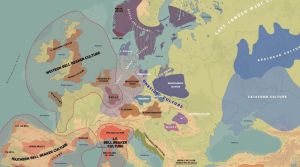
- TIMELINE: c. 2800 BC – 1800 BC
- TECH DEVELOPMENTS: Stylized, cord-impressed bell-shaped drinking vessels; early gold ornamentation and copper melting; specialized archery gear including stone wrist-guards.
- MAJOR CHANGES: Disruption of communal Neolithic tribal tombs in favor of individual social status; rise of a highly mobile, international maritime trade network across Europe.
- BURIAL RITUALS: Strictly individual, single-inhumation burials where the dead are placed in crouched positions with a standardized kit: a beaker, copper dagger, and flint arrowheads.
- FOOD & ANIMALS: Domestic farming of einkorn and emmer barley; heavy use of specialized pottery to store and process dairy products; livestock consists of cattle, sheep, goats, and pigs.
- Western Bell Beaker Culture
This period is marked by what is called the Western Bell Beaker Culture. The characteristic is the shape of a cup, a beaker that is in the shape of an upside-down bell. These people are best known as the first metalworkers. They relied on and brought grain crops, created pastoral animal husbandry (dairy products), and buried their dead in round barrows on hilltops. - ~ÚNĒTICA CULTURE (EARLY BRONZE AGE NETWORKS)
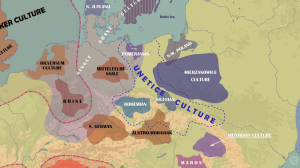
- TIMELINE: c. 2300 BC – 1600 BC (Early Bronze Age)
- TECH DEVELOPMENTS: Mining, Masterful tin-bronze metallurgy; mass production of axes, triangular daggers, and perforated metal pins; standardized bronze ingots used as currency.
- MAJOR CHANGES: Rise of a highly stratified, institutionalized society; extreme wealth consolidation by an elite class controlling strategic metal trade routes.
- BURIAL RITUALS: Uniform flat graves oriented on a strict north-south axis; elite “princely graves” featuring heavy wooden chambers buried under earth and packed with gold and bronze hoards.
- FOOD & ANIMALS: Systematic farming of wheat, barley, and legumes; cattle, sheep, and pigs managed; introduction of the domesticated horse, kept strictly for elite prestige and transit.
- ~TUMULUS CULTURE (MIDDLE BRONZE AGE TRADITION)
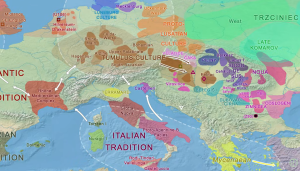
- TIMELINE: c. 1600 BC – 1200 BC (Middle Bronze Age)
- TECH DEVELOPMENTS: Advanced bronze armor; decorative open-work shields; elongated slashing swords; sheet-bronze working used for ceremonial solar calendar hats.
- MAJOR CHANGES: Collapse of centralized, rigid settlements into loose, horizontal homesteads; emergence of a mobile, pastoralist warrior aristocracy protecting trade corridors, spoke Celtic and Latin.
- BURIAL RITUALS: Inhumation under prominent, monumental earthen mounds or stone barrows (Tumuli) to physically map out family lineages across the open landscape.
- FOOD & ANIMALS: Sharp shift toward intensive cultivation of millet; bio-archaeological studies reveal a significant decrease in meat and dairy consumption, creating a uniform, plant-based diet.
- ~URNFIELD CULTURE (LATE BRONZE AGE CREMATIONS)
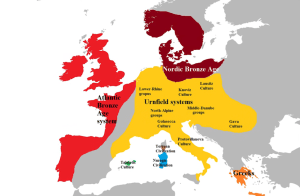
- TIMELINE: c. 1300 BCE – 750 BCE (Late Bronze Age)
- TECH DEVELOPMENTS: Hammered sheet-bronze body armor and ceremonial cauldrons; mass-produced bronze sickles; geometric markings on ingots for early weight tracking.
- MAJOR CHANGES: Radical ideological shift toward communal identity over individual monuments; building of massive hilltop fortresses protected by deep wood and stone ramparts.
- BURIAL RITUALS: Complete abandonment of mounds for total cremation; the dead are burned on pyres, their ashes placed in ceramic urns, and buried in flat, vast, unmarked fields.
- FOOD & ANIMALS: Intensive agriculture focusing on spelt, barley, millet, flax, and broad beans; heavy reliance on cattle for draft power and milk; horses become central to elite warrior status.
- ~HALSTADT CULTURE (ALPINE CELTS)
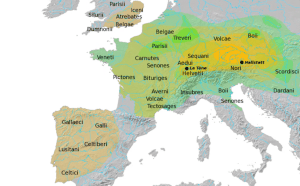
- TIMELINE: c. 800 BC – 450 BC (Early Iron Age)
- TECH DEVELOPMENTS: Forging of heavy iron longswords; advanced iron-rimmed wagon wheels; underground industrial rock-salt mining; wheel-turned pottery.
- MAJOR CHANGES: Emergence of powerful paramount chieftains ruling permanent hilltop fortresses; control of international salt and iron monopolies; direct trade with Greeks and Etruscans.
- BURIAL RITUALS: Monumental earthen tumulus mounds for the elite containing magnificent four-wheeled ceremonial wagons, gold torcs, and imported Mediterranean bronze vessels.
- FOOD & ANIMALS: Dense agriculture with dedicated underground grain storage pits; cattle, sheep, and pigs dominate; pioneering use of rock salt for curing and preserving meat.
- .
- Hallstatt Culture
Around 1100 BC, a mix of Celts moved in from the South. By 1000 BC, the precursors to the Hallstatt Culture followed. They brought the Celtic Languages (Welsh and Gaelic), along with a collection of status items, weapons, and tools, through the manufacturing, trading, and hoarding of bronze status items. On the mainland, there were many settlements all planted near and around mines—extracting copper, tin, and smaller amounts of minerals. At this time, arranged marriages were practiced, most likely to secure tribal unity. - The crucial change came around 900 BC. Iron began to enter the commons. It is thought that this stronger, sharper metal posed a massive, direct threat to the current Bronze Age rulers, fracturing the old order and giving birth to a devastating new era of metallurgy and defensive power.
- High within the salt-rich cradles of the Eastern Alps, a distinct and formidable culture crystallized as the true masters of Europe’s early Iron Age. Driven by the deep, resonant rhythm of the mountains, the Hallstatt chieftains unlocked an industrial empire beneath the earth, hacking block after block of white gold from subterranean rock-salt mines. This salt became the lifeblood of their sovereign communities—not merely a precious mineral for daily nourishment, but a profound technology that allowed them to cure and preserve meats, paving the way for long-distance trade. Armed with the world’s first heavy iron longswords and traveling on heavy wagons with iron-rimmed wheels, they commanded the rugged Alpine corridors, asserting a natural dominance over the winding trade networks that snaked through the valleys below.
- This vast material wealth opened a gateway to unprecedented luxury, drawing the eyes of distant Greek and Etruscan merchants who sought the raw iron, salt, and seasoned meats of the North. In exchange, precious Mediterranean wine, exquisite bronze flagons, and fine pottery flowed upward into the fortified hillforts of the Celtic aristocracy. Yet, for all their worldly commerce, the Hallstatt people maintained a deep, protective reverence for lineage and the physical landscape. When a paramount chieftain stepped from this world, the community did not let their memory fade into the wind; they laid the ruler to rest inside a monumental wooden chamber beneath an immense earthen mound. Buried alongside their four-wheeled ceremonial wagons, gleaming gold torcs, and imported feasting vessels, these ancestral tombs stood as permanent, silent guardians upon the hillsides, mapping out a sacred geography of tribal power and spiritual continuity that defined the early Celtic dawn.
- Hallstatt to La Tène — The evolutionary leaps that marked Hallstatt to La Tène’s peak achievements
| Feature | Hallstatt Base | La Tène Evolution | The Greater Achievement (Why It Matters) |
| The Chariot & Warfare | Heavy, four-wheeled utility wagons used primarily for burial or slow transport. | Ultra-lightweight, two-wheeled tactical war chariots with iron-rimmed wheels. | Unmatched Mobility: It changed how they fought. They became a shock-and-awe cavalry that terrified the tightly grouped, infantry-heavy Roman legions. |
| Metallurgy & Ironwork | Functional iron weapons and heavy bronze buckets. | Master-crafted, leaf-shaped longswords and flexible, heat-treated steel chainmail. | Industrial Dominance: They weren’t just making tools; they were the premier blacksmiths of Europe. The Romans actually copied Celtic helmet and sword designs. |
| Art & Spirituality | Rigid, geometric, straight-lined patterns (squares, lines, basic shapes). | Fluid, abstract swirls, tendrils, and hidden animal faces (the plastic style). | A Visual Language: The art became alive and hypnotic. It reflected a deeply spiritual, shifting worldview where nothing in nature was static—a direct contrast to stiff Roman realism. |
| Trade & Economics | Regional trade centered around salt mines and local chieftains. | Widespread coinage stamped with abstract Celtic designs and vast trans-continental routes. | Economic Integration: It proved they weren’t unorganized “barbarians.” They created an interconnected proto-urban market system across Europe (oppida). |
- —
- —
- ~LA TÈNE CULTURE (GAULISH CELTS & TRIBES)
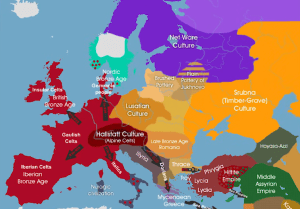
- TIMELINE: c. 450 BC – 1st Century BC (Late Iron Age)
- TECH DEVELOPMENTS: Double-edged iron longswords in decorated scabbards; chainmail armor; rotary quern stones for milling flour; fluid curvilinear art featuring spirals and stylized heads.
- MAJOR CHANGES: Rise of the pan-tribal Druidic priestly class as supreme judges and philosophers; rapid proto-urbanization into large, fortified commercial towns (oppida).
- BURIAL RITUALS: Transition to flat graves; elite burials switch from four-wheeled wagons to fast, two-wheeled war chariots; massive ritual votive deposits sacrificed into sacred bogs and lakes.
- FOOD & ANIMALS: Deep iron-plowshares allow farming of heavy lowland clay soils; specialized breeding of war horses; massive brewing of barley ale and mead; import of Roman wine for elite feasts.
- .
- =====
- Titles
- Western Europe & The Mediterranean
| Modern Country | Pre-Roman Name(s) | Roman Name (Imperial Province) | Historical Notes |
| France | Gaul (Gallia) | Gallia (divided into Narbonensis, Aquitania, Lugdunensis, and Belgica) | Pre-Roman Gaul was heavily populated by Celtic tribes. Julius Caesar famously conquered and divided it. |
| Spain & Portugal | Iberia | Hispania (divided into Baetica, Tarraconensis, and Lusitania) | “Iberia” was the Greek name. The Romans adapted the Phoenician name into Hispania. Lusitania largely corresponds to modern Portugal. |
| Switzerland | Tigurini / Helvetii Lands | Helvetia (and later parts of Raetia) | Named after the Celtic Helvetii tribe. The name is so foundational that Swiss coins and stamps still use “Helvetia”. |
- The British Isles & Central Europe
| Modern Country | Pre-Roman Name(s) | Roman Name (Imperial Province) | Historical Notes |
| United Kingdom | Albion | Britannia | Albion is the oldest known Celtic name for Britain. The Romans named the southern conquered territory Britannia. They called Scotland Caledonia and Wales Cambria. |
| Ireland | Éire (Goidelic) | Hibernia | Ireland was never conquered by Rome. Romans called it Hibernia, a Latin play on words meaning “Land of Winter.” |
| Germany | Teuton Lands | Germania (Germania Superior & Inferior) | Romans only controlled the regions west of the Rhine. The vast unconquered territories to the east were called Germania Magna (Greater Germany). |
- Northern & Eastern Europe (Outside Empire Borders)
- Because Rome never successfully conquered or heavily explored these regions, they did not split them into official “provinces.” Instead, Roman geographers generalized them based on vague tribal contacts:
- Scandinavia (Norway & Sweden): Classical authors initially referred to this vaguely as the mythical island of Thule. During the Empire, Roman writers like Pliny the Elder labeled the region Scandia or Scatinavia. The specific tribe in modern Sweden was recorded as the Suiones, giving rise to the old Norse name Svitjod.
- Finland: The Romans had almost zero contact with Finland. Tacitus mentioned a nomadic people he called the Fenni (likely the Sámi), but the region itself had no unified Roman name. The indigenous people have always called their land Suomi.
- Russia, Ukraine, & Belarus: In antiquity, the vast steppes of eastern Europe and western Russia were known as Sarmatia (after the nomadic Sarmatian tribes) or Scythia. Centuries after Rome fell, the region became known as Kievan Rus’ (founded by Scandinavian Varangians) and later Muscovy before consolidating into Russia. [1, 2, 3, 4, 5, 6, 7]
- (Note: “Terafin” isn’t a historically recorded ancient name for Scandinavia or any European country. It may be a typo or a concept from fantasy fiction/alternate history worldbuilding!). [1]
- Would you like me to generate a downloadable PDF map-index that breaks down the major tribal capitals and Roman cities (like Londinium or Lutetia) within these ancient provinces?
- ======
- Weather
- ======
- Celtic Seasons — Celebrations
The four main Gaelic cross-quarter days, tied to seasons and agricultural cycles in Irish, Scottish, and the Manx traditions. 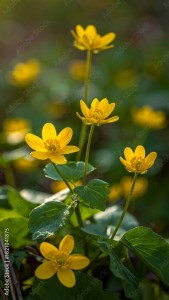 Latha Bealltainn – Latha Buidhe Bealltainn)
Scottish Gaelic for Beltane or May Day (1 May). Literally “the yellow/golden/fortunate day of Beltane.” It marks the start of summer, with bonfires, purification rituals, and celebrations of fertility and protection. “Buidhe” adds connotations of brightness, luck, or the yellow flowers/broom blooming then.- Samhain – Gaelic festival on 31 October–1 November, marking the end of harvest and beginning of winter (the “darker half” of the year). Seen as the Celtic New Year in some traditions. It’s a liminal time when the veil between worlds thins, honoring the dead, with bonfires, feasting, divination, and protective measures against spirits.
- Imbolc – Imbolg – Gaelic festival on 1 February (or 31 Jan–2 Feb), marking the start of spring. From Old Irish “i mbolg” meaning “in the belly,” referring to pregnant ewes, lambing season. Associated with the goddess and saint Brigid embracing purification, fire, candles, and the first signs of new life. A time of renewal and hope after winter.
- Lughnasadh – Lughnasa, Lúnasa – Gaelic festival on 1 August, marking the beginning of the harvest season. Named after the god Lugh, who established it to honor his foster-mother Tailtiu; she died clearing land for agriculture. It involves feasting, games, thanksgiving for the first fruits and grain, and preparations for autumn and winter.
- =====
- ===
- The Celts
Bronze Age — 2400–800 BC - Who were the Celts? Many think of them as the Irish or the people and countries of the British Isles, Albion: England, Ireland, Scotland, Wales.
- What we have learned is that during earlier times they hailed from Indo-European. Many who came and settled first started around 2400 BC. Little is known of those who were here before. Though speculation ranges from the lost Atlanteans, to the leprechaun (leipreachán), and elementals beings who can no longer be seen by the human eye, unless they are touched (corraithe).
- Archaeologists have speculated that the people known as the British arrived around 2400 BC.
- This period is marked by what is called the Western Bell Beaker Culture. The characteristic is the shape of a cup, a beaker that is in the shape of an up-side-down bell.
- These people are best known as the first metalworkers. they relied and brought grain crops, created pastoral animal husbandry (dairy products), buried their dead in round barrows on hill tops.
- Around 1100 BC — a mix of Celts [Gauls?] moved in from the South.
- 1000 BC, the Hallstatt Culture (1200 BC—450 BC) followed. They brought the Celtic Languages (Welsh and Gaelic), along with a collection of status items, weapons and tools, through manufacturing, trading and hoarding of bronze status items.
- On the mainland there were many settlements all planted near and around mines; copper, tin, smaller amounts of aluminum, manganese, nickel, zinc. At this time, arranged marriages were practice, most likely to secure tribal unity.
- The change came around 900 BC. Iron began to enter the commons. It is thought that this stronger metal posed a threat to the current Bronze Age rulers.
- ====================================================================================================================================
Dottir
Steiner
Dottir Swedish for Druids - All of our medieval stories—Parsifal, the Round Table, Hartmann von Aue—reveal mystical truths in esoteric form, even though they are usually only understood in their outward aspect.
- Where do we search for their origin? We must look to a time before the spread of Christianity.
- Into Christianity was blended what had lived in Ireland, Scotland … [Gap in the notes.]
- We are led to a particular center whence this spiritual life was disseminated.
- The spiritual life [of Europe] emanated from a mother lodge in Scandinavia, ‘Drottes’ Lodge. Druids = Oak. For this reason the Germanic peoples were said to receive their instructions beneath oak trees.
- ‘Drottes’, or Druids, were ancient Germanic initiates. They still existed in England till Elizabethan times.
- All that we read in the Edda or can find in the ancient German sagas refers back to the temples of the ‘Drottes’ or Druids.
- The author of these tales was always an initiate.
- The sagas not only have a symbolical or allegorical meaning, but something else as well.
- Example: We know the saga of Baldur. We know that he is the hope of the gods, that he is killed by the god Loki with a branch of mistletoe. The God of Light is killed. This whole story has a deep mystery content which all who underwent initiation not only had to learn, but had to experience.
- The Mysteries. Initiation: the first deed was called the search for the body of Baldur.
- It was supposed that Baldur was always alive. The search consisted of a complete enlightenment about the nature of man.
- For Baldur was the human being who has gone astray. Once upon a time the human being was not as he is today, he was undifferentiated, not bowed down by passionate experiences, but composed of finer ephemeral substance.
- Baldur, the radiant human being. When truly understood, all things which appear to us in the form of symbols must be understood in a higher sense. This human being who has not descended into what today we call matter, is Baldur.
- He lives in each one of us. The Druid priest had to search for the higher self within him. He had to become clear about where this differentiation took place, between the higher and the lower … [Gap]
- The secret of all initiation is to give birth to the higher human being within oneself. What the priest accomplishes more quickly, the rest of mankind must undergo in long stages of development. To become leaders of the rest of mankind, the Druids had to receive this initiation.
- Man who had descended deeper now had to overcome matter and regain his former higher level.
- This birth of the higher human being takes place in all the Mysteries in a similar sort of way.
- The man who had become submerged in matter had to be reawakened. One had to make a series of experiences—real experiences—which were unlike any sense experiences one can have on the physical plane.
- Initiation Stages.
- The first step was that one was led before the ‘Throne of Necessity’. One stood in front of the abyss: really experienced through one’s own body what lived in the lower kingdoms of nature. Man is both mineral and plant, but the man of today is unable to experience what is undergone by the elementary substances and yet the enduring, the constraining things in the world are due to the fact that we are also mineral and plant in our nature
- The next step led the human being to all that lived in the animal kingdom. Everything which existed in the form of passions and desires was beheld in swirling and interweaving movement- All this had to be observed by the candidate for initiation so that his eyes would be opened to what lay behind the veil of the senses. Man is not aware that what swirls around in astral space is hidden behind the physical sheath. The veil of maya is really a sheath which must be penetrated by him who is to be initiated—the sheaths drop away, the human being sees clearly. That is a very special moment: the priest becomes aware that the sheaths had dammed back the impulses which would have been frightful if they had been let loose.
- The third step led to a vision of the elemental nature forces. That is a step which man finds difficult to comprehend without previous preparation. That powerful occult forces are residing in these nature forces and through them express elemental passions, is something which makes man aware that there are powers quite outside the scope of anything he can experience as his own suffering.
- The next trial is called the ‘Handing over of the Serpent’ by the hierophant. One can only explain it by means of the effects which it brings about. It is elucidated in the Tantalus saga. The privilege of being allowed to sit in the Council of the Gods can be abused. It signifies a reality which certainly raises man above himself, but dangers accompany it which are not exaggerated in the story of the Tantalus curse.
- As a rule man says he is powerless in face of the laws of nature. These are thoughts. With that kind of thinking, which is only a shadowy brain-thinking, nothing can be achieved. In creative thinking, which builds and constructs things of the world, which is productive and fruitful, the passive kind of thinking is replaced by a thinking permeated by spiritual force.
- The blown skin of a caterpillar is the empty sheath of the caterpillar; when filled with [productive] thinking it is the living caterpillar. Into the sheath-thoughts, living active power is poured so that the priest is enabled, not only to see the world in vision, but to work in it through magic.
- The danger is that this power can be abused. He can … [Gap]
- At this stage the occultist acquires a certain power, whereby he is enabled to deceive even the higher beings. He must not only repeat truths but experience them and decide whether a thing is true or false. That is what is called ‘The Handing over of the Serpent by the Hierophant’. [it denotes the same thing on a spiritual level that the rudimentary stages in the formation of the spinal cord signify on the physical level. In the animal kingdom we pass through the fishes, amphibians and so on till we reach the brain of the vertebrates and man. See notes.]
- We have a spiritual backbone, too, which determines whether we are to develop a spiritual brain. Man goes through this process at this stage of his development. He is lifted out of Kama (feelings, passions, desires) and endowed with a spiritual backbone so that he can be raised up into the spiraling of the spiritual brain.
- On a spiritual level, the windings of the labyrinth are the same as the convolutions of the brain on the physical level. Man gains access to the labyrinth, to the windings within the spiritual realm.
- Then he had to take the oath of silence. A naked sword was presented to him and he was obliged to swear the most binding oath. This was that he would henceforth keep silence about his experiences where it concerned people who had not been initiated as he had. It is quite impossible to reveal the true content of these secrets without preparation.
- He, [the initiate] however, could create these sagas so that they became the expression of the eternal. One who could give utterance to things in this way of course had great power over his fellow men. The creator of a saga of this kind imprinted something into the human spirit. What is thus spoken is then forgotten and only the merest vestige of it survives death. Eternal truths remain longest after death. Of less elevated scientific thought hardly anything remains. The eternal does so and appears again in a new incarnation.
- The Druid priest spoke out of the higher plane. His words, though simple, being the expression of higher truths, sank into the souls of his hearers. He spoke to simple folk but the truth sank into their souls and something was incorporated into them which would be reborn in a new incarnation. At that time men experienced the truth through fairy stories; thus today our spirit bodies have been prepared and if we are able to grasp higher truths today it is because we have been prepared.
- Thus this time, which came to an end in 60 A.D., had prepared the spiritual life of Europe, had provided the soil on which Christianity could build. These teachings have been preserved and whoever searches will be able to find access to what was taught in these Lodges.
- After he [the Druid] had given his oath on the sword he had to drink a certain draught—and this he did from a human skull. The meaning of this was that he had transcended what was human. That was the feeling which the Druid priest had to develop concerning his lower bodily nature. He had to look upon all that lived within his body with the same objective, cool attitude as he felt towards a containing vessel.
- Then he was initiated into the higher secrets and shown the path to higher worlds. Baldur … [Gap] He was led into an immense palace which was roofed by flashing shields. He encountered a man who cast forth seven flowers. Cosmic Space, Cherubim, Demi-urge [Maker of the World]. Thus he became truly a Priest of the Sun.
- Many people read the Edda and are unaware that it is an account of what really took place in the ancient ‘Drottes’ mysteries. An immense power lay at the disposal of the ancient ‘Drottes’ priests, a power over life and death.
- It is true that everything becomes corrupt in time. It was once the highest, the holiest of things. At the time when Christianity was spreading, much had degenerated and there were many black magicians, so that Christianity came as a redemption.
- The study of these old truths alone is able to give an almost complete survey of the whole of occultism.
- Unlike our present practice, not one stone was laid upon another in the building of a Druid temple without the use of exact astronomical measurement. Doorways were built according to astronomical measurement. The Druid priests were the builders of humanity. A faint reflection of this is preserved today in the views which the Freemasons hold.
- =================
- ~explore Diviciacus’s specific political relationship with Julius Caesar
- ~dig deeper into what Classical sources say about Gallic ritual practices
- ===================
- .
- Show Image The Celtic World Through the Dark Ages Show Image
- October opens with the ancient Celts and closes at Hastings, 1066 AD. Along the way we move through druids and saints, legendary kings and real ones, the mystery of Arthur and the blunt fact of William the Conqueror. These are our people — their blood, their language, their saints and their stories run directly into us.
- . .
- Α Ω Daughter and Sons of Albion
- The development of language among the Celts, and all the other tribes, can best be summarized as, ‘the locals on a slow burn.’ Their writings, even more so. To come to some language uniformity, with the help of the church and, of course, the Normans, the original Celts were driven from a system of pictures and symbols dating back before the founding of Rome. These words, or ideas of words, were full of imagination. Non-verbal communication was really the best way to express a conversation with these folk. The Celts, it was said, could read another’s mind. Found were old tablets, many of them full of curses, with similar symbols developed by the Vikings. However, recent discoveries of much older artifacts may prove otherwise. What makes this topic even more convoluted are the different artifacts found, the local dialects, and the imaginative stories passed down for generations.
- As time moved forward, along with the development of Greco-Roman Society, modern words, symbols, and writings were added to specific locations. This has helped to understand and identify where and when these different ethnic cultures met or collided. What we know is, the Celts were originally and predominately in Central Europe, Indo-European. Over great periods of time, they spread out, becoming: Juts, Picts, Saxons, Anglo, and Belgae. Still, all Celts. Eventually, they all ended up butting heads with the Vikings in the north and coastal areas, the Greeks, and Latins to the South — save one tribe in northwestern Ireland, and those wee folk have yet to be explained. Perhaps they were leprechauns?
- =========
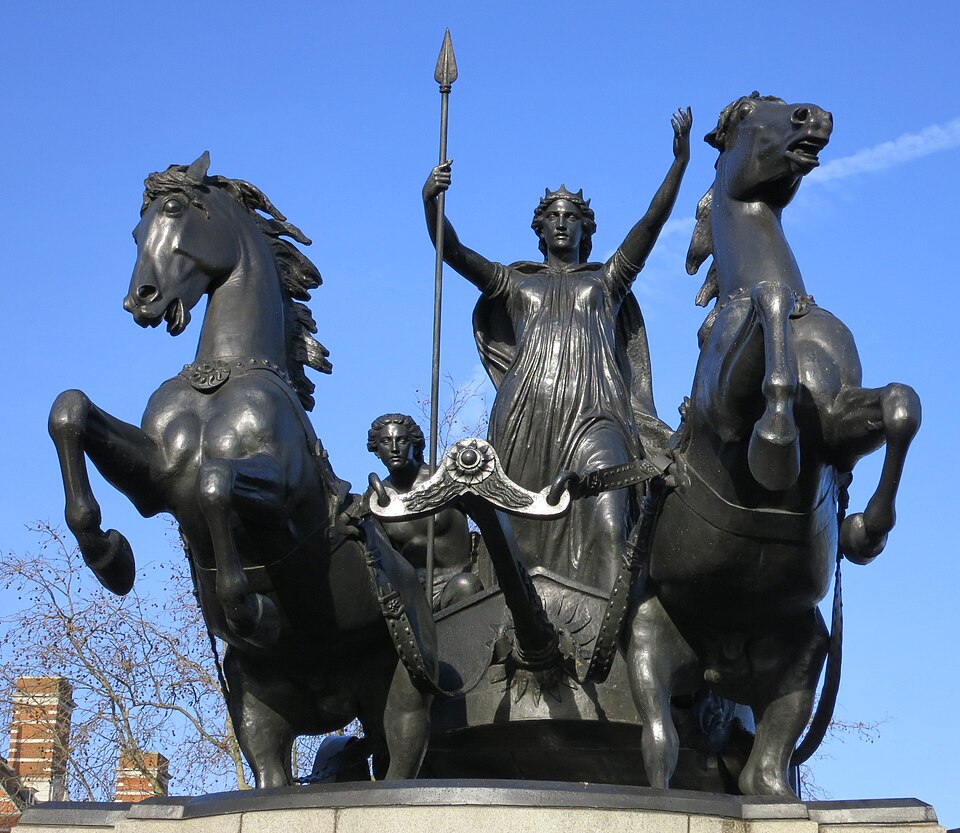
- Boudica of Iceni – Born 25AD
- Quotes: “I am not fighting for my kingdom and wealth now. I am fighting as an ordinary person for my lost freedom, my bruised body, and my outraged daughters.”
- On Victory or Death:
“If you weigh well the strengths of our armies you will see that in this battle we must conquer or die. This is a woman’s resolve. As for the men, they may live or be slaves.”
======= - Rome Arrives When Caesar arrived, his recounting of those on the island was not kind. Regarding the Gaul,
- . . . .
- “The Druids are in charge of all religious matters, superintending public and private sacrifices, and explaining superstitions. A large crowd of young men, who flock to them for schooling, hold the Druids in great respect. For they have opinions to give on almost all disputes involving tribes or individuals, and if any crime is committed, any murder done, or if there is contention about a will or the boundaries of some property, they are the people who investigate the matter and establish rewards and punishments. There is one arch-druid of supreme power. On his death, he is succeeded either by someone outstanding among his fellows, or, if there are several of equal calibre, a decision is reached by a vote of all the Druids. At a fixed time of year, they assemble at a holy place… Anyone with a grievance attends and obeys the decisions and judgments which the Druids give. The general view is that this religion originated in Britain and was imported into Gaul, which means that any keen student of Druidism now goes to Britain for information.”
- “They are the most ignorant people I have ever conquered. They cannot be taught music.” — Julius Caesar, 54 BC
- Cicero, in writing to his friend Atticus, advised him not to buy slaves in England, “because,” said he, “they cannot be taught to read, and are the ugliest and most stupid race I ever saw.”
- Both Julius and Cicero exaggerate. These barbarian tribes, as described by Caesar, had been trading throughout the region for hundreds of years. Before the Romans, the Celts on the Islands had developed extensive trade with the Etruscans, Latins, and even the Greeks, far into Asia Minor and into the Volga and Mongolia. They were, however, a very superstitious and ritualistic people. So when did the first people, the Celts, arrive in Great Britain and Ireland? Legend says, they have always been there, that the last piece of heaven to fall from the sky at the end of Atlantis was Ireland. The Indo-European Celtic were a large, flourishing tribe that broke up into family groups, and over long periods of time became known as the Native Tribes of Europe. Celtic Gauls and Vikings, mingled with the ancient people on the islands, and developed not only their customs, but also their mystical powers of sight and magic. More details will be discussed during Great Mysteries, in January.
- .
- ======
- Rome Arrives
When Caesar arrived, his recounting of those on the island was not kind. Regarding, the Gaul,
. - .
“The Druids are in charge of all religious matters, superintending public and private sacrifices, and explaining superstitions. A large crowd of young men, who flock to them for schooling, hold the Druids in great respect. For they have opinions to give on almost all disputes involving tribes or individuals, and if any crime is committed, any murder done, or if there is contention about a will or the boundaries of some property, they are the people who investigate the matter and establish rewards and punishments. There is one arch-druid of supreme power. On his death, he is succeeded either by someone outstanding among his fellows, or, if there are several of equal calibre, a decision is reached by a vote of all the Druids. At a fixed time of year, they assemble at a holy place… Anyone with a grievance attends and obeys the decisions and judgments which the Druids give. The general view is that this religion originated in Britain and was imported into Gaul, which means that any keen student of Druidism now goes to Britain for information.” - “They are the most ignorant people I have ever conquered. They cannot be taught music.” – Julius Caesar 54 BC
- Cicero, in writing to his friend Atticus, advised him not to buy slaves in England, “because,” said he, “they cannot be taught to read, and are the ugliest and most stupid race I ever saw.”
- Both Julius and Cicero exaggerate. These barbarian tribes, as described by Caesar, had been trading throughout the region for hundreds of years. Before the Romans, the Celts on the Islands had developed extensive trade with the Etruscans, Latins, and even the Greeks, far into Asia Minor and into the Volga and Mongolia. They were, however, very superstitious and ritualistic people. So when did the first people, the Celts, arrive in Great Britain and Ireland? Legend says, they have always been there, that the last piece of heaven to fall from the sky at the end of Atlantis was Ireland. The Indo-European Celtic were a large, flourishing tribe that broke up into family groups, and over long periods of time became known as the Native Tribes of Europe. Celtic Gauls and Vikings, mingled with the ancient people on the islands, and developed not only their customs, but also their mystical powers of sight and magic. More details will be discussed during Great Mysteries, in January.
- ====
- Diodorus Siculus [1c BC Sisacly, Greek] relates The Druids amass great amounts of gold which is used for ornament not only by the women but also by the men. Around their wrists and arms they wear bracelets. Around their necks heavy necklaces of solid gold, and huge rings they wear as well and even course lots of gold, and a peculiar and striking practice is found among the upper Celts in connection with the sacred precincts of the gods as for in the temples and precincts might consecrate in their land a great amount of gold has been deposited as a dedication to the gods and not a native or the country ever touches it because of religious scruple over the Celts are an exceedingly covetous people.
- ===
- Druidic beliefs in reincarnation seemed to be depicted in one scene in which a large godlike figure is dipping the fallen warriors into the cauldron of life and restoring them to live and fight again.
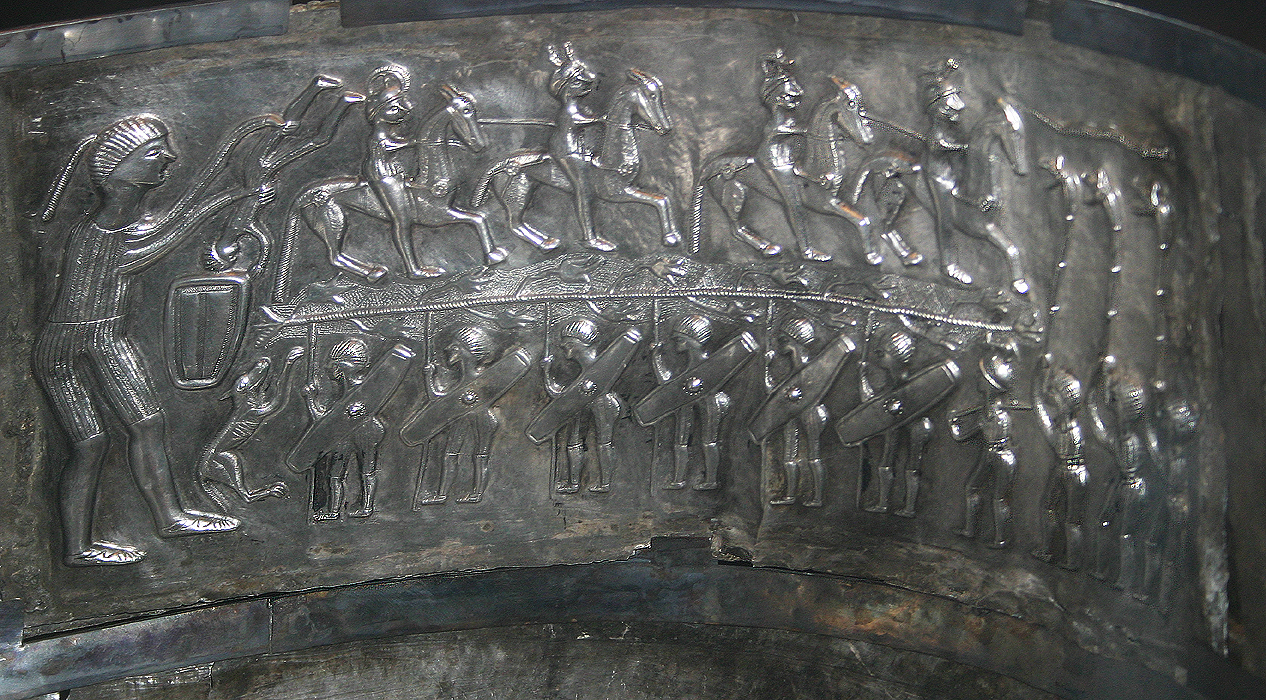
- Julius Caesar said, “The Druids of Gaul, Britain and Ireland had metempsychosis as one of their core doctrines. The principal point of their doctrine is that the soul does not die and that after death it passes from one body into another. The main object of all education is, in their opinion, to imbue their scholars with a firm belief in the indestructibility of the human soul, which, according to their belief, merely passes a death from one tenement to another. For by such doctrine alone, they say, robs death of all its terrors, this is where the highest form of human courage can be developed.
- Diodorus Siculus also relates the importance of the Druidic or philosopher’s caste among the Gauls. He says the Druids could divine the future by observing the flights of birds and the behavior of sacrificial animals and humans.
- No Gaul could make war or sacrifice without first consulting a druid. Caesar wrote that the Gauls adopted the practice of Druidry from Britain, where the main center of Druidic learning was situated.
- We know that druid was also prevalent in Ireland even as recently as a medieval era where they are recorded as diviners. This begs the question, whether druidry itself was not really a pan Celtic cultural practice but one specific to the British Isles and therefore possibly pre-Celtic in origin. an indo-european priestly caste native to Britain and Ireland.
- Among all the Celts there are three sets of men Priests who are held in exceptional honour; the Bards, the Vates and the Druids.
- Bards are the singers and poets.
Vates are diviners and natural philosophers.
Druids are concerned with both natural and moral philosophy.The are the most just of men entrusted with the decision, both private and public disputes – both war and cases of murder. They believe that the souls of men as well as the universe are indestructible. They follow a Metempsychosis Doctrine - ===============================
- [[[[[[Diodorus Siculus [1c BC Sisacly, Greek] relates The Druids amass great amounts of gold which is used for ornament not only by the women but also by the men. Around their wrists and arms they wear bracelets. Around their necks heavy necklaces of solid gold, and huge rings they wear as well and even course lots of gold, and a peculiar and striking practice is found among the upper Celts in connection with the sacred precincts of the gods as for in the temples and precincts might consecrate in their land a great amount of gold has been deposited as a dedication to the gods and not a native or the country ever touches it because of religious scruple over the Celts are an exceedingly covetous people
===== - ===
- master of physiologia (natural philosophy) and practiced augury (predicting the future by reading signs in nature). Unlike the stereotyped mysterious druids of later folklore, Divitiacus operated at the highest levels of Mediterranean politics, speaking fluent Latin and moving comfortably through elite Roman society.
- druidic beliefs in reincarnation seemed to be depicted in one scene in which a large godlike figure is dipping the fallen warriors into the cauldron of life and restoring them to live and fight again.
- Julius Caesar recorded that the Druids of Gaul. Britain and Ireland had met him metempsychosis as one of their core doctrines.
- the principal point of their doctrine is that the soul does not die and that after death it passes from one body into another.
- the main object of all education is in their opinion to imbue their scholars with a firm belief in the indestructibility of the human soul which according to their belief merely passes a death from one tenement to another. for by such doctrine alone they say which robs death of all its terrors can the highest form of human courage be developed .Diodorus Siculus also relates the importance of the druidic or philosopher’s caste among the Gauls he says the Druids could divine the future by observing the flights of birds and the behavior of sacrificial animals and humans
- no Gaul could make war or sacrifice without first consulting a druid.
- Caesar wrote that the Gauls adopted the practice of Druidry from Britain where the main center of druidic learning was situated
- we know that druidry was also prevalent in Ireland even as recently as a medieval era where they are recorded as diviners this begs the question of whether druidry itself was not really a pan Celtic cultural practice but one specific to the British Isles and therefore possibly pre-celtic in origin. an indo-european priestly caste native to Britain and Ireland
- Among all the Celts there are three sets of men Priests who are held in exceptional honour; the Bards, the Vates and the Druids.
- Bards are the singers and poets
Vates are diviners and natural philosophers
Druids are concerned with both natural and moral philosophy,The are the most just of men entrusted with the decision, both private and public disputes – both war and cases of murder.They believe that the souls of men as well as the universe are indestructible. They follow a Metempsychosis Doctrine]]]]]] - BOUCIDA
- =============================================
- *H The Celts – ~RESEARCH~ Notes
From whence we came.
Irish, Scottish, Anglo, Saxon, Pict, Jute, Viking. - ———————————————————–
- 400 BC—The Celts, it’s complicated, the Druids, even more so. We begin to address our people in lectures through history, the inventions, the arts, trade, farming, battles, local customs, and, of course, the mysteries. What we know so far from books based on the artifacts that we have found, we are still finding. However, in January, when we take up Great Mysteries, these two groups of peoples will be better understood from the perspectives of legends, myths, and lore. Which is why they still linger today, and we will touch on those who wish it dead.
- .
. - H The Original Ancient Celts
- Hallstatt Culture – Late Bronze Age
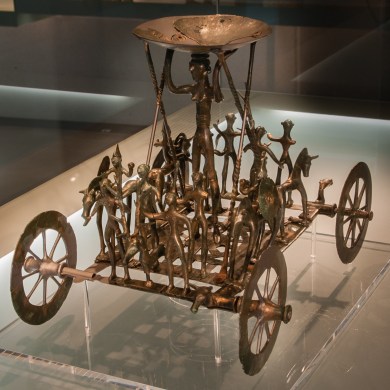 The Hallstatt Culture was discovered in Austria 1846, but the artifacts date as far back as 1200BC, from the Bronze Age to the Early Iron Age. Hallstatt Culture is also known as proto-Celtic. It is thought that there were a number of great migrations and mergers due to lack of resources and droughts, key in the developing culture making all Europeans Celts. These people seriously got around. As this site and others are uncovered there are more discoveries yet to be founds. For example, Le Tène culture which came at the end of the Hallstatt Culture. Was it a merge or a transformation? Outside some speculation of cannibalisms, not proven of course, family values were prominent throughout the culture. The Lectures on the Hallstatt Culture are always filled with a lively debate and often pull out some of the strangest notions. Their art and advances they made are astounding and fills the imagination.
 - .
. - Druids
The Druids were spiritual leaders, judges, and teachers among the ancient Celts. They were the original star architects, performing their rituals in sacred groves and aligned their architecture with celestial patterns. The Druids were the spiritual, judicial, and intellectual class of the ancient Celts. They didn’t leave much in writing, which is either mysterious or maddening, depending on your disposition. To add more to the Druid tapestry, they weren’t just mysterious forest dwellers. Druids were the intellectual backbone of Celtic society. They were the ones who memorized the laws, conducted rituals, and passed down oral traditions. - The Romans.
We know a lot of what we know from Roman accounts, and the Romans didn’t care much for them. Julius Caesar described them performing elaborate spiritual, including human sacrifices, though we have to take that with a grain of salt. The Romans eventually banned druidic practices, especially in Gaul and Britain, because they saw them as a threat to their authority. But the druids left their fingerprints all over the landscape, star-line doorways, sacred groves, and a reputation for knowing things that slipped through the cracks of history. - They didn’t write things down, partly because they believed sacred knowledge was too important to be left on paper. The Romans, especially Julius Caesar, saw them as a powerful class. Caesar wrote that the Druids were exempt from taxes and military service, which tells you something about their status. They also served as intermediaries between the gods and the people. Their rituals often involved oak trees, mistletoe, and elaborate ceremonies.
- When the Romans expanded into Gaul and Britain, they saw the Druids as a direct challenge to Roman authority. The Romans were all about order and written law, while the Druids operated on oral tradition and influence. So the Romans suppressed them fiercely, particularly under Emperor Tiberius and then Claudius, who banned druidic practices outright.
- Druids
The final blow came with the destruction of the Druid stronghold on the island of Anglesy by the Romans in 61 AD. - Yet the Druids left a long shadow. their star-lined doorways and rituals still fascinate us today.
- Their influence seeped into legends. For example, Merlin was said to be a high Druid initiative.
- The Decline
Some say that there is just one Druid left in the world today. It is no doubt a controversial claim - The Druids decline is a layered story. They did not vanish overnight. When the Romans expanded into Gaul and Britain, they saw the Druids as a major force, not just religious, but also political. The Druids held great sway over the Celtic tribes, and they were the keepers of laws, traditions, and that oral knowledge that didn’t line up with Roman rule. So, the Romans eventually banned druidic practices,, especially under Tiberius and Claudius.
- In 61 AD, the Roman governor Sutonius Palinus attacked their stronghold on the island of Anglesy in Wales. This was a great defeat for the Druids and Celts. The Romans destroyed sacred groves, altars, and druidic centers.
- Over time, Christianity spread through these same regions, and the Druids influence faded. Many of their roles, like being the spiritual intermediaries, were absorbed by the new religious structures.
- Moreover, since the Druids relied on oral traditions, a lot of their knowledge slipped away as their numbers dwindled.
- Druid Leaders
Noted by the Romans there were few Druid leaders allowed to speak to the leaders of Rome. Romans of course were very tight-lipped about individual names. They left no list of famous druids, save one figure who stands out. - ===
- hree Types of Druids
- Bards: Poets, Songs, Story Tellers.
Ovates : Telepathic Healers, Seers
Vates: Priests, Philosophers, Judges, Teachers. - The Elusive Mystic Druids [Drottes]
- Wizards of the Oak — The ancient Druids, were diviners, magicians, priests, teachers. They believed in the immortality of the soul, that the soul, upon death, took over the body of a living person. Some later believed the soul crossed over into other worlds. Druid Class often met in caves to perform rituals, and a Druid Priest would build his doorways through his hut in alignment to the stars in order to travel. Priests also had the ability to turn into an oak tree at will. If you find an oak out of place in the woods, it might very well be a Druid.
- 20 years Training —
- Nothing written – All knowledge Memorized —
- Entrance — Doorways to the stars.
- Stones — Ruins
- Healers —
- Telepathic —
- Seers —
- Poets & Singer —
- Story Tellers —
- Judges —
- Mistletoe — a mysterious magical plant
- Sacred Geometry —
- Masonry —
- The Groundwork for the Christian —
- ===
- Divitiacus of the Adoui, a Gaulic chieftain and a druid. He is the only druid we know of who Julius Caesar actually mentioned by name. Divitiacus had a diplomatic relationship with the Romans. He visited Rome and spoke before the Senate, this was a great honor. Caesar described Divitiacus as a friend of Rome, and one of the few druids we know who straddled both worlds, the Celtic and the Roman. He spoke fluent Latin, and though it was a rare glimpse, Divitiacus shows that druids weren’t just mysterious figures in the forest, some were right there in the thick of the politics. Divitiacus was respected for his wisdom and as a bridge to Rome. He was a druid who navigated the Roman world without losing his identity. Cicero said he was a master of physiologia (natural philosophy) and practiced augury (predicting the future by reading signs in nature) and unlike many other Divitiacus was comfortable as he made his way through the elite Roman society.
- Dumnorix — Brother of Divitiacus, hated the Romans.
- Boudica — A Celtic warrior queen who led a fierce rebellion against Roman occupation in 60-61 AD. In the revolt the Druids came together, however they did not win the battle. Though her revolt was ultimately crushed, Boudica remains a powerful symbol of resistance against oppression and represents a time when women held significant power in Iron Age Britain. Of that resistance, giving council, performing rituals, and stirring up that fierce Celtic spirit. And then there’s Tacitus’ account of the Roman assault on Anglesy. He describes druids on the shore raising their arms, calling down curses, awhoch rattled the Roman soldiers. It’s one of the few vivid images we have of druids in action, even though it’s from the Roman perspective. With the Divitiacus, Merlin’s echoes, and Boudica’s rebellion, the Druids left their mark in history.
- \
- The Elusive Mystic Druids [Drottes]
- Wizards of the Oak.
The ancient Druids, were diviners, magicians, priests, teachers. They believed in the immortality of the soul, that the soul, upon death, took over the body of a living person. Some later believed the soul crossed over into other worlds. Druids often met in caves to perform rituals, and a Druid Priest would build his doorways through his hut in alignment to the stars in order to travel. Priests also had the ability to turn into an oak tree at will. If you find an oak out of place in the woods, it might very well be a Druid. - =====
- .
- Three Types of Druids
Bards – Poets – Songs and story tellers.
Ovates – Telepathic – Healers and seers
Vates – Priests – Philosophers, judges, and teachers. - Entrance — Doorways
- Stones — Ruins
- Mistletoe — a mysterious magical plant.
- .
. - The Picts:
- Picts (native northern Britons) + incoming Scoti (Irish Gaels) → formed the Kingdom of Alba/Scotland (9th–10th centuries).
- Language shifted from Pictish (Brittonic-like) to Gaelic dominance.
- Religion transitioned from Celtic paganism to Celtic Christianity (monastic, artistic, with druid-like elements surviving in folklore).
- Picts (Latin “Picti” = painted/tattooed people): Ancient inhabitants of northern/eastern Scotland (3rd–9th centuries AD). Non-Gaelic Celtic or pre-Celtic people known for body art, symbol stones, and resistance to Romans. Language likely Brittonic (P-Celtic). They merged with incoming Scots/Gaels.
- Picts Scotty Picts Scotty These groups ( Scots/Scoti, broader Celts) interacted heavily in Scotland/Ireland:
- .
. - —–
- Picts Scotty
This seems to be a combined or variant reference to the Picts and Scots (Scoti). - Picts (Latin “Picti” = painted/tattooed people): Ancient inhabitants of northern/eastern Scotland (3rd–9th centuries AD). Non-Gaelic Celtic or pre-Celtic people known for body art, symbol stones, and resistance to Romans. Language likely Brittonic (P-Celtic). They merged with incoming Scots/Gaels.
- Scots/Scoti (Latin name for Gaelic Irish): Originally the Gaelic people from Ireland who migrated to western Scotland (Dál Riata kingdom, 5th–9th centuries). They gave Scotland its name and Gaelic language/culture. “Scotty” may be a playful or misspelled shorthand for “Scots” or “Scoti.” The merger of Picts and Scots formed the early Scottish kingdom (Alba) around the 9th–10th centuries.
- Celts (in Ireland & Scotland context)
- Language: Two main branches — Goidelic/Q-Celtic (Irish Gaelic, Scottish Gaelic, Manx) in Ireland and Scotland;
- Brythonic/P-Celtic (Welsh, Cornish, Breton) elsewhere. Gaelic (Irish/Scottish) became dominant in Scotland after Pictish absorption.
- Religion: Pre-Christian polytheism (nature deities, sacred groves, druids, seasonal festivals like Samhain/Imbolc). Druids were priests, judges, poets. Christianity arrived early in Ireland (St. Patrick, 5th century) and Scotland (St. Columba, Iona monastery), blending with Celtic customs (e.g., high crosses, saints replacing gods). No central “Celtic church” — it was localized.
- These groups (Picts, Scots/Scoti, broader Celts) interacted heavily in Scotland/Ireland:
- Picts (native northern Britons) + incoming Scoti (Irish Gaels) → formed the Kingdom of Alba/Scotland (9th–10th centuries).
- Language shifted from Pictish (Brittonic-like) to Gaelic dominance.
- Religion transitioned from Celtic paganism to Celtic Christianity (monastic, artistic, with druid-like elements surviving in folklore).
- Cymru = Welch
- —–
- ~Where as Ireland was the last piece of heaven that fell from the sky, Scotland was the first..
- Ireland & Scotland
- This seems to be a combined or variant reference to the Picts and Scots (Scoti).
- Scots/Scoti (Latin name for Gaelic Irish): Originally the Gaelic people from Ireland who migrated to western Scotland (Dál Riata kingdom, 5th–9th centuries). They gave Scotland its name and Gaelic language/culture. “Scotty” may be a playful or misspelled shorthand for “Scots” or “Scoti.” The merger of Picts and Scots formed the early Scottish kingdom (Alba) around the 9th–10th centuries.
- .
- Celts
- Ireland & Scotland
- Irish Black – Black Irish — a term often used for people of Irish descent that are darker than the stereotypical fair skinned and red-haired Celt. These folk have a Mediterranean look about them with dark hair, dark eyes, and olive complexion. A few theories include pre-Celtic indigenous populations that came down with Atlantis, known as pre-Indo-European. The Spanish Armada survivors who suffered through and survived the 1588 shipwrecks washed up on shore. The Ancient Celtic-Iberian migrations, those traveling through the Hallstatt generation.
- Celt’s Language: Two main branches — Goidelic and Q-Celtic: Irish Gaelic, Scottish Gaelic, Manx, in Ireland and Scotland. Brythonic and P-Celtic: Welsh, Cornish, Breton, elsewhere. Gaelic: Irish & Scottish, became dominant in Scotland after Pictish absorption.
- Celt’s Religion: Pre-Christian polytheism, they were nature deities, sacred groves, druids, seasonal festivals like Samhain & Imbolc. Druids were priests, judges, poets. Christianity arrived early in Ireland, St. Patrick, 5th century, and Scotland, St. Columba, Iona monastery, blending with Celtic customs: high crosses, with saints replacing gods. There was no central Celtic church — worship was localized.
- Eyes – One of the most striking features the Romans were obsessed with were the eyes of the Celts. Casius Dio gives us the only surviving physical description of Boudica. So he says in person she was very tall, with a sturdy figure and a piercing glance. Her hair was yellow and it fell below her waist. She wore a golden necklace around her neck and a multicolored tunic with a heavy cloak and she stood tall and strong holding a spear. Amianus Martellinus who writes about the Gauls says nearly all the Gauls are of a lofty stature fair and of ruddy complexion and a terrible sternness of their eyes. He goes on to say the women are more fierce than the men. The women are strong, blue eyed with a swelling neck, stating she’s gnashing her teeth and throws punches, like kicks missiles from a catapult. When Romans talk about the Germanic people during the time of Julius Caesar, the Germans caused panic in the army. The Gauls and merchants had warned the Romans that the Germans were enormous and very experienced warriors and that when they met them they could barely endure what they called their countenance and the fierceness of their eyes. The Romans were afraid. Even Caesar admitted his officers were hiding in their tents, some crying, while other made their wills. The fierce eyes of the Celts frightened them. Tacitus also giving us a description of Zjamans. He says all have fierce blue eyes, red hair, huge frames. The barbarians, foreigners, seem terribly frightening unusual to them. This image appears over and over again. These tall bodies with fair or reddish hair, fierce blue eyes were intimidating.
Banshee — list of names: The MacCarthys, Magraths, O’Neills, O’Rileys, O’Sullivans, O’Reardons,
O’Flahertys, and almost all other old families of Ireland.
- Celtic Seasons
The four main Gaelic cross-quarter days, tied to seasons and agricultural cycles in Irish, Scottish, and the Manx traditions. - Latha Bealltainn – Latha Buidhe Bealltainn)
Scottish Gaelic for Beltane or May Day (1 May). Literally “the yellow/golden/fortunate day of Beltane.” It marks the start of summer, with bonfires, purification rituals, and celebrations of fertility and protection. “Buidhe” adds connotations of brightness, luck, or the yellow flowers/broom blooming then. - Samhain – Gaelic festival on 31 October–1 November, marking the end of harvest and beginning of winter (the “darker half” of the year). Seen as the Celtic New Year in some traditions. It’s a liminal time when the veil between worlds thins, honoring the dead, with bonfires, feasting, divination, and protective measures against spirits.
- Imbolc – Imbolg – Gaelic festival on 1 February (or 31 Jan–2 Feb), marking the start of spring. From Old Irish “i mbolg” meaning “in the belly,” referring to pregnant ewes, lambing season. Associated with the goddess and saint Brigid embracing purification, fire, candles, and the first signs of new life. A time of renewal and hope after winter.
- Lughnasadh – Lughnasa, Lúnasa – Gaelic festival on 1 August, marking the beginning of the harvest season. Named after the god Lugh, who established it to honor his foster-mother Tailtiu; she died clearing land for agriculture. It involves feasting, games, thanksgiving for the first fruits and grain, and preparations for autumn and winter.
- Irish Harp – In Irish mythology, the harp is famously associated with the Tuatha Dé Danann, a supernatural race of ancient Irish gods. The most notable tale involves the magical harp Uaithne, which belonged to the Dagda, the chieftain of the Tuatha Dé Danann.
- .

Irish Dance
Celtic Irish ~500 BC onward
The origin and ancient roots of Irish dance evolved over centuries in Ireland. Celtic folk dances were often in circular formations around sacred trees during religious rituals. These stem from the Druids who honored nature and the sun. Early dances emphasized group patterns, music, and seasonal celebrations. Traces of these formations survive in Irish dances today. - Early Christian & Medieval period, 5th–12th centuries
Christianity blended with Celtic customs. Dances began to appear in religious ceremonies, feasts, and social gatherings. In the 12th century, the Normans introduced new forms like the “Carol,” circular singing and dancing, which influenced many village traditions. Irish dance and music were tied to social gatherings, storytelling, and clan identity — seen by the English as potential sites of rebellion or Catholic resistance. Crossroads dances, wakes, and feast days were communal events that reinforced Irish identity. Traveling dance masters taught intricate solo steps across Ireland, including reels, jigs, and hornpipes influenced by Scottish and English styles. - Penal Laws 1695–1728, English Suppression of Irish Dances
It all began after the Tudor conquest and the Flight of the Earls, 1607. England tightened control over Ireland. The Plantation of Ulster – 1609, displaced native Irish landowners, and English and British authorities viewed Gaelic culture; language, music and dance, as a threat to loyalty and Protestant dominance. Penal Laws passed after the Williamite, 1689–1691, and the Treaty of Limerick. Key measures included: Banning Catholics from owning land, restricting Catholic worship and clergy, voting, holding public office, educating their children, the suppressing Gaelic culture, bans on Irish language in schools, restrictions on assemblies, and indirect pressure on music and dance as “popish” or seditious activities. - While no law explicitly banned Irish dance, the Penal Laws made public gatherings risky. Dance masters were often itinerant and Catholic, so they operated secretly. Dancing at wakes, weddings, or crossroads could be interpreted as unlawful assembly or rebellion. English authorities and local magistrates sometimes raided or fined such events.
- Public gatherings were risky so Irish dance masters taught in secret — barns, kitchens, private homes, crossroads at night. Dancers had to be able to stop instantly if authorities approached. Arms held tight to the sides made the upper body look almost stationary from a distance or through a window and door crack — only the feet were moving fast below the waistline, so a passerby or spy might not immediately recognize it as dancing. Minimal upper-body movement became the norm. Over generations, this necessity turned into a stylistic feature. The arms-still, feet-blurring style became the “proper” way to dance — elegant, controlled, almost defiant in its restraint. The “arms glued to sides, feet going like mad” look was not an ancient Celtic tradition. It evolved as a survival mechanism during centuries of suppression, then got preserved and celebrated as “authentic Irish” when the culture was reclaimed.
- The English, British suppression peaked under the Penal Laws driven by fear of Catholic, and Gaelic rebellion, but weakened as Catholic rights returned. Dance went underground for over a century, survived in secret, and emerged stronger in the Gaelic Revival. The rigid, upright posture, arms held close to the sides, often completely still or with minimal movement, and feet performing rapidly, with intricate steps in close unison are directly linked to the suppression of Irish dance during the Penal Laws era.
- 18th–19th Centuries – Gradual Relaxation,
Little by little the Penal Laws were slowly dismantled after Catholic Relief Acts, 1778, 1782, 1793, allowing Catholics limited rights: land ownership, education, etc… By 1829, the Catholic Emancipation Act, led by Daniel O’Connell’s campaign removed most major restrictions. Suppression eased in the late 1700s and early 1800s as enforcement weakened. Dance masters resurfaced openly, teaching in barns and homes. - In the late 1800s, when the Gaelic Revival and the Gaelic League, revived and codified Irish dance, they formalized this posture as the standard for competitive stepdance. It was no longer just practical — it became symbolic of Irish resilience and identity under pressure. Suppression eased in the late 1700s and early 1800s as enforcement weakened. Dance masters resurfaced openly, teaching in barns and homes.
- Late 19th–20th centuries:
Gaelic Revival (1890s onward) revived and codified Irish dance. The Gaelic League (1893) standardized forms and created competitions. Sean-nós, “old style” improvised solo dance from western Ireland remained freer. Irish dance now reflected Celtic heritage, nature-based, communal, rhythmic, while blending influences; Norman, English, Scottish, and adapting through history. It’s both a living tradition and a global performance art today. - =================================
- oooooOOOOOOOOOOOOOOOOOOOOOOOOOOOOOOOOOOOOOOOOOOOOOOOOOOOOOOOOOOOOOOOOOOOOOOOOOOOOOOOOOOOOOOOOOOOOOOOOOOOOOOOOOOOOOOOOOOOOOOOOOOOOOOOOOOOOOOOOOOOOOOOOOOOOOOOOOOOOOOOOOOOOOOOOOOOOOOOOOOOOOOOOOOOooooooooo
- 376
The Barbarian Conspiracy, 367 AD, was perhaps the true end of Rome as an Empire. By 376 AD, the Northern Tribesmen did something they hadn’t done in hundreds of years. They united, and in Rome’s weakness laid the Empire North of the Rubicon to rest. - However, we can attribute Constantine (306 to 337 AD) with the conversion of the Celts to Christianity, but we can not disregard how the Celtic influences and defined Christianity, as we learn during the Byzantium Era. Regardless, the Holy Roman Empire throughout Europe was taking on a new shape.
- After the Barbarians Conspiracy, Rome as an Empire quickly dissolved. Soldiers who had fought in faraway battles returned home to the lands promised by the Generals. Those who stayed, especially, in Briton and Ireland, didn’t last long. They crossed the Channel into Gaul for better weather and more sophisticated people. Forts, towns, and cities that sprung up on the Isles and ports were abandoned. Most of the native folk moved further inland, creating small villages and hamlets. The Northern Europeans took root and power on the Mainland, and with the spreading of Christianity began a new idea of Empire.
- Ireland – Hibernia“land of winter”[Classic Latin] Greek geographical accounts. 320 BC Pytheas of Massalia called the island Iérnē (written Ἰέρνη). Roman historian Tacitus (98 AD), uses the name Hibernia. The people Hibernie Ἰουερνία Iouerníā was a Greek rendering of the Q-Celtic name *Īweriū, from which eventually arose the Irish names Ériu and Éire.
- “That island, compared with Britain, is of smaller dimensions, but it is larger than the islands of our own sea. In regard to soil, climate, and the character and ways of its inhabitants, it is not markedly different from Britain; we are better informed, thanks to the trade of merchants, about the approaches to the island and its harbours.
- Agricola had given shelter to one of the petty chieftains whom faction had driven from home, and under the cloak of friendship held him in reserve to be used as opportunity offered. I have often heard my father-in-law say that with one legion and a fair contingent of irregulars Hibernia could be overpowered and held, and that the feat would pay as against Britain also; for so Roman troops would be everywhere and liberty would sink, so to speak, below the horizon.”
- The Agricola by Roman historian Tacitus, c. 98 CE
- Gnaeus Julius Agricola was a Roman general and politician responsible for much of the Roman conquest of Britain.
- Tacitus, was a Roman historian and politician. Tacitus is widely regarded as one of the greatest Roman historians by modern scholars.
- Claudius – geography and tribes of Hibernia
- referred to as little Britain
- 16 tribes
- .
- Ireland — Hibernia “land of winter” [Classical Latin]
- Greek geographical accounts. 320 BC Pytheas of Massalia called the island Iérnē (written Ἰέρνη). Roman historian Tacitus, 98 AD, uses the name Hibernia. The people Hibernie Ἰουερνία Iouerníā was a Greek rendering of the Q-Celtic name *Īweriū, from which eventually arose the Irish names Ériu and Éire.
- “That island, compared with Britain, is of smaller dimensions, but it is larger than the islands of our own sea. In regard to soil, climate, and the character and ways of its inhabitants, it is not markedly different from Britain; we are better informed, thanks to the trade of merchants, about the approaches to the island and its harbours.
- Agricola had given shelter to one of the petty chieftains whom faction had driven from home, and under the cloak of friendship held him in reserve to be used as opportunity offered. I have often heard my father-in-law say that with one legion and a fair contingent of irregulars Hibernia could be overpowered and held, and that the feat would pay as against Britain also; for so Roman troops would be everywhere and liberty would sink, so to speak, below the horizon.”
- The Agricola, by Roman historian Tacitus, c. 98 CE. Gnaeus Julius Agricola was a Roman general and politician responsible for much of the Roman conquest of Britain.
- Claudius — geography and tribes of Hibernia, referred to as little Britain, 16 tribes
- 432 — written annals begin
- .
- ==================================================================
- St. Patrick
- Saint Patrick, 385 or 386 AD — The Apostle of Ireland
- 432 written annals
- Saint Patrick (385 or 386 AD) and the Druids
- Shakus Moore –
- Lugaid mac Lóegairi – High King of Ireland
- Roman Christianity vs Celtic Christianity
- Saint Patrick TITLE: Apostle of Ireland; Patron Saint of Ireland PRIMARY OCCUPATION: Bishop, Missionary FULL NAME: Maewyn Succat (birth name); Patricius (ecclesiastical name) BIRTH: c. 385–386 AD — Roman Britain (possibly Bannavem Taburniae, location debated) DEATH: c. 461 AD — Ireland PARENTS: Calpurnius (father, deacon and Roman official), Conchessa (mother) SIBLINGS: Unknown EDUCATION: Studied for the priesthood in Gaul; largely self-taught in scripture during captivity PHILOSOPHY/RELIGION: Celtic Christianity; deeply personal, mystical faith ACCOMPLISHMENTS: Converted Ireland to Christianity; established churches and monasteries; authored the Confessio and the Letter to Coroticus — the only surviving first-person voice from Roman Britain AFFILIATIONS: Celtic Church; Diocese of Armagh YEARS OF RULE OR VOCATION: Active in Ireland c. 432–461 AD SPOUSES: None (celibate) CHILDREN IN WEDLOCK: None OUT OF WEDLOCK: None recorded NAME OF SUCCESSOR: [tbc] WORKS/BOOKS: Confessio; Letter to Coroticus SYMBOL/EMBLEM: Shamrock (Trinity); serpent (the expulsion of the old gods) CONTEMPORARIES/RIVALS: The Druids of Tara; High King Lugaid mac Lóegairi; Roman church bishops skeptical of his mission LEGACY/INFLUENCE: Shaped Irish Christianity into its distinctive monastic, artistic, and mystical form; his feast day, March 17th, is celebrated on every continent MEMORABLE QUOTE: “Christ beside me, Christ before me, Christ behind me — Christ in the heart of every man who thinks of me.” — Lorica of Saint Patrick
- Born into a Romanized British family — his father a deacon, his grandfather a priest — Patrick was captured at sixteen by Irish raiders and carried off to serve as a slave shepherd on the hills of Connacht. Six years of cold, hunger, and isolation turned him inward. He prayed without ceasing. When at last a vision told him a ship was waiting, he walked two hundred miles to the coast and made his escape.
- He returned to Britain, studied for the priesthood, and then received another vision: “The Voice of the Irish,” calling him back to the island that had enslaved him. He went. He is the only person in late antiquity to leave an autobiographical confession, the Confessio, and it is raw — a man who wrestled with shame, with his lack of Latin education, and with the enormity of what he had been asked to do.
- What Patrick brought to Ireland was not the church of Rome in its full bureaucratic weight. He moved on foot, he negotiated with kings, he baptized in rivers, and he built around the existing rhythms of Celtic life. He confirmed what the Celts already sensed — that the spiritual world was close, that the soul was immortal, that the sacred lived in rivers, trees, and hills. He simply named the source differently.
- His encounter with the Druids is legendary. At Tara, the seat of the High King, he lit the Paschal fire on the Hill of Slane in direct defiance of the royal decree that no fire could burn before the king’s own fire. The Druids warned the king that if that fire was not extinguished, it would never be extinguished in Ireland. They were right.
- Lugaid mac Lóegairi — High King of Ireland at the time of Patrick’s mission
- Shakus Moore — [tbc, confirm speaker reference]
- Roman Christianity vs. Celtic Christianity — a lasting tension; the Irish church was monastic, artistic, locally governed, and deeply mystical long before Rome fully absorbed it
- The Synod of Whitby, 664 AD, was the formal moment when the Celtic church in Britain submitted to Roman practice on the dating of Easter — a small dispute with enormous symbolic weight
- “Christ beside me, Christ before me, Christ behind me, Christ within me, Christ beneath me, Christ above me.” — from the Lorica of Saint Patrick (The Breastplate), c. 5th century
- ========================
- Celtic Thresholds & Mythic Dawn
- Organized Druidism & Its End, c. 1st century BC – c. 600 AD. Druids as the intellectual, religious, and political elite of Celtic society: priests, judges, poets, astronomers, and keepers of oral tradition. Roman campaigns accelerate decline: Tiberius bans Druidism, 1st century AD; Claudius intensifies suppression (c. 54 AD); final stronghold on Anglesey crushed by Suetonius Paulinus, 61 AD. Christianization completes the process: Patrick’s mission in Ireland, 5th century, undermines remaining structures; organized Druidism effectively extinct by ~600 AD in Britain and Ireland. Traces linger only in folk practices and oral memory, scattered among rural communities.
- Celtic Conversion to Christianity, c. 400–800 AD, Early adoption in Ireland: St. Patrick, active c. 432–461 AD establishes churches, monasteries, and a uniquely Celtic form of Christianity relatively free from direct Roman oversight. Insular Christianity flourishes: Irish monastic foundations, e.g., Clonmacnoise, Iona by Columba c. 563 AD. blend Celtic artistic motifs with Christian theology. Conversion on the mainland and Britain: Missionaries like Columbanus, d. 615 AD. Carry Irish-style monasticism to Gaul and Italy; Anglo-Saxon missions, Augustine of Canterbury 597 AD, and synods, e.g., Whitby 664 AD, gradually align practices with Rome. Synthesis rather than erasure: Celtic knots, high crosses, and illuminated manuscripts, e.g., Book of Kells, late 8th century, preserve pre-Christian aesthetic and spiritual echoes within a Christian framework.
- Arthurian Myths & the Seeds of Chivalry, c. 500–late 800s AD. Possible historical kernel: a Romano-British leader, c. 500 AD, resisting Anglo-Saxon advance; early mentions in Welsh sources, Gildas c. 540 AD, Nennius’ Historia Brittonum c. 830 AD lists battles, including Badon. Mythic growth in oral and early written tradition: Geoffrey of Monmouth’s Historia Regum Britanniae, c. 1136 AD, will later expand the legend, but roots form in 9th-century Welsh poems and tales of a heroic war-leader. Emerging knightly ideals: stories of valor, loyalty, and resistance begin to circulate among Britons; faint seeds of courtly honor and the “Matter of Britain” take shape by the late 800s. Cultural bridge: Arthur as a symbol of lost Celtic glory, gradually Christianized and ready to bloom into full medieval romance in later centuries.
- Key Pillars
- ~Threshold Reflection Druidic Twilight: Organized pagan wisdom fades under Roman and Christian pressure, leaving only whispers in the wind.
~Celtic–Christian Synthesis: A unique fusion emerges—monastic golden age in Ireland and Britain preserves both old artistry and new faith.
~Arthurian Dawn: Seeds of heroic myth sprout amid loss, planting the knightly ideals that will flower in the high medieval world.
~Threshold Crossing: October’s thinning veil and falling leaves mirror the Celtic liminal spirit—old pagan world yielding to the Christian light. - —————————–>Summary — Key Pillars
- ~Threshold Reflection — Druidic Twilight: Organized pagan wisdom fades under Roman and Christian pressure, leaving only whispers in the wind — and in the stories we still tell each other on October nights.
- ~Celtic–Christian Synthesis: A unique fusion emerges — monastic golden age in Ireland and Britain preserves both old artistry and new faith. Patrick does not destroy Druidism; he transforms it.
- ~Arthurian Dawn: Seeds of heroic myth sprout amid loss, planting the knightly ideals that will flower in the high medieval world. The Round Table is the Druid’s circle with a cross at the center.
- ~The Fall of Hastings: In 1066 the Anglo-Saxon world ends. Harold falls. William rises. The English language, as we speak it, begins to take its modern shape in the collision that follows.
- ~Threshold Crossing: October’s thinning veil and falling leaves mirror the Celtic liminal spirit — old pagan world yielding to the Christian light, old kings yielding to new conquerors, old gods becoming the saints who replace them. Nothing ends cleanly in Celtic history. Everything becomes something else.
- From Samhain fires to the fires at Hastings, October holds the whole arc: the world before Rome, the world Rome made, the world that outlasted Rome, and the world that came after. These are the bones of who we are.
- .
- aaaaaaaaaaaaaaaaaaaaaaaAAAAAAAAAAAAAAAAAAAAAAAAAAAAAAAAAAAAAAAAAAAAAAAAAAAAAAAAAAAAAAAAAAAAAAAAAAAAAAAAAAAAAAAAAAAAAAAAAAAAAAAAAAAAAAAAAAAAAAAAAAAAAAAAAAAAAAAAAAAAAAAAAAAAAAAAAAAAAAAAAAAAAAAAAAAAAAAAaaaaaaaaaaa
- =======================================================
- The Late Roman, Early Christians and the influence of the Celts —
- Merlin The Ghost of the Druids —
- M3 – Merlin — Merlin’s relationship with the Druids is one of those delightful blends of legend and history. In the Arthurian tales, Merlin is often depicted as a figure who embodies druidic wisdom, a bridge between the old pagan traditions and the emerging Christian world. He is often described as a seer, a shape- shifter, a keeper of ancient knowledge, and sometimes even a wild man of the woods. Many interpretations see him as a kind of last druid, someone who carries the echoes of that ancient Celtic tradition into the Arthurian court. Merlin’s magic is rooted in the natural world, much like the druids reverence for nature, the stars, and sacred groves. Of course the druids we know from history were mostly gone by the time these legends were written down. But Merlin became the literary echo of that lost druidic world, wrapped up in prophecy, mystery, and the wisdom of the old ways.
- Arthur, King of Brits
400/500 AD
Who was Arthur?
Arthur was a bastard child of Uther Pendragon. He was raised by a sorcerer named Merlin. Through his heroic deeds, and by uniting the tribes under Roman Rule, he became the First King of the Brits. He was known for gathering 12 loyal, true and brave men called the Knights of the Round Table. Their mission was to search and find the Holy Grail. They fought many battles in the name of Christ and Christendom. Arthur’s final battle was at Camlann. He was buried on the island of Avalon. I dare say no more, for the lecture given on the life of Arthur is not to be missed. - ——
- The Grail Legend
Christian Mysteries — Recounts the life of Christ from the Gnostic perspective. - The Grail — The cup Christ used at the Last Supper, and Joseph of Arimathea used to collect the blood from the dying Savior on the cross after the Roman soldier stabbed him with the Spear Of Destiny.
- Spear of Destiny — The Spear fashioned from the tree of Adam, used throughout history, including when Christ was stabbed on the cross. It has a long history, and is known to defeat all manner of daemons and win many battles.
- Tree of Adam — The seed placed in Adam’s mouth upon his burial that sprung forth a tree. The wood from the tree used in the building of the Ark, the cross Christ died on, and the shaft of the Spear of Destiny.
- Arthur Pendragon
- Arthur, King of the Brits 400/500 AD
- Who was Arthur? Arthur was a bastard child of Uther Pendragon. He was raised by a sorcerer named Merlin. Through his heroic deeds, and by uniting the tribes under Roman Rule, he became the First King of the Brits. He was known for gathering twelve loyal, true, and brave men called the Knights of the Round Table. Their mission was to search and find the Holy Grail. They fought many battles in the name of Christ and Christendom. Arthur’s final battle was at Camlann. He was buried on the island of Avalon. I dare say no more, for the lecture given on the life of Arthur is not to be missed.
- The historical kernel: Early mentions appear in Welsh sources — Gildas, c. 540 AD, and Nennius’ Historia Brittonum, c. 830 AD, which lists twelve battles including the great victory at Badon Hill. Geoffrey of Monmouth’s Historia Regum Britanniae, c. 1136 AD, will later expand the legend into its full form. But the roots are here, in the chaos after Rome’s withdrawal — a Romano-British war leader holding the line against the Saxon advance. Whatever he was in history, what he became in legend is one of the most powerful stories the Western world has ever produced.
- The deeper current: Arthur is not only a king. He is the once and future king — the one who does not die but sleeps, waiting to return when Britain needs him most. This is the Celtic soul speaking. The Druids believed the soul does not end. Arthur is the supreme expression of that belief carried forward into Christian clothing.
- =====
- The Grail Legend
- Christian Mysteries — Recounts the life of Christ from the Gnostic perspective.
- The Grail — The cup Christ used at the Last Supper, and which Joseph of Arimathea used to collect the blood from the dying Savior on the cross after the Roman soldier stabbed him with the Spear of Destiny.
- Spear of Destiny — The Spear fashioned from the tree of Adam, used throughout history, including when Christ was stabbed on the cross. It has a long history and is known to defeat all manner of daemons and to win many battles.
- Tree of Adam — The seed placed in Adam’s mouth upon his burial that sprung forth a tree. The wood from that tree was used in the building of the Ark, the cross Christ died on, and the shaft of the Spear of Destiny.
- Joseph of Arimathea — He is the bridge between the Crucifixion and Britain. The legend holds that Joseph carried the Grail to Glastonbury, on the Isle of Avalon — the same island to which Arthur was carried after Camlann. Two mysteries, one place, one thread.
- Parsifal — The Question of the Grail — The great failure at the heart of the legend is not a lack of courage but a failure of compassion. Parsifal sees the Grail King suffering and says nothing. The question he fails to ask is simply this: What ails thee? The Grail cannot be seized by force or cunning. It can only be found by one who has suffered enough to ask another man about his pain. The lecture on Parsifal is scheduled for a Sunday afternoon. [confirm date, time, location]
- ========
- . .
- Pre-Christian Celtic Influences —
- Druids, myths, and rituals linger in medieval culture.
- Leo IV’s Proto-Crusade (849 AD): Battle of Ostia, early holy war. Photian Schism (869–870 AD): East-West split; church wealth breeds corruption; end of the Holy Spirit in the East-West agreement. Rollo and Normandy (911 AD): Viking-Christian pact births the powerful duchy that will become the Conqueror’s base. Anglo-Saxon England (~900–1066 AD): Alfred to Hastings — a kingdom forged, defended, and lost. Monasticism’s Rise (~1000–1100 AD): Benedictine monasteries drive culture and faith. Anselm’s Scholasticism (1033–1109 AD): Ontological argument fuses faith with reason. Investiture Controversy (1075–1122 AD): Popes battle emperors over bishop control.
- ===============================
- =====
- Celtic Thresholds & Mythic Dawn
- Organized Druidism & Its End, c. 1st century BC – c. 600 AD. Druids as the intellectual, religious, and political elite of Celtic society: priests, judges, poets, astronomers, and keepers of oral tradition. Roman campaigns accelerate decline: Tiberius bans Druidism, 1st century AD; Claudius intensifies suppression, c. 54 AD; final stronghold on Anglesey crushed by Suetonius Paulinus, 61 AD. Christianization completes the process: Patrick’s mission in Ireland, 5th century, undermines remaining structures. Organized Druidism effectively extinct by c. 600 AD in Britain and Ireland. Traces linger only in folk practices and oral memory, scattered among rural communities.
- Celtic Conversion to Christianity, c. 400–800 AD. Early adoption in Ireland: St. Patrick, active c. 432–461 AD, establishes churches, monasteries, and a uniquely Celtic form of Christianity relatively free from direct Roman oversight. Insular Christianity flourishes: Irish monastic foundations — Clonmacnoise, Iona by Columba c. 563 AD — blend Celtic artistic motifs with Christian theology. Missionaries like Columbanus (d. 615 AD) carry Irish-style monasticism to Gaul and Italy. Anglo-Saxon missions, Augustine of Canterbury (597 AD), and the Synod of Whitby (664 AD) gradually align practice with Rome. Synthesis rather than erasure: Celtic knots, high crosses, and illuminated manuscripts — the Book of Kells, late 8th century — preserve pre-Christian aesthetic and spiritual echoes within a Christian framework.
- Arthurian Myths & the Seeds of Chivalry, c. 500–late 800s AD. Possible historical kernel: a Romano-British leader, c. 500 AD, resisting the Anglo-Saxon advance. Early mentions in Welsh sources — Gildas c. 540 AD; Nennius’ Historia Brittonum c. 830 AD lists the battles, including Badon. Geoffrey of Monmouth’s Historia Regum Britanniae, c. 1136 AD, will later expand the legend, but the roots form in 9th-century Welsh poems. Arthur as a symbol of lost Celtic glory, gradually Christianized and ready to bloom into full medieval romance in later centuries.
- =XXXXXXXXXXX
- =XXXXXXXXXXX
- NOVEMBER
- Carolingians

- =XXXXXXXXXXX
- =XXXXXXXXXXX
- =XXXXXXXXXXX
- =XXXXXXXXXXX
- =XXXXXXXXXXX
- =XXXXXXXXXXX
- =XXXXXXXXXXX
- =XXXXXXXXXXX
- nnnnnnnnnnNNNNNNNNNNNNNNNNNNNNNNNNNNNNNNNNNNNNNNNNNNNNNNNNNNNNNNNNNNNNNNNNNNNNNNNNNNNNNNNNNNNNNNNNNNNNNNNNNNNNNNNNNNNNNNNNNNNNNNNNNNNNNNNNNNNNNNNNNNNNNNNNNNNNNNNNNNNNNNNNNNNNNNnnnnnnnnnnn
- October/nOV
- NEXT MONTH OCT
- 1. The Expansion of the Columban Network
Monastery Foundations: St. Columba founded the island monastery of Iona in 563 AD, which established a highly organized monastic network across Scotland, Ireland, and northern England. - High-Level Scriptoriums: These foundations built the exact physical infrastructure—the scriptoriums (scribal workshops)—and gathered the immense economic wealth (livestock for vellum, specialized labor) required to produce an ultra-luxury manuscript.
- 2. Evolution of Style (The Precursor Texts) The monks did not invent the Insular style for the Book of Kells. They built upon generations of experimental manuscript design:
- Book of Durrow (c. 650–700 AD): Monks mastered the “carpet page” and complex Celtic interlace, proving that abstract geometric design could serve a holy purpose.
- Lindisfarne Gospels (c. 700 AD): Scribes integrated Anglo-Saxon metalwork styles and zoomorphic (animal) patterns into gospel text.
- The Book of Kells (c. 800 AD): The Kells scribes took these exact elements—interlace, animal shapes, and massive initial letters—and pushed them to the highest possible level of complexity.
- 3. The Quest for Global Materials Scribal networks made immense efforts to import, test, and manufacture pigments from all over the known world: Local Ingredients: Scribes harvested woad for blue, orpiment for vibrant yellow, and local lichens.
- Continental Trade: Monks actively tapped into European trade routes to secure rare artistic materials, establishing a palette that would make the Book of Kells uniquely vivid.
- 4. Preservation under Viking Threat The Final Catalyst: In the late 700s and early 800s, Viking raids devastated Iona. The Flight to Kells: The monks made a heroic effort to move their community, their relics, and their ongoing manuscript work to the new, safer inland abbey at Kells, Ireland in 806 AD. This move allowed them to protect, and potentially finish, the book.
- Pre-Christian Celtic Influences —
- Druids, myths, and rituals linger in medieval culture.
- Leo IV’s Proto-Crusade (849 AD): Battle of Ostia, early holy war. Photian Schism (869–870 AD): East-West split; church wealth breeds corruption; end of the Holy Spirit in the East-West agreement. Rollo and Normandy (911 AD): Viking-Christian pact births the powerful duchy that will become the Conqueror’s base. Anglo-Saxon England (~900–1066 AD): Alfred to Hastings — a kingdom forged, defended, and lost. Monasticism’s Rise (~1000–1100 AD): Benedictine monasteries drive culture and faith. Anselm’s Scholasticism (1033–1109 AD): Ontological argument fuses faith with reason. Investiture Controversy (1075–1122 AD): Popes battle emperors over bishop control.
- =================================================================================
- Alfred the Great, 849–899 AD King of the West Saxons, 871 to 886. Anglo-Saxon King, 886–899.
- From Alfred to Godwinson
- Alfred is one of the most important men in English history — and one of the least celebrated in popular memory. When he took the throne, the Danes had overrun nearly every Anglo-Saxon kingdom. Alfred was pushed back to the marshes of Somerset, hiding in the fens, famously burning the cakes of a woman who did not know she was sheltering a king. He came back. He rebuilt his army, defeated the Danish king Guthrum at the Battle of Edington in 878 AD, and then did something no English king had done before: he made Guthrum a Christian and created a peace that held.
- But Alfred was not only a general. He was a scholar. He learned Latin in middle age and personally translated Boethius, Gregory the Great, and Orosius into English. He established the first English school system. He created the Anglo-Saxon Chronicle — the first sustained record of English history in the English language. He issued a comprehensive legal code. He built a navy.
- Alfred understood that a people without their own language, their own literature, and their own law were a people who could be erased. He was right, and the irony of history is that it happened anyway — not from the Danes, but from the Normans, 167 years after his death.
- “So clean and so clear was his mind that he could not forget anything that he had once read or heard.” — Asser, Life of King Alfred, c. 893 AD
- . .
- Alfred the Great TITLE: King of the Anglo-Saxons PRIMARY OCCUPATION: Monarch, Scholar, Military Commander FULL NAME: Ælfrēd of Wessex BIRTH: 849 AD — Wantage, Berkshire, England DEATH: 26 October 899 AD — Winchester, England PARENTS: Æthelwulf of Wessex (father), Osburh (mother) SIBLINGS: Four older brothers, all kings before him; one sister EDUCATION: Largely self-taught; traveled to Rome twice as a child; learned Latin in his thirties PHILOSOPHY/RELIGION: Devout Christian; Augustinian in temperament ACCOMPLISHMENTS: Halted the Danish conquest of England; defeated Guthrum at Edington (878); created the Danelaw peace; established England’s first school system; translated key Latin texts; founded the Anglo-Saxon Chronicle; built the first English navy AFFILIATIONS: House of Wessex; Kingdom of England YEARS OF RULE OR VOCATION: 871–899 AD SPOUSES: Ealhswith of Mercia CHILDREN IN WEDLOCK: Five, including Edward the Elder (successor) and Æthelflæd, Lady of the Mercians OUT OF WEDLOCK: None recorded NAME OF SUCCESSOR: Edward the Elder WORKS/BOOKS: Translations of Boethius, Gregory the Great’s Pastoral Care, Orosius, Bede; the Anglo-Saxon Chronicle (commissioned) SYMBOL/EMBLEM: The Alfred Jewel — ÆLFRED MEC HEHT GEWYRCAN (“Alfred ordered me made”) CONTEMPORARIES/RIVALS: Guthrum (Danish king); Pope John VIII LEGACY/INFLUENCE: Called “the Great” — the only English monarch to hold that title; father of English prose literature; architect of the English national identity MEMORABLE QUOTE: “So long as I have lived, I have striven to live worthily.” — attributed
- Alfred the Great, 849 – 899. King of the West Saxons, 871 to 886, Anglo-Saxon King, 886 – 899.
- From Alfred to Goodwin
- =====
- saxon – normans
- 1066 AD
- The story of the Bayeux Tapestry – the Norman Conquest
- This work is 200 feet long
- Proposal – Prints, Shirts and Banners
- Harold Godwinson, 1022–1066 TITLE: King Harold II of England PRIMARY OCCUPATION: Monarch; Military Commander; Earl of Wessex FULL NAME: Harold Godwinson BIRTH: c. 1022 AD — England DEATH: 14 October 1066 — Battle of Hastings, East Sussex, England PARENTS: Godwin, Earl of Wessex (father); Gytha Thorkelsdóttir (mother, Danish noble descent) SIBLINGS: Several, including Tostig Godwinson (rival brother, killed at Stamford Bridge) EDUCATION: Noble Anglo-Saxon military and administrative training PHILOSOPHY/RELIGION: Christian ACCOMPLISHMENTS: Defeated the Norwegian King Harald Hardrada at the Battle of Stamford Bridge, 25 September 1066 — one of the decisive battles of the Viking Age. Marched his army 300 miles south in four days to meet William. Reigned 282 days. AFFILIATIONS: House of Godwin; Kingdom of England YEARS OF RULE OR VOCATION: 6 January 1066 – 14 October 1066 SPOUSES: Edith of Mercia (hand-fast wife); Ealdgyth of Mercia (formal queen) CHILDREN IN WEDLOCK: Several with Ealdgyth; many with Edith OUT OF WEDLOCK: Several NAME OF SUCCESSOR: Edgar Ætheling (uncrowned); William I in fact WORKS/BOOKS: None SYMBOL/EMBLEM: Dragon standard of Wessex; the Fighting Man standard CONTEMPORARIES/RIVALS: William the Conqueror; Harald Hardrada; his own brother Tostig LEGACY/INFLUENCE: Last Anglo-Saxon king of England; his death at Hastings closed a world. Depicted in the Bayeux Tapestry with an arrow through the eye — almost certainly a later literary addition, but the image endures. MEMORABLE QUOTE: “He bore the weight of two kingdoms in one year — and gave his life for one of them.”
- William the Conqueror — William of Normandy, c. 1028–1087 TITLE: Duke of Normandy; King of England PRIMARY OCCUPATION: Monarch; Military Commander FULL NAME: William I of England; Guillaume le Conquérant BIRTH: c. 1028 AD — Falaise, Normandy, France DEATH: 9 September 1087 AD — Rouen, Normandy, France PARENTS: Robert I, Duke of Normandy (father); Herleva, a tanner’s daughter (mother, unmarried) SIBLINGS: Several half-siblings through his father EDUCATION: Military training; Norman court; deeply practical intelligence PHILOSOPHY/RELIGION: Christian; politically shrewd in his use of papal support ACCOMPLISHMENTS: Won the Battle of Hastings, 14 October 1066; was crowned King of England on Christmas Day 1066 at Westminster Abbey; ordered the Domesday Book (1086) — the most comprehensive survey of a medieval kingdom ever undertaken; rebuilt England’s administrative, legal, and ecclesiastical structure from the ground up AFFILIATIONS: Norman Dynasty; Catholic Church YEARS OF RULE OR VOCATION: Duke of Normandy 1035–1087; King of England 1066–1087 SPOUSES: Matilda of Flanders CHILDREN IN WEDLOCK: Four sons including William II (Rufus) and Henry I; several daughters OUT OF WEDLOCK: At least one NAME OF SUCCESSOR: William II (Rufus) in England; Robert Curthose in Normandy WORKS/BOOKS: None authored; the Domesday Book was commissioned under his order SYMBOL/EMBLEM: Two lions passant (Norman heraldry); the Bayeux Tapestry (commissioned by his half-brother Odo) CONTEMPORARIES/RIVALS: Harold Godwinson; Harald Hardrada; Philip I of France LEGACY/INFLUENCE: Changed the English language, law, architecture, and ruling class permanently. Modern English is his doing as much as anyone’s — the French he imposed collided with Anglo-Saxon and produced something new. Every English monarch since is his descendant. MEMORABLE QUOTE: “By the splendour of God, I have taken possession of my realm; the earth of England is in my two hands.”
- . .
- Show Image Bayeux Tapestry
- .
- Show Image Harold Godwinson, 1022–1066, Crowned King Harold II of England. He was the last Anglo-Saxon English King. Harold reigned from 6 January 1066, until his death at the Battle of Hastings, 14 October 1066.
- . .
- Show Image William the Conqueror — William of Normandy
- . .
- Albion
- In Albion, by 1000 AD, the now Anglo-Saxons were baptized Christian. They had an established hierarchy, with a king at the top and slaves at the bottom — slaves in this culture were those who could not pay their debts or had committed crimes. The people were mostly farmers, growing wheat and barley, foraging in the forests, picking what grew naturally around their lands. If there was water nearby, they fished, used bows and arrows for wild game, and stone wheels to grind their grains. They lived above ground in low thatched roof hutches and in rounds. They raised and domesticated animals: goats and rabbits, boars, and, most importantly, sheep. Sheep provided them with food, wool, milk, and tallow.
- Still, the Anglo-Saxons found themselves in endless battles and raids by the Viking hoards. Men took on the burden of defending their families and villages. The Vikings would often burn down a small village, sending a message to the next. This would force the next village to organize a collection of silver to pay a tribute — extortion was more like it — in order to leave a village alone. At least for that season. When the Vikings weren’t paid, or paid enough, poor farming folk could lose everything, including their life.
- Overall, the Anglo-Saxons and Celts of the Middle Ages lived very much as a naturalist might live today. Although simple changes in hygiene, medicines, and safety have allowed us to live longer and smell better, outside the elite they were always fit and never fat. They were a religiously superstitious people, believing in ghosts, goblins, fairies, angels, and saints — but they also enjoyed a good joke or limerick. They were well organized in their systems of government, in the raising of their children, in the importance of family and traditions. They were hardworking people full of compassion. Most of all, roughly 80% of them, were us.
- . .
- =====
- saxon – normaNS
- ==========
- The Anglo-Saxons
- By 500 AD every village had a local Priest, Smythe, Farmers, and Woodsmen. Male children were expected to take on their father’s craft. The practiced skills were: Smythe, Carpentry, Pottery, Farming, and Animal Husbandry. Skills were passed down to their sons, if they lived. Women worked with the other women in the kitchen and whatever else needed to be done. They were expected to marry and bear live children. Families would choose a proper husband for their daughters. However, if the girl did not wish to marry a particular man, they were not forced to do so. Men did much of the hard work while the women raised the children, kept busy grinding kernels for flour, baking bread, foraging in the forest, tending the animals, sewing and weaving clothes. Sadly, both men’s and women’s hygiene was atrocious. They suffered from fleas, lice, ticks, and several horrible internal parasites.
- The King would mint all coins used, called silver pennies. A new batch was made every seven years. These coins were used as trade, and if any were found to be stolen or counterfeit, one could expect to lose a hand and have that hand nailed to the door of their house. They also had police — mostly a group of watchmen who kept the peace — however, they had little to no real judicial powers.
- Travelers who passed through the villages or hamlets would recite the news or current events as poetic verse and song. The priest could read books; working men and women, peasants, were not literate. However, all knew the Epic Tale of Beowulf by heart, having been taught since childhood. Kin, travelers, and poets would sing it often. Beowulf is the true poem of the Anglo-Saxon and Barbarian Tribes. It is what still unites and identifies them as a people today.
- .
- Beowulf Listen!
- Hwæt! We Gardena in geardagum, þeodcyninga, þrym gefrunon, hu ða æþelingas ellen fremedon. Oft Scyld Scefing sceaþena þreatum, monegum mægþum, meodosetla ofteah, egsode eorlas. Syððan ærest wearð feasceaft funden, he þæs frofre gebad, weox under wolcnum, weorðmyndum þah, oðþæt him æghwylc þara ymbsittendra ofer hronrade hyran scolde, gomban gyldan. þæt wæs god cyning.
- Listen! We of the Spear-Danes in days of yore Of those folk-kings the glory have heard, How those noblemen brave-things did. Often Scyld, son of Scef, from enemy hosts From many people mead-benches took, terrorized warriors. After first he was helpless found, he knew the recompense for that, grew under the sky, in honors thrived, until to him each of the neighboring tribes over the whale-road had to submit, tribute yield. That was a good king!
- . .
- From Vikings to Normans
- The Viking age proper begins around 793 AD with the raid on Lindisfarne — the great monastery off the Northumbrian coast — and it does not truly end until 1066. For nearly three centuries the peoples of Albion lived under the threat, and often the reality, of the longship.
- But the Vikings were not only raiders. They were traders, settlers, and colonizers. In the north and east of England they planted themselves so thoroughly that the region became known as the Danelaw — a territory operating under Norse custom, Norse law, and Norse language. Place names ending in –by (farm), –thorpe (village), and –thwaite (clearing) are their fingerprints still visible on the English map today.
- The relationship was not simply violence. Anglo-Saxon and Viking cultures cross-pollinated continuously. Viking craftsmen were extraordinary. Their poetry — the skaldic verse — was as complex and technically demanding as anything the Celts produced. Their cosmology, with its world-tree Yggdrasil, its nine realms, its doomed gods fighting against inevitable destruction at Ragnarök, was a mythology of tragic grandeur that deeply impressed the peoples they lived among.
- From Viking to Norman is not a story of two separate invasions. It is one story. The Normans — Northmen — were Vikings who had settled in northern France in 911 AD under their leader Rollo, accepted baptism, learned French, and spent a hundred and fifty years becoming the most militarily sophisticated people in Western Europe. When William crossed the Channel in 1066, he brought with him Viking ferocity dressed in the language and manners of France. The result was England.
- Key figures and events:
- Rollo of Normandy, c. 860–930 AD — Viking chieftain who accepted the Duchy of Normandy from the Frankish king; founder of the Norman line
- King Canute (Cnut), 994–1035 AD — King of England, Denmark, and Norway; perhaps the most powerful ruler in northern Europe in his time; the story of Canute and the tide is almost certainly misunderstood — it was an act of humility before God, not arrogance before the sea
- Edward the Confessor, 1003–1066 AD — Last Anglo-Saxon king in the old mold; deeply pious, childless, and the man whose ambiguous death-bed wishes set three men on a collision course for the throne
- ====
- The Mabinogion
- The Mabinogion is the oldest prose literature of Britain, a collection of eleven tales preserved in two medieval Welsh manuscripts — the White Book of Rhydderch, c. 1350, and the Red Book of Hergest, c. 1382–1410 — but rooted in oral tradition reaching back centuries before either manuscript was written.
- The word mabinogi likely derives from the Welsh mab, meaning son or youth, suggesting these were originally tales of a hero’s formation and initiation. Lady Charlotte Guest first translated and published them for an English audience in 1838–1845, and the title Mabinogion — her coinage — has remained.
- The tales fall into loose groups. The Four Branches are the oldest and most mythological, tracing the deeds of figures from the Otherworld — Pwyll, Branwen, Manawydan, and Math — through a landscape where the veil between worlds is paper-thin. Gods walk as men, women are transformed into owls, kings make bargains with death, and the natural and supernatural world are in constant conversation.
- The Arthurian tales within the collection — Culhwch and Olwen, The Dream of Rhonabwy, Gereint and Enid and others — present an Arthur quite different from the French chivalric romances. Here Arthur is rougher, more Celtic, more magical. His court is not Camelot in the French sense; it is a war band of extraordinary men operating at the edge of the known world.
- The Mabinogion matters because it is the memory of a people in the act of being displaced — by Romans, by Saxons, by Normans — who encoded their entire cosmology, their values, their sense of beauty and justice and grief, into story. Every tale is also a lesson in how to live.
- Key tales for October:
- Pwyll, Prince of Dyfed — the Otherworld bargain, the testing of a man’s honor
- Branwen, Daughter of Llŷr — war, sacrifice, and the cauldron of rebirth
- Culhwch and Olwen — the oldest Arthurian tale; thirty-nine impossible tasks and a young man who refuses to give up
- The Dream of Macsen Wledig — Rome and Britain entwined in a single dream
- ====
- =================================================================================
- saxon – normans
- 1066 AD
- The story of the Bayeux Tapestry – the Norman Conquest
- This work is 200 feet long
- Proposal – Prints, Shirts and Banners
- . .
- Show Image Bayeux Tapestry
- .
- Show Image Harold Godwinson, 1022–1066, Crowned King Harold II of England. He was the last Anglo-Saxon English King. Harold reigned from 6 January 1066, until his death at the Battle of Hastings, 14 October 1066.
- . .
- Show Image William the Conqueror — William of Normandy
- .
- ———–
- crucible [november / january
- NOVEMBER
- The Anglo-Saxons
By the 500 AD every village had a local Priest, Smythe, Farmers and Woodsmen. Male children were expected to take on their father’s craft. The practiced skills were: Smythe, Carpentry, Pottery, Farming, and Animal Husbandry. Skills were passed down to their sons, if they lived. Women worked with the other women in the kitchen and whatever else needed to be done. They were expected to marry and bear live children. Families would choose a proper husband for their daughters. However, if the girl did not wish to marry a particular man, they were not forced to do so. Men did much of the hard work while the woman raised the children, kept busy grinding kernels for flour, baking the bread, forging in the forest, tending the animals, sewing and weaving clothes. Sadly, both men’s and women’s hygiene was atrocious. They suffered from fleas, lice, tics and several horrible internal parasites. - The King would mint all coins used, called silver pennies. A new batch was made every 7 years. These coins were used as trade, and if any were found to be stolen or counterfeit, one could expect to lose a hand and have that hand nailed to the door of their house. They also had police, mostly a group of watchmen who kept the peace. however, they had little to no real judicial powers.
- Travelers who passed through the villages or hamlets would recite the news or current events as poetic verse and song. The priest could read books, working men and women, peasants were not literate. However, all knew the Epic Tale of Beowulf by heart, having been taught since childhood. Kin, travelers and poets would sing it often. Beowulf is the true poem of the Angelo-Saxon and Barbarian Tribes. It is what still unites and identifies them as a people today.
- .
- Beowulf
Listen!
Hwæt! We Gardena in geardagum,
þeodcyninga, þrym gefrunon,
hu ða æþelingas ellen fremedon.
Oft Scyld Scefing sceaþena þreatum,
monegum mægþum, meodosetla ofteah,
egsode eorlas. Syððan ærest wearð
feasceaft funden, he þæs frofre gebad,
weox under wolcnum, weorðmyndum þah,
oðþæt him æghwylc þara ymbsittendra
ofer hronrade hyran scolde,
gomban gyldan. þæt wæs god cyning. - Listen! We of the Spear-Danes in days of yore
Of those folk-kings the glory have heard,
How those noblemen brave-things did.
Often Scyld, son of Scef, from enemy hosts
From many people mead-benches took,
terrorized warriors. After first he was
helpless found, he knew the recompense for that,
grew under the sky, in honors thrived,
until to him each of the neighboring tribes
over the whale-road had to submit,
tribute yield. That was a good king! - .
. - .
.
From Vikings to Normans —.
. 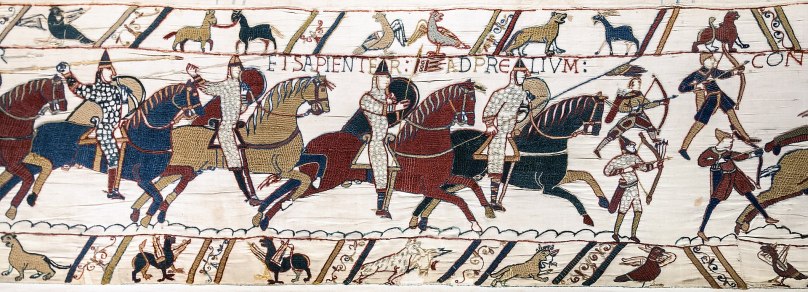 Bayeux Tapestry
.
. Harold Godwinson, 1022 – 1066, Crowned King Harold II of England.
He was the last Anglo-Saxon English King. Harold reigned from 6 January 1066, until his death at the Battle of Hastings, 14 October 1066.
.
.
.
.
.
.
.
.
.
.
.
.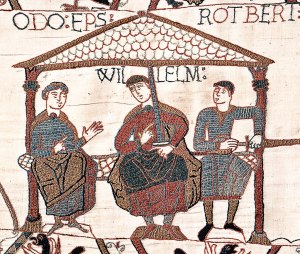 .William the Conqueror – William of Normandy
.
.
.
.
.
.
.
.
.
.- Pre-Christian Celtic Influences- Druids, myths, and rituals linger in medieval culture.
- Leo IV’s Proto-Crusade (849 AD): Battle of Ostia, early holy war.
- Photian Schism (869–870 AD): East-West split, church wealth breeds corruption.
End of the holy spirit - Rollo and Normandy (911 AD): Viking-Christian pact births powerful duchy.
- Anglo-Saxon England (~900–1066 AD): Alfred to Hastings, kingdom forged, lost.
- Monasticism’s Rise (~1000–1100 AD): Benedictine monasteries drive culture, faith.
- Anselm’s Scholasticism (1033–1109 AD): Ontological argument fuses faith, reason.
- Investiture Controversy (1075–1122 AD): Popes battle emperors over bishop control.
- Anselm’s Scholasticism (1033–1109 AD): Ontological argument fuses faith, reason
- =XXXXXXXXXXX
- =XXXXXXXXXXX
- =XXXXXXXXXXX
- =XXXXXXXXXXX
- =XXXXXXXXXXX
- =XXXXXXXXXXX
- =XXXXXXXXXXX
- =XXXXXXXXXXX
- ==== READ THROUGH REMOVE
- Leave at end or start November
- 4. Heraclius (c. 610–641 AD): The Trauma and the Metamorphosis
- If Justinian represents the ancient peak, Heraclius represents the brutal birth of the true medieval Byzantine state. He inherited an empire under siege from all sides.
- The Persian Empire marched right to the walls of Constantinople, stealing the True Cross from Jerusalem. In a desperate, holy-war crusade, Heraclius gambled everything, took the army deep into the Persian heartland, and won a miraculous victory.
- But as he celebrated, an entirely new explosion emerged from the Arabian deserts: the early Muslim conquests. Byzantium was permanently stripped of Egypt, Syria, and its richest lands. Heraclius had to strip away the old Roman provincial laws and invent the Theme System—turning Byzantium into a lean, militarized, Greek-speaking survivalist state. The “Ancient Roman” was dead; the “Medieval Byzantine” was born.
- ====
- 5. Columba of Iona (c. 521–597 AD): The Parallel Mirror in the West As you close this section and prepare the road for Charlemagne, you pivot to a figure operating at the exact same time as Justinian’s wars, but on the absolute edge of the known world: Saint Columba.
- The Story to Tell: While Justinian was trying to preserve the Roman Empire through iron spears and gold mosaics in the Mediterranean, Columba was building a completely different kind of empire in the cold Atlantic mist of Scotland. Exiled from Ireland, Columba founded the monastery of Iona. From this isolated rock, Irish monasticism spread, preserving literacy, copying classical texts, and converting the Picts and Scots.The Narrative Fold into Charlemagne: Columba represents the intellectual “backup drive” of Europe.
- While Byzantium and Italy were tearing each other to pieces in the 6th century, the embers of knowledge were secretly kept alive by Monks in the far West. Centuries later, when Charlemagne decides to launch his Carolingian Renaissance in November, he will actively import scholars trained in the direct lineage of Columba’s monasteries to rebuild the intellect of his new Holy Roman Empire.
- The Trap: Anastasius saved the money, Justinian launched the war, and Italy was ruined—leaving Rome completely vulnerable.
- The Shift: Heraclius shows how Byzantium stopped being a universal Western protector and became an isolated Eastern power.
- sets u
- The HRE: Columba shows where the intellectual seeds were hiding while the Mediterranean burned, ready to be harvested by Charlemagne later on.
- Section VII to transition away from Theodoric’s deathbed?
- THE PAPLE TIERRA
- HOUSES
- ==========================================

- Albion
- Metempsychosis Doctrine — is the philosophical and religious concept of the transmigration of the soul, where the soul passes from one body to another after death. Originating in Pythagorean and Platonic Greek philosophy, it posits that the soul is immortal and undergoes a cycle of rebirths into human, animal, or even vegetable forms. Metempsychosis is often misspelled as Metaphycoses.
Glossary
If you want to map your freshly organized lyrics to the actual mythology, Three Crimson Lions hit all the major points perfectly:
- The Pillow Talk: The song opens exactly how the original epic does. Medb and Ailill are in bed comparing their wealth, leading to the discovery that Ailill owns the magnificent white-horned bull, Finnbhennach (who was originally born into Medb’s herd but left because he refused to be led by a woman).
- The Drunken Messenger: Medb really did send an embassy to Ulster to rent the Brown Bull (Donn Cúailnge). The truce fell apart exclusively beause her drunken messengers boasted that they would take it by force anyway if the chieftain said no.
- The Gae Bolga: The climatic fight between Cú Chulainn and his foster-brother Ferdiad is the emotional peak of the myth. The Gae Bolga is the deadly, magical spear given to Cú Chulainn by the warrior-woman Scáthach. Once it enters a body, it opens thirty barbs that cannot be removed without cutting the victim open, making it a weapon of absolute, tragic finality.
- ======. .
- Living Pan-European and American Cultural and Heritage Community Center
- Show Image SEEDS Projects
- Show Image SUBSCRIBE STAR
- EMAIL: peachcommunity yahoo.com
- quicklink
- Living Pan-European and American Cultural and Heritage Community Center
 SEEDS Projects
- SUBSCRIBE STAR
- .
EMAIL: peachcommunity yahoo.com - .
.
.
.
.
.
.
.
.
.
.
.
.
.
quicklink

