 PEACH Glass Factory Project. It maps out the industrial, economic, and community frameworks required to execute your three-pronged vision.
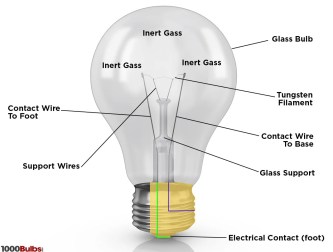
#1. Incandescent Bulb Production (MIT Filament)
To industrialize the advanced, energy-efficient incandescent filament designed at MIT, you must rescue legacy manufacturing assets and establish a tightly controlled production loop. [1]
Sourcing the Ohio Assets
The “for a song” equipment you are tracking originates from the historic GE Lighting Niles-Mahoning and Bucyrus plants in Ohio, which faced closures by General Electric. [1, 2]
- The Target Tech: You do not want a massive, high-speed Corning Ribbon Machine—which pumps out 30 blanks per second and requires an entire town’s power grid to run. [1, 2]
- The Real Need: Target the individual component assembly lines: the filament-mount machines, vacuum-purging/gas-flushing stations, and the brass-basing/soldering machinery.
Operational Requirements for Sustainability
- The Glass Paradox: Do not blow your own bulb blanks from scratch for mass commercial sales. It wastes critical furnace energy. Purchase cheap, pre-made clear lime-glass envelopes in bulk.
- Purification Infrastructure: The MIT high-efficiency filament relies on a specialized thermo-photonic crystal structure. To prevent the filament from degrading, your vacuum-seal stations must achieve perfect atmospheric extraction. You will need dedicated argon/nitrogen gas flushing loops.
- Premium Branding: Federal law heavily restricts standard incandescents. You must legally structure and market these bulbs as specialized, premium “Scientific, Architectural, or High-Efficiency Industrial Thermal Radiators” to avoid standard consumer bans. [1]
#2. Amber Brown Bottle Manufacturing
Amber glass is highly sought after by breweries, cideries, and wellness brands because it filters out ultraviolet light to protect the product. Breaking even requires maximizing structural efficiency.
What You Actually Need to Make Them
- The Recipe (The Batch): Amber glass requires standard silica sand, soda ash, and limestone, mixed with specific coloring agents: iron, sulfur, and carbon.
- The Furnace Configuration: Glass furnaces must run 24/7/365. Letting a furnace cool down cracks the refractory brick, costing hundreds of thousands of dollars to fix. You need a continuous end-port regenerative furnace running at 2,700°F (1,500°C).
- The Forming Machine: For a medium-scale operation looking to break even, do not use manual blowers. You need a refurbished S. (Individual Section) Forming Machine. This machine uses compressed air to instantly stamp out molten glass drops into bottles via a “Blow-and-Blow” mold process.
The Break-Even Strategy
- Weaponize Local Cullet: Raw chemical batch materials are expensive. You can drop your energy costs by 2–3% for every 10% of recycled amber cullet (crushed glass) you introduce to the melt. Establish a free drop-off loop for local breweries to dump their broken bottles back into your furnace.
- Co-Location Heating: The extreme exhaust heat coming off your bottle furnace must not be wasted. Route the hot exhaust air through heat exchangers to directly power the warming jackets of your artistic glass studios and heating systems for the building.
#3. The Artisan Collective & Youth Training
This framework transforms the factory from a cold industrial site into an interconnected, self-sustaining community hub.
The Space & The 10% PEACH Model
- The Core Collective: Designate a dedicated wing of the building with shared industrial infrastructure: high-capacity ventilation, heavy-duty three-phase electrical grids, and a central fuel lines network.
- Cross-Pollination Station: Situate the Blacksmithing (smithing), Woodworking, Pottery, and Glass Blowing spaces adjacent to one another. Woodworkers can craft custom presentation boxes for glass whiskey decanters; smiths can forge custom iron brackets for pottery lamps.
- The Financial Split: Artists calculate their exact material and energy costs to create a piece. PEACH retains 10% of the final sale price at your retail shop, while 90% goes directly to the artist. The 10% cut feeds a communal fund dedicated purely to building maintenance, furnace fuel, and upgrading shared tools.
The Holiday Swag & Introduction Pipeline
[ FREE YOUTH/BEGINNER CLASS ] -> Learn basics using scrap/low-cost glass.
|
v
[ COMMUNITY SWAG MANUFACTURE ] -> Produce Ornaments, Fleurs-de-lis, Easter Eggs.
|
v
[ SALES VIA LOCAL MARKETS ] -> Sold at Farmers Markets / Thrift Shoppe.
|
v
[ THE FINANCIAL REVERSAL ]
* Beginners: 10% to Kid, 90% to PEACH (Reinvested into free classes).
* Advanced: Flips to 90% to Artisan, 10% to PEACH.
- The Swag Catalog: Standardize simple, high-margin items that use minimal glass:
- Christmas: Hollow blown-glass globes with internal silvering.
- Bastille Day: Red, white, and blue pressed glass Fleurs-de-lis.
- Easter: Solid sculpted glass paperweight eggs.
- Autumn: Blown pumpkins using leftover amber glass from the bottle line.
- The Youth/Beginner Pipeline: Run free weekend introductory workshops for local youth and beginners using the lower-temperature glass scraps from your industrial lines.
- The Price Flip:
- The Novice Phase: For pieces produced by pure beginners during free classes, the student receives 10% of the sale price, and PEACH retains 90% to directly offset the cost of the instruction, broken tools, and safety gear.
- The Master Phase: Once a student hits a strict benchmark of speed, safety, and aesthetic quality, they graduate to the standard model: 90% to the artist, 10% to PEACH. They are now professional contract creators
 PEACH COMMUNITY