What is beautiful must also be right and true. –Aristotle
.
 Art – The expression or application of human creative skill and imagination.
Latin: Ars, Artem – skill, craft, science, knowledge, method, character.
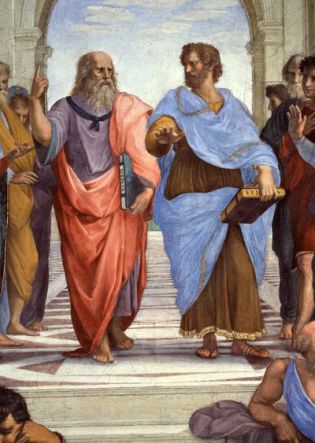
The Arts at the PEACH carry three components, Fine Arts, Practical & Folk Arts and The Skilled Art. Plato had a number of distinct ideas concerning the arts, so we try to follow his ideal in relationship to truth, beauty and goodness. Some may argue beauty is in the eye of the beholder, and all art is subjective. The emphasis at the PEACH is what has been accepted and developed culturally over thousands of years.
Further, each category and discipline has a component of the other two arts nestled within. For example; the Fine Art of ballet, it can not come about without skill through repetitive and dedicated practice. This holds true also for the Skilled Arts, holding both a practical purpose while embracing a Fine Art quality in its completion. For example; a wrought-iron gate or the mantle on a fireplace. Within the Practical Arts, which are generally accepted as a functional or folk art, the other two arts lie subtly within its intended function. For example; a quilt, this takes a developed skill, great patience, a keen sense of design, knowledge of the tools, fabrics and an appreciation for symmetry and beauty. All three Art components within are why families pass these works of art down as heirlooms from generation to generation.
At the PEACH, we have divided the Arts into these three categories:
Fine Arts – Dance, Literature, History & Philosophy, Music, Painting, Photography & Film and Theatre.
Practical & Folk Arts – Basketry, Book-Binding, Candle-Wicking, Cordwaining, Culinary, Fibers & Fabrics, Home Life, Mosaic, Paper & Tissue Arts, Sheep Shearing, Wool, Felting, Qiviut & Silk Washing & Spinning and Tree Tapping.
Skilled Arts – Blacksmithing, Ceramics & Pottery, Farming & Animal Husbandry, Glassblowing, Printmaking, Stone Cutting and Woodworking.
.
.
“Sing , goddess, the anger of Peleus’ son Achilleus
and its devastation, which put pains thousandfold upon the Achians,
hurled in their multitudes to the house of Hades strong souls
of heroes, but gave their bodies to be the delicate feasting
of dogs, of all birds, and the will of Zeus was accomplished
since that time when first there stood in division of conflict
Atreus’ son the lord of men and brilliant Achilleus.” -The Iliad:
.
.
.
“Tell me, Muse, of the man of many ways, who was driven
far journeys, after he had sacked Troy’s sacred citadel.
Many were they whose cities he saw, whose minds he learned of,
many the pains he suffered in his spirit on the wide sea,
struggling for his own life and the homecoming of his companions.
Even so he could not save his companions, hard though
he strove to; they were destroyed by their own wild recklessness,
fools, who devoured the oxen of Helios, the Sun God,
and he took away the day of their homecoming. From some point
here, goddess, daughter of Zeus, speak, and begin our story.” -The Odyssey
.
.
.
Culture
~ Europa Nostra
~ Future for Religious Heritage
~ World Monuments Fund
.
Museums
~ British Museum (London)
~ Louvre (Paris)
~ Vatican Museums (Rome)
~ Rijksmuseum (Amsterdam)
~ Museo Galileo (Florence)
.
Living Pan-European and American Cultural and Heritage Community Center
“You never change things by fighting the existing reality. To change something, build a new model that makes the existing model obsolete.” – R Buckminster Fuller
.
.
.

.
EMAIL:peachcommunity yahoo.com
.
Quicklinks
.
.
.
.
.
.
.
.
 PEACH COMMUNITY