
.
Active Funding: Outside the initial purchase of the facilities and our three-year operational budget, we also offer options for monthly funding. If you are a Foundation and wish to create a Trust or Legacy Fund, or just a wealthy person who loves Roman History, you could fund all of our expenses for the entire month of August where we celebrate Rome and The Family. The funding would cover honored speakers and historians, the Roman Circus, the theater and the musicians, the craftsmen, our library, any expenses for physical and community arts activities, or fund our complete facility operating budget for the month. Your name or foundation would be featured and printed on all pamphlets, brochures, menus, programs, displayed on our website, a list of other amenities and of course you would be our honored guest as the person responsible for filling us all with gratitude.
We also aim to fund ourselves during the months of April and May, when we celebrate farming and labor using proceeds we have collected throughout the year from the collections of our own efforts.
Our goals also includes building a K-12 school, a small clinic, housing for senior members, housing help for families, and we hope to implement a pension system for our workers and life long volunteers. Initial Funding for these entities will come directly from The Swan Factory profits, commodities and efforts.
.
.

.
.
Commodities: Small as they are now, we do take stock in savings to help fund all future operations and hope to set aside at least 3 years of emergency funding based on the currant values of sustainability. The treasures we are currently using to support the basic foundation are bees, trees, butterflies and worms: bee bux, tree bux, butterfly bux, worm wad. Each note, stamp or silver coin is a beautifully drawn print by a talented member in our community. They are used as a form of exchange only within the community. These blessings and the energy they produce will also support the structure of our time bank endeavors. There may be other resources that will be added to this exchange of labor at a latter date. All proceeds from this store of energy will be set aside for supporting the banking of time and investment in expanding the property. Eventually, other treasure will be added to create and support a pension system for our community members and volunteers.
.
.
Grants: As a non-profit organization, the PEACH Community will pursue and apply for Government Grants and some Corporate Giving. We will use these funds to help support visiting educator who are experts in the history of our culture and heritage, along with funding for ongoing and special projects, land management and expansion, building maintenance and the adding of any additional structures. A Grant Writer is very important to our community. especially, someone who has a talent in this area and enjoys working with this process.
.
Legacy Fund: Memorials and Tributes. A legacy fund is a way donors can support the PEACH through charitable giving, now or in the future. Those who give can donate through testamentary or estate planning, gifts or by means of financial assets. What ever areas one wishes to bequeath to any part of the community. Every Legacy will also be properly named and recognized and remembered through the mosaic spiral path or approved community structure.
.
Membership: Those who wish to become Members of the PEACH Community can do so freely. Membership must be acquired through sponsorship. There are also suggested donations, whether through annual net income or time banking.
Member Housing: PEACH Community Housing & Campus Overview. This overview captures current housing options and upcoming development areas.
-On-campus housing includes refurbished classroom spaces, dorm-studios, and 2-bedroom apartments.
-There is a house for the farmer, and a house for the printer, also an apartment above the Thrift Shop.
-In the Bike & Ski Shop there is a 2 bdm. apartment on the 2nd floor, and on the 3rd floor there are, two 1 bdm apartments.
-Central Springs Cabins are built on one-acre lots with plenty of garden space. There are 12, 2 bdm. cabins.
-South Campus, senior housing one side overlooking the 50-acre Prairie Meadow Restoration. A three-story apartment complex. One side overlooks the Prairie Restoration Meadow on the S/E corner of the McMansion property.
-McMansion 100-acre property. Homes are being refurbished and turned into town homes and unite size 2 and 3 bdrm apartments. These homes are for sale, but there are land contracts. The area has a community garden and playground for families and the school has 3 kindergartens on the 1st floor.
-The School also has a separate entrance for member residents on the 2nd and 3rd floors. These are all 2 bdm apartments.
Proposals:
-We are looking into converting the golf course into more member residential housing.
-We are looking into top floor housing at the factory.
-We also offer motel space for visitors and local community guests.
.
Online Efforts: Supporting Individual Guests. Programs and Projects Through Online Fund Raising Structures.
.
Pay it Forward: Individual Donation that help support Family Membership and those in need. This includes donation acquired by invited guests wishing to study or temporally live in our Community.
.
.
Self-Sustainability: A Business, Artist or Artistic Area In The Community that is self-supporting through the efforts of their labor and sales of their goods and services.
.
.

Time Bank
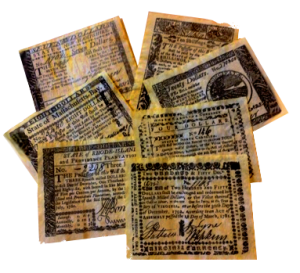
Phase I – The Time Bank is a simple concept, it’s not unlike Colonial Script used within the original 13 Colonies. How did that start?
Let us travel back in time to one of the urban areas within the Colonies. I raise chickens and trade them for other goods my family needs, as well as labor I may need for repair or work I do not have time or the skills to do. Today, I will be taking my horse to the Smyth for a new pair of horseshoes. I’ve struck a bargain with the horse-shoemaker, 5 hens for 4 shoes. This worked out well for me because my poor horse has worn his shoes down and I was worried about his safety. I trade the hens for the work done by the horse-shoemaker. However, I notice when I arrived home our other horse has thrown a shoe, so the next day I bring her to the horse-shoemaker and offer him 3 chickens to replace the lost shoe and replace the other. He tells me honestly that he does not need any more chickens. Sadly, I have nothing else to trade, but he says if I deliver the three chicken to the roofer up the road he’ll fix the shoes because he struck a deal with the roofer to fix the hole in his barn. So I deliver the three chickens to the roofer, and he hands me a piece of paper saying he owes the bearer of the note a roof that needs fixing. We shake hands and I take the note to The Smith. I give the Smyth the note and in exchange he shoes my horse. As the town grows, these notes are now traded so often that a value in numbers begins to replace some items, and as we travel between the colonies we begin to share our values and develop a monetary worth and shard currency,
The scenario above is used within most of the Community, only we do this by tracking time instead of paper. If I spend 3 hours working in the garden I have amassed three hours worth of value and that value is transferred into other people’s time, labor or goods. Since value in goods can change with scarcity, we have a fixed set of items and time that can be exchanged. This value is based on our commodities. We measure Time by the growth of our Commodities. With approval, Time can be donated or traded for US Currency. This is usually done only when someone is in great need. However, the drawback on trading time for US Currency is the exchange under US Law, which means that currency must now be taxed. Therefor it is better to keep the exchanges within the community, this helps keep the value and economy stable. Currently, our commodities are honey, maple syrup, silk, wool, donations to the thrift shop, the farm, gallery, shops and one days work at the Swan Factory. Time can also be converted to Bee, Butterfly, Leaf, Fish and Fowl Bux. Each bill is also a beautiful work of art and limited printing.
Phase II – is the exchange of barter for time. We decide the value of labor and goods among those in the community.
Phase III is the exchange of time for value. We now decide how time is valued on items from the outside world.
Phase IV is the exchange of commodities for US Currency. This is when we invest in infrastructure, growth and US Currency.
“Money is like a shark, if it doesn’t keep moving, it will die.” -Anon
.
.
Volunteerism and The Bank of Karma: This is much Like Paying It Forward, however, not with money, but through time, effort and dedication.
Volunteerism is a concept that has come out of the Libertarian Movement.
The Bank Of Karma or Karma Bank – was Develop by a fellow named Max Keiser, Former Stock Broker and Investor. The Bank is two fold. On the one hand it is passing excess forward, and on the other it’s a matter of organizing in order to push an idea through or remove it altogether – usually in financial matter. Silver at $500 if you want it.
[TBC] expand briefs
 .
.
.
.
.
.
.
.
.
.
.
.
.
.
.
.
.
.
.
.
.
.
.
.
.
.
.
.
.
.
.
.
.
.
.
.
.
.
.
.
.
.
.
.
.
Old Links
.
Living Pan-European and American Cultural and Heritage Community Center

.
EMAIL: peachcommunity yahoo.com
.
.
.
.
.
.
.
.
.
.
.
.
.
.
.
.
.
.
.
.
.
quicklink
 PEACH COMMUNITY