
.
.
NOVEMBER
“Gratitude is not only the greatest of virtues, but the parent of all the others.” Cicero
.
 .
.
Creativity, Gratitude and Thanksgiving
We gather together to ask the Lord’s blessing;
He chastens and hastens his will to make known;
The wicked oppressing now cease from distressing.
Sing praises to his name; he forgets not his own.
Beside us to guide us, our God with us joining,
Ordaining, maintaining his kingdom divine;
So from the beginning the fight we were winning;
Thou, Lord, was at our side; all glory be thine!
We all do extol thee, thou leader triumphant,
And pray that thou still our defender wilt be.
Let thy congregation escape tribulation;
Thy name be ever praised! O Lord, make us free!
The original music is from a book of Dutch patriotic songs, collected written in 1626, in memory of poet and composer Adrianus Valerius. The original song was in celebration of the Protestant Netherlands freedom from Spanish Catholic rule. In 1877, German choir director and musicologist Eduard Kremser used a number of Valerius’ tunes and changed the words in thanks and praise of God’s help and triumph over evil, and as a reminder that God forgets not this own.
.
Dawn of the Middle Ages – East vs West

.
All Saints and All Souls Day
Allhallowtide — All Saints and All Souls Day traditionally fall on November 1st and 2nd. These two holy days are celebrated across all Christian Calendars, they follow the last day of October, the 31st, All Hallows’ Eve, commonly called Halloween. The honoring of the Saints began roughly 600 AD, but the honoring of such heroes dates back to at least 1600 BC.
In the Pagan Tradition, the 31st and the 1st are part of Samhain, the dusk and the dawn. This is approached as part of the Perilous Path in October.
These two days are a celebration of honor and veneration for all the Saints and Martyrs. One may honor their namesake, the saint they were baptized after, or a saint that is a protector over their chosen field or occupation. For some, it is just having an affinity with the lives of saints, martyrs, and heroes where one looks for inspiration or up to as a role model. In some parts of Europe, people dedicate their entire lives to serving the cause these saints began. It is a day to honor those with a profound strength of will and character.
Those who come to the chapel light a candle in the name of the saint on November 1st and a loved one on November 2nd. Visitor are welcome to sit and ponder, meditate, say a pray or rosary as long as they wish. Visitors are welcomed to stand at the podium and read a short biography of the saint they are there to honor and celebrate. They may also wish to share why they are moved by this honored person.
November 2nd is very similar to November 1st. However, rather than a saint that is venerated, it is a relative who has passed on that is remembered, and honored. Often folks will bring flowers and place them at the feet of the statue of the mother. People are again invited to give a short biography of their dearly departed and let others know how they were inspired and strengthened by their life.
The celebration begins just before Midnight on the 31st. Vespers are sung throughout the night, and the names of all those who have passed are read and called out in the chapel. They are invited to join and sit with those who come to remember their loved ones. I have been told they very much enjoyed these two days.
At sunrise the local priest, Father Timothy Meadows, from the Catholic Church, usually comes and celebrates a Tridentine Mass on both days. There are other denominations that will be celebrated throughout the day. The services end shortly after midnight on the 3rd. Check the Celebrations Times Denomination on the Chapel Door.
.
~
During these two days, the League of St. Joseph provides some food and comfort in the cafeteria. There is always coffee, tea, and cocoa. A plate will be set up throughout the two days with ladyfingers, almond, and clove biscuits. There are fresh cut fruits, apples, pears, mela cotogna jam with honey, cheese, rosette di pane, nuts, apricots, figs, and marzipan.
.
~
For the remainder of the week, the café makes a rosemary pork roast cooked outside on the spigot, served with small red and yellow potatoes, carrots, celery, onions and fresh parsley. There is also a cinnamon apple-raisin bread pudding for desert. There is Weiss beer with lemon, or a heavy body Merlot for the adults, and a glass of milk with a dash of almond and cardamom syrup or sparkling apple cider for the children.
.
.
.
.
 Election Day
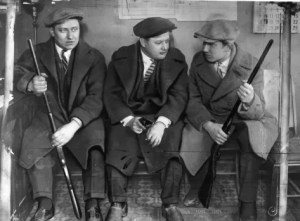
A chili pot luck starts at 6PM in the cafeteria, right after a brief lecture on the history of elections before Rome and around the world. How did elections come about, how were they lost, how are they implemented today? Professor Burk will also talk about wars, duals, fights, deaths, Jim Crow, humor, cartoons, newspapers, the history of all the modern political parties and movements throughout the evening, as well as, who had the best elections in history and modernity. There will be a large TV screen tuned into CSPAN in order to see the results live during the Federal elections, and for State elections, local newscasts. The whole family is invited and all discussions are expected to be heated, but civil. Bring a pot of chili, bread & butter, salad or a dessert. If you can’t cook, help set up and clean up and may the best man win!
.
.
.
Cultural & Historical Foundations Outline – Middle Ages
Charlemagne, the Crusades, & the Normans (c. 768–1095 AD)
- November heralds the medieval light. From post-Roman fragmentation to imperial unity under Charlemagne, the rise of feudal order, and the spark of holy war, the hastening of Norman Conquest.
Post-Roman Fragmentation & Early Medieval Challenges (c. 476–768 AD)
- Barbarian kingdoms settle across Western Europe after the Western Roman Empire’s fall (476 AD).
- Viking raids begin (~790 AD onward, peaking in 9th–10th centuries); Magyar and Saracen pressures add instability.
- Hygiene challenges in villages: Fleas, parasites common; daily life centered on manors and survival.
- Church and monasteries preserve literacy, law, and classical knowledge through dark times (copying manuscripts, maintaining schools amid raids).
The Carolingian Dawn: Charlemagne’s Rise & Unification (c. 768–814 AD)
- Charlemagne ascends the Frankish throne, 768 AD.
- Campaigns to unify Western Europe under Frankish rule. Conquests expand Frankish kingdom (Saxons, Lombards, Bavarians, etc.); establishes centralized Christian authority.
- 800 AD (Christmas Day): Charlemagne crowned Emperor of the Romans by Pope Leo III in Rome—”Father of Europe.”
- Carolingian Renaissance: Revives learning, art, administration—schools founded, manuscripts illuminated (influences like Book of Kells), knowledge safeguarded against invasions.
- Cultural pillars: Gratitude & virtue—Charlemagne’s preservation echoes saints/martyrs’ sacrifice; light in winter darkness (ties to Martinmas/All Souls observances).
.Feudal Foundations & Medieval Order (c. 800–1000 AD)
- Nobility ranks emerge (dukes, counts, knights); oaths of loyalty bind lords and vassals.
- Manorial system supports warriors and agriculture—foundation of feudalism.
- Carolingian legacy endures: Unity, learning, and Christian order provide stability as invasions wane (~1000 AD).
- Remembrance amid cold: Warriors honored, faith/family triumph as winter deepens and Advent approaches.
Transition to the High Middle Ages & the Beginning of the Crusades (c. 1000–1095 AD)
- Stabilization: End of major invasions allows population growth, trade revival, stronger monarchies.
- Church reforms and tensions (e.g., Investiture Controversy buildup in late 11th century).
- November 1095: Council of Clermont (November 18–27)—Pope Urban II calls for the First Crusade on November 27, urging Christians to reclaim the Holy Land. This marks the beginning of the Crusades era, shifting from internal unification to outward holy war.
- Ties to November: A “busy” spark of medieval fervor amid winter’s approach—holy war call echoes themes of sacrifice, virtue, and light against darkness.
From fragmented tribes to imperial crown, November bridges the early medieval foundations (Christian preservation post-Rome) to the high medieval world (feudal height and Crusades).
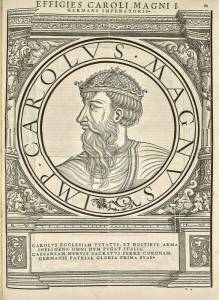
(Christmas 800 AD)—”Father of Europe.”
Conquests unite Western Europe; Carolingian Renaissance revives learning, manuscripts, schools.
Feudal Foundations (c. 800–1000 AD) Nobility ranks emerge (dukes, counts, knights); oaths of loyalty; manors support warriors.
Key Cultural Pillars Gratitude & Virtue: Charlemagne’s preservation echoes saints/martyrs’ sacrifice—light in winter darkness (Martinmas lanterns, All Souls candles).
Renaissance Spark: Illuminated manuscripts (e.g., Book of Kells influences) store knowledge against raids.
Remembrance Amid Cold: Final harvest secured, warriors honored (Armistice ties)—faith, family, and order triumph as Advent nears.
From fragmented tribes to imperial crown, November heralds medieval light:
Charlemagne’s legacy of unity and learning warms the gathering winter, inspiring gratitude for preservers past.
.
.
.
.
.
.
.
.
.
Final Harvest
One more turn of the heap, pulling the final roots, planting the bulbs, and tucking them in for the cold dark nights to come, the last free grazes in the pastures before the snows fall. Taking stock of the stock, securing the animals, the seed, the ritual cleaning, and hanging of the tools for the quiet stillness that now approaches. Creating the fix-it lists for the winter days and nights to come, for there is never nothing to do on the farm. Looking out of the window at the snow-covered landscape, disguised now as barren land, dreaming about the spring, yet to come, in front of a fire with a cup of something sweat and warm.
.
.
November 11th
.
.
.
Martinmas
Like his father, Martin of Tours was a Roman Soldier [316AD], and like his father, he held a high rank in the legions and was regarded as a brave and great warrior. To demonstrate his status and rank in the Roman Military, the most valuable items a soldier could own were his sword and his illustrious cape. His sword was made of the best and finest steel at the time, and his cape was long, thick and deep royal red in color.
As he rode on his horse, returning from a long battle with several of his men, the weather turned bitterly cold, then wet, and snowy. The men in front of him rode past a naked beggar who was on the side of the road. As Martin approached the beggar, the men he rode with mocked the old, naked man. At that moment, Martin stopped his horse, and dismounted. Then he took his sword, removed his illustrious cape, and cut it in two. The men were stunned as he gave half of it to the beggar. They shut their mouths quick as they rode back into camp in silence.
That night, Martin had a dream. The beggar came to him in this dream wearing his cloak. As the beggar approached, he then transformed into the image of Christ. He said to Martin, “Truly, I tell you, whatsoever you do to the least of my brothers, you do unto me.” Then he said, “Here is Martin, the Roman Soldier, who is now baptized, he has clothed me.”
This dream had a profound effect on Martin. He gave up his rank and wealth. Took a vow of poverty and became a monk, spreading the word of Christ throughout France.
Martin is known as the patron saint of soldiers, police, and the poor. He dedicated his life to the indigent and to justice. Later, he became the Bishop of Tours.
His Celebration Day in Nov 11th—Veterans Day around the western world.
Martinmas is also associated with the end of autumn and the beginning of winter, it is when nature falls fast asleep. It is also the very beginning of Advent.
At the PEACH, this festival is a very quiet celebration in honor of St Martin’s memory, and as we begin to live in the darkness. Many people gather bringing their lanterns, some lanterns are old and have been in the family for generations, some are made by the children a few days before our walk. Everyone lights their lantern, and we all take a walk through the dark wood, singing lantern songs and songs about St. Martin.
After our walk through the woods, the people gather in the great hall. The hall is dimly lit. In the center of the room, there are boughs of fir, draped and laid out on the floor in the shape of a spiral. Coats are hung, and all sit on the floor or chairs around the spiral. A hush falls over the room. In the center of the spiral is a candle. Members begin to quietly hum and sing, ‘O come, O come, Emmanuel.’
The youngest of our 7-year-olds will hold the hand of the eldest in our community. He brings with him an unlit candle. They walk through the path of the spiral. Quietly, the elder leads the child to the center, they stop for a moment, and the elder lights the candle, and from that candle the child will light the new candle he brought with him. They walk around the other side of the spiral, and at the very end the child places the candle next to the outside bough. Everyone at this celebration does the same. As they enter, the child gives them a candle, they walk through the spiral and light their candle from the center candle. They walk through the other side of the spiral, and the elder helps them place their candle next to the person who was before them, until all have taken their unlit candle and placed it around the spiral.
Once everyone has gone through the spiral there are a few moments of silence, then quietly everyone heads home, taking with them the little light they brought from the center of the spiral. This light will grow, like the candles around the spiral, throughout Advent until the glory of Christmas Day and the birth of the Christ.
This quiet and beautiful celebration is found in many places in Europe. The feast of Martinmas is part of our culture, and we celebrate it at the PEACH.
~
This is also a very busy time of year for making beautiful things to give as gifts and to sell at our artist’s festival. In the coming weeks adults and children will also take the time for baking and making cookies, cakes and candies while the men who butcher, smoke and dry take up their work.
.
.
.
November 11th
.
.

Armistice Day
The Great War Memorial, held in the grotto or the chapel (depending on whether). The morning begins at 6AM with coffee and pastry in the cafeteria. Some of the Vets bring their children or grand kids, they will help them make and assemble baskets of red tissue poppies. A service to honor the dead warriors will begin at 10:00AM. This service is in memory of those who perished on the battlefield.
At 10:45AM letters calling for the end of the Great War will be read. At exactly 11:11, the chapel bell will ring 11 times, and the peace candle will be lit. Followed by the reading of the poem, In Flanders’s Fields, by Lieutenant-Colonel John McCrae, MD.
In Flanders fields the poppies blow
Between the crosses, row on row,
That mark our place; and in the sky
The larks, still bravely singing, fly
Scarce heard amid the guns below.
We are the Dead. Short days ago
We lived, felt dawn, saw sunset glow,
Loved and were loved, and now we lie,
In Flanders fields.
Take up our quarrel with the foe:
To you from failing hands we throw
The torch; be yours to hold it high.
If ye break faith with us who die
We shall not sleep, though poppies grow
In Flanders fields.
The men’s choir will sing several familiar songs from those early days, and in-between a collection of letters that were sent home during the war will be read. ‘From the Front: The trouble of war, The Hero’s Battle, and Home. It is truly beautiful service. When the service is completed, the men will hand out poppies made from red tissue paper throughout the PEACH Community and in parts of the Local Community. At 1PM, they will gather in the cafeteria for a delicious goose luncheon. Afterwards, our special guest speaker will tell tales and stories of war.
If you would like to be a guest speaker, please contact, Capt. Timothy Taylor.
If you are interested in the Veterans Home Life Project, please contact, Marie Cassel.
.
.
.
.
.
.
.
.
.;
.
.
.
.
Traditional Thanksgiving in the US
(a movable feast)
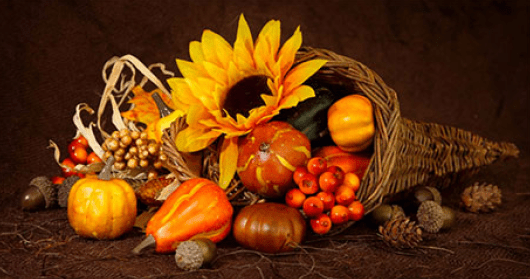
This is the time for extended family in the US to come together. Many residents, members, and visitors leave to spend time or invite their extended families to stay with them and enjoy the traditions of the Thanksgiving Holiday. A number of our businesses and clubs are absent the week of, but those who remain are welcome to celebrate this truly American Tradition.
After Allhallowtide, we have a pretty good idea who will remain during Thanksgiving weekend and we ask people who stay to sign up for what has become our traditional Thanksgiving People’s Holiday. The Italian American Columbus League donates two large turkeys from the local farmers. People who plan to celebrate are asked to sign up for duties and a hot-dish. The café is closed, so we used this space for dinner. It has everything we need to cook and make a bountiful spread. All the activities on this date are scheduled by who ever leads the dinner.
Be prepared to come as you are, or wear your Sunday best. Once you sign up, you will be given full instructions. Dinner aside, the Traditions are usually singing in the lobby after dinner, plenty of games to play. Some have taken it upon themselves to go caroling in the neighborhood, while others may set up a snowball or water balloon fight, depending on the weather. Some folks sit around and chitchat, while others are embroiled in an exciting game of trivial pursuits or betting their pennies on a hot game of poker or pinochle. There’s always twister, circle and card games for the children and plenty of arts and crafts.
To close the evening there is A Song of Thanksgiving followed by a story of the First Thanksgiving in front of the fireplace, and we close the evening by singing Dona Nobis, a song of peace.
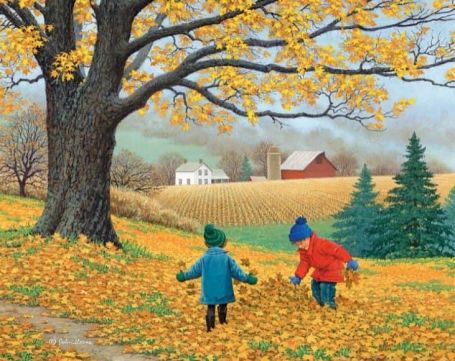
Thanksgiving Friday, a day to unwind.
For those up at the crack of dawn, 6AM until 10AM, we welcome all to help make a lovely breakfast in the cafeteria. Plenty of eggs, milk, bread, butter, soldiers, coffee and tea. Sign up for cooking or cleaning. Donations welcomed.
Tè Chay Tea Room and Confectionery opens at 10AM for a simple warm croissant with sweet butters, currents or lingonberry jams, along with a verity of coffees, teas and cocoa and cakes. Read a book or play one of the many games in the cupboard.
Make sure to take time out for a nice long walk in nature, whether through the woods, or around the springs, a good brisk stroll to visit the horses, cows, sheep, and chickens after a day of so much eating makes one feel healthy!
The Bike and Ski Shop is closed, but there is a schedule for cyclers who wish to organize a ride to and threw the State Park. There and back is roughly, 50 miles, a 4 hour ride.
Thrift Shoppe Fensalir will be open from 11AM until 6PM, there are always new treasures to be found and interesting things to look at. Stop in and say hi to Maya and Hilde, make sure you ask for a joke or a story.
The Bakery is closed, however, the Four Winds Co-op will have limited hours Friday, 10AM until 3PM.
All working studios are open, last one out, turn off the lights.
Café Four Seasons will open at 4PM, for those who still desire a Turkey stew, sandwich, or chilly, and all the fixins’ for dinner, byob. Café will close when they run out of food.
.
.
.
St. Clem’s Night – History
 St Clemet was a Pope and martyr, served between 90AD to 100AD. He was regarded as mild and merciful, third in succession and made Pope by Peter. His day of celebration in 23 November.
Clement was born in Rome, and considered a Roman, he was also raised as a Jew. His service to the church began in 88AD. He converted to Christianity through the teachings of Peter and Paul. He is best known for his letter to the Corinthians I & II, “…those who are great can not subside with those who are little nor the little without the great…”
He is known as the patron saint to those who work in water, iron and marble, the patron saint of stone masons metal workers and blacksmiths.
Clement was known to have converted many pagans to Christian beliefs. Paul considered him an Apostolic man. To be Apostolic meant you understood the teachings of Christ so well, it is as if Clement were an Apostle and follower of Jesus Christ while he walked on the earth. Paul also mentions Clement in Philippians 4:3 – 62AD. He states that Clement is in the Book of Life. To be in this book, one is ensured ever lasting life on the day of judgment. Even before birth, those who will be born are written in this book. A related concept appears in Ezekiel 9:4, where an angel marks the righteous on their foreheads for life, while the remaining inhabitants of Jerusalem are doomed.
However, Clement was not void of controversy within his own caste, his mind was of the single trinity, Homousian. Rather than as Gnostic perspective, Arianism. He admonished the Gnostics. Clement was consider righteous, a justification in faith. “To justify is to declare righteous. Justification is an act of God whereby He pronounces a sinner to be righteous because of that sinner’s faith in Christ. According to one theologian, “the root idea in justification is the declaration of God, the righteous judge, that the man who believes in Christ, sinful though he may be, is righteous—is viewed as being righteous, because in Christ he has come into a righteous relationship with God”
In 98AD he caught the attention of the Roman Caesar Trajan. It appeared to Trajan that he was converting too many Pagans to his Christian beliefs. When Clement refused to make a sacrifice to the pagan gods, Trajan exiled him from Rome, and sent to the city of Inkerman, this is region of Sevastopol in Crimea. The penalty for his crime was forces labor in the quarries. A full account of what happen is still unknown. However, it is believed that Clement converted many high-ranking citizens of the region before being his exiled to Crimea.
The Roman Empire. started to dominate the Crimea Peninsula [Taurica] in the 1st century BC. The eastern area was part of the Bosporus Kingdom [Greco-Scythian/Iranian] state, and the western area was the Greek city of Chersonesos [Greco-Slavic]. The interior was manages sporadically under Roman rule.
This area, once the gateway to the east, eventually became the crossroads between the east and west, even today, under Rome and later after Constantine, under the Holy Roman and Byzantium Empires. This region and area have been under constant conflict since Persia.
In 98AD Roman Emporia Trajan had enough of Clément’s conversions, he exile him to this far away Roman Outpost.
News travel fast of his arrest. It is important to remember that this was the very early stages of Christianity, conversions and the celebration of the Eucharist [55AD Paul, First Epistle to the Corinthians], took place in the homes of the people who were members of this newly formed religion. During times of persecution this celebration was done in caves and catacombs. In 86AD Peter was still alive to make Clement Pope of the church. At this time the celebration of the forming mass was done in his home. Everyone quickly knew Clement was arrested and exiled. Although he was banished Rome did not chose a new Pope to replace him, he was now the Pope in exile and for a brief time the city Inkerman [in Crimea] became the center of Christianity.
When Clemet arrive in Taurica [Crimea] and even in his advanced age he was made to work in the quarry 14 hour a day. This was very hard manual labor, in the sun and hot arid climate, the wind would take you breath and curse you wanting of thirst – even the land was parched. There was very little time given to rest, eat, drink or sleep. Working in a quarry was back breaking, Clement saw the men’s efforts, the combination of the hot climate and little water this was a miserable place to serve. Clement fell to his knees on the rocks and prayed to God for water to quench the men’s thirst, he raised his arms to the heavens and looked up to the sky and ask God to help him find water in this dry arid land.
He then bowed his head to the ground, the wind died down, he head a noise. It was the sound of water. He move towards the sound sand there he saw a spring bubbling up. The water was sweet and clear. It was a miracle! All working that say, even the soldiers, saw what took place. The miracle brought favor from the locals and many converted to Christianity. This is where Clement built his church, the first Christian Community Church, and for a time this was the heart, the center of Christianity. His church is still there today.
The spot where the spring bubbled is still marked by the marble in the quarry, a wall was built as was the church, and the spring continued to bubble for almost 2000 year, until a water vain was cut by the working miners in the 1960s, Sadly, the spring went dry. However, beyond the wall where the water bubbled there is a valley and it began to fill with water, the same spring water that bubbled, and formed a lake.
With the charism [gift] of this miracle Clement gained several thousand converts to Christianity. Unfortunately, once Trajan learned of this news he condemned Clement to death. St. Clement was martyred in 100AD when the persecutors tied an anchor around his neck and tossed him into the Black Sea where he drowned. His death is usually symbolized on medals, that are created to commemorate his life. A ship and anchor are frequently depicted alongside his likeness.
According to this 4th century legend, the tide would recede every year by two miles, revealing a divinely built shrine which contains the martyr’s bones.
“…it is only the good workman who receives the bread of his labor. We must hasten with all earnestness and readiness of mind to prefect every good work laboring with cheerfulness, for even the creator and lord of all things rejoices in his own works.” -St Clement, Epistle to the Corinthians.
`veritas liberabit vos’
(the truth shall set you free)

St. Clem’s Night, Dinner in the Café – get your ticket and vote in early – tasting begins at 2PM. What does St Clement have to do with Mead? First, he is the Patron Saint of Metals, Mariners, Stone Masons and any skilled worker who wishes to get in on sweet honey mead brewing. What’s mead? It is the nectar of the Gods, and there are 1001 ways to brew the brew. What does Clement have to do with Mead? That question you will have to put to the Mead Brewers, unless you speak honey bee.
All submissions must arrive by 2PM when the tasting and voting begin. Followed by singing, clanking, merriment, deliveries, and mead, plenty and lots of mead, and dancing.
This carries through to the finale Contra Dancing night in the gym, where the votes will be tallied for the best Mead and announced to all, unless we get hit by unusually godly spring air in November and can dance outside around a bonfire. It’s been known to happen and it depends on the brew.

~ note
If the 1st Sunday in Advent falls during the holiday weekend, candle-wicking activities will be Saturday and Sunday afternoons from 1PM until 4PM in the cafeteria. Artist Fair will then follow the week after.
.

.
.

.
.
NOVEMBER Schedule CALENDAR
[tbc]
Most of the Community is closed over the Thanksgiving Break, from Wednesday through Monday.
Always Check Schedules.
Description of events and festivals, businesses, sports, all clubs, lectures, history, educational classes, admin meeting, all skills, arts and folk arts.
Festivals Celebrations All Saints and Souls Days, Armistice Day, Martinmas Lantern, Thanksgiving US. Old St. Clem’s Night.
On-Going Lecture Series The Celts – Part III – 800 through the Crusades. All Saints and All Souls Day, Martinmas, Thanksgiving.
Book Club Friday Every week the reading of Beowulf continues.
Writer’s Club The Quest – Short Story. Sacrifice and Gratitude. Biography, Challenges & Sacrifice, Resentment & Anger, Gratitude & Thanks.
Events: All Saints and Soul’s Day, Armistice Day Men’s Choir and Luncheon, Martinmas and Lantern Walk, Thanksgiving, Contra Dance Potluck, Mead.
.
.
.

.
.
.
.
.
.
.
.
.
.
.
.
.
.
.
.
.
Living Pan-European and American Cultural and Heritage Community Center

.
EMAIL: peachcommunity yahoo.com
.
.
.
.
.
.
.
.
.
.
.
.
.
quicklink
 PEACH COMMUNITY