.
.
.
FEBRUARY

.
Renaissance
rebirth,
child of the dark age,
resurrection of Eleusinian wisdom,
from darkness to light,
a new birth,
whispering…
freedom.
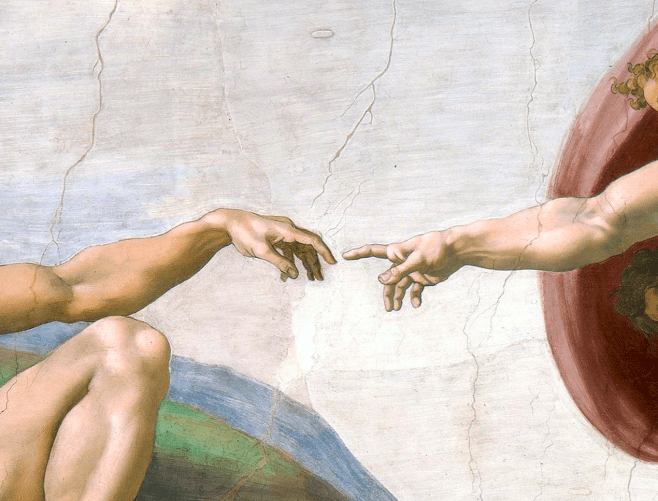
Death And The New Birth
Past, Present and Future
The close of the Middle Ages we see the signing of The Great Charter, The Black Death sweep through Europe , Another Hundred Years War, and The Fall of Constantinople. Yet out of the ashes we see the bath of a new age, the Renaissance, ushering in an emphasis on human potential and achievement through Humanism, a cultural revival in the arts and the growth of the Age of Discovery, always pushing forward to the exaltation of the Individual. This era is rightly set down in the annals of history, alongside the means by which these records came to be — and the wisdom of preserving and sharing them with posterity.
In truth, what changed was naught less than all things. The power to peruse books — or, failing that, to have their contents recited by one who could — opened wide the gates of knowledge. Yet, there was another cause, oft overlooked by modern fancy, which merits your contemplation. I shall leave it with you awhile, that you may ponder its nature.
That cause — indeed, the very cornerstone of our progress — was none other than the Printing Press, that great and noble invention which hath sealed and safeguarded the wisdom of ages past.
Though oft maligned as a Dark Age, this period was in truth a contraction of time — a season of quiet strength, wherein communities took root and traditions grew firm. It afforded the peoples of that age the leisure to reflect, to forecast, to reckon the workings of nature. Verily, it was upon this foundation that the Renaissance was raised, and thus it bore its noble crown.
From that path emerged the age of the awakening mind, the refinement of all things, and the rise of new inventions — the seeds of both the industrial and technical eras [1500–1700].
From 1510 to 1879, the era of Gabriel witnessed the Reformation, Enlightenment, Revolution, Early Industry, and a new spiritual awakening. Inventions gave birth to mechanics, mass production, and automation.
From 1869 to 2248, we live under Michael, industrialization flourished; Modernity and Technology rose; and once more a spiritual awakening stirred.
Western History quickened its pace. Old ways gave way before a ceaseless tide of progress. The sharing of knowledge through books gave rise to commerce and trade; and the material world, in turn, challenged the monastic life of the Church.
Nobility and kings ascended, yet these too were destined to be contested.
What then set all this in motion? Was it the monks’ invention of the clock, to rouse them at appointed hours, which led men to wonder why the sun’s rising shifted with the seasons? Was it the sovereigns, wise and powerful, who kept granaries full and order firm? Or was it the spirit of adventure and commerce — the compass, the rudder, the lateen sail — that steered men toward distant shores? Or perchance, the Rights of Man, which once granted a small liberty, emboldened men to claim far more? We start our transition through four major events that usher in the Renaissance into Italy and over time throughout Europe.
Professor Burke will take us on a voyage through these histories — not merely recounting names and dates, but revealing the souls and minds behind them; how one deed led to another, by chance or design, by necessity or inspiration. Thus, from the final fortnight of January, through all of February, and into the first fortnight of March, we celebrate this period in History. Each Friday evening, Professor Burke shall lead you on a journey through the late Middle Ages unto the Reformation through the Late Renaissance — unfolding the events that have borne us from thence hither and back again.
..
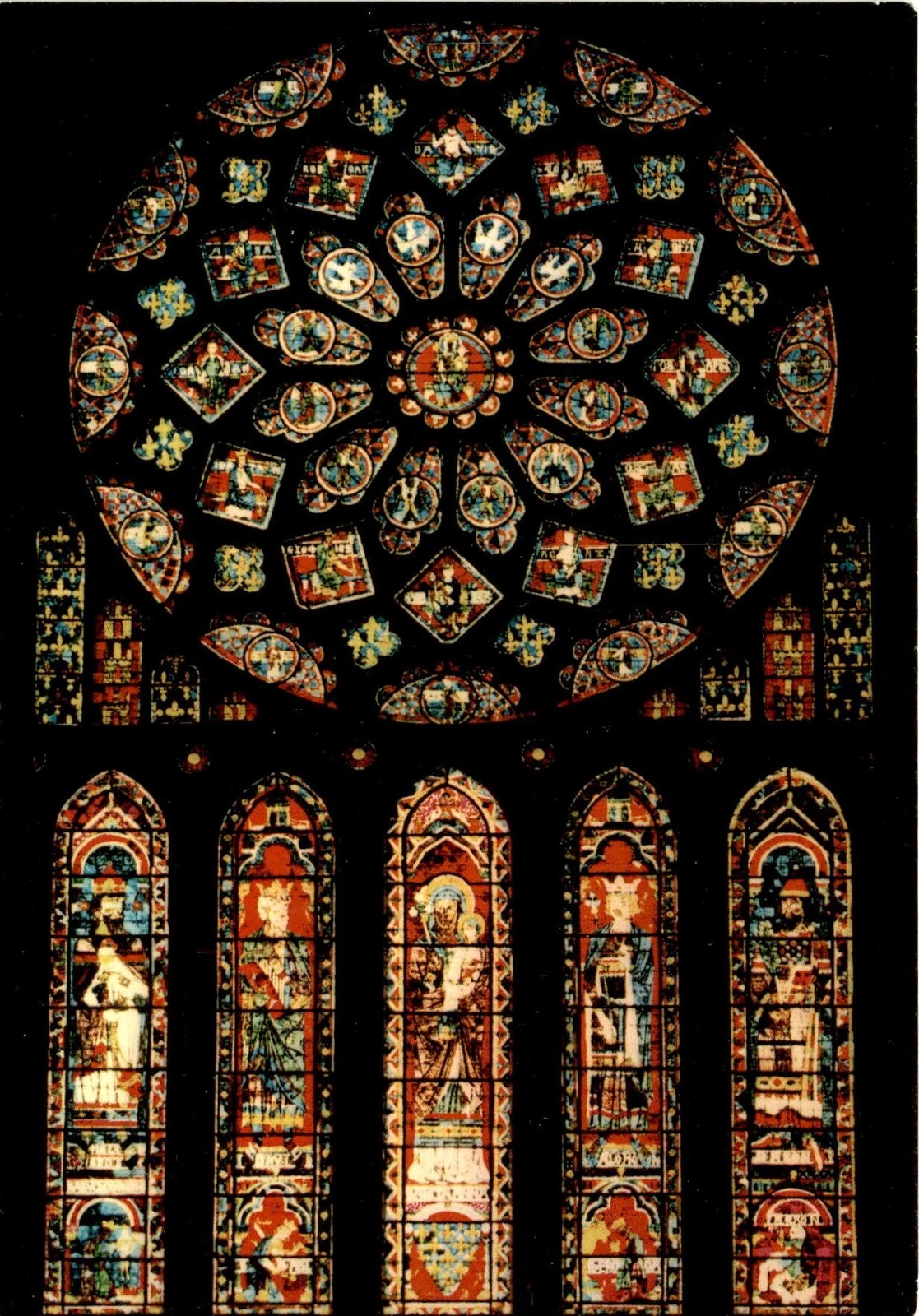
.Late Gothic, Early Renaissance, Early Reformation 1250–1500
Full History and Lecture Series
.

.
. .
.
The Renaissance, the iron hand in the velvet glove..
History Lecture Series
The Renaissance, a cultural revival of classical art, literature, and humanism (c. 1300–1600), varied by region. Below are key countries, regions, or houses with their approximate start years, based on significant humanist or artistic developments:
Italian Renaissance – 1300: Began in Florence with Petrarch’s humanism and Giotto’s art; spread to Venice, Milan. De’ Medici family key patrons.
British Renaissance – 1400: Early humanism under Henry V; flourished later (1500s) with More’s
Utopia and Shakespeare. Tudor house central.
French Renaissance – 1450: Sparked by Italian influence post-Hundred Years’ War; Francis I’s patronage (e.g., Leonardo) and Loire chateaux. Valois house.
Northern Renaissance (HRE/Germany/Netherlands) – 1450: Driven by Gutenberg’s press (c. 1440) and Erasmus’s scholarship; spread to Germany, Low Countries. Habsburg house.
Spanish Renaissance – 1490: Fueled by Columbus’s voyages and unification under Ferdinand/Isabella; El Greco’s art. Habsburg dynasty.
Polish Renaissance – 1500: Influenced by Italian humanism; Copernicus’s heliocentrism and Kraków’s cultural peak. Jagiellon dynasty.
.
.
.
.
.
.
.
.
.
.
.
.
.
.
Tea and Shakespeare – Sonnets every Wednesday in February, 8PM. Tearoom.
Events: Valentine’s Day Dance. Book Fair; Come As You Were. Every Leap Year we have a special dance called the Sadie St. Patrick President’s Day Dance.
Valentine’s Day Dance – 2nd Weekend in February
Festivals and Celebrations: Valentine’s Day Dance, Every Leap Year Sadie St. Patrick’s President’s Day Dance. Shakespeare Theatre.
EVENTS
Book Fair: Come As You Were – First Weekend in February
Sadie, St. Patrick President’s Day Dance. See March.
Lecture Series – History from the Middle Ages through the Reformation
.
.
.
.
The Renaissance, the iron hand in the velvet glove..
The Renaissance, a cultural revival of classical art, literature, and humanism (c. 1300–1600), varied by region. Below are key countries, regions, or houses with their approximate start years, based on significant humanist or artistic developments:
Italian Renaissance – 1300: Began in Florence with Petrarch’s humanism and Giotto’s art; spread to Venice, Milan. De’ Medici family key patrons.
British Renaissance – 1400: Early humanism under Henry V; flourished later (1500s) with More’s
Utopia and Shakespeare. Tudor house central.
French Renaissance – 1450: Sparked by Italian influence post-Hundred Years’ War; Francis I’s patronage (e.g., Leonardo) and Loire chateaux. Valois house.
Northern Renaissance (HRE/Germany/Netherlands) – 1450: Driven by Gutenberg’s press (c. 1440) and Erasmus’s scholarship; spread to Germany, Low Countries. Habsburg house.
Spanish Renaissance – 1490: Fueled by Columbus’s voyages and unification under Ferdinand/Isabella; El Greco’s art. Habsburg dynasty.
Polish Renaissance – 1500: Influenced by Italian humanism; Copernicus’s heliocentrism and Kraków’s cultural peak. Jagiellon dynasty.
FEBRUARY CALENDAR
Month of Education & Community Meeting & Lectures
[TBC]
EVENTS
Book Fair: Come As You Were – First Weekend in February
Valentine’s Day Dance – 2nd Weekend in February
Sadie, St. Patrick President’s Day Dance. See March.
Tea and Shakespeare – Sonnets every Wednesday in February, 8PM. Tearoom.
Lecture Series – History from the Middle Ages through the Reformation
Festivals and Celebrations: Valentine’s Day Dance, Every Leap Year Sadie St. Patrick’s President’s Day Dance. Shakespeare Theatre.
Arts: Wool and Silk Spinning. Knitting, Sewing, Needlepoint, Basket Weaving. Shakespeare Theatre.
Clubs: Woodworking, Ceramics, Printmaking, Painting.
Businesses: Book Binding, Cordwaining, Co-op, Café, Bakery, Apothecary. Swan Lightbulbs Factory, Galley, The Farm. Tearoom.
Philosophy & History: The Magna Carta, Lecture, Italian Renaissance
Cultural Celebrations: New Birth
Writer’s Club: The Bard – Shakespearesque: Play, Sonnets, 5 new words and their meaning. Modern problem in Shakespeare’s tongue, or rewrite Shakespeare to tell a modern tale. A sonnet in the Shakespeare tongue.
Events: Valentine’s Day Dance. Book Fair; Come As You Were. Every Leap Year we have a special dance called the Sadie St. Patrick President’s Day Dance.
Description of events and festivals, businesses, sports, all clubs, lectures, history, educational classes, admin meeting, all skills, arts and folk arts.
.
.
.
.
.
.
.
.
.
.
.
.
.
.
.
.
.
.
.
.
Living Pan-European and American Cultural and Heritage Community Center

.
EMAIL: peachcommunity yahoo.com
.
.
.
.
.
.
 PEACH COMMUNITY