October History
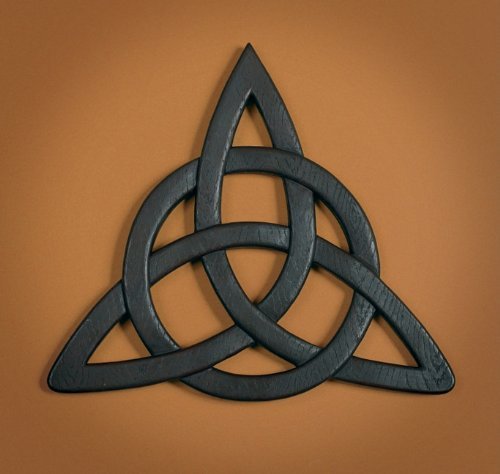
Α Ω
Daughter and Sons of Albion
The development of language among the Celts, and all the other tribes, can best be summarized as, ‘the locals on a slow burn.’ Their writings, even more so. To come to some language uniformity, with the help of the church and, of course, the Normans, the original Celts, were driven from a system of pictures and symbols, dating back before the founding of Rome. These words, or ideas of words, were full of imagination. Non-verbal communication was really the best way to express a conversation with these folk. The Celts, it was said, could read another’s mind. Found were old tablets, many of them full of curses, with similar symbols developed by the Vikings. However, recent discoveries of much older artifacts may prove otherwise. What makes this topic even more convoluted are the different artifacts found, the local dialects, and imaginative stories passed down for generations.
As time moved forward, along with the development of Greco-Roman Society, modern words, symbols, and writings were added to specific locations. This has helped to understand and identify where and when these different ethnic cultures met or collided. What we know is, the Celts were originally and predominately in Central Europe, Indo-European. Over great periods of time, they spread out, becoming: Juts, Picts, Saxons, Anglo, and Belgae. Still, all Celts. Eventually, they all ended up butting heads with the Vikings in the north and coastal areas, the Greeks, and Latins to the South, save one tribe in northwestern Ireland, and those wee folk have yet to be explained. Perhaps they were leprechauns?
.
.
.
.
.
.
Rome Arrives
When Caesar arrived, his recounting of those on the island was not kind. Regarding, the Gaul,
.
.
.
.
“The Druids are in charge of all religious matters, superintending public and private sacrifices, and explaining superstitions. A large crowd of young men, who flock to them for schooling, hold the Druids in great respect. For they have opinions to give on almost all disputes involving tribes or individuals, and if any crime is committed, any murder done, or if there is contention about a will or the boundaries of some property, they are the people who investigate the matter and establish rewards and punishments. There is one arch-druid of supreme power. On his death, he is succeeded either by someone outstanding among his fellows, or, if there are several of equal calibre, a decision is reached by a vote of all the Druids. At a fixed time of year, they assemble at a holy place… Anyone with a grievance attends and obeys the decisions and judgments which the Druids give. The general view is that this religion originated in Britain and was imported into Gaul, which means that any keen student of Druidism now goes to Britain for information.”
“They are the most ignorant people I have ever conquered. They cannot be taught music.” – Julius Caesar 54 BC
Cicero, in writing to his friend Atticus, advised him not to buy slaves in England, “because,” said he, “they cannot be taught to read, and are the ugliest and most stupid race I ever saw.”
Both Julius and Cicero exaggerate. These barbarian tribes, as described by Caesar, had been trading throughout the region for hundreds of years. Before the Romans, the Celts on the Islands had developed extensive trade with the Etruscans, Latins, and even the Greeks, far into Asia Minor and into the Volga and Mongolia. They were, however, very superstitious and ritualistic people. So when did the first people, the Celts, arrive in Great Britain and Ireland? Legend says, they have always been there, that the last piece of heaven to fall from the sky at the end of Atlantis was Ireland. The Indo-European Celtic were a large, flourishing tribe that broke up into family groups, and over long periods of time became known as the Native Tribes of Europe. Celtic Gauls and Vikings, mingled with the ancient people on the islands, and developed not only their customs, but also their mystical powers of sight and magic. More details will be discussed during Great Mysteries, in January.
.
376
The Barbarian Conspiracy, 367 AD, was perhaps the true end of Rome as an Empire. By 376 AD, the Northern Tribesmen did something they hadn’t done in hundreds of years. They united, and in Rome’s weakness laid the Empire North of the Rubicon to rest.
However, we can attribute Constantine (306 to 337 AD) with the conversion of the Celts to Christianity, but we can not disregard how the Celtic influences and defined Christianity, as we learn during the Byzantium Era. Regardless, the Holy Roman Empire throughout Europe was taking on a new shape.
After the Barbarians Conspiracy, Rome as an Empire quickly dissolved. Soldiers who had fought in faraway battles returned home to the lands promised by the Generals. Those who stayed, especially, in Briton and Ireland, didn’t last long. They crossed the Channel into Gaul for better weather and more sophisticated people. Forts, towns, and cities that sprung up on the Isles and ports were abandoned. Most of the native folk moved further inland, creating small villages and hamlets. The Northern Europeans took root and power on the Mainland, and with the spreading of Christianity began a new idea of Empire.
Ireland – Hibernia “land of winter”[Classic Latin] Greek geographical accounts. 320 BC Pytheas of Massalia called the island Iérnē (written Ἰέρνη). Roman historian Tacitus (98 AD), uses the name Hibernia. The people Hibernie Ἰουερνία Iouerníā was a Greek rendering of the Q-Celtic name *Īweriū, from which eventually arose the Irish names Ériu and Éire.
“That island, compared with Britain, is of smaller dimensions, but it is larger than the islands of our own sea. In regard to soil, climate, and the character and ways of its inhabitants, it is not markedly different from Britain; we are better informed, thanks to the trade of merchants, about the approaches to the island and its harbours.
Agricola had given shelter to one of the petty chieftains whom faction had driven from home, and under the cloak of friendship held him in reserve to be used as opportunity offered. I have often heard my father-in-law say that with one legion and a fair contingent of irregulars Hibernia could be overpowered and held, and that the feat would pay as against Britain also; for so Roman troops would be everywhere and liberty would sink, so to speak, below the horizon.”
The Agricola by Roman historian Tacitus, c. 98 CE
Gnaeus Julius Agricola was a Roman general and politician responsible for much of the Roman conquest of Britain.
Tacitus, was a Roman historian and politician. Tacitus is widely regarded as one of the greatest Roman historians by modern scholars.
Claudius – geography and tribes of Hibernia
referred to as little Britain
16 tribes
432 written annals
Saint Patrick (385 or 386 AD) and the Druids
Shakus Moore –
Lugaid mac Lóegairi – High King of Ireland
Roman Christianity vs Celtic Christianity
.
Arthur, King of Brits
400/500 AD
Who was Arthur?
Arthur was a bastard child of Uther Pendragon. He was raised by a sorcerer named Merlin. Through his heroic deeds, and by uniting the tribes under Roman Rule, he became the First King of the Brits. He was known for gathering 12 loyal, true and brave men called the Knights of the Round Table. Their mission was to search and find the Holy Grail. They fought many battles in the name of Christ and Christendom. Arthur’s final battle was at Camlann. He was buried on the island of Avalon. I dare say no more, for the lecture given on the life of Arthur is not to be missed.
.
The Mabinogion
.
The Grail Legend
Christian Mysteries — Recounts the life of Christ from the Gnostic perspective.
The Grail — The cup Christ used at the Last Supper, and Joseph of Arimathea used to collect the blood from the dying Savior on the cross after the Roman soldier stabbed him with the Spear Of Destiny.
Spear of Destiny — The Spear fashioned from the tree of Adam, used throughout history, including when Christ was stabbed on the cross. It has a long history, and is known to defeat all manner of daemons and win many battles.
Tree of Adam — The seed placed in Adam’s mouth upon his burial that sprung forth a tree. The wood from the tree used in the building of the Ark, the cross Christ died on, and the shaft of the Spear of Destiny.
.
The Anglo-Saxons
By the 500 AD every village had a local Priest, Smythe, Farmers and Woodsmen. Male children were expected to take on their father’s craft. The practiced skills were: Smythe, Carpentry, Pottery, Farming, and Animal Husbandry. Skills were passed down to their sons, if they lived. Women worked with the other women in the kitchen and whatever else needed to be done. They were expected to marry and bear live children. Families would choose a proper husband for their daughters. However, if the girl did not wish to marry a particular man, they were not forced to do so. Men did much of the hard work while the woman raised the children, kept busy grinding kernels for flour, baking the bread, forging in the forest, tending the animals, sewing and weaving clothes. Sadly, both men’s and women’s hygiene was atrocious. They suffered from fleas, lice, tics and several horrible internal parasites.
The King would mint all coins used, called silver pennies. A new batch was made every 7 years. These coins were used as trade, and if any were found to be stolen or counterfeit, one could expect to lose a hand and have that hand nailed to the door of their house. They also had police, mostly a group of watchmen who kept the peace. however, they had little to no real judicial powers.
Travelers who passed through the villages or hamlets would recite the news or current events as poetic verse and song. The priest could read books, working men and women, peasants were not literate. However, all knew the Epic Tale of Beowulf by heart, having been taught since childhood. Kin, travelers and poets would sing it often. Beowulf is the true poem of the Angelo-Saxon and Barbarian Tribes. It is what still unites and identifies them as a people today.
.
Beowulf
Listen!
Hwæt! We Gardena in geardagum,
þeodcyninga, þrym gefrunon,
hu ða æþelingas ellen fremedon.
Oft Scyld Scefing sceaþena þreatum,
monegum mægþum, meodosetla ofteah,
egsode eorlas. Syððan ærest wearð
feasceaft funden, he þæs frofre gebad,
weox under wolcnum, weorðmyndum þah,
oðþæt him æghwylc þara ymbsittendra
ofer hronrade hyran scolde,
gomban gyldan. þæt wæs god cyning.
Listen! We of the Spear-Danes in days of yore
Of those folk-kings the glory have heard,
How those noblemen brave-things did.
Often Scyld, son of Scef, from enemy hosts
From many people mead-benches took,
terrorized warriors. After first he was
helpless found, he knew the recompense for that,
grew under the sky, in honors thrived,
until to him each of the neighboring tribes
over the whale-road had to submit,
tribute yield. That was a good king!
.
.
.
Alfred the Great, 849 – 899. King of the West Saxons, 871 to 886, Anglo-Saxon King, 886 – 899.
From Alfred to Goodwin
.
.
.
.
From Vikings to Normans —
.
.
Albion
In Albion, by 1000 AD, the now Anglo-Saxons were baptized Christian. They had an established hierarchy, with a king at the tops and slaves at the bottom; slaves in this culture were those who could not pay their debts or had committed crimes. The people were mostly farmers, growing wheat and barley, foraging in the forests, picking what grew naturally around their lands. If there was water nearby, they fished, used bows and arrows for wild game, and stone wheels to grind their grains. They lived above ground in low thatched roof hutches and in rounds. They raised and domesticated animals: goats and rabbits, boars and, most importantly, sheep. Sheep provided them with food, wool, milk, and tallow.
Still, the Anglo-Saxons found themselves in endless battles and raids by the Viking hoards. Men took on the burden of defending their families and villages. The Vikings would often burn down a small village, sending a message to the next. This would force the next village to organize a collection of silver to pay a tribute; extortion was more like it, in order to leave a village alone. At least for that season. When the Vikings weren’t paid or paid enough, poor farming folk could lose everything, including their life.
Overall, the Anglo-Saxons and Celts of the Middle Ages lived very much as a naturalist might live today. Although simple changes in hygiene, medicines and safety have allowed us to live longer and smell better. However, outside the elite, they were always fit and never fat. They were a religiously superstitious people, believing in ghosts, goblins, fairies, angels and saints, but they also enjoyed a good joke or limerick. They were well organized, in their systems of governments, in the raising of their children, in the importance of family and traditions, and they were hardworking people full of compassion. Most of all, roughly 80% of them, were us.
.
.
.
.
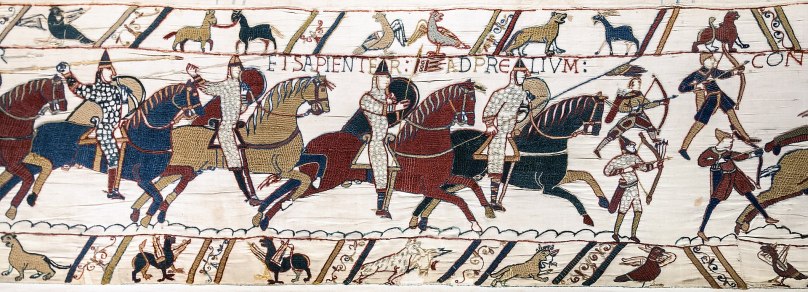 Bayeux Tapestry
.
.
 Harold Godwinson, 1022 – 1066, Crowned King Harold II of England.
He was the last Anglo-Saxon English King. Harold reigned from 6 January 1066, until his death at the Battle of Hastings, 14 October 1066.
.
.
.
.
.
.
.
.
.
.
.
.
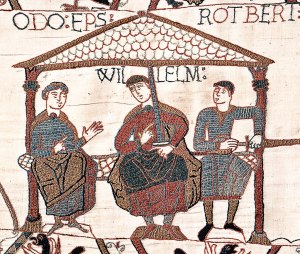 .William the Conqueror – William of Normandy
.
.
.
.
.
.
.
.
.
.
Pre-Christian Celtic Influences- Druids, myths, and rituals linger in medieval culture.
Leo IV’s Proto-Crusade (849 AD): Battle of Ostia, early holy war.
Photian Schism (869–870 AD): East-West split, church wealth breeds corruption.
End of the holy spirit
Rollo and Normandy (911 AD): Viking-Christian pact births powerful duchy.
Anglo-Saxon England (~900–1066 AD): Alfred to Hastings, kingdom forged, lost.
Monasticism’s Rise (~1000–1100 AD): Benedictine monasteries drive culture, faith.
Anselm’s Scholasticism (1033–1109 AD): Ontological argument fuses faith, reason.
Investiture Controversy (1075–1122 AD): Popes battle emperors over bishop control.
Anselm’s Scholasticism (1033–1109 AD): Ontological argument fuses faith, reason.
Celtic Thresholds & Mythic Dawn
Organized Druidism & Its End, c. 1st century BC – c. 600 AD. Druids as the intellectual, religious, and political elite of Celtic society: priests, judges, poets, astronomers, and keepers of oral tradition.Roman campaigns accelerate decline: Tiberius bans Druidism, 1st century AD; Claudius intensifies suppression (c. 54 AD); final stronghold on Anglesey crushed by Suetonius Paulinus, 61 AD. Christianization completes the process: Patrick’s mission in Ireland, 5th century, undermines remaining structures; organized Druidism effectively extinct by ~600 AD in Britain and Ireland. Traces linger only in folk practices and oral memory, scattered among rural communities.
Celtic Conversion to Christianity, c. 400–800 AD, Early adoption in Ireland: St. Patrick, active c. 432–461 AD establishes churches, monasteries, and a uniquely Celtic form of Christianity relatively free from direct Roman oversight. Insular Christianity flourishes: Irish monastic foundations, e.g., Clonmacnoise, Iona by Columba c. 563 AD. blend Celtic artistic motifs with Christian theology. Conversion on the mainland and Britain: Missionaries like Columbanus, d. 615 AD. Carry Irish-style monasticism to Gaul and Italy; Anglo-Saxon missions, Augustine of Canterbury 597 AD, and synods, e.g., Whitby 664 AD, gradually align practices with Rome. Synthesis rather than erasure: Celtic knots, high crosses, and illuminated manuscripts, e.g., Book of Kells, late 8th century, preserve pre-Christian aesthetic and spiritual echoes within a Christian framework.
Arthurian Myths & the Seeds of Chivalry, c. 500–late 800s AD. Possible historical kernel: a Romano-British leader, c. 500 AD, resisting Anglo-Saxon advance; early mentions in Welsh sources, Gildas c. 540 AD, Nennius’ Historia Brittonum c. 830 AD lists battles, including Badon. Mythic growth in oral and early written tradition: Geoffrey of Monmouth’s Historia Regum Britanniae, c. 1136 AD, will later expand the legend, but roots form in 9th-century Welsh poems and tales of a heroic war-leader. Emerging knightly ideals: stories of valor, loyalty, and resistance begin to circulate among Britons; faint seeds of courtly honor and the “Matter of Britain” take shape by the late 800s. Cultural bridge: Arthur as a symbol of lost Celtic glory, gradually Christianized and ready to bloom into full medieval romance in later centuries.
Summary – Key Pillars
~Threshold Reflection Druidic Twilight: Organized pagan wisdom fades under Roman and Christian pressure, leaving only whispers in the wind.
~Celtic–Christian Synthesis: A unique fusion emerges—monastic golden age in Ireland and Britain preserves both old artistry and new faith.
~Arthurian Dawn: Seeds of heroic myth sprout amid loss, planting the knightly ideals that will flower in the high medieval world.
~Threshold Crossing: October’s thinning veil and falling leaves mirror the Celtic liminal spirit—old pagan world yielding to the Christian light.
Living Pan-European and American Cultural and Heritage Community Center

.
EMAIL: peachcommunity yahoo.com
.
.
.
.
.
.
.
.
.
.
.
.
.
.
quicklink
.
.
 PEACH COMMUNITY