.
.
.
.
19 Century Vanguards
.
.
 Napoleon Bonaparte
Title: Emperor Napoleon Bonaparte I – Military General- Military Genius, Statesman.
Birth/Death: August 15, 1769, Ajaccio, Corsica – May 5, 1821, Saint Helena.
Parents: Carlo Buonaparte & Letizia Ramolino.
Siblings: Joseph, Lucien, Elisa, Louis, Pauline, Caroline, Jérôme.
Spouses: Joséphine de Beauharnais; Marie Louise of Austria.
Children: Napoléon François Charles Joseph Bonaparte (King of Rome).
Accomplishments: Emperor of the French; conquered much of Europe; codified laws in the Napoleonic Code; reformed administration, education, and the military.
Works: Napoleonic Code, memoirs of campaigns, administrative reforms.
Affiliations: French First Republic, French Consulate, French Empire.
Education/Mentors: Military academy at Brienne; studied under tutors in mathematics, history, and strategy.
Contemporaries/Rivals: Duke of Wellington, Tsar Alexander I, Admiral Nelson, various European monarchs.
Legacy/Influence: Redefined European politics, warfare; principles of meritocracy, legal reform across Europe; inspired nationalist movements.
Symbol/Emblem: Napoleonic eagle; coronation painting by Jacques-Louis David; French Imperial regalia.
Quote: “Impossible is a word to be found only in the dictionary of fools.”
.
.
.
.
.
.
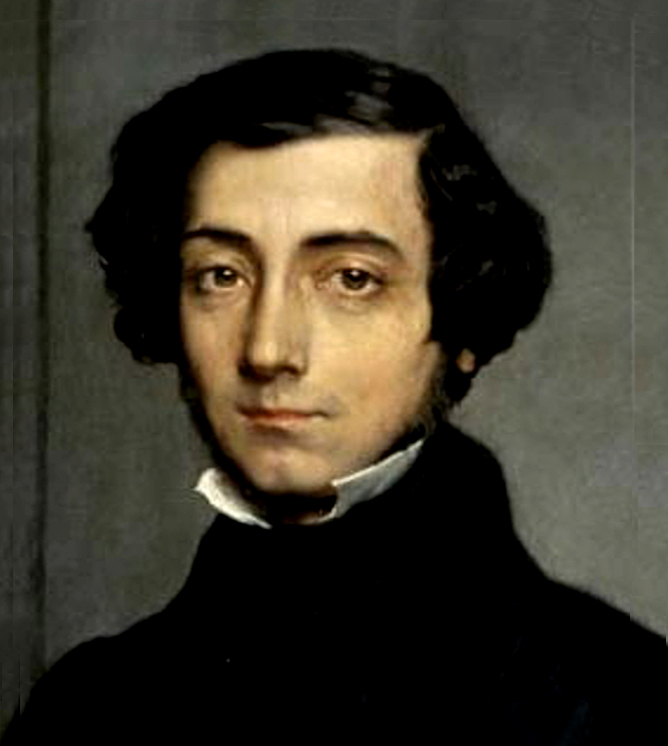 Alexis Charles Henri Clérel de Tocqueville
Title: Alexis de Tocqueville – Political Thinker, Philosopher, Historian, Statesman.
Birth/Death: July 29, 1805 (Paris, France) – April 16, 1859 (Cannes, France).
Parents: Hervé Louis François Jean Bonaventure Clérel, Comte de Tocqueville (royalist officer) & Louise Madeleine Le Peletier de Rosanbo.
Siblings: Édouard, Hippolyte (brothers).
Spouses: Married Mary Motley (an Englishwoman) in 1835.
Children: None.
Accomplishments: Author of Democracy in America. Deputy in the French Chamber of Deputies. Minister of Foreign Affairs.
Works: Democracy in America (2 volumes) The Old Regime and the Revolution (1856) Various essays and speeches on democracy, society, and political order.
Affiliations: French Chamber of Deputies (center-left “Doctrinaires” and moderates). Académie des Sciences Morales et Politiques.
Education/Mentors: Studied law in Paris. Mentored intellectually by François Guizot (historian and statesman).
Contemporaries/Rivals: François Guizot, Alphonse de Lamartine, Pierre-Joseph Proudhon. Rival in thought with Karl Marx.
Legacy/Influence: Shaped the study of democracy, civil society, and the role of religion in politics. Influential in both political science and sociology. Widely read in the U.S. and Europe for insights on liberty, equality, and tyranny of the majority.
Symbol/Emblem: The balance of liberty and equality (often represented in his works as two scales in tension).
Quotes: “Democracy and socialism have nothing in common but one word, equality. But notice the difference: while democracy seeks equality in liberty, socialism seeks equality in restraint and servitude.”
.
.
.
.
.
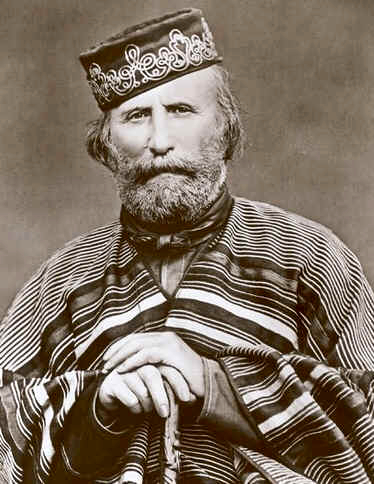 Giuseppe GaribaldiTitle: General Garibaldi, Revolutionary & Patriot.
Birth/Death: 1807–1882, Nice/Italy.
Parents: Giovanni Domenico Garibaldi & Maria Rosa Nicoletta Raimondo.
Siblings: Menotti Garibaldi (brother).
Spouse: Anita Ribeiro (m. 1842, d. 1849); Giuseppina Raimondi (m. 1860, annulled); Francesca Armosino (m. 1880).
Children: Menotti, Rosita, Teresita, Ricciotti (with Anita); Clélia, Rosa, Manlio (with Francesca).
Accomplishments: Expedition of the Thousand (1860); unified southern Italy; fought in South American wars.
Works: Speeches—Proclamation to Sicilians (1860); Writings—My Life (autobiography). Affiliations: Young Italy; Republican.
Affiliations: Carbonari, Young Italy, Republic of Rio Grande do Sul, Uruguayan Navy & Italian Legion in Uruguay, Kingdom of Sardinia-Piedmont, Redshirts/I Mille, Freemasonry, Society for Italian Unification.
Education/Mentors: Self-taught sailor; mentored by Giuseppe Mazzini.
Contemporaries/Rivals: Camillo Cavour, Victor Emmanuel II, Pope Pius IX.
Legacy/Influence: Hero of Risorgimento; inspired global nationalism.
Symbol/Emblems: Redshirts; Garibaldi Monument; “Hero of Two Worlds.”
Quotes: “I offer neither pay, nor quarters, nor food; I offer only hunger, thirst, forced marches, battles and death. Let him who loves his country with his heart, and not merely with his lips, follow me.” “Here we either make Italy, or we die.”
.
.
.
.
.
.
 Abraham Lincoln
Title: 16th President, Statesman, Lawyer
Birth/Death: Feb. 12, 1809 Kentucky, Illinois – Apr. 15, 1865, Washington, D.C. .
Parents: Thomas Lincoln & Nancy Hanks Lincoln.
Siblings: Sarah, Thomas, and a half-brother, John.
Spouse: Mary Todd Lincoln (m. 1842).
Children: Robert Todd, Edward Baker, William Wallace, Thomas.
Accomplishment: . Preserved Union in Civil War; Emancipation Proclamation (1863); Gettysburg Address (1863).
Works: Speeches—Gettysburg Address, Second Inaugural Address. Proclamations—Emancipation Proclamation.
Affiliations: Republican Party (founding member).
Education/Mentors: Self-taught (<1 yr. formal school); law studies under Illinois mentors.
Contemporaries/Rivals: Jefferson Davis, Ulysses S. Grant, Robert E. Lee.
Influence: Symbol of democracy, freedom, national reconciliation.
Symbol/Legacy: Abraham Lincoln Memorial, U.S. currency, ($5 bill, penny). Emancipation Proclamation.
Quotes: “A house divided can not stand.” “You can fool all the people some of the time and some of the people all the time, but you cannot fool all the people all the time””
.
.
.
.
.
.
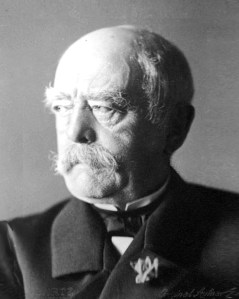 Otto Eduard Leopold von Bismarck
Title: Otto von Bismarck – Chancellor, Architect of German Unification ,Statesman, Diplomat
Birth/Death: April 1, 1815, Schönhausen, Prussia – July 30, 1898, Friedrichsruh, Germany
Parents: Karl Wilhelm Ferdinand von Bismarck & Wilhelmine Luise Mencken
Siblings: 3 brothers, 3 sisters
Spouses: Johanna von Puttkamer
Children: Herbert, Wilhelm, Marie, Hans
Accomplishments: Unified Germany; implemented Realpolitik; led Europe through complex diplomacy post-Franco-Prussian War
Works: Speeches, memoirs (Reflections and Reminiscences)
Affiliations: Prussian Conservative Party, German Empire government
Education/Mentors: University of Göttingen; studied law and diplomacy
Contemporaries/Rivals: Napoleon III, Kaiser Wilhelm I, Napoleon Bonaparte (legacy), French leaders
Legacy/Influence: Architect of modern Germany; master of balance-of-power diplomacy in Europe
Symbol/Legacy: Bismarck Memorials in Germany; unification of German states under Prussian leadership
Quotes:“Politics is the art of the possible.” “The main thing is to make history, not to write it!” Preventive war is like committing suicide for fear of death” “When you want to fool the world, tell the truth.”
.
.
.
.
.
.
.
Alexandrina Victoria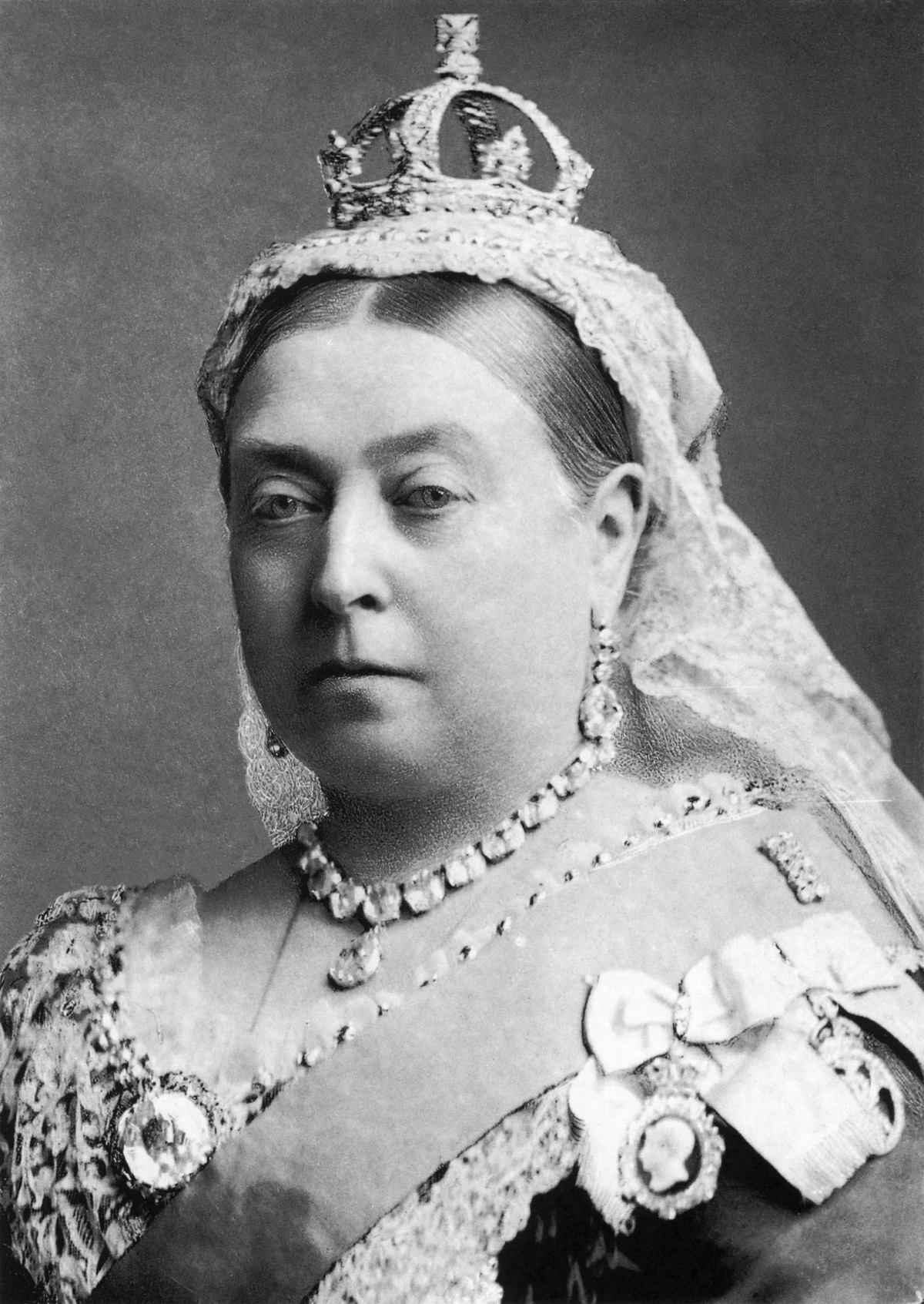
Title: Her Most Gracious Majesty Victoria, by the Grace of God, Queen of the United Kingdom of Great Britain and Ireland Queen, Defender of the Faith, Empress of India.
Birth/Death: May 24, 1819, Kensington Palace, London – January 22, 1901, Osborne House, Isle of Wight
Parents: Prince Edward, Duke of Kent & Strathearn & Princess Victoria of Saxe-Coburg-Saalfeld
Siblings: Carl, Feodora, and 2 half-siblings from her mother’s previous marriage
Spouses: Prince Albert of Saxe-Coburg and Gotha
Children: Victoria, Albert Edward, Alice, Alfred, Helena, Louise, Arthur, Leopold, Beatrice
Accomplishments: Longest-reigning British monarch, British Empire expansion, symbol of the British Empire and Victorian morality; oversaw industrial expansion and empire building, Golden Jubilee -1887.
Affiliations: British monarchy, British Empire government, Whig Party.
Accomplishments: Longest-reigning British monarch, British Empire expansion, symbol of the British Empire and Victorian morality; oversaw industrial expansion and empire building, Golden Jubilee -1887.
Education/Mentors: Early private tutors; strong influence from mother and Prince Leopold, and mentored by Lord Melbourne.
Works: Personal diaries, letters, state correspondence. Speeches—Diamond Jubilee Address (1897); Diaries—Leaves from the Journal.
Contemporaries/Rivals: Benjamin Disraeli, William Gladstone, Napoleon III. Prince Albert.
Legacy/Influence: Defined the cultural, moral, and political tone of the Victorian age; symbol of stability and empire. Victoria Memorial. Cultural Icon, Empire Figurehead
Symbol/Emblem: Crown, British monarch, British modernization. Portraiture, the “Victorian” era of architecture, fashion, and morality
Quote: “We are not amused.” “We are not interested in the possibilities of defeat; they do not exist.” “The important thing is not what they think of me, but what I think of them.”
.
.
.
LEADING WORLD EVENTS – 19th Century
United Kingdom in the Nineteenth Century
Rothschild Bank The scam of the century – Nathan Mayer Rothschild financed the British war effort against Napoleon and famously profited by spreading rumors of a British defeat after the Battle of Waterloo, then buying British bonds at a low price before the news of victory caused bond values to surge. This event significantly boosted the Rothschild family’s wealth and international banking influence, solidifying their position as a powerful force in European finance and marking the beginning of their multinational banking empire.
Rothschild Bank – Early 19th century (London branch, 1811–1812). Criminal bankers, Amsel Rothchild defrauded the British public Tricked the markets into thinking Wellington Lost the war to Napoleon. Origins: Mayer Amschel Rothschild in Frankfurt established a financial dynasty. His five sons spread across Europe (Frankfurt, Vienna, Naples, Paris, London). British Role: Nathan Mayer Rothschild set up in London. The bank financed trade, railways, mining, and most famously, government debt during the Napoleonic Wars. Impact: They became the leading European banking family of the 19th century, influencing international finance, stabilizing currencies, and financing empires.
Status After Napoleon – 1815
The British Isles emerged from the convulsions of the Napoleonic struggle not merely triumphant but exalted, her fleets unchallenged upon the seas, her treasury strained yet resilient, her statesmen proud guardians of a new European balance. Britannia stood watchful at Vienna, resolved that no single power should again threaten the liberties of Europe.
Industry and reform became the twin pillars of her century. The coal and iron of her midlands transformed not only her landscape but the very manner of man’s existence, as steam and smoke proclaimed the birth of the modern age. At home, Parliament trembled under the cries for suffrage and representation, slowly widening the ancient franchise. Abroad, the moral conscience of the nation wrestled with slavery, finally casting off the chains from the empire’s dominions.
The passage of the Reform Acts, the stern quelling of Chartist agitation, and the ever-widening span of her railways mark the domestic course. Overseas, the conquest of India was made secure; Canada, Australia, and the Cape became loyal dominions. The clash with Russia in the Crimea, the mutiny of sepoys in India, and the partition of Africa declared Britain’s imperial burdens as much as her glories.
East India Company – Founded: 1600 (by Royal Charter of Elizabeth I). Role in Britain: Granted monopoly on English trade with the East Indies. It grew into a vast commercial and political force, effectively ruling large parts of India. Peak: 18th century — its private armies controlled territory, collected taxes, and influenced Parliament. Decline: After the Indian Rebellion of 1857, the British Crown dissolved its political power (1858). Trade functions eventually faded by 1874. Legacy: Both an engine of Britain’s wealth and empire, and a symbol of exploitation and colonialism.
Opium Wars – First War (1839–1842), – Second War (1856–1860). Cause: Britain exported Indian opium to China, creating addiction and draining Chinese silver. The Qing Dynasty resisted.
Conflict: Britain’s superior navy crushed China. Results: Treaty of Nanking (1842): Britain gained Hong Kong, access to ports, and “most favored nation” status.
Opened China to foreign spheres of influence. Legacy: A dark chapter in imperial trade, showing Britain’s global dominance and ruthlessness in pursuing profit.
In Europe she was arbiter, ensuring no despotism would again overshadow the continent. Beyond Europe she was merchant, missionary, and soldier alike—bearing the paradox of commerce and conquest under one flag. “Pax Britannica” became no idle phrase, for her navy commanded the sea-lanes, and her financiers, the markets. By the closing years of Victoria’s reign, Britain bestrode the world like a colossus, her empire the most extensive ever known, her industry still vast though now rivaled by Germany and America. She entered the new century rich in dominion but laden with the cares of empire, her confidence unshaken yet her supremacy no longer unquestioned.
End of Century
By the closing years of Victoria’s reign, Britain bestrode the world like a colossus, her empire the most extensive ever known, her industry still vast though now rivaled by Germany and America. She entered the new century rich in dominion but laden with the cares of empire, her confidence unshaken yet her supremacy no longer unquestioned.
Victorian Britain’s spirit, industry, empire, confidence, one of the best is “(written in but sung passionately through the 19th century). Its refrain — proclaiming that became an unofficial anthem of naval power and empire. Thomas Arne took the text and set it to music, originally for the grand finale of his sung stage work Alfred, based on the legend of Alfred the Great, an Anglo-Saxon King who died over 800 years beforehand. “Britons never shall be slaves”.
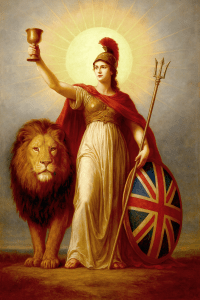 Rule, Britannia!
Thomas Arne 1740
When Britain first, at heaven’s command
Arose from out the azure main
Arose, arose from out the azure main
This was the charter, the charter of the land
And guardian angels sang this strain
Rule Britannia, Britannia, rule the waves
Britons never, never, shall be slaves
Rule Britannia, Britannia, rule the waves
Britons never, never, shall be slaves
Still more majestic shalt thou rise
More dreadful from each foreign stroke
More dreadful, dreadful from each foreign stroke
As the loud blast, the blast that tears the skies
Serves but to root thy native oak
Rule Britannia, Britannia, rule the waves
Britons never, never, shall be slaves
Rule Britannia, Britannia, rule the waves
Britons never, never, shall be slaves
Still more majestic shalt thou rise
More dreadful from each foreign stroke
More dreadful, dreadful from each foreign stroke
As the loud blast, the blast that tears the skies
Serves but to root thy native oak
Rule Britannia, Britannia, rule the waves
Britons never, never, shall be slaves
Rule Britannia, Britannia, rule the waves
Britons never, never, shall be slaves
The Muses, still with freedom found
Shall to thy happy coasts repair
Shall to thy happy, happy coasts repair
Blest isle regardless, with countless beauty places
And manly hearts to guard the fair
Rule Britannia, Britannia, rule the waves
Britons never, never, shall be slaves
Rule Britannia, Britannia, rule the waves
Britons never, never, shall be slaves
“Jerusalem” – William Blake – 1804. Vision of England as a holy, industrial yet spiritual land.
“God Save the King/Queen” – 1745. National Anthem
“The Song of the Shirt” – Thomas Hood, – 1843. Poem, Social-criticism exposing poverty and exploitation during the Victorian era.
“Charge of the Light Brigade” – Alfred, Lord Tennyson, 1854. Poem, British valor and tragic sacrifice in the Crimean War.
“Land of Hope and Glory” – Edward Elgar, 1901. The end of Victorian imperial confidence.
.
.
France 19th Century
France in the Nineteenth Century
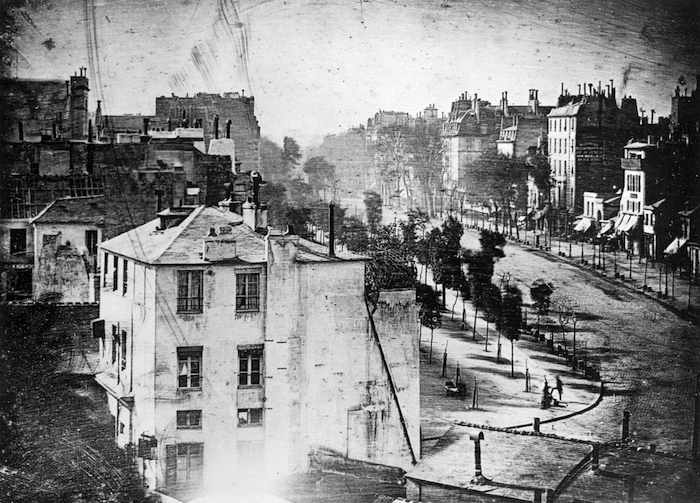
After Napoleon – 1815
France, once the terror of Europe beneath the eagles of Bonaparte, was cast low by Waterloo and the decrees of Vienna. She was compelled to endure occupation, indemnity, and the restoration of her Bourbon kings. Yet even in defeat, France remained the lodestar of European culture, her salons alive with wit, her spirit restless beneath the yoke of foreign dictation.
The century was a pageant of revolutions and restorations, of thrones raised and thrones cast down. The tricolor, once lowered, was hoisted anew in defiance of kings; republics flickered like a torch in the wind, while emperors re-emerged in Bonapartist guise. Liberty, equality, fraternity—these cries resounded through each convulsion, though never long satisfied.
The July Revolution of 1830 expelled the elder Bourbons in favor of Louis-Philippe, the “Citizen King.” The upheavals of 1848 swept him away, birthing the Second Republic, soon eclipsed by Louis-Napoleon, who crowned himself Emperor as Napoleon III. His rule brought grandeur to Paris and ambition abroad, yet ended in the humiliation of Sedan and the fall of the Second Empire. The Third Republic, born of war and siege, limped forth amidst the blood of the Commune. Turning Points:
France remained the perennial disturber of the European balance, her revolutions sparking imitators across the continent. Abroad she renewed her colonial ardor—Algeria subdued, Senegal and Indochina claimed—seeking compensation for losses nearer home. Ever the rival to Britain, she opposed her in Egypt, in Africa, and in Asia, yet both stood together when threatened by the specter of Prussia’s might. Role in Europe / World:
End of Century
Though scarred by the disasters of 1870, France endured. She turned inward to heal her wounds, outward to build a new empire overseas, and onward to cultivate the arts and sciences in which she never ceased to excel. By the century’s end she stood a republic, uncertain yet resolute, allied with Russia against the rising German colossus, her people still animated by that old, unquenchable spirit.
.
.
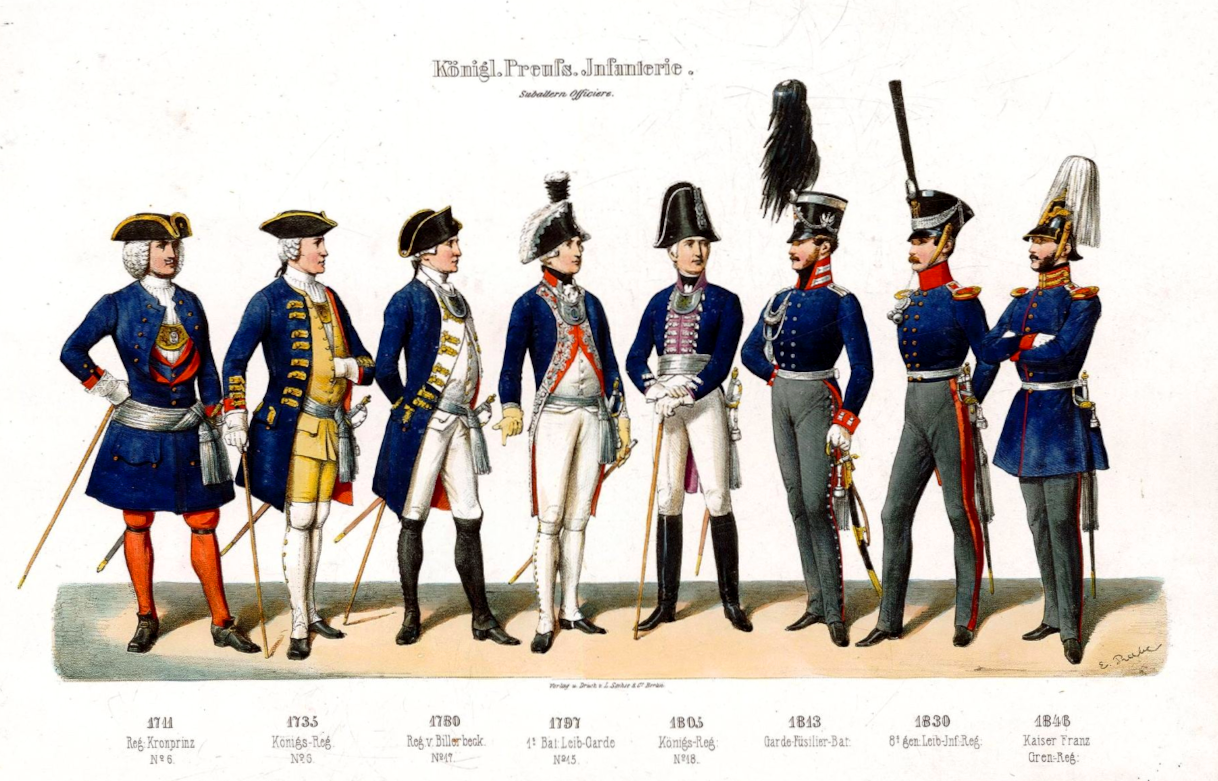 Prussia 19th Century
Status After Napoleon -1815
Prussia, humbled yet not destroyed by the Corsican, emerged from the Congress of Vienna enlarged in territory and entrusted with the guardianship of northern Germany. Though still overshadowed by Austria, she bore within her borders the seeds of iron and industry, and in her army the stern discipline that would one day remake the continent.
Duty, drill, and dynastic resolve defined her path. The century was consumed by the struggle for German unity, first in spirit, then in sword. Prussia stood as the champion of efficiency and order, harnessing her coal and steel to the service of the state. Her kings, ably guided by ministers of iron will, prepared the way for a national awakening.
The revolutions of 1848 stirred liberal hopes, but Frederick William IV spurned the imperial crown “from the gutter.” Yet the dream endured. The Zollverein bound the German states in commerce; the genius of Bismarck bound them in destiny. The wars against Denmark (1864), Austria (1866), and France (1870) were the hammer blows by which unity was forged. At Versailles, in 1871, the German Empire was proclaimed, with Prussia its beating heart.
From a middling power, Prussia ascended to the foremost military state of Europe. She eclipsed Austria, humbled France, and altered the very balance of nations. Abroad, Germany was slower to seek colonies, but in industry and science she advanced with giant strides, challenging Britain’s ancient supremacy. Her martial spirit and restless energies made her both admired and feared.
End of Century
By century’s end, the German Empire stood united, prosperous, and formidable, her universities the envy of Europe, her armies unmatched on the continent, her factories humming with invention. Yet beneath the grandeur lay the question of how this new power would wield its strength: as a guarantor of order, or a disturber of peace. The answer, yet unspoken, awaited the century to come.
.
.
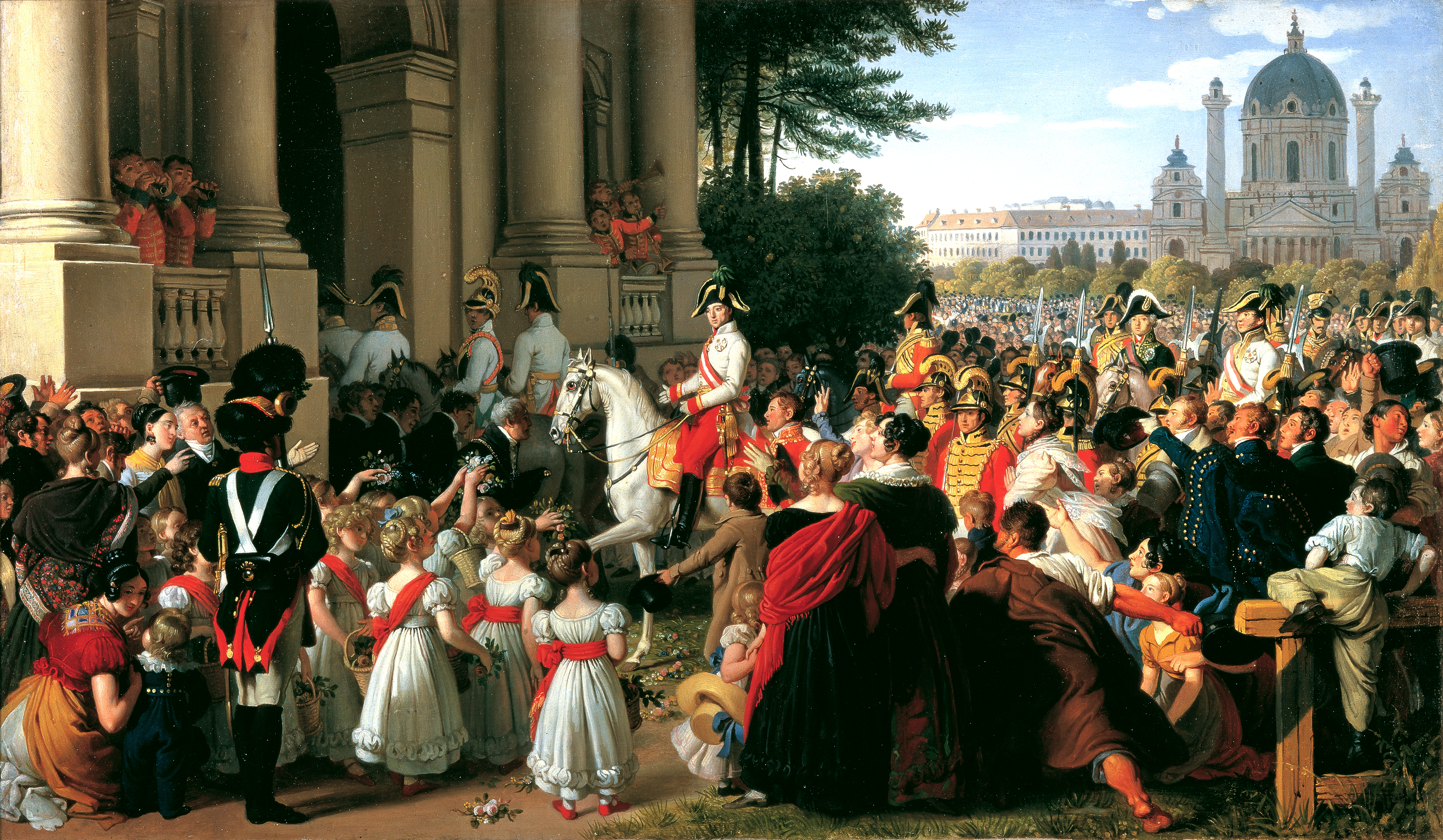 “The Entry of Emperor Francis I into Vienna After the Peace of Paris” (1828), Johann Peter Krafft
Triumphant of Emperor Francis I
Following Napoleon’s defeat, Emperor Francis I returned triumphantly to Vienna, a symbol of the restored order and stability across Europe. Krafft’s neoclassical depiction captures the solemnity of diplomacy, the jubilation of the populace, and the sense of a continent seeking to rebuild after years of upheaval. This painting embodies the spirit of the post-Napoleon era, where political restoration and cautious optimism will now defined European society.
Post-Napoleonic Europe & The Concert of Europe 1815–1848
The post-Napoleonic era saw the establishment of the Concert of Europe, a system of diplomacy and alliances among the Great Powers—Austria, Prussia, Russia, Great Britain, and eventually France—to maintain peace and prevent revolutions. Driven by Austrian Chancellor Klemens von Metternich, the Concert aimed to restore the balance of power, uphold monarchical and aristocratic rule, and maintain social order by suppressing liberal and nationalist movements, though it ultimately weakened due to the 1830 and 1848 revolutions.
Restoration of Monarchies and Conservative Order
Post-Napoleonic period in Europe, 1814-1848, where the conservative powers of Austria, Prussia, and Russia, where Prince Metternich restored the traditional monarchies and the old aristocratic order after the fall of Napoleon. The Conservative Order a.k.a. the Congress of Vienna aimed to suppress revolutionary, liberal, and nationalist movements that threatened the established power structures and to maintain peace through regular conferences known as the Concert of Europe
.
.
The Holy Alliance and Quadruple Alliance
The Alliance of 1815 was a military and political pact between the United Kingdom, Austria, Prussia, and Russia, formalized after Napoleon’s final defeat at Waterloo. Its primary goals were to prevent the resurgence of French aggression and revolutionary outbreaks in Europe, enforce the peace settlement of the Congress of Vienna, and maintain stability through periodic conferences. The alliance functioned until 1818, when France was admitted, transforming it into the Quintuple Alliance.
Nationalism and liberalism begin to simmer under surface
Though the ideas of liberty and nationhood reach back before the 18th century, it was the French Revolution of 1789 that cast them upon the European stage in full force. Enlightenment principles of natural rights, liberty, and the separation of powers found expression in new constitutions, while the Revolution’s wars — and later Napoleon’s empire — stirred national sentiment among peoples long subject to foreign crowns.
The Congress of Vienna in 1815 sought to restore monarchies and quash these forces. Yet in redrawing Europe without heed to its peoples, it only pressed liberalism and nationalism to smoulder beneath the surface, particularly among Italians and Germans divided into scattered states. Throughout the 19th century, these suppressed fires flared into revolutions: in Spain, Portugal, and Italy during the 1820s; in Greece, where a nationalist-liberal revolt won independence; and in the widespread upheavals of 1830 and 1848. Though many of these uprisings were suppressed, they revealed the irrepressible strength of these ideas.
By century’s end, liberalism and nationalism had reshaped the continent, giving rise to new constitutional nation-states — the most notable examples being a unified Italy and a unified Germany.
Early Industrial Revolution impact across Britain, Belgium, France, Germany
The Industrial Revolution began in Britain, with widespread impacts including a shift from agriculture to factory production and a rise in population and urbanization. Belgium was an early adopter of British industrial technology, becoming a leader in coal and iron-based heavy industry, while France adopted industrialization more slowly, eventually developing its own industrial power. Germany lagged behind in early industrialization, with much of its iron manufacturing still using older methods until the 1840s, when new techniques like coke-blast iron production began to take hold.
Latin American wars of independence, 1810s-1820
This was a series of revolutionary struggles that resulted in the liberation of most Spanish colonies from Spanish rule. Key Points: Creole nationalism, Influence of Enlightenment, Napoleonic Wars, which weaken Spain. Prominent leaders like Simón Bolívar and José de San Martín led the final campaigns, culminating in the defeat of Spanish forces and the emergence of new nations across the continent by the mid-1820s.
Greek War of Independence, 1821–1829
The Greek War of Independence was the first successful national revolution of the 1820s and marked the beginning of the birth of the modern Greek state against the Ottoman Empire, The uprisings began in the Peloponnese and Central Greece in 1821 after the formation of the Filiki Eteria secret society. The war was marked by significant foreign intervention, particularly the decisive Battle of Navarino in 1827 by a combined British, French, and Russian fleet. European powers’ support was crucial to securing Greek independence, which was formally recognized in the Treaty of Constantinople in 1832.
The Great Famine in Ireland, 1845–1852
In the mid-1840s, Ireland was struck by catastrophe when a blight ravaged the potato crop, the chief sustenance of its peasantry. Year upon year the failure returned, and what began as hardship became a famine of dreadful scale. Nearly a million perished from hunger and disease, while another million or more departed in sorrow across the seas, chiefly to Britain and America.
Relief from the British government proved slow and insufficient. Public works and soup kitchens offered scant respite, while food exports continued to leave Irish shores. To many, this neglect appeared less as misfortune than as injustice, deepening bitterness toward English rule.
The famine thus became not only a tragedy of human suffering but a forge of national spirit. The rising generation, styled Young Ireland, sought to break from dependence and claim self-determination. Though Revolution swept Europe, the Irish 1848 up-rising failed, however, the memory of famine endured, feeding the currents of nationalism that would only swell with the passing decades to come.
.
Rise of Nationalism and Liberalism 1847
Revolutions – The Springtime of Nations included the German states, France, Austria, Italy, Hungary. The rising nationalism due to, liberalism, social unrest, economic hardship. The revolutions were contagious, they spread across multiple European states, loud calls for constitutional government, national unity, and civil rights. Unfortunately, most were suppressed by conservative forces. However, the the groundwork was laid for future unification and liberal reforms. These uprisings marked the first widespread challenge to the old monarchical order in Europe since Napoleon, which inspired later movements toward unification of Germany and Italy, and liberal constitutions. One English historians said about the 1848 German revolution, “German history reached its turning point and failed to turn” A.J.P. Taylor. Many other thought differently, “Revolutions may fail, but ideas endure.”
The Dissolving of the HRE into Confederation of the Rhine – 1815 – 1966
1848 – War of German Unification
Ludwig II, 1845-1886, Ludwig Otto Friedrich Wilhelm – also called the Swan King or the Fairy Tale King (der Märchenkönig). King of Bavaria from 1864 until his death in 1886. He also held the titles of Count Palatine of the Rhine, Duke of Bavaria, Duke of Franconia and Duke in Swabia. Outside Germany, he is at times called “the Mad King” or Mad King Ludwig.
Ludwig ascended to the throne in 1864 at the age of 18. He spent his day-to-day affairs of state in favor of artistic and architectural projects. He commissioned Neuschwanstein Castle, Linderhof Palace, and Herrenchiemsee. He was the devoted patron of the composer Richard Wagner. Ludwig spent his own private revenue on artistic and architectural projects. He later borrowed extensively. This extravagance was used against him to declare him insane, a determination that was false. Ludwig was taken into custody and effectively deposed on 12 June 1886; he and his doctor were found dead the following day. His death was ruled a suicide, a conclusion that was also false. Today, his architectural and artistic legacy includes many of Bavaria’s most important sights.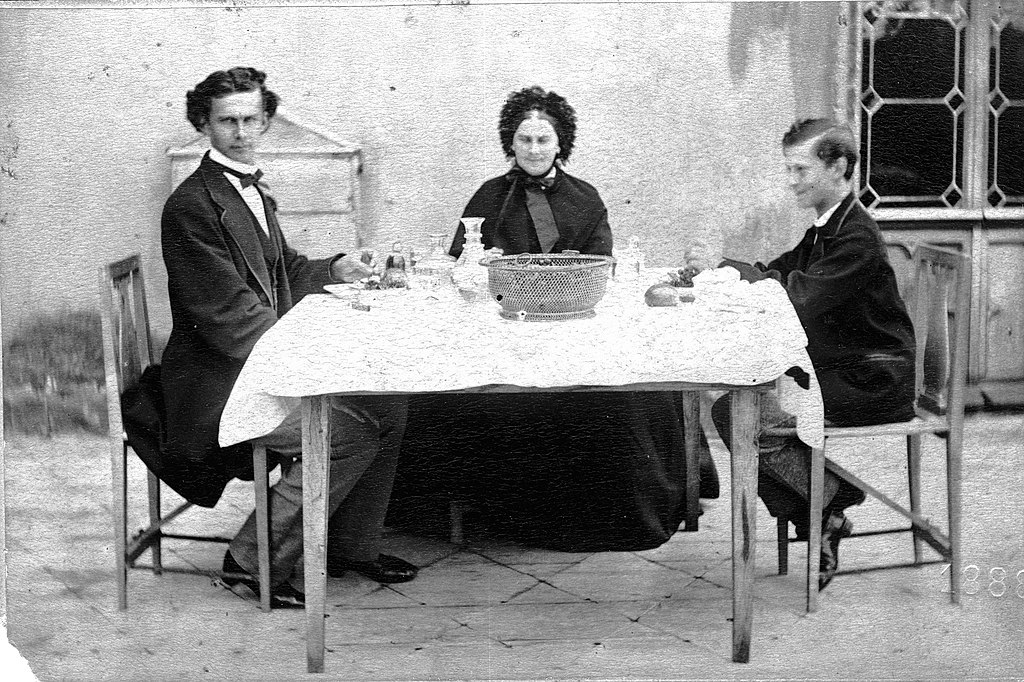
1866 – Austro Prussia War 1866
European Industrial & Social Change 1850s–1870s
Second Industrial Revolution beginnings (steel, chemicals, electricity)
Rise of railroads and telegraph networks
Social reform movements: 1850-1870 – labor unions, socialism, early feminism
19th-century European industrialization wrought both wealth and suffering. Social reform movements addressed industrialization’s impacts, focusing on issues like child labor, working conditions, public health, education, and women’s rights. Key areas of reform also included labor laws. Labor laws and protections were debated and enacted; early socialist thought spread among workers; early feminism pressed for recognition and rights. These movements laid the groundwork for modern labor protections and social welfare systems.
The Crimean War (1853–1856) and decline of Ottoman influence.
The accelerated of the Crimean War and the decline of the Ottoman Empire’s exposed Turkeys military and economic weaknesses to the European powers, leading to its increased dependence on foreign aid and protection. While the Ottomans secured a technical victory with British and French support, the conflict highlighted their inability to defend themselves, reinforcing their image as the “Sick Man of Europe” and intensifying foreign intervention, ultimately contributing to further territorial losses and a diminished role in global affairs.
Italian, Risorgimento – unification processes
The Risorgimento was a 19th-century social and political movement for the unification of Italy, which was previously fragmented into various states. The process, led by Count Cavour and Giuseppe Garibaldi, involved a combination of nationalist uprisings, wars, and political maneuvering, culminating in the creation of the Kingdom of Italy in 1861, with Rome becoming the capital in 1871 after the capture of the Papal States.
Germany, Bismarck – unification processes – 1871
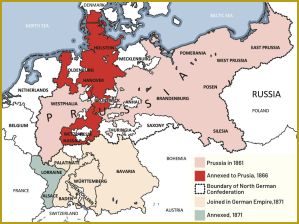
After becoming Prussia’s minister-president in 1862, he first modernized the Prussian army. He then engineered this army through strategy often described as “iron and blood.” He did this by unifying Germany under Prussian rule through a combination of military action and shrewd diplomacy. He then orchestrated three decisive wars that established Prussian dominance: Second Schleswig War (1864) against Denmark, the Austro-Prussian War (1866), and the Franco-Prussian War (1870-1871). This last war with France galvanized the southern German states to join the North German Confederation fostering German nationalism to create a powerful, unified nation-state this formed the German Empire in 1871.
American Civil War 1861–1865 – global political impact
The American Civil War resonated far beyond the United States, demonstrating the durability of a unified republic and accelerating the worldwide movement toward the abolition of slavery. The Union victory strengthened the federal government, bolstered international confidence in the United States, and influenced events abroad, including the French intervention in Mexico and the formation of the Canadian Confederation. It also reshaped global markets and inspired republican movements, marking the U.S. as a rising power on the international stage.
.
Imperial Expansion & Global Politics – 1870s–1890
This period is often called the “New Imperialism.” It consists of European powers and newly industrialized nations like the United States and Japan engaging in an aggressive “scramble for colonies.” This expansion reshaped global politics by intensifying rivalries among imperial powers, creating new power dynamics, and exploiting resources and territories in Africa and Asia.
Scramble for Africa intensifies, Berlin Conference – 1884–1885
The Scramble for Africa intensified in the 1880s, leading European powers to convene the Berlin Conference (1884–1885), which formalized the partitioning of Africa among themselves, not with any African representation. Organized by German Chancellor Otto von Bismarck to prevent conflict over African resources and markets, the conference established rules for claiming territory, like the “Principle of Effectivity,” ensuring that new claims involved effective control. The resulting General Act of Berlin legitimized the rapid colonization, leading to the imposition of European borders and systems, the exploitation of the African people and resources, and the establishment of lasting political and economic challenges on the continent.
British Empire At Its Height – French, German, Belgian colonial expansion
At its height in 1920, the British Empire was the largest empire in world history, ruling over 24% of the Earth’s total land area. While the British built their empire over centuries, French, German, and Belgian colonial expansion primarily occurred in the late 19th and early 20th centuries during the “Scramble for Africa.” At its peak in 1920, after receiving former German and Ottoman territories, the British Empire controlled a total of over 35.5 million square kilometers and a population of 449 million people. Its territories were so widespread that it was famously described as “The empire on which the sun never sets”
Meiji Restoration in Japan – (1868) rapid modernization
The Meiji Restoration of 1868 initiated Japan’s rapid modernization, transitioning it from a feudal society to an industrialized world power by dismantling the feudal system, adopting Western technology and institutions, and establishing a new political structure centered on the Emperor. This comprehensive reform involved widespread economic, industrial, educational, and military changes, allowing Japan to resist colonization, become a major global power, and preserve aspects of its traditional culture during the Meiji era (1868-1912).
Cultural and Scientific Advances – Darwinism, Positivism
Darwinism and positivism were two major 19th-century movements that radically advanced science and reshaped cultural thought by championing empirical observation over metaphysical or religious explanations. Though distinct, both profoundly influenced the development of the social sciences and pushed Western Civilization toward a more secular, scientific worldviewm
Rising Tensions Between Great Powers – France-Germany rivalry post Franco-Prussian War 1870–71
The Franco-Prussian War of 1870–71 and its aftermath fundamentally reordered the European balance of power and created a period of sustained tension between France and Germany. Germany’s decisive victory led to its unification and the rise of a new, dominant continental power, which fostered a deep French desire for revenge known as “revanchism.”
Wilhelminische Zeit, 1888 and 1918
The Wilhelminian age refers to the period of German history from 1888, the death of Kaiser Friedrich III, to 1918, the end of World War I. This was the reign of Emperor Wilhelm II. The era represents creative change in society, politics, culture, art, literature, and the architecture of Germany. This period also coincides with the late Victorian and Edwardian eras in the British Empire, the Gilded Age in the United States, the Belle Époque in the Third French Republic, and the Silver Age in the Russian Empire. This era was marked by significant German industrial growth, expansion into colonial territories, and increasing international assertiveness, but also by social divisions and political tensions that contributed to the outbreak of World War I.
.
.
.
Germany
Pre HRC Germany
 Pagans
 Teutonic Knights
HRE – “This body which was called and which still calls itself the Holy Roman Empire was in no way holy, nor Roman, nor an empire.” -Voltaire
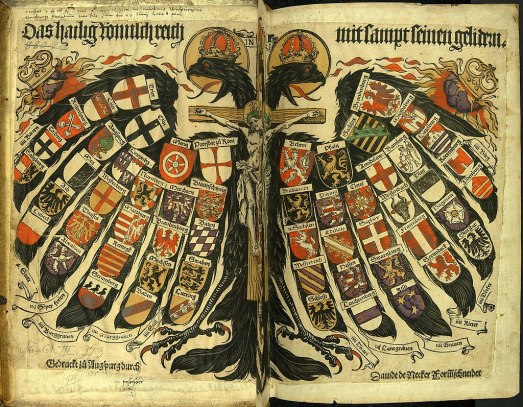
Pre HRC Germany
Before the Holy Roman Empire was formally established in 962 CE, the territory of modern-day Germany was shaped by the fragmentation of the Carolingian Empire, the rise of powerful Germanic “stem duchies,” and their eventual unification under the Ottonian dynasty. The story of pre-HRE Germany is one of transition from the vast, integrated Frankish realm to a distinct and powerful German kingdom
………………………………………………………………………………………………
The dissolving of the HRE into Confederation of the Rhine – 1815 – 1966
1866 – Austro Prussia War 1866
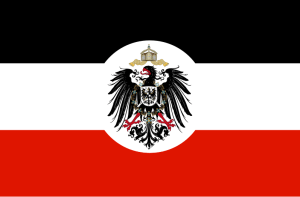
1871 – Confederation of the Rhine to The German Empire, Proclaimed by Keiser Wilhelm the First and his Chancellor, Otto von Bismarck.
.The dissolving of the HRE into Confederation of the Rhine – 1815 – 1966
1848 – War of German Unification
1866 – Austro Prussia War 1866
1871 – Confederation of the Rhine to The German Empire, Proclaimed by Keiser Wilhelm the First and his Chancellor, Otto von Bismarck.
.
.
.
.
GB
Malthusianism – Malthus
Thomas Robert Malthus 1766 – 1834, Born in Great Britain. Economist, cleric, political, economic, demographic scholar.
Book: An Essay on the Principle of Population, 1798. His essay concluded that human beings utilize abundance for population growth rather than for maintaining a high standard of living.
Malthus observed that an increase in a nation’s food production improved the well-being of the population, however, he found that these improvements were temporary due to population growth, which restored the original per capita production level. He stated that when population growth outpaces agricultural production, this brings about famine or war, resulting in poverty and depopulation. This event was called the Malthusian catastrophe (A.K.A. Malthusian trap, population trap, Malthusian check, Malthusian crisis, Malthusian spectre, Malthusian crunch).
This growth or quality of life? This debate still rages today. Do we curb population for a higher standard of living and more distribution of the wealth or increase population which lowers the standard of living and isolates wealth to a lucky few?
.
.
Revolution, 1848
Springtime of the People and Nations.
This was the age of Enlightenment, Romanticism, Formation of Liberal Democracies, and Nationalism. 50 European Countries were affected, there were widespread revolutions and uprisings throughout Europe. A call for the removal of the old monarchical structures and the cry for independent nation-states was felt everywhere. Demands for freedom of the press, economic rights, the abolition of serfdom, and representative democracies.
Matale Rebellion – 1848 – Great Britain.
Most of the uprisings ended in October 1849.There are many details and events to cover, but what we see during this period is the formation of modern Europe, and for the most part what still exists today. The month of May will have a good number of interesting Lectures during this period in the History of History Series. Check the calendar for dates, times and locations.
The End of Kings List of overthrown Governments:
.
.
Historical Biographies – EUROPE–
Otto von Bismarck, 1815 – 1898, Schönhausen, Germany. .He was Statesman who helped to unified the Rhine Confederation into Germany and served as its first chancellor. German National Socialist He created the first welfare state.
The formation of the German Empire.
.
Alexandrina Victoria – 1819 – 1901 Born in London, Great Britain.
Queen of the United Kingdom of Great Britain and Ireland.
Giuseppe Garibaldi, 1807 – 1882. Born in Nice, France. Family
Garibaldi was an Italian general and patriot. He unified and helped create the Kingdom of Italy. He is one of the fathers of the fatherland.
Expedition of the Thousand
—
History of History
History 1790–1890
Rulers & Leaders
 Australia
Henry Parkes (1815–1896, Australia) — Politician known as the “Father of Federation” for Australian states.
Austria Empire 1804 – 1867
Klemens von Metternich (1773–1859, Austrian) – TITLE: Architect of the post-Napoleonic order through the Congress of Vienna, championing conservatism and balance of power. QUOTE: “When Paris sneezes, Europe catches a cold.”
Great Britain
Austria-Hungarian 1867 – 1918
Franz Ferdinand (1863–1914, Austro-Hungarian) – TITLE: Emperor of Austria and King of Hungary for nearly seven decades, presided over a complex, multi-ethnic empire marked by growing nationalist tensions. Archduke whose assassination triggered World War I. QUOTE: “I am a soldier, not a politician.” “Let us stick to the old ways.
Louis Kossuth (1802–1894, Hungarian) – TITLE: Leader of the Hungarian Revolution of 1848, championed independence from Austria-Hungary. QUOTE: “Liberty is the breath of nations.”
Archduke Karl Ludwig (1833–1896, Austro-Hungarian) – TITLE: Member of the Habsburg dynasty, influential in dynastic affairs and succession planning during Franz Joseph I’s reign. QUOTE: “Duty to the dynasty outweighs all else.”
Balkan
Canada
John A. Macdonald (1815–1891, Canada) — First Prime Minister of Canada, led Confederation in 1867.
France
Great Britain
Toussaint Louverture – Leader – Revolutionary, General
Full Name: François-Dominique Toussaint Louverture
Birth/Death (date and place): May 20, 1743, Saint-Domingue – April 7, 1803, Fort-de-Joux, France
Parents: Gaou Guinou (father), Pauline (mother)
Siblings: Unknown
Spouses: Suzanne Simone Baptiste
Children: Isaac, Saint-Jean, Placide, Pauline, Emilia, Claire, Adrien
Most Memorable Accomplishment(s): Led the Haitian Revolution; freed Haiti from French colonial rule; established the first free Black republic in the Americas
Memorable Quote: “I was born a slave, but nature gave me the soul of a free man.”
Works: Military orders, correspondence
Known Affiliations: Revolutionary forces in Saint-Domingue, French colonial armies (initially)
Education / Mentors: Largely self-educated; military experience through colonial militia and revolutionary training
Contemporaries / Rivals: Napoleon Bonaparte, Jean-Jacques Dessalines, Henri Christophe
Legacy / Influence: Symbol of anti-slavery struggle and revolutionary leadership; inspired future independence movements
Symbol / Emblem / Signature Work: Haitian flag, revolutionary military campaigns
Charles X (1757–1836, French) – TITLE: King of France (1824–1830), last Bourbon monarch before the July Revolution, attempted conservative restoration of royal power. QUOTE: “The crown is sacred and inviolable.”
Napoleon Bonaparte (1769–1821, Italian/French) – TITLE: Emperor and Military Genius. He dominated Europe in the early 19th century. He created the Napoleonic Code, this reshaped politics and law throughout Europe and Western Civilization. He fought in over 60 battles, winning the majority. He was defeated at Waterloo by Field Marshal Arthur Wellesley, 1st Duke of Wellington. QUOTE: “Impossible is a word to be found only in the dictionary of fools.”
Louis Philippe I (1773–1850, French) – TITLE: “Citizen King” who ruled France during the July Monarchy, attempting to balance liberal and conservative forces until deposed in 1848. QUOTE: “It is better to obey than to command.”
Louis-Napoléon Bonaparte (Napoleon III) (1808–1873, French) – TITLE: Nephew of Napoleon I; became Emperor of the French, modernized Paris, and led France during the Crimean and Franco-Prussian Wars. QUOTE: “To resist the inevitable is useless.”
Great Britain
Greece
Alexandros Ypsilantis, 18 – 19 , Greece. TITLE: a member of the Filiki Eteria, QUOTE: ” ”
Great Britain
Regno d’Itali
Victor Emmanuel II (1820–1878, Italian) – TITLE: First King of a unified Italy, key figure in the Risorgimento, worked with Cavour and Garibaldi to consolidate Italian states. QUOTE: “Italy is made; now we must make Italians.”
Giuseppe Garibaldi (1807–1882, Italian) – TITLE: Revolutionary and military leader who helped unify Italy. QUOTE: “I offer neither pay, nor quarters, nor food; I offer hunger, thirst, forced marches, battle, and death.”
Portugal
Great Britain
Prussia
Frederick William IV (1795–1861, Prussian) – TITLE: King of Prussia (1840–1861), resisted liberal reforms, precursor to Bismarck’s unification of Germany. QUOTE: “I will never be king of a united Germany.”
Wilhelm I (1797–1888, Prussian) – TITLE: King of Prussia and first Emperor of unified Germany under Bismarck’s leadership. QUOTE: “I no longer have a kingdom, but an empire.”
Otto Eduard Leopold von Bismarck, (1815–1898, Prussia/Saxony) – TITLE: Prince of Bismarck, Count of Bismarck-Schönhausen, Duke of Lauenburg, German-Prussian statesman, he unified Germany through diplomacy and war First Chancellor of the German Empire (1871–1890). Architect of Realpolitik and European balance of power system. QUOTE: “Politics is the art of the possible.”
Frederick III (1831–1888, Prussia) – TITLE: German Emperor for 99 days, liberal-minded, influenced German politics in late 19th century. QUOTE: “I wish to reign in freedom and fairness.”
Russia & Ukraine
Alexander II of Russia (1818–1881, Russian) – TITLE: Tsar known for emancipating the serfs and major reforms, assassinated in 1881. QUOTE: “I am the Tsar, and I will rule as I please.”
Nicholas I (1796–1855, Russian) – TITLE: Tsar of Russia, conservative autocrat, oversaw the suppression of revolts and the Crimean War. QUOTE: “Autocracy, orthodoxy, and nationality shall preserve the empire.”
Alexander II, (1818–1881, Russia) — Tsar known for emancipating the serfs in 1861 and reforming the empire.
Scandinavian & Baltic
 Spain
Spain
Simon Bolivar (1783–1830, Venezuelan) – TITLE: “El Libertador,” Defeated Spain in Latin America. by leading a liberation movements across South America against Spanish rule, aiming to unite the continent. QUOTE: “Freedom is the only worthy goal in life.”
.
 South Africa
Paul Kruger (1825–1904, South African, Boer) – TITLE: President of the South African Republic (Transvaal), led Boer resistance against British imperialism. QUOTE: “It is better to die for a principle than to live for a lie.”
United Kingdom of Great Britain and Ireland
Arthur Wellesley, Duke of Wellington (1769–1852, British) – TITLE: Defeated Napoleon at Waterloo, later served twice as Prime Minister of the UK, influential in conservative politics and military affairs. QUOTE: “The battle of Waterloo was won on the playing fields of Eton.”
Benjamin Disraeli (1804–1881, British) – TITLE: Twice Prime Minister, championed the expansion of the British Empire and social reforms. QUOTE: “Action may not always bring happiness; but there is no happiness without action.”
William Ewart Gladstone (1809–1898, British) – TITLE: Four-time British Prime Minister and Liberal leader known for reforms and Irish Home Rule advocacy. QUOTE: “Justice is truth in action.”
Queen Victoria (1819–1901, British) – TITLE: British, Monarch of the United Kingdom of Great Britain and Ireland and Empress of India, Monarch whose reign oversaw industrial expansion, imperial growth, social reform, cultural, political, and imperial expansion known as the Victorian Era QUOTE: “We are not interested in the possibilities of defeat; they do not exist.
United States Of America
Thomas Jefferson (1743–1826, United States) – TITLE: Third President of the United States, principal author of the Declaration of Independence, champion of liberty, religious freedom, and westward expansion. QUOTE: “I cannot live without books.”
John Quincy Adams (1767–1848, United States) – TITLE: Sixth President of the United States and influential diplomat, helped shape early American foreign policy. QUOTE: “America does not go abroad in search of monsters to destroy.”
William Henry Harrison (1773–1841, United States) – TITLE: Ninth President of the United States, known for his military leadership in the Battle of Tippecanoe. Died shortly after taking office. QUOTE: “I contend that the strongest of all governments is that which is most free.”
Andrew Jackson (1767–1845, United States) – TITLE: Seventh President of the United States, champion of populism and expanded presidential power, controversial for Indian Removal policies. QUOTE: “One man with courage makes a majority.”
John C. Calhoun (1782–1850, United States) – TITLE: Advocate of states’ rights and slavery, served as Vice President and Secretary of War. His ideas contributed to sectional tensions before the Civil War. QUOTE: “The Union — next to our liberty most dear.”
James Monroe (1758–1831, United States) – TITLE: Fifth President of the United States, promulgated the Monroe Doctrine opposing European colonialism in the Americas. QUOTE: “National honor is national property of the highest value.”
Martin Van Buren (1782–1862, United States) – TITLE: Eighth President of the United States and founder of the Democratic Party. QUOTE: “It is easier to do a job right than to explain why you didn’t.”
John Tyler (1790–1862, United States) – TITLE: 10th President of the United States, first Vice President to succeed a deceased President.
QUOTE: “I can’t consent to being dictated to.”
William Tecumseh Sherman (1820–1891, United States) – TITLE: Union general famous for his “March to the Sea” during the Civil War, pioneering total war tactics. QUOTE: “War is cruelty, and you cannot refine it.”
Alfred Thayer Mahan (1840–1914, United States) – TITLE: Naval historian and strategist, emphasized sea power’s importance to national greatness. QUOTE: “Whoever rules the waves rules the world.”0th President of the United States; annexed Texas and faced sectional tensions. QUOTE: “I can’t consent to be dictated to.”
James K. Polk (1795–1849, United States) – TITLE: 11th U.S. President, known for Manifest Destiny, territorial expansion including Oregon and Texas annexation, and the Mexican-American War. QUOTE: “No president who performs his duties faithfully and conscientiously can have any leisure.”
Zachary Taylor (1784–1850, United States) – TITLE: 12th President of the United States, military leader in the Mexican-American War, known as “Old Rough and Ready.” QUOTE: “I have always done my duty.”
Millard Fillmore (1800–1874, United States) – TITLE: 13th President, last Whig president, signed the Compromise of 1850 including the Fugitive Slave Act. QUOTE: “May God save the country, for it is evident that the people will not.”
Franklin Pierce (1804–1869, United States – TITLE: 14th President, his administration struggled with sectional tensions leading to the Civil War. QUOTE: “We are all Democrats, we are all Republicans.”
James Buchanan (1791–1868, United States) – TITLE: 15th President, often criticized for inaction as the nation approached Civil War. QUOTE: “The ballot box is the rightful remedy for the repeal of bad laws.”
Abraham Lincoln (1809–1865, United States) – TITLE: 16th President; led the United States through the Civil War, issued the Emancipation Proclamation, and was assassinated in 1865. QUOTE: “Government of the people, by the people, for the people, shall not perish from the earth.”
Jefferson Davis (1808–1889, United States) – TITLE: President of the Confederate States during the American Civil War. QUOTE: “The axiom that the government derives its just powers from the consent of the governed is true.”
Ulysses S. Grant (1822–1885, United States) – TITLE: Union general who won the Civil War and served as 18th President during Reconstruction. QUOTE: “In every battle there comes a time when both sides consider themselves beaten; then he who continues the attack wins.”
Robert E. Lee (1807–1870, United States) – TITLE: Confederate general, brilliant tactician, symbol of Southern honor. QUOTE: “It is well that war is so terrible — otherwise we should grow too fond of it.”
Andrew Johnson (1808–1875, United States) – TITLE: 17th President, succeeded Lincoln, presided over early Reconstruction and was impeached but acquitted. QUOTE: “I am the last man to surrender to any man.”
Grover Cleveland (1837–1908, United States) – TITLE: Only U.S. President to serve two non-consecutive terms, known for honesty and fighting corruption. QUOTE: “A public office is a public trust.”
William McKinley (1843–1901, United States) – TITLE: 25th U.S. President, led America during the Spanish-American War and increased global presence. QUOTE: “In the time of darkest defeat, victory may be nearest.”
Benjamin Harrison (1833–1901, United States) – TITLE: 23rd President of the United States, presided over economic legislation and modernization of the Navy. QUOTE: “The care of human life and happiness and not their destruction is the first and only object of good government.”
.
.
.
Human Rights Activist, Health & Labor Leaders
Florence Nightingale (1820–1910, British) – TITLE: Pioneer of modern nursing and healthcare reform, especially during the Crimean War. QUOTE: “I attribute my success to this—I never gave or took any excuse.”
Industrialists & Scoundrels
Discovery & Travel
David Livingstone, (1813–1873, Scotland/Africa) — Explorer and missionary in Africa.
.
Invention & Engineering
Cornelius Vanderbilt, (1794–1877, United States) — Railroad and shipping magnate.
James Hill, (1838–1916, Canada) — Railroad builder, key in Western Canada development.
Literature
Jane Austen (1775-1817, England) Influenced by: Samuel Johnson, Frances Burney. Best Works: Pride and Prejudice, Emma, Mansfield Park. Attributes: Wit, Irony, Social Observer
Quote: “It is a truth universally acknowledged, that a single man in possession of a good fortune, must be in want of a wife.”
Alexander Pushkin (1799-1837, Russia) Influenced by: Lord Byron, Voltaire. Best Works: Eugene Onegin, The Bronze Horseman, Boris Godunov. Attributes: Father of Modern Russia Lyricism, Nationalism, Narrative Innovation. Quote: “I have raised myself a monument not built by hands”
Nikolai Gogol (1809-1852, Russia) Influenced by: Ukrainian folklore, European Romanticism. Best Works: Dead Souls, The Overcoat, The Government Inspector. Attributes: Satire, Grotesque, Realism Precursor. Quote: “The longer and more carefully we look at a funny story the sadder it becomes.”
William Makepeace Thackeray, 1811-1863, England. Influenced by: Jonathan Swift, Henry Fielding. Best Works: Vanity Fair, The Luck of Barry Lyndon, Pendennis. Attributes: Satire, Social Realism, Narrative Irony. Quote: “Mother is the name for God in the lips and hearts of little children.”
Charles Dickens, 1812-1870, England. Influenced by: Smollett, Fielding, London street life. Best Works: Great Expectations, David Copperfield, A Tale of Two Cities. Attributes: Social Conscience, Character Vividness, Serial Mastery. Quote: “It was the best of times, it was the worst of times.”
Walt Whitman, (1819–1892, United States) — Poet and essayist, author of Leaves of Grass. Known As: Works: Quotes: “”
Fyodor Dostoevsky, 1821-1881, Russia. Influenced by: Gogol, Schiller, Russian Orthodoxy. Best Works: Crime and Punishment, The Brothers Karamazov, Notes from Underground. Attributes: Psychological Depth, Moral Inquiry, Existentialism. Quote: “The soul is healed by being with children.”
Gustave Flaubert, 1821-1880, France. Influenced by: Balzac, Cervantes, Romanticism. Best Works: Madame Bovary, Sentimental Education, Salammbô. Attributes: Precision, Realism, Stylistic Purity. Quote: “Be regular and orderly in your life like a bourgeois, so that you may be violent and original in your work.”
Leo Tolstoy, 1828-1910, Russia. Influenced by: Rousseau, Schopenhauer, Russian Peasant Life. Best Works: War and Peace, Anna Karenina, The Death of Ivan Ilyich. Attributes: Epic Scope, Moral Clarity, Spiritual Quest. Quote: “Everyone thinks of changing the world, but no one thinks of changing himself.”
Emily Dickinson, (1830–1886, United States) — Influential American poet. Known As: Works: Quotes: “”
Mark Twain, 1835-1910, United States. Influenced by: Southwestern Humor, Dickens, Frontier Life. Best Works: Adventures of Huckleberry Finn, The Adventures of Tom Sawyer, A Connecticut Yankee in King Arthur’s Court. Attributes: Verbal Wit, Social Satire, Vernacular Voice. Quote: “The secret of getting ahead is getting started.”
Émile Zola, 1840-1902, France. Influenced by: Balzac, Taine, Scientific Positivism. Best Works: Germinal, Thérèse Raquin, Nana. Attributes: Naturalism, Social Outrage, Documentary Detail. Quote: “I am little concerned with beauty or perfection; I don’t care for the great centuries. All I care about is life, struggle, intensity.”
Thomas Hardy, 1840-1928, England. Influenced by: Wordsworth, Schopenhauer, Wessex Landscapes. Best Works: Tess of the d’Urbervilles, Jude the Obscure, Far from the Madding Crowd. Attributes: Tragic Vision, Rural Realism, Fatalism. Quote: “A strong woman who recklessly throws away her strength, she is worse than a weak woman who has never had any strength to throw away.”
Henry James, 1843-1916, United States. Influenced by: Balzac, George Eliot, European Manners. Best Works: The Portrait of a Lady, The Turn of the Screw, The Ambassadors. Attributes: Psychological Nuance, International Theme, Stylistic Density. Quote: “Three things in human life are important: the first is to be kind; the second is to be kind; and the third is to be kind.”
Robert Louis Stevenson, 1850-1894, Scotland. Influenced by: Romantic Adventure, Poe, Scottish Folklore. Best Works: Treasure Island, Strange Case of Dr Jekyll and Mr Hyde, Kidnapped. Attributes: Narrative Drive, Moral Duality, Atmosphere. Quote: “Don’t judge each day by the harvest you reap but by the seeds that you plant.”
Oscar Wilde, 1854-1900, Ireland. Influenced by: Pater, Baudelaire, Aestheticism. Best Works: The Picture of Dorian Gray, The Importance of Being Earnest, De Profundis. Attributes: Epigrammatic Brilliance, Aesthetic Decadence, Social Subversion. Quote: “Be yourself; everyone else is already taken.”
Anton Chekhov, 1860-1904, Russia. Influenced by: Turgenev, French Realists, Medical Practice. Best Works: The Cherry Orchard, Three Sisters, The Seagull. Attributes: Subtext, Humane Detachment, Modern Drama. Quote: “Any idiot can face a crisis; it’s this day-to-day living that wears you out.”
Stephen Crane, 1871-1900, United States. Influenced by: Zola, Civil War Veterans, Newspaper Realism. Best Works: The Red Badge of Courage, Maggie: A Girl of the Streets, The Open Boat. Attributes: Impressionism, War Realism, Existential Grit. Quote: “A man said to the universe: ‘Sir, I exist!’ ‘However,’ replied the universe, ‘that fact has not created in me a sense of obligation.’”
“rest, nature, books, music… such is my idea of happiness.”
~Leo Tolstoy
.
Music
Stephen Foster, (1826–1864, United States) — Composer known for popular American folk songs.
Opera
Giuseppe Verdi, 1813–1901, Italy. Craft: Opera Composer. Known As: Master of Italian opera, merging drama and music. Performance/Works: La Traviata, Aida, Rigoletto. Quote: ” ”
Richard Wagner, 1813–1883, Germany. Craft: Opera Composer. Known As: Revolutionary composer, Gesamtkunstwerk (“total work of art”). Performance/Works: The Ring Cycle, Tristan und Isolde. Quote: ” ”
Giacomo Puccini, 1858–1924, Italy. Craft: Opera Composer. Known As: Romantic and verismo opera innovator. Performance/Works: La Bohème, Tosca, Madama Butterfly. Quote: ” ”
Enrico Caruso, 1873–1921, Italy. Craft: Opera Singer (Tenor). Known As: World-famous operatic tenor, pioneer in recording. Performance/Works: Performances of La Bohème, Rigoletto. Quote: ” ”
Feodor Chaliapin, 1873–1938, Russia. Craft: Opera Singer (Bass). Known As: Legendary dramatic stage presence, expressive performances. Performance/Works: Boris Godunov. Quote: ” ”
Nellie Melba, 1861–1931, Australia/France. Craft: Opera Singer (Soprano). Known As: International opera star, promoter of opera worldwide. Performance/Works: La Bohème, Don Giovanni. Quote: ” ”
Wilhelm Richard Wagner, 1813–1883. Born in Leipzig. Baptized Lutheran. He was the ninth child of Carl Friedrich Wagner, clerk. Mother, Johanna Rosine Paetz. His father died of typhoid fever when he was an infant. His mother later remarried, Ludwig Geyer. Musician: Composer of Romantic Dramatic Operas, Theatre Director, Writer Libretto. Regarded as Gesamtkunstwerk- Complete Work of Art, synthesis of poetry, visual, musical and dramatic arts. He was also considered a Polemicist.
Great Britain
Librettist
Francesco Maria Piave, 1810–1876, Italy. Craft: Librettist. Known As: Frequent collaborator with Verdi, Pacini and Mercadante. Works: Rigoletto, La Traviata, and Macbeth. Quote:“Piave was Verdi’s most faithful librettist.
“Temistocle Solera, 1815–1878, Italy. Craft: Librettist, Composer. Known As: Wrote the libretto for Verdi’s Nabucco, Composed operas and served as Impresario in Madrid. Works: Quote: “Opera is the voice of the people.”
Philippe Gille, 1831–1901, France. Craft: Librettist, Critic and Secretary at the Théâtre Lyrique. Known As: Collaborated with Massenet, Delibes, Works: Manon and Lakmé. Quote: “Libretto is the backbone of opera.”
William S. Gilbert, 1836–1911, E gland. Craft: Librettist, Playwright. Known As: Half of the famous Gilbert & Sullivan duo; satirical, witty librettos for comic operas Works: The Mikado, H.M.S. Pinafore. Quote: “I am the most harmless and delightful of humans.”
Arthur Sullivan, 1842–1900, England. Craft: Composer. Known As: Musical half of Gilbert & Sullivan; master of comic opera score. Works: The Mikado, H.M.S. Pinafore. Quote: “Music should tell the story, not just decorate it.”
Arrigo Boito, 1842–1918, Italy. Craft: Librettist, Composer. Known As: Libretti for Verdi and composed his own opera. Works: Mefistofele, Otello and Falstaff Quote: “Art is the most beautiful of all lies.”
Luigi Illica, 1857–1919, Italy. Craft: Librettist. Known As: Worked with Puccini , Mascagni and Giordano. Works: La Bohème, Tosca, and Madama Butterfly. Quote: “The libretto is the soul of the opera.”
Harry B. Smith, 1860–1936, USA. Craft: Librettist, Lyricist. Known As: Writer of 300 librettos and more than 6,000 lyrics, collaborating with composers like Victor Herbert and Reginald De Koven. Works: Ziegfeld Follies. Quote: “A lyricist’s job is to make the music speak.”
Giuseppe Adami, 1878–1946, Italy. Craft: Librettist. Known As: Collaborated with Puccini, Mascagni and Giordano. Works: La rondine, Il tabarro, and Turandot. Quote: “Opera is the most complete form of art.”
Performing Arts & Theatre &
Henrik Ibsen, 1828–1906, Norway. Craft: Playwright. Known As: The father of modern drama. He introduced realistic contemporary plays that exposed social evils. Quote: “A man can play the fool only once, but a woman can do it all her life.”
William S. Gilbert, 1836–1911, England. Craft: Librettist, Playwright. Known As: Half of the famous Gilbert & Sullivan duo; satirical, witty librettos for comic operas like The Mikado and H.M.S. Pinafore. Quote: “I am the most harmless and delightful of humans.”
Arthur Sullivan, 1842–1900, England. Craft: Composer. Known As: Known As: Musical half of Gilbert & Sullivan; master of comic opera score, satirical, witty librettos for comic operas like .The Mikado and H.M.S. Pinafore. Quote: “Music should tell the story, not just decorate it.”
Sarah Bernhardt, 1844–1923, France. Craft: Actress. Known As: “The Divine Sarah.” he was one of the most famous actresses of the 19th century, known for her dramatic performances in both male and female roles, and her eccentric lifestyle, Work: Dramatic stage performances. Quote: ” ”
Henry Irving, 1838–1905, England. Craft: Actor, Theatrical Manager. Known As: First actor to be knighted in Britain. He dominated the London stage for decades and was famous for his grand, dramatic acting style. Work: London stage. Quote: “Wouldn’t you like to have heard the voice of Shakespeare, or Jesus Christ?” ”
Anton Chekhov, 1860–1904, Russia. Craft: Playwright, Short Story Writer. Known As: A master of the modern short story and a playwright who probed below the surface of life. Quote: “Don’t tell me the moon is shining; show me the glint of light on broken glass. Quote: ” “
Konstantin Stanislavski, 1863–1938, Russia. Craft: Theatre. Known As: Father of modern acting technique, MAT co-founder. Work: An Actor Prepares, The Seagull productions. Quote: ” ”
Vsevolod Meyerhold, 1874–1940, Russia. Craft: Actor, Theatre Director. Known As: Avant-garde director, innovator of biomechanics and constructivist theatre. The father of modern acting technique. He revolutionized Russian theatre with his emphasis on physicality and expression. He developed the ‘Stanislavsky System,’ emphasizing emotional truth and psychological realism. Quote: “Love the art in yourself, not yourself in the art.” “The theatre is the most important of all the arts.”
Henrik Ibsen, 1828–1906, Norway. Craft: Theatre. Known As: Father of Realism. Work: A Doll’s House, Hedda Gabler. Quote: ” ”
George Bernard Shaw, 1856–1950, Ireland. Craft: Playwright, Critic. Known As: A revolutionary comedic dramatist and a prominent British socialist. Quote: <em>”The single biggest problem in communication is the illusion that it has taken place. Quote: ” ”
Oscar Wilde, 1854–1900, Ireland. Craft: Theatre. Known As: Aesthetic movement, social satire. Work: The Importance of Being Earnest. Quote: ” ”
Great Britain
Cinema
Great Britain
Philosophy
Ralph Waldo Emerson. (1803–1882, United States) — Philosopher and essayist; leader of Transcendentalism.
Auguste Comte,Positivism
.
.
.Publication, Daredevils, Photos, Film & Sports
Alexander Cartwright, 1820-1892, USA.
Genre: Sport.
Craft: Engineer, Athlete.
Influenced by: Informal bat-and-ball games, the need for standardized rules.
Best Works or Known For: Developing the modern baseball field and creating the first official rules for the game in 1845. He is often called the “Father of Baseball.”
Attributes: Foundational, Organizer, Standardizer.
Quote: “Baseball is a game of skill.”
William Clarke, 1829-1888, USA.
Genre: Sport.
Craft: Athlete, Entrepreneur.
Influenced by: The rise of professional sports in the mid-19th century.
Best Works or Known For: A pioneer of bare-knuckle boxing, he was one of the first to gain significant fame and fortune through his sport.
Attributes: Professional, Influential, Pioneering.
Quote: “The champion of the world is a gladiator.”
William George Beers, 1843-1933, Canada.
Genre: Sport.
Craft: Dentist, Athlete, Administrator.
Influenced by: Indigenous North American lacrosse traditions.
Best Works or Known For: Standardizing the rules of lacrosse in the 1860s, turning it from a folk game into a modern sport, which he helped make Canada’s national game.
Attributes: Foundational, Innovative, Unifying.
Quote: “It is a noble game.”
Dr. James Naismith, 1861-1939, Canada/USA.
Genre: Sport.
Craft: Physical Educator, Inventor.
Influenced by: The need for a new indoor sport that was not as rough as American football.
Best Works or Known For: Invented the game of basketball in 1891 and wrote the first rule book.
Attributes: Inventive, Educational, Foundational.
Quote: “The game is the thing.”
Jack Johnson, 1878-1946, USA.
Genre: Sport, Culture.
Craft: Boxer.
Influenced by: The social and racial tensions of the early 20th century.
Best Works or Known For: The first African American world heavyweight boxing champion, a hugely controversial and significant figure in sports and civil rights.
Attributes: Resilient, Trailblazer, Controversial.
Quote: “I have no quarrel with the man who fights me.”
Science
Louis Agassiz (1807–1873, Switzerland/United States) — Biologist and geologist, contributed to glaciology.
Dmitri Mendeleev (1834–1907, Russia) — Chemist who created the periodic table.
Charles Darwin – – Darwinism: Advancing biological science and influencing social theory, In biology, Charles Darwin’s theory of evolution by natural selection provided a powerful, evidence-based explanation for the diversity of life on Earth. Its cultural influence, however, was mixed and often controversial.
.
.
Visual Arts- Painting, Architecture, & Sculpture
Thomas Eakins (1844–1916, United States) — Realist painter and photographer.
Frederick McKibben (1855–1917, Australia) — Prominent Australian impressionist painter.
.
.
.

Great Britain
Great Britain
Great Britain
List of Key Inventions:
1800 — J.M. Jacquard invents the Jacquard loom.
1800 — Count Alessandro Volta invents the battery.
1804 — Richard Trevithick develops a steam-powered locomotive.
1809 — Humphry Davy invents the first electric light.
1810 — Peter Durand invents the tin can.
1814 — The first successful steam locomotive, designed by George Stephenson, makes its debut.
1814 — Joseph Nicéphore Niépce took the first photograph. The process takes eight hours.
1816 — René Laënnec invents the stethoscope.
1819 — Samuel Fahnestock patents the soda fountain.
1823 — Charles Mackintosh invents his eponymous raincoat, “the Mac” in Scotland.
1824 — Professor Michael Faraday invents the toy balloons.
1824 — Joseph Aspdin takes out an English patent for Portland cement.
1825 — William Sturgeon invents the electromagnet.
1826 — Joseph Nicéphore Niépce created the first permanent photograph from a camera image.
1827 — John Walker invents modern-day matches.
1827 — Charles Wheatstone invents the microphone.
1829 — W.A. Burt invents the typographer, the precursor to the typewriter.
1829 — Louis Braille develops his eponymous method of raised printing to be read by the blind.
1830 — Barthelemy Thimonnier invents a rudimentary sewing machine.
1831 — Cyrus H. McCormick invents the first commercially viable reaper.
1831 — Michael Faraday invents the electric dynamo. generator.
1834 — Jacob Perkins invents and ether ice machine, a precursor to the modern refrigerator.
1835 — Solymon Merrick patents the wrench.
1835 — Charles Babbage invents a mechanical calculator.
1836 — Francis Pettit Smith and John Ericcson team up to invent the propeller.
1836 — Samuel Colt invents the first revolver.
1837 — Samuel Morse invents the telegraph. Morse code arrives the following year.
1839—Charles Goodyear invents vulcanized rubber.
1839—Louis Daguerre invents the daguerreotype – Photography.
1844—John Mercer invents a process to increase the tensile strength and affinity for dyes in cotton thread.
1845—Elias Howe invents the modern sewing machine.
1845—Robert William Thomson patents pneumatic tires made of vulcanized rubber.
1845—Massachusetts dentist Dr. William Morton is the first to use anesthesia for a tooth extraction.
1847—Hungarian Ignaz Semmelweis invents antiseptics.
1848—Waldo Hanchett patents the dentist’s chair.
1849—Walter Hunt invents the safety pin.
1851—Isaac Singer invents his eponymous sewing machine, patents a sewing machine motor.
1852—Jean Bernard Léon Foucault invents the gyroscope, crucial to the development of navigation systems, automatic pilots, and stabilizers.
1854—John Tyndall demonstrates the principles of fiber optics.
1856—Health science pioneer Louis Pasteur develops the process of pasteurization.
1857—George Pullman invents his eponymous sleeping car for trains.
1858—Hamilton Smith patents a rotary washing machine.
1858—Jean Joseph Étienne Lenoir invents a double-acting, electric spark-ignition internal combustion automobile engine fueled by coal gas, which he patents two years later.
.
Technological and Cultural Developments up to 1800 -1890
Advances in photography, telegraphy, steamships
Invention of the telephone (1876)
Growth of urbanization and modern city life
Art and literature: Romanticism, Realism, Impressionism
Foundations of modern science: Maxwell’s electromagnetic theory, periodic table
.
.
Great Britain
Great Britain
.
Great Britain
Great Britain
.
.
.
.
.
AMERICA – Civil War
American Civil War (1861–1865) –
The American Civil War resonated far beyond the United States, demonstrating the durability of a unified republic and accelerating the worldwide movement toward the abolition of slavery. The Union victory strengthened the federal government, bolstered international confidence in the United States, and influenced events abroad, including the French intervention in Mexico and the formation of the Canadian Confederation. It also reshaped global markets and inspired republican movements, marking the U.S. as a rising power on the international stage.
Andrew Jackson, 1767 – 1845. Waxhaws, NC. known as Old Hickory, he came from humble beginnings. As the 7the president , his reign was termed Jacksonian democracy. He was a populist who shifted political power from established elites to ordinary voters.
“I killed the Bank.
$20 bill since 1928.
Social reform movements:
Major social reform movements between 1850 and 1870 focused heavily on the abolition of slavery, the expansion of women’s rights, and other issues that were shaped by the American Civil War. This period saw older movements evolve and new ones form to adapt to the profound changes of the era, particularly after the Thirteenth, Fourteenth, and Fifteenth Amendments radically altered the legal and social landscape of the country
.
.
Jefferson Finis Davis, 1808 – 1889, Born in Fairview, Kentucky. Raised in Woodville, Mississippi. Jefferson was the 10th and last child born to Cotton Farmer, Welshmen, Samuel Emory Davis and mother, Irish, Jane Cook. His middle name Finis, is the Latin word for Final. His father served in the Continental Army during the Revolutionary War. [tbc]
Education
His first years of primary Education was in a local One Room School House in Woodsville. In 1816 at age 8 his father sent him to The Dominican Preparatory College of Saint Thomas. In 1823, he attended Transylvania University in Lexington. His father passed away in 1824. Jefferson eldest brother, Joseph Emory Davis, was 23 years his senior, he took on the role of surrogate father. Joseph was able to secure Jefferson an appointment at the United States Military Academy at West Point. His time there was considered rambunctious, he graduated as a Second Lieutenant, and was 23 out of 33 in his class.
Family & Career
In 1829 he was sent to the 1st Infantry Regiment at Forts Crawford and Winnebago in Michigan Territory under the command of Colonel Zachary Taylor.
In 1835 he married Sarah Knox Taylor, daughter of general. Unfortunately, she passed away 3 months later from Malaria.
Jefferson joined the Democratic Party 1840. He was a strict constructionist, pro states’ rights, and opposed a national bank.
He remarried, in 1844 to Varina Banks Howell, who was then 18, Jefferson was 36. They had 6 children.
He fought in the Mexican–American War 1844-1848.
Plantation & Politics
He served in the US House and Senator. He later served as President of the Confederate States of America, 1861 to 1865 Ironically, he was anti-secession.
.
.
Abraham Lincoln, 1809 – 1865. Born: Larue County, Kentucky, United States. Family, parents….
Wife…. Policies… Mormons… Slavery… Secession West Virginia…
Self-educated simple man, who became the 16th President of the United State under the banner of the new Republican Party. Responsible for the American Civil War. Assassinated. Was also known as, Honest Abe and The Great Emancipator.
.
..
Robert E. Lee, 1807 – 1870. Born: Stratford, Virginia, United States. Commander of the Confederate States Army, commanding the Army of Northern Virginia. He served in the US Army for 32 years.
.
.
Stonewall Jackson, 1824 – 1863. Birthplace: Clarksburg, West Virginia, United States
Confederate Commanders of the Confederate States Army. Considered one of the most tactically sound commanders in the history of the US
.
.
Ulysses S. Grant, 1822 – 1885. Point Pleasant, Ohio, United States.
The 18th president of the United States, Ulysses S. Grant held office from 1869 to 1877. He led the Union Army as Commanding General of the United States Army during the American Civil War .
.
.
.
.
US Civil War – The crossroads
Between 1812 and 1861 what did America look like?
Great Britain
it will become all one thing, or all the other
.
.
.
.
.
US Reconstruction
.
.
.
.
.
NATIVE AMERICAN WARS
.
Custer
.
.
.
.
.
William Tecumseh Sherman, 1820 – 1891. Born: Lancaster, Ohio, United States. Union Army General during the American Civil War. Commanding General of the United States Army, 1869 – 1883. He is remembered for his “scorched earth” military policy during the American Civil War in the “March to the Sea.” Book: Memoir, 1875. Avid wildlife conservationist.
.
.
Sitting Bull
.
.
Native Americans & The Settlers
.
.
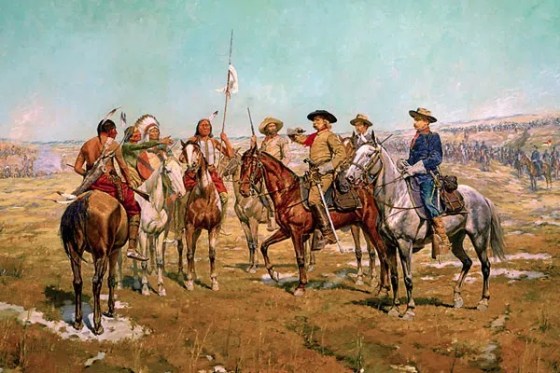
.
.
America – The Wild West – Cowboys
Bingham, Guinn, Gwynne, Hillerman, Sides, Stone, Stegner.
.
.
Notable Historical Figures during this timeline to be covered over the years:
William James
American philosopher and psychologist. Greatly influence by Charles Darwin, James developed his theoretical perspective on psychology known as Functionalism: the relationships between internal states and external behaviors. It is a theory that all aspects of a society serve a function, and those aspects are necessary for the survival of that society. Memorable Quote, “Thoughts become perception perception becomes reality. Alter your thoughts alter your reality.”
John Dewey
American philosopher and educator, who was greatly influenced by William James. Founder of Pragmatism and Functional Psychology, which consisted of Four Principles: Unity, Interest, Experience, and Integration. He was considered a humanist and progressive, and his legacy lays on the foundation of public education in the United States. Memorable Quote, “Change is the Norm.”
.
.
Great Britain
Great Britain
Great Britain
Great Britain
DARWIN
Alfred Russel Wallace (born January 8, 1823, Usk, Monmouthshire, Wales—died November 7, 1913, Broadstone, Dorset, England) was a British humanist, naturalist, geographer, and social critic. He became a public figure in England during the second half of the 19th century, known for his courageous views on scientific, social, and spiritualist subjects. His formulation of the theory of evolution by natural selection, which predated Charles Darwin’s published contributions, is his outstanding legacy, but it was just one of many controversial issues he studied and wrote about during his lifetime. Wallace’s wide-ranging interests—from socialism to spiritualism, from island biogeography to life on Mars, from evolution to land nationalization—stemmed from his profound concern with the moral, social, and political values of human life.
Wallace – 1857 – colleced beatles
long letter to darwin
Wallace & Darwin
Hegel & Marx
Hagel the idealist v Marx the mundane, common place.
.
Darwinism & Goetheanism
Two streams have arisen in modern science. One is called Goetheanism, the other Darwinism.
The evolution of life.
Darwinism is materialism. Contrasting Dwain is Goetheanism, the living spirit.
Darwin is the theory of descent. Goethe is the philosophy of accent.
Goetheanism is the organic evolution that raises above the physical existence of Darwinism.
.
.
The Rise of Spiritualists in the 19c
.
.
.
Living Pan-European and American Cultural and Heritage Community Center

.
EMAIL: peachcommunity yahoo.com
.
.
.
.
.
.
.
.
.
.
.
.
.
.
quicklink
.
 PEACH COMMUNITY