“Everything In The Modern World Today, Was Planted Here.”
Reformation Expansion, Kingdoms, Wars, Discovery, Baroque 1500 – 1650
.The Reign of Kings and the Dawn of Establishing Science
.
From the Barbarians to the disciplined Roman Soldier, from the wrath and twilight of the Pagan Gods, to the piety of Christian and Byzantine – Romaioi Churches, through a new birth and the establishment of Divine Right with the Reign of Kings, all leading to the awakening of the Faustian Man. This is the aeon, the in-between era , when men are still Subjects, but there is a longing growing for freedom.
As the Roman era expressed itself full of force and expansion, the Dark Ages pulled tight in its contraction. That does not mean within this contraction all activity was dormant. On the contrary, even in contemplation and repetition, there is always activity. This expressed itself in the new birth, the Renaissance. For over 200 years, this efflorescence spread throughout Europe.
Combining the discipline developed throughout the Dark Ages, and the desired discoveries of the Renaissance, we come full stop to the Reformation. This interruption strove to shake loose what was superfluous. What they brought forward as a gift from discipline and desires was refinement. The next 200 years will bring Western Civilization into a time of graciousness and sophistication, creating sound structures that became everlasting and welcomed with open arms the development and progress of science and industry.
Dependability, strong and refined tools, education, books, books, books, and more books. The idea of what is modern takes shape. Science, for now, is a curiosity. Labor slowly embarks, becoming an industry. For the healthy, hard-working, and curious Europeans, it was the best of times, it was the…

.
.
.
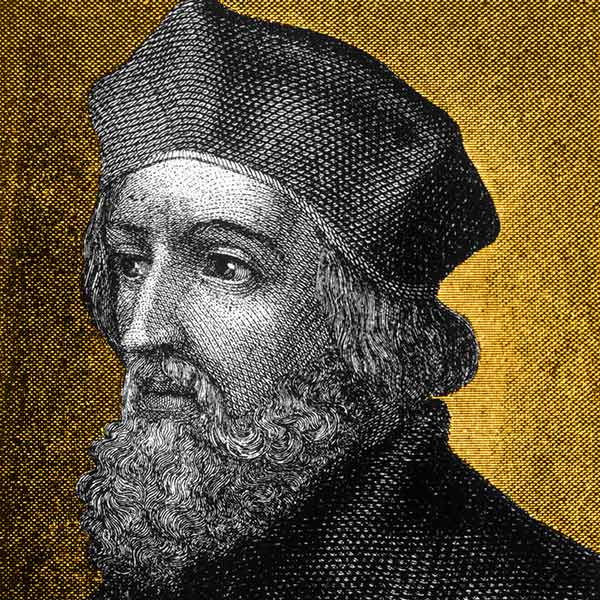 Jan Hus**
Jan Hus – Was a Scientist and Theologyn. Born: c. 1370, Husinec, Bohemia (Czechia). Died: July 6, 1415, Konstanz, HRE (age 45). Parents and siblings are unknown. He never married nor had any children. He was influenced by the Byzantine Rite, also known as the Greek Rite and the Rite of Constantinople. He was also influenced by the writings of the English Catholic Priest John Wycliffe. Jan Hus is most remembered for preaching against the corruption in the Catholic Church.
The Hussite movement was a pre-Reformation Christian movement that emerged in Bohemia in the early 15th century, primarily influenced by the teachings of Jan Hus. The Hussites believed in the reformation of the Church, advocating for changes in doctrine, practices, and structure. This movement questioned many aspects of the Roman Catholic Church and ultimately led to the Hussite Wars.
The Hussites went to war with the Holy Roman Empire to stand for their reforms. On November 28, 1414, Jan Hus was captured and charged with heresy. The penalty for his crime was to be burned at the stake.
The Hussite movement played a significant role in the development of the Bohemian Reformation and influenced subsequent reform movements in Europe. His actions and writings had a great and profound effect on Martin Luther and his martyrdom gave great inspiration to the entire Protestant Reformation.
Hus’ successor, Jakoubek of Stříbro, took the ideas developed by Hus and set forth demands by the Hussites titled, The Four Articles of Prague. These articles originated from the Bethlehem Chapel, and the faculty of Charles University in Prague, 1420.
The Four Articles of Prague
Freedom of Preaching – The right to preach the word of God freely and without hindrance.
Communion in Bread and Wine (Utraquism) – The belief that the laity should receive both the bread and wine during communion, challenging the Catholic practice of reserving the wine for the clergy. This became a central symbol of the movement.
Poverty of the Clergy – Advocating for the removal of secular power and wealth from the clergy, bringing them back to an evangelical and apostolic life.
Punishment of Mortal Sins – Calling for the punishment of notorious sinners, including clergy, regardless of their social status.
“Truth prevails through faith’s fire..
.
.
..
..
The Reformation
Doctrine: Justification By Faith Sola Fide – faith alone
The Protestant Reformation marked a profound religious, political, and intellectual upheaval in 16th-century Europe. This challenged the authority of the Catholic Church, which led to the establishment of Protestantism, salvation by grace through faith alone. The Reformation fostered individual interpretation of the Bible and a more personal relationship with God.
However, the Protestant Reformation was not merely a religious movement, it was a catalyst that reshaped European society, politics, and culture. Its echoes are still felt in the modern world, marking a pivotal moment in the history of Western civilization.
Martin Luther, 1483 – 1546, considered German, an Augustinian priest and monk. Wrote The 95 Theses, (en) Published, 31 October 1517, which challenged the Catholic Church for its power and corruption. Lutheranism was the religious movement named after him. Justification, you can not work your way into heaven, but that only through the grace of God can you be or are justified. in otherwords, your contribution to salvation, after the death and resurrection of Christ Jesus, is in the confessing of your sins. Through that process then grace is bestowed upon you.
.Issues
The Corruption of the Catholic Church – From inappropriate sexual conduct, lack of education of the clergy, financial corruption through indulgences.
The Protestant Reformation – Wittenberg, Germany. The separation from the Roman Catholic Church because of corruption and differences in doctrine.
.Outcome
Challenging Papal Authority – Reformers scrutinized the pope’s power and the Church’s mandate to define Christian practice.
Focus on the Bible – They posited that the Bible should serve as the ultimate source of religious authority, rather than the traditions and pronouncements issued by the papacy.
Justification by Faith – The Reformers contended that salvation was attained through faith in Jesus Christ alone, in stark contrast to the Catholic Church’s teachings that emphasized good works.
Individual Interpretation – The Reformation encouraged personal interpretation of the Bible and fostered a more intimate relationship between individuals and God.
Rise of Protestantism – The movement led to the emergence of various Protestant denominations, such as Lutheranism, Calvinism, and Anglicanism.
Political and Social Impact – The Reformation precipitated extensive political and social ramifications, including religious wars, political fragmentation, and the rise of novel social and economic structures.
The Counter-Reformation – In response, the Catholic Church initiated its own reform movement known as the Counter-Reformation, which aimed to rectify internal issues and reaffirm Catholic doctrine.
.
Notable Figures
All dared to question papal authority and the Church’s interpretation of Christian doctrine. These men advocated for a more Bible-centered faith and a redistribution of ecclesiastical power. This gave rise to new Christian denominations which had political, social, and cultural repercussions across Europe.
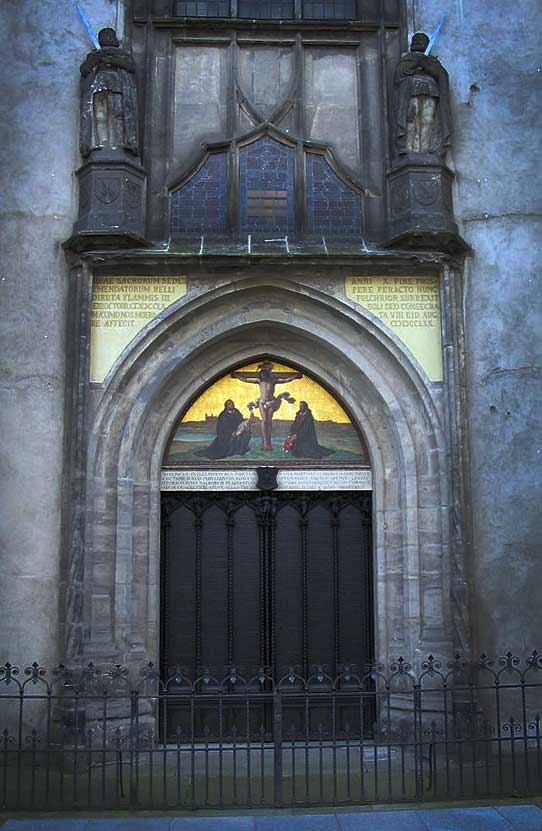
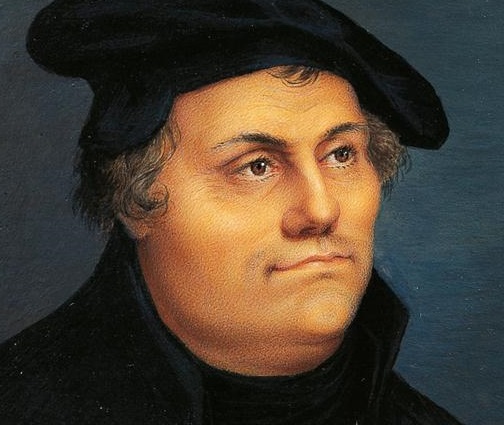 Martin Luther-Saxony-Anhalt, HRE (now Germany). He challenged the sale of indulgences by the priests along with a list of complainte which he published and posted on the door of the Castle Church in Wittenberg, October 31, 1517. This document is famously known as the Ninety-Five Theses. This is considered the pivotal moment in the history of what ignited and led to the Protestant Reformation against the Catholic Church.
From that point on, this quiet modest monk’s life was transformed forever. He became a central figure in the Protestant Reformation, facing excommunication from the Catholic Church and being declared an outlaw by the Holy Roman Emperor. Until his death, in Eisleben, 18 February 1546, Luther was a dedicated servant to God as he continued to preach, write, and translate the Bible into German. His legacy has led to the growth of the Reformation movement and the establishment of Lutheranism.
“Peace if possible, truth at all costs.”
.
.
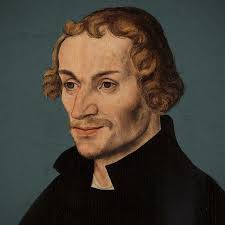 Philipp Melanchthon
Philipp Melanchthon, Scientist, Theologist and Teacher . Born: February 16, 1497, Bretten, HRE. Died: April 19, 1560, Wittenberg, HRE. Parents: Georg Schwarzerdt, Barbara Reuter. Siblings: Anna, others. Spouses: One (first: Katharina Krapp). Children: Anna, Philipp. Accomplishment: Co-authored Augsburg Confession (1530) with Martin Luther, defining Lutheran doctrine during Reformation (Protestant Reformation**). He was considered a systematic theologian. Philipp belived that for the sake of the public order the law and morals were important and must be stressed, but his Evangelical position was that humans are saved by faith and that good works are the necessary expression of faith, for good works flow from faith. He also plaued a significant role in reforming education, including establishing the first Protestant public school system in Germany, Philipp shaped Protestant education and theology. In 1560, he died of the flu, he was age 63.
“Reform binds faith to scripture’s truth.”
.
.
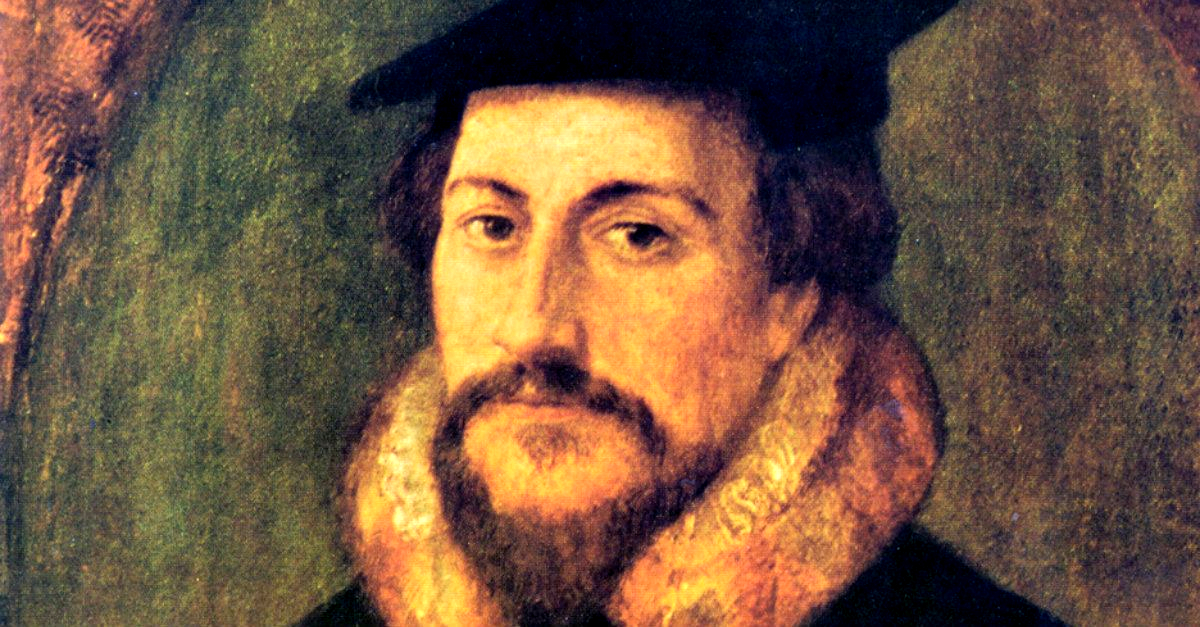
John Calvin – born July 10, 1509, Noyon, Picardy, France—died May 27, 1564, Geneva, Switzerland, John Calvin was a theologian and ecclesiastical statesman. he formulated and developed Calvinism, a Protestant theology emphasizing God’s sovereignty and the paramount importance of the Bible. He was the leading French Protestant reformer and the most important figure in the second generation of the Protestant Reformation. His interpretation of Christianity, advanced above all in his Institut of the Christianae religionis, and the institutional and social patterns he worked out for Geneva deeply influenced Protestantism elsewhere in Europe and in North America. The Calvinist form of Protestantism is widely thought to have had a major impact on the formation of the modern world.
Calvinism is described by many people in many different ways, however, at its essence, it is an understanding of scripture. That through biblical scripture God revealed himself graciously to us all. Further, it is stated that God is at work in this world through his name. It is believed that Calvinism helps the believer understand what God has done through Jesus Christ, his one and only begotten son, gave us the gift of death and resurection for all people; those who have rejected God, those who have rebelled against him, and those who have sinned against him. God has intervened and he is calling to himself the people, a people who believe in the name of Lord Jesus Christ. Those that do will be forgiven of their sins and they will be with him forever in heaven By understanding the scripture, you will witness and testify that God is always intervening, whether it be from his creation in the beginning of Genesis to his return when reading the Book of Revelation. God is always actively involved with his creation, redeeming it and preparing it for his return. This is what Calvinists believe.
“All the arts come from God and are to be respected as divine inventions”
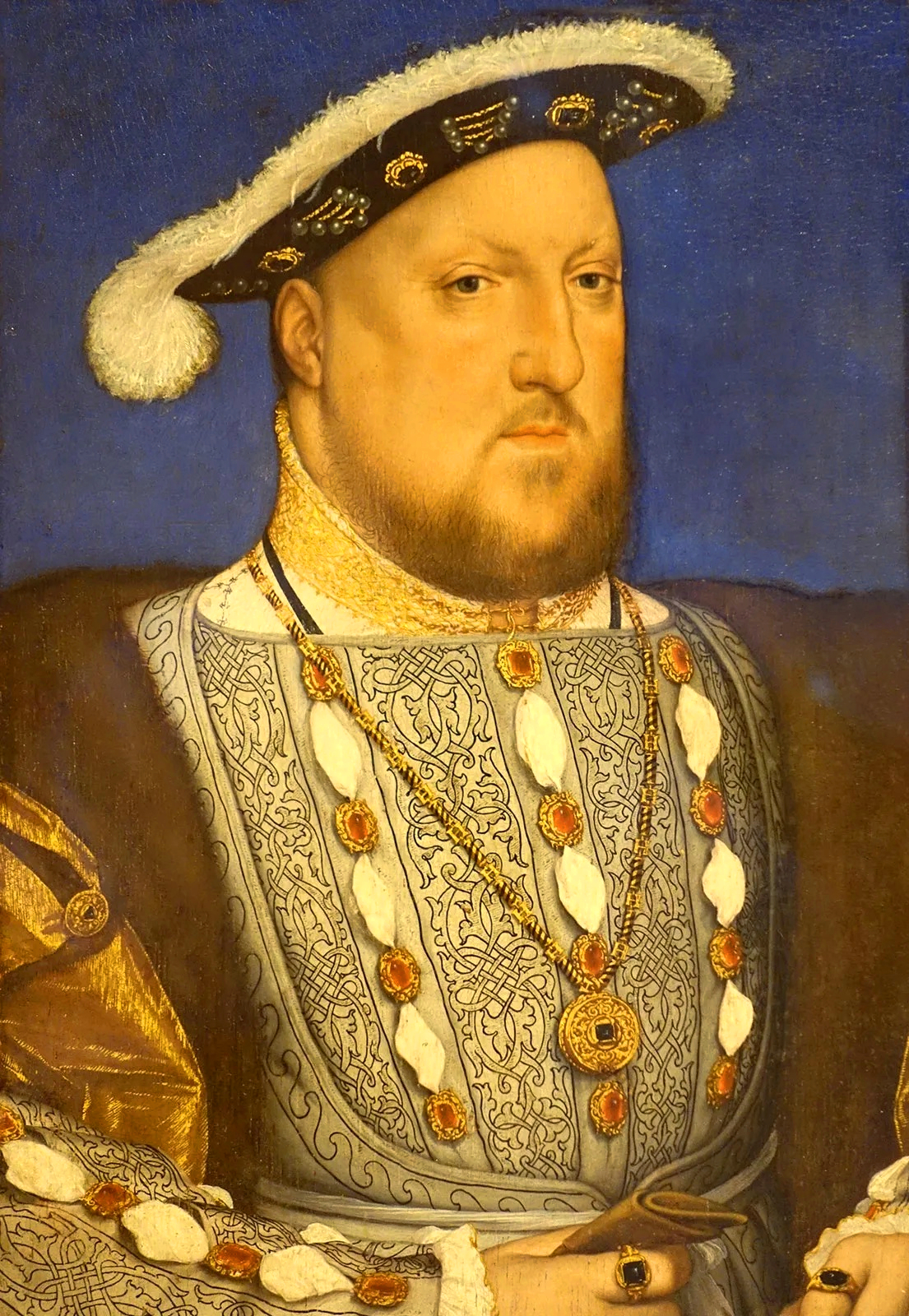 Henry VIII, King of England – In 1534, Henry severed ties with the Catholic Church. This was based on personal and political motives. Henry’s desire to annul his marriage from his wife Catherine of Aragon and marry Anne Boleyn, coupled with his ambition to control the wealth and power of the Church in England, drove his decision to break away from Rome. Henry then establish the Church of England. In the the Act of Supremacy, Henry made the Crown the Supreme Head of the Church of England, thus replacing the Pope as the ultimate authority. He also dissolved all the monasteries and seized their land and wealth, further solidifying his power and enriching the Crown. This break with Rome led to a period of religious and political upheaval in England, with consequences that lasted for centuries. While Henry he retained Catholic practices but rejected papal authority he remained Catholic in his beliefs. In fact, he was origially for the church and Pope and against Luther. After his death the Church of England gradually moved towards Protestantism under the reigns of his successors, Edward VI and Elizabeth I.
Englands Legacy of the Reformation
Personal and Political Motivations – Henry’s desire to divorce Catherine and marry Anne, coupled with his ambition to control the wealth and power of the Church in England, drove his decision to break away from Rome.
Freedom of Religion – The Reformation played a crucial role in articulating the concept of religious freedom and fostering religious tolerance.
Religious Diversity – The movement contributed to a rich tapestry of religious diversity across Europe.
Shaping Western Culture – The Reformation significantly influenced Western culture, shaping prevailing ideas about individualism, freedom of conscience, and the role of individuals in society.
Influence on North America – The Reformation also had a lasting impact on the colonization of North America, shaping the religious and political landscape that would ultimately give rise to the United States.
“I am the Supreme Head of the Church of England,”
.
.
.
.
.
.
lIST
Europe Becoming Europeans
Anaximander Charlemagne Luther Bodin Kant Voltaire Napoleon
.
to be a nation, a country, in a location you have to feel it – its deliberate – you become part of it, down to the bone.
The first recorded usage of Eurṓpē as a geographic term is in the Homeric Hymn to Delian Apollo, in reference to the western shore of the Aegean Sea. As a name for a part of the known world, it is first used in the 6th century BC by Anaximander and Hecataeus. Anaximander placed the boundary between Asia and Europe along the Phasis River
(the modern Rioni River on the territory of Georgia) in the Caucasus, a convention still followed by Herodotus in the 5th century BCE.[30] Herodotus mentioned that the world had been divided by unknown persons into three parts—Europe, Asia, and Libya (Africa)—with the Nile and the Phasis forming their boundaries—though he also states that some considered the River Don, rather than the Phasis, as the boundary between Europe and Asia.
.
.
.
.
.
.
[TBC]
 Poland
Poland Myths*
The Legend of Lech, Czech, and Rus, which explains the origins of the Polish, Czech, and Russian/Slavic peoples. This myth dates back to oral traditions, first recorded in medieval chronicles like the Chronicle of Greater Poland (13th century), and is considered a cultural cornerstone for Poland’s identity. It centers on three brothers—Lech (founder of Poland), Czech (founder of the Czech lands), and Rus (founder of the eastern Slavs)—who part ways to establish their own nations. Lech’s journey leads him to a white eagle, which becomes Poland’s emblem, symbolizing divine favor and national destiny. Czech and Rus founded their own nations to the south and east. This myth explains the origins of the Polish people and their emblem, the White Eagle, symbolizing strength and divine protection. Legacy: Established a cultural narrative for Polish identity, linking it to divine favor and Slavic brotherhood, influencing national symbols and medieval chronicles. Remark: Gallus Anonymus, a 12th-century chronicler, wrote in his Gesta Principum Polonorum (c. 1115), “The tale of Lech gives the Poles a noble origin, blessed by heaven’s sign.”
Ariovald of the Lugii *
Full Name: Ariovald of the Lugii (hypothetical). Born: c. 30 BCE, near modern Kalisz, Poland. Died: c. 20 CE, near modern Kalisz, Poland. Parents: Unknown tribal leader, unnamed mother. Siblings: Unknown. Spouses: One (first: unnamed; total: 1). Major Works/Accomplishments: Led the Lugii, a Germanic tribe, in maintaining trade along the Amber Road, negotiating with Roman merchants, and defending against neighboring tribes like the Marcomanni. Organized small fortified settlements (e.g., near modern Kalisz), fostering early community structures. Profession: Tribal leader, warrior. Legacy: Represented the pre-Slavic Germanic presence in Poland, contributing to the region’s early economic and martial traditions before the Slavic migrations. Remark: Pliny the Elder, a Roman historian, noted in Natural History (c. 77 CE), “The Lugii, under their chiefs, control the amber trade, a people both cunning and bold.”
.
.
The Middle Ages
The history of Poland in the High Middle Ages is marked by the rise of the Piast Dynasty, the adoption of Christianity, and the consolidation of a Polish state amidst external pressures from the Holy Roman Empire, Bohemia, and Kievan Rus’.
The Lechitic Western Polans tribe, meaning “people living in open fields,” gave Poland its name and dominated the region by the 10th century. This period saw Poland transform from tribal polities into a medieval kingdom, with significant cultural and political developments that laid the foundation for its later power under the Jagiellonian Dynasty (14th–16th centuries).
Polish Leading Figures and Events
Mieszko I *
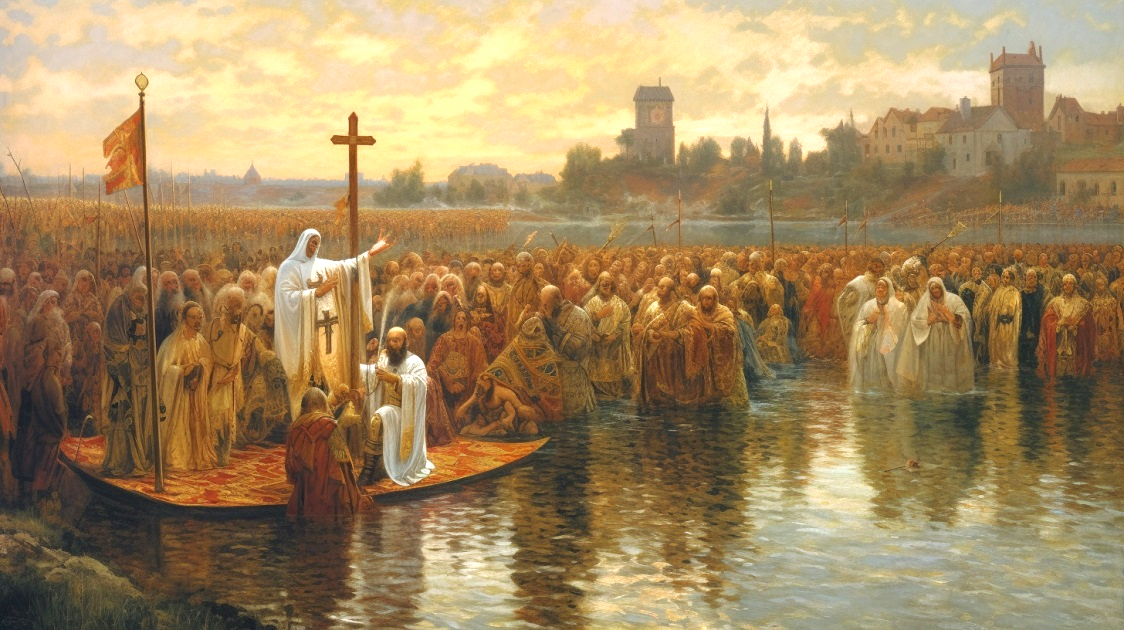
Full Name: Mieszko I. Born: c. 930, possibly Poznań, Poland. Died: May 25, 992, Poznań, Poland. Parents: Siemomysł, unnamed mother. Siblings: Czcibor, unnamed brother. Spouses: One (first: Dobrawa of Bohemia; total: 1). Major Works/Accomplishments: Unified Polish tribes under the Piast dynasty, adopted Western Christianity in 966 (baptism), establishing Poland as a Christian state aligned with Rome; founded a missionary bishopric in Poznań. Profession& Honors: Duke, ruler. Legacy: Founded the Polish state, integrating it into European Christendom and securing its independence from the Holy Roman Empire. Remark: A 10th-century chronicler, Ibrāhīm ibn Yaʾḳūb, noted, “Mieszko’s realm is the most powerful among the Slavs, rich in resources and men.”
Bolesław I the Brave *
Full Name: Bolesław I Chrobry (the Brave). Born: c. 967, possibly Poznań, Poland. Died: June 17, 1025, Kraków, Poland. Parents: Mieszko I, Dobrawa of Bohemia. Siblings: Sigrid the Haughty, unnamed brother. Spouses: Four (first: an unnamed daughter of Rikdag; total: 4). Major Works/Accomplishments: Expanded Polish territory to the Baltic Sea and Carpathians, established the Gniezno Archbishopric (1000), crowned as Poland’s first king in 1025, securing autonomy from the Holy Roman Empire after a 16-year conflict. Profession & Honors: Duke, king, military leader. Legacy: Elevated Poland to a kingdom, cementing its status as a major European power through military and ecclesiastical achievements. Remark: Thietmar of Merseburg, a contemporary chronicler, wrote in 1018, “Bolesław’s ambition knows no bounds; he challenges even the mightiest emperors.”
Casimir I the Restorer*
Full Name: Casimir I Karol (the Restorer). Born: July 25, 1016, Kraków, Poland. Died: November 19, 1058, Poznań, Poland. Parents: Bolesław I the Brave, Emnilda of Lusatia. Siblings: Bezprym, Regelinda, Mieszko II, Otto. Spouses: One (first: Maria Dobroniega of Kiev; total: 1). Major Works/Accomplishments: Restored Polish unity after internal strife and invasions (1030s), revived the ecclesiastical structure, shifted the capital to Kraków, securing Polish lands against Bohemian and German threats. Profession & Honors: Duke, ruler. Legacy: Stabilized Poland after a period of collapse, laying the groundwork for its medieval growth. Remark: Gallus Anonymus, a 12th-century Polish chronicler, stated, “Casimir rebuilt the kingdom from ruins, earning the name Restorer with his steadfast rule.”
.
.
Events
Christianization of Poland*
Dates: 966 CE. Geography: Poland, centered in Poznań. Nations: Poland, Bohemia, Holy Roman Empire. Key Details: Mieszko I’s baptism in 966 marked Poland’s entry into Western Christendom, aligning it with Rome rather than the Holy Roman Empire’s influence; a missionary bishopric was established in Poznań, integrating Poland into European culture. Legacy: Anchored Poland in Western civilization, fostering its political and cultural development. Remark: Widukind of Corvey, a 10th-century Saxon chronicler, observed, “Mieszko’s baptism brought a new people into the fold of Christ, strengthening the Church’s reach.”
Poland was indeed a “busy place” in the High Middle Ages, navigating pressures from the Holy Roman Empire, Bohemia, and Kievan Rus’, while establishing its identity through Christianity and monarchy.
.
.
Poland’s Renaissance
The Nihil Novi Act (1505)
The Nihil Novi Constitution (1505) marked a pivotal shift in the Polish–Lithuanian Commonwealth, codifying the nobility’s (szlachta) dominance by requiring their consent (via the Sejm) for new laws, effectively creating a noble democracy under Golden Liberty [2*]. Enacted under King Alexander Jagiellon, it limited royal power, ensuring the Sejm’s supremacy and equal rights for all nobles, regardless of wealth or origin. This built on the Union of Lublin [2*] (1569), formalizing the Commonwealth’s elective monarchy and parliamentary system, unique in Europe for its scale. The constitution strengthened Poland’s cultural identity, fostering gratitude among nobles for their freedoms, but later enabled factionalism, contributing to partitions (18th century).
.
.
Poland’s Renaissance lasted from the late 15th to the late 16th century and is widely considered to have been the Golden Age of Polish culture.
The nation was ruled by the Jagiellonian Dynasty, the Crown of the Kingdom of Poland (from 1569 part of the Polish–Lithuanian Commonwealth). The Dynasty actively participated in the broad European Renaissance and the multinational Polish state experienced a period of cultural growth thanks in part to a century without major wars, aside from conflicts in the sparsely-populated eastern and southern borderlands.
The Reformation in Poland spread peacefully throughout the country, giving rise to the Polish Brethren. In fact, living conditions improved, cities grew, and exports of agricultural products enriched the population, especially the nobility, The Szlachta; the noble estate of the realm of the Polish–Lithuanian Commonwealth. who gained dominance in the new political system of Golden Liberty.
Union of Lublin
On July 1, 1569, the Union of Lublin was formalized in Lublin, Poland, creating the Polish–Lithuanian Commonwealth, one of Europe’s largest states at the time. This historic agreement merged the Crown of the Kingdom of Poland and the Grand Duchy of Lithuania into a single state with an elective monarchy, replacing their previous autonomy. The union was driven by the childless Sigismund II Augustus, the last Jagiellon ruler, whose lack of heirs prompted the restructuring. It also saw the abandonment of Royal Prussia’s autonomy and the incorporation of the Duchy of Livonia, linked to Lithuania since the Union of Grodno (1566), as a Polish–Lithuanian condominium.
The Commonwealth was governed by an elected monarch, who held the dual roles of King of Poland and Grand Duke of Lithuania, supported by a common Senate and the Sejm (parliament). This system marked a progressive evolution in the Polish–Lithuanian alliance, blending their political traditions while allowing regional diversity. The Union of Lublin set the stage for the Commonwealth’s cultural and political influence through the 17th century.
Democracy the Nobles
The Golden Liberty Nobles, also known as, the Golden Freedoms, This developed after the Union of Lublin (1569), in the Polish–Lithuanian Commonwealth. All nobles regardless of rank, economic status or their ethnic background were now considered to have equalrights and legal privileges. The nobility controlled the legislature (the Sejm—the parliament) and the Commonwealth’s elected king.
.
The Shaping of Poland’s Cultural Soul
Poland’s rich history begins with myth and early tribal life, evolving through medieval consolidation and a vibrant Renaissance. The Legend of Lech, Czech, and Rus, first recorded in the 13th-century Chronicle of Greater Poland, narrates the origins of the Polish, Czech, and eastern Slavic peoples. Lech, guided by a white eagle—now Poland’s emblem—founded the nation, a tale blessed by heaven’s sign, as noted by 12th-century chronicler Gallus Anonymus. Before Slavic dominance, the Lugii, led by Ariovald around 30 BCE–20 CE, thrived near modern Kalisz, controlling the Amber Road trade with Rome, their fortified settlements laying early economic and martial foundations, as Pliny the Elder observed.
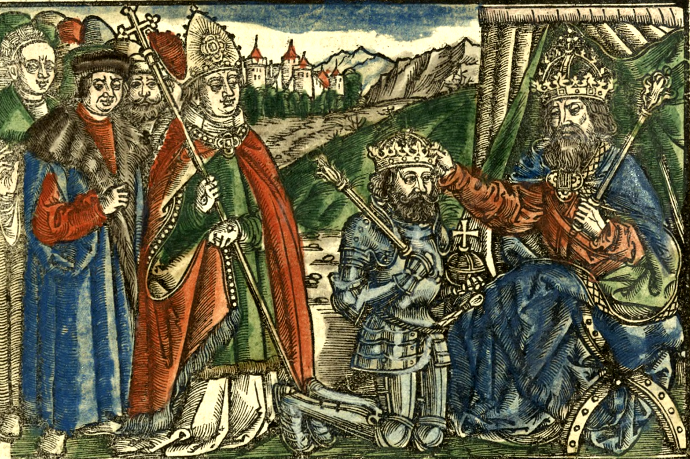
The High Middle Ages marked Poland’s rise under the Piast Dynasty. Mieszko I, born circa 930, unified tribes and adopted Christianity in 966, establishing a Poznań bishopric and aligning Poland with Rome, a move chronicler Ibrāhīm ibn Yaʾḳūb praised as powerful among Slavs. His son, Bolesław I the Brave (c. 967–1025), expanded to the Baltic and Carpathians, crowning himself king in 1025 and founding the Gniezno Archbishopric in 1000, challenging the Holy Roman Empire, as Thietmar of Merseburg recorded. After internal strife, Casimir I the Restorer (1016–1058) revived unity, shifting the capital to Kraków and securing lands against Bohemian and German threats, earning Gallus Anonymus’ acclaim.
Christianization in 966, centered in Poznań, anchored Poland in Western Christendom, while the Gniezno Congress of 1000 solidified its ecclesiastical structure. The Polans, meaning “field dwellers,” dominated the Vistula Basin by the 10th century, their amber trade fostering pre-Piast unity. The Piast lineage, from Mieszko to Casimir III (who founded Kraków Academy in 1364), bridged to the Jagiellonian Dynasty, which ushered in Poland’s Renaissance (late 15th–late 16th century).
.
.

This Golden Age, free of major wars, saw cultural flourishing under the Polish-Lithuanian Commonwealth, formed by the Union of Lublin in 1569. The Nihil Novi Constitution of 1505, under Alexander Jagiellon, empowered the szlachta with Golden Liberty, requiring Sejm consent for laws, a noble democracy unique in Europe. Kraków Academy trained figures like Nicolaus Copernicus, while literature thrived with Jan Kochanowski’s Laments (1580) and Mikołaj Rej’s vernacular prose (1543). Music, led by Wacław of Szamotuły’s motets, and arts by Francesco Fiorentino and Bartolommeo Berrecci, reflected Renaissance polyphony. The Union of Krewo (1385) and Brest (1596) expanded influence, blending Orthodox and Catholic elements, while the Statute of Kalisz (1264) protected Jewish rights, showcasing Polish Cultural Diversity.
Poland’s Church, from Wawel Cathedral to the Polish Brethren’s tolerance, shaped a resilient identity. The Amber Road, Polans’ trade, and a strong work ethic in Kraków and Gdańsk artisans underscored economic vitality. This legacy, from mythic origins to Renaissance peaks, defines Poland’s enduring spirit.
.966 Baptism of Poland*
Dates: 966 CE. Geography: Poznań, Poland. Nations: Poland, Bohemia. Key Details: Mieszko I’s baptism marked Poland’s entry into Christianity, aligning it with Rome and establishing a Poznań bishopric. This unified tribes, fostering a national identity. Legacy: Laid the foundation for Poland’s Western cultural integration. Remark: A chronicler noted, “Faith united Poland’s scattered souls.”
1000 – Gniezno Congress*
Dates: 1000 CE. Geography: Gniezno, Poland. Nations: Poland, Holy Roman Empire. Key Details: Established the Gniezno Archbishopric, strengthening Poland’s Church ties with Rome under Bolesław I. It symbolized Poland’s growing autonomy. Legacy: Cemented ecclesiastical power in Polish state-building. Remark: Otto III called it, “A new pillar of Christendom.”
1333- Polish-Lithuanian Alliance *
Dates: 1335 CE. Geography: Poland, Lithuania. Nations: Poland, Lithuania. Key Details: A pact expanded Polish influence, countering Teutonic threats with Lithuanian support. It set the stage for later unions. Legacy: Enhanced regional stability and cultural exchange. Remark: A noble wrote, “Alliance fortified our eastern shield.”
1385 – Union of Krewo *
Dates: 1385 CE. Geography: Krewo, Lithuania. Nations: Poland, Lithuania. Key Details: Jadwiga and Władysław II’s marriage united Poland and Lithuania, initiating Christianization of the latter. It bolstered mutual defense. Legacy: Paved the way for a stronger Commonwealth. Remark: Jagiełło declared, “Krewo binds our fates.”
1410: Battle of Grunwald [*] (Event, History)
Dates: 1410 CE. Geography: Grunwald, Poland. Nations: Poland, Lithuania, Teutonic Order. Key Details: Polish-Lithuanian forces defeated the Teutonic Knights, showcasing military might. It weakened German influence. Legacy: Boosted national pride and unity. Remark: A soldier noted, “Grunwald echoed Poland’s strength.”
1569 – Union of Lublin *
Dates: 1569 CE. Geography: Lublin, Poland. Nations: Poland, Lithuania. Key Details: Formalized the Polish-Lithuanian Commonwealth, creating a noble democracy. It merged diverse cultures. Legacy: Shaped a unique European state. Remark: A delegate said, “Lublin united our diverse voices.”
1596- Union of Brest*
Dates: 1596 CE. Geography: Brest, Poland. Nations: Poland, Lithuania, Orthodox Church. Key Details: Merged Orthodox and Catholic rites, fostering religious harmony in the Commonwealth. It reflected tolerance. Legacy: Strengthened multicultural identity. Remark: A bishop wrote, “Brest bridged faiths.”
Polish Golden Age **
Dates: c. 1500–1572 CE. Geography: Kraków, Poland; Vilnius, Lithuania. Nations: Polish-Lithuanian Commonwealth. Key Details: The Polish Golden Age, spanning the late 15th to late 16th century under the Jagiellonian Dynasty, marked a cultural and political zenith. Free from major wars, the Commonwealth thrived with the Union of Lublin (1569) forming a noble democracy under Golden Liberty, empowering the szlachta via the Nihil Novi Constitution (1505). Kraków Academy, founded by Casimir III, nurtured scholars like Nicolaus Copernicus, while literature flourished with Jan Kochanowski’s Laments (1580) and Mikołaj Rej’s vernacular prose (1543). Music, led by Wacław of Szamotuły, and arts by Francesco Fiorentino and Bartolommeo Berrecci, reflected Renaissance ideals. The Reformation spread peacefully, birthing the Polish Brethren, and exports enriched the nobility. However, this prosperity sowed seeds of later factionalism, contributingThe Shaping of Poland’s Cultural Soul to the 18th-century partitions. Legacy: Defined Poland’s cultural resilience and intellectual legacy, celebrated in PEACH’s February Book Festival. Remark: Kochanowski wrote, “In Poland’s peace, art and wisdom bloom.”
966 – Baptism of Poland *
Dates: 966 CE. Geography: Poznań, Poland. Nations: Poland, Bohemia. Key Details: Mieszko I’s baptism marked Poland’s entry into Christianity, aligning it with Rome and establishing a Poznań bishopric. This unified tribes, fostering a national identity. Legacy: Laid the foundation for Poland’s Western cultural integration. Remark: A chronicler noted, “Faith united Poland’s scattered souls.”
1000: Gniezno Congress [*] (Event, History)
Dates: 1000 CE. Geography: Gniezno, Poland. Nations: Poland, Holy Roman Empire. Key Details: Established the Gniezno Archbishopric, strengthening Poland’s Church ties with Rome under Bolesław I. It symbolized Poland’s growing autonomy. Legacy: Cemented ecclesiastical power in Polish state-building. Remark: Otto III called it, “A new pillar of Christendom.”
1335: Polish-Lithuanian Alliance [*] (Event, History)
Dates: 1335 CE. Geography: Poland, Lithuania. Nations: Poland, Lithuania. Key Details: A pact expanded Polish influence, countering Teutonic threats with Lithuanian support. It set the stage for later unions. Legacy: Enhanced regional stability and cultural exchange. Remark: A noble wrote, “Alliance fortified our eastern shield.”
1385: Union of Krewo [*] (Event, History)
Dates: 1385 CE. Geography: Krewo, Lithuania. Nations: Poland, Lithuania. Key Details: Jadwiga and Władysław II’s marriage united Poland and Lithuania, initiating Christianization of the latter. It bolstered mutual defense. Legacy: Paved the way for a stronger Commonwealth. Remark: Jagiełło declared, “Krewo binds our fates.”
1410: Battle of Grunwald [*] (Event, History)
Dates: 1410 CE. Geography: Grunwald, Poland. Nations: Poland, Lithuania, Teutonic Order. Key Details: Polish-Lithuanian forces defeated the Teutonic Knights, showcasing military might. It weakened German influence. Legacy: Boosted national pride and unity. Remark: A soldier noted, “Grunwald echoed Poland’s strength.”
1569: Union of Lublin [*] (Event, History)
Dates: 1569 CE. Geography: Lublin, Poland. Nations: Poland, Lithuania. Key Details: Formalized the Polish-Lithuanian Commonwealth, creating a noble democracy. It merged diverse cultures. Legacy: Shaped a unique European state. Remark: A delegate said, “Lublin united our diverse voices.”
1596: Union of Brest [*] (Event, History)
Dates: 1596 CE. Geography: Brest, Poland. Nations: Poland, Lithuania, Orthodox Church. Key Details: Merged Orthodox and Catholic rites, fostering religious harmony in the Commonwealth. It reflected tolerance. Legacy: Strengthened multicultural identity. Remark: A bishop wrote, “Brest bridged faiths.”
Polish Golden Age **
Dates: c. 1500–1572 CE. Geography: Kraków, Poland; Vilnius, Lithuania. Nations: Polish-Lithuanian Commonwealth. Key Details: The Polish Golden Age, spanning the late 15th to late 16th century under the Jagiellonian Dynasty, marked a cultural and political zenith. Free from major wars, the Commonwealth thrived with the Union of Lublin (1569) forming a noble democracy under Golden Liberty, empowering the szlachta via the Nihil Novi Constitution (1505). Kraków Academy, founded by Casimir III, nurtured scholars like Nicolaus Copernicus, while literature flourished with Jan Kochanowski’s Laments (1580) and Mikołaj Rej’s vernacular prose (1543). Music, led by Wacław of Szamotuły, and arts by Francesco Fiorentino and Bartolommeo Berrecci, reflected Renaissance ideals. The Reformation spread peacefully, birthing the Polish Brethren, and exports enriched the nobility. However, this prosperity sowed seeds of later factionalism, contributing to the 18th-century partitions. Legacy:
*****
1. Polans Tribe* [2*] (Event, History)
Dates: c. 700–900 CE.
Geography: Vistula Basin, Poland (Gniezno, Poznań).
Nations: Polans, Lugii.
Key Details: The Polans, a Lechitic tribe meaning “field dwellers,” dominated the Vistula, leveraging Amber Road trade (Ariovald of the Lugii [2*]). Their settlements, like Gniezno, grew from Baltic amber exports to Rome, fostering pre-Piast unity. By 900, they formed the core of Mieszko I’s state (Mieszko I [3*]).
Remark: A 10th-century source noted, “Polans’ fields shine with amber’s wealth.”
2. Piast Dynasty Continuity* [2*] (Event, History)
Dates: c. 960–1370 CE.
Geography: Poland (Gniezno, Kraków).
Nations: Poland, Bohemia, HRE.
Key Details: The Piast Dynasty, from Mieszko I (Mieszko I [3*]), unified Poland through Christianization (966) and expansion (Bolesław I [3*]). Despite fragmentation (1138), Casimir III [3*] restored unity, founding Kraków Academy (1364). The dynasty ended with Casimir’s death (1370), succeeded by Jagiellonians (Union of Krewo [2*]).
Remark: Gallus Anonymus wrote, “Piasts forged Poland’s enduring heart.”
3. Church’s Role in Poland* [2*] (Event, History)
Dates: c. 966–1500 CE.
Geography: Poland (Gniezno, Kraków).
Nations: Poland, Rome.
Key Details: The Church anchored Poland’s identity via Mieszko I’s baptism (966, Christianization [2*]) and the Gniezno Archbishopric (1000, Gniezno Congress [2*]). Wawel Cathedral [2*] symbolized Catholic power, supporting Piast (Piast Dynasty [2*]) and Jagiellonian rulers against Teutonic threats.
Remark: Otto III said in 1000, “Poland’s faith strengthens Christendom’s frontier.”
4. Union of Krewo* [2*] (Event, History)
Dates: August 14, 1385 CE.
Geography: Krewo, Lithuania (modern Belarus).
Nations: Poland, Lithuania.
Key Details: The Union of Krewo united Poland and Lithuania through Jadwiga [3*] and Władysław II Jagiełło [3*]’s marriage, countering Teutonic Knights. It initiated Christianization of Lithuania, paving the way for the Polish–Lithuanian Commonwealth (Polish–Lithuanian Union [2*]).
Remark: Jagiełło declared in 1385, “Krewo joins our fates for freedom.”
5. Nihil Novi Constitution* [2*] (Event, History)
Dates: May 1505 CE.
Geography: Radom, Poland.
Nations: Polish–Lithuanian Commonwealth.
Key Details: The Nihil Novi act, passed by the Sejm under Alexander Jagiellon, required noble consent for new laws, entrenching Golden Liberty [2*]. It empowered the szlachta, marking the rise of noble democracy in the Commonwealth (Polish–Lithuanian Commonwealth [2*]).
Remark: A Sejm deputy stated, “Our voice guards the Commonwealth’s liberty.”
Nihil Novi: Additional Context and Document
The Nihil Novi Constitution (1505) formalized the Polish nobility’s (szlachta) legislative power, limiting royal authority and establishing a noble-dominated Sejm. This act, meaning “nothing new,” ensured no laws could pass without noble approval, cementing Golden Liberty [2*]. It followed privileges like Piotrków (1496), which restricted peasant mobility, and preceded Łaski’s Statutes (1506), codifying szlachta rights. The document’s text, in Latin, is preserved in Polish archives; English translations are rare but summarized in Norman Davies’ God’s Playground (2005, pp. 150–151). No direct English-named copy exists; check Łaski’s Statutes for partial translations.
Polish Cultural Diversity* [2*] (Event, History)
Dates: c. 1000–1600 CE.
Geography: Poland, Kraków, Lublin.
Nations: Poland, Lithuania, Jewish communities.
Key Details: Poland’s medieval-to-Renaissance era embraced diversity, with Statute of Kalisz [2*] (1264) protecting Jewish rights and the Polish Brethren [2*] promoting religious tolerance. The Union of Lublin [2*] (1569) united diverse ethnicities, fostering a vibrant Commonwealth (Polish–Lithuanian Commonwealth [2*]).
Remark: A 16th-century noble wrote, “Poland’s strength lies in its many voices.”
Archaeological evidence suggests Hunnic influence in the region (e.g., artifacts in the Carpathians), but direct textual links to Polish myths are sparse.
Conclusion: Poland’s pre-1200 myths and figures don’t have a direct connection to Attila the Hun. The Legend of Lech, Czech, and Rus may reflect broader post-Hunnic migrations (5th–6th centuries), as Slavs moved into areas vacated after Attila’s empire fell, but this is a general historical context, not a specific link. Siemowit and Mieszko I are too far removed chronologically and focus on local state-building.
.[POLAND]
.
****************

COUNCEIL TRENT
.Council Of Trent, 1545–1563, Trento, Italy. The formal reply to the Protestant Reformation from the Roman Catholic Church. Creating sweeping reforms to revitalize the Church from corruption. It was held in three parts from 1545 to 1563, in the Italian city of Trent. The council directly addressed the criticisms of the Protestant Reformation, refuting the doctrines of reformers like Martin Luther and John Calvin.
Clarification of Catholic Doctrine:
The council clarified and defined key Catholic doctrines, including salvation, the sacraments, the authority of Scripture and tradition, and the role of the pope.
Reform of the Church:
The council aimed to reform abuses and practices within the church, promoting a more disciplined and well-educated clergy.
Establishment of Seminaries:
The council emphasized the importance of seminaries for training and educating the clergy, ensuring they were well-versed in Catholic doctrine and practice.
Standardization of the Mass:
The council standardized the Latin Mass, known as the “Tridentine Mass,” to ensure uniformity and order within the church.
Reaffirmed Catholic Practices:
The council reaffirmed practices like the veneration of saints and relics, indulgences, and the real presence of Christ in the Eucharist.
.
=========================
“The stories do not die, they rest” Home
==========
Absolutism – 1650–1789
Monarchs claimed divine-right authority, but their power was less checked by the Church than before.
History of History
History 1600–1690
Rulers & Leaders
Austria-Hungary
Battle of Vienna 1683
Balkans
Canada
Eastern European
France
Great Britain
Greece
Regno d’Itali
Portugal
Russia
Scandinavian & Baltic
Spain
South Africa
America Colony
.
.
Activist
.
.
Banking & Scoundrels
.
.
Discovery
.
.
Invention & Engineering
.
.
Literature
.
.
Music – Baroque Period
Jean-Baptiste Lully, 1632–1687 – France. Composer & Conductor [French Baroque]. Influenced By: Italian Church Music. Most Famous Works: Armide, Atys, Te Deum. Quote: “Music must serve the king, and the king must serve the music.”
Arcangelo Corelli, 1653–1713 – Italy . Composer & Violinist [Italian Baroque]. Influenced By: Early Italian composers, Roman church music. Most Famous Works: Concerti Grossi Op. 6, Sonatas for Violin and Continuo Op. 5. Quote: “True music is that which moves the soul through simplicity and grace.”
Marin Marais, 1656 – 1728 – France. Composer & Viol Player [Baroque Music] Influenced by: Jean-Baptiste Lully – Famous Works: Composer of over 500 works for viol. Court musician for Louis XIV. French Baroque style. Virtuoso viol (viola da gamba). Affiliations: Académie Royale de Musique, Paris; teacher and court performer. Influenced by: Jean-Baptiste Lully; French Baroque dance and opera traditions. Most Renounced: Sonnerie de Ste. Geneviève du Mont-de-Paris, Pièces de viole, Alcide. Viol suites and character pieces. Quote: “The viol sings when the bow is touched with truth.”
Tomaso Albinoni, 1671 – 1761 – Italy. Composer: Operas & Instrumental, especially concertos, Known for his expressive slow movements and lyricism.[Baroque Music]. Influenced By: Corelli. Most Famous Works: Adagio in G minor, Concertos Op. 7 & Op. 9, Zenobia. Affiliations: Venice, opera houses and churches, collaborated with librettists. Quote: “Music must move the heart before it can please the ear.”
Antonio Lucio Vivaldi, 1678 – 1741 – Italy & Austria. Virtuoso violinist and Composer [Baroque Music]. Influenced By: Corelli. Most Famous Works: Composed over 500 Concertos, Four Seasons, Gloria, L’estro Armonico. Affiliations: Maestro di violino at the Ospedale della Pietà, Quote: “Time is short; music is long. Let us compose while we may.”
Jean-Philippe Rameau, 1683–1764 – France. Composer & Theorist [Baroque Opera, Harpsichord] – Influenced by: French Baroque tradition – Most Famous Works: Hippolyte et Aricie, Castor et Pollux, Treatise on Harmony – Quote: “Harmony is the soul of music, without it nothing can exist.”
Johann Sebastian Bach, 1685–1750 – Germany. Composer & Organist [Baroque Music] – Influenced by: Vivaldi, German organ traditions – Most Famous Works: Brandenburg Concertos, The Well-Tempered Clavier, Mass in B minor – Quote: “I was obliged to be industrious. Whoever is diligent will succeed.”
George Frideric Handel, 1685–1759 – Germany/England. Composer [Baroque Opera, Oratorio] – Influenced by: Italian opera, German choral tradition – Most Famous Works: Messiah, Water Music, Music for the Royal Fireworks – Quote: “I should be sorry if I only entertained them. I wish to make them better.”
Domenico Scarlatti, 1685–1757 – Italy/Portugal/Spain . Composer & Harpsichordist [Baroque Keyboard] – Influenced by: Italian, Spanish, Portuguese musical traditions – Most Famous Works: 555 Keyboard Sonatas, Essercizi per Gravicembalo, Harpsichord Suites – Quote: “Music is the arithmetic of sounds as optics is the geometry of light.”
.
Performing Arts – Theatre
Lope de Vega, 1562–1635, Spain. Craft: Theatre. Known As: Spanish Golden Age playwright. Works: Fuenteovejuna. Quote: “”
Christopher Marlowe, 1564–1593, England. Craft: Playwright, Poet. Known As: A pioneer of English Renaissance drama. Works: Quote: “Is this the face that launched a thousand ships, and burnt the topless towers of Ilium?”
Ben Jonson, 1572–1637, England. Craft: Playwright, Poet. Known As: A leading dramatist of the Jacobean era. Works: Quote: “He who is not a good servant will not be a good master.””
George Wager, 1590–1634, England. Craft: Playwright. Known As: Lesser-known Jacobean dramatist contemporary with Ben Jonson. Works: Quote: “The stage is a mirror to the manners of men.”
Pierre Corneille, 1606–1684, France. Craft: Playwright. Known As: The founder of French classical tragedy. Works: Quote: “To will is to act.”
Jean Rotrou, 1609–1650, France. Craft: Playwright. Known As: Contemporary of Corneille, known for tragedies and dramas. Works: Quote: “Drama reflects the passions of men.”
Jean-Baptiste Poquelin 1622–1673, France. Craft: Theatre, Playwright, Actor. Known As: Molière, Master of French social satire and farces comedy. The greatest master of comedy in Western literature. Work: The Way of the World, Tartuffe, The Misanthrope. Works: Quote “The duty of comedy is to correct men by amusing them.”
Thomas Corneille, 1625–1709, France. Craft: Playwright. Known As: Brother of Pierre Corneille, contributed to French theatre with tragedies and comedies. Works: Quote: “In art, one may follow, yet never fully imitate.”
Philippe Quinault, 1635–1688, France. Craft: Librettist. Known As: Wrote libretti for Lully; key figure in French opera and theatre. Works: Quote: “Words must serve music as servants serve the king.”
Thomas Betterton, 1635-1710, England. Craft: Actor, Theatrical Manager. Known As: The greatest actor of his generation, masterful tragic portrayals. Works: Hamlet, Othello. Quote:
William Wycherley, 1641–1716, England. Craft: Playwright. Known As: A leading figure in Restoration comedy, known for his satirical plays. Works: Quote: “A fool and his money are soon parted.”
Jean Racine, 1639–1699, France. Craft: Playwright. Known As: A master of French classical tragedy, known for his intense psychological insight. Works: Quote: “There is no greater love than that which is given in silence.”
Nell Gwyn, 1650–1687, England. Craft: Actress, Comedienne. Known As: First celebrated English actress after women were permitted on stage. Works: Comedy roles, public performances. Quote: ” ”
William Congreve, 1670–1729, England. Craft: Playwright. Theatre. Known As: Known for his witty dialogue and satirical plays. Master of Restoration comedy. Works: The Way of the World. Quote: ““Music has charms to soothe a savage breast, to soften rocks, or bend a knotted oak.”
.
Philosophy
.
.
Publication & Sports
.
.
Science
.
Visual Arts – Painting, Architecture, & Sculpture
.
.
.
EVENTS
.
.
.
.
.
.
.
.
.
.
Age of Exploration and Discovery, 1400—1650s, Europe. Forced by the Turks, the West began to look for new trade routes to the Far East via ships, and eventually the Americas. Many of these excursions were expensive and risky, many ships never returned. Some explored for adventure on the high seas, however, many expeditions were for money.
Ottoman Capture of Constantinople – In 1453, the Ottomans captured Constantinople shutting down trade routes to India and China, cutting off the supply of spices and the silks, this pushed the west to explore new
Henry The Navigator – Sailed south to map and explore the west coast of Africa. By 1488, Portuguese explorer Bartolomeu Dias was the first European to sail around the southern tip of Africa and into the Indian Ocean.
Christopher Columbus – Believing the world was round, he wished to sail west across the Atlantic Ocean, looking for a new route to the Far East, Japan, China, and India. Unable to secure funding from Italy, he approached Queen Isabella and King Ferdinand of Spain. They eventually agreed to fund two ships for his trip to find Japan in 1492. His excursion brought forward the discovery of the New World, later called the Americas. The Americas were named after the great mapmaker Amerigo Vespucci. He was a Castilian Citizen, although Italian-born. He was also a navigator, and explorer, but never visited his namesake, the Americas. Amerigo was convinced that the land Columbus had found was new land and not Japan. Turned out, he was correct.
Treaty of Tordesillas – In 1494, a treaty was signed dividing up the spoils of the New World. Spain claiming most of the Americas, Portugal claiming Brazil, India, and Asia.
Spain, First Global Empire – By having the largest reach in history, creating its trading colonies in China at Macau, along with its lands in what became known as Americas, Spain stood as the First Global Empire.
Hernan Cortes – Conquered the Aztec Empire.
Francisco Pizarro – Conquered the Inca Empire.
Vasco da Gama – Found a trade route around the southern trip of Africa and to India.
.
Europeans Mapped the World – exploration, and travelers became an industry.
.
.
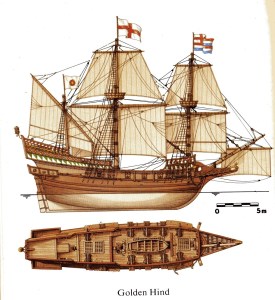
Great Britain, and the Netherlands – Both British and the Dutch mercantile established colonies in the New World. By the late 1500s the British were able to surpass all other European nations in terms of size and their worldwide empire.
This came about using information from the past: Claudius Ptolemy’s star charts discovered at the Library of Alexandria, with the use of magnetite. Knowing where the magnetic north was created, the compass, which led to more time devoted to the development of navigational tools: the square, lateen sail, sternpost rudder. The technology of the past came together, creating what was called the Galleon Ship. The Golden Hinde (Pelican). Her captain, Sir Francis Drake. With a crew of 164 men. He circumnavigated the world between 1577 and 1580. From then onward, Britain Rule the Waves.
America
The Establishment of Colonies in the Americas –
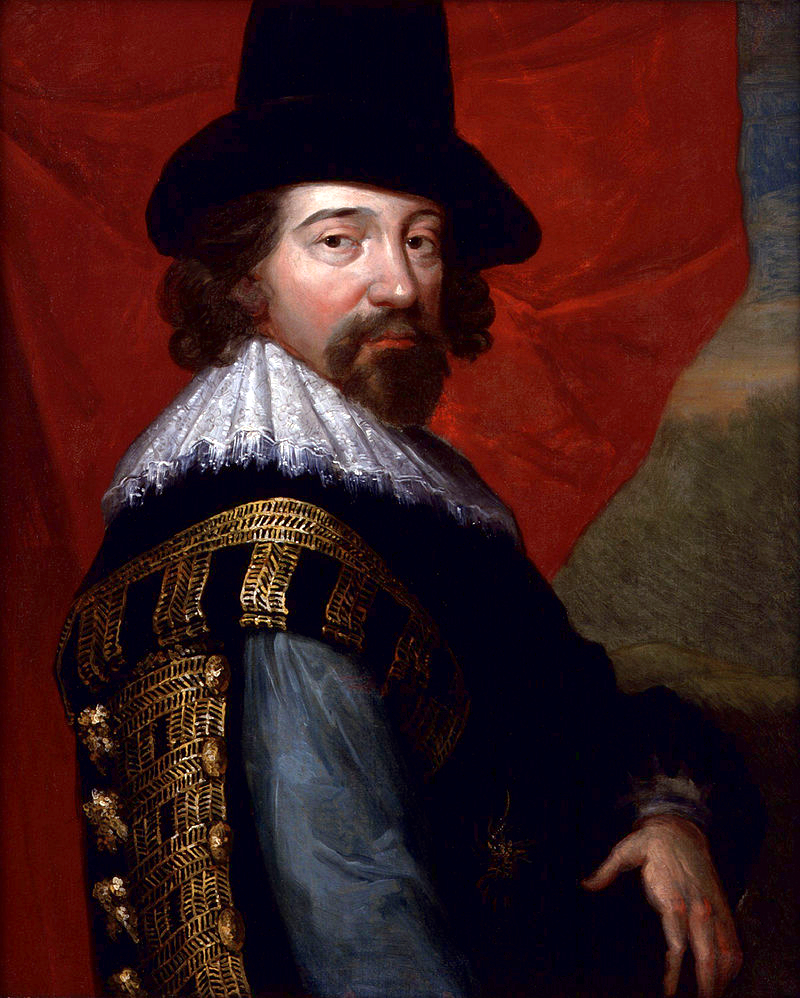
Francis Bacaon
Francis Bacon, a key figure in the Scientific Revolution, influenced empirical thought during Europe’s expansion.
Francis Bacon (Figure, History)*
Full Name: Francis Bacon. Born: January 22, 1561, London, England. Died: April 9, 1626, Highgate, England. Parents: Sir Nicholas Bacon, Anne Cooke. Siblings: Anthony, Edward, others. Spouses: One (first: Alice Barnham; total: 1). Major Works/Accomplishments: Authored Novum Organum (1620), advocating empirical science; developed the Baconian method, emphasizing observation and experimentation; served as Lord Chancellor of England (1618–1621). Profession: Philosopher, statesman, scientist. Legacy: Laid the foundation for modern scientific inquiry, influencing the Enlightenment and colonial science (e.g., in Jamestown). Remark: John Aubrey, a 17th-century biographer, wrote in 1681, “Bacon saw nature’s truths through the lens of reason, a new path for mankind.”
Jamestown – Founding of Jamestown* builds on Age of Exploration*, showing colonial outcomes. ‘
Jamestown, US
Jamestown’s founding marks the beginning of English colonization in North America, tying to your “Europe Becoming Europeans” theme.
Founding of Jamestown (Event, History)*
Dates: May 14, 1607 CE. Geography: Jamestown, Virginia, North America. Nations: Kingdom of England, Powhatan Confederacy. Key Details: English settlers, led by Captain John Smith, established Jamestown under the Virginia Company, facing harsh conditions, disease, and conflicts with the Powhatan. Tobacco cultivation (introduced by John Rolfe, 1612) ensured economic survival, attracting more settlers. The first African slaves arrived in 1619, marking the start of slavery in English colonies. Legacy: Became the first permanent English colony in America, shaping British colonial expansion and racial dynamics. Remark: John Smith wrote in 1624, “Jamestown was our foothold, wrested from wilderness by grit and gold.”
—
1619
.Americas
Jamestown 1600
Founding of Jamestown* builds on Age of Exploration*, showing colonial outcomes. ‘
Pilgrims
SFBacon**
Bacon’s Rebellion
Dominion of New England (13 Colonies)
1700, 250,000 settlers in the English colonies
Prosperity in the Colonies
.
Germany
Christopher Marlowe, 1564 – 1593
.
From the Renaissance to Refinements. [tbc]
the Renaissance paved the way for Neoclassicism. Both styles, while distinct, share a common thread: drawing inspiration from the principles and aesthetics of ancient Greek and Roman art and architecture.
Renaissance and Neoclassicism: A Connection of Classical Inspiration
The phrase “Renaissance to Refinements” or similar phrasing, when discussing architectural styles, suggests a lineage of influence where the Renaissance paved the way for Neoclassicism. Both styles, while distinct, share a common thread: drawing inspiration from the principles and aesthetics of ancient Greek and Roman art and architecture.
Renaissance Classicism’s Influence on Neoclassicism:
Revival of Classical Ideals: The Renaissance marked a “rebirth” or “revival” of ancient Greek and Roman art, literature, and architectural ideals. This fundamental emphasis on classicism, including principles of symmetry, balance, and idealized forms, provided a foundation for the later Neoclassical movement.
Architectural Elements: Renaissance architects, like Andrea Palladio, studied and applied classical principles in their designs, incorporating elements such as columns, pilasters, pediments, and domes. Neoclassicism built upon this foundation, particularly Palladio’s work, further refining and reinterpreting these elements.
Emphasis on Symmetry and Proportion: Both Renaissance and Neoclassical architecture placed a strong emphasis on symmetry, proportion, and harmony, often using mathematical ratios and geometric shapes to achieve balanced and aesthetically pleasing designs.
Refinements of Neoclassicism:
Enlightenment Influence: Neoclassicism, emerging during the Enlightenment, also reflected the movement’s values of reason, civic virtue, and order. This is evident in the style’s emphasis on clarity, simplicity, and rationality.
Archaeological Discoveries: New archaeological discoveries, like the excavations of Pompeii and Herculaneum, provided Neoclassical architects with a more precise understanding of ancient Greek and Roman forms, leading to a stricter adherence to classical prototypes compared to the Renaissance.
Reaction to Baroque: Neoclassicism can be seen as a reaction against the ornate and elaborate excesses of the Baroque and Rococo styles, favoring a return to simpler, more restrained forms and compositions.
In summary, Neoclassicism can be seen as a “refinement” of Renaissance ideals. While both movements looked to antiquity for inspiration, Neoclassicism, influenced by the Enlightenment and fueled by new discoveries, aimed for a more accurate and disciplined application of classical principles, emphasizing simplicity, order, and reason.
.
NEOCLASSICAL
Refinement of Neoclassical Architecture
Neoclassicism emerged in the 18th century but was refined in the early 17th century through Renaissance influences, particularly in Poland and Eastern Europe, where classical ideals met local traditions.
Refinement of Neoclassical Architecture (Event, Cultural History)*
Dates: c. 1600–1750 . Geography: Europe (focus on Poland, Russia, Italy). Nations: Polish-Lithuanian Commonwealth, Tsardom of Russia, Papal States. Key Details: Inspired by Renaissance classicism, architects in Poland (e.g., Tylman van Gameren) blended Greek and Roman forms with local Baroque elements, as seen in Warsaw’s Wilanów Palace (1677–1696). In Russia, early Neoclassical influences appeared under Peter the Great (e.g., Peterhof Palace, 1714–1725), adapting classical symmetry to Orthodox aesthetics. The style emphasized order and harmony, reflecting Enlightenment ideals. Legacy: Paved the way for 18th-century Neoclassicism, influencing civic architecture across Europe. Remark: Johann Joachim Winckelmann, an 18th-century art historian, wrote in 1764, “The classical spirit, reborn in the East, mirrors Europe’s quest for reason.”
Spain
Philip IV – 1605 – 1665 – – The Hapsburg
.
.
SCIENCESCIENCESCIENC
Scientists by Birth Order (Aristotle to Post-1650)
~Aristotle (384 BCE, Stagira, Greece): Scientist: Philosophy; theorized crystal spheres, geocentric cosmology influencing medieval science. Remark: “Heaven’s spheres move in eternal harmony.” 3 for foundational impact.Aristotle, 384 – 322 BC Athens, – crystal spheres was an earth center universe: sun, moon, planets, stars. He observed that these bodied circled the Earth in a uniform motion, that they were evenly paced, and moved in an orderly fashion. Until…Notes Aristotle’s Crystal Spheres: His geocentric model posited transparent spheres carrying planets, influential until Tycho’s observations and Kepler’s laws disproved them.
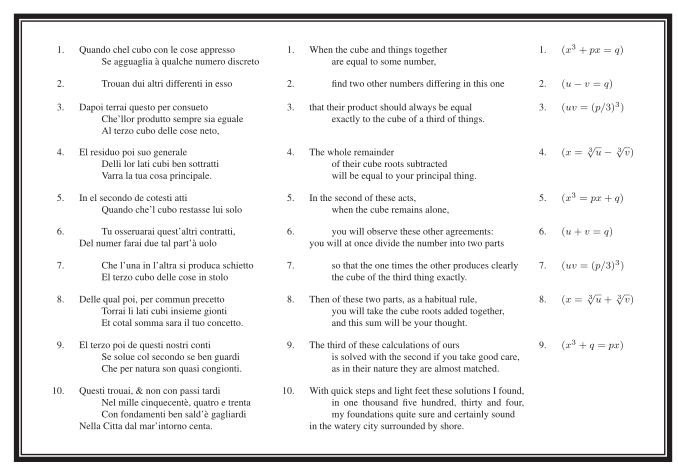
Tartaglia
Niccolò Fontana, dubbed Tartaglia (“the stammerer”), was born circa 1500 in Brescia, Italy, to a humble family. His father, Michele Fontana (Micheletto the Rider), a poor mail dispatch rider, was murdered when Niccolò was six, plunging the family into poverty. Self-taught in mathematics after limited early schooling, his life changed dramatically in 1512 when, at age 12, French forces attacked Brescia in retaliation for an earlier defeat. Severely wounded by a saber, Tartaglia survived thanks to his mother’s care but bore lifelong facial scars and speech impediments, later concealed by a beard.
A patron, Ludovico Balbisonio, funded his studies at a prestigious Padua school. Returning to Brescia in 1515, his arrogance sparked conflicts, prompting a move to Verona, where he taught at the Palazzo Mizzanti School by 1516. He later married and had a family but remained impoverished. In 1534, he relocated to Venice, gaining fame through public mathematical debates.
In 1535, Master Zuanne da Coi challenged him with cubic equations of the form x3+ax2=bx^3 + ax^2 = bx^3 + ax^2 = b, which Tartaglia solved brilliantly. That year, he triumphed in a public math duel against Antonio Fior, solving all 30 cubic problems in under two hours, cementing his reputation. In 1537, his Nova Scientia introduced ballistics, proving projectile motion follows a parabolic curve—contradicting Aristotle—and included the first firing tables, aiding European armies. In 1543, he translated Euclid’s Elements into Italian, broadening geometric access. His 1546 Quesiti et Inventioni Diverse detailed cubic solutions and ballistics, alongside Latin editions of Archimedes’ works, fueling the mathematical revival.
A bitter feud erupted in 1545 with Gerolamo Cardano. In 1539, Tartaglia shared his cubic formula under a secrecy oath, encoded in a poem. Cardano’s 1545 Ars Magna published it with credit but broke the oath, devastating Tartaglia. By 1548, he returned to Venice in poverty, dying in 1557 at home near the Rialto Bridge.
.
.
Copernicus
Cnicus –Nicolaus Copernicus, 1473 – 1543 – Toruń, Prussia – Mathematician, Astronomer. Contrary to Aristotle’s Earth Centered Universe, Copernicus proposed a heliocentric system, that the sun was the center orbited by the planets. Further, he purposed that the Earth was also a planet and that it turned once every day on its own axis, and that this axis was the primary reason for the spring and autumn equinox. So, who was Nicolaus Copernicus? [tbc]
.
.
Tycho Brahe
Tycho Brahe (1546, Knudstrup, Denmark): Scientist: Astronomy; precise stellar observations, challenged Aristotle’s crystal spheres. Remark: “Stars reveal truth beyond ancient spheres.” 3 for global influence. Tycho Brahe, 1546 – 1601 – Scania, Denmark – Astronomer, Astrologer, Alchemist. [tbc].
Galileo de’ Galilei, 1564 – 1642 – Pisa, Italy – Astronomer, Physicist, Engineer. He was a noted Polymath, an accomplished individual in several areas of study. He is often called the father of observational astronomy, modern physics, the scientific method and modern science. Publication, Starry Messenger (Sidereus Nuncius). Galileo – February 15, 1564, Pisa, Italy – ADD formula 32ps ps, Add synopis Stary Messenger
.
.
Johannes Kepler
Johannes Kepler (1571, Weil der Stadt, HRE): Scientist: Astronomy; planetary motion laws, built on Tycho, refuted crystal spheres. Remark: “Orbits dance to cosmic laws.” 3 (existing brief).Johannes Kepler, 1571 – 1630 – Weil der Stadt, Germany – Mathematician, Astronomer, Astrologer, Natural Philosopher.
.
.
Jan Heweliusz (1611, Gdańsk, Poland): Scientist: Astronomy; mapped moon (Selenographia, 1647), advanced telescopes. Remark: “The moon’s face unveils celestial secrets.” 2 for regional impact.
.
.
Stanisław Lubieniecki (1623, Raków, Poland): Scientist: Astronomy; Theatrum Cometicum (1668), comet studies. Remark: “Comets trace heaven’s fleeting paths.” 2 for specialized work.
.
.
.
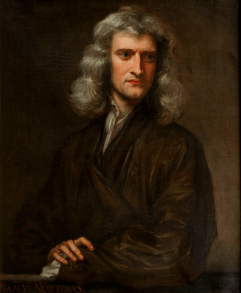 Sir Isaac Newton, 1642 – 1727
Isaac was born on January 4, 1643, (Julien, 25 December 1642) in Woolsthorpe, Lincolnshire, England. Isaac was born prematurely and was not expected to live. His father, who was a wealthy farmer, died three months prior to his birth. His mother, Hannah Ayscough, soon remarried, Rev. Barnabas Smith, and left Isaac, age 3, with his maternal grandmother. These tragic events left the child traumatized, full of anxiety, insecure, and often time displayed irrational behaviors and violent thoughts.
At age 7, he was enrolled at The King’s School in Lincolnshire. During the school semester, he lived with the local Apothecary. This is where Isaac first developed an interest in chemistry. He had also done very well in his studies at school, and it was often said that he had a keen, sharp mind. He loved to build mechanical toys and pull pranks on the locals.
At age 12, he reunited with his mother after her 2nd husband, Rev. Smith, passed on. She brought with her 3 small children from the marriage. Shortly after her arrival, she pulled Isaac out of school and set him to work on the farm. He did not care for this sort of work and often displayed his deep dissatisfaction with the skills required. The headmaster at The King’s School had seen something brilliant about the child in his studies, and between the headmaster and his Uncle Phillip, they persuaded Isaac’s mother to allow him to complete his education.
Isaac’s Uncle Philip, was a graduate of Cambridge. Aware of Isaac’s keen intellectual abilities, stepped in again to speak for the lad. So, in 1661, he convinced Isaac’s mother to allow him to apply at Cambridge Trinity University under a general work-study program. There he waited tables and served the wealthy students whilst attending general course classes.
The early years of Isaac’s life was surrounded by a violent Civil Wars in England. However by the time he reached Cambridge the wars had ended and he saw the restoration of King Charles II.
Isaac arrived at Cambridge during a very exciting time, a refined renaissance in the sciences. A scientific revolution. It was also a very promiscuous social period as well, but that did not appeal to Isaac at all. Isaac was a recluse, never traveled abroad, had very few friends, he was celibate, stayed in his room for hours dedicating himself to his studies and strangely enough, during this time, his hair turned prematurely white.
His main courses were general topics and mathematics, but he soon fell in love with philosophy and the advancements in the sciences. Unfortunately, his general study grades suffered, but he was carrying quite a load in Advance Science and Philosophy, which was understandable. Upon Graduation, in 1665, Isaac did not graduate with honors or any distinctions. However, his efforts awarded him the title of Scholar, thus securing his financial future to further his education.
Outside his written papers, and later, several books, Isaac kept copious notes of everything he read and his thoughts on a plethora of topics. Quaestiones Quaedam Philosophicae, (Certain Philosophical Questions) – A New Framework for the Scientific Revolution (1661-1665).
In late 1665, The Great Plague (Black Death) struck Great Britain. Thousands were dying every week. Cambridge University closed its doors and Isaac went home to the farm. This is when and where he had a Eureka Moment. Outside the house, in the apple orchard, he sat under a tree, and while pondering the now accepted sun centered solar system, he wondered how do the planets actually move. As he sat down, he contemplated the orbit of the moon, trying to resolve Descartes’ Mechanical Clockwork Universe when a ripened apple fell from the tree, and dropped to the ground near his foot. He realized at that moment what is holding the moon in its position to the earth, the sun and all the planets was a great invisible force, he called that force gravity.
Of course this is the story Isaac told as an old man, and there’s no doubt Galileo’s motion experiments influenced his theory greatly, but he wanted to prove his theory of gravity and from these experiments and calculations, at the age of 22, he developed a new branch of mathematics called, Calculus. The study of continuous change, often called, Infinitesimal Calculus.
He later formed his theory on light and color. This proved to be one of his most controversial theories. However, his experiments in this area, eventually led to his design from a glass lens to a mirror telescope, which magnified the distance 40 times more than Galileo’s tubular telescope. One could now see the round contours of that planet Jupiter, along with its moons. Yet, in his mind, this telescope was simply a toy. When introduced to King Charles II, this toy made Isaac Newton a household name. They soon elected him as a Member of the Royal Society.
Around this time, Newton became very interested in Alchemy. He kept secret and coded notes. His goal was to find the Philosopher’s Stone. This seemed to those who knew him then, as many who study him today, an odd thing, since during his life, due to many charlatans, alchemy was banned, and for some it meant torture and the death penalty. Also, at this time, Newton calculated and predicted the year the world would end, 2060.
During this same period, Isaac had passed his paper on Light to a few members of the Society. Responses and reviews were published in the Society Newsletter. One member, Robert Hook, wrote a report which acknowledged Newton’s Paper, but criticized it greatly. This conflict between them raged for five years through the Royal Society Newsletter. Newton did not take criticism well, especially regarding his work, and by 1675, he declared he would never publish another scientific paper. He then withdrew from the scientific community and isolated himself almost completely. Even today, many still disagree with his theory of color and light.
As a result of all this, he threw himself into the study of Ancient Greek Myths, Philosophy and Alchemy.
As part of his tenure at Trinity, it was required of him to become a minister of the church. This presented some new problems. His personal reason for rejecting the ministry is that he did not believe in the Trinity as equals. This was heresy, so he kept these views to himself. Further, he coded his words in secret writings and it wasn’t until recently theses texts were decoded. Newton studied the bible, of which he had many versions, and the Gnostic books that were available. He believed in one god that created everything, but also in other beings at work, for everything was created by God. To him, science, math, philosophy, and religion were all connected, and he believed all knowledge was divine.
During this time, Newton continued to pour himself over his religious investigation and alchemical studies. In his early 40s, the astronomer Edmond Halley paid him a visit. Halley posed a question regarding the movement of the planets in relationship to the sun. Newton said they moved as Kepler had projected, in an ellipse. He later sent Halley the calculations. This question and meeting persuaded Newton to focus his attention on physics again, and as it tuned out, this calculation became one of the Newtonian Three Laws of Motion. For almost two years, he spent his waking life working on these Law until they were full proof. In short, what happens out in the far reaches of the universe, happens everywhere. As above, so below.
Newtonian Three Laws of Motion.
Law I. Every object in a state of uniform motion will remain in that state of motion unless an external force acts on it. (law of inertia).
Law II. Force equals mass times acceleration, [f(t)= m a(t)]. (law of force and acceleration).
Law III. For every action there is an equal and opposite reaction. (law of action reaction).
From this argument he then developed what he considered mathematical proof that gravity exists.
Newton’s Universal Law Of Gravitation.
Expressed: 
Newton further believed that gravity was an occult force. There was, of course, blowback. How do you prove gravity without seeing, tasting, touching, smelling, hearing an invisible force? Certainly, mathematical calculations, and one’s imagination could not replace something so grand, all should be able to experience this with the human senses.
Such criticisms and arguments, again from Robert Hook, sent Newton into a tailspin. Now, suffering from exhaustion, he had a physical and mental breakdown. However, after a few months’ rest, he was back on his feet and took, what can only be called, a miraculous turn. He decided to become, a Great Man. He moved to London, was appointed Master of the Mint, with all its powers. He ran for a Seat in Parliament, and won. Furthermore, he became president of the Royal Society, and hired many artists to paint his portrait, all total, 14. Moreover, to top it all off, he was Knighted by the King, Sir Isaac Newton. Simply, a very remarkable transition, but after all, he was Isaac Newton.
A year after Hook died, Sir Isaac published his book on Optics. He put aside the topic of Alchemy, but continued his studies secretly on Gnosticism and Theology. Like other great men of the past, he seems to come to the resolution that not everyone would understand his ideas, work, and discoveries in his own time. He died in 1727, at the age of 84. He is buried in Westminster Abbey.
Through the month of March, we celebrate and investigate the lead-up to the Neoclassicism Movement. There will be weekly lecture on what brought on the Scientific Revolution. From Aristotle through Newton.
[tbc]
.
.
.
Roger Joseph Boscovich, 1711 – 1787 – Republic of Ragusa – Physicist, astronomer, mathematician, philosopher, diplomat, poet, theologian, Jesuit priest, polymath. Pub. A Theory of Natural Philosophy (1758).
Ended the Church’s prohibition on Copernicus. Mathematically, his work proved everyone from Copernicus through Newton correct. This set aside Aristotle’s Crystal Spheres aside and ushered in the Age of Science..
**********
.
.
.
.
.
.
.
.
.
.
Aristotle crystal spheres
A was wrong “nothing could change the way an object behaved bc every object has its own unique charcteristics and it would always behave in every mediu.
Niccoló Fontana Tartaglia
curved canon balls
surface area
archamedi boat
Galileo
32 secs ps
parallax shift
add
Roger Joseph Boscovich
.
Philosophy, Science & Industry
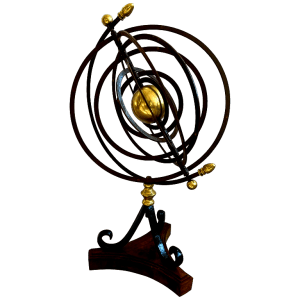
Johannes Gutenberg, 1400- 1468 Printing to Indexing. Press 1440- [tbc]
Giambattista Benedetti, 1530 – 1590 in) Venice – Mathematics, physics, mechanics, construction of sundials, music. Science of motion – Publications: Resolutio omnium Euclidis problematum (1553) and Demonstratio proportionum motuum localium (1554).
René Descartes 1596 – 1650 – La Haye en Touraine, Touraine, Kingdom of France Mathematics – Clockwork Universe – Philosopher: Rationalism (Born-31 March 1596, Died 11 February 1650m, Stockholm, Swedish Empire). Field of Study: Epistemology, metaphysics, mathematics, physics, cosmology. Publication Principles of Philosophy – Cartesian Mechanism
==========-
===========
=======-=—
.
change gem here
.
.
Absolutism the Age of Monarchs
Absolutism 1650–1789, the divine right of kings.
The consolidation of power through government, society, and religion. This was fueled by religious wars, creation of standing armies and a centralized government in order to to curb the power of the nobility and the church, Kings now asserted their own sovereignty.
Past
Religious Wars, Instability and the transition from Feudalism
The factors leading to the Age of Absolutism were, violent religious wars of the 16th and 17th centuries, particularly the Thirty Years’ War, created a desire for order and protection, making people more willing to accept strong monarchical rule.The move from a feudal system to a more capitalist society provided the context for monarchs to consolidate their power and unify state laws.
Present
Absolutism (1650-1789)
Centralization Power
Subjugation of Nobility
Government, Bureaucracy, Armies and Economic Policies
France, under Louis XIV, Sun King, is a prime example of this form of rule. It was called The Divine Right of Kings, the idea in society that monarchs were appointed by God to rule on his behalf, making their decrees unquestionable and their authority absolute. Monarchs worked to pacify and subjugate nobles, solidifying their own empowerment thus preventing the fragmentation of power that characterized earlier feudal systems. To enforce their rule and maintain stability, monarchs created centralized bureaucratic systems and large standing armies. Economically, Monarchs often implemented policies like mercantilism to increase national wealth and promote economic self-sufficiency, which also served to consolidate state power. However, this idea was challenged by the rise of a constitutional monarchy in England, along with the intellectual shift towards the Enlightenment, which brought the period to an end during the French Revolution.
Challenges and the End of the Era Rise of Constitutional Monarchy. England’s Glorious Revolution (1688) and the establishment of a Bill of Rights demonstrated the possibility of a constitutional monarchy where monarchical power was limited by law.
Future
Enlightenment & Revolution
Thinkers like Locke, Voltaire, and Rousseau challenged the foundations of absolute power, promoting ideas of individual rights and popular sovereignty. Revolutionary Movements The American and French Revolutions in the late 18th century served as powerful examples of how absolute power could be overthrown, ultimately contributing to the collapse of the era of Absolutism.
..
France
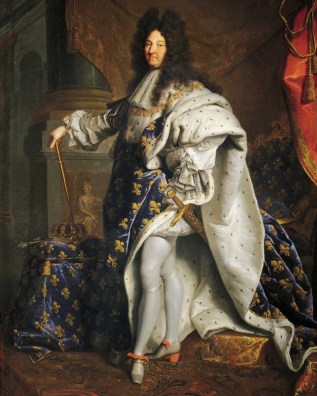 Louis XIV – Sun King – 1643 – 1715
longest reigning monarch.
Versailles –
Control of the Nobility –
.
.
.
.
.
.
.
.
European Imperialism (Focus on Eastern Europe)
Imperialism in Eastern Europe during the 16th–17th centuries involved Poland, Russia, and the Ottoman Empire vying for control, often over Ukraine and the Baltic. The Polish-Lithuanian Commonwealth expanded eastward, clashing with Muscovy and the Ottomans
.
.
.
.
.
.
.
.
Russia
Peter The Great, Peter I, 1672 – 1725.
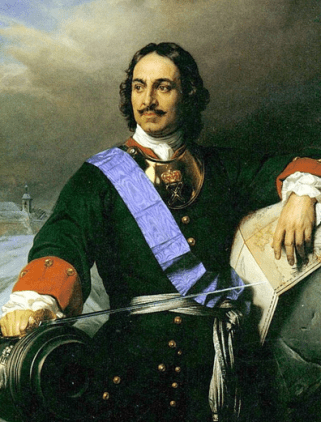 Born: Moscow, Russia. Tsar of all Russia from 1682 – 1721. First Emperor of all Russia. Ruled jointly with his elder half-brother, Ivan V, 1666 – 1696. Born: Moscow, Russia. Spouse: Catherine I of Russia (m. 1712–1725), Eudoxia Lopukhina (m. 1689–1698). Parents: Alexis of Russia, Natalya Naryshkina.
House: Romanov.
He fathered fifteen children.
Peter was a towering figure, he stood, 6′ 8″
Ranking of Nobility through Merit.
.
.
.
history
Russia
We’ll end with Russia, building on Ptolemy’s Influence in Russia* (9th–15th centuries) by focusing on its role during the 16th–17th centuries, a time of expansion and cultural consolidation under the Rurikids and early Romanovs.
Russia During the Time of Troubles (Event, History)*
Dates: 1598–1613 CE. Geography: Tsardom of Russia (Moscow, Novgorod). Nations: Russia, Poland-Lithuanian Commonwealth, Sweden. Key Details: After the Rurikid dynasty’s end (1598), Russia faced famine, civil war, and foreign intervention (e.g., Polish occupation of Moscow, 1610–1612). The crisis ended with Michael Romanov’s election (1613), beginning the Romanov dynasty. Russia’s eastern expansion continued, reaching Siberia (e.g., Yermak’s conquest, 1582). Legacy: Strengthened Russian autocracy under the Romanovs, setting the stage for Peter the Great’s reforms and imperial growth. Remark: Patriarch Hermogen wrote in 1611, “In our darkest hour, Russia found its unity under heaven’s will.”
.
.
.
.
Prussia
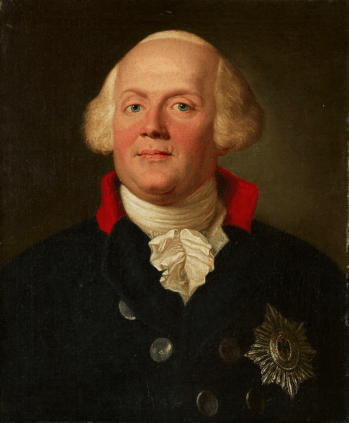 Friedrich II The Great 1712 – 1786
.
.
.
.
.
.
.
.
.
.
.
.
.
.
.
.
.
.
Notes: The Czech lands, initially Christianized by Saints Cyril [] and Methodius [] using the Byzantine Rite in Old Church Slavonic, faced resistance as the Roman Rite in Latin was imposed by German-speaking bishops like Wiching [], leading to a cultural memory of vernacular liturgy that fueled Jan Hus’ [] rapid following and the Hussite Movement [].
Charles university
.
.
.
.
.
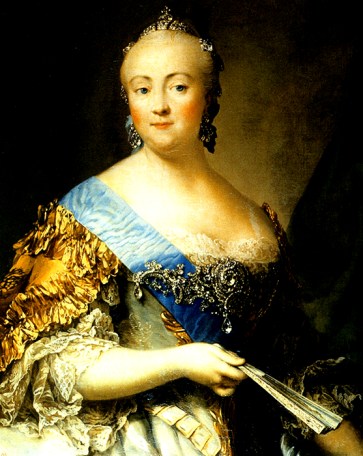
Catherine the Great
Catherine II, 1729 – 1796 Princess Sophie of Anhalt-Zerbst.
.
.
.
.
.
.
.
.
.
.
.
.
.
.
.
.
.
.
.
.
.
.
.
.
.
.
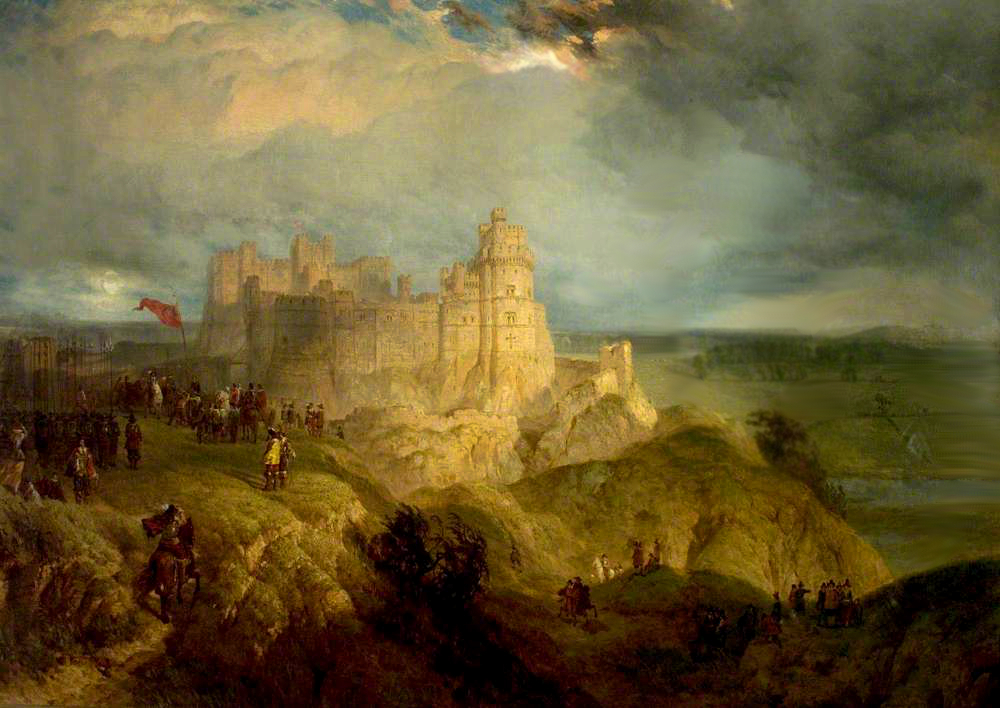
The English Civil War or Great Rebellion was a series of civil wars and political machinations between Royalists and Parliamentarians in the Kingdom of England from 1642 to 1651. Part of the wider 1639 to 1653 Wars of the Three Kingdoms, the struggle consisted of the First English Civil War and the Second English Civil War. The Anglo-Scottish War of 1650 to 1652 is sometimes referred to as the Third English Civil War.
While the conflicts in the three kingdoms of England, Scotland and Ireland had similarities, each had their own specific issues and objectives. The First English Civil War was fought primarily over the correct balance of power between Parliament and Charles I. It ended in June 1646 with Royalist defeat and the king in custody.
However, victory exposed Parliamentarian divisions over the nature of the political settlement. The vast majority went to war in 1642 to assert Parliament’s right to participate in government, not abolish the monarchy, which meant Charles’ refusal to make concessions led to a stalemate. Concern over the political influence of radicals within the New Model Army like Oliver Cromwell led to an alliance between moderate Parliamentarians and Royalists, supported by the Covenanter Scots. Royalist defeat in the 1648 Second English Civil War resulted in the execution of Charles I in January 1649, and establishment of the Commonwealth of England.
In 1650, Charles II was crowned King of Scotland, in return for agreeing to create a Presbyterian church in both England and Scotland. The subsequent Anglo-Scottish war ended with Parliamentarian victory at Worcester on 3 September 1651. Both Ireland and Scotland were incorporated into the Commonwealth, and the British Isles became a unitary state. This arrangement ultimately proved both unpopular and unviable in the long term, and was dissolved upon the Stuart Restoration in 1660. The outcome of the civil wars effectively set England and Scotland on course towards a parliamentary monarchy form of government.
This family needs a thorough rundown. History of History. Rebellion; Revolution and Restoration
Charles I – 1600 – 1649, House Stuart. Son of King James VI of Scotland. Catholic. Absolutist Monarchy. He was a Knight of the Garter, a skilled horseman, marksman, excelled in fencing. He had nine children. He was the Duke of York, Prince of Whales, King of Scotland and heir apparent to England Scotland and Whales.
Charles II – His reign was opposed and then restored. He saved the economy through the Wool Industry (65%) of the economy was woo; exports. He mandated that all shall wear wool especially the dead wrapped and buried in it.
James II – Last Catholic monarch of England, Scotland, and Ireland. Ended absolutism and the divine right of kings. He confirmed the primacy of Parliament over the Crown.
Consensus & Symmetry
Glorious Revolution in England
The Pilgrim’s Progress, John Bunyan
Wars of the Three Kingdoms (c. 1639–1651)
The Spark – Personal Rule and Rising Tensions (1629–1640)Charles I’s Eleven Years’ Tyranny (rule without Parliament).
Forced loans, Ship Money, religious reforms (Laudian “beauty of holiness”).
Scottish resistance: National Covenant (1638), Bishops’ Wars (1639–1640).
Summoning of the Short and Long Parliaments (1640)—the breaking point.
Outbreak – Raising the Standard at Nottingham (1642)
Charles leaves London; attempts to arrest MPs fail (January 1642).
22 August 1642: Royal standard raised at Nottingham—formal declaration of war.
Division of the kingdoms: Royalists (Cavaliers) vs. Parliamentarians (Roundheads).
Early skirmishes; Edgehill (October 1642)—indecisive first major battle.
Wars Escalate (1643–1646)
Stalemates turn to Parliamentarian advantage: New Model Army formed (1645).
Key battles: Marston Moor (1644), Naseby (1645)—decisive Royalist defeats.
Scotland and Ireland drawn in (Confederate Ireland, Covenanters).
Charles surrenders to the Scots (1646).
Captivity, Trial, and Regicide (1647–1649)
Charles imprisoned; negotiations fail (he plays sides off against each other).
Pride’s Purge (1648): Army removes moderate MPs → Rump Parliament.
Trial of Charles I (January 1649): Charged as “tyrant, traitor, murderer.”
Execution at Whitehall (30 January 1649)—monarchy abolished.
Aftermath –
Commonwealth and Protectorate (1649–1660)
England declared a Commonwealth (republic).
Cromwell conquers Ireland (1649–1650) and Scotland (1650–1651).
Oliver Cromwell as Lord Protector (1653–1658).
Restoration of Charles II (1660)—monarchy returns, but forever changed.
Key Cultural Pillars & Reflection
Divine Right vs. Consent: Clash of absolute monarchy and parliamentary sovereignty.
Three Kingdoms Torn: England, Scotland, Ireland all engulfed—no “English-only” war.
A Kingdom Divided: Families split, religion weaponized, no clear heroes.
Legacy: Seeds of constitutional monarchy—no future king would claim divine absolutism again.
ART
Section 1: Portrait of Charles I in armor or with scepter (divine-right).
Section 2: Your chosen Nottingham painting/engraving.
Section 3: Battle of Naseby or Marston Moor scene.
Section 4: Trial of Charles I execution scaffold.
Section 5: Cromwell dissolving Parliament or Charles II’s Restoration entry.
.
Rule and Death of Cromwell
In the end why did the British Peoples preferer kings? After the English Civil War, Oliver Cromwell took over as Lord Protector. Cromwell was a devout Puritan, zealously religious and believed that people ought to live biblically. English Puritans wanted people to lead simple lives, stripped of the accoutrements of leisure and wealth. They believed that Luther’s reformation had not gone far enough, they promoted purer forms of worship and religious practice. Cromwell was keen to encourage Puritan religiosity across England. He ruled with a blend of military rule and religious zealotry, stern moral policing. He taxed the system so hard that it made people nostalgic for the monarchy they’d had beheaded. He banned sports, censored theater, outlawed all manner of fun and enjoyment, he even restricted Christmas, and declared war on Catholic Spain. Soldiers roamed the streets confiscating food if it looked to festive. He turned England into a miserable gray dictatorship of boredom. Towards the end he was so hated that after he died, in January of 1661, on the 12th anniversary of the execution of King Charles I, Oliver Cromwell’s body was exhumed so his corpse could be put on trial for treason and regicide.
The trial took place in a typical courtroom with a judge, jury, and the accused. Only in this case, the accused was a three-year-old rotten, stinking corpse. As you might expect, the defense strategy of a thousand-mile-stare with dead eyes didn’t go over so well, and Oliver Cromwell’s corpse was found guilty. His corpse was hanged at Tyburn, London, then thrown into a pit. His head was chopped off and stuck on a pole outside Westminster Hall, where it sat until 1685..
.
.
.
England – Regency Era – Commonly understood as the years between 1795 and 1837.
[tbc]
Stuart Restoration – Reinstatement Stuart monarchy, May 1660, England, Scotland, and Ireland. This replaced the Commonwealth of England, established in January 1649 after the execution of Charles I, with his son Charles II. The Commonwealth had been governed by Lord Protector Oliver Cromwell.
[tbc]
.
.
Age Of Imperialism 1763 – 1912
.
.
.
.
.
Economies of War and Spirit
Malthusianism
Great Awakening
French and Indian (British) War 7 year
From the Renaissance to Refinements. [tbc]
the Renaissance paved the way for Neoclassicism. Both styles, while distinct, share a common thread: drawing inspiration from the principles and aesthetics of ancient Greek and Roman art and architecture.
Renaissance and Neoclassicism: A Connection of Classical Inspiration
The phrase “Renaissance to Refinements” or similar phrasing, when discussing architectural styles, suggests a lineage of influence where the Renaissance paved the way for Neoclassicism. Both styles, while distinct, share a common thread: drawing inspiration from the principles and aesthetics of ancient Greek and Roman art and architecture.
Renaissance Classicism’s Influence on Neoclassicism:
Revival of Classical Ideals: The Renaissance marked a “rebirth” or “revival” of ancient Greek and Roman art, literature, and architectural ideals. This fundamental emphasis on classicism, including principles of symmetry, balance, and idealized forms, provided a foundation for the later Neoclassical movement.
Architectural Elements: Renaissance architects, like Andrea Palladio, studied and applied classical principles in their designs, incorporating elements such as columns, pilasters, pediments, and domes. Neoclassicism built upon this foundation, particularly Palladio’s work, further refining and reinterpreting these elements.
Emphasis on Symmetry and Proportion: Both Renaissance and Neoclassical architecture placed a strong emphasis on symmetry, proportion, and harmony, often using mathematical ratios and geometric shapes to achieve balanced and aesthetically pleasing designs.
Refinements of Neoclassicism:
Enlightenment Influence: Neoclassicism, emerging during the Enlightenment, also reflected the movement’s values of reason, civic virtue, and order. This is evident in the style’s emphasis on clarity, simplicity, and rationality.
Archaeological Discoveries: New archaeological discoveries, like the excavations of Pompeii and Herculaneum, provided Neoclassical architects with a more precise understanding of ancient Greek and Roman forms, leading to a stricter adherence to classical prototypes compared to the Renaissance.
Reaction to Baroque: Neoclassicism can be seen as a reaction against the ornate and elaborate excesses of the Baroque and Rococo styles, favoring a return to simpler, more restrained forms and compositions.
In summary, Neoclassicism can be seen as a “refinement” of Renaissance ideals. While both movements looked to antiquity for inspiration, Neoclassicism, influenced by the Enlightenment and fueled by new discoveries, aimed for a more accurate and disciplined application of classical principles, emphasizing simplicity, order, and reason.
.
MOVE TO APRIL
Neoclassicism & Early Enlightenment –
.
Philosophy of Science, the Science of Sciences
Frances Bacon, 1561 – 1626, Philosopher: Scientific Method
Giordano Bruno, 1548 – 1600, Philosopher: Mathematician
Jakob Böhme, 1575 – 1624, Philosopher: Mystic
René Descartes 1596 – 1650, Philosopher: Rationalism – Clockwork Universe
“You ask what I am thinking of? I am thinking of immortality. What am I doing? Growing my wings.” -Milton
Humanities
John Milton, 1608 – 1674, Bio, Paradise Lost
Refining Math and Science
Aristotle de mundo
Aristotelianism v Cartesian Mechanism v Newtonian Mechanism
Aristotle to Newton
Cartesian Mechanism
Historically, philosophy encompassed all bodies of knowledge, all practitioners were considered philosophers. From the time of the Ancient Socratic Greeks Natural Philosophy. This encompassed all forms of knowledge: astronomy, medicine, mathematic, rhetoric, nature, physics.
For example, Newton’s 1687 Mathematical Principles of Natural Philosophy became classified as a book of physics. Copernicus, Gallio, and Kepler Astronomers
More Humanists
The Nouveau, Ancien, Nouveau Riche.
.
.
.
.
.
.
.
.
.
.
.
.
.
.
.
.
Living Pan-European and American Cultural and Heritage Community Center

.
EMAIL: peachcommunity yahoo.com
.
.
.
.
.
.
.
.
.
.
.
.
.
quicklink
 PEACH COMMUNITY