
Modernity
What does it mean to be civilized in the modern world? Every Wednesday at 7PM, throughout the month of June, Prof. Burke will offer a series of Lectures on a particular set of topics. A brief overview of western society and the developments of art, economics, and politics. Followed by the importance of the culture life through the historic reflections in the visual arts and music, and finally, an outline of the Three-Fold Social Order and how this can be implemented within a developing Community.
“There is a wisdom of the head, and a wisdom of the heart.” Charles Dickens
.
.

.
.
.
June Philosophy & History Lecture Series
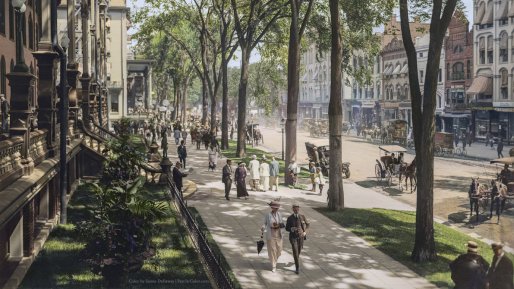 Every Friday evening in June there are several lectures on the history and life of the summer festivals, the nature of nature, how we got from here to there, and the history and future of the PEACH Community.
Week 1—Nature – Farmer, Johan Huber will give a lecture on the relationship between man and the earth, his stewardship of the land, and the relationship to the stars and the growing season. Depending on the crowd, this lecture will take place in the lecture hall or on the Farmer’s Front Porch. Thursdays, 7PM.
Week 2—History—Speaker, Dr. James Burke. The Victorian Era (1840) through Modernity (1920). From Victoria to the Great Depression, the expansion of the Industrial Age, the beginning of a Middle Class, and how the Scientific Method begins to dominate the modern world of Science, Nature and our Social and Economic Structures. Theatre. 7PM.
The Orient and the Occident
History – Professor Burke will offer a lecture regarding these two civilizations, east, and west. How they developed, came into contact and where are they headed. Second Saturday, 7PM. Theatre.
Week 3 – Solstice & St Johns – Guest Speaker, Dennis Gray – Who is St. John, what is the meaning and purpose of St John’s Tide and his connection to the Summer Solstice. Chapel. 7PM.
Week 4 – Changing The Factory Mindset & Building The New Role Model – Annual Guardian Address. A spokesman for the Guardians will talk about their annual year-end meeting and offer a public discussion of the year in review, what is presently taking place, and plans for the future to come. Bring your questions and good wishes. Tea and cake will be served on the cafeteria patio at 6PM. This Year’s Speaker: Jasper Stone. Talk at 7PM in the Lecture Hall.
Imperial Expansion & Global Politics (1870s–1890)
Scramble for Africa intensifies, Berlin Conference (1884–1885)
British Empire at height; French, German, Belgian colonial expansion
Meiji Restoration in Japan (1868) and rapid modernization
Cultural and scientific advances (Darwinism, positivism)
Rising tensions between great powers (France-Germany rivalry post Franco-Prussian War 1870–71)
Early labor movements and socialist parties gain strength
.
.

.
History of History – Modernity
Technological and Cultural Developments up to 1890
Advances in photography, telegraphy, steamships
Invention of the telephone (1876)
Growth of urbanization and modern city life
Art and literature: Romanticism, Realism, Impressionism
Foundations of modern science: Maxwell’s electromagnetic theory, periodic table

.
.
.
History 1890–1928
Rulers & Leaders
Australia
Billy Hughes (1862–1952, Australia) — Prime Minister during WWI and early interwar period.
Balkans
Canada
William Lyon Mackenzie King (1874–1950, Canada) — Longest-serving Canadian PM. during interwar years.
Eastern Europe
France
Germany
Kaiser Wilhelm II (1859–1941, Germany) — Last German Emperor; led up to WWI.
Paul von Hindenburg (1847–1934, German) — German general in WWI and later President of the Weimar Republic. Quote: “The victory is ours.”
Greece
Italy
Benito Mussolini ll Duce (1883–1945, Italy) — Emerged as fascist leader by early 1920s..Fascist leader and Prime Minister of Italy from 1922 to 1943, founder of Italian Fascism and key Axis power figure during WWII.
Portugal
António de Oliveira Salazar (1889–1970, Portugal) — Authoritarian ruler and Prime Minister who established the Estado Novo regime from 1932 to 1968.
Russia
Tsar Nicholai II – Nikolai Alexandrovich Romanov 1868 – 1918), Last Emperor of Russia, King of Congress Poland and Grand Duke of Finland. Abdication, by force, 15 March 1917. Russian Orthodox Church as Saint Nicholas the Passion-Bearer. Last Russian emperor; overthrown in 1917 Revolution.
Vladimir Lenin (1870–1924, Russian) – TITLE: Revolutionary leader and architect of the Soviet Union after the 1917 Bolshevik Revolution. QUOTE: “Peace, land, and bread.”
Joseph Stalin (1878–1953, Russian) – TITLE: Rose to power after Lenin, ruled Soviet Union with authoritarian control. QUOTE: “A single death is a tragedy; a million deaths is a statistic.”
Scandinavian & Baltic
Spain
Francisco Franco (1892–1975, Spain) — Military general and dictator who ruled Spain from 1939 until his death following the Spanish Civil War.
Emiliano Zapata (1879–1919, Mexican) – TITLE: Revolutionary leader advocating peasants’ land rights during the Mexican Revolution. QUOTE: “It is better to die on your feet than live on your knees.”
South Africa
Paul Kruger (1825–1904, South African) — President of the South African Republic, leader of Boer resistance against British imperialism. Quote: “It is better to die for a principle than to live for a lie.”
United Kingdom
Winston Churchill (1874–1965, United Kingdom) — Prime Minister during WWII, Nobel Prize winner in Literature (1953), renowned orator and statesman.
United States Of America Stephen Grover Cleveland (1837 – 1908, United States) 22nd and 24th President. Served from 1885 to 1889 and 1893 to 1897. He was the first U.S. president to serve nonconsecutive terms and the first Democrat elected president after the Civil War. He was Bourbon Democrat, pro-business movement opposed high tariffs. He stood for political reform and fiscal conservatism, was praise for honesty, self-reliance, integrity, and commitment to classical liberalism. He fought against political corruption, patronage, and bossism convinced many like-minded Republicans, called “Mugwumps”, to cross party lines and support him. He signed the Interstate Commerce Act of 1887 regulating railroad. He signed the Dawes Act, which subdivided Native American tribal communal landholdings into individual allotments. This policy led to Native Americans ceding control of about two-thirds of their land between 1887 and 1934
William McKinley (1843–1901, United States) — TITLE: 25th U.S. President, led during the Spanish-American War, expanded American influence overseas. Quote: “In the time of darkest defeat, victory may be nearest.”
Theodore Roosevelt, Jr., 1858 – 1919. United States) Progressive President and Rough Rider, known for reforms and expanding U.S. influence. Born in New York, NY. He was a Politician, Conservationist, Naturalist, and Writer. He created the National Parks system in the US, in order to preserve and protect the beauty of nature. He was the 26th President of the United States, 1901-1909, known for his “Square Deal” domestic policy. He was called T. R. or Teddy, the nickname teddy was later attached to a child’s toy bear, called the teddy bear, named after Theodore. His biography is quite remarkable, he was a man of great will. QUOTE: “Speak softly and carry a big stick.”
Woodrow Wilson (1856–1924, United States) — 28th U.S. President; led the nation through the Great War [World War I] and championed the League of Nations. Advocate for progressive reforms. Quote: “The world must be made safe for democracy. ”Vladimir Lenin (1870–1924, Russia) — Leader of the Bolshevik Revolution and first head of Soviet Russia
.
.
Activism & Human Rights
W.E.B. Du Bois (1868–1963, United States) — Civil rights activist, co-founder of NAACP.
Emmeline Pankhurst (1858–1928, United Kingdom/Australia) — Suffragette leader (included for colonial ties).Václav Havel (1936–2011, Czechoslovakia) — Later dissident and president (born after timeline but important).
Rosa Luxemburg (1871–1919, Poland/Germany) — Marxist theorist and revolutionary socialist.
Eugene V Debs (1855-1926, American) Labor activist, founding member of the IWW, anti war, helped organize the Pullman strike. Ran as a Socialist candidate for President five times, most times by any American Citizen: 1900, 1904, 1908, 1912, 1920 the last time from a prison cell. He was arrested for being against the War. He was arrested and charged with espionage and for sedition, convicted for 10 years. Quote. “The American People can have anything they want, trouble is, they don’t ant much of anything.” -EV Debs
Eugenics –
Cabbage Patch Children –
Coney Island – Infantorium
.
Industrialists & Scoundrels
J.P. Morgan, Financier and Industrialist – (1837–1913, United States) – Led banking empire, formed monopolies (e.g., U.S. Steel, 1901), criticized for predatory finance and Jekyll Island influence during 1890s–1910s.
John D. Rockefeller, Industrialist and Philanthropist – (1839–1937, United States) – Founded Standard Oil, used predatory pricing to dominate oil industry, faced 1911 antitrust breakup, seen as a robber baron. Founded Standard Oil, controlled oil industry in 1890s–1910s, faced antitrust breakup (1911), shaped U.S. industrial economy.
Nelson Aldrich, Senator and Financial Reformer – (1841–1915, United States) – Led 1910 Jekyll Island meeting, pushed pro-corporate policies as Senator, criticized for elite ties and financial manipulation.
Cecil Rhodes, Industrialist and Imperialist – (1853–1902, United Kingdom/South Africa) – Founded De Beers, exploited African labor and resources in diamond mining, drove imperialist expansion (e.g., Rhodesia) in 1890s. Founded De Beers, dominated diamond mining, drove British colonial expansion in southern Africa, influential in 1890s industry and imperialism.
.
.
Discovery & Travel
Robert Peary (1856–1920, US) — Claimed first to North Pole (1909).
Roald Amundsen, Explorer – (1872–1928, Norway) – Norwegian polar explorer, led the first expedition to reach the South Pole (1911), navigated Northwest Passage (1903–1906), active in Arctic and Antarctic exploration through 1928. U.S. connection: Funded by U.S. sponsors (e.g., National Geographic Society) and lectured in the U.S. during the 1920s.
Ernest Shackleton, Explorer – (1874–1922, United Kingdom) – British Antarctic explorer, led the Imperial Trans-Antarctic Expedition (1914–1917), famous for surviving the Endurance disaster, influential in 1890s–1920s exploration. U.S. connection: Gained U.S. media attention and funding for expeditions; Endurance story popularized in U.S. press.
Vilhjalmur Stefansson (1879–1962, Canada/US) — Arctic explorer.
Amelia Earhart, Aviation Pioneer – (1897–1937, United States) – Pioneering aviator, first woman to fly solo across the Atlantic (1932, post-1928 but active in aviation during 1920s), set records in 1920s U.S. aviation. U.S. connection: U.S.-based, shaped American aviation culture, supported by U.S. media and sponsors (e.g., Purdue University).
Louis Blériot (1872–1936, France) — Aviator; first to fly across the English Channel (1909).
Sven Hedin (1865–1952, Sweden) — Explorer and geographer known for Central Asia expeditions.
.
.
Invention & Engineering
Alfred Nobel, Industrialist and Inventor – (1833–1896, Sweden) – Invented dynamite, led explosives industry, amassed wealth through global business ventures, established Nobel Prizes via 1895 will.
Andrew Carnegie, Industrialist and Philanthropist – (1835–1919, United States) – Built Carnegie Steel Company, dominated U.S. steel industry in 1890s, sold to J.P. Morgan (1901), funded philanthropy during 1900s–1910s.
John D. Rockefeller, Industrialist and Philanthropist – (1839–1937, United States) –
Alexander Graham Bell (1847–1922, Scotland/US) — Telephone inventor and innovator.
Sergei Witte, Statesman – (1849–1915, Russia) – Russian Finance Minister and PM (1905–1906), drove industrialization, negotiated 1905 Revolution reforms, shaped pre-WWI Russian policy through economic modernization.
Henry Ford (1863–1947, US) — Mass production and assembly lines (Model T, 1908). Founder of Ford Motor Company, pioneer of assembly line production.
Reginald Fessenden (1866–1932, Canada/US) — Early radio transmission. Inventor in radio technology and early wireless communication.
Sergei Witte, Statesman – (1849–1915, Russia) – Russian Finance Minister and PM (1905–1906), drove industrialization, negotiated 1905 Revolution reforms, shaped pre-WWI Russian policy through economic modernization.
Guglielmo Marconi (1874–1937, Italy) — Radio transmission and wireless telegraphy
Ferdinand Porsche (1875–1951, Austria/Germany) — Automotive engineering pioneer. Thomas Edison: U.S. inventor, iconic for electrical and entertainment innovations, active in 1890–1928, complements industrialists like Carnegie. Nikola Tesla: Serbian-American inventor, pioneered AC electricity, active in 1890s–1920s, fits technological focus of era.
George Westinghouse: U.S. inventor and industrialist, collaborated with Tesla on AC systems, active in 1890s–1914, bridges invention and industry.
Isambard Kingdom Brunel (1806–1859, United Kingdom, earlier but foundational figure) — Revolutionary engineer of railways and ships (for context).
Gottlieb Daimler (1834–1900, Germany, earlier but foundation of automotive industry).
Nikola Tesla (1856–1943, Serbian-American but influential globally, including Europe) — Inventor and electrical engineer.
.
.
Literature
Anton Chekhov (1860–1904, Russia) — Playwright and short story writer, important figure in modern drama.
James Joyce (1882–1941, Ireland) — Modernist novelist; “Ulysses” (1922). Pioneer of literary modernism, author of Ulysses and Finnegan’s Wake.
Franz Kafka (1883–1924, Austria-Hungary) — Writer of existentialist and surreal works. Surrealist writer whose work coined the term “Kafkaesque.”
Virginia Woolf (1882–1941, UK) — Leading modernist novelist and essayist. Influential modernist novelist known for Mrs Dalloway and To the Lighthouse.
Thomas Mann (1875–1955, Germany) — Author of “The Magic Mountain.”
F. Scott Fitzgerald (1896–1940, US) — Chronicler of Jazz Age; “The Great Gatsby.”
Willa Cather (1873–1947, US) — Novelist of pioneer life.
Lucy Maud Montgomery (1874–1942, Canada) — “Anne of Green Gables.”
Banjo Paterson (1864–1941, Australia) — Poet of the Outback.
Robert Frost (1874–1963, United States) — Poet known for depictions of rural life.
Adolf Hitler (1889-1945, Austria) — Fascist, Author, “Mein Kampf”. Soldier, WWI. Leader of the Nationalsozialistische Deutsche Arbeiterpartei.
Jean-Paul Sartre (1905–1980, France) — Existentialist philosopher and writer with major contributions to literature and philosophy.V
.
.
Music
Igor Stravinsky (1882–1971, Russia/France) — Composer who revolutionized 20th-century music Composer of “The Rite of Spring” (1913).
Arnold Schoenberg (1874–1951, Austria/US) — Developed atonal and twelve-tone music.
Gustav Mahler (1860–1911, Austria) — Late-Romantic symphonist.
George Gershwin (1898–1937, US) — Composer blending classical and jazz.
Scott Joplin (1868–1917, US) — “King of Ragtime” music.
Percy Grainger (1882–1961, Australia/UK) — Composer and folk music arranger.
Dmitri Shostakovich (1906–1975, Soviet Union) — Leading Soviet-era composer balancing artistic expression with political pressures.
Benjamin Britten (1913–1976, United Kingdom) — Prominent English composer and conductor known for operas and orchestral works.
.
.
Performing Arts –
Oper Soloist
Pablo Casals, 1876–1973, Spain. Craft: Cellist (concert and opera accompaniment). Known As: Virtuoso performer, influenced orchestral and operatic performance. Work: Solo and orchestral performances. Quote: ” ”
Move to 1800 Oscar Wilde, 1854–1900, Ireland. Craft: Theatre. Known As: Aesthetic movement, social satire. Work: The Importance of Being Earnest. Quote: ” ”
Henrik Ibsen, 1828–1906, Norway. Craft: Theatre, Playwright. Known As: The father of realism, modern drama. He introduced realistic contemporary plays that exposed social evils. Works: Doll’s House. Hedda Gabler. “A man can play the fool only once, but a woman can do it all her life.”
Anton Chekhov, 1860–1904, Russia. Craft: Playwright, Short Story Writer. Known As: A master of the modern short story and a playwright who probed below the surface of life. Quote: “Don’t tell me the moon is shining; show me the glint of light on broken glass.
“Theatre
George Bernard, Shaw, 1856–1950, Ireland. Craft: Playwright, Critic. Known As: A revolutionary comedic dramatist and a prominent British socialist. Work: Pygmalion, Saint Joan. Quote: “The single biggest problem in communication is the illusion that it has taken place.”
Nellie Melba,(1861–1931, Australia) — Famous operatic soprano. International opera star (performing arts but emblematic figure).
Konstantin Stanislavsky, 1863–1938, Russia. Craft: Actor, Director. Known As: The father of modern acting technique. He developed the ‘Stanislavsky System,’ emphasizing emotional truth and psychological realism. Quote: “Love the art in yourself, not yourself in the art.”
Max Reinhardt, (1873–1943, Austria/Germany) — influential theatre director, innovator in stagecraft and large-scale productions.
Vsevolod Meyerhold, 1874–1940, Russia. Craft: Director, Actor. Known As: A pioneer of biomechanics and avant-garde theatre. He revolutionized Russian theatre with his emphasis on physicality and expression. Quote: “The theatre is the most important of all the arts.”
Bertolt Brecht, 1898–1956, Germany. Craft: Playwright, Poet, Director. Known As: A revolutionary theatre practitioner and the creator of Epic Theatre, social critique. He aimed to provoke rational thought and social change. Work: The Three Penny Opera, Mother Courage. Quote: “Art is not a mirror held up to reality but a hammer with which to shape it.”
Kurt Weill, 1900–1950, Germany/USA. Craft: Composer, of avant-garde and cabaret music. Known As: A composer who blended classical music with popular styles. He collaborated with Bertolt Brecht on ‘The Three Penny Opera.’ Quote: “Music is a means of communication, a way of expressing what cannot be said.”
George Bernard Shaw, 1856–1950, Ireland. Craft: Theatre. Known As: Playwright, critic, wit. Work: Pygmalion, Saint Joan. Known As: A revolutionary comedic dramatist and a prominent British socialist. Quote: “The single biggest problem in communication is the illusion that it has taken place.”
Eugene O’Neill, 1888–1953, USA. Craft: Theatre. Known As: American playwright, realism. Work: Long Day’s Journey Into Night, The Iceman Cometh. Quote: ” ”
Vaudeville & Cinema
Charlie Chaplin, 1889–1977, United Kingdom/USA. — Craft: Actor, Film Director, Producer. Known As: “The Tramp.” Work: Pioneer in cinema, The Kid, City Lights. Quote: ” ”
Mary Pickford, 1892-1979, Canada/USA. Craft: Actress, Producer. Known For: Known As: America’s Sweetheart. She was a major star of the silent film era and a co-founder of the legendary studio, United Artists.
Mary Pickford, 1892-1979, Canada/USA. Craft: Actress, Producer. Known For: Known as “America’s Sweetheart,” she was a major star of the silent film era and a co-founder of the legendary studio, United Artists.
Rudolph Valentino, (1895–1926, Italian-American) — Film actor and cultural icon (not political, but influential in social movements).
Buster Keaton, (1895–1966, United States) — Silent film actor and director known for physical comedy.
Sergei Eisenstein, (1898–1948, Russia) — Film director and theorist, pioneer of montage technique.
Marlene Dietrich, (1901–1992, Germany/USA) — Actress and singer, major film star in 1920s–30s. Known As: Cabaret and film icon. Work: The Blue Angel, Morocco. Quote: ” ”
Philosophy
Bertrand Russell (1872–1970, UK) — Analytic philosophy and social critic.
Martin Heidegger (1889–1976, Germany) — Existentialist philosopher. Existentialist philosopher best known for Being and Time.
Ludwig Wittgenstein (1889–1951, Austria/UK) — Philosopher of language. Philosopher of language and mind, author of Tractatus Logico-Philosophicus and Philosophical Investigations.
John Dewey (1859–1952, US) — Philosopher and educator, leader in pragmatism and progressive education. Pragmatism and educational reform.
Arnold Joseph Toynbee, 1889 – 1975 – English international affairs historian.
George Santayana (1863–1952, US/Spain) — Philosopher and literary critic.
Friedrich Wilhelm Nietzsche, 1844 – 1900 – German philosopher, poet, critic, philologist, and composer.
Carl Gustav Jung, 1875 – 1961 – Swiss psychiatrist, psychoanalyst, founded analytical psychology.
Oswald Arnold Gottfried Spangle, 1880 – 1936 – German polymath: history, philosophy, mathematics, science, art, and their relation to his theory of history.
Martin Heidegger, 1889 – 1976 – German philosopher, made significant contributions to phenomenology, hermeneutics, and existentialism.
Simone de Beauvoir (1908–1986, France) — Early feminist existentialist thinker. Feminist existentialist philosopher and author of The Second Sex.
.
.
Publication
Joseph Pulitzer, Newspaper Publisher – (1847–1911, United States) – Owned New York World, pioneered yellow journalism in 1890s, fueled Spanish-American War fever (1898) with sensationalist reporting, competed with Hearst, established Pulitzer Prizes (1917), shaped U.S. public opinion and policy.
Frederick Jackson Turner, Historian – (1861–1932, United States) – Authored Frontier Thesis (1893), argued frontier shaped U.S. democracy, influenced expansionist ideology and historical thought through 1920s, tied to U.S. identity and policy (e.g., imperialism).
William Randolph Hearst, Newspaper Publisher – (1863–1951, United States) – Owned New York Journal and media empire, drove yellow journalism in 1890s, provoked Spanish-American War sentiment, ran for office (1904–1906), influenced 1920s U.S. media and politics.
.
.
Science
Marie Curie (1867–1934, Poland/France) — Nobel laureate in physics and chemistry; radioactivity research.
Niels Bohr (1885–1962, Denmark) — Quantum mechanics founder.
Alexander Fleming (1881–1955, UK) — Discovered penicillin (1928).
Robert Millikan (1868–1953, US) — Photoelectric effect experiments.
Ernest Rutherford (1871–1937, New Zealand/UK) — Nuclear physics pioneer.
Florence Bascom (1862–1945, US) — First woman geologist in US Geological Survey.
Albert A. Michelson (1852–1931, United States) — Physicist and first American Nobel laureate in sciences.
Ivan Pavlov (1849–1936, Russia) — Physiologist known for classical conditioning experiments.
Max Planck (1858–1947, Germany) — Originator of quantum theory, Nobel laureate.
Erwin Schrödinger (1887–1961, Austria) — Physicist known for wave mechanics and the Schrödinger equation.
.
.
Sports
Babe Didrikson Zaharias (1911–1956, United States) — Multi-sport athlete, Olympic gold medalist.
.
.
Visual Arts – Painting, Architecture, Sculpture, & Instillations
Pablo Picasso (1881–1973, Spain/France) — Cubism pioneer; “Les Demoiselles d’Avignon” (1907).Co-founder of Cubism and one of the most influential artists of the 20th century.
Henri Matisse (1869–1954, France) — Fauvist color innovator.
Wassily Kandinsky (1866–1944, Russia/Germany) — Abstract art pioneer.
Kazimir Malevich (1879–1935, Russia) — Founder of Suprematism.
Edward Hopper (1882–1967, US) — Realist painter of urban scenes.
Tom Thomson (1877–1917, Canada) — Influential Canadian landscape painter (Group of Seven precursor).
Arthur Streeton (1867–1943, Australia) — Key figure in Australian Impressionism.
Joan Miró (1893–1983, Spain) — Surrealist painter and sculptor known for vibrant colors and abstract shapes.
Henry Moore (1898–1986, United Kingdom) — Renowned for large-scale abstract bronze sculptures
Georgia O’Keeffe (1887–1986, United States) — Modernist painter known for flowers and southwestern landscapes.
Frank Lloyd Wright (1867–1959, United States) — Architect, Influential architect and pioneer of organic architecture.
Le Corbusier (1887–1965, Switzerland/France) — Pioneer of modern architecture and urban planning.
Walter Gropius (1883–1969, Germany) — Founder of the Bauhaus School, influential modernist architect.
Antoni Gaudí (1852–1926, Spain) — Architect of Catalan modernism; work continued into early 20th century.
EVENTS
Bismarck resigns as German Chancellor – 1890
.
.
Wounded Knee Massacre marks near end of Native American armed resistance in U.S. – 1890:
.
.
End of the Ottoman Empire 1908
Abdul Hamid II (1842–1918, Ottoman) – TITLE: Last Sultan of the Ottoman Empire, ruled with authoritarianism, oversaw both modernization and repression. QUOTE: “I am the shadow of the empire.”
The US Federal Reserve – 1913
Historical records confirm six attendees at the November 1910 Jekyll Island meeting, held under the guise of a duck hunt to maintain secrecy. These men were:
Nelson Aldrich (1841–1915, US): U.S. Senator, chaired the National Monetary Commission, led the meeting to reform banking post-Panic of 1907.
A. Piatt Andrew (1873–1936, US): Assistant Secretary of the Treasury, economics professor, advised on banking reforms.
Henry P. Davison (1867–1922, US): Senior partner at J.P. Morgan & Co., key in banking consolidation and crisis response.
Charles D. Norton (1870–1923, US): President of the Morgan-dominated First National Bank of New York, financial expert.
Frank A. Vanderlip (1864–1937, US): President of National City Bank (forerunner of Citibank), former Treasury official.
Paul Warburg (1868–1932, US/Germany): Partner at Kuhn, Loeb & Co., German-born banking expert, advocated for a central bank.
Benjamin Strong (1872–1928, US, vice president of Bankers Trust) was involved, but most accounts (e.g., Federal Reserve History, Forbes) conclude he did not attend, though his ideas influenced the meeting.
.
.
WWI The Great War – 1914- 1918
T. E. Lawrence, 1888 – 1935. British.
John J. Pershing, 1860 – 1948. American
Woodrow Wilson, 1856 – 1924. American. Democratic 28th president of the United States, president of Princeton University, Governor of New Jersey, Developed the League of Nations. Granted the Federal Reserve. Enter the US into WWI, 1917. Wilsonianism. Architect of post-WWI peace (League of Nations).
.
.
Russian Revolution – 1917 – 1923 Russian Civil War, 1917-1923, February and October Revolutions of 1917. Though 1919 marked a crucial phase giving the Bolsheviks jews the upper hand, murdering over 30 million Russian Christians.
Vladimir Lenin, (1870–1924, Russian-Jew) First Head of Government of the U.S.S.R. Soviet Russia. Leader of Bolshevik Revolution 1917, founder of Soviet Russia. Out of Communism he developed Leninism. He slaughtered million or white Russians and Ukrainians. Key figure in communist ideology. Quote: “Peace, land, and bread.”
Trotsky – Lev Davidovich Bronstein, 1879 – 1940. Born in Ukraine–Jew. Soviet Marxist, responsible for the deaths of millions white Christian Russians.
Stalin – Joseph Vissarionovich Stalin – Ioseb Besarionis dze Jughashvili, 1878 – 195. Born Gori, Georgian [Tiflis Governorate of the Russian Empire]. General Secretary of the Communist Party of the Soviet Union (1922–1952) Chairman of the Council of Ministers of the Soviet Union (1941–1953). Rose to power after Lenin; ruled the Soviet Union with authoritarian control. Quote: “A single death is a tragedy; a million deaths is a statistic.”
Genrikh Grigoryevich Yagoda (1891-1938, Russian-Jew) Head of the OGPU, Soviet Union Secret Police. Responsible for the death of 10 million Russian Christians.
.
.
[dates, country work]
1895 — Wilhelm Röntgen – discovers X-rays.
1896 — Guglielmo Marconi – sends the first transatlantic wireless signal.
1903 — Wright Brothers – achieve powered flight.
1908 — Henry Ford – introduces the Model T automobile.
1913 — Henry Ford – implements the moving assembly line.
1920 — John Logie Baird – demonstrates the first television.
1925 — John von Neumann – develops the foundations of modern computing
1926 — Robert Goddard – launches the first liquid-fueled rocket, pioneering modern rocketry.
1927 — Philo Farnsworth – develops the first fully electronic television system.
1928 — Alexander Fleming – discovers penicillin, the world’s first true antibiotic.
1928 — Harold Stephen Black – invents the feedback amplifier, crucial for modern electronics.
.
1890
1900
1906
1910
1913
WWI
The History of the Habsburg Dynasty – the end
The Habsburgs origins trace back to the 10th-century Switzerland, their they built a castle, Castle Habsburg, which gave the family its name. Over the course of their history, the Habsburg family lineage lasted for more than 900 years, beginning in the early 10th century with Radbot of Habsburg (c. 985-1045), considered the founder of the family. They soon became part of the Holy Roman Empire in the Aargau region which was lush with Alpine rivers, that straddled commercial routes, soon to join northern Italy, Champagne and Flanders. This is where the Hapsburgs wealth and rise to power began.
The Habsburgs were the dominant political family for 636 years (1273–1918) in Europe, mainly ruling over the Holy Roman Empire, Austria, Hungary, and other territories in Central and Eastern Europe. Their influence extended far beyond one region, often through strategic marriages, alliances, and territorial acquisitions. They married into Spain, France, Great Britain, and ruled over the Americas and The Eastern Coast of Africa Their last rule included the dual monarchy of Austria-Hungary Empire, from 1867 until the end of World War I.
The first significant ruler of the Habsburg family was Rudolf I of Habsburg, who became King of Germany in 1273. He was elected as Holy Roman Emperor, marking the beginning of the family’s rise to power in European politics. His election to the throne set the stage for Habsburg dominance in Central Europe.
The last monarch of the Habsburg family to rule was Karl I (Charles I) of Austria, who reigned as Emperor of Austria and King of Hungary from 1916 to 1918. He was the last emperor of Austria and the last monarch of the Austro-Hungarian Empire. His reign ended following the defeat of Austria-Hungary in World War I, and the monarchy was abolished in 1918 after the empire collapsed.
.
.
Introduce the dynasty as nearly 900 years of European influence.
Tease the idea that crowns were lost, but influence may still linger—the family didn’t disappear overnight.
Origins & Rise:
Radbot of Habsburg (~985–1045) builds Habsburg Castle; early foothold in Switzerland.
Rudolf I elected King of Germany (1273); first major political foothold.
The Web of Power:
Maximilian I: marriages expand influence across Burgundy, Austria, and beyond.
Charles V: Spain, Holy Roman Empire, Netherlands, Italy, colonies—height of power.
Philip II, Ferdinand I: splitting the dynasty into Spanish and Austrian lines.
Maria Theresa: consolidates Austrian line, reforms government, marries children across Europe.
Genetic Signature:
Intermarriage to retain wealth and power.
Famous “Habsburg jaw” emerges.
The family’s blood spreads into multiple royal houses, including England, Spain, Belgium, and modern European royalty.
The Fall or Transformation:
Charles II of Spain dies (1700)—Spanish line extinct.
Karl I abdicates (1918)—end of monarchy, but not necessarily the end of influence.
Shadow of Influence:
The family’s reach is so extensive, it touches nearly every European throne and political alliance.
Their legacy is structural, genetic, and cultural—maybe even invisible today, but still resonant.
=================
.
.
The Immortal Dynasty: The Habsburgs
House of Habsburg – Austria/Spain – European Rulers and Influencers
Origin & Founder: Radbot of Habsburg (c. 985–1045), Switzerland; builder of Habsburg Castle, which gave the family its name.
Territories & Reach: Holy Roman Empire, Austria, Hungary, northern Italy, Flanders, Spain, the Americas, and parts of Africa.
Timeline: ~985–1918 (monarchical rule); influence continues thereafter.
Origins and Rise
The Habsburg story begins with a modest Swiss count, Radbot, who built Habsburg Castle around 985. From these Alpine foothills, the family slowly extended its influence, gaining political power in the Holy Roman Empire through strategic marriages, alliances, and the election of Rudolf I as King of Germany in 1273, establishing a dynasty that would dominate European politics for centuries.
Web of Power and Influence
Maximilian I expanded the family’s reach through brilliant marital strategy, marrying into the Burgundian line and connecting the Habsburgs to France, the Low Countries, and Italy. At the height of their power, Charles V (1500–1558) ruled Spain, the Holy Roman Empire, the Netherlands, Italy, and vast colonies in the Americas, his many names reflecting the dizzying breadth of his dominion. His brother Ferdinand I inherited the Austrian lands, splitting the dynasty into Spanish and Austrian branches, while Philip II of Spain extended influence across Europe and the New World.
Later, Maria Theresa (1717–1780) consolidated the Austrian line, implemented sweeping reforms, and ensured her children married into the major European dynasties, including France and Bavaria, securing Habsburg influence for another generation.
Genetic Signature
To maintain wealth and power, the Habsburgs frequently intermarried within the family. This practice produced both remarkable continuity and notable genetic traits, including the famous “Habsburg jaw.” Through marriages across Europe, the Habsburg bloodline spread into nearly every royal house, touching England, Spain, Belgium, and more.
The Fall or Transformation
The Spanish line ended with Charles II (1661–1700), and the Austro-Hungarian monarchy concluded with Karl I (1887–1922), whose abdication in 1918 marked the formal end of Habsburg rule. Yet, even as crowns were lost, the dynasty’s structural, political, and cultural influence persisted.
Shadow of Influence
For nearly a millennium, the Habsburgs shaped Europe in ways both visible and hidden. While monarchy ended, the family’s legacy endures in alliances, royal bloodlines, and historical memory. Perhaps, in some corner of Europe, the dynasty’s quiet influence still lingers—a reminder that power does not vanish with titles alone.
Quote
“Few families in history have combined longevity, breadth, and subtlety of influence as the Habsburgs did. Their legacy is woven through the politics, genetics, and culture of Europe in ways that continue to reverberate.” —
.
.
Red October
.
.
1925 – Prison
.
.
.
.
.
.
.
.
.
.
.
.
.
.
.
.
.
.
.
.
.
.
.
.
=testtest======================================================================================================================
William Ewart Gladstone, Prime Minister – (1809–1898, United Kingdom) – Liberal PM (last term ended 1894), championed Irish Home Rule and social reforms, shaped Victorian Britain.
John A. Macdonald, Sir, Prime Minister of Canada – (1815–1891, Canada) – First PM (1867–1873, 1878–1891), led Confederation, built Canadian Pacific Railway, controversial for Indigenous policies.
Otto von Bismarck, Prince of Bismarck, Duke of Lauenburg – (1815–1898, Germany) – First German Chancellor (1871–1890), unified Germany, influenced pre-WWI diplomacy.
Henry Parkes, Sir, Premier of New South Wales – (1815–1896, Australia) – “Father of Australian Federation,” 1889 Tenterfield Oration spurred 1901 unification.
Queen Victoria, Queen of the United Kingdom and Empress of India – (1819–1901, United Kingdom) – Monarch (1837–1901), symbolized British Empire’s peak, stabilized politics.
Susan B. Anthony, Suffragist – (1820–1906, United States) – Co-founded National Woman Suffrage Association (1869), pivotal for 19th Amendment (1920).
Benjamin Harrison, President of the United States – (1833–1901, United States) – 23rd President (1889–1893), signed Sherman Antitrust Act, expanded navy.
Grover Cleveland, President of the United States – (1837–1908, United States) – 22nd and 24th President (1885–1889, 1893–1897), managed 1893 economic panic, fiscal conservative.
Marcus Hanna, Senator and Political Strategist – (1837–1904, United States) – Managed McKinley’s 1896 campaign, U.S. Senator (1897–1904), influenced Republican tariff and labor policies.
Mother Jones (Mary Harris Jones), Labor Activist – (1837–1930, United States) – Iconic labor organizer, led strikes and child labor reforms, active in 1890s coal strikes and 1920s labor movements, co-founded Industrial Workers of the World with Debs.
August Bebel, Socialist Leader – (1840–1913, Germany) – Leading German socialist, co-founded Social Democratic Party, influenced Zetkin and Luxemburg, shaped pre-WWI labor and socialist movements.
Edward VII, King of the United Kingdom and Emperor of India – (1841–1910, United Kingdom) – Succeeded Victoria (1901), reigned until 1910, fostered Entente Cordiale (1904) for pre-WWI alliances.
Georges Clemenceau, Prime Minister of France – (1841–1929, France) – PM (1906–1909, 1917–1920), led France to WWI victory, key in Versailles Treaty.
Wilfrid Laurier, Sir, Prime Minister of Canada – (1841–1919, Canada) – First French-Canadian PM (1896–1911), promoted immigration, unity, supported WWI efforts.
William McKinley, President of the United States – (1843–1901, United States) – 25th President (1897–1901), led Spanish-American War (1898), assassinated in 1901.
Richard Croker, Political Boss – (1843–1922, United States) – Leader of Tammany Hall (1886–1902), controlled New York City politics through Democratic patronage.
Louis Riel, Métis Leader and Activist – (1844–1885, Canada) – Led Métis resistance in Red River Rebellion (1869–1870) and North-West Rebellion (1885); legacy inspired Indigenous activism in 1890–1928.
Anna Howard Shaw, Suffragist and Reformer – (1847–1919, United States) – President of National American Woman Suffrage Association (1904–1915), led suffrage campaigns with Catt and Paul, supported WWI efforts.
Kate Sheppard, Suffragist – (1847–1934, New Zealand/United Kingdom) – Led New Zealand’s suffrage movement, securing women’s vote in 1893, influenced Goldstein and Pankhursts, active in 1920s social reforms.
Edmund Barton, Sir, Prime Minister of Australia – (1849–1920, Australia) – First Australian PM (1901–1903), key figure in federation, established national institutions like the High Court, supported WWI efforts.
Sergei Witte, Statesman – (1849–1915, Russia) – Russian Finance Minister and PM (1905–1906), drove industrialization, negotiated 1905 Revolution reforms, shaped pre-WWI Russian policy.
Victoriano Huerta, President of Mexico – (1850–1916, Mexico) – Military leader and President (1913–1914), led controversial regime during Mexican Revolution, impacting U.S.-Mexico relations.
Samuel Gompers, Labor Leader – (1850–1924, United States) – Founded American Federation of Labor (1886), led labor movements for wages and conditions.
Karl Kautsky, Socialist Theorist – (1854–1938, Germany) – Leading Marxist theorist, influenced German Social Democrats and Russian revolutionaries (Lenin, Plekhanov), active in anti-war socialist
debates during WWI.
Robert Borden, Sir, Prime Minister of Canada – (1854–1937, Canada) – PM (1911–1920), led Canada through WWI, secured Dominion autonomy at Versailles, introduced conscription.
25
Eugene V. Debs, Labor Activist – (1855–1926, United States) – Founded IWW, led 1894 Pullman Strike, Socialist presidential candidate (1900–1920), imprisoned for anti-WWI activism.
Robert M. La Follette, Progressive Politician – (1855–1925, United States) – Wisconsin Governor and Senator, led Progressive movement, fought for labor reforms and anti-trust laws, aligned with Roosevelt and Foss.
John Redmond, Irish Nationalist Leader – (1856–1918, Ireland/United Kingdom) – Led Irish Parliamentary Party, pushed for Irish Home Rule (1912–1914), supported British WWI effort, bridged Gladstone’s legacy.
Alfred Deakin, Prime Minister of Australia – (1856–1919, Australia) – PM (1903–1904, 1905–1908, 1909–1910), shaped federation policies, supported WWI effort.
Keir Hardie, Labour Party Founder – (1856–1915, United Kingdom) – Founded UK Labour Party (1900), championed workers’ rights, influenced WWI-era labor policies.
Tom Mann, Labor Activist – (1856–1941, United Kingdom/Australia) – British trade unionist, led Australian labor strikes (1900s–1920s), influenced syndicalism and Hardie’s Labour Party, bridged UK-AU labor movements.
Georgy Plekhanov, Marxist Theorist – (1856–1918, Russia) – “Father of Russian Marxism,” influenced early socialist movements, mentored Lenin, active in 1905 Revolution, opposed Bolsheviks by 1917.
Woodrow Wilson, President of the United States – (1856–1924, United States) – 28th President (1913–1921), led U.S. into WWI, proposed League of Nations, enacted Federal Reserve Act.
Anna Kuliscioff, Socialist and Feminist – (1857–1925, Russia/Italy) – Russian-born Italian activist, promoted socialist feminism, influenced Italian labor movements and Mussolini’s early socialism.
Clara Zetkin, Socialist and Women’s Rights Activist – (1857–1933, Germany) – Led socialist women’s movement, organized International Women’s Day (1910), active in German socialist politics, influenced Luxemburg.
William Howard Taft, President of the United States – (1857–1930, United States) – 27th President (1909–1913), continued Progressive reforms, later Chief Justice (1921–1930).
Eugene Foss, Governor and Labor Advocate – (1858–1939, United States) – Massachusetts Governor (1911–1913), supported labor reforms, aligned with Progressive Era figures like Roosevelt and Wilson.
Theodore Roosevelt, President of the United States – (1858–1919, United States) – 26th President (1901–1909), led Progressive reforms, trust-busting, WWI-era advocacy.
Emmeline Pankhurst, Suffragette – (1858–1928, United Kingdom) – Founded Women’s Social and Political Union (1903), led militant suffrage campaigns, secured partial UK women’s vote (1918).
Charles Eastman, Sioux Activist and Author – (1858–1939, United States) – Native American (Dakota) physician and reformer, advocated for Indigenous rights, co-founded Society of American Indians (1911), active post-Riel.
Carrie Chapman Catt, Suffragist – (1859–1947, United States) – President of National American Woman Suffrage Association (1900–1904, 1915–1920), led campaign for 19th Amendment, worked with Anthony and Paul.
Jean Jaurès, Socialist Leader – (1859–1914, France) – Leading French socialist, founded L’Humanité newspaper, advocated for workers’ rights and peace, assassinated for anti-WWI stance, influenced Bebel and Zetkin.
Kaiser Wilhelm II, German Emperor – (1859–1941, Germany) – Emperor (1888–1918), pursued aggressive policies, led Germany into WWI, abdicated post-war.
William Jennings Bryan, Politician and Activist – (1860–1925, United States) – Democratic presidential candidate (1896, 1900, 1908), championed populism, free silver, anti-imperialism; Secretary of State (1913–1915).
John J. Pershing, General – (1860–1948, United States) – Commander of American Expeditionary Forces in WWI (1917–1918), led U.S. troops in Europe.
Victor Berger, Socialist Politician – (1860–1929, United States) – First Socialist U.S. Congressman (1911–1913, 1919, 1923–1928), promoted labor rights, aligned with Debs and La Follette.
Raymond Poincaré, President of France – (1860–1934, France) – President (1913–1920), strengthened pre-WWI alliances (e.g., with Russia), led France through WWI, enforced Versailles Treaty.
Jane Addams, Social Reformer – (1860–1935, United States) – Founded Hull House (1889), led Progressive reforms, advocated peace during WWI, 1931 Nobel Peace Prize.
Edith Cowan, Women’s Rights Activist – (1861–1932, Australia) – First woman elected to Australian parliament (1921), advocated for women’s and children’s rights, built on Goldstein’s suffrage legacy.
William Cooper, Indigenous Activist – (1861–1941, Australia) – Yorta Yorta leader, active in 1920s petitioning for Indigenous rights, founded Australian Aborigines’ League (1934), complementing Riel and Eastman.
25
Ida B. Wells-Barnett, Journalist and Activist – (1862–1931, United States) – Anti-lynching crusader, co-founded NAACP (1909), fought for racial justice and suffrage.
Billy Hughes, Prime Minister of Australia – (1862–1952, Australia) – PM (1915–1923), led Australia through WWI, pushed conscription, represented Australia at Versailles.
David Lloyd George, Prime Minister – (1863–1945, United Kingdom) – PM (1916–1922), led Britain through WWI, negotiated Versailles Treaty, introduced social reforms.
Mary Church Terrell, Civil Rights Activist – (1863–1954, United States) – Co-founded the National Association of Colored Women (1896), advocated for civil rights and women’s suffrage, worked
alongside Wells-Barnett and Du Bois.
Warren G. Harding, President of the United States – (1865–1923, United States) – 29th President (1921–1923), promoted “return to normalcy” post-WWI, signed early disarmament treaties, died in office amid scandals.
George V, King of the United Kingdom and Emperor of India – (1865–1936, United Kingdom) – Succeeded Edward VII (1910), reigned through WWI, stabilized monarchy, oversaw 1928 suffrage expansion.
James Connolly, Socialist and Nationalist – (1868–1916, Ireland/United Kingdom) – Irish socialist and labor leader, co-led 1916 Easter Rising with Collins, executed, shaped Irish independence alongside de Valera.
W.E.B. Du Bois, Scholar and Activist – (1868–1963, United States) – Co-founded NAACP (1909), authored The Souls of Black Folk (1903), criticized Washington’s accommodationism, led civil rights activism.
Nicholas II, Tsar of Russia – (1868–1918, Russia) – Last Tsar (1894–1917), faced 1905 Revolution, led Russia into WWI, abdicated, executed in 1918.
Vida Goldstein, Suffragist and Pacifist – (1869–1949, Australia) – Led women’s suffrage (achieved 1902), ran for parliament (1903), opposed WWI conscription.
Emma Goldman, Anarchist and Activist – (1869–1940, United States/Russia) – Russian-born U.S. anarchist, promoted labor rights, feminism, deported 1919 for anti-WWI activism.
Vladimir Lenin, Revolutionary Leader – (1870–1924, Russia) – Led Bolshevik Revolution (1917), founded Soviet Russia, shaped communist policy.
Rosa Luxemburg, Revolutionary Activist – (1871–1919, Germany/Russia) – Polish-Russian Marxist, co-founded Spartacist League, led German revolutionary efforts post-WWI, murdered 1919.
Eleanor Rathbone, Suffragist and Social Reformer – (1872–1946, United Kingdom) – Led UK suffrage campaigns, advocated for women’s rights and family allowances, influential in 1918/1928 voting reforms alongside Pankhursts.
Alexandra Kollontai, Revolutionary and Feminist – (1872–1952, Russia) – Bolshevik revolutionary, advocated women’s rights and socialism, served as Soviet diplomat in 1920s, influenced Kuliscioff and Goldman.
Nellie McClung, Suffragist and Reformer – (1873–1951, Canada) – Secured women’s voting rights in Manitoba (1916), part of Famous Five, supported WWI effort.
Winston Churchill, Politician and Statesman – (1874–1965, United Kingdom) – First Lord of the Admiralty (1911–1915), pushed Gallipoli campaign, Colonial Secretary (1921–1922).
Arthur Meighen, Prime Minister of Canada – (1874–1960, Canada) – PM (1920–1921, 1926), shaped post-WWI Canadian policy, supported Borden’s WWI efforts and Dominion autonomy.
Felix Dzerzhinsky, Revolutionary and Security Chief – (1877–1926, Russia) – Founded Cheka (Soviet secret police, 1917), led Bolshevik security operations, worked with Lenin and Yagoda.
Margaret Sanger, Birth Control Activist – (1879–1966, United States) – Founded American Birth Control League (1921), led reproductive rights movement, collaborated with suffragists like Catt and Paul.
Leon Trotsky, Revolutionary Leader – (1879–1940, Russia) – Bolshevik leader, organized Red Army (1918–1922), active in 1905 Revolution.
Christabel Pankhurst, Suffragette – (1880–1958, United Kingdom) – Daughter of Emmeline Pankhurst, co-led Women’s Social and Political Union, drove militant suffrage campaigns, secured 1918/1928 UK voting rights.
Alexander Kerensky, Revolutionary Leader – (1881–1970, Russia) – Led Russian Provisional Government (1917), overthrown by Bolsheviks, active in 1905 Revolution.
Eamon de Valera, Irish Nationalist Leader – (1882–1975, Ireland/United Kingdom) – Led Sinn Féin and Irish independence movement, key in 1916 Easter Rising and 1920s Anglo-Irish Treaty, built on Redmond’s legacy.
Benito Mussolini, Fascist Leader – (1883–1945, Italy) – Founded Fascist movement (1919), led March on Rome (1922), became PM (1922–1928).
25
Alice Paul, Suffragist – (1885–1977, United States) – Led National Woman’s Party, organized 1913 suffrage parade, pushed for 19th Amendment (1920), collaborated with Anthony and Wells-Barnett.
T.E. Lawrence, Colonel and Advisor – (1888–1935, United Kingdom) – “Lawrence of Arabia,” led Arab Revolt (1916–1918), advised Churchill at 1921 Cairo Conference.
Michael Collins, Revolutionary Leader – (1890–1922, Ireland/United Kingdom) – Key figure in Irish independence, led IRA intelligence during War of Independence (1919–1921), negotiated Anglo-
Irish Treaty (1921), served as Chairman of Irish Free State Provisional Government, killed in Civil War ambush.
Genrikh Yagoda, Revolutionary and Security Official – (1891–1938, Russia) – Bolshevik, joined Cheka (1919), active in revolutionary security roles by 1920s.
=====
Perfect — here’s a table of key figures, daredevils, publications, and inventions for The Age of Spectacle (1890–1929), organized for quick reference:
| Category | Name / Title | Birth/Death | Country | Occupation / Role | Notable Works / Achievements | Quotes / Notes |
|---|---|---|---|---|---|---|
| Theatre & Vaudeville | Sarah Bernhardt | 1844–1923 | France | Actress | La Dame aux Camélias, Shakespearean roles | “The art of acting is the art of living several lives.” |
| George M. Cohan | 1878–1942 | USA | Actor, Playwright, Composer | Little Johnny Jones, Broadway musicals | “Give my regards to Broadway.” | |
| Film / Cinema | Georges Méliès | 1861–1938 | France | Filmmaker, Magician | A Trip to the Moon, The Impossible Voyage | Pioneer of special effects in cinema |
| Edwin S. Porter | 1870–1941 | USA | Filmmaker | The Great Train Robbery, Early narrative films | Advanced storytelling in film | |
| Sports / Spectacle | Jim Thorpe | 1887–1953 | USA | Athlete | Olympic gold, Professional football/baseball | Legendary multi-sport athlete |
| Charles “Charlie” Chaplin (Vaudeville → Film) | 1889–1977 | UK/USA | Actor, Comedian | The Kid, Modern Times | Comic genius bridging vaudeville and cinema | |
| Daredevils / Stunt Performers | Various | USA / Europe | Performers | Early aviation stunts, Motorcycle / auto stunts | Captured public imagination with risk | |
| Publications / Newspapers | Joseph Pulitzer | 1847–1911 | USA | Publisher | New York World, Yellow Journalism | Built mass-circulation newspapers |
| William Randolph Hearst | 1863–1951 | USA | Publisher | San Francisco Examiner, New York Journal | Expanded sensationalist journalism | |
| Illustrated Magazines | – | USA / Europe | – | Harper’s Weekly, The Strand Magazine | Serialized stories and images for mass audiences | |
| Technology / Inventions | Automobiles | – | Europe / USA | Engineers / Inventors | Ford Model T, Early racing cars | “Horseless carriage” sparks speed culture |
| Photography & Motion Pictures | – | France / USA | Inventors / Filmmakers | Kinetoscope, Cinematograph | Enables mass visual entertainment | |
| Telegraph & Early Radio | – | USA / Europe | Engineers / Inventors | Marconi’s wireless, Telegraph networks | Mass communication spreads news & culture |
.
.
.
.
.
.
.
.
.
.
.
.
.
.
.
.
.
Living Pan-European and American Cultural and Heritage Community Center

.
EMAIL: peachcommunity yahoo.com
.
.
.
.
 PEACH COMMUNITY