.
Renaissance
rebirth,
child of the dark age,
resurrection of Eleusinian wisdom,
from darkness to light,
a new birth,
whispering…
freedom.
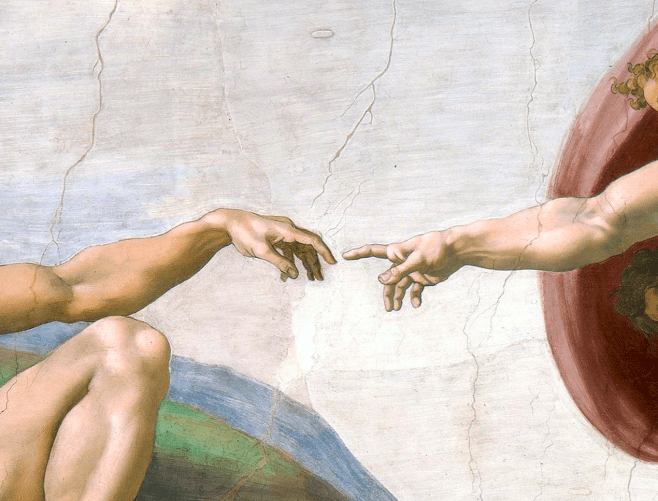
Death And The New Birth
Past, Present and Future
The close of the Middle Ages we see the signing of The Great Charter, The Black Death sweep through Europe , Another Hundred Years War ,1337–1453, and The Fall of Constantinople, 1454. Yet out of the ashes we see the bath of a new age, the Renaissance, ushering in an emphasis on human potential and achievement through Humanism, a cultural revival in the arts and the growth of the Age of Discovery, always pushing forward to the exaltation of the Individual. This era is rightly set down in the annals of history, alongside the means by which these records came to be — and the wisdom of preserving and sharing them with posterity.
In truth, what changed was naught less than all things. The power to peruse books — or, failing that, to have their contents recited by one who could — opened wide the gates of knowledge. Yet, there was another cause, oft overlooked by modern fancy, which merits your contemplation. I shall leave it with you awhile, that you may ponder its nature.
That cause — indeed, the very cornerstone of our progress — was none other than the Printing Press, that great and noble invention which hath sealed and safeguarded the wisdom of ages past.
Though oft maligned as a Dark Age, this period was in truth a contraction of time — a season of quiet strength, wherein communities took root and traditions grew firm. It afforded the peoples of that age the leisure to reflect, to forecast, to reckon the workings of nature. Verily, it was upon this foundation that the Renaissance was raised, and thus it bore its noble crown.
From that path emerged the age of the awakening mind, the refinement of all things, and the rise of new inventions — the seeds of both the industrial and technical eras [1500–1700].
From 1510 to 1879, the era of Gabriel witnessed the Reformation, Enlightenment, Revolution, Early Industry, and a new spiritual awakening. Inventions gave birth to mechanics, mass production, and automation.
From 1869 to 2248, we live under Michael, industrialization flourished; Modernity and Technology rose; and once more a spiritual awakening stirred.
Western History quickened its pace. Old ways gave way before a ceaseless tide of progress. The sharing of knowledge through books gave rise to commerce and trade; and the material world, in turn, challenged the monastic life of the Church.
Nobility and kings ascended, yet these too were destined to be contested.
What then set all this in motion? Was it the monks’ invention of the clock, to rouse them at appointed hours, which led men to wonder why the sun’s rising shifted with the seasons? Was it the sovereigns, wise and powerful, who kept granaries full and order firm? Or was it the spirit of adventure and commerce — the compass, the rudder, the lateen sail — that steered men toward distant shores? Or perchance, the Rights of Man, which once granted a small liberty, emboldened men to claim far more? We start our transition through four major events that usher in the Renaissance into Italy and over time throughout Europe.
.

.
“All the world’s a stage, And all the men and women merely players”
-William Shakespeare
.
.
.
.
.
.
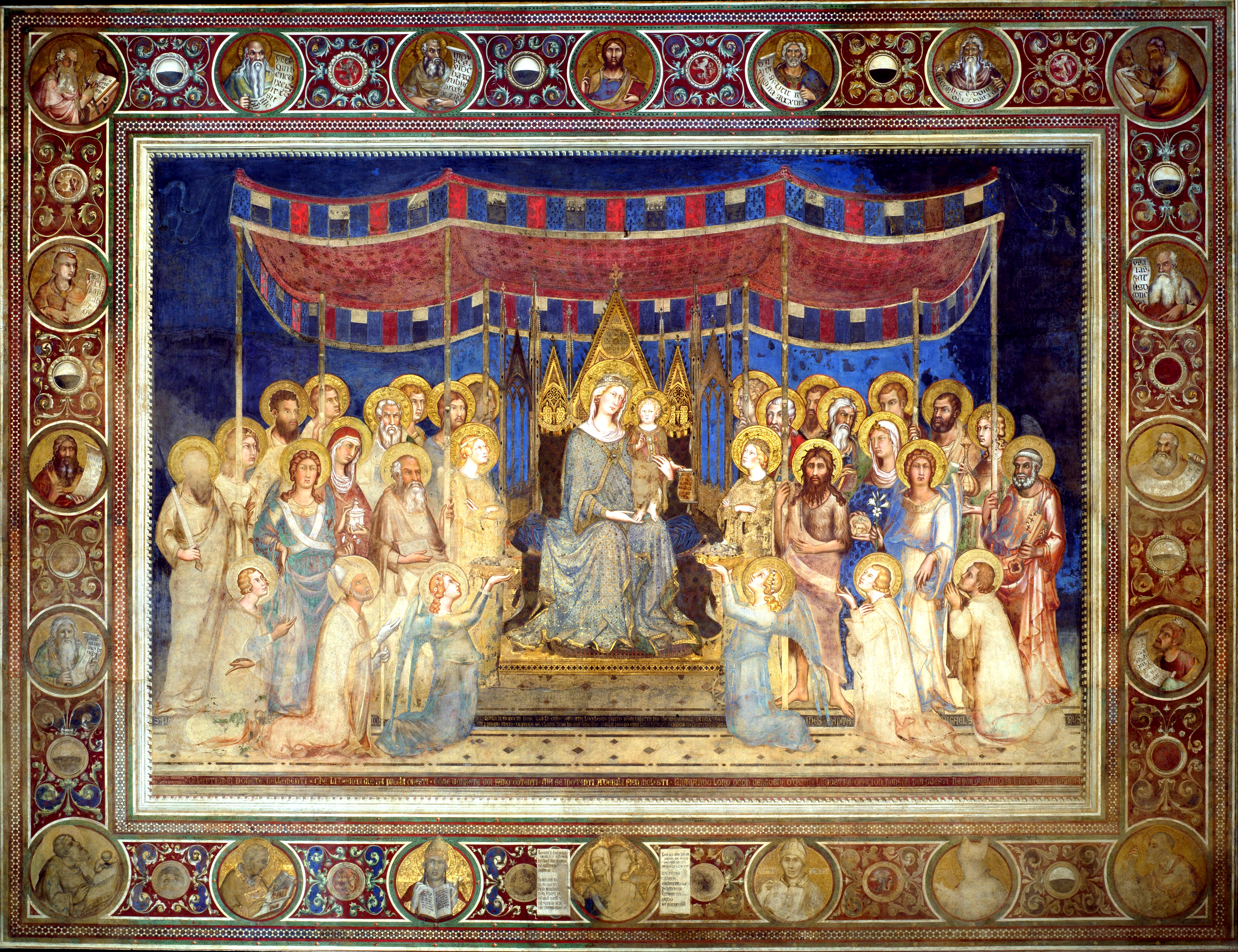
The Church, Kings, and Dynasties
From tribes to kingdoms, humanity’s journey has been arduous, marked by wars over territory and power, documented from prehistory to the Renaissance. The 1453 fall of Constantinople drove Greek scholars westward, sparking a rebirth of classical ideas. Capturing our ancestors’ mindset is challenging. We must shed 21st-century lenses to imagine their lives, not as children think, but as those in the Middle Ages or Renaissance did. Our thinking, layered with progress, differs vastly from theirs during the Reformation, Enlightenment, or even 50 years ago.
So why is knowing this history important? At its base, for your protection, we know all too well that, as George Santayana warned, “Those who do not learn history are doomed to repeat them.” It’s not just names and dates to be memorized, but the story of our people’s lives, and at its heart, the best, and the worst of them—their triumphs and failures – his story history.
Gender roles shaped their world: masculine power in governance, feminine influence in spirituality, men toiling at work, women raising the children as if it was all meant to be this way, balancing nature of duality . We measure our past to guide our future with good intentions. Leonardo da Vinci’s Vitruvian Man reflects humanity’s role in nature, drawing on Greek symmetry and beauty. The Renaissance, a “rebirth,” revived these ideas, urging us to contemplate our place in the cosmos. This period explores kingdoms and dynasties—culture, wars, language, and our Celtic connections—through key figures and events, from the Late Middle Ages to the Neoclassical era. Join us to uncover how our ancestors shape our future!
Prof. Burke’s captivating lectures bring these stories to life.
Below is a brief historical outline for each topic
1250–1400 – Late Middle Ages
1400–1500 – Early Renaissance
1500–1660 – Late Renaissance/Reformation/Refinement
1660–1750 – Neoclassical
.
—–
🇮🇹 Italy at the End of the Middle Ages (c. 1200–1350)
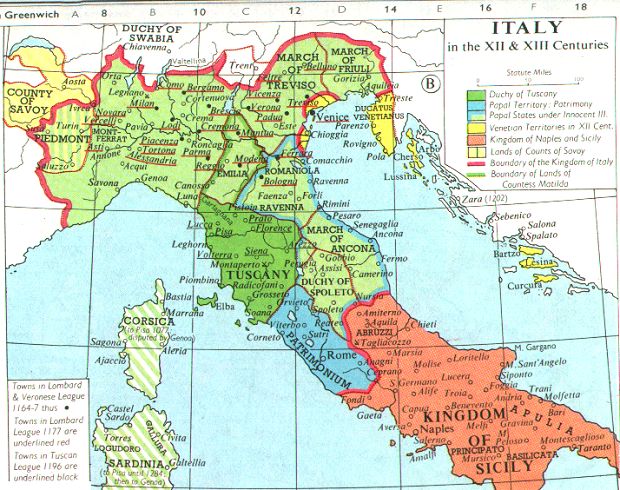
At the close of the Middle Ages, “Italy” did not yet exist as a unified nation—but rather as a fragmented peninsula, divided among rival republics, duchies, kingdoms, and ecclesiastical territories. These divisions shaped not only political life but also the birth of the Renaissance, as city-states vied for cultural dominance as fiercely as they did for military or mercantile power.
Major Powers c. 12th–13th century
🛡️
The Papal States (light blue): Stretching across the center of the peninsula, this was not merely a religious domain—it was a secular power ruled by the Pope, who held armies, levied taxes, and waged war.
The Kingdom of Naples and Sicily (red): Southern Italy and the island of Sicily formed a large feudal monarchy often controlled by foreign rulers—Normans, Angevins, and later the Spanish crown.
The Duchy of Tuscany & Northern Republics (green): Florence, Siena, Pisa, and others existed in fierce competition. Florence in particular emerged as a cultural and financial powerhouse in the 14th and 15th centuries.
The Maritime Republics – Venice and Genoa (green): Both wielded enormous naval and commercial power. Venice controlled trade routes to the East; Genoa contested influence in the western Mediterranean.
The Holy Roman Empire’s Shadow (yellow): In the north, the Emperor claimed overlordship, though in practice many cities (like Milan, Verona, and Bologna) operated independently or in loose leagues.
Italy’s disunity became its strength. Where a single monarch might have imposed cultural conformity, this patchwork of city-states produced a competitive explosion of creativity, each seeking to outshine the others on parchment, canvas, and stone. Italy is a battlefield of poets and popes, where city-states bled gold into marble and the Renaissance rose out of feuding banners. Endless fascination, Florence’s banking secrets, Venice’s shadow empire, the Papal intrigues in Rome, the Sicilian Vespers… all waiting like doors just barely ajar. At this time in Italy’s history it doesn’t just look like a boot. It walks through fire and silk.
Families Behind the Flags
Key la Familia: Medici, Sforza, Visconti, Este
From the 13th century onward, Italy’s city-states fell under the sway of ambitious dynasties. In Florence, the Medici turned banking into rule—and patronage into a cultural weapon. Milan saw the iron grip of the Visconti, followed by the equally ruthless Sforza. In Ferrara, the Este family brought poets and painters to court, while Venice, though a republic, was guided by a tight patrician class who moved like monarchs behind closed doors. These were not kings in name—but in power, they rivaled any crowned head in Europe.
⚔️ Key Tensions
Guelphs vs. Ghibellines: This rivalry—between supporters of the Pope (Guelphs) and those of the Holy Roman Emperor (Ghibellines)—divided cities, families, and even individual households.
Communes and Signorie: Many city-states began as republican communes but gradually came under the rule of powerful dynasties (like the Medici in Florence or the Sforza in Milan), leading to the emergence of princely courts.
🏛️ The Renaissance Emerges
By 1350, despite plague, warfare, and division, this fractured land was giving birth to a new era of learning, art, and individualism. These rival powers channeled their wealth into patronage, universities, architecture, and humanism.
.
.Italy –Historical Timeline (1250–1660)
In the long arc of human civilization, from tribal roots to imperial dynasties, the landscape of Europe—especially the Italian peninsula—bore witness to waves of conquest, cultural fusion, and systemic collapse. The fall of Rome in 476 AD did not mark a clean break but rather a slow erosion of infrastructure and leadership. Christianity, as it filled the void, became the new organizing force, yet it was largely uninterested in the Roman legacy of roads, aqueducts, or governance. Land fragmented, feudal obligations replaced civic unity, and a once-global empire reduced to baronies, bishoprics, and border wars.
By the Late Middle Ages (1250–1400), Italy had not yet become a country in the modern sense. It was a mosaic of fiercely independent city-states—Venice, Milan, Florence, and others—each acting as miniature nations, each with their own armies, rivalries, and ambitions. Northern Italy’s economic dominance began early. Venice, boosted by the spoils of the Fourth Crusade in 1204, emerged as a mercantile powerhouse, controlling trade routes from the Adriatic to the Levant. Florence and Milan rivaled it in cultural influence and banking innovation, but not in political unity.
While Venice consolidated its empire of commerce, Florence was giving birth to something altogether new: a cultural rebirth, a Renaissance. The seeds of this flowering were paradoxically planted by catastrophe. Between 1347 and 1351, the Black Death ravaged Europe, killing a third to half of its population. Though horrific in human cost, the plague upended the rigid feudal order. Suddenly, labor had value, wealth changed hands, and a new middle class began to emerge. Survivors inherited property and liquid capital, investing in education, trade, and enterprise. Knowledge became a commodity, and human potential—rather than divine fate—started to animate thought.
At the same time, distant winds were stirring. Marco Polo, born in Venice in 1254, had returned from China nearly a century earlier, bringing tales of wonders and mapping trade routes that would tempt generations of explorers. In Florence, Dante (1265–1321) penned The Divine Comedy, weaving spiritual philosophy and classical structure into a masterwork of vernacular literature. Petrarch (1304–1374), born in Arezzo, ignited what would be called humanism—an intellectual movement rooted in the rediscovery of ancient texts and the idea that man could shape his own destiny.
Still, the continent burned. From 1337 to 1453, England and France were locked in intermittent battle: the Hundred Years’ War. Fueled by dynastic claims, trade disputes, and feudal fealty, it ravaged towns and reshaped kingdoms. Yet even this chaos could not dim the spark of inquiry and invention beginning to glow in Italy.
Then came the fall of Constantinople in 1453. The Byzantine Empire, final guardian of ancient Greek thought, collapsed under the weight of Ottoman siege. But from that ruin came renewal. Refugees and scholars fled westward, carrying texts by Plato, Aristotle, and Galen—texts that had been lost, ignored, or corrupted in Latin translation. These works entered Italy through Florence, especially, and found patrons in powerful families eager to legitimize their rule through culture.
One family stood poised to shape this world. The Medici of Florence, wool merchants turned bankers, were quietly weaving their web of influence. In 1397, Giovanni di Bicci de’ Medici opened a branch of his family bank in Florence—a seemingly ordinary transaction, yet it would become the economic engine of the Renaissance. Behind him lay decades of instability, plague, war, and decentralization. Ahead was an explosion of art, architecture, and philosophy. He did not know it yet, but his descendants would sponsor Michelangelo, fund Brunelleschi’s dome, and rule the city like merchant princes.
And so we arrive in Florence, 1397. The air is thick with incense and ambition. Behind us lies a century of shadows and rebirth. Before us, a city poised to redefine civilization. We stand in the square, waiting for a man—not a king or a bishop, but a banker.
The future is about to begin.
Italy –Historical Timeline (1250–1660)
In the long arc of human civilization, from tribal roots to imperial dynasties, the landscape of Europe—especially the Italian peninsula—bore witness to waves of conquest, cultural fusion, and systemic collapse. The fall of Rome in 476 AD did not mark a clean break but rather a slow erosion of infrastructure and leadership. Christianity, as it filled the void, became the new organizing force, yet it was largely uninterested in the Roman legacy of roads, aqueducts, or governance. Land fragmented, feudal obligations replaced civic unity, and a once-global empire reduced to baronies, bishoprics, and border wars.
By the Late Middle Ages (1250–1400), Italy had not yet become a country in the modern sense. It was a mosaic of fiercely independent city-states—Venice, Milan, Florence, and others—each acting as miniature nations, each with their own armies, rivalries, and ambitions. Northern Italy’s economic dominance began early. Venice, boosted by the spoils of the Fourth Crusade in 1204, emerged as a mercantile powerhouse, controlling trade routes from the Adriatic to the Levant. Florence and Milan rivaled it in cultural influence and banking innovation, but not in political unity.
While Venice consolidated its empire of commerce, Florence was giving birth to something altogether new: a cultural rebirth, a Renaissance. The seeds of this flowering were paradoxically planted by catastrophe. Between 1347 and 1351, the Black Death ravaged Europe, killing a third to half of its population. Though horrific in human cost, the plague upended the rigid feudal order. Suddenly, labor had value, wealth changed hands, and a new middle class began to emerge. Survivors inherited property and liquid capital, investing in education, trade, and enterprise. Knowledge became a commodity, and human potential—rather than divine fate—started to animate thought.
At the same time, distant winds were stirring. Marco Polo, born in Venice in 1254, had returned from China nearly a century earlier, bringing tales of wonders and mapping trade routes that would tempt generations of explorers. In Florence, Dante (1265–1321) penned The Divine Comedy, weaving spiritual philosophy and classical structure into a masterwork of vernacular literature. Petrarch (1304–1374), born in Arezzo, ignited what would be called humanism—an intellectual movement rooted in the rediscovery of ancient texts and the idea that man could shape his own destiny.
Still, the continent burned. From 1337 to 1453, England and France were locked in intermittent battle: the Hundred Years’ War. Fueled by dynastic claims, trade disputes, and feudal fealty, it ravaged towns and reshaped kingdoms. Yet even this chaos could not dim the spark of inquiry and invention beginning to glow in Italy.
Then came the fall of Constantinople in 1453. The Byzantine Empire, final guardian of ancient Greek thought, collapsed under the weight of Ottoman siege. But from that ruin came renewal. Refugees and scholars fled westward, carrying texts by Plato, Aristotle, and Galen—texts that had been lost, ignored, or corrupted in Latin translation. These works entered Italy through Florence, especially, and found patrons in powerful families eager to legitimize their rule through culture.
One family stood poised to shape this world. The Medici of Florence, wool merchants turned bankers, were quietly weaving their web of influence. In 1397, Giovanni di Bicci de’ Medici opened a branch of his family bank in Florence—a seemingly ordinary transaction, yet it would become the economic engine of the Renaissance. Behind him lay decades of instability, plague, war, and decentralization. Ahead was an explosion of art, architecture, and philosophy. He did not know it yet, but his descendants would sponsor Michelangelo, fund Brunelleschi’s dome, and rule the city like merchant princes.
And so we arrive in Florence, 1397. The air is thick with incense and ambition. Behind us lies a century of shadows and rebirth. Before us, a city poised to redefine civilization. We stand in the square, waiting for a man—not a king or a bishop, but a banker.
The future is about to begin.
..
.
Renaissance Proper 1350 – 1650.
After the fall, or rather fading and blending of Rome into Christianity, 312 – 476 AD, Rome and its once conquered lands slowly fell into ruins. As the church developed, it was not interested in the upkeep of roads, bridges and infrastructure, the church disregarded land management, large agricultural farms, things simply fell apart, there was no stern leadership and outside the spiritual obligations there was no real organization.
In the late Middle Ages, a series of disasters devastated Rome and all of its past lands.
In the north there was a great famine and everywhere else, the Black Death, 1346 through 1351.
Millions died, but the technological and infrastructure that was taken care of, still in good shape and in use, was untouched by the devastation.
Ironically, the incidences of massive deaths freed up loads and capital. This allowed family members who inherited a windfall to invest and speculate in new ideas and technology. This helped the average person become skilled and more independent, thus creating a middle class. Everything expanded economically. New adventures and new ideas made life easier and more interesting.
What Sparked the Renaissance was the fall of Constantinople, in1453, thus saw the Ancient Greeks philosophers and their texts flood into Florence, this in great part help to ignite the humanism movement. Further, Byzantine scholars brought with them works full of Greek Classical Knowledge, and this is what fueled the Renaissance in Italy. From there this knowledge spread throughout all of Europe . It didn’t take long thanks to Gutenberg’s Printing Press.
.
.
2. High Middle Ages (1000–1300)
Italy –Historical Timeline (1250–1660)
In the long arc of human civilization, from tribal roots to imperial dynasties, the landscape of Europe—especially the Italian peninsula—bore witness to waves of conquest, cultural fusion, and systemic collapse. The fall of Rome in 476 AD did not mark a clean break but rather a slow erosion of infrastructure and leadership. Christianity, as it filled the void, became the new organizing force, yet it was largely uninterested in the Roman legacy of roads, aqueducts, or governance. Land fragmented, feudal obligations replaced civic unity, and a once-global empire reduced to baronies, bishoprics, and border wars.
By the Late Middle Ages (1250–1400), Italy had not yet become a country in the modern sense. It was a mosaic of fiercely independent city-states—Venice, Milan, Florence, and others—each acting as miniature nations, each with their own armies, rivalries, and ambitions. Northern Italy’s economic dominance began early. Venice, boosted by the spoils of the Fourth Crusade in 1204, emerged as a mercantile powerhouse, controlling trade routes from the Adriatic to the Levant. Florence and Milan rivaled it in cultural influence and banking innovation, but not in political unity.
While Venice consolidated its empire of commerce, Florence was giving birth to something altogether new: a cultural rebirth, a Renaissance. The seeds of this flowering were paradoxically planted by catastrophe. Between 1347 and 1351, the Black Death ravaged Europe, killing a third to half of its population. Though horrific in human cost, the plague upended the rigid feudal order. Suddenly, labor had value, wealth changed hands, and a new middle class began to emerge. Survivors inherited property and liquid capital, investing in education, trade, and enterprise. Knowledge became a commodity, and human potential—rather than divine fate—started to animate thought.
At the same time, distant winds were stirring. Marco Polo, born in Venice in 1254, had returned from China nearly a century earlier, bringing tales of wonders and mapping trade routes that would tempt generations of explorers. In Florence, Dante (1265–1321) penned The Divine Comedy, weaving spiritual philosophy and classical structure into a masterwork of vernacular literature. Petrarch (1304–1374), born in Arezzo, ignited what would be called humanism—an intellectual movement rooted in the rediscovery of ancient texts and the idea that man could shape his own destiny.
Still, the continent burned. From 1337 to 1453, England and France were locked in intermittent battle: the Hundred Years’ War. Fueled by dynastic claims, trade disputes, and feudal fealty, it ravaged towns and reshaped kingdoms. Yet even this chaos could not dim the spark of inquiry and invention beginning to glow in Italy.
Then came the fall of Constantinople in 1453. The Byzantine Empire, final guardian of ancient Greek thought, collapsed under the weight of Ottoman siege. But from that ruin came renewal. Refugees and scholars fled westward, carrying texts by Plato, Aristotle, and Galen—texts that had been lost, ignored, or corrupted in Latin translation. These works entered Italy through Florence, especially, and found patrons in powerful families eager to legitimize their rule through culture.
One family stood poised to shape this world. The Medici of Florence, wool merchants turned bankers, were quietly weaving their web of influence. In 1397, Giovanni di Bicci de’ Medici opened a branch of his family bank in Florence—a seemingly ordinary transaction, yet it would become the economic engine of the Renaissance. Behind him lay decades of instability, plague, war, and decentralization. Ahead was an explosion of art, architecture, and philosophy. He did not know it yet, but his descendants would sponsor Michelangelo, fund Brunelleschi’s dome, and rule the city like merchant princes.
And so we arrive in Florence, 1397. The air is thick with incense and ambition. Behind us lies a century of shadows and rebirth. Before us, a city poised to redefine civilization. We stand in the square, waiting for a man—not a king or a bishop, but a banker.
The future is about to begin.
..
.
Renaissance Proper 1350 – 1650.
After the fall, or rather fading and blending of Rome into Christianity, 312 – 476 AD, Rome and its once conquered lands slowly fell into ruins. As the church developed, it was not interested in the upkeep of roads, bridges and infrastructure, the church disregarded land management, large agricultural farms, things simply fell apart, there was no stern leadership and outside the spiritual obligations there was no real organization.
In the late Middle Ages, a series of disasters devastated Rome and all of its past lands.
In the north there was a great famine and everywhere else, the Black Death, 1346 through 1351.
Millions died, but the technological and infrastructure that was taken care of, still in good shape and in use, was untouched by the devastation.
Ironically, the incidences of massive deaths freed up loads and capital. This allowed family members who inherited a windfall to invest and speculate in new ideas and technology. This helped the average person become skilled and more independent, thus creating a middle class. Everything expanded economically. New adventures and new ideas made life easier and more interesting.
What Sparked the Renaissance was the fall of Constantinople, in1453, thus saw the Ancient Greeks philosophers and their texts flood into Florence, this in great part help to ignite the humanism movement. Further, Byzantine scholars brought with them works full of Greek Classical Knowledge, and this is what fueled the Renaissance in Italy. From there this knowledge spread throughout all of Europe . It didn’t take long thanks to Gutenberg’s Printing Press.
.
.
ARTS
Dante Alighieri
TITLE: Poet; Philosopher; Statesman
PRIMARY OCCUPATION: Writer and Political Thinker
FULL NAME: Durante di Alighiero degli Alighieri
BIRTH: 1265 – Florence, Italy
DEATH: 1321 – Ravenna, Italy
PARENTS: Alighiero di Bellincione and Bella degli Abati
SIBLINGS: One half-brother, Francesco
EDUCATION: Studied trivium and quadrivium; influenced by Brunetto Latini
PHILOSOPHY/RELIGION: Roman Catholic with Thomist influences
ACCOMPLISHMENTS: Authored Divine Comedy; shaped Italian literary language; bridged medieval and Renaissance thought
AFFILIATIONS: White Guelphs (Florentine political faction)
YEARS OF RULE OR VOCATION: Exiled 1302–1321; major work composed in exile
SPOUSES: Gemma Donati
CHILDREN IN WEDLOCK: Pietro, Jacopo, Antonia, others
OUT OF WEDLOCK: None known
NAME OF SUCCESSOR: Not applicable
WORKS/BOOKS: Divine Comedy, La Vita Nuova, De Monarchia, Convivio
SYMBOL/EMBLEM: Laurel wreath; red robe; aquiline nose
CONTEMPORARIES/RIVALS: Petrarch (later), Guido Cavalcanti, Pope Boniface VIII
LEGACY/INFLUENCE: Father of the Italian language; influence on world literature and theology
MEMORABLE QUOTE: “Abandon all hope, ye who enter here.”
Petrarch
TITLE: Father of Humanism
PRIMARY OCCUPATION: Poet; Scholar; Cleric
FULL NAME: Francesco Petrarca
BIRTH: July 20, 1304 – Arezzo, Republic of Florence
DEATH: July 19, 1374 – Arquà (now Arquà Petrarca), Italy
PARENTS: Ser Petracco (father), Eletta Canigiani (mother)
SIBLINGS: Gherardo (brother)
EDUCATION: Law studies at Montpellier and Bologna; self-taught in Latin classics
PHILOSOPHY/RELIGION: Christian Humanism
ACCOMPLISHMENTS: Rediscovered Cicero’s letters; helped ignite the Renaissance through humanist ideals; refined the sonnet form
AFFILIATIONS: Avignon papal court; Colle di Val d’Elsa circle
YEARS OF VOCATION: Active from 1327 to death
SPOUSES: None
CHILDREN IN WEDLOCK: None
OUT OF WEDLOCK: Giovanni, Francesca
NAME OF SUCCESSOR: (Ideological) Giovanni Boccaccio
WORKS/BOOKS: Canzoniere, Secretum, Africa, Letters to Classical Authors, De Vita Solitaria
SYMBOL/EMBLEM: The laurel wreath
CONTEMPORARIES/RIVALS: Boccaccio, Cola di Rienzo
LEGACY/INFLUENCE: Established early Renaissance humanist ideals; inspired later poets across Europe
MEMORABLE QUOTE: “I am a citizen of no place, everywhere I am a stranger.”
Giotto
TITLE: Master Painter of Florence
PRIMARY OCCUPATION: Painter; Architect
FULL NAME: Giotto di Bondone
BIRTH: c. 1267 – near Florence (possibly Vespignano)
DEATH: January 8, 1337 – Florence, Italy
PARENTS: Bondone (father), mother unknown
SIBLINGS: Not known
EDUCATION: Apprentice to Cimabue
PHILOSOPHY/RELIGION: Catholic; religious themes dominant in art
ACCOMPLISHMENTS: Introduced naturalism and emotional realism to Western art; painted Scrovegni (Arena) Chapel frescoes
AFFILIATIONS: Florence Cathedral; papal commissions in Rome
YEARS OF VOCATION: Active c. 1290–1337
SPOUSES: Ricevuta di Lapo del Pela (documented)
CHILDREN IN WEDLOCK: At least four (including Francesco, painter)
OUT OF WEDLOCK: None known
NAME OF SUCCESSOR: (Ideological) Masaccio, Michelangelo (centuries later)
WORKS/BOOKS: Scrovegni Chapel frescoes, Bardi and Peruzzi chapels, Bell tower of Florence Cathedral
SYMBOL/EMBLEM: Bell tower (Campanile)
CONTEMPORARIES/RIVALS: Dante Alighieri, Cimabue
LEGACY/INFLUENCE: Forefather of Renaissance painting; praised by Dante and Vasari
MEMORABLE QUOTE: (About him, from Dante’s Purgatorio): “Giotto has eclipsed the fame of Cimabue.”
.
III Late Middle Ages (1300–1400)
I. 1250–1450 – Late Middle Ages
This was a time of feudalism, the Black Death, the Hundred Years’ War. Power came from land control, military strength, and papal influence. The Holy Roman Empire was dominiate, and France was soon to be its equal. England was on the rise
NOWN AS: Casanova Family
TITLE: Venetian Nobility
PRIMARY OCCUPATION: Noble Family; Merchants and Politicians
FULL NAME: House of Casanova
BIRTH: Established in Venice by at least the 13th century
DEATH: Still extant in various branches
PARENTS: N/A (family lineage)
SIBLINGS: Multiple branches and members
EDUCATION: Typical noble education in Venice (law, trade, politics)
PHILOSOPHY/RELIGION: Roman Catholicism
ACCOMPLISHMENTS: Influential in Venetian politics and commerce; contributed to the Republic’s governance and trade dominance
AFFILIATIONS: Venetian Republic aristocracKy
YEARS OF RULE OR VOCATION: 13th century onward, prominence fluctuated over centuries
SPOUSES: Various alliances through marriages within Venetian nobility
CHILDREN IN WEDLOCK: Numerous descendants
OUT OF WEDLOCK: Unknown
NAME OF SUCCESSOR: N/A (family continued through branches)
WORKS/BOOKS: Not applicable (family)
SYMBOL/EMBLEM: Traditional Venetian noble heraldry (varied by branch)
CONTEMPORARIES/RIVALS: Other Venetian noble families such as the Contarini, Dandolo
LEGACY/INFLUENCE: Part of the Venetian aristocratic class that maintained the Republic’s independence and maritime power
MEMORABLE QUOTE: “A noble house in service to Venice’s glory.”
KNOWN AS: Visconti Family
TITLE: Lords and Dukes of Milan
PRIMARY OCCUPATION: Rulers, Military Leaders, Patrons of the Arts
FULL NAME: House of Visconti
BIRTH: Established in Lombardy, Italy, in the late 13th century
DEATH: Extinct in male line by the 15th century, legacy continued through Sforza
PARENTS: N/A (family lineage)
SIBLINGS: Various branches
EDUCATION: Noble education including military training and governance
PHILOSOPHY/RELIGION: Roman Catholicism
ACCOMPLISHMENTS: Controlled Milan as Lords and Dukes; expanded territory; fostered Milan as a Renaissance cultural center; built castles and patronized artists
AFFILIATIONS: Milanese state, Holy Roman Empire
YEARS OF RULE OR VOCATION: Late 13th century to mid-15th century
SPOUSES: Various noble marriages to secure alliances
CHILDREN IN WEDLOCK: Numerous descendants, including Gian Galeazzo Visconti
OUT OF WEDLOCK: Some illegitimate offspring documented
NAME OF SUCCESSOR: House of Sforza (after Visconti male line ended)
WORKS/BOOKS: None written by family; known for patronage
SYMBOL/EMBLEM: Visconti serpent (Biscione) devouring a human figure
CONTEMPORARIES/RIVALS: Other Italian noble houses, including the Sforza and Gonzaga
LEGACY/INFLUENCE: Major ruling family shaping Milanese politics and Renaissance culture; emblem still used in Milan’s coat of arms
MEMORABLE QUOTE: “Power held with wisdom, the serpent guards the city.”
”
KNOWN AS: Cosimo de’ Medici
TITLE: De facto ruler of Florence
PRIMARY OCCUPATION: Banker, Statesman, Patron of the Arts
FULL NAME: Cosimo di Giovanni de’ Medici
BIRTH: 27 September 1389 – Florence, Italy
DEATH: 1 August 1464 – Florence, Italy
PARENTS: Giovanni di Bicci de’ Medici (father), Piccarda Bueri (mother)
SIBLINGS: Lorenzo de’ Medici (father of Piero the Gouty), Benedetto, and others
EDUCATION: Classical education typical of Italian nobility
PHILOSOPHY/RELIGION: Roman Catholicism; supporter of humanism
ACCOMPLISHMENTS: Established Medici political dominance in Florence; patronized artists like Donatello and Fra Angelico; founded the Medici Library; laid groundwork for Renaissance culture
AFFILIATIONS: Medici Bank, Florence Republic political councils
YEARS OF RULE OR VOCATION: 1434–1464 (influential through behind-the-scenes political power)
SPOUSES: Contessina de’ Bardi
CHILDREN IN WEDLOCK: Piero di Cosimo de’ Medici
OUT OF WEDLOCK: None known
NAME OF SUCCESSOR: Piero di Cosimo de’ Medici
WORKS/BOOKS: None written by him; known for patronage
SYMBOL/EMBLEM: Medici coat of arms (balls/dots on shield)
CONTEMPORARIES/RIVALS: Niccolò da Uzzano (Florentine statesman), rival families such as Albizzi
LEGACY/INFLUENCE: Founder of Medici political dynasty; helped Florence become the cradle of the Renaissance
MEMORABLE QUOTE: “He who has the Medici behind him
is invincible.”
KNOWN AS: Giovanni Boccaccio
TITLE: Writer, Poet
PRIMARY OCCUPATION: Author and Humanist
FULL NAME: Giovanni Boccaccio
BIRTH: 1313 – Certaldo, Italy
DEATH: 1375 – Certaldo, Italy
PARENTS: Boccaccino di Chellino (father), mother unknown
SIBLINGS: Unknown
EDUCATION: Studied law and literature, largely self-educated in humanities
PHILOSOPHY/RELIGION: Roman Catholic, early humanist tendencies
ACCOMPLISHMENTS: Author of The Decameron; pioneer of humanist literature; influenced Renaissance humanism and literature
AFFILIATIONS: Florentine literary circles; patronized by the Medici family
YEARS OF RULE OR VOCATION: Active c. 1330–1375
SPOUSES: None recorded
CHILDREN IN WEDLOCK: None recorded
OUT OF WEDLOCK: None recorded
NAME OF SUCCESSOR: None (literary legacy continued)
WORKS/BOOKS: The Decameron, On Famous Women, Genealogy of the Pagan Gods
SYMBOL/EMBLEM: None known
CONTEMPORARIES/RIVALS: Petrarch, Dante Alighieri (posthumous influence)
LEGACY/INFLUENCE: Father of humanist prose narrative; influenced European literature and storytelling
MEMORABLE QUOTE: “Beauty is the bait which with delight allures man to enlarge his kind.”
KNOWN AS: Coluccio Salutati
TITLE: Chancellor of Florence; Humanist Scholar
PRIMARY OCCUPATION: Politician, Humanist Writer
FULL NAME: Coluccio Salutati
BIRTH: 1331 – Stazzona, near Pisa, Italy
DEATH: 1406 – Florence, Italy
PARENTS: Unknown
SIBLINGS: Unknown
EDUCATION: Classical studies and rhetoric
PHILOSOPHY/RELIGION: Roman Catholic, humanist philosophy
ACCOMPLISHMENTS: Chancellor of Florence; revitalized humanist culture and education; promoted classical Latin literature and civic humanism
AFFILIATIONS: Florentine government and humanist circle
YEARS OF RULE OR VOCATION: Chancellor 1375–1406
SPOUSES: Unknown
CHILDREN IN WEDLOCK: Unknown
OUT OF WEDLOCK: Unknown
NAME OF SUCCESSOR: Leonardo Bruni
WORKS/BOOKS: Letters and speeches promoting humanism
SYMBOL/EMBLEM: None known
CONTEMPORARIES/RIVALS: Petrarch, Leonardo Bruni
LEGACY/INFLUENCE: Key figure in early Renaissance humanism; inspired civic involvement and literary revival
MEMORABLE QUOTE: “True liberty is the power to do what is right.”
KNOWN AS: Francesco Sforza
TITLE: Duke of Milan
PRIMARY OCCUPATION: Condottiero (mercenary leader), Ruler
FULL NAME: Francesco Sforza
BIRTH: 1401 – San Miniato, Italy
DEATH: 1466 – Milan, Italy
PARENTS: Muzio Attendolo Sforza (father), Maria Marzani (mother)
SIBLINGS: Unknown
EDUCATION: Military training; political and strategic education
PHILOSOPHY/RELIGION: Roman Catholicism
ACCOMPLISHMENTS: Founded the Sforza dynasty in Milan; consolidated Milanese power; patron of Renaissance arts and architecture
AFFILIATIONS: Duchy of Milan; Holy Roman Empire
YEARS OF RULE OR VOCATION: Duke of Milan 1450–1466
SPOUSES: Bianca Maria Visconti
CHILDREN IN WEDLOCK: Galeazzo Maria Sforza and others
OUT OF WEDLOCK: Several illegitimate children
NAME OF SUCCESSOR: Galeazzo Maria Sforza (son)
WORKS/BOOKS: None known
SYMBOL/EMBLEM: Sforza family coat of arms (griffin and serpents)
CONTEMPORARIES/RIVALS: Cosimo de’ Medici, Ludovico III Gonzaga
LEGACY/INFLUENCE: Established a long-lasting Milanese dynasty; strengthened Milan as a Renaissance power
MEMORABLE QUOTE: “Power is not given, it is taken.”
.
4. Early Renaissance (1400–1564)
KNOWN AS: Cosimo de’ Medici
TITLE: De facto ruler of Florence; Patron of the Arts
PRIMARY OCCUPATION: Banker, Statesman, Patron
FULL NAME: Cosimo di Giovanni de’ Medici
BIRTH: 1389 – Florence, Italy
DEATH: 1464 – Florence, Italy
PARENTS: Giovanni di Bicci de’ Medici (father), Piccarda Bueri (mother)
SIBLINGS: Lorenzo de’ Medici (father of Lorenzo the Magnificent), others
EDUCATION: Humanist education typical of wealthy Florentine families
PHILOSOPHY/RELIGION: Roman Catholic; supporter of humanism and the arts
ACCOMPLISHMENTS: Founded Medici political dominance in Florence; patronized artists like Donatello and Fra Angelico; expanded Medici banking empire
AFFILIATIONS: Medici Bank, Florentine Republic, humanist circles
YEARS OF RULE OR VOCATION: c. 1434–1464 (de facto ruler)
SPOUSES: Contessina de’ Bardi
CHILDREN IN WEDLOCK: Piero di Cosimo de’ Medici
OUT OF WEDLOCK: None known
NAME OF SUCCESSOR: Piero di Cosimo de’ Medici
WORKS/BOOKS: None authored
SYMBOL/EMBLEM: Medici family coat of arms (red balls/“palle” on a gold shield)
CONTEMPORARIES/RIVALS: Filippo Brunelleschi, Niccolò Machiavelli (later), rival families such as Albizzi
LEGACY/INFLUENCE: Established the foundation for Florence’s Renaissance cultural flowering and political dominance
MEMORABLE QUOTE: “He who seeks glory in the life of others earns it himself.”
KNOWN AS: Marsilio Ficino
TITLE: Renaissance Philosopher and Humanist; Priest; Translator of Plato
PRIMARY OCCUPATION: Philosopher, Theologian, Scholar, Cleric
FULL NAME: Marsilio Ficino
BIRTH: October 19, 1433 – Figline Valdarno, Republic of Florence
DEATH: October 1, 1499 – Careggi, near Florence
PARENTS: Leonardo di Buonaccorso Ficino (father), Alessandra de’ Bencini (mother)
SIBLINGS: At least one brother, Giovanni
EDUCATION: Studied medicine and philosophy at the University of Florence and University of Padua; extensive classical training in Latin and Greek
PHILOSOPHY/RELIGION: Neoplatonism; Christian Platonism; strong influence from Plato and Plotinus; deeply committed to integrating Platonic philosophy with Christian theology
ACCOMPLISHMENTS: Founder and leading figure of the Florentine Platonic Academy; first to translate all of Plato’s works into Latin, making them widely accessible; wrote influential treatises on philosophy, astrology, and the soul; key intellectual figure in the revival of Platonic thought during the Renaissance
AFFILIATIONS: Supported and sponsored by the Medici family, especially Cosimo de’ Medici; member and leader of the Florentine Platonic Academy
YEARS OF RULE OR VOCATION: Active primarily mid to late 15th century (c. 1450–1499)
SPOUSES: None (ordained priest)
CHILDREN IN WEDLOCK: None
OUT OF WEDLOCK: None
NAME OF SUCCESSOR: Intellectual successors include later Neoplatonists and Renaissance humanists influenced by his translations and teachings
WORKS/BOOKS: Latin translations of Plato’s complete works; Theologia Platonica; On the Immortality of the Soul; various letters and commentaries on philosophy and medicine
SYMBOL/EMBLEM: Often symbolized by the serpent-entwined staff of Hermes (caduceus), representing wisdom and communication
CONTEMPORARIES/RIVALS: Contemporaries included Giovanni Pico della Mirandola, Lorenzo de’ Medici, and Poliziano; rivalries were mostly intellectual debates on the interpretation of Platonism and Christian theology
LEGACY/INFLUENCE: Central to the Renaissance revival of classical philosophy, Ficino’s work laid the foundation for the spread of humanism and the blending of Christian and classical thought; influenced countless scholars, artists, and thinkers including Pico della Mirandola and later European philosophers
MEMORABLE QUOTE: “The soul is nourished by truth as the body is by food.”
KNOWN AS: Lorenzo de’ Medici (Lorenzo the Magnificent)
TITLE: Florentine Statesman and Patron
PRIMARY OCCUPATION: Politician, Patron of Arts and Letters
FULL NAME: Lorenzo di Piero de’ Medici
BIRTH: 1449 – Florence, Italy
DEATH: 1492 – Florence, Italy
PARENTS: Piero di Cosimo de’ Medici (father), Lucrezia Tornabuoni (mother)
SIBLINGS: Giuliano de’ Medici (brother)
EDUCATION: Classical humanist education, tutored by Angelo Poliziano
PHILOSOPHY/RELIGION: Roman Catholic; Renaissance humanist ideals
ACCOMPLISHMENTS: Consolidated Medici political power; patronized artists including Botticelli, Michelangelo, and Leonardo da Vinci; supported humanist scholars and poets
AFFILIATIONS: Medici family, Florentine Republic, Platonic Academy
YEARS OF RULE OR VOCATION: 1469–1492 (de facto ruler)
SPOUSES: Clarice Orsini
CHILDREN IN WEDLOCK: Piero di Lorenzo de’ Medici and others
OUT OF WEDLOCK: None recorded
NAME OF SUCCESSOR: Piero di Lorenzo de’ Medici
WORKS/BOOKS: None authored
SYMBOL/EMBLEM: Medici family coat of arms
CONTEMPORARIES/RIVALS: Savonarola (later rival), Pope Sixtus IV, Charles VIII of France
LEGACY/INFLUENCE: Greatest patron of the Florentine Renaissance; enhanced Florence’s cultural and political prestige
MEMORABLE QUOTE: “It is better to be feared than loved, if you cannot be both.” (Attributed, reflecting Renaissance political thought)
KNOWN AS: Filippo Brunelleschi
TITLE: Architect and Engineer
PRIMARY OCCUPATION: Architect, Engineer, Inventor
FULL NAME: Filippo Brunelleschi
BIRTH: 1377 – Florence, Italy
DEATH: 1446 – Florence, Italy
PARENTS: Giuliano di Lippo di Medici (father), Lisa di Giovanni Filippo de’ Giuli
SIBLINGS: Unknown
EDUCATION: Studied goldsmithing and sculpture; self-taught in architecture and engineering
PHILOSOPHY/RELIGION: Roman Catholic; Renaissance humanist influences
ACCOMPLISHMENTS: Engineered the dome of the Florence Cathedral (Duomo); pioneer of Renaissance architecture and perspective; innovated linear perspective in art
AFFILIATIONS: Florentine guilds; patronized by the Medici family
YEARS OF RULE OR VOCATION: Active c. 1400–1446
SPOUSES: None recorded
CHILDREN IN WEDLOCK: None recorded
OUT OF WEDLOCK: None recorded
NAME OF SUCCESSOR: None known
WORKS/BOOKS: Architectural designs and treatises (some lost)
SYMBOL/EMBLEM: None known
CONTEMPORARIES/RIVALS: Lorenzo Ghiberti, Donatello
LEGACY/INFLUENCE: Revolutionized Renaissance architecture; his dome remains a masterpiece and symbol of Florence
MEMORABLE QUOTE: “They who can give up essential liberty to obtain a little temporary safety deserve neither liberty nor safety.” (Attributed)
KNOWN AS: Leonardo da Vinci
TITLE: Artist, Inventor, Polymath
PRIMARY OCCUPATION: Painter, Sculptor, Engineer, Scientist
FULL NAME: Leonardo di ser Piero da Vinci
BIRTH: 1452 – Vinci, Republic of Florence
DEATH: 1519 – Amboise, Kingdom of France
PARENTS: Piero da Vinci (father), Caterina (mother)
SIBLINGS: Several half-siblings
EDUCATION: Informal education; apprenticed in Verrocchio’s workshop
PHILOSOPHY/RELIGION: Christian; deeply curious about nature and human anatomy
ACCOMPLISHMENTS: Painted Mona Lisa and The Last Supper; advanced studies in anatomy, engineering, and flight; numerous inventions and notebooks
AFFILIATIONS: Various patrons including the Medici family and French royalty
YEARS OF RULE OR VOCATION: Active 1469–1519
SPOUSES: None recorded
CHILDREN IN WEDLOCK: None recorded
OUT OF WEDLOCK: None recorded
NAME OF SUCCESSOR: None known
WORKS/BOOKS: Extensive notebooks on art, science, and engineering
SYMBOL/EMBLEM: None known
CONTEMPORARIES/RIVALS: Michelangelo, Raphael, Botticelli
LEGACY/INFLUENCE: Icon of the Renaissance; shaped modern art, science, and engineering concepts
MEMORABLE QUOTE: “Simplicity is the ultimate sophistication.”
KNOWN AS: Michelangelo Buonarroti
TITLE: Sculptor, Painter, Architect, Poet
PRIMARY OCCUPATION: Artist
FULL NAME: Michelangelo di Lodovico Buonarroti Simoni
BIRTH: 1475 – Caprese, Republic of Florence
DEATH: 1564 – Rome, Papal States
PARENTS: Lodovico Buonarroti (father), Francesca Neri (mother)
SIBLINGS: Several
EDUCATION: Studied classical sculpture and painting in Florence
PHILOSOPHY/RELIGION: Roman Catholic; deeply spiritual, with humanist influences
ACCOMPLISHMENTS: Sculpted David and Pietà; painted the Sistine Chapel ceiling; architect of St. Peter’s Basilica dome
AFFILIATIONS: Medici family, Popes Julius II and Leo X
YEARS OF RULE OR VOCATION: Active 1490–1564
SPOUSES: None recorded
CHILDREN IN WEDLOCK: None recorded
OUT OF WEDLOCK: None recorded
NAME OF SUCCESSOR: None known
WORKS/BOOKS: Poems and drawings
SYMBOL/EMBLEM: None known
CONTEMPORARIES/RIVALS: Leonardo da Vinci, Raphael, Donatello
LEGACY/INFLUENCE: Master of Renaissance art; influenced Western sculpture and painting profoundly
MEMORABLE QUOTE: “The greatest danger for most of us is not that our aim is too high and we miss it, but that it is too low and we reach it.”
KNOWN AS: Niccolò Machiavelli
TITLE: Political Thinker, Diplomat, Historian
PRIMARY OCCUPATION: Philosopher, Writer, Politician
FULL NAME: Niccolò di Bernardo dei Machiavelli
BIRTH: 1469 – Florence, Republic of Florence
DEATH: 1527 – Florence, Republic of Florence
PARENTS: Bernardo di Niccolò Machiavelli (father), Bartolommea di Stefano Nelli (mother)
SIBLINGS: Unknown
EDUCATION: Humanist education typical of Florentine elites
PHILOSOPHY/RELIGION: Renaissance humanism; secular political realism
ACCOMPLISHMENTS: Author of The Prince; key figure in political philosophy and Renaissance politics; diplomat for Florence
AFFILIATIONS: Florentine Republic, Medici family (later)
YEARS OF RULE OR VOCATION: Active c. 1498–1527
SPOUSES: Marietta Corsini
CHILDREN IN WEDLOCK: Several
OUT OF WEDLOCK: None recorded
NAME OF SUCCESSOR: N/A
WORKS/BOOKS: The Prince, Discourses on Livy, The Art of War
SYMBOL/EMBLEM: None known
CONTEMPORARIES/RIVALS: Cesare Borgia, Lorenzo de’ Medici, Pope Julius II
LEGACY/INFLUENCE: Founder of modern political science; ideas continue to influence political thought
MEMORABLE QUOTE: “The ends justify the means.”
KNOWN AS: Girolamo Savonarola
TITLE: Dominican Friar, Preacher, Religious Reformer
PRIMARY OCCUPATION: Clergyman, Prophet
FULL NAME: Girolamo Savonarola
BIRTH: 1452 – Ferrara, Italy
DEATH: 1498 – Florence, Italy (executed)
PARENTS: Unknown
SIBLINGS: Unknown
EDUCATION: Dominican theological training
PHILOSOPHY/RELIGION: Catholicism, ascetic reformist ideology
ACCOMPLISHMENTS: Led religious reform movement in Florence; denounced corruption; famous for “Bonfire of the Vanities”
AFFILIATIONS: Dominican Order, Florentine Republic (briefly)
YEARS OF RULE OR VOCATION: Active 1476–1498
SPOUSES: None
CHILDREN IN WEDLOCK: None
OUT OF WEDLOCK: None
NAME OF SUCCESSOR: None
WORKS/BOOKS: Sermons and letters
SYMBOL/EMBLEM: Dominican Cross
CONTEMPORARIES/RIVALS: Lorenzo de’ Medici, Pope Alexander VI, Florentine oligarchs
LEGACY/INFLUENCE: Symbol of religious zeal and political upheaval; precursor to Counter-Reformation
MEMORABLE QUOTE: “The world is a great book, of which they who never stir from home read only a page.”
KNOWN AS: Ludovico Sforza
TITLE: Duke of Milan
PRIMARY OCCUPATION: Nobleman, Military Leader, Patron of the Arts
FULL NAME: Ludovico Maria Sforza
BIRTH: 1452 – Vigevano, Italy
DEATH: 1508 – Loches, France (imprisoned)
PARENTS: Francesco I Sforza (father), Bianca Maria Visconti (mother)
SIBLINGS: Multiple, including Ascanio and Trivulzio Sforza
EDUCATION: Noble education typical of Italian aristocracy
PHILOSOPHY/RELIGION: Roman Catholicism
ACCOMPLISHMENTS: Ruled Milan (1494–1500); patronized Leonardo da Vinci and other artists; commissioned major architectural projects
AFFILIATIONS: House of Sforza, Duchy of Milan
YEARS OF RULE OR VOCATION: 1494–1500
SPOUSES: Beatrice d’Este
CHILDREN IN WEDLOCK: Several
OUT OF WEDLOCK: None known
NAME OF SUCCESSOR: Massimiliano Sforza (son)
WORKS/BOOKS: None known
SYMBOL/EMBLEM: Sforza Coat of Arms
CONTEMPORARIES/RIVALS: Charles VIII of France, Cesare Borgia, Ludovico’s political rivals in Milan
LEGACY/INFLUENCE: Influential Renaissance patron; his reign marked a cultural flowering in Milan
MEMORABLE QUOTE: “He who does not risk, does not win.”
KNOWN AS: Cesare Borgia
TITLE: Duke of Valentinois, Military Leader, Politician
PRIMARY OCCUPATION: Condottiero, Statesman
FULL NAME: Cesare Borgia
BIRTH: 1475 – Subiaco, Italy
DEATH: 1507 – Viana, Navarre (wounded in battle)
PARENTS: Rodrigo Borgia (Pope Alexander VI) (father), Vannozza dei Cattanei (mother)
SIBLINGS: Lucrezia Borgia, Giovanni Borgia
EDUCATION: Military and political training
PHILOSOPHY/RELIGION: Roman Catholicism, pragmatic politics
ACCOMPLISHMENTS: Expanded papal territories; military campaigns in Romagna; inspiration for Machiavelli’s The Prince
AFFILIATIONS: Papal States, House of Borgia
YEARS OF RULE OR VOCATION: c. 1498–1507
SPOUSES: Charlotte of Albret
CHILDREN IN WEDLOCK: None known
OUT OF WEDLOCK: Several alleged
NAME OF SUCCESSOR: None known
WORKS/BOOKS: None known
SYMBOL/EMBLEM: Borgia family coat of arms (dragon)
CONTEMPORARIES/RIVALS: Ludovico Sforza, Niccolò Machiavelli, Pope Julius II
LEGACY/INFLUENCE: Notorious for ruthless politics; model for political realism; symbol of Renaissance intrigue
MEMORABLE QUOTE: “Fortune is the arbiter of half the things we do, but she still leaves the other half to us.”
KNOWN AS: Giovanni Pico della Mirandola
TITLE: Philosopher, Humanist
PRIMARY OCCUPATION: Scholar, Writer
FULL NAME: Giovanni Pico della Mirandola
BIRTH: 1463 – Mirandola, Italy
DEATH: 1494 – Florence, Italy
PARENTS: Gianfrancesco I Pico (father), Giulia Boiardo (mother)
SIBLINGS: Unknown
EDUCATION: Studied at University of Bologna and University of Ferrara
PHILOSOPHY/RELIGION: Renaissance Humanism, Christian Kabbalah
ACCOMPLISHMENTS: Authored Oration on the Dignity of Man; sought to reconcile philosophy, theology, and mysticism
AFFILIATIONS: Italian Renaissance Humanists
YEARS OF RULE OR VOCATION: Active 1480s–1494
SPOUSES: None recorded
CHILDREN IN WEDLOCK: None recorded
OUT OF WEDLOCK: None recorded
NAME OF SUCCESSOR: N/A
WORKS/BOOKS: Oration on the Dignity of Man, 900 Theses
SYMBOL/EMBLEM: Pico family coat of arms
CONTEMPORARIES/RIVALS: Marsilio Ficino, Girolamo Savonarola
LEGACY/INFLUENCE: Called the “Father of Renaissance Humanism”; influenced philosophy, theology, and the arts
MEMORABLE QUOTE: “To him it is granted to have whatever he chooses, to be whatever he wills.”
KNOWN AS: Luca Pacioli
TITLE: Mathematician, Father of Accounting
PRIMARY OCCUPATION: Mathematician, Franciscan Friar
FULL NAME: Luca Pacioli
BIRTH: c. 1447 – Sansepolcro, Italy
DEATH: c. 1517 – possibly Rome or Venice, Italy
PARENTS: Unknown
SIBLINGS: Unknown
EDUCATION: Studied mathematics and theology
PHILOSOPHY/RELIGION: Catholicism
ACCOMPLISHMENTS: Authored Summa de Arithmetica, introducing double-entry bookkeeping
AFFILIATIONS: Franciscan Order, Renaissance scholars
YEARS OF RULE OR VOCATION: Active c. 1470–1517
SPOUSES: None (celibate friar)
CHILDREN IN WEDLOCK: None
OUT OF WEDLOCK: None
NAME OF SUCCESSOR: N/A
WORKS/BOOKS: Summa de Arithmetica, Divina Proportione
SYMBOL/EMBLEM: Franciscan habit and symbol
CONTEMPORARIES/RIVALS: Leonardo da Vinci (collaborator), Piero della Francesca
LEGACY/INFLUENCE: Father of modern accounting; influenced mathematics and art theory
MEMORABLE QUOTE: “The language of business is accounting.”
KNOWN AS: Niccolò da Conti
TITLE: Explorer and Merchant
PRIMARY OCCUPATION: Merchant, Traveler
FULL NAME: Niccolò da Conti
BIRTH: c. 1395 – Venice, Italy
DEATH: c. 1469
PARENTS: Unknown
SIBLINGS: Unknown
EDUCATION: Unknown
PHILOSOPHY/RELIGION: Roman Catholicism
ACCOMPLISHMENTS: Extensive travels through Asia; inspired European exploration
AFFILIATIONS: Venetian merchant class
YEARS OF RULE OR VOCATION: Active early 15th century
SPOUSES: Unknown
CHILDREN IN WEDLOCK: Unknown
OUT OF WEDLOCK: Unknown
NAME OF SUCCESSOR: N/A
WORKS/BOOKS: Accounts of travels recorded by others
SYMBOL/EMBLEM: Venetian merchant insignia
CONTEMPORARIES/RIVALS: Marco Polo, Ibn Battuta (comparative explorers)
LEGACY/INFLUENCE: Provided knowledge that helped shape Renaissance geography and exploration
MEMORABLE QUOTE: “The world is wide, and I have only just begun to see it.”
KNOWN AS: Raphael
TITLE: Painter and Architect of the High Renaissance
PRIMARY OCCUPATION: Artist, Architect
FULL NAME: Raffaello Sanzio da Urbino
BIRTH: 1483 – Urbino, Italy
DEATH: 1520 – Rome, Italy
PARENTS: Giovanni Santi (father), Magia di Battista Ciarla (mother)
SIBLINGS: Giovanni Santi Jr. (brother)
EDUCATION: Trained under Pietro Perugino; self-taught through study of classical art
PHILOSOPHY/RELIGION: Devout Catholic; influenced by Humanism
ACCOMPLISHMENTS: Masterpieces including The School of Athens, numerous Madonna paintings, architectural work on St. Peter’s Basilica
AFFILIATIONS: Papal commissions, Renaissance art circles
YEARS OF RULE OR VOCATION: Active c. 1500–1520
SPOUSES: None (died young)
CHILDREN IN WEDLOCK: None
OUT OF WEDLOCK: None
NAME OF SUCCESSOR: N/A (influence passed on to later Renaissance artists)
WORKS/BOOKS: Various frescoes and paintings; architectural designs
SYMBOL/EMBLEM: The laurel wreath and the Renaissance palette
CONTEMPORARIES/RIVALS: Michelangelo, Leonardo da Vinci, Bramante
LEGACY/INFLUENCE: One of the trinity of great Renaissance painters; deeply influenced Western art and architecture
MEMORABLE QUOTE: “The best painter is the one who can best imitate nature.”
KNOWN AS: Botticelli
TITLE: Painter of the Early Renaissance
PRIMARY OCCUPATION: Artist, Painter
FULL NAME: Alessandro di Mariano di Vanni Filipepi
BIRTH: c. 1445 – Florence, Italy
DEATH: 1510 – Florence, Italy
PARENTS: Mariano di Vanni Filipepi (father), Lisa di Giovanni (mother)
SIBLINGS: Unknown
EDUCATION: Apprenticed under Fra Filippo Lippi
PHILOSOPHY/RELIGION: Influenced by Neoplatonism and Christian themes
ACCOMPLISHMENTS: Masterworks include The Birth of Venus, Primavera, major contributor to Medici patronage of the arts
AFFILIATIONS: Medici family, Florentine Renaissance circle
YEARS OF RULE OR VOCATION: Active c. 1465–1510
SPOUSES: None recorded
CHILDREN IN WEDLOCK: None
OUT OF WEDLOCK: None
NAME OF SUCCESSOR: N/A (influence continued through Renaissance painters)
WORKS/BOOKS: Numerous frescoes and panel paintings
SYMBOL/EMBLEM: The shell (as in The Birth of Venus) and the flowing lines of his compositions
CONTEMPORARIES/RIVALS: Leonardo da Vinci, Michelangelo, Raphael
LEGACY/INFLUENCE: One of the most celebrated Early Renaissance painters, influenced by classical mythology and humanist ideals
MEMORABLE QUOTE: “Art is a harmony parallel to nature.”
KNOWN AS: Donatello
TITLE: Master Sculptor of the Early Renaissance
PRIMARY OCCUPATION: Sculptor
FULL NAME: Donato di Niccolò di Betto Bardi
BIRTH: c. 1386 – Florence, Italy
DEATH: December 13, 1466 – Florence, Italy
PARENTS: Niccolò di Betto Bardi (father), mother unknown
SIBLINGS: Unknown
EDUCATION: Apprenticed in Florence under Lorenzo Ghiberti
PHILOSOPHY/RELIGION: Christian Humanism; Renaissance ideals
ACCOMPLISHMENTS: Pioneered realistic sculpture with works like David (bronze), Gattamelata (equestrian statue), contributed to the rebirth of classical forms
AFFILIATIONS: Florentine artistic circles, patrons including the Medici family
YEARS OF RULE OR VOCATION: Active c. 1400–1466
SPOUSES: None recorded
CHILDREN IN WEDLOCK: None recorded
OUT OF WEDLOCK: None recorded
NAME OF SUCCESSOR: None formal
WORKS/BOOKS: Numerous sculptures including Saint George, Feast of Herod relief
SYMBOL/EMBLEM: Realism combined with classical balance
CONTEMPORARIES/RIVALS: Filippo Brunelleschi, Lorenzo Ghiberti, Michelozzo
LEGACY/INFLUENCE: Considered father of Renaissance sculpture; influenced generations of sculptors
MEMORABLE QUOTE: “The true work of art is but a shadow of the divine perfection.”
KNOWN AS: Andrea Palladio
TITLE: Architect of the Renaissance; Father of Neoclassical Architecture
PRIMARY OCCUPATION: Architect, Writer
FULL NAME: Andrea di Pietro della Gondola
BIRTH: November 30, 1508 – Padua, Republic of Venice
DEATH: August 19, 1580 – Maser, Republic of Venice
PARENTS: Pietro della Gondola (father), mother unknown
SIBLINGS: Unknown
EDUCATION: Apprenticed under architect Giangiorgio Trissino
PHILOSOPHY/RELIGION: Catholicism; Renaissance humanism
ACCOMPLISHMENTS: Designed villas and churches emphasizing classical symmetry and harmony; authored I Quattro Libri dell’Architettura (The Four Books of Architecture)
AFFILIATIONS: Venetian Republic; wealthy patrons such as the Barbaro family
YEARS OF RULE OR VOCATION: Active c. 1530–1580
SPOUSES: Elena Bianchini
CHILDREN IN WEDLOCK: Several children
OUT OF WEDLOCK: None recorded
NAME OF SUCCESSOR: None formal
WORKS/BOOKS: I Quattro Libri dell’Architettura; numerous villas including Villa Rotonda
SYMBOL/EMBLEM: Classical temple fronts, harmony, and proportion
CONTEMPORARIES/RIVALS: Michelangelo, Giulio Romano
LEGACY/INFLUENCE: His architectural principles shaped Western architecture for centuries; foundational to Neoclassical style
MEMORABLE QUOTE: “Architecture is a social art and must meet the needs of mankind.”
KNOWN AS: Giorgio Vasari
TITLE: Painter, Architect, and First Art Historian
PRIMARY OCCUPATION: Artist, Writer, Architect
FULL NAME: Giorgio Vasari
BIRTH: July 30, 1511 – Arezzo, Republic of Florence
DEATH: June 27, 1574 – Florence, Grand Duchy of Tuscany
PARENTS: Unknown
SIBLINGS: Unknown
EDUCATION: Studied under Andrea del Sarto and others
PHILOSOPHY/RELIGION: Catholicism; Renaissance humanism
ACCOMPLISHMENTS: Wrote Lives of the Most Excellent Painters, Sculptors, and Architects, a seminal work documenting Renaissance artists; painted and designed architecture in Florence
AFFILIATIONS: Medici family patronage
YEARS OF RULE OR VOCATION: Active c. 1530–1574
SPOUSES: Niccolosa Bacci
CHILDREN IN WEDLOCK: Several
OUT OF WEDLOCK: None recorded
NAME OF SUCCESSOR: None formal
WORKS/BOOKS: Lives of the Artists (Le Vite)
SYMBOL/EMBLEM: Chronicler of Renaissance art and artists
CONTEMPORARIES/RIVALS: Michelangelo, Titian
LEGACY/INFLUENCE: Father of art history; his biographies shaped understanding of Renaissance art for centuries
MEMORABLE QUOTE: “The glory of painting comes from the harmony of its parts.”
.
.
.
.
Pre-ITALY
Black Death A Chronicle of Shadows
Mode 1: Dante Alighieri (1265–1321): Born Florence, wrote Divine Comedy. Petrarch (1304–1374): Born Arezzo, father of humanism.
Rome Vs Byzantium
Hagia Sophia: Constantinople’s legacy—its mosaics and dome influenced Sicilian art (e.g., Monreale Cathedral), which Frederick II drew on. Post-1453, its fall will bring Greek texts to Italy, shifting the Renaissance.
Rome’s Western focus vs. Sicily’s Eastern ties, reducing Medici overemphasis.
Crusades: Linked Sicily’s role to your question, not Rome.
Arts: Still nation-specific pre-1450.
Addressing Constantinople, Rome, and the Crusades Church Divide:
Byzantium vs Romean
Constantinople and focus on Rome reflects
e—Rome was the Western perspectiv
Constantinople (falling to the Ottomans in 1453) was Orthodox.
The Great Schism (1054) split them, and by the early Renaissance, Rome dominated Italy’s cultural narrative, as seen with Cosimo’s patronage. Sicily, under Frederick II, had ties to Constantinople’s Byzantine legacy (e.g., Greek scholars), which you might not feel connected to, but it enriched the south.
Crusades Launch: As noted, Rome called for Crusades (e.g., Urban II in 1095), but launches weren’t from Rome.
Sicily and southern Italy (e.g., Messina, Brindisi) were key staging points due to their ports, especially for the Third Crusade (1189–1192) with Richard I. Northern France and Germany also launched forces, not Rome itself, which was more a spiritual than logistical base.
Over centuries, Rome’s empire quietly unraveled. After Romulus Augustus submitted in 476 AD, the once‑invincible arteries of roads and aqueducts gradually fell into ruin. Nature swept into the cracks of decaying infrastructure, while Christianity filled the spiritual void. Political unity dissolved, and with it, the centralized state. In time Italy reverted to a patchwork of city‑based authorities, recalling the civic structure of ancient Greece more than the unified imperial order that had preceded it.
From the 11th to the early 14th centuries, northern Italian cities such as Venice, Florence, Milan, Bologna, and Genoa emerged as powerful communes—self‑governing republics founded by the merchant class, free from feudal overlords. Over time, the Investiture Controversy fractured imperial influence, enabling these communes to assert independence and govern local territory through merchant councils and elected consuls. Though some cities later fell under dynastic rule—Florence under the Medici, Milan under the Visconti or Sforza—it was their mercantile origins that set the tone for broad social mobility and cultural flourishing.
This dynamic society was buoyed not by serfdom but by trade and urban prosperity. Italy’s highly urbanized population—among the densest in medieval Europe—created space for artisans, merchants, and civic leaders to thrive. The result was a vibrant fusion of aristocracy, burgher class, and communal institutions. Milan, Venice, and Florence became epicenters of finance: Medici banking in Florence, Amsterdam’s early forerunners in Venice and Genoa—all emblematic of a new economic and civic order that valued capital and civic duty over land ownership.
Yet life was never serene. Famines, famines tied to years of crop failures, and the sweeping devastation of the Black Death between 1346 and 1351 reshaped demographic and social orders. While mortality decimated populations, survivors inherited land and capital, facilitating the rise of a new middle class and opening possibilities for education, entrepreneurship, and financial systems previously suppressed under feudal restrictions. Investment in arts, learning, and innovation spread quickly with new wealth, inspiring advances in literature, architecture, and science.
Cultural rebirth was already underway before historians mark the true beginning of the Renaissance. Dante (1265–1321) set his Divine Comedy in the vernacular of Florence, bridging theology, classical symbolism, and social critique; Petrarch (1304–1374) pioneered humanism, emphasizing individual agency and the rediscovery of classical texts. Both were part of a growing intellectual ferment that prized reason, virtue, and cultural continuity.
Then came a seismic rupture in history. In 1453, Constantinople fell to the Ottomans. Byzantine scholars, texts, and traditions flooded into Italy. Philosophical manuscripts by Plato and Aristotle—until then mediated through Latin or Arabic commentaries—entered the intellectual bloodstream of Florence and beyond. Scholars like Constantine Lascaris taught Greek grammar and literature in Milan and Florence; Platonic circles reformed Florentine thought into Neoplatonic humanism. Though the intellectual currents began earlier, this influx accelerated the Renaissance’s momentum.
Thus pre‑Italy emerges as a story of rebirth: Rome’s collapse seeded the fragmentation into city‑states; commerce, plague, and shifting loyalties laid fertile ground; clusters of burghers, bankers, artisans, and scholars bound together in urban republics; the seed of Greek learning, planted by refugees, blossomed via humanism in Florence.
So here we stand in Florence, circa 1397. The city-state is richer, smarter, and more restless than nearly any other place in Europe. You find yourself at the center of the square, waiting to meet with a banker—a mere cog in the great machine of the Medici trade network, but also a symbol of the new economy: capital, trust, and communal ambition in a world remade. Ahead lies a city about to define the Renaissance, on the brink of becoming the cradle of the modern world.
Pre-Italy Florentine Republic
Father of the Renaissance
TITLE: Ruler of Florence
Primary Occupation: Prince
Full Name: Cosimo di Giovanni de’ Medici
Born: September 27, 1389, Florence, Italy
Died: August 1, 1464, Florence, Italy
Parents: Giovanni di Bicci de’ Medici, Piccarda Bueri
Siblings: Lorenzo the Elder
Spouses: One (first: Contessina de’ Bardi)
Children in Wedlock: Piero, Giovanni, others
Out of Wedlock: Unknown
Most Memorable Accomplishment(s): Fostered art patronage, navigated Florentine rivalries with Milan and Venice
Education & Mentors: Tutored in commerce and humanism
Years of Rule:1434–1464
Affiliations: Florentine Republic
Successor: Piero de’ Medici
Emblem: Medici Balls
Contemporaries & Rivals: Visconti of Milan the Doge of Venice
Legacy: Culturally Unified Florence
Memorable Quotes: “H was Father of the Arts.” -Vespasiano da Bisticci, c. 1480 regarding Cosmo’s patronage
Humanists/Philosophers: Father Marsilio Ficino
P
.
.
.
.

.
ITALY
Renaissance in Italy
Northern Italy
Compris4d mostly of city-states, Venice, Florence, Held economic clout, but not politically unified as a counry
Formally, the Emporer was the head of state. However he had limited Authority. He relied heavily on the cooperation of the constituent states, especially the Reichstag (Imperial Diet). The Reichstag was the legislative body, superior to the Emperor, they creating laws and decisions on matters of war and peace.
Emperors like Frederick II wielded significant influence, backed by wealth and papal conflicts. The Empire’s fragmentation later weakened it.
The Reichstag structure was composed of three classes:
Council of Electors: Princes who elected the Emperor.
Council of Princes: Other princes.
Council of Cities: Representatives of free imperial cities.
The Paple States – Italy
The Catholic Church held temporal power and massive spiritual influence, rivaling secular rulers.
Southern ITALY
Kingdom of Sicily/Naples – contested by Aragon and France whrn it came to decisson concerning the the Mediterranean regions
State Structure:
Italy Replulic
Republic Of Florence, 1397 – de Medici
The Republic of Florence (1115–1532, de’ Medici influence from 1397) was a key Renaissance hub, not a kingdom but a city-state. The de’ Medici family dominated from the 15th century, transitioning it to a duchy (1532). “1397” likely refers to early de’ Medici prominence (e.g., Giovanni di Bicci de’ Medici’s banking rise), though their political control solidified later (1434, Cosimo).
Italy: Historical (1250–1660: Marco Polo, Renaissance), Cultural (art, music, lit, events, tech).
Event: Republic of Florence as a Type 1 brief (dates, geography, key figures).
Figures: Key de’ Medici rulers (e.g., Cosimo, Lorenzo the Magnificent) to capture their influence.
1397–1532 (Republic period), emphasizing Renaissance culture and de’ Medici patronage.
Briefs: 1 event (Republic of Florence **), 2 figures (Cosimo de’ Medici *, Lorenzo de’ Medici **).
Italy was fragmented (e.g., Venice, Milan, Papal States); I’ll focus on Florence unless you want other city-states.
Venice/Milan/Florence: Declining Renaissance (city-states under Italy).
Italy: Historical (1250–1660: Marco Polo, Renaissance), Cultural (art, music, lit, events, tech).
Venice/Florence/Genoa (Italy): Still rich but declining as Atlantic trade surpassed the Mediterranean.
Venice (Italy): Economic and cultural leader, but not a unified state. Venice (Italy): Economic and cultural leader, but not a unified state.
Venice (Italy)
1204 (pre-1250 context): Fourth Crusade boosts Venetian trade empire.
Venice – Italy
Considering this was a being a city-state, it was the n economic powerhouse of the whole Mediterranean regions. They escualted in trads, banking and industry.
Italy’s city-states like Venice act like “countries” but weren’t unified.
Italy was a patchwork of city-states (e.g., Venice, Florence) with economic clout but no unified “country.” The Black Death (1347–1351) disrupted everyone, leveling power temporarily.
2. 1400–1500: Early Renaissance
The Renaissance kicked off in Italy, and exploration began. France and England solidified, while Spain emerged via unification. Power shifted toward centralized states and trade hubs.
.
Kingdom of Sicily/Naples (Italy): Key Mediterranean players, often contested by Aragon and France.
.
.
.
.
.
Art
KNOWN AS: Pioneer of Perspective
TITLE: Painter
[Full brief as before] united health car
Donatello (1386–1466)
KNOWN AS: Master of Sculpture
TITLE: Sculptor
[Full brief as before]
Filippo Brunelleschi, 1377—1446, Republic of Florence – Architect, Sculptor, Engineer.
Leonardo da Vinci, 1452—1519 – Republic of Florence – Polymath: Painter, Draughtsman, Engineer, Scientist, Theorist, Sculptor, Architect.
Michelangelo Simoni, 1475—1564), Republic of Florence – Sculptor, Painter, Architect. – The Devine.
Raphael da Urbino, 1483—1520 – Urbino, Italy – Painter, Architect.
Gian Bernini, 1598 – 1680 – Naples, Italy – Sculptor and Architect.
Pioneer of Perspective
TITLE: Painter
[Full brief as before]
Donatello (1386–1466)
KNOWN AS: Master of Sculpture
TITLE: Sculptor
Primary Occupation: Artist
Full Name: Donato di Niccolò di Betto Bardi
Born: c. 1386, Florence, Italy
Died: December 13, 1466, Florence, Italy
Parents: Niccolò di Betto Bardi, unknown mother
Siblings: Unknown
Spouses: None
Children in Wedlock: None
Out of Wedlock: Unknown
Most Memorable Accomplishment(s): Created David (c. 1440), advancing Renaissance sculpture
Education/Mentors: Trained by Ghiberti
Years of Rule/Accomplishment/Affiliations: Active 1408–1466; affiliated with Florentine art
Name of Successor: N/A
Works/Books/Symbol/Emblem: David
Contemporaries/Rivals: Brunelleschi
Legacy/Influence: Elevated sculpture’s status
Memorable Quote: Unknown (Note: Vasari, c. 1550, called him “a giant of form,” reflecting his mastery.)
Humanists/Philosophers: N/A
Music
Philosophy Religion
HRCC –
Father Marsilio Ficino
Dante Alighieri,1265 – 1321 – Republic of Florence – Poet, Writer, Philosopher, .wrote Divine Comedy.
Mode 1: Dante Alighieri (1265–1321): Born Florence, wrote Divine Comedy.
Petrarch (1304–1374): Born Arezzo, father of humanism
taly (City-States and Southern Italy)KNOWN AS: Cradle of the Renaissance
TITLE: Rulers of Italian City-States and Southern Italy
Primary Occupation: Monarchs/Princes
Full Name: Various (e.g., House of Medici, House of Hohenstaufen)
Years of Rule/Accomplishment/Affiliations: 1434–1494 (north); 1130–1494 (south under Sicily); affiliated with fragmented Italian regions, Rome-centric West vs. Constantinople’s East
Legacy/Influence: Sparked Renaissance art and thought amid rivalries, with Sicily bridging West and East influences Rulers: Cosimo de’ Medici (1434–1464)
KNOWN AS: Father of the Renaissance
TITLE: Ruler of Florence
Primary Occupation: Monarch/Prince
Full Name: Cosimo di Giovanni de’ Medici
Born: September 27, 1389, Florence, Italy
Died: August 1, 1464, Florence, Italy
Parents: Giovanni di Bicci de’ Medici, Piccarda Bueri
Siblings: Lorenzo the Elder
Spouses: One (first: Contessina de’ Bardi)
Children in Wedlock: Piero, Giovanni, others
Out of Wedlock: Unknown
Most Memorable Accomplishment(s): Patronized art in Florence, aligned with Rome’s Catholic influence, overshadowing eastern ties
Education/Mentors: Tutored in commerce and humanism
Years of Rule/Accomplishment/Affiliations: Ruled 1434–1464; affiliated with Florentine Republic, Roman Church
Name of Successor: Piero de’ Medici
Works/Books/Symbol/Emblem: Medici Balls
Contemporaries/Rivals: Visconti of Milan, Doge of Venice
Legacy/Influence: Elevated Florence as a Western Renaissance hub
Memorable Quote: Unknown (Note: Vespasiano da Bisticci, c. 1480, called him “father of the arts,” reflecting his patronage.)
Humanists/Philosophers: Marsilio Ficino
Frederick II (1194–1250) [Southern Italy/Sicily]
KNOWN AS: Stupor Mundi (Wonder of the World)
TITLE: King of Sicily, Holy Roman Emperor
Primary Occupation: Monarch
Full Name: Frederick Hohenstaufen
Born: December 26, 1194, Jesi, Italy
Died: December 13, 1250, Castel Fiorentino, Italy
Parents: Henry VI, Constance of Sicily
Siblings: Unknown
Spouses: Multiple (e.g., Constance of Aragon)
Children in Wedlock: Henry, Conrad, others
Out of Wedlock: Unknown
Most Memorable Accomplishment(s): Ruled Sicily and southern Italy (1198–1250), blending Norman, Arab, and Byzantine (Constantinople-influenced) cultures
Education/Mentors: Educated in multiple languages and sciences
Years of Rule/Accomplishment/Affiliations: Ruled 1198–1250; affiliated with House of Hohenstaufen, bridging West and East
Name of Successor: Conrad IV
Works/Books/Symbol/Emblem: De Arte Venandi cum Avibus
Contemporaries/Rivals: Pope Innocent III
Legacy/Influence: Created a southern cultural crossroads, prefiguring Renaissance diversity
Memorable Quote: Unknown (Note: Salimbene de Adam, c. 1280, called him “a marvel of the age,” reflecting his eclectic rule.)
Humanists/Philosophers: Michael Scot
Events
A Chronicle of Shadows 14th Century Europe—
The Black Death (1347–1351)
.
.
The h the age was underwear. the start of the underwear index – story
The Hundred Years’ War ***
Dates: 1337–1453. Geography: France, England (e.g., Normandy, Aquitaine, Flanders). Nations: France, England (allies: Burgundy, Brittany, Portugal). Key Battles: Sluys (1340), Crécy (1346), Poitiers (1356), Agincourt (1415), Orléans (1429), Castillon (1453). The war, a series of conflicts over French succession and territory, ended with French victory, reclaiming most English lands.
The Hundred Years’ War was an intermittent conflict between the kingdoms England and France during the Late Middle Ages. It was sparked by Edward III’s claim to the French throne and feudal disputes over Duchy of Aquitaine. Fueled by rising nationalism on both sides.
In reality it spanned 116 years but wasn’t continuous fighting; included long truces (e.g., 1360–1369, 1389–1415) and disruptions like the Black Death (1348–1351).
Key periods (e.g., Edwardian War 1337–1360, Caroline War 1369–1389, Lancastrian War 1415–1453) were distinct campaigns, not a single war.
Civil Strife: Included France’s internal conflicts (e.g., Armagnac-Burgundian civil war, 1407–1435), blurring “war” vs. “conflict.”
Nationalism and Economics: Fueled by emerging nationalism and economic struggles (e.g., trade, feudal rights), it was a broader socio-political clash.
Mode 1: Dante Alighieri (1265–1321): Born Florence, wrote Divine Comedy. Petrarch (1304–1374): Born Arezzo, father of humanism
Addressing Infighting Between City-StatesYes, Lots of Infighting: Pre-Italy was a patchwork of rival city-states—Florence, Venice, Milan, Genoa, Siena—each vying for dominance. The Medici in Florence clashed with the Visconti of Milan and the Doge of Venice, while trade wars (e.g., Venice vs. Genoa) fueled conflict. This fragmentation limited collaboration, keeping artists like Masaccio and Donatello tied to local patrons (e.g., Medici) rather than a unified “Italy.”
Marco Polo’s Role: His travels (1271–1295) were an exception, driven by Venetian trade, not war. His book, written with Rustichello da Pisa after his 1298 capture by Genoa, circulated in manuscripts but had limited reach pre-printing press, reinforcing the isolation you described.
Impact on Arts: Infighting meant artists worked for specific cities’ churches or rulers (e.g., Masaccio’s Brancacci Chapel for Florence), not across regions, until the printing press (1440s) and fall of Constantinople (1453) began changing that.
Notes:Separation: Arts (including Polo) are distinct from rulers, nation-specific pre-1450.
Infighting Context: Added to Cosimo’s brief and Polo’s legacy to reflect the competitive landscape.
Printing Press Shift: Post-1450, we’ll reorg
.
.
.
.
.
TRAVRL
Marco Polo (1254–1324)
KNOWN AS: The Traveler
TITLE: Explorer/Writer
Primary Occupation: Merchant/Explorer
Full Name: Marco Polo
Born: 1254, Venice, Italy
Died: January 8, 1324, Venice, Italy
Parents: Niccolò Polo, unknown mother
Siblings: Maffeo Polo
Spouses: One (first: Donata Badoer)
Children in Wedlock: Fantina, Bellela, Moreta
Out of Wedlock: Unknown
Most Memorable Accomplishment(s): Traveled to Asia (1271–1295), documented in The Travels of Marco Polo, inspiring future exploration
Education/Mentors: Learned from family trade
Years of Rule/Accomplishment/Affiliations: Active 1271–1298; affiliated with Venetian commerce
Name of Successor: N/A
Works/Books/Symbol/Emblem: The Travels of Marco Polo
Contemporaries/Rivals: Venetian merchants
Legacy/Influence: Spread Asian knowledge, prefiguring Renaissance curiosity
Memorable Quote: Unknown (Note: Rustichello da Pisa, c. 1298, noted his essence, calling him “a man of wondrous tales,” reflecting his impact.)
Humanists/Philosophers: N/A
Masaccio (1401–1428)
.
.
.
.
.
.
.
.
.
Dante Alighieri
Title: Poet
Primary Occupation: Writer
School/Movement: Proto-Renaissance Literature
Full Name: Durante degli Alighieri
Born: c. May 1265. Place: Florence, Italy.
Died: September 14, 1321. Place: Ravenna, Italy.
Family: Parents: Alighiero di Bellincione, Bella degli Abati; married Gemma Donati; four children, including Jacopo.
Most Memorable Accomplishment(s): Wrote Divine Comedy, a cornerstone of Western literature.
Education/Mentors: Studied in Florence; influenced by Brunetto Latini, Virgil’s works.
Innovation/Technique: Vernacular Italian poetry, allegorical narrative.
Years of Rule/Accomplishment/Affiliations: Active 1290s–1321; exiled from Florence, served Ravenna’s court.
Name of Successor: None (literary influence).
Works: Divine Comedy, La Vita Nuova, quill, laurel crown.
Contemporaries: Guido Cavalcanti, Boccaccio (later).
Legacy & Influence: Elevated vernacular literature; inspired Renaissance humanism. Dante’s Florence-based epic, born from exile, reflects the era’s turmoil and your theme of local roots yielding universal art.
Memorable Quote: “In the middle of the journey of our life, I found myself within a dark wood.” (Divine Comedy).
.
.
Francesco Petrarca
Title: Poet/Scholar
Primary Occupation: Writer
School/Movement: Humanism
Full Name: Francesco Petrarca
Born: July 20, 1304. Place: Arezzo, Italy.
Died: July 19, 1374. Place: Arquà, Italy.
Family: Parents: Eletta Canigiani, Ser Petracco; no legal spouse; two children, Giovanni, Francesca.
Most Memorable Accomplishment(s): Wrote Canzoniere sonnets; rediscovered Cicero’s letters, sparking humanism.
Education/Mentors: Studied at Bologna; influenced by classical texts.
Innovation/Technique: Sonnet form, revival of classical learning.
Years of Rule/Accomplishment/Affiliations: Active 1320s–1374; served Avignon papacy, Italian courts.
Name of Successor: None (intellectual influence).
Works/Books/Symbol/Emblem: Canzoniere, Africa, laurel wreath, ancient manuscript.
Contemporaries/Rivals: Boccaccio, Dante (posthumously).
Legacy/Influence: Founded humanism; shaped Renaissance thought. Petrarch’s Arezzo-born ideas, rooted in classical revival, set the stage for your Greek-inspired Renaissance.
Memorable Quote: “Books have led some to learning and others to madness.”
.
.
Leonardo da Vinci
Title: Artist/Scientist
Primary Occupation: Polymath
School/Movement: High Renaissance
Full Name: Leonardo di ser Piero da Vinci
Born: April 15, 1452. Place: Vinci, Italy.
Died: May 2, 1519. Place: Amboise, France.
Family: Parents: Caterina, Piero da Vinci; no spouse; no children.
Most Memorable Accomplishment(s): Painted Mona Lisa, Last Supper; sketched Vitruvian Man.
Education/Mentors: Trained under Andrea del Verrocchio; influenced by Greek classics.
Innovation/Technique: Sfumato, anatomical precision, scientific sketches.
Years of Rule/Accomplishment/Affiliations: Active 1470s–1519; served Florence, Milan, French court.
Name of Successor: None (universal influence).
Works/Books/Symbol/Emblem: Mona Lisa, Last Supper, Vitruvian Man, sketchbook, compass.
Contemporaries/Rivals: Michelangelo, Raphael.
Legacy/Influence: Embodied Renaissance polymathy; fused art and science. Leonardo’s Vitruvian Man, drawn in Milan, captures your theme of man’s balance with nature, grounding the Renaissance in Greek ideals while looking to the heavens.
Memorable Quote: “Learning never exhausts the mind.” (From notebooks).
.
.
.
.
.
.
.
.
.
.
.
.
THIS NEEDS TO BE MOVED TO THE PROPER AREAS
ENGLAND
JAN
The Magna Carta – 1215
Signed at Runnymede, the Magna Carta forced King John to limit royal power, planting seeds of governance. The Magna Carta and war losses culminate in 1646’s Commonwealth.
.
.
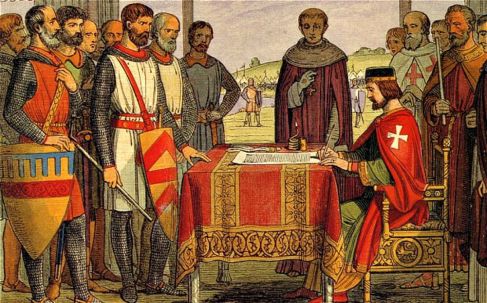
Lectures – History Brief, Dark and Middle Ages
The Magna Carta, the Great Charter, was signed on 15 June 1215 AD. It was initially intended a peace treaty between the Barons and King John. This event took place at Runnymede, a meadow on the banks of the River Thames in the county of Surrey, near Windsor and Staines in England. tt was signed by King John under pressure by the Barons. The document limited the power of King, established the principle that the king was not above the law, it introduced concepts of due process and the right to a fair trial by a jury of peers and guaranteed the protection of personal property. Unfortunately, the document did not take hold in the England at that time, but its mention has planted the seeds of self-governance and freedom, It served as a schematic for the US Constitution and has influenced the development of constitutional law and human rights around the world, The Magna Carta is an icon and a symbol of freedom and the rule of law around the world.
In the year of our Lord 1215, the English sovereign, King John, son of King Henry the Second, did affix his seal to the Magna Carta, also known as the Great Charter. This noble document sought to restore the ancient rights of the English nobility, rights held ere the Norman Conquest of 1066, and to reaffirm the principles first set forth by Henry the First some six decades prior.
The Magna Carta commanded that the King himself was not above the law, and must henceforth seek the counsel of his nobles ere embarking on wars or levying new taxes. Originally, it contained some twenty clauses, which later expanded to sixty-three, forming the bedrock of English liberties.
Moreover, this august assembly of nobles came to be regarded as the first English Parliament. In later ages, the Magna Carta would be esteemed as the very foundation upon which the United States Constitution was built, and the noble assembly therein an inspiration for the House of Representatives. Thus was born the principle of ‘No taxation without representation.’
OCT
Arthur, King of the Brits KNOWN AS: The Great Bear, Arctos (Greek), Artos (Celt), Artis, Arctic – Great Warrior TITLE: King of the British PRIMARY OCCUPATION: Legendary Monarch/Warrior FULL NAME: Arthur of Britain BIRTH: c. 470 – unknown location DEATH: c. 520 – unknown location PARENTS: Unknown (legendary: Uther Pendragon, Igraine) SIBLINGS: Unknown EDUCATION: Mentored by Merlin PHILOSOPHY/RELIGION: Druid Pagan (influenced by Merlin) ACCOMPLISHMENTS: Led Britons against Saxon invaders, winning the Battle of Badon (c. 500). AFFILIATIONS: Briton resistance YEARS OF RULE OR VOCATION: late 5th, early 6th centuries SPOUSES: One (first: Guinevere) CHILDREN IN WEDLOCK: Unknown OUT OF WEDLOCK: Unknown NAME OF SUCCESSOR: Unknown WORKS/BOOKS: Unknown SYMBOL/EMBLEM: Round Table (legendary) CONTEMPORARIES/RIVALS: Unknown (Saxon leaders implied) LEGACY/INFLUENCE: Mythic symbol of British unity and resistance. MEMORABLE QUOTE: Unknown (Note: Later chronicler Geoffrey of Monmouth, 12th century, wrote, “Arthur, a man of outstanding courage… worthy to be king,” shaping his legend.)
Alfred the Great KNOWN AS: The Great TITLE: King of the West Saxons and the Anglo-Saxons PRIMARY OCCUPATION: Monarch FULL NAME: Alfred of Wessex BIRTH: 848/849 – Wantage, England DEATH: October 26, 899 – Winchester, England PARENTS: Æthelwulf of Wessex, Osburh SIBLINGS: Æthelbald, Æthelberht, Æthelred, others EDUCATION: Likely educated in royal court, influenced by clerics PHILOSOPHY/RELIGION: Christian ACCOMPLISHMENTS: Unified Anglo-Saxon kingdoms, establishing the Danelaw treaty (c. 886). AFFILIATIONS: House of Wessex YEARS OF RULE OR VOCATION: Ruled 871–899 SPOUSES: One (first: Ealhswith) CHILDREN IN WEDLOCK: Unknown OUT OF WEDLOCK: Unknown NAME OF SUCCESSOR: Edward the Elder WORKS/BOOKS: Unknown SYMBOL/EMBLEM: Wessex dragon (speculative) CONTEMPORARIES/RIVALS: Viking leaders (e.g., Guthrum) LEGACY/INFLUENCE: Known as the founder of England, strengthened defenses and education. MEMORABLE QUOTE: Unknown (Note: Asser, his biographer, wrote in 893, “Alfred, king of the Anglo-Saxons, was a lover of wisdom above all things,” praising his intellect.)
JAN
King John KNOWN AS: John Lackland TITLE: King of England PRIMARY OCCUPATION: Monarch FULL NAME: John Plantagenet BIRTH: December 24, 1166 – Oxford, England DEATH: October 19, 1216 – Newark Castle, England PARENTS: Eleanor of Aquitaine, Henry II SIBLINGS: Richard I, Geoffrey, Eleanor, Joan, others EDUCATION: Educated in royal household; influenced by his mother, Eleanor, and clerics. PHILOSOPHY/RELIGION: Christian ACCOMPLISHMENTS: Signed Magna Carta (1215), establishing early limits on royal power. AFFILIATIONS: Plantagenet dynasty, opposed by barons and Pope Innocent III YEARS OF RULE OR VOCATION: Ruled 1199–1216 SPOUSES: Two, Isabel of Gloucester, Isabella of Angoulême CHILDREN IN WEDLOCK: Henry III, Richard, Joan, Isabella, Eleanor OUT OF WEDLOCK: Several, including Joan (married Llywelyn the Great) NAME OF SUCCESSOR: Henry III (son) WORKS/BOOKS: Magna Carta (1215) SYMBOL/EMBLEM: Plantagenet crest (speculative) CONTEMPORARIES/RIVALS: Stephen Langton, Robert Fitzwalter (baron leader), Philip II of France LEGACY/INFLUENCE: Magna Carta laid foundations for constitutional law; his reign’s failures shaped baronial resistance; vilified in chronicles but reevaluated by historians. MEMORABLE QUOTE: “I am no king’s man, but God’s.”
Stephen Langton KNOWN AS: Stephen Langton TITLE: Archbishop of Canterbury PRIMARY OCCUPATION: Cleric, Theologian FULL NAME: Stephen Langton BIRTH: c. 1150 – Langton by Wragby, England DEATH: July 9, 1228 – Slindon, England PARENTS: Henry Langton, Unknown SIBLINGS: Walter Langton (possibly others) EDUCATION: Likely studied theology in Paris PHILOSOPHY/RELIGION: Catholic theologian ACCOMPLISHMENTS: Helped draft Magna Carta (1215). AFFILIATIONS: Church, barons YEARS OF RULE OR VOCATION: Archbishop 1207–1228 SPOUSES: None (celibate as cleric) CHILDREN IN WEDLOCK: None OUT OF WEDLOCK: None confirmed NAME OF SUCCESSOR: Unknown WORKS/BOOKS: Biblical chapter divisions SYMBOL/EMBLEM: Unknown CONTEMPORARIES/RIVALS: King John, Pope Innocent III LEGACY/INFLUENCE: Shaped Magna Carta and biblical scholarship. MEMORABLE QUOTE: Unknown
Richard I (The Lionheart) KNOWN AS: The Lionheart TITLE: King of England PRIMARY OCCUPATION: Monarch FULL NAME: Richard Plantagenet BIRTH: September 8, 1157 – Oxford, England DEATH: April 6, 1199 – Châlus, France PARENTS: Henry II of England, Eleanor of Aquitaine SIBLINGS: John, Geoffrey, others EDUCATION: Likely educated in royal court, trained in military tactics PHILOSOPHY/RELIGION: Christian ACCOMPLISHMENTS: Led the Third Crusade, capturing Acre (1191). AFFILIATIONS: House of Plantagenet YEARS OF RULE OR VOCATION: Ruled 1189–1199 SPOUSES: One (first: Berengaria of Navarre) CHILDREN IN WEDLOCK: None OUT OF WEDLOCK: Unknown NAME OF SUCCESSOR: John WORKS/BOOKS: Unknown SYMBOL/EMBLEM: Lionheart emblem CONTEMPORARIES/RIVALS: Saladin LEGACY/INFLUENCE: Crusader legend. MEMORABLE QUOTE: Unknown (Note: Chronicler Roger of Howden, c. 1192, noted his essence, calling him, “a knight without fear.”)
Philip II Augustus, King of France KNOWN AS: Philip Augustus TITLE: King of France PRIMARY OCCUPATION: Monarch FULL NAME: Philip Augustus Capet BIRTH: August 21, 1165 – Gonesse, France DEATH: July 14, 1223 – Mantes, France PARENTS: Adela of Champagne, Louis VII (King and Queen of France) SIBLINGS: Agnes, Alice, others EDUCATION: Tutored in royal court; influenced by Walter of Lesbos PHILOSOPHY/RELIGION: Christian ACCOMPLISHMENTS: Won Battle of Bouvines (1214); reclaimed French territories from England; strengthened royal authority. AFFILIATIONS: Capetian dynasty, allied with Holy Roman Empire YEARS OF RULE OR VOCATION: Ruled 1180–1223 SPOUSES: Three, Isabelle of Hainaut, Ingeborg of Denmark, Agnes of Merania CHILDREN IN WEDLOCK: Louis VIII, Marie OUT OF WEDLOCK: Pierre Charlot NAME OF SUCCESSOR: Louis VIII (son) WORKS/BOOKS: Royal charters SYMBOL/EMBLEM: Fleur-de-lis CONTEMPORARIES/RIVALS: King John, Richard I, Emperor Otto IV LEGACY/INFLUENCE: Centralized French monarchy; laid groundwork for modern French state. His victories over England shifted European power dynamics. MEMORABLE QUOTE: “I have made France, not found it.” (Attributed).
Henry V, King of England KNOWN AS: Henry of Monmouth, The Warrior King TITLE: King of England PRIMARY OCCUPATION: Monarch, Military Leader FULL NAME: Henry of Monmouth BIRTH: September 16, 1386 – Monmouth Castle, Wales DEATH: August 31, 1422 – Vincennes, France PARENTS: Mary de Bohun, Henry IV (King of England) SIBLINGS: Thomas, John, Humphrey, Blanche, Philippa EDUCATION: Educated at The Queen’s College, Oxford; influenced by Henry Beaufort PHILOSOPHY/RELIGION: Christian ACCOMPLISHMENTS: Led England to victory at the Battle of Agincourt (1415); secured the Treaty of Troyes (1420), naming him heir to the French throne. AFFILIATIONS: Lancastrian dynasty YEARS OF RULE OR VOCATION: Ruled 1413–1422 SPOUSES: One, Catherine of Valois CHILDREN IN WEDLOCK: Henry VI OUT OF WEDLOCK: None confirmed NAME OF SUCCESSOR: Henry VI (son) WORKS/BOOKS: Unknown SYMBOL/EMBLEM: Lancastrian rose (red rose symbol) CONTEMPORARIES/RIVALS: Charles VI of France, John Oldcastle, Edmund Mortimer LEGACY/INFLUENCE: Strengthened English nationalism; immortalized in Shakespeare’s Henriad as a warrior-king. MEMORABLE QUOTE: “We few, we happy few, we band of brothers.” (Shakespeare’s Henry V, attributed).
STAY
Henry VIII, King of England and Ireland
KNOWN AS: Henry Tudor TITLE: King of England and Ireland PRIMARY OCCUPATION: Monarch FULL NAME: Henry Tudor BIRTH: June 28, 1491 – Greenwich, England DEATH: January 28, 1547 – London, England PARENTS: Henry VII of England, Elizabeth of York SIBLINGS: Arthur, Margaret, Mary EDUCATION: Unknown PHILOSOPHY/RELIGION: Christian (shifted to Church of England) ACCOMPLISHMENTS: Initiated the English Reformation by breaking with Rome, establishing the Church of England (1534). AFFILIATIONS: English Reformation YEARS OF RULE OR VOCATION: Ruled 1509–1547 SPOUSES: Six, Catherine of Aragon, Anne Boleyn, Jane Seymour, Anne of Cleves, Catherine Howard, Catherine Parr CHILDREN IN WEDLOCK: Mary I, Elizabeth I, Edward VI OUT OF WEDLOCK: Henry FitzRoy (recognized illegitimate son) NAME OF SUCCESSOR: Edward VI WORKS/BOOKS: Unknown SYMBOL/EMBLEM: Unknown CONTEMPORARIES/RIVALS: Francis I of France, Charles V of Spain LEGACY/INFLUENCE: Transformed England’s religious and political landscape. MEMORABLE QUOTE: Unknown (Note: Venetian ambassador Giustiniani wrote in 1519, “The King is tall and handsome, with a regal presence,” noting his early charisma.).
Henry VIII, King of England and Ireland
KNOWN AS: Henry Tudor
TITLE: King of England and Ireland
PRIMARY OCCUPATION: Monarch
FULL NAME: Henry Tudor
BIRTH: June 28, 1491 – Greenwich, England
DEATH: January 28, 1547 – London, England
PARENTS: Henry VII of England, Elizabeth of York
SIBLINGS: Arthur, Margaret, Mary
EDUCATION: Unknown
PHILOSOPHY/RELIGION: Christian (shifted to Church of England)
ACCOMPLISHMENTS: Initiated the English Reformation by breaking with Rome, establishing the Church of England (1534).
AFFILIATIONS: English Reformation
YEARS OF RULE OR VOCATION: Ruled 1509–1547
SPOUSES: Six, Catherine of Aragon, Anne Boleyn, Jane Seymour, Anne of Cleves, Catherine Howard, Catherine Parr
CHILDREN IN WEDLOCK: Mary I, Elizabeth I, Edward VI
OUT OF WEDLOCK: Henry Fitz Roy (recognized illegitimate son)
NAME OF SUCCESSOR: Edward VI
WORKS/BOOKS: Unknown
SYMBOL/EMBLEM: Unknown
CONTEMPORARIES/RIVALS: Francis I of France, Charles V of Spain
LEGACY/INFLUENCE: Transformed England’s religious and political landscape.
MEMORABLE QUOTE: Unknown (Note: Venetian ambassador Giustiniani wrote in 1519, “The King is tall and handsome, with a regal presence,” noting his early charisma.).
OCT
Arthur, King of the Brits
KNOWN AS: The Great Bear, Arctos (Greek), Artos (Celt), Artis, Arctic – Great Warrior
TITLE: King of the British
Primary Occupation: Legendary Monarch/Warrior
Full Name: Arthur of Britain
Born: c. 470, unknown location
Died: c. 520, unknown location
Parents: Unknown (legendary: Uther Pendragon, Igraine)
Siblings: Unknown
Spouses: One (first: Guinevere)
Children in Wedlock: Unknown
Out of Wedlock: Unknown
Most Memorable Accomplishment(s): Led Britons against Saxon invaders, winning the Battle of Badon (c. 500), preserving Celtic resistance in post-Roman Britain
Education/Mentors: Unknown
Years of Rule/Accomplishment/Affiliations: late 5th, early 6th centuries; affiliated with Briton resistance
Name of Successor: Unknown
Works/Books/Symbol/Emblem: Unknown
Contemporaries/Rivals: Unknown (Saxon leaders implied)
Legacy/Influence: Mythic symbol of British unity and resistance
Memorable Quote: Unknown (Note: Later chronicler Geoffrey of Monmouth, 12th century, wrote, “Arthur, a man of outstanding courage… worthy to be king,” shaping his legend.)
Humanists/Philosophers: Unknown
Alfred the Great
KNOWN AS: The Great
TITLE: King of the West Saxons and the Anglo-Saxons
Primary Occupation: Monarch
Full Name: Alfred of Wessex
Born: 848/849, Wantage, England
Died: October 26, 899, Winchester, England
Parents: Æthelwulf of Wessex, Osburh
Siblings: Æthelbald, Æthelberht, Æthelred, others
Spouses: One (first: Ealhswith)
Children in Wedlock: Unknown
Out of Wedlock: Unknown
Most Memorable Accomplishment(s): Unified Anglo-Saxon kingdoms, repelled Viking invasions, and established the Danelaw treaty (c. 886), laying foundations for a unified England
Education/Mentors: Unknown
Years of Rule/Accomplishment/Affiliations: Ruled 871–899; affiliated with House of Wessex
Name of Successor: Edward the Elder
Works/Books/Symbol/Emblem: Unknown
Contemporaries/Rivals: Viking leaders (e.g., Guthrum)
Legacy/Influence: Known as the founder of England, strengthened defenses and education
Memorable Quote: Unknown (Note: Asser, his biographer, wrote in 893, “Alfred, king of the Anglo-Saxons, was a lover of wisdom above all things,” praising his intellect.)
Humanists/Philosophers: UnknownHenry V
JAN
Royalty/Politicians (Magna Carta Era)King John
KNOWN AS: John Lackland
TITLE: King of England
Primary Occupation: Monarch
Full Name: John Plantagenet
Born: December 24, 1166. Place: Oxford, England.
Died: October 19, 1216. Place: Newark Castle, England.
Parents: Mother: Eleanor of Aquitaine. Father: Henry II. Titles: King and Queen of England.
Siblings: Richard I, Geoffrey, Eleanor, Joan, others.
Spouses: Two. Isabel of Gloucester, Isabella of Angoulême.
Children in Wedlock: Henry III, Richard, Joan, Isabella, Eleanor.
Out of Wedlock: Several, including Joan (married Llywelyn the Great).
Most Memorable Accomplishment(s): Signed Magna Carta (1215), establishing early limits on royal power; fought barons in First Barons’ War; lost much of England’s French territories.
Education/Mentors: Educated in royal household; influenced by his mother, Eleanor, and clerics.
Years of Rule/Accomplishment/Affiliations: Ruled England (1199–1216); affiliated with Plantagenet dynasty; opposed by barons and Pope Innocent III.
Name of Successor: Henry III (son).
Works/Books/Symbol/Emblem: Magna Carta (1215).
Contemporaries/Rivals: Stephen Langton, Robert Fitzwalter (baron leader), Philip II of France.
Legacy/Influence: Magna Carta laid foundations for constitutional law; his reign’s failures shaped baronial resistance; vilified in chronicles but reevaluated by historians.
Memorable Quote: “I am no king’s man, but God’s.” (Attributed to John by chroniclers, defiantly).
Stephen Langton
KNOWN AS: Stephen Langton
TITLE: Archbishop of Canterbury
Primary Occupation: Cleric, Theologian
Full Name: Stephen Langton
Born: c. 1150. Place: Langton by Wragby, England.
Died: July 9, 1228. Place: Slindon, England.
Parents: Mother: Unknown. Father: Henry Langton. Titles: None.
Siblings: Walter Langton (possibly others).
Spouses: None (celibate as cleric).
Children in Wedlock: None.
Out of Wedlock: None confirmed.
Most Memorable Accomplishment(s): Helped draft Magna Carta (1215); divided Bible into modern chapter system; mediated between King John and barons.
Richard I (The Lionheart) [Placeholder]KNOWN AS: The Lionheart
TITLE: King of England
Primary Occupation: Monarch
Full Name: Richard Plantagenet
Born: September 8, 1157, Oxford, England
Died: April 6, 1199, Châlus, France
Parents: Henry II of England, Eleanor of Aquitaine
Siblings: John, Geoffrey, others
Spouses: One (first: Berengaria of Navarre)
Children in Wedlock: None
Out of Wedlock: Unknown
Most Memorable Accomplishment(s): Led the Third Crusade, capturing Acre (1191)
Education/Mentors: Unknown
Years of Rule/Accomplishment/Affiliations: Ruled 1189–1199; affiliated with House of Plantagenet
Name of Successor: John
Works/Books/Symbol/Emblem: Unknown
Contemporaries/Rivals: Saladin
Legacy/Influence: Crusader legend
Memorable Quote: Unknown (Note: Chronicler Roger of Howden, c. 1192, noted his essence, calling him “a knight without fear.”)
Humanists/Philosophers: UnknownLady Jane Grey (The Child Queen) [Placeholder]
KNOWN AS: Edward I
TITLE: King of England
Primary Occupation: Monarch
Full Name: Edward Plantagenet
Born: June 17, 1239. Place: Westminster, England.
Died: July 7, 1307. Place: Burgh by Sands, England.
Parents: Mother: Eleanor of Provence. Father: Henry III. Titles: King and Queen of England.
Siblings: Margaret, Beatrice, Edmund, Katherine, others.
Spouses: Two. Eleanor of Castile, Margaret of France.
Children in Wedlock: Eleanor, Joan, Alphonso, Edward II, others (16 total). Out of Wedlock: None confirmed.
Most Memorable Accomplishment(s): Conquered Wales; attempted Scottish conquest; issued Statutes of Westminster; expelled Jews from England (1290).
Education/Mentors: Tutored in royal household; influenced by Simon de Montfort (early).
Years of Rule/Accomplishment/Affiliations: Ruled England (1272–1307); affiliated with Plantagenet dynasty; crusader (Ninth Crusade).
Name of Successor: Edward II (son).
Works/Books/Symbol/Emblem: Statutes of Westminster; hammer emblem (Scotland campaigns).
Contemporaries/Rivals: Llywelyn ap Gruffudd, Robert Bruce, Philip IV of France.
Legacy/Influence: Known as “Longshanks”; strengthened English law but left unresolved Scottish conflicts; his Jewish expulsion was a dark mark. $$$His legal reforms centralized royal authority, setting a precedent for parliamentary governance.
Memorable Quote: “All my enemies shall feel the hammer of the English.” (Chronicled during Scottish campaigns). Philosophy/Literature
dec jan?????
Isabella of Valois
KNOWN AS: The Little Queen, Child Bride of Richard II
TITLE: Queen of England
Primary Occupation: Monarch (briefly)
Full Name: Isabella of Valois
Born: November 9, 1389, Paris, France
Died: September 13, 1409, Blois, France
Parents: Charles VI of France, Isabeau of Bavaria
Siblings: Nine younger siblings, seven surviving infancy
Spouses: Two (first: Richard II of England; second: Charles, Duke of Orléans)
Children in Wedlock: One (Joan, with Charles)
Out of Wedlock: None
Most Memorable Accomplishment(s): Married Richard II at age 7 in 1396 to attempt peace in the Hundred Years’ War, ruled as queen until his deposition in 1399, returned to France in 1401 after refusing Henry IV’s proposal
Education/Mentors: Raised with a court supervised by governesses (e.g., Madame de Coucy)
Years of Rule/Accomplishment/Affiliations: Queen 1396–1399; affiliated with House of Valois, English-French diplomacy
Name of Successor: As queen, no direct successor; later Catherine of Valois (Henry V’s wife)
Works/Books/Symbol/Emblem: Unknown (noted for trousseau with dolls and jewels)
Contemporaries/Rivals: Richard II, Henry IV, Henry of Monmouth
Legacy/Influence: Symbol of failed peace efforts, her brief life shaped Valois-Orléans lineage
Memorable Quote: Unknown (Note: Chroniclers noted her essence, with English envoys describing her as “pretty” and eager to be queen, reflecting her youthful resolve.)
Humanists/Philosophers: Unknown
KNOWN AS: William of Ockham
TITLE: Friar/Philosopher
Primary Occupation: Theologian/Philosopher
Full Name: William of Ockham
Born: c. 1287. Place: Ockham, Surrey, England.
Died: c. 1347. Place: Munich, Bavaria.
Parents: Mother: Unknown. Father: Unknown. Titles: Commoners.
Siblings: Unknown.
Spouses: None (Franciscan friar).
Children in Wedlock: None. Out of Wedlock: None.
Most Memorable Accomplishment(s): Developed Ockham’s Razor (principle of parsimony); challenged papal authority; wrote on logic and metaphysics.
Education/Mentors: Studied at Oxford; influenced by Duns Scotus.
Years of Rule/Accomplishment/Affiliations: Active 1310s–1340s; Franciscan order; excommunicated by Pope John XXII.
Name of Successor: None (philosophical influence).
Works/Books/Symbol/Emblem: Summa Logicae, Dialogus, Razor symbol.
Contemporaries/Rivals: Pope John XXII, Thomas Aquinas (posthumously), Walter Burley.
Legacy/Influence: Ockham’s Razor shaped scientific and philosophical inquiry; his nominalism influenced modern thought. $$$His defiance of papal authority prefigured Reformation ideas.
Memorable Quote: “Entities should not be multiplied beyond necessity.” (Ockham’s Razor principle). Literature
KNOWN AS: Geoffrey Chaucer
TITLE: Poet
Primary Occupation: Writer/Diplomat
Full Name: Geoffrey Chaucer
Born: c. 1343. Place: London, England.
Died: October 25, 1400. Place: London, England.
Parents: Mother: Agnes Copton. Father: John Chaucer. Titles: Merchants.
Siblings: Unknown.
Spouses: One. Philippa Roet.
Children in Wedlock: Thomas, Elizabeth, Agnes, Lewis. Out of Wedlock: None confirmed.
Most Memorable Accomplishment(s): Wrote The Canterbury Tales, foundational English literary work; served as diplomat and courtier.
Education/Mentors: Self-educated; influenced by French and Italian poets (Dante, Boccaccio).
Years of Rule/Accomplishment/Affiliations: Active 1360s–1400; served underregister.
Legacy/Influence: Standardized English vernacular literature; influenced English poetry and storytelling. $$$His use of Middle English helped shape the language’s literary evolution.
Memorable Quote: “Whan that Aprill with his shoures soote…” (Canterbury Tales opening). France: Magna Carta (1215) to ~1600Royalty/Politicians
KNOWN AS: Philip II Augustus
TITLE: King of France
Primary Occupation: Monarch
Full Name: Philip Augustus Capet
Born: August 21, 1165. Place: Gonesse, France.
Died: July 14, 1223. Place: Mantes, France.
Parents: Mother: Adela of Champagne. Father: Louis VII. Titles: King and Queen of France.
Siblings: Agnes, Alice, others.
Spouses: Three. Isabelle of Hainaut, Ingeborg of Denmark, Agnes of Merania.
Children in Wedlock: Louis VIII, Marie. Out of Wedlock: Pierre Charlot.
Most Memorable Accomplishment(s): Won Battle of Bouvines (1214); reclaimed French territories from England; strengthened royal authority.
Education/Mentors: Tutored in royal court; influenced by Walter of Lesbos.
Years of Rule/Accomplishment/Affiliations: Ruled France (1180–1223); Capetian dynasty; allied with Holy Roman Empire against England.
Name of Successor: Louis VIII (son).
Works/Books/Symbol/Emblem: Fleur-de-lis; royal charters.
Contemporaries/Rivals: King John, Richard I, Emperor Otto IV.
Legacy/Influence: Centralized French monarchy; laid groundwork for modern French state. $$$His victories over England shifted European power dynamics.
Memorable Quote: “I have made France, not found it.” (Attributed). Art/Sculpture
STAY
KNOWN AS: Nicole Oresme
TITLE: Scholar/Bishop
Primary Occupation: Scientist/Philosopher
Full Name: Nicole Oresme
Born: c. 1320. Place: Allemagne, France.
Died: July 11, 1382. Place: Lisieux, France.
Parents: Mother: Unknown. Father: Unknown. Titles: Commoners.
Siblings: Unknown.
Spouses: None (cleric).
Children in Wedlock: None. Out of Wedlock: None.
Most Memorable Accomplishment(s): Proposed Earth’s rotation; wrote on mathematics and economics; translated Aristotle for French court.
Education/Mentors: Studied at University of Paris; influenced by John Buridan.
Years of Rule/Accomplishment/Affiliations: Active 1340s–1382; Bishop of Lisieux; served Charles V.
Name of Successor: None (intellectual influence).
Works/Books/Symbol/Emblem: Treatise on Money, Livre du Ciel et du Monde.
Contemporaries/Rivals: William of Ockham, Thomas Bradwardine.
Legacy/Influence: Early heliocentric ideas; pioneered economic theory (monetary policy). $$$His scientific curiosity prefigured Copernicus.
Memorable Quote: “The Earth moves, though we perceive it not.” (Paraphrased from Livre du Ciel).
KNOWN AS: Jean Fouquet
TITLE: Painter
Primary Occupation: Artist
Full Name: Jean Fouquet
Born: c. 1420. Place: Tours, France.
Died: c. 1481. Place: Tours, France.
Parents: Mother: Unknown. Father: Unknown. Titles: Commoners.
Siblings: Unknown.
Spouses: Unknown.
Children in Wedlock: Unknown. Out of Wedlock: None recorded.
Most Memorable Accomplishment(s): Painted Melun Diptych; blended Italian Renaissance and French Gothic styles; pioneered portraiture in France.
Education/Mentors: Trained in Tours; influenced by Italian artists during travels.
Years of Rule/Accomplishment/Affiliations: Active 1440s–1470s; worked for French court and clergy.
Name of Successor: None (artistic influence).
Works/Books/Symbol/Emblem: Melun Diptych, Virgin and Child, Portrait of Charles VII.
Contemporaries/Rivals: Rogier van der Weyden, Jan van Eyck.
Legacy/Influence: Introduced Renaissance techniques to French art; shaped early French portraiture. $$$His work bridged medieval and modern artistic traditions.
Memorable Quote: None recorded. Science/Inventors
James V
KNOWN AS: Unknown
TITLE: King of Scotland
Primary Occupation: Monarch
Full Name: James Stewart
Born: April 10, 1512, Linlithgow, Scotland
Died: December 14, 1542, Falkland, Scotland
Parents: James IV of Scotland, Margaret Tudor
Siblings: Alexander, others
Spouses: Two (first: Madeleine of Valois)
Children in Wedlock: Unknown
Out of Wedlock: Unknown
Most Memorable Accomplishment(s): Strengthened Scottish monarchy through alliances with France, notably marrying Madeleine (1537), maintaining Scotland’s independence amid English pressures
Education/Mentors: Unknown
Years of Rule/Accomplishment/Affiliations: Ruled 1513–1542; affiliated with House of Stewart
Name of Successor: Mary, Queen of Scots
Works/Books/Symbol/Emblem: Unknown
Contemporaries/Rivals: Henry VIII of England
Legacy/Influence: Preserved Scottish autonomy until his daughter’s reign
Memorable Quote: Unknown (Note: Scottish chronicler John Lesley wrote, “James was a prince of great courage,” after his death, praising his resilience.)
Humanists/Philosophers: UnknownMary I
———————————-
Royalty/Politicians
Henry V
KNOWN AS Henry of Monmouth
TITLE: King of England
Primary Occupation: Monarch, Military Leader
Full Name: Henry of Monmouth
Born: September 16, 1386. Place: Monmouth Castle, Wales.
Died: August 31, 1422. Place: Vincennes, France.
Parents: Mother: Mary de Bohun. Father: Henry IV (Henry of Bolingbroke). Titles: King of England.
Siblings: Thomas, John, Humphrey, Blanche, Philippa.
Spouses: One. Catherine of Valois.
Children in Wedlock: Henry VI.
Out of Wedlock: None confirmed.
Most Memorable Accomplishment(s): Led England to victory at the Battle of Agincourt (1415) during the Hundred Years’ War; secured the Treaty of Troyes (1420), naming him heir to the French throne; promoted English as the language of government.
Education/Mentors: Educated at The Queen’s College, Oxford, under Henry Beaufort; gained military experience during the Glyndŵr rebellion.
Years of Rule/Accomplishment/Affiliations: Ruled England (1413–1422); fought in Hundred Years’ War; affiliated with Lancastrian dynasty.
Name of Successor: Henry VI (son).
Works/Books/Symbol/Emblem: Lancastrian rose (red rose symbol).
Contemporaries/Rivals: Charles VI of France, John Oldcastle (Lollard rebel), Edmund Mortimer (conspirator).
Legacy/Influence: Strengthened English nationalism through military victories; immortalized in Shakespeare’s Henriad as a warrior-king; his promotion of English language shaped national identity.
Memorable Quote: “We few, we happy few, we band of brothers.” (Shakespeare’s Henry V, attributed to Henry at Agincourt).
—
KNOWN AS: Henry of Monmouth, The Warrior King
TITLE: King of England
Primary Occupation: Monarch
Full Name: Henry of Monmouth
Born: September 16, 1386, Monmouth, Wales
Died: August 31, 1422, Vincennes, France
Parents: Henry IV of England, Mary de Bohun
Siblings: Thomas, John, Humphrey, others
Spouses: One (first: Catherine of Valois)
Children in Wedlock: Unknown
Out of Wedlock: Unknown
Most Memorable Accomplishment(s): Secured English gains in the Hundred Years’ War, notably winning the Battle of Agincourt (1415), strengthening England’s claim to France
Education/Mentors: Unknown
Years of Rule/Accomplishment/Affiliations: Ruled 1413–1422; affiliated with House of Lancaster
Name of Successor: Henry VI
Works/Books/Symbol/Emblem: Shakespeare’s Henriad
Contemporaries/Rivals: Charles VI of France, Owain Glyndŵr
Legacy/Influence: Cemented England’s military reputation in Europe
Memorable Quote: Unknown (Note: Shakespeare, in Henry V, has the Chorus say, “This star of England… fortunes him,” reflecting later admiration for his Agincourt victory.)
Humanists/Philosophers: Unknown..
–
–
Henry VIII
KNOWN AS: Henry Tudor
TITLE: King of England and Ireland
Primary Occupation: Monarch
Full Name: Henry Tudor
Born: June 28, 1491, Greenwich, England
Died: January 28, 1547, London, England
Parents: Henry VII of England, Elizabeth of York
Siblings: Arthur, Margaret, Mary
Spouses: Six (first: Catherine of Aragon)
Children in Wedlock: Mary I, Elizabeth I, Edward VI
Out of Wedlock: Henry Fitz Roy (recognized illegitimate son)
Most Memorable Accomplishment(s): Initiated the English Reformation by breaking with Rome, establishing the Church of England (1534), reshaping English religion and monarchy
Education/Mentors: Unknown
Years of Rule/Accomplishment/Affiliations: Ruled 1509–1547; affiliated with English Reformation
Name of Successor: Edward VI
Works/Books/Symbol/Emblem: Unknown
Contemporaries/Rivals: Francis I of France, Charles V of Spain
Legacy/Influence: Transformed England’s religious and political landscape
Memorable Quote: Unknown (Note: Venetian ambassador Giustiniani wrote in 1519, “The King is tall and handsome, with a regal presence,” noting his early charisma.)
Humanists/Philosophers: Unknown
…
KNOWN AS: Bloody Mary, Mary, Queen of Scots
TITLE: Queen of England and Ireland
Primary Occupation: Monarch
Full Name: Mary Tudor
Born: February 18, 1516, Greenwich, England
Died: November 17, 1558, London, England
Parents: Henry VIII of England, Catherine of Aragon
Siblings: Elizabeth, Edward (half-siblings)
Spouses: One (first: Philip II of Spain)
Children in Wedlock: None
Out of Wedlock: None confirmed
Most Memorable Accomplishment(s): Restored Catholicism in England (1553–1558), reversing her father’s Reformation, though her persecutions earned her the nickname “Bloody Mary”
Education/Mentors: Unknown
Years of Rule/Accomplishment/Affiliations: Ruled 1553–1558; affiliated with Catholic restoration
Name of Successor: Elizabeth I
Works/Books/Symbol/Emblem: Unknown
Contemporaries/Rivals: Elizabeth I, Philip II of Spain
Legacy/Influence: Brief Catholic resurgence, marked by religious conflict
Memorable Quote: Unknown (Note: Ambassador Simon Renard wrote in 1554, “She is gentle but resolute in her faith,” reflecting her determination during her reign.)
Humanists/Philosophers: UnknownElizabeth IKNOWN AS: The Virgin Queen, Gloriana, Last of the House of Tudor
TITLE: Queen of England and Ireland
Primary Occupation: Monarch
Full Name: Elizabeth Tudor
Born: September 7, 1533, Greenwich, England
Died: March 24, 1603, Richmond, England
Parents: Henry VIII of England, Anne Boleyn
Siblings: Mary, Edward (half-siblings)
Spouses: None (never married)
Children in Wedlock: Mary, Queen of Scots
Out of Wedlock: None confirmed
Most Memorable Accomplishment(s): Established a stable Protestant England, defeating the Spanish Armada (1588) and fostering the Elizabethan era’s cultural and naval dominance
Education/Mentors: Educated by humanists like Roger Ascham; influenced by William Cecil, Lord Burghley
Years of Rule/Accomplishment/Affiliations: Ruled 1558–1603; affiliated with Protestant cause and Privy Council
Name of Successor: James I (James VI of Scotland)
Works/Books/Symbol/Emblem: Golden Speech (1601), Tudor rose (red and white)
Contemporaries/Rivals: Mary, Queen of Scots (rival), Philip II of Spain, Francis Drake
Legacy/Influence: Stabilized England’s economy and religion; her reign saw a cultural golden age; strengthened England’s naval power
Memorable Quote: “I know I have the body but of a weak and feeble woman; but I have the heart and stomach of a king.” (Elizabeth, Tilbury Speech, 1588)
Humanists/Philosophers: Roger Ascham, William CecilMary Queen of Scots
KNOWN AS: The Nine Days’ Queen
TITLE: Queen of England
Primary Occupation: Monarch (briefly)
Full Name: Lady Jane Grey
Born: October 1537, Bradgate Park, England
Died: February 12, 1554, Tower of London, England
Parents: Henry Grey, Frances Brandon
Siblings: Katherine, Mary
Spouses: One (first: Guildford Dudley)
Children in Wedlock: None
Out of Wedlock: None
Most Memorable Accomplishment(s): Proclaimed queen July 10, 1553, deposed after nine days by Mary I
Education/Mentors: Unknown
Years of Rule/Accomplishment/Affiliations: Ruled July 10–19, 1553; affiliated with Protestant cause
Name of Successor: Mary I
Works/Books/Symbol/Emblem: Unknown
Contemporaries/Rivals: Mary I, Edward VI
Legacy/Influence: Symbol of political turmoil
Memorable Quote: Unknown (Note: Chronicler John Foxe, c. 1563, captured her essence, calling her “a martyr for her faith,” reflecting her tragic end.)
Humanists/Philosophers: Unknown
KNOWN AS: Unknown
TITLE: Queen of Scotland
Primary Occupation: Monarch
Full Name: Mary Stuart
Born: December 8, 1542, Linlithgow, Scotland
Died: February 8, 1587, Fotheringhay, England
Parents: James V of Scotland, Mary of Guise
Siblings: None surviving
Spouses: Three (first: Francis II of France)
Children in Wedlock: James VI of Scotland
Out of Wedlock: Unknown
Most Memorable Accomplishment(s): Asserted her claim to the English throne, challenging Elizabeth I, though her imprisonment and execution (1587) ended her ambitions
Education/Mentors: Unknown
Years of Rule/Accomplishment/Affiliations: Ruled 1542–1567; affiliated with House of Stuart
Name of Successor: James VI of Scotland
Works/Books/Symbol/Emblem: Unknown
Contemporaries/Rivals: Elizabeth I
Legacy/Influence: Her claim fueled Anglo-Scottish tensions
Memorable Quote: Unknown (Note: Elizabeth I reportedly said in 1586, “She would be the end of me or I of her,” highlighting their rivalry.)
Humanists/Philosophers: Unknown
James VI and I
KNOWN AS: Unknown
TITLE: King of Scotland as James VI, King of Great Britain and Ireland as James I
Primary Occupation: Monarch
Full Name: James Charles Stuart
Born: June 19, 1566, Edinburgh, Scotland
Died: March 27, 1625, Theobalds, England
Parents: Mary Queen of Scots, Henry Stuart (Lord Darnley)
Siblings: None
Spouses: One (first: Anne of Denmark)
Children in Wedlock: Henry, Elizabeth, Charles
Out of Wedlock: Unknown
Most Memorable Accomplishment(s): Unified the Scottish and English crowns (1603), initiating British colonial expansion with the Plantation of Ulster and Jamestown (1607)
Education/Mentors: Unknown
Years of Rule/Accomplishment/Affiliations: Ruled Scotland 1567–1625, England 1603–1625; affiliated with House of Stuart
Name of Successor: Charles I
Works/Books/Symbol/Emblem: Unknown
Contemporaries/Rivals: Unknown
Legacy/Influence: Laid foundations for British empire
Memorable Quote: Unknown (Note: Sir Anthony Weldon, a critic, wrote, “He was a king of good learning but poor judgment,” reflecting mixed contemporary views.)
Humanists/Philosophers: Unknown
—
Elizabeth I
KNOWN AS: The Virgin Queen
TITLE: Queen of England
Primary Occupation: Monarch
Full Name: Elizabeth Tudor
Born: September 7, 1533. Place: Greenwich, England.
Died: March 24, 1603. Place: Richmond, England.
Parents: Mother: Anne Boleyn. Father: Henry VIII. Titles: King and Queen of England.
Siblings: Edward VI, Mary I (half-siblings).
Spouses: None (never married).
Children in Wedlock: None.
Out of Wedlock: None confirmed.
Most Memorable Accomplishment(s): Established the Elizabethan Settlement, balancing Catholic and Protestant factions; defeated the Spanish Armada (1588); patronized Shakespeare and the arts, fostering the Elizabethan Renaissance.
Education/Mentors: Educated by humanists like Roger Ascham; influenced by William Cecil, Lord Burghley.
Years of Rule/Accomplishment/Affiliations: Ruled England (1558–1603); affiliated with Protestant cause and Privy Council.
Name of Successor: James I (James VI of Scotland).
Works/Books/Symbol/Emblem: Golden Speech (1601), Tudor rose (red and white).
Contemporaries/Rivals: Mary, Queen of Scots (rival), Philip II of Spain, Francis Drake.
Legacy/Influence: Stabilized England’s economy and religion; her reign saw a cultural golden age; strengthened England’s naval power.
Memorable Quote: “I know I have the body but of a weak and feeble woman; but I have the heart and stomach of a king.” (Elizabeth, Tilbury Speech, 1588).
Humanists/Philosophers
Thomas More
KNOWN AS: Sir Thomas More
TITLE: Lord Chancellor, Humanist
Primary Occupation: Statesman, Philosopher, Lawyer
Full Name: Thomas More
Born: February 7, 1478. Place: London, England.
Died: July 6, 1535. Place: London, England.
Parents: Mother: Agnes Graunger. Father: John More (judge). Titles: None.
Siblings: None confirmed.
Spouses: Two. Jane Colt, Alice Middleton.
Children in Wedlock: Margaret, Elizabeth, Cicely, John.
Out of Wedlock: None confirmed.
Most Memorable Accomplishment(s): Wrote Utopia (1516), a seminal humanist text envisioning an ideal society; served as Lord Chancellor under Henry VIII; martyred for refusing to accept Henry’s break with Rome.
Education/Mentors: Studied at Oxford and Lincoln’s Inn; influenced by Erasmus of Rotterdam.
Years of Rule/Accomplishment/Affiliations: Lord Chancellor (1529–1532); affiliated with English humanist circles.
Name of Successor: Thomas Cromwell (as Lord Chancellor).
Works/Books/Symbol/Emblem: Utopia (1516), History of King Richard III (c. 1513–1518).
Contemporaries/Rivals: Erasmus (friend), Thomas Cromwell, John Fisher.
Legacy/Influence: Shaped Renaissance humanism; Utopia inspired social and political thought; canonized as a Catholic saint.
Memorable Quote: “I die the king’s good servant, but God’s first.” (More, at his execution).
Literary Figures/TheatreWilliam Shakespeare
KNOWN AS: Shakespeare, The Bard
TITLE: Playwright, Poet
Primary Occupation: Playwright, Actor, Poet
Full Name: William Shakespeare
Born: April 1564 (baptized April 26, 1564). Place: Stratford-upon-Avon, England.
Died: April 23, 1616. Place: Stratford-upon-Avon, England.
Parents: Mother: Mary Arden. Father: John Shakespeare (glover, alderman). Titles: None.
Siblings: Joan, Margaret, Gilbert, Joan, Anne, Richard, Edmund.
Spouses: One. Anne Hathaway.
Children in Wedlock: Susanna, Hamnet, Judith.
Out of Wedlock: None confirmed.
Most Memorable Accomplishment(s): Wrote 37 plays, including Hamlet, Romeo and Juliet, and Henry V; composed 154 sonnets; co-founded the Globe Theatre, shaping English drama.
Education/Mentors: Likely educated at King’s New School, Stratford; influenced by classical texts and Elizabethan theatre.
Years of Rule/Accomplishment/Affiliations: Active as a playwright (1580s–1616); affiliated with Lord Chamberlain’s Men and King’s Men.
Name of Successor: No direct successor; influenced Ben Jonson and later dramatists.
Works/Books/Symbol/Emblem: Hamlet (c. 1600), Romeo and Juliet (c. 1595), Sonnet 18 (1609).
Contemporaries/Rivals: Christopher Marlowe, Ben Jonson, Robert Greene (rival).
Legacy/Influence: Defined English literature and theatre; his works shaped modern English language and global drama.
Memorable Quote: “All the world’s a stage, and all the men and women merely players.” (Shakespeare, As You Like It).
Christopher Marlowe
TITLE: Playwright, Poet
Primary Occupation: Playwright, Poet, Translator
Full Name: Christopher Marlowe
Born: February 1564 (baptized February 26, 1564). Place: Canterbury, England.
Died: May 30, 1593. Place: Deptford, England.
Parents: Mother: Catherine Marlowe. Father: John Marlowe (shoemaker). Titles: None.
Siblings: Several (exact names not fully recorded).
Spouses: None (never married).
Children in Wedlock: None.
Out of Wedlock: None confirmed.
Most Memorable Accomplishment(s): Wrote Doctor Faustus (c. 1589) and Tamburlaine (c. 1587), pioneering blank verse in English drama; translated Ovid’s Amores.
Education/Mentors: Studied at Cambridge University; influenced by classical literature and humanist scholars.
Years of Rule/Accomplishment/Affiliations: Active as a playwright (1580s–1593); affiliated with Admiral’s Men and Elizabethan espionage networks.
Name of Successor: No direct successor; influenced Shakespeare.
Works/Books/Symbol/Emblem: Doctor Faustus (c. 1589), Tamburlaine (c. 1587), The Jew of Malta (c. 1590).
Contemporaries/Rivals: William Shakespeare, Thomas Kyd, Robert Greene.
Legacy/Influence: Revolutionized Elizabethan drama with blank verse; shaped tragic and historical plays; his mysterious death fueled literary legend.
Memorable Quote: “Is it not passing brave to be a king, and ride in triumph through Persepolis?” (Marlowe, Tamburlaine).
Explorers/Discovery
John Cabot
KNOWN AS: John Cabot (Giovanni Caboto)
TITLE: Explorer, Navigator
Primary Occupation: Explorer
Full Name: Giovanni Caboto
Born: c. 1450. Place: Possibly Genoa or Venice, Italy (active in England).
Died: c. 1498–1500 (exact date unknown). Place: Unknown (possibly at sea or England).
Parents: Mother: Unknown. Father: Giulio Caboto (merchant). Titles: None.
Siblings: Piero Caboto (brother).
Spouses: One. Mattea (surname unknown).
Children in Wedlock: Ludovico, Sebastiano, Sancto.
Out of Wedlock: None confirmed.
Most Memorable Accomplishment(s): Led 1497 voyage for Henry VII, landing in Newfoundland, claiming it for England; explored North American coast, boosting English interest in the New World.
Education/Mentors: Self-taught navigator; influenced by Venetian maritime tradition.
Years of Rule/Accomplishment/Affiliations: Active in England (1490s); sailed under Henry VII’s patronage.
Name of Successor: No direct successor; son Sebastiano continued exploration.
Works/Books/Symbol/Emblem: None (letters and logs attributed to him).
Contemporaries/Rivals: Christopher Columbus, Vasco da Gama.
Legacy/Influence: Laid groundwork for English claims in North America; inspired later explorers like Frobisher.
Memorable Quote: “I intend to find a new route to the Indies.” (Attributed to Cabot by contemporaries).
Martin Frobisher
TITLE: Explorer, Privateer
Primary Occupation: Navigator, Military Leader
Full Name: Martin Frobisher
Born: c. 1535. Place: Altofts, England.
Died: November 22, 1594. Place: Plymouth, England.
Parents: Mother: Margaret Yorke. Father: Bernard Frobisher. Titles: None.
Siblings: Unknown.
Spouses: Two. Isobel Richard, Dorothy Wentworth.
Children in Wedlock: None confirmed.
Out of Wedlock: None confirmed.
Most Memorable Accomplishment(s): Led three voyages (1576–1578) to find the Northwest Passage, exploring Canada’s Arctic; fought against the Spanish Armada (1588); knighted for naval service.
Education/Mentors: Self-taught in navigation; influenced by Elizabethan maritime circles.
Years of Rule/Accomplishment/Affiliations: Active as explorer (1570s–1594); served under Elizabeth I; affiliated with Muscovy Company.
Name of Successor: No direct successor; influenced John Davis.
Works/Books/Symbol/Emblem: Logs of Arctic voyages (1576–1578).
Contemporaries/Rivals: John Davis, Francis Drake, Humphrey Gilbert.
Legacy/Influence: Advanced English exploration in the Arctic; contributed to naval tactics against Spain; mapped parts of Canada.
Memorable Quote: “The sea is the key to England’s greatness.” (Attributed to Frobisher by contemporaries).
Generals/Military LeadersWilliam Marshal
KNOWN AS: William Marshal, The Marshal
TITLE: Earl of Pembroke, Regent of England
Primary Occupation: Knight, Statesman, Military Leader
Full Name: William Marshal
Born: c. 1146–1147. Place: Unknown (likely Wiltshire, England).
Died: May 14, 1219. Place: Caversham, England.
Parents: Mother: Sybil of Salisbury. Father: John Marshal. Titles: None.
Siblings: John Marshal (brother).
Spouses: One. Isabel de Clare.
Children in Wedlock: William, Richard, Gilbert, Walter, Anselm, Maud, Isabel, Sybil, Eva, Joan.
Out of Wedlock: None confirmed.
Most Memorable Accomplishment(s): Led Henry III’s forces to victory at the Battle of Lincoln (1217); served as regent for Henry III, stabilizing England; reissued Magna Carta (1217).
Education/Mentors: Trained as a knight; mentored by Patrick of Salisbury and in Norman courts.
Years of Rule/Accomplishment/Affiliations: Active (1160s–1219); regent (1216–1219); served Henry II, Richard I, John, Henry III.
Name of Successor: Henry III (as king); Hubert de Burgh (as regent).
Works/Books/Symbol/Emblem: History of William Marshal (biography, c. 1220s).
Contemporaries/Rivals: Simon de Montfort, Louis VIII of France.
Legacy/Influence: Known as “the greatest knight”; stabilized England during First Barons’ War; shaped chivalric ideals.
Memorable Quote: “I have served four kings and will serve the fifth.” (Attributed to Marshal by his biography).
HistoriansGeoffrey of Monmouth
KNOWN AS: Geoffrey of Monmouth
TITLE: Bishop, Chronicler
Primary Occupation: Historian, Cleric
Full Name: Geoffrey of Monmouth
Born: c. 1095. Place: Possibly Monmouth, Wales.
Died: c. 1155. Place: Unknown (likely England).
Parents: Mother: Unknown. Father: Unknown. Titles: None.
Siblings: Unknown.
Spouses: None confirmed (likely celibate as cleric).
Children in Wedlock: None.
Out of Wedlock: None confirmed.
Most Memorable Accomplishment(s): Wrote Historia Regum Britanniae (c. 1136), popularizing King Arthur; shaped British historical mythology; appointed Bishop of St Asaph.
Education/Mentors: Educated in Oxford or Paris; influenced by Welsh and Norman traditions.
Years of Rule/Accomplishment/Affiliations: Active as a scholar (1120s–1155); affiliated with Norman clergy and Oxford circles.
Name of Successor: No direct successor; influenced later chroniclers like Wace.
Works/Books/Symbol/Emblem: Historia Regum Britanniae (c. 1136), Vita Merlini (c. 1150).
Contemporaries/Rivals: William of Malmesbury, Henry of Huntingdon.
Legacy/Influence: Created enduring Arthurian legend; shaped medieval and Renaissance literature; blended history and myth.
Memorable Quote: “Britain, best of islands, is situated in the western ocean.” (Geoffrey, Historia Regum Britanniae).
Artists
KNOWN AS: William Caxton
TITLE: Printer, Publisher
Primary Occupation: Printer, Translator
Full Name: William Caxton
Born: c. 1422. Place: Kent, England.
Died: c. 1491. Place: Westminster, England.
Parents: Mother: Unknown. Father: Unknown. Titles: None.
Siblings: Unknown.
Spouses: One. Maud Caxton (surname unknown).
Children in Wedlock: Elizabeth (possibly others).
Out of Wedlock: None confirmed.
Most Memorable Accomplishment(s): Introduced the printing press to England (1476); printed The Canterbury Tales (c. 1476); translated and published Recuyell of the Historyes of Troye (1473).
Education/Mentors: Self-educated in printing in Bruges; influenced by European printers like Gutenberg.
Years of Rule/Accomplishment/Affiliations: Active as a printer (1470s–1491); affiliated with Edward IV’s court and Merchant Adventurers.
Name of Successor: Wynkyn de Worde (printer).
Works/Books/Symbol/Emblem: The Canterbury Tales (c. 1476), Recuyell of the Historyes of Troye (1473), Le Morte d’Arthur (1485).
Contemporaries/Rivals: Wynkyn de Worde, European printers.
Legacy/Influence: Revolutionized English literature through printing; standardized English language; made books accessible.
Memorable Quote: “This book is for the profit of all men.” (Caxton, preface to Recuyell).
Musician
KNOWN AS: John Dunstaple (or Dunstable)
TITLE: Composer
Primary Occupation: Musician, Composer
Full Name: John Dunstaple
Born: c. 1390. Place: Unknown (likely England).
Died: December 24, 1453. Place: London, England.
Parents: Mother: Unknown. Father: Unknown. Titles: None.
Siblings: Unknown.
Spouses: None confirmed.
Children in Wedlock: None.
Out of Wedlock: None confirmed.
Most Memorable Accomplishment(s): Composed Quam pulchra es and Missa Rex seculorum, pioneering polyphonic music; influenced European sacred music with the “English countenance.”
Education/Mentors: Likely trained in cathedral schools; influenced by English choral traditions.
Years of Rule/Accomplishment/Affiliations: Active as a composer (1410s–1453); possibly served Henry V’s court; affiliated with St Albans Abbey.
Name of Successor: No direct successor; influenced composers like Guillaume Dufay.
Works/Books/Symbol/Emblem: Quam pulchra es (c. 1420s), Missa Rex seculorum (c. 1430s).
Contemporaries/Rivals: Guillaume Dufay, Gilles Binchois.
Legacy/Influence: Shaped Renaissance polyphony; his harmonic style influenced Continental composers; elevated English music’s reputation.
Memorable Quote: None recorded; his music was praised as “the fount and origin” of Renaissance style (by Tinctoris).
———————————————————————————————————
Scientists
KNOWN AS: William Gilbert
TITLE: Father of Magnetism
Primary Occupation: Physician, Scientist
Full Name: William Gilbert
Born: May 24, 1544. Place: Colchester, England.
Died: November 30, 1603. Place: London, England.
Parents: Mother: Elizabeth Coggeshall. Father: Jerome Gilbert (recorder). Titles: None.
Siblings: Unknown (records sparse).
Spouses: None confirmed (likely never married).
Children in Wedlock: None.
Out of Wedlock: None confirmed.
Most Memorable Accomplishment(s): Published De Magnete (1600), the first major study of magnetism; pioneered experimental science; served as physician to Elizabeth I and James I.
Education/Mentors: Studied medicine at Cambridge (St John’s College); self-taught in physics.
Years of Rule/Accomplishment/Affiliations: Active as a scientist (1570s–1603); affiliated with Royal College of Physicians and Elizabethan court.
Name of Successor: No direct successor; influenced scientists like Galileo.
Works/Books/Symbol/Emblem: De Magnete (1600).
Contemporaries/Rivals: Francis Bacon, Tycho Brahe.
Legacy/Influence: Laid foundations for experimental science; his work on magnetism influenced electricity studies; shaped early modern scientific method.
Memorable Quote: “The force of a magnet is a divine gift.” (Gilbert, from De Magnete).
Poets/Literary
Geoffrey ChaucerKNOWN AS: Chaucer, Father of English Literature
TITLE: Poet, Diplomat
Primary Occupation: Poet, Civil Servant
Full Name: Geoffrey Chaucer
Born: c. 1343. Place: London, England.
Died: October 25, 1400. Place: London, England.
Parents: Mother: Agnes Copton. Father: John Chaucer (vintner). Titles: None.
Siblings: Unknown (possibly a sister, Katherine).
Spouses: One. Philippa Roet.
Children in Wedlock: Thomas, Elizabeth, Agnes, Lewis.
Out of Wedlock: None confirmed.
Most Memorable Accomplishment(s): Wrote The Canterbury Tales (c. 1387–1400), a cornerstone of English literature; introduced iambic pentameter; served as a diplomat for Edward III.
Education/Mentors: Likely educated in London; influenced by French and Italian poets like Boccaccio during diplomatic missions.
Years of Rule/Accomplishment/Affiliations: Active as a poet and official (1360s–1400); served Edward III and Richard II; affiliated with royal court.
Name of Successor: No direct successor; influenced Spenser and Shakespeare.
Works/Books/Symbol/Emblem: The Canterbury Tales (c. 1387–1400), Troilus and Criseyde (c. 1380s), The Book of the Duchess (c. 1368).
Contemporaries/Rivals: John Gower, William Langland.
Legacy/Influence: Standardized Middle English in literature; shaped narrative poetry; The Canterbury Tales remains a literary masterpiece.
Memorable Quote: “What is better than wisdom? Woman. And what is better than a good woman? Nothing.” (Chaucer, The Canterbury Tales).
Edmund Spenser
TITLE: Poet Laureate (unofficial)
Primary Occupation: Poet, Administrator
Full Name: Edmund Spenser
Born: c. 1552. Place: London, England.
Died: January 13, 1599. Place: London, England.
Parents: Mother: Elizabeth (surname unknown). Father: John Spenser (clothmaker). Titles: None.
Siblings: Unknown.
Spouses: Two. Machabyas Childe, Elizabeth Boyle.
Children in Wedlock: Sylvanus, Katherine (possibly others).
Out of Wedlock: None confirmed.
Most Memorable Accomplishment(s): Wrote The Faerie Queene (1590–1596), an epic poem celebrating Elizabeth I; developed the Spenserian stanza; served as a colonial administrator in Ireland.
Education/Mentors: Studied at Cambridge (Pembroke College); influenced by Gabriel Harvey and classical poets.
Years of Rule/Accomplishment/Affiliations: Active as a poet (1570s–1599); served under Elizabeth I in Ireland; affiliated with Leicester’s circle.
Name of Successor: No direct successor; influenced Milton.
Works/Books/Symbol/Emblem: The Faerie Queene (1590–1596), The Shepheardes Calender (1579), Amoretti (1595).
Contemporaries/Rivals: Philip Sidney, Christopher Marlowe.
Legacy/Influence: Shaped English epic poetry; his Spenserian stanza influenced later poets; contributed to Elizabethan literary nationalism.
Memorable Quote: “For there is nothing lost, that may be found, if sought.” (Spenser, The Faerie Queene).
Clerics/Reformers
KNOWN AS: Wycliffe, Morning Star of the Reformation
TITLE: Theologian, Reformer
Primary Occupation: Theologian, Translator
Full Name: John Wycliffe
Born: c. 1328. Place: Hipswell, Yorkshire, England.
Died: December 31, 1384. Place: Lutterworth, England.
Parents: Mother: Unknown. Father: Roger Wycliffe. Titles: None.
Siblings: Unknown.
Spouses: None confirmed (likely celibate as cleric).
Children in Wedlock: None.
Out of Wedlock: None confirmed.
Most Memorable Accomplishment(s): Translated the Bible into Middle English (1380s); criticized Catholic Church abuses, inspiring Lollardy; wrote Summa de Ente, a philosophical treatise.
Education/Mentors: Studied at Oxford (Balliol College); influenced by scholastic theologians.
Years of Rule/Accomplishment/Affiliations: Active as a reformer (1360s–1384); affiliated with Oxford and Lollard movement.
Name of Successor: No direct successor; influenced Jan Hus and Luther.
Works/Books/Symbol/Emblem: Wycliffe Bible (1380s), Summa de Ente (c. 1370s).
Contemporaries/Rivals: William Courtenay (Archbishop of Canterbury, opponent), John of Gaunt (patron).
Legacy/Influence: Laid groundwork for Protestant Reformation; his Bible translation democratized scripture; Lollardy shaped English religious dissent.
Memorable Quote: “Trust wholly in Christ; rely altogether on his sufferings.” (Wycliffe, from his sermons).
Explorers/Discovery
KNOWN AS: Sir Francis Drake
TITLE: Admiral, Explorer, Privateer
Primary Occupation: Navigator, Military Leader
Full Name: Francis Drake
Born: c. 1540. Place: Tavistock, Devon, England.
Died: January 28, 1596. Place: Portobelo, Panama (at sea).
Parents: Mother: Mary Mylwaye. Father: Edmund Drake (farmer, preacher). Titles: None.
Siblings: Several (exact names not recorded).
Spouses: Two. Mary Newman, Elizabeth Sydenham.
Children in Wedlock: None.
Out of Wedlock: None confirmed.
Most Memorable Accomplishment(s): Circumnavigated the globe (1577–1580); led raids against Spanish ships, capturing vast wealth; played key role in defeating the Spanish Armada (1588).
Education/Mentors: Self-taught in navigation; mentored by John Hawkins.
Years of Rule/Accomplishment/Affiliations: Active as an explorer (1560s–1596); served Elizabeth I; affiliated with English navy.
Name of Successor: No direct successor; influenced Raleigh and Cavendish.
Works/Books/Symbol/Emblem: Logs of circumnavigation (1577–1580).
Contemporaries/Rivals: Walter Raleigh, Martin Frobisher, Spanish admirals.
Legacy/Influence: Strengthened England’s naval dominance; inspired Elizabethan exploration; became a national hero.
Memorable Quote: “There must be a beginning of any great matter, but the continuing unto the end yields the true glory.” (Drake, attributed by contemporaries).
Politicians/Statesmen
KNOWN AS: Thomas Cromwell
TITLE: Lord Privy Seal, Chief Minister
Primary Occupation: Statesman, Lawyer
Full Name: Thomas Cromwell
Born: c. 1485. Place: Putney, England.
Died: July 28, 1540. Place: London, England.
Parents: Mother: Katherine Meverell. Father: Walter Cromwell (blacksmith). Titles: None.
Siblings: Katherine, Elizabeth.
Spouses: One. Elizabeth Wyckes.
Children in Wedlock: Gregory.
Out of Wedlock: None confirmed.
Most Memorable Accomplishment(s): Orchestrated Henry VIII’s break with Rome, enabling the English Reformation; served as chief minister (1532–1540); established Court of Augmentations to manage monastic wealth.
Education/Mentors: Self-educated; influenced by Thomas Wolsey and European reformers.
Years of Rule/Accomplishment/Affiliations: Active as a statesman (1520s–1540); served Henry VIII; affiliated with Reformation supporters.
Name of Successor: No direct successor; power shifted to Thomas Cranmer.
Works/Books/Symbol/Emblem: Reformation legislation (e.g., Act of Supremacy, 1534).
Contemporaries/Rivals: Thomas More (rival), Anne Boleyn, Thomas Cranmer.
Legacy/Influence: Shaped the English Reformation; centralized royal administration; his policies transformed England’s religious and political landscape.
Memorable Quote: “I have ventured all for the king’s service.” (Cromwell, attributed at his execution).
Military Leaders
Generals Edward
KNOWN AS: The Black Prince
TITLE: Prince of Wales
Primary Occupation: Military Leader, Heir to the Throne
Full Name: Edward of Woodstock
Born: June 15, 1330. Place: Woodstock, England.
Died: June 8, 1376. Place: Westminster, England.
Parents: Mother: Philippa of Hainault. Father: Edward III. Titles: King and Queen of England.
Siblings: John of Gaunt, Lionel, Edmund, Mary, Margaret, others.
Spouses: One. Joan of Kent.
Children in Wedlock: Edward, Richard (later Richard II).
Out of Wedlock: None confirmed.
Most Memorable Accomplishment(s): Led English victories at Crécy (1346) and Poitiers (1356) during the Hundred Years’ War; captured King John II of France; governed Aquitaine with strategic brilliance.
Education/Mentors: Educated in royal household; trained in military tactics by his father, Edward III.
Years of Rule/Accomplishment/Affiliations: Active as a commander (1340s–1376); served Edward III; affiliated with Plantagenet dynasty.
Name of Successor: Richard II (son).
Works/Books/Symbol/Emblem: Black Prince’s shield (three ostrich feathers).
Contemporaries/Rivals: John II of France, Bertrand du Guesclin.
Legacy/Influence: Defined chivalric warfare; his victories bolstered English morale; became a legendary figure in military history.
Memorable Quote: “Serve me loyally, and I will reward you well.” (Attributed to Edward by chroniclers).
“All the world’s a stage, And all the men and women merely players”
-William Shakespeare
.
.
Gaining traction under Edward III, with military successes (e.g., Crécy 1346). Limited by smaller population but boosted by trade and naval potential.
Great Britain
Arthur, King Of the Brits *
Arthur, Welsh, late 5th, early 6th centuries – Legend. Defeated the Saxons -Arthur, King of the British -Great Bear – Arctos (Greek) – Artos (Celt), Artis, Arctic – Great Warrior/.
Full Name: Arthur of Britain. Born: c. 470, unknown location. Died: c. 520, unknown location. Parents: Unknown (legendary: Uther Pendragon, Igraine). Siblings: Unknown. Spouses: One (first: Guinevere). Most Memorable Accomplishment: Led Britons against Saxon invaders, winning the Battle of Badon (c. 500), preserving Celtic resistance in post-Roman Britain.
Alfred the Great **
Full Name: Alfred of Wessex. Born: 848/849, Wantage, England. Died: October 26, 899, Winchester, England. Parents: Æthelwulf of Wessex, Osburh. Siblings: Æthelbald, Æthelberht, Æthelred, others. Spouses: One (first: Ealhswith). Most Memorable Accomplishment: Unified Anglo-Saxon kingdoms, repelled Viking invasions, and established the Danelaw treaty (c. 886), laying foundations for a unified England.
Alfred the Great 848–899 – Berkshire, Windsor. House of Wessex. King of the West Saxons and The Anglo-Saxons. Marriage, Osburha. Remembered for creating England, Battled with the Vikings, Dena lagu Treaty. His son Edward would be the First King of England.
Henry V **
Full Name: Henry of Monmouth. Born: September 16, 1386, Monmouth, Wales. Died: August 31, 1422, Vincennes, France. Parents: Henry IV of England, Mary de Bohun. Siblings: Thomas, John, Humphrey, others. Spouses: One (first: Catherine of Valois). Most Memorable Accomplishment: Secured English gains in the Hundred Years’ War, notably winning the Battle of Agincourt (1415), strengthening England’s claim to France.
Henry V, Henry of Monmouth, 1386 – 1422 – Monmouthshire, Wales – King of England. Marriage, Catherine of Valois, later Tudor. Protestant. Remembered for English gains during the Hundred Years’ War, Shakespeare’s Henriad. Known as the Warrior King.
Henry VIII ***
Full Name: Henry Tudor. Born: June 28, 1491, Greenwich, England. Died: January 28, 1547, London, England. Parents: Henry VII of England, Elizabeth of York. Siblings: Arthur, Margaret, Mary. Spouses: Six (first: Catherine of Aragon). Most Memorable Accomplishment: Initiated the English Reformation by breaking with Rome, establishing the Church of England (1534), reshaping English religion and monarchy.
Henry VIII, Henry Tudor, 1509–1547 – Greenwich, Kent – King of England and Ireland. English Reformation. Established Divine Right of Kings.
James V *
Full Name: James Stewart. Born: April 10, 1512, Linlithgow, Scotland. Died: December 14, 1542, Falkland, Scotland. Parents: James IV of Scotland, Margaret Tudor. Siblings: Alexander, others. Spouses: Two (first: Madeleine of Valois). Most Memorable Accomplishment: Strengthened Scottish monarchy through alliances with France, notably marrying Madeleine (1537), maintaining Scotland’s independence amid English pressures.
James V, -1512 – 1542
Mary I *
Full Name: Mary Tudor. Born: February 18, 1516, Greenwich, England. Died: November 17, 1558, London, England. Parents: Henry VIII of England, Catherine of Aragon. Siblings: Elizabeth, Edward (half-siblings). Spouses: One (first: Philip II of Spain). Most Memorable Accomplishment: Restored Catholicism in England (1553–1558), reversing her father’s Reformation, though her persecutions earned her the nickname “Bloody Mary.”
Mary I, Mary Tudor, 1516–1558 – Greenwich, England – Queen of England and Ireland. Mother, Catherine of Aragon. Marriage, Philip of Spain; Habsburg. Catholic. Known as Mary, Queen of Scots, Bloody Mary.
Elizabeth I ***
Full Name: Elizabeth Tudor. Born: September 7, 1533, Greenwich, England. Died: March 24, 1603, Richmond, England. Parents: Henry VIII of England, Anne Boleyn. Siblings: Mary, Edward (half-siblings). Spouses: None. Most Memorable Accomplishment: Established a stable Protestant England, defeating the Spanish Armada (1588) and fostering the Elizabethan era’s cultural and naval dominance.Elizabeth I, Elizabeth Tudor, 1533 – 1603 – Greenwich, England – Queen of England and Ireland. Mother, Anne Bolin. Marriage, Never. Protestant. Known as Virgin Queen, Gloriana, Last of the House of Tudor.
Mary Queen of Scots **
Full Name: Mary Stuart. Born: December 8, 1542, Linlithgow, Scotland. Died: February 8, 1587, Fotheringhay, England. Parents: James V of Scotland, Mary of Guise. Siblings: None surviving. Spouses: Three (first: Francis II of France). Most Memorable Accomplishment: Asserted her claim to the English throne, challenging Elizabeth I, though her imprisonment and execution (1587) ended her ambitions.
James VI and I **
Full Name: James Charles Stuart. Born: June 19, 1566, Edinburgh, Scotland. Died: March 27, 1625, Theobalds, England. Parents: Mary Queen of Scots, Henry Stuart (Lord Darnley). Siblings: None. Spouses: One (first: Anne of Denmark). Most Memorable Accomplishment: Unified the Scottish and English crowns (1603), initiating British colonial expansion with the Plantation of Ulster and Jamestown (1607).
James VI and I, James Charles Stuart, 1566–1625- Edinburgh, Scotland – King of Scotland as James VI, King of Great Britain and Ireland as James I. Marriage, Anne of Denmark. Catholic. Mother, Mary, Queen of Scots. He began the Plantation of Ulster in Ireland, and the English Colonization in the Americas.
English Houses
English Houses **
Dates: 519–1714. Geography: England, later Great Britain.
Key Houses: Transitions: Norman Conquest (1066), Wars of the Roses (1455–1487), Tudor Reformation (1534), Stuart Union (1603). The dynastic shifts shaped England’s political, cultural, and religious identity, culminating in British unification.
House of Wessex (519–1066) Cerdicings , Kingdom of Wessex and England, West Saxon Dynasty, Southern England, 519–1066.
House of Denmark, (1013–1042) House of Knýtlinga, 916–1018.
House of Godwin
House of Normandy (1066–1135),
House of Blois
House of Anjou/Plantagenet (1154–1485),
House of Lancaster
House of York
House of Tudor (1485–1603)
House of Stuart (1603–1714).
House of Lancaster: This cadet branch of the Plantagenets ruled England from 1399, when Henry IV usurped the throne from Richard II, until 1461, when Edward IV of the House of York deposed Henry VI. There was a brief restoration from 1470 to 1471, but the male line ended with Henry VI’s death in 1471. The dynasty’s influence continued through the Tudors after Henry VII’s victory in 1485.
House of York: This branch ruled England from 1461, with Edward IV’s victory at Towton, until 1485, when Richard III fell at Bosworth Field to Henry Tudor (Henry VII). The Yorkist claim persisted through marriage into the Tudor line but became extinct in the male line by 1499 with Edward Plantagenet’s death.
House of Godwin: This isn’t a royal house with a defined reign in England. The Godwin family, led by Earl Godwin of Wessex, was a powerful Anglo-Saxon noble family in the 11th century, peaking under Harold Godwinson, who reigned as king from January 6, 1066, until his death at Hastings on October 14, 1066—a mere 9 months. Their influence waned after the Norman Conquest, so no extended “house” years apply.
House of Blois: This house, linked to Stephen of Blois, ruled England from 1135, when Stephen seized the throne after Henry I’s death, until 1154, when he relinquished it to Henry II under the Treaty of Wallingford. That’s a 19-year reign, though contested by Matilda. No broader “house” period is recognized beyond Stephen’s rule.
 Geoffrey Chaucer – c. 1343–1400
A Voice for the People
In the midst of plagues, wars, and kings, there emerged a man whose weapon was neither sword nor crown, but word. Geoffrey Chaucer, often called the Father of English literature, gave voice to a changing England, one no longer shaped solely by court or church, but by pilgrims, merchants, and innkeepers. He was born not into nobility, but to a family of vintners—respectable and rising in a time when the merchant class was gaining power.
Chaucer lived through the Black Death, the Hundred Years’ War, and political upheaval under both Edward III and Richard II. He worked as a courtier, diplomat, and civil servant, which gave him rare access to the highest and lowest in society. He traveled abroad, studied the works of Dante, Boccaccio, and French poets, and wove their influence into something distinctly his own.
His greatest work, The Canterbury Tales, written in English—not Latin or French—was revolutionary. In it, a band of travelers from all walks of life each share a tale. Their voices ring out in sharp contrast: bawdy, reverent, wise, foolish, hopeful, weary. In them, we hear the stirrings of the Renaissance, the rise of individuality, and the belief that every life—no matter how humble—has a story worth telling.
Chaucer wrote in a world bound by fate and feudalism, but he hinted at something new: a man who observes, who reflects, who questions. He didn’t wage war or claim thrones—but he did something braver, in its own way: he captured the soul of his time, in its contradictions, humanity, and humor.
When we look back on the twilight of the Middle Ages, Chaucer stands as one of its brightest lanterns, guiding us toward what was to come.
.
.
..
Shakespeare **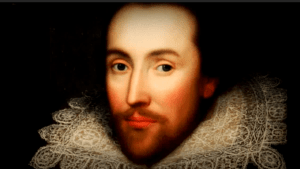
William Shakespeare, 1564 – 1616) – Stratford, England – Playwright, Poet, Actor.
Known as the “Bard of Avon” Considered the Greatest writer of the English Language.
I struggled with writing about William Shakespeare, simply because I couldn’t write anything more exciting and, frankly, better about him than a lecture given by Jonathan Bowden (1962—2012 – Kent, England – Writer, Activist). Bowden, a controversial figure, held many keen insights concerning Western Civilization and British history, a true blue Saxon. Unfortunately, to our great loss, Jonathan passed over at 49, a fortnight shy of his 50th birthday. His deep understanding of The Bard is nothing less than brilliant. There is an audio available on this lecture, but the quality is horrendous. However, thanks to Lee and Donna Hancock, one can read the entire transcript, which is posted at Counter Currents.
Shakespeare, by Jonathan Bowden
“We’re here today to talk about William Shakespeare, one of the greatest artists, writers, and playwrights that has ever existed in our race—the Aryan or Indo-European people—or, to be truthful, in any other group on this planet. Shakespeare lived during the Elizabethan period and wrote over 50 plays. He was an artist who was also an active actor and jobbing writer. For him, the work was part of the craft that he did in and around theaters, which he helped to own and manage.”
Shakespeare’s Not a Play
Dates: c. 1592–1609.
Geography: England.
Nations: England.
Key Details: Beyond his 38 plays, William Shakespeare wrote 154 sonnets (published 1609) and narrative poems like Venus and Adonis (1593) and The Rape of Lucrece (1594), plus shorter works like The Phoenix and the Turtle (1601). These explore temperaments of love, tragedy, comedy, and histor–sonnets delving into beauty, time, and betrayal, while poems weave epic narratives with moral depth. His non-dramatic output, often overshadowed by his plays, consumed much of his life, reflecting the dedication of a true artist
Quote s
Shakespeare’s Works (1590–1613)
A collection of William Shakespeare’s contributions, added to the PEACH lecture journals to enrich the Literature section during the Elizabethan era: Shakespeare’s Plays (38 Plays, 1590-1613): Includes histories like Henry V, tragedies like Hamlet, comedies like A Midsummer Night’s Dream, and romances like The Tempest. See full lisr below
The Works of William Shakespeare
Henry VI, Part 2 (Event, Literature)*
Dates: c. 1590–1591. Geography: England. Nations: England. Key Details: A history play depicting the Wars of the Roses, focusing on political strife and the rise of York. Quip: “Henry VI, Part 2: Roses bloom red with royal dread!”
Henry VI, Part 3 (Event, Literature)*
Dates: c. 1590–1591. Geography: England. Nations: England. Key Details: Continues the Wars of the Roses, with Richard of York’s fall and the rise of Edward IV. Quip: “Henry VI, Part 3: Thrones clash, roses wither fast!”
Henry VI, Part 1 (Event, Literature)*
Dates: c. 1591–1592. Geography: England, France. Nations: England, France. Key Details: Chronicles Joan of Arc’s role in the Hundred Years’ War and Henry VI’s early reign. Quip: “Henry VI, Part 1: Joan sparks war, crowns falter!”
Richard III (Event, Literature)*
Dates: c. 1592–1593. Geography: England. Nations: England. Key Details: Depicts Richard III’s ruthless rise to power and downfall, ending the Wars of the Roses. Quip: “Richard III: Crooked king, straight to doom!”
The Comedy of Errors (Event, Literature)*
Dates: c. 1592–1593. Geography: Ephesus (fictional). Nations: None. Key Details: A farce about mistaken identities between two sets of twins, leading to hilarious chaos. Quip: “Comedy of Errors: Twins tangle, laughter doubles!”
Titus Andronicus (Event, Literature)*
Dates: c. 1593–1594. Geography: Rome (fictional). Nations: Rome. Key Details: A gruesome tragedy of revenge, with Titus seeking justice amid betrayal and violence. Quip: “Titus Andronicus: Revenge served bloody and cold!”
The Taming of the Shrew (Event, Literature)*
Dates: c. 1593–1594. Geography: Padua (fictional). Nations: None. Key Details: A comedy where Petruchio “tames” the fiery Katherina through controversial tactics. Quip: “Taming of the Shrew: Katherina’s fire meets Petruchio’s wire!”
The Two Gentlemen of Verona (Event, Literature)*
Dates: c. 1594–1595. Geography: Verona, Milan (fictional). Nations: None. Key Details: A comedy of love and friendship, as Valentine and Proteus navigate romance and betrayal. Quip: “Two Gentlemen: Love tests friends, hearts mend!”
Love’s Labour’s Lost (Event, Literature)*
Dates: c. 1594–1595. Geography: Navarre (fictional). Nations: None. Key Details: A comedy where scholars swear off love, only to fall for visiting princesses. Quip: “Love’s Labour’s Lost: Oaths break, hearts ache!”
Romeo and Juliet (Event, Literature)*
Dates: c. 1594–1595. Geography: Verona (fictional). Nations: None. Key Details: A tragic love story of star-crossed lovers doomed by their feuding families. Quip: “Romeo and Juliet: Love blooms, but fate dooms!”
Richard II (Event, Literature)*
Dates: c. 1595–1596. Geography: England. Nations: England. Key Details: A history play about Richard II’s deposition by Henry Bolingbroke, sparking civil unrest. Quip: “Richard II: Crown falls, rebellion calls!”
A Midsummer Night’s Dream (Event, Literature)*
Dates: c. 1595–1596. Geography: Athens (fictional). Nations: None. Key Details: A whimsical comedy of lovers, fairies, and a magical forest, ending in harmony. Quip: “Midsummer Night’s Dream: Fairy tricks, love fixes!”
King John (Event, Literature)*
Dates: c. 1596–1597. Geography: England, France. Nations: England, France. Key Details: A history play about King John’s struggles with France and internal rebellion. Quip: “King John: Magna Carta, royal drama!”
The Merchant of Venice (Event, Literature)*
Dates: c. 1596–1597. Geography: Venice (fictional). Nations: None. Key Details: A comedy-drama where Shylock demands a pound of flesh, but mercy prevails. Quip: “Merchant of Venice: Shylock’s bond, mercy beyond!”
Henry IV, Part 1 (Event, Literature)*
Dates: c. 1597–1598. Geography: England. Nations: England. Key Details: A history play about Prince Hal’s rise, featuring the boisterous Falstaff and Hotspur’s rebellion. Quip: “Henry IV, Part 1: Hal grows, Falstaff glows!”
Henry IV, Part 2 (Event, Literature)*
Dates: c. 1597–1598. Geography: England. Nations: England. Key Details: Continues Hal’s journey to kingship, with Falstaff’s antics and the king’s decline. Quip: “Henry IV, Part 2: Hal’s crown, Falstaff’s frown!”
Much Ado About Nothing (Event, Literature)*
Dates: c. 1598–1599. Geography: Messina (fictional). Nations: None. Key Details: A comedy of love and deception, with Beatrice and Benedick’s witty sparring. Quip: “Much Ado: Beatrice and Benedick, love’s quick trick!”
Henry V (Event, Literature)*
Dates: c. 1598–1599. Geography: England, France. Nations: England, France. Key Details: A history play of Henry V’s victory at Agincourt, showcasing leadership and war. Quip: “Henry V: Agincourt’s cry, England’s sky!”
Julius Caesar (Event, Literature)*
Dates: c. 1599–1600. Geography: Rome. Nations: Rome. Key Details: A tragedy of betrayal, as Brutus and others assassinate Caesar, leading to chaos. Quip: “Julius Caesar: Et tu, Brutus? Rome’s ruin!”
As You Like It (Event, Literature)*
Dates: c. 1599–1600. Geography: Forest of Arden (fictional). Nations: None. Key Details: A pastoral comedy where Rosalind finds love and freedom in disguise. Quip: “As You Like It: Arden’s charm, love’s warm arm!”
Twelfth Night (Event, Literature)*
Dates: c. 1599–1600. Geography: Illyria (fictional). Nations: None. Key Details: A comedy of mistaken identities, with Viola’s disguise sparking love and confusion. Quip: “Twelfth Night: Viola’s mask, love’s task!”
Hamlet (Event, Literature)*
Dates: c. 1600–1601. Geography: Denmark (fictional). Nations: None. Key Details: A tragedy of Prince Hamlet’s revenge against his uncle for his father’s murder. Quip: “Hamlet: To be or not, fate’s knot!”
The Merry Wives of Windsor (Event, Literature)*
Dates: c. 1600–1601. Geography: Windsor (fictional). Nations: England. Key Details: A comedy where Falstaff’s romantic schemes are foiled by clever wives. Quip: “Merry Wives: Falstaff’s woo, wives undo!”
Troilus and Cressida (Event, Literature)*
Dates: c. 1601–1602. Geography: Troy (fictional). Nations: None. Key Details: A tragicomedy of love and war during the Trojan War, with a cynical edge. Quip: “Troilus and Cressida: Love’s vow, war’s plow!”
All’s Well That Ends Well (Event, Literature)*
Dates: c. 1602–1603. Geography: France, Italy (fictional). Nations: None. Key Details: A comedy where Helena wins Bertram’s love through cunning and perseverance. Quip: “All’s Well: Helena’s quest, love’s jest!”
Measure for Measure (Event, Literature)*
Dates: c. 1604–1605. Geography: Vienna (fictional). Nations: None. Key Details: A dark comedy exploring justice and morality, with Angelo’s hypocrisy exposed. Quip: “Measure for Measure: Justice bends, mercy mends!”
Othello (Event, Literature)*
Dates: c. 1604–1605. Geography: Venice, Cyprus (fictional). Nations: None. Key Details: A tragedy of jealousy, as Iago manipulates Othello into murdering Desdemona. Quip: “Othello: Iago’s lie, love must die!”
King Lear (Event, Literature)*
Dates: c. 1605–1606. Geography: Britain (fictional). Nations: None. Key Details: A tragedy of a king’s descent into madness after dividing his kingdom among his daughters. Quip: “King Lear: Daughters’ scorn, king torn!”
Macbeth (Event, Literature)*
Dates: c. 1605–1606. Geography: Scotland (fictional). Nations: None. Key Details: A tragedy of ambition, as Macbeth murders his way to the throne, spiraling into guilt. Quip: “Macbeth: Witches’ brew, doom’s true!”
Antony and Cleopatra (Event, Literature)*
Dates: c. 1606–1607. Geography: Rome, Egypt. Nations: Rome, Egypt. Key Details: A tragedy of love and politics, as Antony and Cleopatra’s affair leads to their downfall. Quip: “Antony and Cleopatra: Love’s flame, empire’s shame!”
Coriolanus (Event, Literature)*
Dates: c. 1607–1608. Geography: Rome. Nations: Rome. Key Details: A tragedy of pride, as the warrior Coriolanus is banished and seeks revenge. Quip: “Coriolanus: Pride’s fall, Rome’s call!”
Timon of Athens (Event, Literature)*
Dates: c. 1607–1608. Geography: Athens (fictional). Nations: None. Key Details: A tragedy of a generous man turned misanthrope after his friends betray him. Quip: “Timon of Athens: Gold gone, friends none!”
Pericles, Prince of Tyre (Event, Literature)*
Dates: c. 1608–1609. Geography: Various (fictional). Nations: None. Key Details: A romance of Pericles’ adventures, reuniting with his lost family after trials. Quip: “Pericles: Seas apart, hearts restart!”
Cymbeline (Event, Literature)*
Dates: c. 1609–1610. Geography: Britain, Rome (fictional). Nations: None. Key Details: A romance where Imogen’s loyalty triumphs over deceit and war. Quip: “Cymbeline: Imogen’s grace, love’s embrace!”
The Winter’s Tale (Event, Literature)*
Dates: c. 1610–1611. Geography: Sicily, Bohemia (fictional). Nations: None. Key Details: A romance of jealousy and redemption, with a magical statue coming to life. Quip: “Winter’s Tale: Statue wakes, heartbreaks!”
The Tempest (Event, Literature)*
Dates: c. 1611–1612. Geography: Island (fictional). Nations: None. Key Details: A romance of magic and forgiveness, as Prospero orchestrates reconciliation. Quip: “Tempest: Prospero’s spell, all’s well!”
Henry VIII (Event, Literature)*
Dates: c. 1612–1613. Geography: England. Nations: England. Key Details: A history play of Henry VIII’s reign, focusing on his divorce and Anne Boleyn’s rise. Quip: “Henry VIII: Divorce strife, new wife!”
The Two Noble Kinsmen (Event, Literature)*
Dates: c. 1612–1613. Geography: Athens (fictional). Nations: None. Key Details: A tragicomedy of friendship and rivalry, as two cousins compete for love. Quip: “Two Noble Kinsmen: Friends fight, love’s plight!”
SSSSSSSSSSSSSSSSSSSSSSSSSSSSSSSSSSSSSSSSSSS
Henry VI, Part 2 (1590–1591)
Henry VI, Part 3 (1590–1591)
Henry VI, Part 1 (1591–1592)
Richard III (1592–1593)
The Comedy of Errors (1592–1593)
Titus Andronicus (1593–1594)
The Taming of the Shrew (1593–1594)
The Two Gentlemen of Verona (1594–1595)
Love’s Labour’s Lost (1594–1595)
Romeo and Juliet (1594–1595)
Richard II (1595–1596)
A Midsummer Night’s Dream (1595–1596)
King John (1596–1597)
The Merchant of Venice (1596–1597)
Henry IV, Part 1 (1597–1598)
Henry IV, Part 2 (1597–1598)
Much Ado About Nothing (1598–1599)
Henry V (1598–1599)
Julius Caesar (1599–1600)
As You Like It (1599–1600)
Twelfth Night (1599–1600)
Hamlet (1600–1601)
The Merry Wives of Windsor (1600–1601)
Troilus and Cressida (1601–1602)
All’s Well That Ends Well (1602–1603)
Measure for Measure (1604–1605)
Othello (1604–1605)
King Lear (1605–1606)
Macbeth (1605–1606)
Antony and Cleopatra (1606–1607)
Coriolanus (1607–1608)
Timon of Athens (1607–1608)
Pericles, Prince of Tyre (1608–1609)
Cymbeline (1609–1610)
The Winter’s Tale (1610–1611)
The Tempest (1611–1612)
Henry VIII (1612–1613)
The Two Noble Kinsmen (1612–1613)
.
.
.

Short Lecture Series–
The Birnam Wood Prophecy
The Language of Shakespeare
The Shakespeare Garden
The Songs of Shakespeare
The Whimsical Shakespeare – Who’s Who, What’s What
History of Theatre Renaissance
..
MOVE TO JAN
World Events
The Black Death (1347–1351)
A Chronicle of Shadows 14th Century Europe—
.
The Hundred Years’ War **
Dates: 1337–1453. Geography: France, England (e.g., Normandy, Aquitaine, Flanders). Nations: France, England (allies: Burgundy, Brittany, Portugal). Key Battles: Sluys (1340), Crécy (1346), Poitiers (1356), Agincourt (1415), Orléans (1429), Castillon (1453). The war, a series of conflicts over French succession and territory, ended with French victory, reclaiming most English lands.
The Hundred Years’ War was an intermittent conflict between the kingdoms England and France during the Late Middle Ages. It was sparked by Edward III’s claim to the French throne and feudal disputes over Duchy of Aquitaine. Fueled by rising nationalism on both sides.
In reality it spanned 116 years but wasn’t continuous fighting; included long truces (e.g., 1360–1369, 1389–1415) and disruptions like the Black Death (1348–1351).
Key periods (e.g., Edwardian War 1337–1360, Caroline War 1369–1389, Lancastrian War 1415–1453) were distinct campaigns, not a single war.
Civil Strife: Included France’s internal conflicts (e.g., Armagnac-Burgundian civil war, 1407–1435), blurring “war” vs. “conflict.”
Nationalism and Economics: Fueled by emerging nationalism and economic struggles (e.g., trade, feudal rights), it was a broader socio-political clash.
337
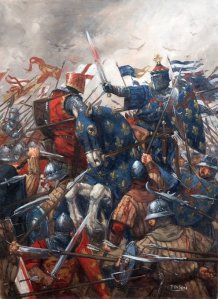 The Hundred Years’ War (French: Guerre de Cent Ans; 1337–1453) was a conflict between the kingdoms of England and France and a civil war in France during the Late Middle Ages. It emerged from feudal disputes over the Duchy of Aquitaine and was triggered by a claim to the French throne made by Edward III of England. The war grew into a broader military, economic, and political struggle involving factions from across Western Europe, fuelled by emerging nationalism on both sides. The periodisation of the war typically charts it as taking place over 116 years. However, it was an intermittent conflict which was frequently interrupted by external factors, such as the Black Death, and several years of truces.
Now, with such laws comes a great deal of administrative duties, and King John was actually quite good at this task. However, it was often said that he could be petty, vindictive, and cruel. This reputation remained with his legacy throughout history and was later portrayed as the villain in the legend of Robinhood. Though he died shortly after signing the document, his posterity, and the Nobles, did very well. They continued to secure much land in France, even beyond the Aquitaine.
Over time, however, resentment grew between the two countries of England and France, and by 1337, war broke out. This war went on for 116 years and is often noted as a War of Nationalism. Most historians divide this war into 3 parts, and Prof. Burke offers a wonderful presentation of this part of our history in his lecture series Mid-January: Life of the Peasantry, the Kings, and Queens, development of the weapons of war: Long Bow and the Canon, and the beginning role of science as an art unto its own. There is a brief interlude between 1347 through 1351 for what is now known as the Black Death.
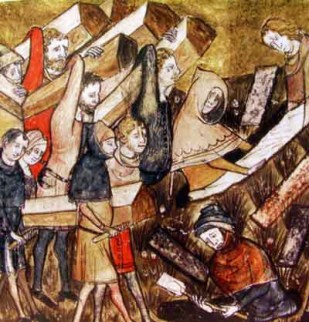 1346
1346
In its wake, the Black Death took with it 200 million souls. It began in Turkey on trade ships to Ital. Though the people were unaware of how it reached them or what was actually causing the illness and deaths, many felt it was the devil and the church was not only there to comfort, but to expand on its doctrine. However, we have learned, over time, that the fleas of ship rats infected with the bacteria that blew up into the world’s largest pandemic carried it. It came to be known as the bubonic plague (Yersinia pestis) infecting the lymph nodes in the body. Death was gruesome, it wiped out whole villages and towns. It wiped whole villages and towns out on the Continent. Even on the English island it killed at least 20% of the people, making its way even into Scotland. It took over 100 years to replace the population that was lost.
Once the plague had subsided, several new ideas, not to mention more concentrated wealth into younger and less noble hands, sprang up. There was a breakout within the Feudal System. Since labor was wrought by the peasants and either they were dead, or their masters were dead, there was a great demand for workers to work the fields and fashion clothing. For many reasons, the peasants took it upon themselves to demand more money, more independence, and they started to acquire land and create their own wealth. It was a very profitable time for the peasantry, and one could say, the beginnings of a true Middle-Class.
.
.
JAN/FEB
XXFRANCE
Despite early losses in the Hundred Years’ War (1337–1453). France had a strong feudal monarchy under the Capetians, Philip IV. A strong Catholic influenec makes France wealthy and foster a larger population.
France 12th through early 17th century – Capetian Dynasty
Philip II Augustus **
Philip II 1165–1223 – Kingdom of France – First King of France.
Full Name: Philip II Augustus of France. Born: August 21, 1165, Gonesse, France. Died: July 14, 1223, Mantes-la-Jolie, France. Parents: Louis VII of France, Adela of Champagne. Siblings: Marie, Alix, Marguerite, Alys (half-siblings). Spouses: Three (first: Isabelle of Hainaut). Most Memorable Accomplishment: Consolidated royal power, tripling French territory by defeating England’s John I at the Battle of Bouvines (1214), establishing France as a major European power.
Charles VI *
Charles VI 1368–1422 – Kingdom of France – King – Ended the hundred year’s war.
Full Name: Charles VI of France. Born: December 3, 1368, Paris, France. Died: October 21, 1422, Paris, France. Parents: Charles V of France, Joanna of Bourbon. Siblings: Louis, John, Catherine, others. Spouses: One (Isabeau of Bavaria). Most Memorable Accomplishment: Preserved the French crown during mental illness and the Hundred Years’ War, enabling later victories like Orléans (1429).
Louis XII **
Louis XII, 1462 – 1515- Kingdom of France – France – King of France and Naples.
Full Name: Louis XII of France. Born: June 27, 1462, Blois, France. Died: January 1, 1515, Paris, France. Parents: Charles, Duke of Orléans; Marie of Cleves. Siblings: Anne, Joan. Spouses: Three (first: Joan of France). Most Memorable Accomplishment: Earned the title “Father of the People” for tax reforms and Italian campaigns, briefly controlling Naples (1497–1504).
Louis XIII **
Louise XIII, 1601 –1643, Kingdom of France – The Just. Louise. Full Name: Louis XIII of France. Born: September 27, 1601, Fontainebleau, France. Died: May 14, 1643, Saint-Germain-en-Laye, France. Parents: Henry IV of France, Marie de’ Medici. Siblings: Elisabeth, Christine, Nicholas, Gaston, Henrietta Maria. Spouses: One (Anne of Austria). Most Memorable Accomplishment: Strengthened royal authority by curbing noble revolts, laying the foundation for absolutism under Louis XIV.
Philip II Augustus, King of France KNOWN AS: Philip Augustus TITLE: King of France PRIMARY OCCUPATION: Monarch FULL NAME: Philip II Augustus of France BIRTH: August 21, 1165 – Gonesse, France DEATH: July 14, 1223 – Mantes-la-Jolie, France PARENTS: Louis VII of France, Adela of Champagne SIBLINGS: Marie, Alix, Marguerite, Alys (half-siblings) EDUCATION: Tutored in royal court; influenced by Walter of Lesbos PHILOSOPHY/RELIGION: Christian ACCOMPLISHMENTS: Consolidated royal power, tripling French territory by defeating England’s John I at the Battle of Bouvines (1214); established France as a major European power. AFFILIATIONS: Capetian dynasty, allied with Holy Roman Empire YEARS OF RULE OR VOCATION: Ruled 1180–1223 SPOUSES: Three, Isabelle of Hainaut, Ingeborg of Denmark, Agnes of Merania CHILDREN IN WEDLOCK: Louis VIII, Marie OUT OF WEDLOCK: Pierre Charlot NAME OF SUCCESSOR: Louis VIII (son) WORKS/BOOKS: Royal charters SYMBOL/EMBLEM: Fleur-de-lis CONTEMPORARIES/RIVALS: King John, Richard I, Emperor Otto IV LEGACY/INFLUENCE: Centralized French monarchy; laid groundwork for modern French state. His victories over England shifted European power dynamics. MEMORABLE QUOTE: “I have made France, not found it.” (Attributed).
Charles VI, King of France KNOWN AS: Charles VI TITLE: King of France PRIMARY OCCUPATION: Monarch FULL NAME: Charles VI of France BIRTH: December 3, 1368 – Paris, France DEATH: October 21, 1422 – Paris, France PARENTS: Charles V of France, Joanna of Bourbon SIBLINGS: Louis, John, Catherine, others EDUCATION: Unknown PHILOSOPHY/RELIGION: Christian ACCOMPLISHMENTS: Preserved the French crown during mental illness and the Hundred Years’ War, enabling later victories like Orléans (1429). AFFILIATIONS: Valois dynasty YEARS OF RULE OR VOCATION: Ruled 1380–1422 SPOUSES: One, Isabeau of Bavaria CHILDREN IN WEDLOCK: Unknown OUT OF WEDLOCK: Unknown NAME OF SUCCESSOR: Charles VII (son) WORKS/BOOKS: Unknown SYMBOL/EMBLEM: Unknown CONTEMPORARIES/RIVALS: Henry V of England, Philip the Bold LEGACY/INFLUENCE: Maintained French resilience during crisis. MEMORABLE QUOTE: Unknown.
Louis XII, King of France KNOWN AS: Louis XII TITLE: King of France and Naples PRIMARY OCCUPATION: Monarch FULL NAME: Louis XII of France BIRTH: June 27, 1462 – Blois, France DEATH: January 1, 1515 – Paris, France PARENTS: Charles, Duke of Orléans, Marie of Cleves SIBLINGS: Anne, Joan EDUCATION: Unknown PHILOSOPHY/RELIGION: Christian ACCOMPLISHMENTS: Earned the title “Father of the People” for tax reforms and Italian campaigns, briefly controlling Naples (1497–1504). AFFILIATIONS: Valois-Orléans dynasty YEARS OF RULE OR VOCATION: Ruled 1498–1515 SPOUSES: Three, Joan of France, Anne of Brittany, Mary Tudor CHILDREN IN WEDLOCK: Claude, Renée OUT OF WEDLOCK: Unknown NAME OF SUCCESSOR: Francis I WORKS/BOOKS: Unknown SYMBOL/EMBLEM: Unknown CONTEMPORARIES/RIVALS: Ferdinand II of Aragon, Pope Julius II LEGACY/INFLUENCE: Improved governance and expanded French influence in Italy. MEMORABLE QUOTE: Unknown.
Louis XIII, King of France KNOWN AS: The Just TITLE: King of France PRIMARY OCCUPATION: Monarch FULL NAME: Louis XIII of France BIRTH: September 27, 1601 – Fontainebleau, France DEATH: May 14, 1643 – Saint-Germain-en-Laye, France PARENTS: Henry IV of France, Marie de’ Medici SIBLINGS: Elisabeth, Christine, Nicholas, Gaston, Henrietta Maria EDUCATION: Unknown PHILOSOPHY/RELIGION: Christian ACCOMPLISHMENTS: Strengthened royal authority by curbing noble revolts, laying the foundation for absolutism under Louis XIV. AFFILIATIONS: Bourbon dynasty YEARS OF RULE OR VOCATION: Ruled 1610–1643 SPOUSES: One, Anne of Austria CHILDREN IN WEDLOCK: Louis XIV, Philippe OUT OF WEDLOCK: Unknown NAME OF SUCCESSOR: Louis XIV (son) WORKS/BOOKS: Unknown SYMBOL/EMBLEM: Unknown CONTEMPORARIES/RIVALS: Cardinal Richelieu, Philip IV of Spain LEGACY/INFLUENCE: Set stage for French absolutism. MEMORABLE QUOTE: Unknown.
Henry V, King of England KNOWN AS: Henry of Monmouth, The Warrior King TITLE: King of England PRIMARY OCCUPATION: Monarch, Military Leader FULL NAME: Henry of Monmouth BIRTH: September 16, 1386 – Monmouth Castle, Wales DEATH: August 31, 1422 – Vincennes, France PARENTS: Mary de Bohun, Henry IV (King of England) SIBLINGS: Thomas, John, Humphrey, Blanche, Philippa EDUCATION: Educated at The Queen’s College, Oxford; influenced by Henry Beaufort PHILOSOPHY/RELIGION: Christian ACCOMPLISHMENTS: Led England to victory at the Battle of Agincourt (1415); secured the Treaty of Troyes (1420), naming him heir to the French throne. AFFILIATIONS: Lancastrian dynasty YEARS OF RULE OR VOCATION: Ruled 1413–1422 SPOUSES: One, Catherine of Valois CHILDREN IN WEDLOCK: Henry VI OUT OF WEDLOCK: None confirmed NAME OF SUCCESSOR: Henry VI (son) WORKS/BOOKS: Unknown SYMBOL/EMBLEM: Lancastrian rose (red rose symbol) CONTEMPORARIES/RIVALS: Charles VI of France, John Oldcastle, Edmund Mortimer LEGACY/INFLUENCE: Strengthened English nationalism; immortalized in Shakespeare’s Henriad as a warrior-king. MEMORABLE QUOTE: “We few, we happy few, we band of brothers.” (Shakespeare’s Henry V, attributed).
Henry VIII, King of England and Ireland KNOWN AS: Henry Tudor TITLE: King of England and Ireland PRIMARY OCCUPATION: Monarch FULL NAME: Henry Tudor BIRTH: June 28, 1491 – Greenwich, England DEATH: January 28, 1547 – London, England PARENTS: Henry VII of England, Elizabeth of York SIBLINGS: Arthur, Margaret, Mary EDUCATION: Unknown PHILOSOPHY/RELIGION: Christian (shifted to Church of England) ACCOMPLISHMENTS: Initiated the English Reformation by breaking with Rome, establishing the Church of England (1534). AFFILIATIONS: English Reformation YEARS OF RULE OR VOCATION: Ruled 1509–1547 SPOUSES: Six, Catherine of Aragon, Anne Boleyn, Jane Seymour, Anne of Cleves, Catherine Howard, Catherine Parr CHILDREN IN WEDLOCK: Mary I, Elizabeth I, Edward VI OUT OF WEDLOCK: Henry FitzRoy (recognized illegitimate son) NAME OF SUCCESSOR: Edward VI WORKS/BOOKS: Unknown SYMBOL/EMBLEM: Unknown CONTEMPORARIES/RIVALS: Francis I of France, Charles V of Spain LEGACY/INFLUENCE: Transformed England’s religious and political landscape. MEMORABLE QUOTE: Unknown (Note: Venetian ambassador Giustiniani wrote in 1519, “The King is tall and handsome, with a regal presence,” noting his early charisma.).
Mary I, Queen of England and Ireland KNOWN AS: Bloody Mary TITLE: Queen of England and Ireland PRIMARY OCCUPATION: Monarch FULL NAME: Mary Tudor BIRTH: February 18, 1516 – Greenwich, England DEATH: November 17, 1558 – London, England PARENTS: Henry VIII of England, Catherine of Aragon SIBLINGS: Elizabeth I, Edward VI (half-siblings) EDUCATION: Unknown PHILOSOPHY/RELIGION: Catholic ACCOMPLISHMENTS: Restored Catholicism in England (1553–1558), reversing her father’s Reformation. AFFILIATIONS: Catholic restoration YEARS OF RULE OR VOCATION: Ruled 1553–1558 SPOUSES: One, Philip II of Spain CHILDREN IN WEDLOCK: None OUT OF WEDLOCK: None confirmed NAME OF SUCCESSOR: Elizabeth I WORKS/BOOKS: Unknown SYMBOL/EMBLEM: Unknown CONTEMPORARIES/RIVALS: Elizabeth I, Philip II of Spain LEGACY/INFLUENCE: Brief Catholic resurgence, marked by religious conflict. MEMORABLE QUOTE: Unknown (Note: Ambassador Simon Renard wrote in 1554, “She is gentle but resolute in her faith,” reflecting her determination.).
Elizabeth I, Queen of England and Ireland KNOWN AS: The Virgin Queen, Gloriana, Last of the House of Tudor TITLE: Queen of England and Ireland PRIMARY OCCUPATION: Monarch FULL NAME: Elizabeth Tudor BIRTH: September 7, 1533 – Greenwich, England DEATH: March 24, 1603 – Richmond, England PARENTS: Anne Boleyn, Henry VIII (King and Queen of England) SIBLINGS: Edward VI, Mary I (half-siblings) EDUCATION: Educated by humanists like Roger Ascham; influenced by William Cecil PHILOSOPHY/RELIGION: Protestant ACCOMPLISHMENTS: Defeated the Spanish Armada (1588); established the Elizabethan Settlement, balancing religious factions. AFFILIATIONS: Protestant cause, Privy Council YEARS OF RULE OR VOCATION: Ruled 1558–1603 SPOUSES: None (never married) CHILDREN IN WEDLOCK: None OUT OF WEDLOCK: None confirmed NAME OF SUCCESSOR: James I (James VI of Scotland) WORKS/BOOKS: Golden Speech (1601) SYMBOL/EMBLEM: Tudor rose (red and white) CONTEMPORARIES/RIVALS: Mary, Queen of Scots, Philip II of Spain, Francis Drake LEGACY/INFLUENCE: Stabilized England’s economy and religion; fostered a cultural golden age. MEMORABLE QUOTE: “I know I have the body but of a weak and feeble woman; but I have the heart and stomach of a king.” (Tilbury Speech, 1588).
James V, King of Scotland KNOWN AS: Unknown TITLE: King of Scotland PRIMARY OCCUPATION: Monarch FULL NAME: James Stewart BIRTH: April 10, 1512 – Linlithgow, Scotland DEATH: December 14, 1542 – Falkland, Scotland PARENTS: James IV of Scotland, Margaret Tudor SIBLINGS: Alexander, others EDUCATION: Unknown PHILOSOPHY/RELIGION: Christian ACCOMPLISHMENTS: Strengthened Scottish monarchy through alliances with France, notably marrying Madeleine (1537). AFFILIATIONS: House of Stewart YEARS OF RULE OR VOCATION: Ruled 1513–1542 SPOUSES: Two, Madeleine of Valois, Mary of Guise CHILDREN IN WEDLOCK: Unknown OUT OF WEDLOCK: Unknown NAME OF SUCCESSOR: Mary, Queen of Scots WORKS/BOOKS: Unknown SYMBOL/EMBLEM: Unknown CONTEMPORARIES/RIVALS: Henry VIII of England LEGACY/INFLUENCE: Preserved Scottish autonomy until his daughter’s reign. MEMORABLE QUOTE: Unknown (Note: Scottish chronicler John Lesley wrote, “James was a prince of great courage,” praising his resilience.).
James VI and I, King of Scotland and Great Britain KNOWN AS: Unknown TITLE: King of Scotland as James VI, King of Great Britain and Ireland as James I PRIMARY OCCUPATION: Monarch FULL NAME: James Charles Stuart BIRTH: June 19, 1566 – Edinburgh, Scotland DEATH: March 27, 1625 – Theobalds, England PARENTS: Mary Queen of Scots, Henry Stuart (Lord Darnley) SIBLINGS: None EDUCATION: Unknown PHILOSOPHY/RELIGION: Christian ACCOMPLISHMENTS: Unified the Scottish and English crowns (1603), initiating British colonial expansion. AFFILIATIONS: House of Stuart YEARS OF RULE OR VOCATION: Ruled Scotland 1567–1625, England 1603–1625 SPOUSES: One, Anne of Denmark CHILDREN IN WEDLOCK: Henry, Elizabeth, Charles OUT OF WEDLOCK: Unknown NAME OF SUCCESSOR: Charles I WORKS/BOOKS: Unknown SYMBOL/EMBLEM: Unknown CONTEMPORARIES/RIVALS: Unknown LEGACY/INFLUENCE: Laid foundations for British empire. MEMORABLE QUOTE: Unknown (Note: Sir Anthony Weldon wrote, “He was a king of good learning but poor judgment,” reflecting mixed views.).
Mary, Queen of Scots KNOWN AS: Unknown TITLE: Queen of Scotland PRIMARY OCCUPATION: Monarch FULL NAME: Mary Stuart BIRTH: December 8, 1542 – Linlithgow, Scotland DEATH: February 8, 1587 – Fotheringhay, England PARENTS: James V of Scotland, Mary of Guise SIBLINGS: None surviving EDUCATION: Unknown PHILOSOPHY/RELIGION: Catholic ACCOMPLISHMENTS: Asserted her claim to the English throne, challenging Elizabeth I. AFFILIATIONS: House of Stuart YEARS OF RULE OR VOCATION: Ruled 1542–1567 SPOUSES: Three, Francis II of France, Henry Stuart, James Hepburn CHILDREN IN WEDLOCK: James VI of Scotland OUT OF WEDLOCK: Unknown NAME OF SUCCESSOR: James VI of Scotland WORKS/BOOKS: Unknown SYMBOL/EMBLEM: Unknown CONTEMPORARIES/RIVALS: Elizabeth I LEGACY/INFLUENCE: Her claim fueled Anglo-Scottish tensions. MEMORABLE QUOTE: Unknown (Note: Elizabeth I reportedly said in 1586, “She would be the end of me or I of her,” highlighting their rivalry.).
Jane Grey, Queen of England KNOWN AS: The Nine Days’ Queen TITLE: Queen of England PRIMARY OCCUPATION: Monarch (briefly) FULL NAME: Lady Jane Grey BIRTH: October 1537 – Bradgate Park, England DEATH: February 12, 1554 – Tower of London, England PARENTS: Henry Grey, Frances Brandon SIBLINGS: Katherine, Mary EDUCATION: Unknown PHILOSOPHY/RELIGION: Protestant ACCOMPLISHMENTS: Proclaimed queen July 10, 1553, deposed after nine days by Mary I. AFFILIATIONS: Protestant cause YEARS OF RULE OR VOCATION: Ruled July 10–19, 1553 SPOUSES: One, Guildford Dudley CHILDREN IN WEDLOCK: None OUT OF WEDLOCK: None NAME OF SUCCESSOR: Mary I WORKS/BOOKS: Unknown SYMBOL/EMBLEM: Unknown CONTEMPORARIES/RIVALS: Mary I, Edward VI LEGACY/INFLUENCE: Symbol of political turmoil. MEMORABLE QUOTE: Unknown (Note: Chronicler John Foxe wrote, “a martyr for her faith,” reflecting her tragic end.).
Edward, The Black Prince KNOWN AS: The Black Prince TITLE: Prince of Wales PRIMARY OCCUPATION: Military Leader, Heir to the Throne FULL NAME: Edward of Woodstock BIRTH: June 15, 1330 – Woodstock, England DEATH: June 8, 1376 – Westminster, England PARENTS: Philippa of Hainault, Edward III (King and Queen of England) SIBLINGS: John of Gaunt, Lionel, Edmund, Mary, Margaret, others EDUCATION: Educated in royal household; trained by Edward III PHILOSOPHY/RELIGION: Christian ACCOMPLISHMENTS: Led victories at Crécy (1346) and Poitiers (1356); captured King John II of France. AFFILIATIONS: Plantagenet dynasty YEARS OF RULE OR VOCATION: Active 1340s–1376 SPOUSES: One, Joan of Kent CHILDREN IN WEDLOCK: Edward, Richard (later Richard II) OUT OF WEDLOCK: None confirmed NAME OF SUCCESSOR: Richard II (son) WORKS/BOOKS: Unknown SYMBOL/EMBLEM: Black Prince’s shield (three ostrich feathers) CONTEMPORARIES/RIVALS: John II of France, Bertrand du Guesclin LEGACY/INFLUENCE: Defined chivalric warfare; bolstered English morale. MEMORABLE QUOTE: “Serve me loyally, and I will reward you well.” (Attributed by chroniclers).
William Marshal, Earl of Pembroke KNOWN AS: William Marshal, The Marshal TITLE: Earl of Pembroke, Regent of England PRIMARY OCCUPATION: Knight, Statesman, Military Leader FULL NAME: William Marshal BIRTH: c. 1146–1147 – Unknown (likely Wiltshire, England) DEATH: May 14, 1219 – Caversham, England PARENTS: Sybil of Salisbury, John Marshal SIBLINGS: John Marshal (brother) EDUCATION: Trained as a knight; mentored by Patrick of Salisbury PHILOSOPHY/RELIGION: Christian ACCOMPLISHMENTS: Led victory at Battle of Lincoln (1217); served as regent for Henry III. AFFILIATIONS: Served Henry II, Richard I, John, Henry III YEARS OF RULE OR VOCATION: Active 1160s–1219; regent 1216–1219 SPOUSES: One, Isabel de Clare CHILDREN IN WEDLOCK: William, Richard, Gilbert, Walter, Anselm, Maud, Isabel, Sybil, Eva, Joan OUT OF WEDLOCK: None confirmed NAME OF SUCCESSOR: Henry III (as king); Hubert de Burgh (as regent) WORKS/BOOKS: History of William Marshal (biography, c. 1220s) SYMBOL/EMBLEM: Unknown CONTEMPORARIES/RIVALS: Simon de Montfort, Louis VIII of France LEGACY/INFLUENCE: Known as “the greatest knight”; stabilized England during First Barons’ War. MEMORABLE QUOTE: “I have served four kings and will serve the fifth.” (Attributed by his biography).
Thomas Cromwell, Lord Privy Seal KNOWN AS: Thomas Cromwell TITLE: Lord Privy Seal, Chief Minister PRIMARY OCCUPATION: Statesman, Lawyer FULL NAME: Thomas Cromwell BIRTH: c. 1485 – Putney, England DEATH: July 28, 1540 – London, England PARENTS: Katherine Meverell, Walter Cromwell (blacksmith) SIBLINGS: Katherine, Elizabeth EDUCATION: Self-educated; influenced by Thomas Wolsey PHILOSOPHY/RELIGION: Christian (Reformation supporter) ACCOMPLISHMENTS: Orchestrated Henry VIII’s break with Rome, enabling the English Reformation. AFFILIATIONS: Reformation supporters YEARS OF RULE OR VOCATION: Active 1520s–1540 SPOUSES: One, Elizabeth Wyckes CHILDREN IN WEDLOCK: Gregory OUT OF WEDLOCK: None confirmed NAME OF SUCCESSOR: Thomas Cranmer (influential role) WORKS/BOOKS: Reformation legislation (e.g., Act of Supremacy, 1534) SYMBOL/EMBLEM: Unknown CONTEMPORARIES/RIVALS: Thomas More, Anne Boleyn, Thomas Cranmer LEGACY/INFLUENCE: Shaped the English Reformation; centralized royal administration. MEMORABLE QUOTE: “I have ventured all for the king’s service.” (Attributed at his execution).
ART Geoffrey Chaucer KNOWN AS: Chaucer, Father of English Literature TITLE: Poet, Diplomat PRIMARY OCCUPATION: Poet, Civil Servant FULL NAME: Geoffrey Chaucer BIRTH: c. 1343 – London, England DEATH: October 25, 1400 – London, England PARENTS: Agnes Copton, John Chaucer (vintner) SIBLINGS: Unknown (possibly a sister, Katherine) EDUCATION: Likely educated in London; influenced by French and Italian poets like Boccaccio PHILOSOPHY/RELIGION: Christian ACCOMPLISHMENTS: Wrote The Canterbury Tales (c. 1387–1400), a cornerstone of English literature; introduced iambic pentameter. AFFILIATIONS: Royal court YEARS OF RULE OR VOCATION: Active 1360s–1400 SPOUSES: One, Philippa Roet CHILDREN IN WEDLOCK: Thomas, Elizabeth, Agnes, Lewis OUT OF WEDLOCK: None confirmed NAME OF SUCCESSOR: Unknown WORKS/BOOKS: The Canterbury Tales, Troilus and Criseyde, The Book of the Duchess SYMBOL/EMBLEM: Unknown CONTEMPORARIES/RIVALS: John Gower, William Langland LEGACY/INFLUENCE: Standardized Middle English in literature; shaped narrative poetry. MEMORABLE QUOTE: “What is better than wisdom? Woman. And what is better than a good woman? Nothing.” (The Canterbury Tales).
ART Jean Fouquet KNOWN AS: Jean Fouquet TITLE: Painter PRIMARY OCCUPATION: Artist FULL NAME: Jean Fouquet BIRTH: c. 1420 – Tours, France DEATH: c. 1481 – Tours, France PARENTS: Unknown (Commoners) SIBLINGS: Unknown EDUCATION: Trained in Tours; influenced by Italian artists PHILOSOPHY/RELIGION: Christian ACCOMPLISHMENTS: Painted Melun Diptych; blended Italian Renaissance and French Gothic styles. AFFILIATIONS: French court, clergy YEARS OF RULE OR VOCATION: Active 1440s–1470s SPOUSES: Unknown CHILDREN IN WEDLOCK: Unknown OUT OF WEDLOCK: None recorded NAME OF SUCCESSOR: None WORKS/BOOKS: Melun Diptych, Virgin and Child, Portrait of Charles VII SYMBOL/EMBLEM: Unknown CONTEMPORARIES/RIVALS: Rogier van der Weyden, Jan van Eyck LEGACY/INFLUENCE: Introduced Renaissance techniques to French art; shaped early French portraiture. His work bridged medieval and modern artistic traditions. MEMORABLE QUOTE: Unknown.
ART Nicole Oresme KNOWN AS: Nicole Oresme TITLE: Scholar/Bishop PRIMARY OCCUPATION: Scientist/Philosopher FULL NAME: Nicole Oresme BIRTH: c. 1320 – Allemagne, France DEATH: July 11, 1382 – Lisieux, France PARENTS: Unknown (Commoners) SIBLINGS: Unknown EDUCATION: Studied at University of Paris; influenced by John Buridan PHILOSOPHY/RELIGION: Christian ACCOMPLISHMENTS: Proposed Earth’s rotation; wrote on mathematics and economics. AFFILIATIONS: University of Paris, Charles V’s court YEARS OF RULE OR VOCATION: Active 1340s–1382 SPOUSES: None (cleric) CHILDREN IN WEDLOCK: None OUT OF WEDLOCK: None NAME OF SUCCESSOR: None WORKS/BOOKS: Treatise on Money, Livre du Ciel et du Monde SYMBOL/EMBLEM: Unknown CONTEMPORARIES/RIVALS: William of Ockham, Thomas Bradwardine LEGACY/INFLUENCE: Early heliocentric ideas; pioneered economic theory. His scientific curiosity prefigured Copernicus. MEMORABLE QUOTE: “The Earth moves, though we perceive it not.” (Paraphrased).
ART Thomas More KNOWN AS: Sir Thomas More TITLE: Lord Chancellor, Humanist PRIMARY OCCUPATION: Statesman, Philosopher, Lawyer FULL NAME: Thomas More BIRTH: February 7, 1478 – London, England DEATH: July 6, 1535 – London, England PARENTS: Agnes Graunger, John More (judge) SIBLINGS: None confirmed EDUCATION: Studied at Oxford and Lincoln’s Inn; influenced by Erasmus of Rotterdam PHILOSOPHY/RELIGION: Christian (Catholic) ACCOMPLISHMENTS: Wrote Utopia (1516), a seminal humanist text; served as Lord Chancellor under Henry VIII. AFFILIATIONS: English humanist circles YEARS OF RULE OR VOCATION: Lord Chancellor 1529–1532 SPOUSES: Two, Jane Colt, Alice Middleton CHILDREN IN WEDLOCK: Margaret, Elizabeth, Cicely, John OUT OF WEDLOCK: None confirmed NAME OF SUCCESSOR: Thomas Cromwell (as Lord Chancellor) WORKS/BOOKS: Utopia (1516), History of King Richard III SYMBOL/EMBLEM: Unknown CONTEMPORARIES/RIVALS: Erasmus, Thomas Cromwell, John Fisher LEGACY/INFLUENCE: Shaped Renaissance humanism; canonized as a Catholic saint. MEMORABLE QUOTE: “I die the king’s good servant, but God’s first.” (At his execution).
ART William Shakespeare KNOWN AS: Shakespeare, The Bard TITLE: Playwright, Poet PRIMARY OCCUPATION: Playwright, Actor, Poet FULL NAME: William Shakespeare BIRTH: April 1564 (baptized April 26, 1564) – Stratford-upon-Avon, England DEATH: April 23, 1616 – Stratford-upon-Avon, England PARENTS: Mary Arden, John Shakespeare (glover, alderman) SIBLINGS: Joan, Margaret, Gilbert, Joan, Anne, Richard, Edmund EDUCATION: Likely educated at King’s New School, Stratford; influenced by classical texts PHILOSOPHY/RELIGION: Christian ACCOMPLISHMENTS: Wrote 37 plays, including Hamlet and Romeo and Juliet; co-founded the Globe Theatre. AFFILIATIONS: Lord Chamberlain’s Men, King’s Men YEARS OF RULE OR VOCATION: Active 1580s–1616 SPOUSES: One, Anne Hathaway CHILDREN IN WEDLOCK: Susanna, Hamnet, Judith OUT OF WEDLOCK: None confirmed NAME OF SUCCESSOR: None; influenced Ben Jonson WORKS/BOOKS: Hamlet (c. 1600), Romeo and Juliet (c. 1595), Sonnet 18 (1609) SYMBOL/EMBLEM: Unknown CONTEMPORARIES/RIVALS: Christopher Marlowe, Ben Jonson, Robert Greene LEGACY/INFLUENCE: Defined English literature and theatre; shaped modern English language. MEMORABLE QUOTE: “All the world’s a stage, and all the men and women merely players.” (As You Like It).
ART Christopher Marlowe KNOWN AS: Christopher Marlowe TITLE: Playwright, Poet PRIMARY OCCUPATION: Playwright, Poet, Translator FULL NAME: Christopher Marlowe BIRTH: February 1564 (baptized February 26, 1564) – Canterbury, England DEATH: May 30, 1593 – Deptford, England PARENTS: Catherine Marlowe, John Marlowe (shoemaker) SIBLINGS: Several (exact names not fully recorded) EDUCATION: Studied at Cambridge University; influenced by classical literature PHILOSOPHY/RELIGION: Christian (speculative unorthodox views) ACCOMPLISHMENTS: Wrote Doctor Faustus (c. 1589) and Tamburlaine (c. 1587); pioneered blank verse. AFFILIATIONS: Admiral’s Men, Elizabethan espionage networks YEARS OF RULE OR VOCATION: Active 1580s–1593 SPOUSES: None CHILDREN IN WEDLOCK: None OUT OF WEDLOCK: None confirmed NAME OF SUCCESSOR: None; influenced Shakespeare WORKS/BOOKS: Doctor Faustus, Tamburlaine, The Jew of Malta SYMBOL/EMBLEM: Unknown CONTEMPORARIES/RIVALS: William Shakespeare, Thomas Kyd, Robert Greene LEGACY/INFLUENCE: Revolutionized Elizabethan drama; his death fueled literary legend. MEMORABLE QUOTE: “Is it not passing brave to be a king, and ride in triumph through Persepolis?” (Tamburlaine).
ART Edmund Spenser KNOWN AS: Poet Laureate (unofficial) TITLE: Poet, Administrator PRIMARY OCCUPATION: Poet, Administrator FULL NAME: Edmund Spenser BIRTH: c. 1552 – London, England DEATH: January 13, 1599 – London, England PARENTS: Elizabeth (surname unknown), John Spenser (clothmaker) SIBLINGS: Unknown EDUCATION: Studied at Cambridge (Pembroke College); influenced by Gabriel Harvey PHILOSOPHY/RELIGION: Christian ACCOMPLISHMENTS: Wrote The Faerie Queene (1590–1596), celebrating Elizabeth I. AFFILIATIONS: Leicester’s circle, served in Ireland YEARS OF RULE OR VOCATION: Active 1570s–1599 SPOUSES: Two, Machabyas Childe, Elizabeth Boyle CHILDREN IN WEDLOCK: Sylvanus, Katherine (possibly others) OUT OF WEDLOCK: None confirmed NAME OF SUCCESSOR: None; influenced Milton WORKS/BOOKS: The Faerie Queene, The Shepheardes Calender, Amoretti SYMBOL/EMBLEM: Unknown CONTEMPORARIES/RIVALS: Philip Sidney, Christopher Marlowe LEGACY/INFLUENCE: Shaped English epic poetry; influenced Elizabethan nationalism. MEMORABLE QUOTE: “For there is nothing lost, that may be found, if sought.” (The Faerie Queene).
ART William Caxton KNOWN AS: William Caxton TITLE: Printer, Publisher PRIMARY OCCUPATION: Printer, Translator FULL NAME: William Caxton BIRTH: c. 1422 – Kent, England DEATH: c. 1491 – Westminster, England PARENTS: Unknown (None) SIBLINGS: Unknown EDUCATION: Self-educated in printing in Bruges; influenced by European printers PHILOSOPHY/RELIGION: Christian ACCOMPLISHMENTS: Introduced the printing press to England (1476); printed The Canterbury Tales. AFFILIATIONS: Edward IV’s court, Merchant Adventurers YEARS OF RULE OR VOCATION: Active 1470s–1491 SPOUSES: One, Maud Caxton CHILDREN IN WEDLOCK: Elizabeth (possibly others) OUT OF WEDLOCK: None confirmed NAME OF SUCCESSOR: Wynkyn de Worde WORKS/BOOKS: The Canterbury Tales, Recuyell of the Historyes of Troye, Le Morte d’Arthur SYMBOL/EMBLEM: Unknown CONTEMPORARIES/RIVALS: Wynkyn de Worde, European printers LEGACY/INFLUENCE: Revolutionized English literature; standardized English language. MEMORABLE QUOTE: “This book is for the profit of all men.” (Preface to Recuyell).
ART John Dunstaple KNOWN AS: John Dunstaple (or Dunstable) TITLE: Composer PRIMARY OCCUPATION: Musician, Composer FULL NAME: John Dunstaple BIRTH: c. 1390 – Unknown (likely England) DEATH: December 24, 1453 – London, England PARENTS: Unknown (None) SIBLINGS: Unknown EDUCATION: Likely trained in cathedral schools; influenced by English choral traditions PHILOSOPHY/RELIGION: Christian ACCOMPLISHMENTS: Composed Quam pulchra es, pioneering polyphonic music. AFFILIATIONS: Possibly Henry V’s court, St Albans Abbey YEARS OF RULE OR VOCATION: Active 1410s–1453 SPOUSES: None confirmed CHILDREN IN WEDLOCK: None OUT OF WEDLOCK: None confirmed NAME OF SUCCESSOR: None; influenced Guillaume Dufay WORKS/BOOKS: Quam pulchra es, Missa Rex seculorum SYMBOL/EMBLEM: Unknown CONTEMPORARIES/RIVALS: Guillaume Dufay, Gilles Binchois LEGACY/INFLUENCE: Shaped Renaissance polyphony; elevated English music’s reputation. MEMORABLE QUOTE: None recorded.
ART William Gilbert KNOWN AS: Father of Magnetism TITLE: Physician, Scientist PRIMARY OCCUPATION: Physician, Scientist FULL NAME: William Gilbert BIRTH: May 24, 1544 – Colchester, England DEATH: November 30, 1603 – London, England PARENTS: Elizabeth Coggeshall, Jerome Gilbert (recorder) SIBLINGS: Unknown EDUCATION: Studied medicine at Cambridge; self-taught in physics PHILOSOPHY/RELIGION: Christian ACCOMPLISHMENTS: Published De Magnete (1600), pioneering magnetism studies. AFFILIATIONS: Royal College of Physicians, Elizabethan court YEARS OF RULE OR VOCATION: Active 1570s–1603 SPOUSES: None confirmed CHILDREN IN WEDLOCK: None OUT OF WEDLOCK: None confirmed NAME OF SUCCESSOR: None; influenced Galileo WORKS/BOOKS: De Magnete (1600) SYMBOL/EMBLEM: Unknown CONTEMPORARIES/RIVALS: Francis Bacon, Tycho Brahe LEGACY/INFLUENCE: Laid foundations for experimental science; influenced electricity studies. MEMORABLE QUOTE: “The force of a magnet is a divine gift.” (De Magnete).
ART John Wycliffe KNOWN AS: Wycliffe, Morning Star of the Reformation TITLE: Theologian, Reformer PRIMARY OCCUPATION: Theologian, Translator FULL NAME: John Wycliffe BIRTH: c. 1328 – Hipswell, Yorkshire, England DEATH: December 31, 1384 – Lutterworth, England PARENTS: Unknown, Roger Wycliffe SIBLINGS: Unknown EDUCATION: Studied at Oxford; influenced by scholastic theologians PHILOSOPHY/RELIGION: Christian (pre-Reformation reformer) ACCOMPLISHMENTS: Translated the Bible into Middle English; criticized Catholic Church abuses. AFFILIATIONS: Oxford, Lollard movement YEARS OF RULE OR VOCATION: Active 1360s–1384 SPOUSES: None confirmed CHILDREN IN WEDLOCK: None OUT OF WEDLOCK: None confirmed NAME OF SUCCESSOR: None; influenced Jan Hus WORKS/BOOKS: Wycliffe Bible, Summa de Ente SYMBOL/EMBLEM: Unknown CONTEMPORARIES/RIVALS: William Courtenay, John of Gaunt LEGACY/INFLUENCE: Laid groundwork for Protestant Reformation; democratized scripture. MEMORABLE QUOTE: “Trust wholly in Christ; rely altogether on his sufferings.” (From his sermons).
ART Geoffrey of Monmouth KNOWN AS: Geoffrey of Monmouth TITLE: Bishop, Chronicler PRIMARY OCCUPATION: Historian, Cleric FULL NAME: Geoffrey of Monmouth BIRTH: c. 1095 – Possibly Monmouth, Wales DEATH: c. 1155 – Unknown (likely England) PARENTS: Unknown SIBLINGS: Unknown EDUCATION: Educated in Oxford or Paris; influenced by Welsh and Norman traditions PHILOSOPHY/RELIGION: Christian ACCOMPLISHMENTS: Wrote Historia Regum Britanniae, popularizing King Arthur. AFFILIATIONS: Norman clergy, Oxford circles YEARS OF RULE OR VOCATION: Active 1120s–1155 SPOUSES: None confirmed CHILDREN IN WEDLOCK: None OUT OF WEDLOCK: None confirmed NAME OF SUCCESSOR: None; influenced Wace WORKS/BOOKS: Historia Regum Britanniae, Vita Merlini SYMBOL/EMBLEM: Unknown CONTEMPORARIES/RIVALS: William of Malmesbury, Henry of Huntingdon LEGACY/INFLUENCE: Created Arthurian legend; blended history and myth. MEMORABLE QUOTE: “Britain, best of islands, is situated in the western ocean.” (Historia Regum Britanniae).
ART John Cabot KNOWN AS: John Cabot (Giovanni Caboto) TITLE: Explorer, Navigator PRIMARY OCCUPATION: Explorer FULL NAME: Giovanni Caboto BIRTH: c. 1450 – Possibly Genoa or Venice, Italy DEATH: c. 1498–1500 – Unknown (possibly at sea) PARENTS: Unknown, Giulio Caboto (merchant) SIBLINGS: Piero Caboto (brother) EDUCATION: Self-taught navigator; influenced by Venetian maritime tradition PHILOSOPHY/RELIGION: Christian ACCOMPLISHMENTS: Led 1497 voyage to Newfoundland, claiming it for England. AFFILIATIONS: Henry VII’s patronage YEARS OF RULE OR VOCATION: Active 1490s SPOUSES: One, Mattea CHILDREN IN WEDLOCK: Ludovico, Sebastiano, Sancto OUT OF WEDLOCK: None confirmed NAME OF SUCCESSOR: None; son Sebastiano continued exploration WORKS/BOOKS: None (letters and logs attributed) SYMBOL/EMBLEM: Unknown CONTEMPORARIES/RIVALS: Christopher Columbus, Vasco da Gama LEGACY/INFLUENCE: Laid groundwork for English claims in North America. MEMORABLE QUOTE: “I intend to find a new route to the Indies.” (Attributed).
ART Martin Frobisher KNOWN AS: Martin Frobisher TITLE: Explorer, Privateer PRIMARY OCCUPATION: Navigator, Military Leader FULL NAME: Martin Frobisher BIRTH: c. 1535 – Altofts, England DEATH: November 22, 1594 – Plymouth, England PARENTS: Margaret Yorke, Bernard Frobisher SIBLINGS: Unknown EDUCATION: Self-taught in navigation; influenced by Elizabethan maritime circles PHILOSOPHY/RELIGION: Christian ACCOMPLISHMENTS: Led three voyages to find the Northwest Passage (1576–1578); fought against the Spanish Armada. AFFILIATIONS: Muscovy Company, Elizabeth I YEARS OF RULE OR VOCATION: Active 1570s–1594 SPOUSES: Two, Isobel Richard, Dorothy Wentworth CHILDREN IN WEDLOCK: None confirmed OUT OF WEDLOCK: None confirmed NAME OF SUCCESSOR: None; influenced John Davis WORKS/BOOKS: Logs of Arctic voyages SYMBOL/EMBLEM: Unknown CONTEMPORARIES/RIVALS: John Davis, Francis Drake, Humphrey Gilbert LEGACY/INFLUENCE: Advanced English Arctic exploration; contributed to naval tactics. MEMORABLE QUOTE: “The sea is the key to England’s greatness.” (Attributed).
ART Francis Drake KNOWN AS: Sir Francis Drake TITLE: Admiral, Explorer, Privateer PRIMARY OCCUPATION: Navigator, Military Leader FULL NAME: Francis Drake BIRTH: c. 1540 – Tavistock, Devon, England DEATH: January 28, 1596 – Portobelo, Panama PARENTS: Mary Mylwaye, Edmund Drake (farmer, preacher) SIBLINGS: Several (exact names not recorded) EDUCATION: Self-taught in navigation; mentored by John Hawkins PHILOSOPHY/RELIGION: Christian ACCOMPLISHMENTS: Circumnavigated the globe (1577–1580); defeated the Spanish Armada (1588). AFFILIATIONS: English navy, Elizabeth I YEARS OF RULE OR VOCATION: Active 1560s–1596 SPOUSES: Two, Mary Newman, Elizabeth Sydenham CHILDREN IN WEDLOCK: None OUT OF WEDLOCK: None confirmed NAME OF SUCCESSOR: None; influenced Raleigh WORKS/BOOKS: Logs of circumnavigation SYMBOL/EMBLEM: Unknown CONTEMPORARIES/RIVALS: Walter Raleigh, Martin Frobisher, Spanish admirals LEGACY/INFLUENCE: Strengthened England’s naval dominance; became a national hero. MEMORABLE QUOTE: “There must be a beginning of any great matter, but the continuing unto the end yields the true glory.” (Attributed).
JAN
1412
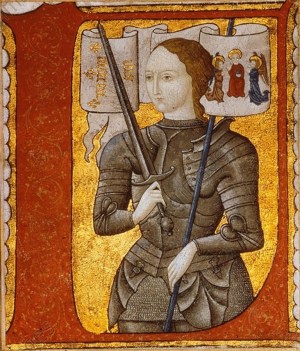 In spite of all this, war lingered, new weapon technology evolved, more precise canon targets developed, and with the confusion of land ownership from the loss of entire families, the fervor of nationalism grew. Then out of nowhere along came a young French peasant girl who said she had a vision from the Archangel Michael, Saint Margret and Saint Catherine. That she saw Charles VII take the throne, and the defeat of the English by the French. This peasant girl’s name was Jeanne d’Arc. We know her best as Joan of Arc. Charles made arrangements for Joan to be at the battle of Orleans, within 9 days the French won, and continued to win battle after battle. Charles was then consecrated King. All of her visions came true, and she was celebrated throughout France known as, La Pucelle de Lorraine – Maid of Lorraine.
However, not everyone was happy with Joan’s visions, Charles as King or French Nationalism. Her own countrymen betrayed her. On May 23rd, 1430, she was captured at Compiègne by the Burgundian faction, a group of French nobles allied with the English. They handed her over to the English, where she was tried and convicted of being a witch, then they burned her at the stake. The French, however, continued to drive the English out, and in the final act, the Battle of Castellón, 1453, they did just that. The war was finally over.
The life, story, inspiration, mission, and death of Joan of Arc will also be part of Prof. Burke’s lecture series. Historical Lecture From, Brief on the Middle Ages [Magna Carta], the Renaissance [Italy] through the Early Enlightenment [Voltaire] will take place, Mid-January, February, and March. An extended course will be offered during the weeks. Each Lecture is 2.5 hours. If credit is desired, there are some Administration fees. To meet course recommendation, a daily class journal with index and key, composed in the style of the time, including art. For college credit [30 lectures, 11 weeks, 80 hours] a final essay and presentation will be required mid-April. All credit candidates must attend, these presentations are open to the public.
.
France: 1215–~1600 (Continued)Royalty/Politicians
KNOWN AS: Louis IX
TITLE: King of France
Primary Occupation: Monarch
Full Name: Louis Capet
Born: April 25, 1214. Place: Poissy, France.
Died: August 25, 1270. Place: Tunis, North Africa.
Parents: Mother: Blanche of Castile. Father: Louis VIII. Titles: King and Queen of France.
Siblings: Robert, Alphonse, Isabelle, Charles, others.
Spouses: One. Margaret of Provence.
Children in Wedlock: Philip III, John, Agnes, Blanche, others (11 total). Out of Wedlock: None confirmed.
Most Memorable Accomplishment(s): Led Seventh and Eighth Crusades; canonized as Saint Louis; established royal justice system (e.g., Parlement of Paris).
Education/Mentors: Tutored by Blanche of Castile; influenced by Dominican and Franciscan theologians.
Years of Rule/Accomplishment/Affiliations: Ruled France (1226–1270); Capetian dynasty; allied with Church.
Name of Successor: Philip III (son).
Works/Books/Symbol/Emblem: Sainte-Chapelle (built for relics); fleur-de-lis.
Contemporaries/Rivals: Henry III of England, Frederick II (HRE), Albigensian heretics.
Legacy/Influence: Model Christian king; strengthened French monarchy; his saintly reputation boosted Capetian prestige. $$$His crusades, though failures, reinforced France’s religious leadership.
Memorable Quote: “Justice is the first duty of a king.” (Attributed). Literature/Philosophy
KNOWN AS: Christine de Pizan
TITLE: Writer
Primary Occupation: Author/Poet
Full Name: Christine de Pizan
Born: c. 1364. Place: Venice, Italy (moved to France).
Died: c. 1430. Place: Poissy, France.
Parents: Mother: Unknown. Father: Tommaso di Benvenuto da Pizzano. Titles: Court astrologer (father).
Siblings: Paolo, Aghinolfo.
Spouses: One. Étienne du Castel.
Children in Wedlock: Jean, others. Out of Wedlock: None.
Most Memorable Accomplishment(s): Wrote The Book of the City of Ladies, defending women’s virtue; first professional female writer in Europe.
Education/Mentors: Self-educated via father’s court connections; influenced by Boccaccio and Dante.
Years of Rule/Accomplishment/Affiliations: Active 1390s–1429; served French court (Charles VI, Charles VII).
Name of Successor: None (literary influence).
Works/Books/Symbol/Emblem: The Book of the City of Ladies, The Treasure of the City of Ladies.
Contemporaries/Rivals: Jean de Meun, male chroniclers.
Legacy/Influence: Pioneered feminist literature; shaped French vernacular prose. $$$Her work challenged medieval gender norms, a precursor to modern feminism.
Memorable Quote: “If women had written the histories, they would read differently.” (Paraphrased from City of Ladies). Generals/Military
KNOWN AS: Joan of Arc
TITLE: Saint/Warrior
Primary Occupation: Military Leader/Spiritualist
Full Name: Jeanne d’Arc
Born: c. 1412. Place: Domrémy, France.
Died: May 30, 1431. Place: Rouen, France.
Parents: Mother: Isabelle Romée. Father: Jacques d’Arc. Titles: Peasants.
Siblings: Jacquemin, Jean, Pierre, Catherine.
Spouses: None.
Children in Wedlock: None. Out of Wedlock: None.
Most Memorable Accomplishment(s): Led French victories at Orléans (1429); inspired Charles VII’s coronation; canonized in 1920.
Education/Mentors: Self-taught; claimed divine visions (St. Michael, St. Catherine).
Years of Rule/Accomplishment/Affiliations: Active 1429–1431; allied with Charles VII’s court.
Name of Successor: None (symbolic influence).
Works/Books/Symbol/Emblem: Letters to Charles VII; banner with lilies and cross.
Contemporaries/Rivals: English commanders, Pierre Cauchon (bishop).
Legacy/Influence: National heroine of France; symbol of faith and resistance. $$$Her leadership marked a turning point in the Hundred Years’ War, galvanizing French unity.
Memorable Quote: “I am not afraid; I was born to do this.” (Trial testimony).
France: 1215–~1600 (Top Three per Discipline)
ARTS
ArchitectureSchool/Movement: French Renaissance Architecture
The French Renaissance (c. 1490s–1600) blended Italian influences (symmetry, classical motifs) with Gothic traditions, driven by royal patronage under Francis I. Key sites like the Louvre and Château de Chambord showcased elegant proportions and decorative facades, moving away from medieval fortresses. $$$This shift reflected France’s cultural ambition to rival Italy. KNOWN AS: Pierre Lescot
TITLE: Architect
Primary Occupation: Architect
Full Name: Pierre Lescot
Born: c. 1515. Place: Paris, France.
Died: September 10, 1578. Place: Paris, France.
Parents: Mother: Unknown. Father: Pierre Lescot (senior). Titles: Nobility.
Siblings: Unknown.
Spouses: Unknown.
Children in Wedlock: Unknown. Out of Wedlock: None recorded.
Most Memorable Accomplishment(s): Designed Louvre’s Cour Carrée; introduced Renaissance style to France.
Education/Mentors: Trained in Paris; influenced by Italian architects.
Years of Rule/Accomplishment/Affiliations: Active 1540s–1570s; served Francis I, Henry II.
Name of Successor: None (architectural influence).
Works/Books/Symbol/Emblem: Louvre Palace, Lescot Wing.
Contemporaries/Rivals: Philibert de l’Orme, Sebastiano Serlio.
Legacy/Influence: Set French Renaissance architectural standard. $$$His Louvre work symbolized France’s cultural shift.
Memorable Quote: None recorded.
KNOWN AS: Philibert de l’Orme
TITLE: Architect
Primary Occupation: Architect
Full Name: Philibert de l’Orme
Born: c. 1514. Place: Lyon, France.
Died: January 8, 1570. Place: Paris, France.
Parents: Mother: Unknown. Father: Jean de l’Orme. Titles: Builders.
Siblings: Unknown.
Spouses: None recorded.
Children in Wedlock: None. Out of Wedlock: None recorded.
Most Memorable Accomplishment(s): Designed Château de Chenonceau; wrote Nouvelles Inventions (architecture treatise).
Education/Mentors: Studied in Italy; influenced by Michelangelo, Serlio.
Years of Rule/Accomplishment/Affiliations: Active 1540s–1560s; served Francis I, Catherine de’ Medici.
Name of Successor: None (architectural influence).
Works/Books/Symbol/Emblem: Chenonceau, Nouvelles Inventions.
Contemporaries/Rivals: Pierre Lescot, Jean Bullant.
Legacy/Influence: Pioneered French classical style; his treatises shaped architectural theory. $$$His blend of practicality and elegance defined French châteaux.
Memorable Quote: “Architecture is the art of building well.” (Paraphrased from treatise).
KNOWN AS: Jean Bullant
TITLE: Architect
Primary Occupation: Architect
Full Name: Jean Bullant
Born: c. 1515. Place: Écouen, France.
Died: October 13, 1578. Place: Écouen, France.
Parents: Mother: Unknown. Father: Unknown. Titles: Unknown.
Siblings: Unknown.
Spouses: Unknown.
Children in Wedlock: Unknown. Out of Wedlock: None recorded.
Most Memorable Accomplishment(s): Designed Château d’Écouen; contributed to Tuileries Palace.
Education/Mentors: Trained in France; influenced by Italian Renaissance.
Years of Rule/Accomplishment/Affiliations: Active 1540s–1570s; served Henry II, Catherine de’ Medici.
Name of Successor: None (architectural influence).
Works/Books/Symbol/Emblem: Château d’Écouen, Tuileries designs.
Contemporaries/Rivals: Pierre Lescot, Philibert de l’Orme.
Legacy/Influence: Advanced French Renaissance style with bold classical elements. $$$His work for nobility spread Renaissance aesthetics beyond royal courts.
Memorable Quote: None recorded.
Literature School/Movement: La Pléiade
La Pléiade (c. 1540s–1580s) was a group of French poets who championed vernacular literature, drawing on classical Greek and Roman models. They elevated French as a literary language, focusing on sonnets, odes, and epics. $$$This movement laid the groundwork for modern French literature, reflecting the Renaissance’s humanist ideals.
KNOWN AS: Christine de Pizan
TITLE: Writer
Primary Occupation: Author/Poet
Full Name: Christine de Pizan
Born: c. 1364. Place: Venice, Italy (moved to France).
Died: c. 1430. Place: Poissy, France.
Parents: Mother: Unknown. Father: Tommaso di Benvenuto da Pizzano. Titles: Court astrologer (father).
Siblings: Paolo, Aghinolfo.
Spouses: One. Étienne du Castel.
Children in Wedlock: Jean, others. Out of Wedlock: None.
Most Memorable Accomplishment(s): Wrote The Book of the City of Ladies; first professional female writer.
Education/Mentors: Self-educated; influenced by Boccaccio, Dante.
Years of Rule/Accomplishment/Affiliations: Active 1390s–1429; served Charles VI, Charles VII.
Name of Successor: None (literary influence).
Works/Books/Symbol/Emblem: The Book of the City of Ladies, The Treasure of the City of Ladies.
Contemporaries/Rivals: Jean de Meun.
Legacy/Influence: Pioneered feminist literature. $$$Her work prefigures La Pléiade’s vernacular push.
Memorable Quote: “If women had written the histories, they would read differently.” (Paraphrased).
KNOWN AS: Pierre de Ronsard
TITLE: Poet
Primary Occupation: Poet
Full Name: Pierre de Ronsard
Born: September 11, 1524. Place: Couture-sur-Loir, France.
Died: December 27, 1585. Place: Saint-Cosme, France.
Parents: Mother: Jeanne Chaudrier. Father: Louis de Ronsard. Titles: Nobility.
Siblings: Unknown.
Spouses: None.
Children in Wedlock: None. Out of Wedlock: None recorded.
Most Memorable Accomplishment(s): Led La Pléiade; wrote Les Amours and Odes; celebrated French vernacular poetry.
Education/Mentors: Studied under Jean Dorat; influenced by Petrarch, Homer.
Years of Rule/Accomplishment/Affiliations: Active 1540s–1580s; served Charles IX, Henry III.
Name of Successor: None (literary influence).
Works/Books/Symbol/Emblem: Les Amours, Odes, rose (symbol of love poetry).
Contemporaries/Rivals: Joachim du Bellay, Clément Marot.
Legacy/Influence: Elevated French poetry to rival Latin; shaped modern lyricism. $$$His work made poetry a prestigious art form in France.
Memorable Quote: “Live now, believe me, wait not till tomorrow.” (Sonnets for Hélène).
KNOWN AS: Joachim du Bellay
TITLE: Poet
Primary Occupation: Poet
Full Name: Joachim du Bellay
Born: c. 1522. Place: Liré, France.
Died: January 1, 1560. Place: Paris, France.
Parents: Mother: Renée Chabot. Father: Jean du Bellay. Titles: Nobility.
Siblings: Unknown.
Spouses: None.
Children in Wedlock: None. Out of Wedlock: None recorded.
Most Memorable Accomplishment(s): Wrote La Deffence et Illustration de la Langue Française; key La Pléiade member; authored Les Regrets.
Education/Mentors: Studied at Poitiers; influenced by Ronsard, Italian poets.
Years of Rule/Accomplishment/Affiliations: Active 1540s–1550s; served French court.
Name of Successor: None (literary influence).
Works/Books/Symbol/Emblem: Les Regrets, La Deffence, olive branch (peaceful poetry).
Contemporaries/Rivals: Pierre de Ronsard, Clément Marot.
Legacy/Influence: Promoted French as a literary language; shaped Renaissance poetry. $$$His manifesto was a cultural declaration of French pride.
Memorable Quote: “France, mother of arts, of arms, and of laws.” (Les Regrets).
MusicSchool/Movement: Franco-Flemish School
The Franco-Flemish School (c. 1400–1600) dominated European music, blending polyphony with emotional depth. French composers like Josquin des Prez brought complex vocal harmonies to sacred and secular music, influencing the Renaissance sound across Europe. $$$This school’s technical mastery set the stage for modern Western music. KNOWN AS: Josquin des Prez
TITLE: Composer
Primary Occupation: Musician
Full Name: Josquin des Prez
Born: c. 1450. Place: Hainaut, France (modern Belgium).
Died: August 27, 1521. Place: Condé-sur-l’Escaut, France.
Parents: Mother: Unknown. Father: Gossart des Prez. Titles: Unknown.
Siblings: Unknown.
Spouses: None recorded.
Children in Wedlock: None. Out of Wedlock: None recorded.
Most Memorable Accomplishment(s): Composed Missa Pange Lingua, Ave Maria; pioneered expressive polyphony.
Education/Mentors: Likely trained in Cambrai; influenced by Johannes Ockeghem.
Years of Rule/Accomplishment/Affiliations: Active 1470s–1521; served French, Italian courts, Papal choir.
Name of Successor: None (musical influence).
Works/Books/Symbol/Emblem: Missa Pange Lingua, Ave Maria, musical staff.
Contemporaries/Rivals: Heinrich Isaac, Orlando di Lasso.
Legacy/Influence: Defined Renaissance sacred music; influenced Bach, Mozart. $$$His emotional depth made music a personal art form.
Memorable Quote: None recorded.
KNOWN AS: Clément Janequin
TITLE: Composer
Primary Occupation: Musician
Full Name: Clément Janequin
Born: c. 1485. Place: Châtellerault, France.
Died: c. 1558. Place: Paris, France.
Parents: Mother: Unknown. Father: Unknown. Titles: Unknown.
Siblings: Unknown.
Spouses: None recorded.
Children in Wedlock: None. Out of Wedlock: None recorded.
Most Memorable Accomplishment(s): Composed La Guerre (battle chanson); pioneered programmatic music.
Education/Mentors: Trained in Bordeaux; influenced by Josquin des Prez.
Years of Rule/Accomplishment/Affiliations: Active 1510s–1550s; served French court, clergy.
Name of Successor: None (musical influence).
Works/Books/Symbol/Emblem: La Guerre, Chant des Oiseaux.
Contemporaries/Rivals: Claudin de Sermisy, Pierre Certon.
Legacy/Influence: Shaped secular chanson; influenced descriptive music. $$$His vivid soundscapes brought music closer to storytelling.
Memorable Quote: None recorded.
KNOWN AS: Claudin de Sermisy
TITLE: Composer
Primary Occupation: Musician
Full Name: Claudin de Sermisy
Born: c. 1490. Place: France (exact location unknown).
Died: c. 1562. Place: Paris, France.
Parents: Mother: Unknown. Father: Unknown. Titles: Unknown.
Siblings: Unknown.
Spouses: Unknown.
Children in Wedlock: Unknown. Out of Wedlock: None recorded.
Most Memorable Accomplishment(s): Composed Tant que vivray; wrote masses and chansons for French court.
Education/Mentors: Likely trained in Paris; influenced by Josquin des Prez.
Years of Rule/Accomplishment/Affiliations: Active 1510s–1560s; served Francis I, Henry II.
Name of Successor: None (musical influence).
Works/Books/Symbol/Emblem: Tant que vivray, Missa Dona Nobis Pacem.
Contemporaries/Rivals: Clément Janequin, Pierre Certon.
Legacy/Influence: Popularized elegant, lyrical chansons; enriched French court music. $$$His work bridged sacred and secular styles.
Memorable Quote: None recorded.
—————————————————————————————————————
France: 1215–~1600 (Top Three per Discipline)
Architecture School/Movement: French Renaissance Architecture
Imported from Italy under Francis I, this style (c. 1490s–1600) blended classical symmetry with Gothic flair, seen in châteaux like Chambord and the Louvre. $$$Unlike Italy’s independent workshops, French architects worked for royals, limiting experimental freedom but creating grand, unified designs.
KNOWN AS: Pierre Lescot
TITLE: Architect
Primary Occupation: Architect
Full Name: Pierre Lescot
Born: c. 1515. Place: Paris, France.
Died: September 10, 1578. Place: Paris, France.
Parents: Mother: Unknown. Father: Pierre Lescot (senior). Titles: Nobility.
Siblings: Unknown.
Spouses: Unknown.
Children in Wedlock: Unknown. Out of Wedlock: None recorded.
Most Memorable Accomplishment(s): Designed Louvre’s Cour Carrée; introduced Renaissance style to France.
Education/Mentors: Trained in Paris; influenced by Italian architects.
Years of Rule/Accomplishment/Affiliations: Active 1540s–1570s; served Francis I, Henry II.
Name of Successor: None (architectural influence).
Works/Books/Symbol/Emblem: Louvre Palace, Lescot Wing.
Contemporaries/Rivals: Philibert de l’Orme, Sebastiano Serlio.
Legacy/Influence: Set French Renaissance standard. $$$His work rivaled Italy’s elegance but was more court-controlled.
Memorable Quote: None recorded.
KNOWN AS: Philibert de l’Orme
TITLE: Architect
Primary Occupation: Architect
Full Name: Philibert de l’Orme
Born: c. 1514. Place: Lyon, France.
Died: January 8, 1570. Place: Paris, France.
Parents: Mother: Unknown. Father: Jean de l’Orme. Titles: Builders.
Siblings: Unknown.
Spouses: None recorded.
Children in Wedlock: None. Out of Wedlock: None recorded.
Most Memorable Accomplishment(s): Designed Château de Chenonceau; wrote Nouvelles Inventions.
Education/Mentors: Studied in Italy; influenced by Michelangelo.
Years of Rule/Accomplishment/Affiliations: Active 1540s–1560s; served Francis I, Catherine de’ Medici.
Name of Successor: None (architectural influence).
Works/Books/Symbol/Emblem: Chenonceau, Nouvelles Inventions.
Contemporaries/Rivals: Pierre Lescot, Jean Bullant.
Legacy/Influence: Shaped French classical style. $$$Less innovative than Italy’s Brunelleschi but more practical for royal needs.
Memorable Quote: “Architecture is the art of building well.” (Paraphrased).
KNOWN AS: Jean Bullant
TITLE: Architect
Primary Occupation: Architect
Full Name: Jean Bullant
Born: c. 1515. Place: Écouen, France.
Died: October 13, 1578. Place: Écouen, France.
Parents: Mother: Unknown. Father: Unknown. Titles: Unknown.
Siblings: Unknown.
Spouses: Unknown.
Children in Wedlock: Unknown. Out of Wedlock: None recorded.
Most Memorable Accomplishment(s): Designed Château d’Écouen; contributed to Tuileries Palace.
Education/Mentors: Trained in France; influenced by Italian Renaissance.
Years of Rule/Accomplishment/Affiliations: Active 1540s–1570s; served Henry II, Catherine de’ Medici.
Name of Successor: None (architectural influence).
Works/Books/Symbol/Emblem: Château d’Écouen, Tuileries designs.
Contemporaries/Rivals: Pierre Lescot, Philibert de l’Orme.
Legacy/Influence: Spread Renaissance aesthetics. $$$His work was less iconic than Italy’s but vital for French nobility.
Memorable Quote: None recorded.
LiteratureSchool/Movement: La Pléiade
This poet group (1540s–1580s) pushed French as a literary language, inspired by classical models. Unlike Italy’s sprawling humanist texts or England’s narrative focus (Chaucer), La Pléiade emphasized lyrical precision. $$$Their work gave France a literary identity but lacked England’s storytelling depth. KNOWN AS: Christine de Pizan
TITLE: Writer
Primary Occupation: Author/Poet
Full Name: Christine de Pizan
Born: c. 1364. Place: Venice, Italy (moved to France).
Died: c. 1430. Place: Poissy, France.
Parents: Mother: Unknown. Father: Tommaso di Benvenuto da Pizzano. Titles: Court astrologer (father).
Siblings: Paolo, Aghinolfo.
Spouses: One. Étienne du Castel.
Children in Wedlock: Jean, others. Out of Wedlock: None.
Most Memorable Accomplishment(s): Wrote The Book of the City of Ladies; first professional female writer.
Education/Mentors: Self-educated; influenced by Boccaccio, Dante.
Years of Rule/Accomplishment/Affiliations: Active 1390s–1429; served Charles VI, Charles VII.
Name of Successor: None (literary influence).
Works/Books/Symbol/Emblem: The Book of the City of Ladies, The Treasure of the City of Ladies.
Contemporaries/Rivals: Jean de Meun.
Legacy/Influence: Pioneered feminist literature. $$$Outshone Italy’s male-dominated texts in gender advocacy.
Memorable Quote: “If women had written the histories, they would read differently.” (Paraphrased).
KNOWN AS: Pierre de Ronsard
\TITLE: Poet
Primary Occupation: Poet
Full Name: Pierre de Ronsard
Born: September 11, 1524. Place: Couture-sur-Loir, France.
Died: December 27, 1585. Place: Saint-Cosme, France.
Parents: Mother: Jeanne Chaudrier. Father: Louis de Ronsard. Titles: Nobility.
Siblings: Unknown.
Spouses: None.
Children in Wedlock: None. Out of Wedlock: None recorded.
Most Memorable Accomplishment(s): Led La Pléiade; wrote Les Amours, Odes.
Education/Mentors: Studied under Jean Dorat; influenced by Petrarch.
Years of Rule/Accomplishment/Affiliations: Active 1540s–1580s; served Charles IX, Henry III.
Name of Successor: None (literary influence).
Works/Books/Symbol/Emblem: Les Amours, Odes, rose.
Contemporaries/Rivals: Joachim du Bellay, Clément Marot.
Legacy/Influence: Elevated French poetry. $$$Matched Italy’s lyrical finesse but less narrative than Chaucer.
Memorable Quote: “Live now, believe me, wait not till tomorrow.” (Sonnets for Hélène).
KNOWN AS: Joachim du Bellay
TITLE: Poet
Primary Occupation: Poet
Full Name: Joachim du Bellay
Born: c. 152 mush2. Place: Liré, France.
Died: January 1, 1560. Place: Paris, France.
Parents: Mother: Renée Chabot. Father: Jean du Bellay. Titles: Nobility.
Siblings: Unknown.
Spouses: None.
Children in Wedlock: None. Out of Wedlock: None recorded.
Most Memorable Accomplishment(s): Wrote La Deffence et Illustration de la Langue Française, Les Regrets.
Education/Mentors: Studied at Poitiers; influenced by Ronsard.
Years of Rule/Accomplishment/Affiliations: Active 1540s–1550s; served French court.
Name of Successor: None (literary influence).
Works/Books/Symbol/Emblem: Les Regrets, La Deffence, olive branch.
Contemporaries/Rivals: Pierre de Ronsard, Clément Marot.
Legacy/Influence: Promoted French literary identity. $$$Less impactful than Italy’s Dante but key for French pride.
Memorable Quote: “France, mother of arts, of arms, and of laws.” (Les Regrets).
MusicSchool/Movement: Franco-Flemish School
This school (1400–1600) led European music with intricate polyphony, rivaling Italy’s sacred music tradition. Unlike England’s simpler choral works, Franco-Flemish composers like Josquin brought emotional and technical depth to masses and motets. $$$France’s music outshone its visual arts, holding its own against Italy.
KNOWN AS: Josquin des Prez
TITLE: Composer
Primary Occupation: Musician
Full Name: Josquin des Prez
Born: c. 1450. Place: Hainaut, France (modern Belgium).
Died: August 27, 1521. Place: Condé-sur-l’Escaut, France.
Parents: Mother: Unknown. Father: Gossart des Prez. Titles: Unknown.
Siblings: Unknown.
Spouses: None recorded.
Children in Wedlock: None. Out of Wedlock: None recorded.
Most Memorable Accomplishment(s): Composed Missa Pange Lingua, Ave Maria.
Education/Mentors: Trained in Cambrai; influenced by Johannes Ockeghem.
Years of Rule/Accomplishment/Affiliations: Active 1470s–1521; served French, Italian courts.
Name of Successor: None (musical influence).
Works/Books/Symbol/Emblem: Missa Pange Lingua, Ave Maria, musical staff.
Contemporaries/Rivals: Heinrich Isaac, Orlando di Lasso.
Legacy/Influence: Defined Renaissance sacred music. $$$Rivaled Italy’s Palestrina in influence.
Memorable Quote: None recorded.
KNOWN AS: Clément Janequin
TITLE: Composer
Primary Occupation: Musician
Full Name: Clément Janequin
Born: c. 1485. Place: Châtellerault, France.
Died: c. 1558. Place: Paris, France.
Parents: Mother: Unknown. Father: Unknown. Titles: Unknown.
Siblings: Unknown.
Spouses: None recorded.
Children in Wedlock: None. Out of Wedlock: None recorded.
Most Memorable Accomplishment(s): Composed La Bataille de Marignan; pioneered programmatic chansons.
Education/Mentors: Likely trained in French cathedrals; influenced by Josquin.
Years of Rule/Accomplishment/Affiliations: Active 1510s–1550s; served French clergy, court.
Name of Successor: None (musical influence).
Works/Books/Symbol/Emblem: La Bataille de Marignan, Chant des Oiseaux.
Contemporaries/Rivals: Claudin de Sermisy, Pierre Certon.
Legacy/Influence: Shaped secular French music with vivid soundscapes. $$$His chansons were livelier than England’s madrigals.
Memorable Quote: None recorded.
KNOWN AS: Claudin de Sermisy
TITLE: Composer
Primary Occupation: Musician
Full Name: Claudin de Sermisy
Born: c. 1490. Place: France (exact location unknown).
Died: c. 1562. Place: Paris, France.
Parents: Mother: Unknown. Father: Unknown. Titles: Unknown.
Siblings: Unknown.
Spouses: None recorded.
Children in Wedlock: None. Out of Wedlock: None recorded.
Most Memorable Accomplishment(s): Composed Tant que vivray; key figure in Parisian chanson tradition.
Education/Mentors: Trained in French churches; influenced by Josquin.
Years of Rule/Accomplishment/Affiliations: Active 1510s–1560s; served Francis I’s court.
Name of Successor: None (musical influence).
Works/Books/Symbol/Emblem: Tant que vivray, Missa pro Defunctis.
Contemporaries/Rivals: Clément Janequin, Pierre Certon.
Legacy/Influence: Popularized light, melodic chansons. $$$Less complex than Italy’s music but widely accessible.
Memorable Quote: None recorded.
TTTTTTTTTTTTTTTTTTTTTTTTTTTTTTTTTTTTTTTTTTTTTTTTTTTTTTTTTTT
France: 1215–~1600 (Completing the Arts)Art/SculptureSchool/Movement: French Renaissance Art
Influenced by Italy, French art (c. 1490s–1600) mixed Gothic traditions with classical forms, seen in courtly portraits (Fouquet) and decorative sculpture (Goujon). Unlike Italy’s bold individualism or England’s modest output, French art was royal propaganda, less daring but elegant. $$$The “losing point” of war exhaustion post-1453 funneled funds into châteaux and art to rival Italy.KNOWN AS: Jean Fouquet
TITLE: Painter
Primary Occupation: Artist
Full Name: Jean Fouquet
Born: c. 1420. Place: Tours, France.
Died: c. 1481. Place: Tours, France.
Parents: Mother: Unknown. Father: Unknown. Titles: Commoners.
Siblings: Unknown.
Spouses: Unknown.
Children in Wedlock: Unknown. Out of Wedlock: None recorded.
Most Memorable Accomplishment(s): Painted Melun Diptych; pioneered French portraiture.
Education/Mentors: Trained in Tours; influenced by Italian artists.
Years of Rule/Accomplishment/Affiliations: Active 1440s–1470s; served French court, clergy.
Name of Successor: None (artistic influence).
Works/Books/Symbol/Emblem: Melun Diptych, Portrait of Charles VII.
Contemporaries/Rivals: Rogier van der Weyden, Jan van Eyck.
Legacy/Influence: Introduced Renaissance techniques to France. $$$Less revolutionary than Leonardo but key for French identity.
Memorable Quote: None recorded.
KNOWN AS: Jean Goujon
TITLE: Sculptor
Primary Occupation: Artist
Full Name: Jean Goujon
Born: c. 1510. Place: Normandy, France.
Died: c. 1567. Place: Bologna, Italy (fled religious wars).
Parents: Mother: Unknown. Father: Unknown. Titles: Unknown.
Siblings: Unknown.
Spouses: Unknown.
Children in Wedlock: Unknown. Out of Wedlock: None recorded.
Most Memorable Accomplishment(s): Sculpted Fountain of the Innocents; collaborated on Louvre decorations.
Education/Mentors: Trained in France; influenced by Italian sculptors, Lescot.
Years of Rule/Accomplishment/Affiliations: Active 1540s–1560s; served Henry II, Catherine de’ Medici.
Name of Successor: None (artistic influence).
Works/Books/Symbol/Emblem: Fountain of the Innocents, Louvre reliefs.
Contemporaries/Rivals: Pierre Lescot, Benvenuto Cellini (Italian in France).
Legacy/Influence: Defined French Renaissance sculpture with fluid, classical style. $$$His work was elegant but less bold than Michelangelo’s.
Memorable Quote: None recorded.
KNOWN AS: François Clouet
TITLE: Painter
Primary Occupation: Artist
Full Name: François Clouet
Born: c. 1510. Place: Tours, France.
Died: c. 1572. Place: Paris, France.
Parents: Mother: Unknown. Father: Jean Clouet (painter). Titles: Artists.
Siblings: Unknown.
Spouses: Unknown.
Children in Wedlock: Unknown. Out of Wedlock: None recorded.
Most Memorable Accomplishment(s): Painted portraits of Francis I, Catherine de’ Medici; refined court portraiture.
Education/Mentors: Trained by father; influenced by Italian portraitists.
Years of Rule/Accomplishment/Affiliations: Active 1540s–1570s; served French royal court.
Name of Successor: None (artistic influence).
Works/Books/Symbol/Emblem: Portrait of Francis I, Lady in Her Bath.
Contemporaries/Rivals: Jean Goujon, Italian court artists.
Legacy/Influence: Elevated French portraiture with detailed realism. $$$More restrained than Italy’s Titian but vital for court prestige.
Memorable Quote: None recorded.
——-
.
.
..
SPAIN
Kingdom of Castile rising through Christian reconquest of Iberian Muslim territories. Wealth from trade and agriculture, but not yet a unified Spain. Kingdom of Aragon (Spain): Maritime power in the Mediterranean, controlling Sicily and parts of Italy.
Spain – Españia
The Catholic Monarchs and Dynasties
Once upon a time Rome fell [379AD], to the north the Germanic Warlords took control, and to the west in the land the Romans invaded, [200BC] and conquered [20BC], was called Hispania, part of the Iberian Peninsula. The Iberian Peninsula was a division of ancient Celtic tribe and conquests from the East. Carthage, one of the early modern tribes, were eventually conquered and united under the rule of Rome. By 312AD Rome and Hispania were part of the Holy Roman Empire [HRE}, by 400AD the HRE had split. In Rome’s weaken state, threats came from the existing tribes and from their cousins in from the north, The Visigoths. The Visigoths and their allied tribe began to unravel Rome and Hispania, settling in the regions along with other warring tribes. HRE did not give up, alliance were made among the new tribal areas of Galicia, Andalusia, Aragon, and Castilla, Keeping Hispania in the faith. However, by 700AD with the rise of Islam the Arab Umayyad Caliphate [Moors] invaded a large portion of the peninsula, making Hispania part of its western and Northern Territory. The Visigoths in turn united with the other tribes, refusing to give up, thus embarking on what became known as the Reconquista. [900–1250]
-TBC-
Pelagius of Asturias, 685 – 737 – Hispano-Visigoth Nobleman who founded the Kingdom of Asturias. Reconquista, Catholic, Established the Asturian Monarchy, Kings of Castile, Kings of León, Kings of Portugal. Reconquest of the Iberian Peninsula from the Moors.
Legend of El Cid – Arabic, al-sīd, the Lord
El Cid was baptized Rodrigo Díaz de Vivar (1045–1099). He was a Castilian Nobleman, married to Doña Jimena Díaz, [1046–1116], known as, la Dama de Valencia, they had three children. To comprehend the development of Spain, especially through the Middle-Ages and into the Renaissance, it is necessary to read and understand the epic poem, Cantar de Mio Cid – The Song of My Cid. This poem is a journey through the Iberian Peninsula, the rise and fall of Christian Kingdoms, the alliances, and wars with the Maghreb and Muladi tribes, known commonly as the Moors. During the Reconquista tribal wars and conflicts on the Iberian Peninsula is forever lasting, peace is a privilege, and faith is the only comfort.
The life of El-Cid speaks to us of the long road through the Reconquista, the forming, solidification and establishment of northern and western Christian Kingdoms, and the ongoing conflicts and battles between the HRC and Islam. It is all very, very complex, however, this Epic Poem creates for the reader an atmosphere of quality and creates a mood for the place and time that Rodrigo lived. Although Epic Poems are better appreciated when read and spoken out loud, which has always been their intention. There is a week’s worth of lectures and readings regarding this Epic Poem by our guest speaker William Merwin, both English and Spanish. The poem is taught to all the children of Spain. El Cid is still revered as honorable, just, trustworthy and the right hand of God. He is a true Hero of Spain.
CANTAR I – THE BANISHMENT OF THE CID
He turned and looked upon them, and he wept very sore
As he saw the yawning gateway and the hasps wrenched off the door,
And the pegs whereon no mantle nor coat of vair there hung.
There perched no moulting goshawk, and there, no falcon swung.
My lord the Cid sighed deeply such grief was in his heart
And he spake well and wisely: “Oh Thou, in Heaven that art
Our Father and our Master, now I give thanks to Thee.
Of their wickedness, my foemen have done this thing to me…”
.
DEC CURSADES
Spain – History – Rise and Fall
-Justine – Byzantium
-Invasion of the Arabs and Moors
-The formation of Spain as a Nation
-Inquisition
– Ferdinand of Aragon and Isabella of Castile
-The First Global Empire.
– The growth of population due to the Religious Christian forces from the north and northern center dominated by Aragon and Castile of the Iberian Peninsula fought, pushed and defeated the Muslim state by 1250, only Granada remained in Muslim hands.
– Hispania touched by the Black Death.
– The 100 Years War between England and France touch Spain between [1366–1389] and through marriages and alliance kept Spain out of much of the conflict.
– Foreign intervention in the affairs of Castile declined after 1389
– Rise of Spain and the HRE
– Reconquista was completed when Portugal, Aragon, and Castile… united.
– Henry III of Castile – takes the throne.
.-The English defeat of the Spanish Armada in 1588 The end of an Empire
House of Habsburg (1516–1700), Bourbon (1272–1861), Bonaparte (1799–1870), Savoy (1003–1943).
Corrections:
Habsburg: Correct, 1516–1700 (Charles I to Charles II).
Bourbon: Incorrect dates; Spanish Bourbons ruled 1700–1808, 1813–1868, restored 1874–1931.
Bonaparte: Incorrect; Joseph Bonaparte ruled 1808–1813.
Savoy: Incorrect; ruled Spain 1870–1873 (Amadeus I).
Missing: Earlier houses (e.g., Trastámara, Visigoths).
Scope: From Rome (Hispania, ~218 BCE) to British defeat (assumed 1808, Trafalgar/Napoleonic Wars).
List: House names and dates, no rulers.
Spanish Houses:
Visigothic (418–711)
Umayyad (756–1031, Al-Andalus)
Jiménez (1035–1126, Castile/León)
Burgundy (1126–1369, Castile/León)
Trastámara (1369–1516, Castile/Aragon)
Habsburg (1516–1700)
Bourbon (1700–1808, 1813–1868, 1874–1931)
Bonaparte (1808–1813)
Savoy (1870–1873)
.
Spanish Houses
House of Habsburg, 1516 -1700 – Habsburg Hispanic Monarchs: Charles I and Philip II
House of Bourbon, 1272–1861 Deposed
House of Bonaparte, 1799–1870
House of Savoy, 1003–1943
..
.
..
Spain – History – Rise and Fall
-Justine – Byzantium
-Invasion of the Arabs and Moors
-The formation of Spain as a Nation
-Inquisition
– Ferdinand of Aragon and Isabella of Castile
-The First Global Empire.
– The growth of population due to the Religious Christian forces from the north and northern center dominated by Aragon and Castile of the Iberian Peninsula fought, pushed and defeated the Muslim state by 1250, only Granada remained in Muslim hands.
– Hispania touched by the Black Death.
– The 100 Years War between England and France touch Spain between [1366–1389] and through marriages and alliance kept Spain out of much of the conflict.
– Foreign intervention in the affairs of Castile declined after 1389
– Rise of Spain and the HRE
– Reconquista was completed when Portugal, Aragon, and Castile… united.
– Henry III of Castile – takes the throne.
.-The English defeat of the Spanish Armada in 1588 The end of an Empire
.
FEB
HRC – Dominion
– Spain fell gently into the hands of the Roman Catholic Church, in 1492. Three kingdoms [1250–1479] push the Muslims almost out of Iberia: The latter pair now dominated Spain, although Navarre clung on to Independence in the north and Granada in the south. Castile was the largest kingdom in Spain; Aragon was a federation of regions. They fought frequently against Muslim invaders and saw, often large, internal conflict.
– Ferdinand and Isabella Unite Spain [1479–1516] Known as the Catholic Monarchs, Ferdinand of Aragon and Isabella of Castile married in [1469] both came to power in [1479], Isabella after a civil war. Their role was in uniting Spain under one Monarch and one kingdom. They incorporated the kingdoms of Aragon, Castile, Navarre, and Granada along with several other regions. They cleared the country of all Muslims and Jews, held sway of lands and rights, y 1492 the Reconquista was complete, bringing forward the age of discovery and the dawning of a new Empire.
In fourteen hundred and ninety-two Columbus sailed the ocean blue.
He was looking for a faster, closer, easier way to, Japan.
.
.
.
.Spanish Tribes and Kingdoms
Celts – Phoenician – Phoenician – Greek – Cartage – Rome
Vasconic/Basque, 16,000BC – Celts, language spoken
Galicia. 4500–1500BC – Early Tribal Celtic
Iberia, 500BC – Greeks, name given
Hibērus or Hispania m 218BC – Rome
Celtiberian, 195BC – Tribal Celts
Suevi, 64BC – Tribes Celtic, Germanic-Czech
Vandals 120BC, Tribal Celtic, Germanic-Polish – Andalusian
Alans [Iran], 20BC – Tribal Asia Minor, Castile – Portugal
Visigoths, 300AD – Tribes Celtic, Germanic – Gaul
King Roderick – Rodrigo, unknown – 711, Last of the Spanish Visigoths
Berbers – Umayyad, established Wilayah of Al-Andalus. Conquest of Hispania, 711AD
Kingdom of Asturias, Founder, Pelagius, 685 – 737 – initiator of the Reconquista.
Kingdom of Asturias & León, 718 – 1037
Feudal country of Catalonia, 800 – 1137
Kingdom of Navarre, 824–1620
Kingdom of León, 910–1230
Kingdom of Aragon, 1035–1707
Kingdom of Castile, 1065–1230
Kingdom of Portugal, 1139–1910
Kingdom of Castile and Aragon, 1479 – 1516
Kingdom of Spain, 1492–1516 – In 1516 all the kingdoms were united under Hapsburg Rule until 1650. The Empire of Spain began to break down due to endless wars, conflicts, and revolutions.
.
.
.Spanish Houses
House of Habsburg, 1516 -1700 – Habsburg Hispanic Monarchs: Charles I and Philip II
House of Bourbon, 1272–1861 Deposed
House of Bonaparte, 1799–1870
House of Savoy, 1003–1943
Ferdinand II of Aragon and Isabella I of Castile – Mode 1 Summary
Born: Ferdinand: March 10, 1452, Sos, Aragon; Isabella: April 22, 1451, Madrigal de las Altas Torres, Castile
Died: Ferdinand: January 23, 1516, Madrigalejo, Spain; Isabella: November 26, 1504, Medina del Campo, Spain
Reign: Isabella: Queen of Castile (1474–1504); Ferdinand: King of Aragon (1479–1516); joint rulers of unified Spain after 1479.
Titles: Catholic Monarchs (conferred by Pope Alexander VI in 1494).
Key Facts:
Married in 1469, uniting Castile and Aragon, laying the foundation for a unified Spain. Their marriage merged two powerful kingdoms but maintained separate administrations.
Completed the Reconquista with the conquest of Granada in 1492, ending Muslim rule in Iberia.
Sponsored Christopher Columbus’ 1492 voyage, initiating Spanish colonization of the Americas and establishing a global empire.
Issued the Alhambra Decree (1492), expelling Jews from Spain unless they converted to Christianity, and established the Spanish Inquisition (1478) to enforce Catholic orthodoxy.
Strengthened royal authority by reforming the nobility, creating the Santa Hermandad (a policing force), and centralizing governance.
Secured dynastic alliances through their children’s marriages, including Joanna (to Philip of Habsburg) and Catherine (to Arthur, then Henry VIII of England).
Ferdinand played a key role in European politics, annexing Navarre (1512) and engaging in the Italian Wars against France.
Their reign marked the start of Spain’s Golden Age, with cultural and economic growth, though policies like the Inquisition left a controversial legacy.
Legacy: Ferdinand and Isabella transformed Spain into a major European power, initiating its imperial era. Their religious zeal shaped Spain’s identity but led to persecution of Jews, Muslims, and conversos.
Popes During the Lifetimes of Ferdinand and Isabella (1451–1516) – Mode 1 Summaries
The following popes served during the period from Isabella’s birth (1451) to Ferdinand’s death (1516). Each summary covers their papacy and key actions relevant to the era.
.
=========
NOTES
Ferdinand and Isabella’s lifetimes (1451–1516) align with a transformative papal era, from Renaissance humanism to early Reformation tensions.
A Mode 2 analysis of Ferdinand and Isabella’s papal ties
more on Spanish Inquisition.
.
..
Christopher Columbus
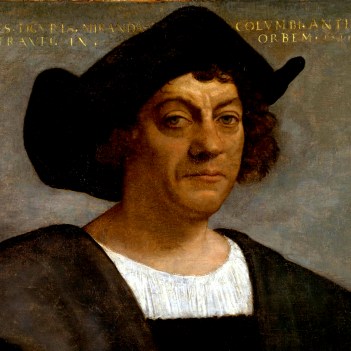 “…and the sea will grant each man new hope – sleep brings dreams of home”
Born October 31, 1451, in the port of Genoa, Italy. He was baptized Cristóbal Colón [Cristoforo Colombo]. The eldest son of 5. His father was Domenico Colombo and his mother, Susanna [m. Fontanarossa], were weavers and wool merchants. His family was not wealthy, but they were respectable.
From an early age, the sea fascinated Cristóbal. He left school at age 11, and by age 12 he was working in the ports, cleaning, loading and unloading ships. By 15 he was out on voyages, sailing and working on merchant ships up and down the coats of Portugal and into the Mediterranean Sea. In his free time, he would read the book The Travels of Marco Polo.
It is said that Cristóbal was a tall and lean man. His hair was red, but by age 25, it had turned completely white. He had a fair complexion, and he often blushed red. His eyes were blue, and he had a hawkish Italian nose. Although his mother tongue was Italian, he spoke fluent Spanish. His accent was so good that people found it difficult to guess where he was from.
Cristóbal was an extremely religious and moral man. He rarely swore, attended mass regularly, and often devoted his Sundays entirely to prayer. As time moved forward, his dedication to the church increased. He often took to wearing the clothing of a friar; a simple robe, and walked barefoot. He was also a Millenarist. Furthermore, he believed the end of the world was near, and that soon, 1000 years of peace and prosperity would follow.
He had 4 siblings, 3 brothers, Bartholomew, Giovanni, and Giacomo, and a sister, Bianchinetta. As his younger brothers grew older, they joined him on the docks. Three of the four brothers worked together for life.
In 1470, at age 20, Cristóbal took his first voyage out into the Atlantic Ocean. However, in 1476, while traveling up the coast of Portugal, his ship was attacked by pirates.
He soon settled in Lisbon, Portugal, and in 1477, he married Felipa Moniz Perestrelo. She came from a noble family who had interests in the Maritime. In 1479, she gave birth to a son, Diego. Sadly, six years into their marriage, she died of consumption.
Cristóbal made many friends during his travels including dukes, noblemen, as well as, powerful Italian merchants, he corresponded with them often. These friendships proved useful, especially, during times of hardship and bad luck.
In 1485, while in Córdoba, he met a young girl named, Beatriz Enríquez de Trasierra. She was 20-years old, he was 15 years her senior. She was raised as an orphan, and without nobility. They lived together for a time. She bore him a son, Fernando. Albeit illegitimate, they never married.
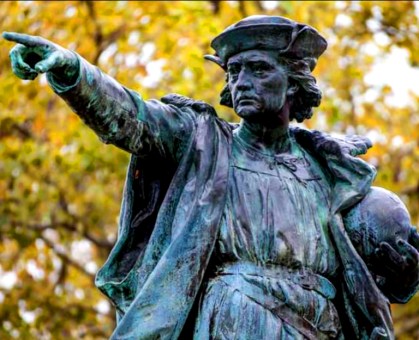
To Find the East, Go West
Columbus sailed the ocean blue in fourteen-hundred and ninety-two.
Endless wars between the Byzantium and Ottoman Empire caused endless problems at the crossroad of the Silk Road. Trade was becoming difficult by land. Traveling by sea was equally problematic, especially from Western European Ports. Cristóbal, believing the world was round, began searching for an easy route to India. He felt certain he could reach India and the Spice Islands by sailing west.
The Idea
As early as 1481, preserved correspondence between the Italian mathematician and philosophy, Paolo del Pozzo Toscaneli, Columbus conceived of the idea of sailing west to reach Asia. Toscaneli convinced him it was possible.
In 1484, Columbus began making his way to gather funding for a trip based on this idea. He approached King João of Portugal many times, but was constantly turned down. In 1486, he went to Spain and approached Queen Isabella I of Castile and King Ferdinand II of Aragon. They were very intrigued by the idea, but were currently occupied with the Reconquista of Granada. Nevertheless, they told him to come back at a later date. Five years had passed, Columbus felt he could no longer wait. He was prepared to try his luck in France. It was early spring in 1492, when Isabella called him to the court and stated they would now sponsor his trip.
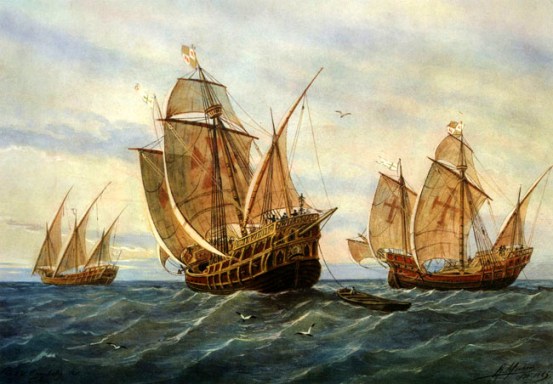
He was given three ships: the Niña (little girl), which was originally called, Santa Clara. The Pinta (painted one), its original name is unknown, but we know from the description it was a small caravel vessel with a lateen sail, making it the fastest ship in the fleet, and giving it the flexibility to use the sail against the wind. This was indeed one of the most important ships during the age of discovery, it changed everything. Finally, he was given the flagship, Santa Maria (Blessed Virgin Mary), also known as the La Gallego, or Galician [Northern Celtic, Spanish tribe] it was a Carrack Ship and the largest of the three, with possibly four sails. A strong fortified ship good for carrying all manner of cargo.
Voyage I
On August 3, 1492 they set sail. Under the Julian Calendar it was a Friday. They headed south towards the Canary Islands. Here, they gathered more supplies and made a number of repairs and adjustments before they set sail west across the Atlantic.
Columbus anticipated the journey would take a little over a month, but in fact, it took seventy days. He believed the world was much smaller than it really is. Eventually, provision ran out, many of the crew became ill, some had died from disease, hunger, and thirst. However, on October 12, 1492, approximately at 2 AM, sailor, Rodrigo de Triana, spotted land. Columbus approached the island, he set anchor and the crew rowed to the shore. It was now dawn. Once he set foot on land, he knelt down, bowed his head and said a prayer. He then declared the name of the island to be San Salvador, Christ the Savior.
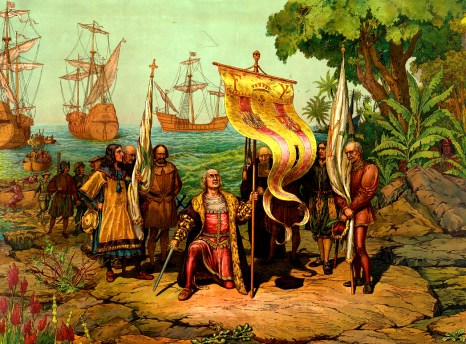
Later, when he returned to Spain, Columbus recounts his trip indicating the natives he met were called, Lucaya, and their island was named, Guanahani. He said they were a sweet and gentle people.
Nonetheless, Columbus believed he was somewhere near China and Japan. However, he found no riches of gold, silks, or spices in San Salvador. So he set sail, heading south hoping he would reach mainland China. This is where he came across what is now known as Cuba and Hispaniola [Haiti and Dominican Republic]. He and his crew settled in the Northwest corner of Hispaniola [Haiti], and established a small settlement, la Navidad (Christmas).
In November, the Pinta, be a fast coastal ship, left to explore further west. The men worked with the Natives and started to built a fort. Once this was underway Columbus made plans to sail back to Spain, to bring the news of his landing, gather more supplies and more men. Unfortunately, on Christmas Day, the Santa Maria ran aground off the coast of Hispaniola. Columbus was hoping to return with the entire crew, but now found only limited space on his last ship, la Nina. He left 40 men behind at the la Navidad. Soon after, Columbus set sail for Spain. He arrived in port on March 15, 1493, thus completing his first voyage west.
.
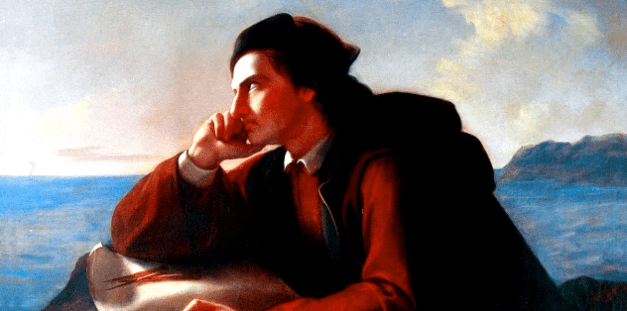
Voyage II
Despite losing the Santa Maria. the success of finding this new land, and establishing a small settlement in Hispaniola, convinced the Spanish monarchs to finance a second voyage . Columbus set sail once again on September 23, 1493, with 17 ships and 1,200 men. The purpose of this second journey was to establish many colonies in the name of Spain, and continue the search for the gold and the spices of the Far East.
They sailed onward, finding a scattering of other islands. Two in particular, Guadeloupe, and Jamaica. Columbus thought he had landed on islands off the coast of Japan. Yet, still, no riches were to be found. He then sailed back to Hispaniola. However, when they returned to the settlement in La Navidad, they discovered the Natives had slaughtered everyone. Perhaps it was because of poor treatment by those who remained behind.
Columbus moved to the other side of the island and set up camp in what is now called the Dominican Republic. He established the city of Santo Domingo. This time, Columbus stayed and took charge. With the extra supplies and men, he conquered the entire island of Hispaniola by 1495. However, the colonist began to parish through disease and starvation. In March 1496, Columbus sailed back to Spain to gather more supplies. He arrived in Cadiz, Spain, by the end of July.
Voyage III
Columbus returned to the New World in May 1498. He sent half of his fleet to resupply Santo Domingo and set off to explore. He reached Trinidad, Tobago, Grenada, and Margarita, eventually landing on the north-eastern part of what is now called Venezuela, Discovering South America. He then returned to Hispaniola and found it was in chaos. He resumed his duties as Governor, but he was heavy handed the people grew to despise him. Likewise, his brothers, all were horrible administrators, and they pocketed much of the wealth generated by the colonists for themselves. When the crisis reached a peak and anger set in, Columbus sent emissaries to Spain to bring back help. The Crown sent Francisco de Bobadilla to Hispaniola, not to help Columbus, but based on the reports, to replace him as Governor. It was clear to the Crown that Columbus was the problem. In 1500, de Bobadilla had Columbus and his brothers arrested, put in chains and sent back to Spain. Based on the complaints, he was put on trial, but he effectively defended himself against the charges and was released.
Voyage IV
In 1501 Columbus was fifty. He somehow convinced the Spanish Crown to finance one more journey. Although Columbus had been a terrible Governor, there was no doubt he was a great sea Captain, his sailing and discovery skills were by far his greatest attributes. He left in May 1502 and arrived in Hispaniola just ahead of a major hurricane. Before he landed he sent a warning to the fleet making ready to depart from Spain, telling them to delay their trip, but they ignored him, tragically 24 of the 28 ships caught up in the hurricane were lost. When he arrived in Hispaniola he was forbidden from entering the Colony. So he set sail through the Caribbean and discovered what is now Central America. He landed in Panama, but was an unwelcomed guest. On is return it was clear his ships were in bad shape, rot had set in. He made it as far Jamaica and ended up stranded for over a year before another ship rescued him. He returned home to Spain just before Christmas in 1504. Shortly upon arrival he move to Seville and lived with his son Diego.
The Death of Christopher Columbus
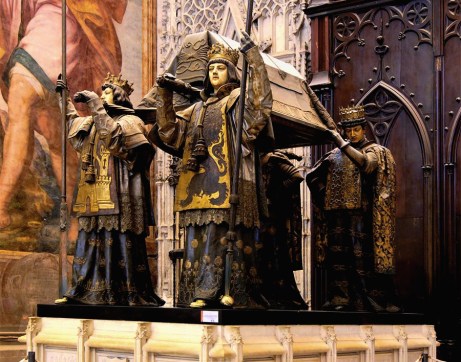
Christopher Columbus died on the 20th of May 1506. He was age 55
The man who discovered the Americas believed his entire life was drive through divine intervention. As a seaman and a Captain he managed to escape death many times, through the grace of God. In all of his affairs he believe it was God leading him.
He identified with and felt a deep connected to St. Christopher, the man who carried the Christ child across a swollen stream with the weight of the world on his shoulders. He felt this same burden as he crossed the Atlantic. At the end of his Third Voyage he made an addition to his signature, Christopher Columbus, Christo Ferens (Christ Bearer).
Upon the discovery of what he believed to be a new rout to China, he never saw himself returning as he did to the island and the mainland. Instead he believe his destiny lay in recapturing Jerusalem. He believed that Jerusalem and Mount Sion would be rebuilt by a Christian from Spain, himself.
Regardless, at this age he wished to return to Hispaniola and be appointed its Governor once again. Isabella was against the idea, due to his increasing debilitation. However, she died in 1504. Columbus then petitioned Ferdinand and waited to be to be summons to court, but all his efforts were in vain. His end days were that of an unhappy man. However, his family took great care of him, and despite the fact that the end was near his fellow sailors visited him often and stood by his side until his death on May 20th 1506.
His sons Diego and Ferdinand, his brother and a his shipmates were at his bedside when a priest said Mass for the last time. The great explorer Christopher Columbus last words were, ‘Into God’s hands I commended my spirit.’ Nelle mani di Dio affido il mio spirito.’
Columbus was buried in the Carthusian monastery of Santa Maria de las Cuevas in Seville. However, his body was exhumed in 1542 and taken to Santo Domingo in the Caribbean, where it remained until the island was ceded to the French in the 1790. It was then taken to Havana, Cuba. However, after the Spanish-American War in 1898 and Spain’s loss of Cuba, Columbus’s remains were at last returned to Spain and buried in Seville Cathedral.
Legacy
Columbus never believed he had discovered the New World. However, his trip paved the way for what is now called the Age of Discovery. He utilized the technology of the day, including math, reading and writing. He furthered the idea in the advancement of science that the earth was indeed round. His actions pushed the developing Western Civilization forward. He established trade routs between the east and west hemisphere bringing advanced agriculture and new animal livestock to the New World. In exchange he brought back many variety of food stuffs and exotic plants, and after 12,000 year of extinction, he brought horses back to the New World.
.
.
.
.
.
..
.
.
PORTUGAL
Portugal – had a Small but growing maritime influence, laying groundwork for later exploration.
.
.
.
Holy Roman Empire
Austria, Northern and Central parts of Italy and what eventually became Germany. During the Late Middle Ages the HRM was a loose confederation of states and rgions with a the dominant political structure.
Johannes Gutenberg
Title: Inventor Primary Occupation: Printer School/Movement: Printing Revolution Full Name: Johannes Gensfleisch zur Laden zum Gutenberg Born: c. 1400. Place: Mainz, HRE. Died: 3 February 1468. Place: Mainz, HRE. Family: Parents: Friele Gensfleisch, Else Wyrich; no spouse or children recorded. Most Memorable Accomplishment(s): Invented movable type printing; produced Gutenberg Bible (1455). Education/Mentors: Self-taught; influenced by manuscript culture. Innovation/Technique: Movable type, mechanized printing press. Years of Rule/Accomplishment/Affiliations: Active 1430s–1468; served Mainz merchants. Name of Successor: None (technological influence). Works/Books/Symbol/Emblem: Gutenberg Bible, 42-line Bible, printing press, ink block. Contemporaries/Rivals: William Caxton, early printers. Legacy/Influence: Revolutionized knowledge dissemination; empowered Renaissance and Reformation. Gutenberg’s Mainz press, born from the Black Death’s economic shift, reflects your theme of loss fueling progress, spreading ideas for March’s intellectual boom. Memorable Quote: “Let the press give light to truth.”
trong>Known As: Johannes Gutenberg
Title: Inventor
Primary Occupation: Printer
School/Movement: Printing Revolution
Full Name: Johannes Gensfleisch zur Laden zum Gutenberg
Born: c. 1400.
Place: Mainz, HRE.
Died: 3 February 1468.
Place: Mainz, HRE.
Family:
Parents: Friele Gensfleisch, Else Wyrich
Spouse/Children: No spouse or children recorded.
Most Memorable Accomplishment(s): Invented movable type printing; produced Gutenberg Bible (1455).
Education/Mentors: Self-taught; influenced by manuscript culture.
Innovation/Technique: Movable type, mechanized printing press.
Years of Rule/Accomplishment/Affiliations: Active 1430s–1468; served Mainz merchants.
Name of Successor: None (technological influence).
Works/Books/Symbol/Emblem: Gutenberg Bible, 42-line Bible, printing press, ink block.
Contemporaries/Rivals: William Caxton, early printers.
Legacy/Influence: Revolutionized knowledge dissemination; empowered Renaissance and Reformation. Gutenberg’s Mainz press, born from the Black Death’s economic shift, reflects your theme of loss fueling progress, spreading ideas for March’s intellectual boom.
Memorable Quote: “Let the press give light to truth.”
====
.
.HRS
Papal Roman and Byzantium Empire – 400AD –
Dates: 1100–1500. Geography: Central Europe (Germany, Bohemia, Netherlands). Nations: HRE states, Papal States. Key Details: The Catholic Church influenced HRE governance through investiture disputes (e.g., Concordat of Worms, 1122), crusades (e.g., Northern Crusades), and councils (e.g., Constance, 1414–1418, ending the Great Schism). It amassed wealth via tithes, controlled education, and clashed with emperors (e.g., Frederick II). Indulgences and clerical corruption sparked pre-Reformation dissent (e.g., Hussites in Bohemia), setting the stage for Luther’s 1517 challenge.
The fall of Constantinople in 1453 can be attributed to a combination of factors, including the city’s weakened state, the Ottoman Empire’s military advancements, and internal divisions within the Byzantine Empire. Specifically, five key reasons contributed to the city’s demise: a shrinking population and defenses, the Ottomans’ superior military technology (particularly cannons), internal political instability and religious division, the failure of Western European aid, and the strategic brilliance of Sultan Mehmed II.
1. Weakened Defenses and Population Decline:
Constantinople, once a bustling metropolis, had suffered significant population loss and physical decay due to previous sieges, plagues, and political instability. The city’s once-impenetrable walls were now manned by a fraction of their former strength, and vast open fields within the walls reflected the city’s diminished resources.
2. Ottoman Military Advancements:
The Ottoman army, under Sultan Mehmed II, possessed superior military technology, particularly cannons that could breach the city’s defenses. This new form of warfare rendered the Theodosian Walls, which had previously protected the city for centuries, vulnerable.
=
The Ottoman conquest of Constantinople in 1453, led by Sultan Mehmed II, marked a pivotal moment in history, signifying the end of the Byzantine Empire and the rise of the Ottoman Empire as a major power. The siege, which began in April, culminated on May 29th with the Ottomans breaching the city’s defenses and capturing it. This event had profound consequences, reshaping the political and cultural landscape of the region and ushering in a new era.
–
the Ottoman Empire originated from a Turkish tribe that migrated to Anatolia from Central Asia. Over time, they expanded their territory, eventually forming a powerful empire under the leadership of Osman I around 1299. While the early Ottomans were known as “ghazis” (warriors for the faith), the process of Islamization was gradual and complex, involving both voluntary conversion and the influence of existing Islamic states like the Abbasid Caliphate.
–
3. Internal Political and Religious Divisions:
Internal power struggles and disputes over religious union with the Roman Catholic Church created deep divisions within the Byzantine Empire. These divisions weakened the empire’s ability to present a united front against the Ottoman threat, and the religious disputes alienated potential Western allies.
4. Failure of Western Aid:
Despite pleas for assistance from Western European powers, the promised aid was limited and arrived too late to make a significant difference. The West’s reluctance stemmed from its own internal conflicts, religious divisions, and perhaps a degree of indifference towards the fate of the Byzantine Empire.
5. Strategic Brilliance of Mehmed II:
Mehmed II’s strategic brilliance was evident in his meticulous planning and execution of the siege. He effectively blockaded the city by land and sea, employed powerful cannons to bombard the walls, and even managed to move ships overland into the Golden Horn to attack from a previously unthreatened side. His leadership and tactical prowess played a crucial role in the city’s fall.
============================
Three advantages for Europe stemming from the fall of Constantinople in 1453 include:
Stimulus to the Renaissance: Byzantine scholars fleeing Constantinople brought with them ancient Greek and Roman texts and knowledge, according to Saint Sophia Greek Orthodox Cathedral of Washington DC. This influx of learning helped spark the European Renaissance, fostering a renewed interest in classical learning, art, and humanist ideas in Europe, particularly in Italy.
Catalyst for the Age of Exploration: The Ottoman control of existing land routes to Asia through Constantinople disrupted European trade with the East. This spurred European powers like Portugal and Spain to search for new sea routes, leading to the Age of Exploration and the subsequent discovery of new trade routes and eventually, the Americas.
Shift in European Power Dynamics: The economic and geopolitical changes brought about by the fall of Constantinople, including the disruption of traditional trade routes and the rise of new maritime powers like Portugal and Spain, shifted the balance of power in Europe towards the West, according to TutorChase. This ultimately influenced European political and military strategies for centuries to come.
—————————————————————————————
Ferdinand II of Aragon and Isabella I of Castile – Mode 1 Summary
Born: Ferdinand: March 10, 1452, Sos, Aragon; Isabella: April 22, 1451, Madrigal de las Altas Torres, Castile
Died: Ferdinand: January 23, 1516, Madrigalejo, Spain; Isabella: November 26, 1504, Medina del Campo, Spain
Reign: Isabella: Queen of Castile (1474–1504); Ferdinand: King of Aragon (1479–1516); joint rulers of unified Spain after 1479.
Titles: Catholic Monarchs (conferred by Pope Alexander VI in 1494).
Key Facts:
Married in 1469, uniting Castile and Aragon, laying the foundation for a unified Spain. Their marriage merged two powerful kingdoms but maintained separate administrations.
Completed the Reconquista with the conquest of Granada in 1492, ending Muslim rule in Iberia.
Sponsored Christopher Columbus’ 1492 voyage, initiating Spanish colonization of the Americas and establishing a global empire.
Issued the Alhambra Decree (1492), expelling Jews from Spain unless they converted to Christianity, and established the Spanish Inquisition (1478) to enforce Catholic orthodoxy.
Strengthened royal authority by reforming the nobility, creating the Santa Hermandad (a policing force), and centralizing governance.
Secured dynastic alliances through their children’s marriages, including Joanna (to Philip of Habsburg) and Catherine (to Arthur, then Henry VIII of England).
Ferdinand played a key role in European politics, annexing Navarre (1512) and engaging in the Italian Wars against France.
Their reign marked the start of Spain’s Golden Age, with cultural and economic growth, though policies like the Inquisition left a controversial legacy.
Legacy: Ferdinand and Isabella transformed Spain into a major European power, initiating its imperial era. Their religious zeal shaped Spain’s identity but led to persecution of Jews, Muslims, and conversos.
Popes During the Lifetimes of Ferdinand and Isabella (1451–1516) – Mode 1 Summaries
The following popes served during the period from Isabella’s birth (1451) to Ferdinand’s death (1516). Each summary covers their papacy and key actions relevant to the era.
Nicholas V (1447–1455)
Born: November 13, 1397, Sarzana, Genoa
Died: March 24, 1455, Rome
Papacy: 1447–1455
Promoted humanism and the arts, founding the Vatican Library.
Issued the bull Dum Diversas (1452), authorizing Portugal’s conquest of non-Christian lands, indirectly influencing later Spanish exploration.
Attempted to organize a crusade against the Ottoman Turks after Constantinople’s fall (1453).
Rebuilt parts of Rome, strengthening the papacy’s cultural prestige.
Callixtus III (1455–1458)
Born: December 31, 1378, Xàtiva, Valencia (then Aragon)
Died: August 6, 1458, Rome
Papacy: 1455–1458
First Borgia pope, born Alfonso de Borja in Ferdinand’s Aragon.
Focused on crusades against the Ottomans, ordering church bells rung at noon (a tradition still practiced).
Annulled Joan of Arc’s conviction (1456), rehabilitating her reputation.
Appointed relatives, including nephew Rodrigo Borgia (future Alexander VI), to key posts, setting a precedent for nepotism.
Pius II (1458–1464)
Born: October 18, 1405, Corsignano, Siena
Died: August 14, 1464, Ancona
Papacy: 1458–1464
Humanist scholar (Enea Silvio Piccolomini), wrote influential memoirs.
Pushed for a crusade against the Ottomans but failed to unite European rulers.
Issued Execrabilis (1460), condemning appeals against papal authority.
Canonized Catherine of Siena, strengthening ties with Italian states.
Paul II (1464–1471)
Born: February 23, 1417, Venice
Died: July 26, 1471, Rome
Papacy: 1464–1471
Suppressed humanist academies, clashing with Renaissance scholars.
Strengthened papal control over Rome, improving city infrastructure.
Opposed the Hussites in Bohemia and dealt with conflicts involving the Medici in Florence.
Known for lavish displays but limited political impact on Spain.
Sixtus IV (1471–1484)
Born: July 21, 1414, Celle Ligure, Genoa
Died: August 12, 1484, Rome
Papacy: 1471–1484
Authorized the Spanish Inquisition (1478) at Ferdinand and Isabella’s request, granting them control over its operations.
Built the Sistine Chapel and promoted Renaissance art, commissioning artists like Botticelli.
Engaged in nepotism, elevating relatives (e.g., future Pope Julius II) and sparking Italian conflicts like the Pazzi Conspiracy (1478).
Issued bulls supporting Portugal’s African exploration, creating tensions with Castile over Atlantic claims.
Innocent VIII (1484–1492)
Born: 1432, Genoa
Died: July 25, 1492, Rome
Papacy: 1484–1492
Oversaw the papacy during the completion of the Reconquista (1492).
Issued Summis Desiderantes (1484), endorsing witch hunts, influencing religious zeal in Spain.
Mediated disputes between Spain and Portugal, leading to the Treaty of Tordesillas (1494, post-papacy) groundwork.
Known for weak leadership and reliance on secular powers, including Ferdinand.
Alexander VI (1492–1503)
Born: January 1, 1431, Xàtiva, Valencia (Aragon)
Died: August 18, 1503, Rome
Papacy: 1492–1503
Second Borgia pope (Rodrigo Borgia), notorious for corruption and nepotism.
Issued bulls (e.g., Inter Caetera, 1493) dividing the New World between Spain and Portugal, enabling Spain’s American empire.
Conferred the title “Catholic Monarchs” on Ferdinand and Isabella (1494).
Involved in Italian politics, promoting his children (e.g., Cesare and Lucrezia Borgia), which strained relations with Spain at times.
Pius III (1503)
Born: May 9, 1439, Siena
Died: October 18, 1503, Rome
Papacy: September 22–October 18, 1503
Nephew of Pius II, his 26-day papacy had minimal impact due to illness.
Elected as a compromise candidate after Alexander VI’s controversial reign.
No significant interactions with Spain during his brief tenure.
Julius II (1503–1513)
Born: December 5, 1443, Albisola, Genoa
Died: February 21, 1513, Rome
Papacy: 1503–1513
Known as the “Warrior Pope,” led military campaigns in the Italian Wars, allied with Ferdinand against France.
Commissioned Michelangelo’s Sistine Chapel ceiling and St. Peter’s Basilica rebuilding.
Issued the bull Universalis Ecclesiae (1508), confirming Spain’s control over American church appointments.
Strengthened papal authority, supporting Ferdinand’s annexation of Navarre (1512).
Leo X (1513–1521)
Born: December 11, 1475, Florence
Died: December 1, 1521, Rome
Papacy: 1513–1521
Medici pope, focused on Renaissance patronage and lavish spending.
Oversaw early stages of the Protestant Reformation, excommunicating Martin Luther (1521).
Supported Ferdinand’s European diplomacy, including alliances against France.
Granted indulgences, sparking criticism that indirectly affected Spain’s religious policies under Ferdinand’s successors.
====== NOTES
Popes like Sixtus IV (Spanish Inquisition), Alexander VI (New World division), and Julius II (Navarre and Italian Wars) directly shaped Spain’s trajectory.
Alexander VI’s role in Spain’s empire, Mode 2),
papal influence on Europe
.
move to
MARCH
MARCH
MARCH
DUTCH
Low Countries, modern Netherlands/Belgium. Very wealthy from trade but politically fragmented under Burgundian or Hapsburg influence.
.
.
.
.
.
Northern Renaissance (HRE/Germany/Netherlands) – 1450
Using our rules: ~100 words, figures (name, birth/death, parents, siblings, spouses [number, first’s last name], accomplishment), events (dates, geography, nations, details), stars (*, **, ***).
**Charles IV *
Full Name: Charles of Luxembourg. Born: May 14, 1316, Prague, Bohemia. Died: November 29, 1378, Prague, Bohemia. Parents: John of Luxembourg, Elisabeth of Bohemia. Siblings: Bonne, John Henry, others. Spouses: Four (first: Valois). Most Memorable Accomplishment: Issued the Golden Bull (1356), formalizing HRE electoral processes, stabilizing imperial governance, and strengthening Bohemia’s role within the empire.
Frederick III **
Full Name: Frederick of Habsburg. Born: September 21, 1415, Innsbruck, Austria. Died: August 19, 1493, Linz, Austria. Parents: Ernest of Habsburg, Cymburgis of Masovia. Siblings: Margaret, Albert, others. Spouses: One (first: Portugal). Most Memorable Accomplishment: Secured Habsburg dominance in the HRE by becoming emperor (1452), laying foundations for the dynasty’s long reign.
Maximilian I **
Full Name: Maximilian of Habsburg. Born: March 22, 1459, Wiener Neustadt, Austria. Died: January 12, 1519, Wels, Austria. Parents: Frederick III of Habsburg, Eleanor of Portugal. Siblings: Kunigunde. Spouses: Three (first: Burgundy). Most Memorable Accomplishment: Expanded Habsburg influence through strategic marriages, uniting Spain, Burgundy, and Austria, shaping European politics.
Charles V ***
Full Name: Charles of Habsburg. Born: February 24, 1500, Ghent, Flanders. Died: September 21, 1558, Yuste, Spain. Parents: Philip of Habsburg, Joanna of Castile. Siblings: Eleanor, Isabella, Ferdinand, others. Spouses: One (first: Portugal). Most Memorable Accomplishment: Ruled a vast empire (HRE, Spain, Americas), defended Catholicism against Protestant Reformation, shaping global politics.
Kingdom of Germany **
Dates: 843–1806. Geography: Central Europe (e.g., Bavaria, Saxony, Swabia). Nations: HRE states, electors (e.g., Saxony, Brandenburg). Key Details: Emerged from East Francia (Treaty of Verdun, 843), served as HRE’s core kingdom, with emperors elected by princes, shaping German identity until dissolution.
Germany – Hungry
Germany is far more complicated….
Frederick
.
.
.
.
.
.
.
.
.
.
.
Netherlands
Netherlands (Rulers)
Context: The Netherlands (Low Countries) in 1350–1650 was under Burgundian, then Habsburg rule, before Dutch independence (1581). No unified “Netherlands” kingdom existed yet.
Rulers: Habsburg rulers (e.g., Philip the Good, Charles V) controlled the region.
Brief:1figure (PhiliptheGood,Burgundian-Habsburgtransition).
Philip the Good *
Full Name: Philip of Burgundy. Born: July 31, 1396, Dijon, France. Died: June 15, 1467, Bruges, Flanders. Parents: John the Fearless, Margaret of Bavaria. Siblings: Catherine, Marie, others. Spouses: Three (first: Valois). Most Memorable Accomplishment: Consolidated Burgundian Netherlands, fostering trade and arts, setting the stage for Habsburg rule.
.
.
.
.
Prussia
Prussia (Rulers)
Context: Prussia in 1350–1650 was a Duchy under the Teutonic Knights, becoming a Polish fief (1466). The Hohenzollern dynasty rose later (1525).
Rulers: Early Hohenzollern (e.g., Albert of Prussia).
Brief: 1 figure (Albert, first Duke).
House Holstein-Gottorp-Romano
Peter I, Pyotr Alekseyevich-Romano, 1672–1725 – Moscow, Russia – Tsar – Peter the Great
Full Name: Albert of Hohenzollern. Born: May 17, 1490, Ansbach, Germany. Died: March 20, 1568, Tapiau, Prussia. Parents: Frederick I of Ansbach, Sophia of Poland. Siblings: George, others. Spouses: Two (first: Denmark). Most Memorable Accomplishment: Secularized Teutonic Prussia, becoming its first duke (1525), founding the Hohenzollern dynasty’s Prussian legacy.
.
.
.
.
OVERVIEW
Poland
Polish Renaissance *
Dates: c. 1500–1600. Geography: Poland (Kraków, Warsaw). Nations: Kingdom of Poland, Grand Duchy of Lithuania. Key Details: Under the Jagiellon dynasty, Poland embraced Italian humanism, fostering arts and science. Copernicus revolutionized astronomy with heliocentrism (1543), while Kraków’s university thrived. The Renaissance strengthened Polish-Lithuanian identity before the Commonwealth’s formation (1569). Quip: “Poland swapped swords for scrolls, proving the sun doesn’t orbit kings!”
Polish Houses and Rulers (1100–1500)
Context: Poland’s history from 1100–1500 was dominated by the Piast dynasty (c. 960–1370), followed briefly by the Anjou house (1370–1386) and the start of the Jagiellon dynasty (1386–1572). The period saw Poland’s unification, Christianization, and Renaissance flourishing. Rulers are listed with their reign years, focusing on kings and key dukes during fragmentation (1138–1320).
Houses and Rulers:
Piast Dynasty (c. 960–1370): First ruling family, founded by Mieszko I (c. 960–992). Ruled until Casimir III’s death (1370).
Bolesław III Wrymouth (1102–1138): Unified Poland, issued 1138 testament dividing lands among sons, leading to fragmentation.
Władysław II the Exile (1138–1146): Senior duke during fragmentation; exiled after conflicts with brothers.
Bolesław IV the Curly (1146–1173): Senior duke, managed internal strife and external threats.
Mieszko III the Old (1173–1177, 1191, 1198–1202): Senior duke, faced noble revolts; long-lived (d. 1202, age 76).
Casimir II the Just (1177–1194): Senior duke, strengthened Church ties, promoted justice.
Leszek I the White (1194–1227, intermittent): Senior duke, killed at Gąsawa (1227) amid fragmentation.
Henry I the Bearded (1232–1238): Silesian duke, attempted reunification; died fighting Mongols.
Henry II the Pious (1238–1241): Silesian duke, killed at Legnica (1241) against Mongols.
Bolesław V the Chaste (1243–1279): Kraków duke, maintained regional stability; married Kinga of Hungary.
Leszek II the Black (1279–1288): Kraków duke, faced Mongol invasions; no heirs.
Przemysł II (1295–1296, king): Crowned king (1295), first since 1076; assassinated.
Wenceslas II of Bohemia (1300–1305, king): Bohemian Přemyslid, ruled Poland briefly via conquest.
Władysław I the Elbow-high (1320–1333, king): Reunified Poland, crowned 1320; allied with Hungary.
Casimir III the Great (1333–1370): Strengthened Poland, founded University of Kraków (1364); last Piast king.
Capetian House of Anjou (1370–1386): Ruled via Hungarian ties after Piast extinction.
Louis I of Hungary (1370–1382): King of Poland and Hungary; centralized power.
Jadwiga of Poland (1384–1399): Queen, married Jogaila, starting Jagiellon dynasty.
Jagiellon Dynasty (1386–1572): Founded by Jogaila’s marriage to Jadwiga; ruled Poland-Lithuania.
Władysław II Jagiełło (1386–1434): Lithuanian grand duke, crowned Polish king; founded Jagiellons.
Władysław III of Varna (1434–1444): Young king, died in crusade against Ottomans.
Casimir IV Jagiellon (1447–1492): Oversaw Polish Renaissance, defeated Teutonic Knights (1466).
Notes:
1100–1138: Unified Poland under Bolesław III; post-1138 fragmentation created competing Piast duchies (e.g., Silesia, Kraków).
1320: Władysław I’s coronation ended fragmentation.
1500: Marks Polish Renaissance start, under Jagiellons (e.g., Copernicus).
Sources: Web references confirm Piast (960–1370), Anjou (1370–1386), Jagiellon (1386–1572) houses and rulers.
(Casimir III the Great) and one for the Piast Dynasty (event), with quips to keep it engaging, complementing your Polish Renaissance* brief (locked).
Casimir III the Great * (Figure, Poland/Renaissance)
Full Name: Casimir of Poland. Born: April 30, 1310, Kowal, Poland. Died: November 5, 1370, Kraków, Poland. Parents: Władysław I the Elbow-high, Jadwiga of Kalisz. Siblings: Elizabeth, others. Spouses: Four (first: Gediminid). Most Memorable Accomplishment: Strengthened Poland, founded University of Kraków (1364), fostering early Renaissance learning. Quip: “Casimir built schools and laws so solid, even Mongols couldn’t crack them!”
Piast Dynasty * (Event, Poland)
Dates: c. 960–1370. Geography: Poland (Gniezno, Kraków). Nations: Kingdom of Poland. Key Details: Founded by Mieszko I, the Piasts Christianized and unified Poland. Rulers like Bolesław I (crowned 1025) and Casimir III (d. 1370) expanded and centralized the state, laying foundations for the Polish Renaissance. Quip: “Piasts turned tribal fields into a kingdom—talk about a royal glow-up!\
.
Hungry *
Dates: c. 1450–1526. Geography: Hungary (Buda, Visegrád). Nations: Kingdom of Hungary. Key Details: Under King Matthias Corvinus (r. 1458–1490), Hungary embraced Italian humanism, fostering arts and scholarship. Corvinus’s Bibliotheca Corviniana rivaled Vatican libraries, and Italian architects shaped Buda’s palaces. The Renaissance peaked with royal patronage but waned after the 1526 Battle of Mohács, when Ottoman rule disrupted cultural growth. Quip: “Matthias turned Buda into Florence’s cooler cousin—until the Ottomans crashed the party!”
Context and Integration
Historical Context: The Hungarian Renaissance, centered in Buda, was driven by Matthias Corvinus’s patronage, Italian influences, and trade. It’s distinct from the Polish Renaissance (1500) but shares humanist roots, aligning with your Religion section (Humanism, Church). The 1526 Ottoman conquest marks its decline, fitting your 1350–1918 scope.
.
.
.
Wallachia
Vlad III Dracul
Full Name: Vlad III Dracul – Voivode [Ruler] of Wallachia – Military Leader.
Known As: Vlad Țepeș – Vlad the Impaler – Vlad Dracula/Drăculea
Birth/Death: Born 1431, Sighișoara, Transylvania (modern Romania) – Died December 1476 or January 1477, near Bucharest, Wallachia.
Parents: Father: Vlad II Dracul, Prince of Wallachia. Mother: Cneajna of Moldavia
Siblings: Mircea II, Radu the Fair (Radu cel Frumos), and others
Spouses: Ilona Szilágyi (and possibly a first unnamed wife)
Children: Mihnea (called “the Bad”), and possibly two other sons.
Most Memorable Accomplishment(s): Defended Wallachia’s independence from Ottoman rule during the 15th century. Also known for his fierce tactics against both internal rivals and foreign invaders — especially his use of impalement as a method of punishment and intimidation he learned as a captive child from the Turks. Became a national hero in Romanian folklore for his harsh but effective defense of his homeland.
Years of Rule, Accomplishment, and Affiliations: He was the second son of Vlad Dracul, who became the ruler of Wallachia in 1436. Vlad and his younger brother, Radu, were held as hostages in the Ottoman Empire in 1442 to secure their father’s loyalty. Vlad’s eldest brother Mircea and their father were murdered after John Hunyadi, regent-governor of Hungary, invaded Wallachia in 1447. Vlad ruled Wallachia three separate times: 1448, 1456–1462, and 1476. Member of the Order of the Dragon, a Christian knightly order founded to defend Europe against the Ottoman Turks. His second reign marked a period of strong central authority and brutal justice, earning him the name “Țepeș” (The Impaler).He was regarded as a hero in Romania due to his opposition to the Ottoman Turkish Empire.
Name of Successor: Basarab Laiotă cel Bătrân briefly succeeded him after his death.
Memorable Quote: “When a man is strong, he can make peace as he wills.”
.
.
The Turks
.
.
Norse, 1000 – Leif Erikson
Spain, 1492 – Columbus, Genoa, Italy. Go East by Going West
Francis, 1534 – Jacques Cartier
British, 1585 – Sir Walter Raleigh.Americas (Explorers)
Context: Early exploration (1000–1585), Norse to British.
Figures: Leif Erikson, Christopher Columbus, Jacques Cartier, Walter Raleigh.
Briefs: 4 figures, no event (exploration tied to individuals).
.
.
.
.
.
.
.
Discovery Briefs
Leif Erikson *
Full Name: Leif Erikson. Born: c. 970, Iceland. Died: c. 1020, Greenland. Parents: Erik the Red, Thjodhild. Siblings: Thorvald, Thorstein, Freydís. Spouses: One (first: Unknown). Most Memorable Accomplishment: Led Norse exploration to Vinland (c. 1000), establishing early European contact with North America.
Christopher Columbus **
Full Name: Christopher Columbus. Born: c. 1451, Genoa, Italy. Died: May 20, 1506, Valladolid, Spain. Parents: Domenico Colombo, Susanna Fontanarossa. Siblings: Bartholomew, Giovanni, others. Spouses: One (first: Moniz). Most Memorable Accomplishment: Initiated Spanish colonization of the Americas with 1492 voyage, linking Old and New Worlds.
Jacques Cartier *
Full Name: Jacques Cartier. Born: c. 1491, Saint-Malo, France. Died: September 1, 1557, Saint-Malo, France. Parents: Jamet Cartier, Geseline Jansart. Siblings: Unknown. Spouses: One (first: Cauchon). Most Memorable Accomplishment: Explored Canada (1534–1542), claiming it for France, mapping the St. Lawrence River.
Walter Raleigh **
Full Name: Walter Raleigh. Born: c. 1552, Devon, England. Died: October 29, 1618, London, England. Parents: Walter Raleigh Sr., Catherine Champernowne. Siblings: Carew, Margaret, others. Spouses: One (first: Throckmorton). Most Memorable Accomplishment: Established Roanoke Colony (1585), advancing British exploration in North America.s
.
.
.
.
.
.
The Renaissance, the iron hand in the velvet glove..
The Renaissance, a cultural revival of classical art, literature, and humanism (c. 1300–1600), varied by region. Below are key countries, regions, or houses with their approximate start years, based on significant humanist or artistic developments:
Italian Renaissance – 1300: Began in Florence with Petrarch’s humanism and Giotto’s art; spread to Venice, Milan. De’ Medici family key patrons.
British Renaissance – 1400: Early humanism under Henry V; flourished later (1500s) with More’s
Utopia and Shakespeare. Tudor house central.
French Renaissance – 1450: Sparked by Italian influence post-Hundred Years’ War; Francis I’s patronage (e.g., Leonardo) and Loire chateaux. Valois house.
Northern Renaissance (HRE/Germany/Netherlands) – 1450: Driven by Gutenberg’s press (c. 1440) and Erasmus’s scholarship; spread to Germany, Low Countries. Habsburg house.
Spanish Renaissance – 1490: Fueled by Columbus’s voyages and unification under Ferdinand/Isabella; El Greco’s art. Habsburg dynasty.
Polish Renaissance – 1500: Influenced by Italian humanism; Copernicus’s heliocentrism and Kraków’s cultural peak. Jagiellon dynasty.
.
Aristotle Found
Since the almighty created everything, each thing is unique. Therefore, everything is related to the center of the universe.
The Church
All that matters about this life is the next.
Humanism
Human being have the potential for value and goodness. Human needs matters more. Using rational ways to solve problems. Therefore, human beings are prime importance.
..
Philosophy and Science
Age of Discovery – or – another way round
Through the month of February [tbc]
the great change of being
.
.
.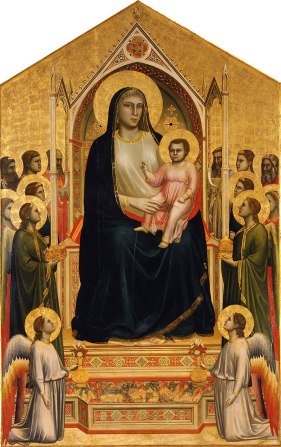
LEAVE
Art and Music of the Renaissance
From the Religious through the Secular
The Art of sculpture, painting and tapestry
Medieval through Renaissance Music
Art
Italian Artists
Gian Bernini, 1598 – 1680 – Naples, Italy – Sculptor and Architect.
Giotto di Bondone *
Full Name: Giotto di Bondone. Born: c. 1267, Vespignano, Italy. Died: January 8, 1337, Florence, Italy. Parents: Bondone, unknown mother. Siblings: Unknown. Spouses: One (first: Lapi). Most Memorable Accomplishment: Pioneered naturalistic frescoes in the Scrovegni Chapel (c. 1305), launching the Italian Renaissance. Quip: “Giotto painted so real, sheep tried grazing on his walls!”
Filippo Brunelleschi *
Full Name: Filippo Brunelleschi. Born: 1377, Florence, Italy. Died: April 15, 1446, Florence, Italy. Parents: Brunellesco di Lippo, Giuliana Spini. Siblings: Two, names unknown. Spouses: None. Most Memorable Accomplishment: Designed Florence Cathedral’s dome (1436), a Renaissance architectural marvel. Quip: “Brunelleschi’s dome: the ultimate Renaissance hat for Florence!”
Masaccio *
Full Name: Tommaso di Ser Giovanni di Simone. Born: December 21, 1401, San Giovanni Valdarno, Italy. Died: c. 1428, Rome, Italy. Parents: Giovanni di Mone Cassai, Jacopa di Martinozzo. Siblings: Giovanni. Spouses: One (first: unknown). Most Memorable Accomplishment: Painted The Holy Trinity (c. 1427), mastering perspective in early Renaissance art. Quip: “Masaccio’s perspective made flat walls pop like a Renaissance 3D movie!”
Leonardo da Vinci *
Full Name: Leonardo di ser Piero da Vinci. Born: April 15, 1452, Vinci, Italy. Died: May 2, 1519, Amboise, France. Parents: Not formally known, Caterina Buti del Vacca. Siblings: Twelve, including Francesco. Spouses: None. Most Memorable Accomplishment: Painted Mona Lisa (c. 1503–1506), defining Renaissance portraiture. Quip: “Leonardo’s Mona Lisa smirk? She knew he was sketching helicopters on the side!”
Michelangelo Buonarroti *
Full Name: Michelangelo di Lodovico Buonarroti Simoni. Born: March 6, 1475, Caprese, Italy. Died: February 18, 1564, Rome, Italy. Parents: Ludovico Buonarroti, Francesca di Neri. Siblings: 4 brothers, including Buonarroto. Spouses: None. Most Memorable Accomplishment: Sculpted David (1501–1504) and painted Sistine Chapel ceiling (1508–1512). Quip: “Michelangelo’s David: proof muscles and marble beat any Renaissance selfie!”
Raphael *
Full Name: Raffaello Sanzio da Urbino. Born: April 6, 1483, Urbino, Italy. Died: April 6, 1520, Rome, Italy. Parents: Giovanni Santi, Magia di Battista. Siblings: None. Spouses: None. Most Memorable Accomplishment: Painted School of Athens (1509–1511), embodying Renaissance humanism. Quip: “Raphael’s philosophers partied so hard, Plato nearly danced off the fresco!”
Northern/Western European Artists
Hubert van Eyck *
Full Name: Hubert van Eyck. Born: c. 1385, Maaseik, Belgium. Died: September 18, 1426, Ghent, Belgium. Parents: Unknown. Siblings: Jan, Margaretha, Lambert. Spouses: None. Most Memorable Accomplishment: Co-painted Ghent Altarpiece (c. 1432), a Northern Renaissance masterpiece. Quip: “Hubert’s altarpiece glowed so much, it lit up churches and egos!”
Hieronymus Bosch *
Full Name: Jheronimus van Aken. Born: c. 1450, ‘s-Hertogenbosch, Netherlands. Died: August 9, 1516, ‘s-Hertogenbosch, Netherlands. Parents: Anthonius van Aken, Aleyt Goyarts. Siblings: Goessen, others. Spouses: One (first: van Meervenne). Most Memorable Accomplishment: Painted Garden of Earthly Delights (c. 1490–1510), a surreal moral allegory. Quip: “Bosch’s nightmares on canvas made demons blush!”
Albrecht Dürer *
Full Name: Albrecht Dürer. Born: May 21, 1471, Nuremberg, Germany. Died: April 6, 1528, Nuremberg, Germany. Parents: Albrecht Dürer Sr., Barbara Holper. Siblings: Seventeen, including Hans. Spouses: One (first: Frey). Most Memorable Accomplishment: Created woodcuts like Apocalypse (1498), blending Gothic and Renaissance styles. Quip: “Dürer’s prints were so sharp, they cut through medieval gloom!”
Étienne Delaune *
Full Name: Étienne Delaune. Born: c. 1518, Orléans, France. Died: c. 1583, Strasbourg, France. Parents: Unknown. Siblings: Unknown. Spouses: One (first: unknown). Most Memorable Accomplishment: Engraved intricate prints, influencing French Renaissance decorative arts. Quip: “Delaune’s engravings: tiny lines, massive Renaissance swagger!”
Pieter Bruegel the Elder *
Full Name: Pieter Bruegel. Born: c. 1525, Breda, Netherlands. Died: September 9, 1569, Brussels, Belgium. Parents: Unknown. Siblings: Unknown. Spouses: One (first: Coecke). Most Memorable Accomplishment: Painted Peasant Wedding (1567), capturing everyday life with Renaissance realism. Quip: “Bruegel’s peasants partied so hard, even nobles crashed the feast!”
Titian
Full Name: Tiziano Vecellio. Born: c. 1488, Pieve di Cadore, Italy. Died: August 27, 1576, Venice, Italy. Parents: Gregorio Vecellio, Lucia. Siblings: Francesco, others. Spouses: One (first: di Ferrari). Most Memorable Accomplishment: Painted Venus of Urbino (1538), defining Venetian Renaissance color. Quip: “Titian’s colors popped so bright, Venice forgot how to blink!”
Jan van Eyck
Full Name: Jan van Eyck. Born: c. 1390, Maaseik, Belgium. Died: July 9, 1441, Bruges, Belgium. Parents: Unknown. Siblings: Hubert, Margaretha, Lambert. Spouses: One (first: Lievine). Most Memorable Accomplishment: Painted Arnolfini Portrait (1434), mastering oil techniques. Quip: “Jan’s oils shone so real, mirrors got jealous!”
.
.
Music Forms
Gregorian Chant *
Dates: c. 800–1000 (used 1400–1600). Geography: Western Europe (Rome, France). Nations: Papal States, Frankish Empire. Key Details: Monophonic sacred songs in Latin, standardized under Pope Gregory I (c. 590–604). Used in Renaissance liturgy, influencing polyphony. Creator: Attributed to Pope Gregory I. Quip: “Gregory’s chants: monks singing so holy, even angels took a knee!”
Medieval Modes *
Dates: c. 900–1600. Geography: Europe (Italy, France). Nations: HRE, France. Key Details: Scales (Ionian, Dorian, Phrygian, Lydian, Mixolydian, Aeolian, Locrian) shaped sacred and secular music. Renaissance composers like Josquin used modes for emotional depth. Creator: Evolved from Greek theory, no single creator. Quip: “Modes: the Renaissance playlist for every mood, from pious to party!”
Polyphony *
Dates: c. 1200–1600. Geography: France, Italy, Netherlands. Nations: France, HRE. Key Details: Multi-voice music, layering melodies. Perfected by Josquin des Prez (c. 1450–1521) in masses like Missa Pange Lingua. Defined Renaissance sacred music. Creator: Developed by Leonin, Perotin (12th c.), refined by Josquin. Quip: “Polyphony: when choirs juggle melodies like Renaissance acrobats!”
Intervals *
Dates: c. 1400–1600. Geography: Europe (Italy, England). Nations: Papal States, England. Key Details: Distances between pitches (e.g., thirds, fifths) structured Renaissance harmony. Composers like Palestrina used consonant intervals in sacred music. Creator: No single creator; codified by music theorists. Quip: “Intervals: the musical stairs Renaissance composers climbed to heaven!”
Rhythm *
Dates: c. 1400–1600. Geography: France, Netherlands. Nations: France, HRE. Key Details: Renaissance rhythm used mensural notation, allowing complex patterns in madrigals and masses. Josquin’s works showcased syncopation. Creator: Evolved collectively, no single creator. Quip: “Rhythm: Renaissance beats so catchy, even monks tapped their feet!”
3/4 Trinity *
Dates: c. 1400–1600. Geography: Western Europe. Nations: France, England. Key Details: Triple meter (3/4 time) symbolized the Holy Trinity in sacred music. Used in dances (e.g., pavanes) and masses. Creator: No single creator; tied to Church tradition. Quip: “3/4 time: three beats for Father, Son, and Holy Ghost!”
Harmony *
Dates: c. 1400–1600. Geography: Italy, Netherlands. Nations: Papal States, HRE. Key Details: Combining pitches into chords, harmony enriched polyphony. Palestrina’s masses (e.g., Missa Papae Marcelli) balanced clarity and richness. Creator: No single creator; advanced by Palestrina. Quip: “Harmony: Renaissance chords so sweet, they hugged your soul!”
Counterpoint *
Dates: c. 1400–1600. Geography: France, Italy. Nations: France, Papal States. Key Details: Interweaving independent melodies, perfected in polyphony. Josquin and Palestrina mastered strict counterpoint in sacred music. Creator: Codified by Tinctoris (c. 1477), practiced by Josquin. Quip: “Counterpoint: melodies dancing together without stepping on toes!”
Chords *
Dates: c. 1400–1600. Geography: Europe (Italy, England). Nations: Papal States, England. Key Details: Simultaneous notes forming harmony, used in masses and madrigals. Palestrina’s works emphasized triads. Creator: No single creator; evolved in polyphony. Quip: “Chords: Renaissance music’s secret sauce for heart-tugging tunes!”
4/4 Nature *
Dates: c. 1400–1600. Geography: Western Europe. Nations: France, HRE. Key Details: Common time (4/4) provided a “natural” pulse for secular and sacred music, used in dances and masses. Creator: No single creator; standard in mensural notation. Quip: “4/4: the beat so natural, even trees swayed to it!”
Gregorian Chants – 9c & 10c
Medieval Modes – Ionian, Dorian, Phrygian, Lydian, Mixolydian, Aeolian , Locrian.
Polyphony
Intervals
Rhythm
3/4 Trinity
Harmony
Counterpoint
Chords
4/4 Nature
Musical Patterns*
Dies Irae *
Dates: c. 1200–1600. Geography: Western Europe (Italy, France). Nations: Papal States, France. Key Details: A medieval chant for requiem masses, symbolizing death’s judgment. Attributed to Thomas of Celano (c. 1250), its haunting melody influenced Renaissance composers like Josquin in sacred works. Quip: “Dies Irae: the grim reaper’s favorite Renaissance earworm!”
Sol Motif *
Dates: c. 1400–1600. Geography: Europe (Italy, England). Nations: Florence, England. Key Details: Bright major modes (e.g., Ionian) or solfege “Sol” evoked the sun’s warmth in secular music, like Monteverdi’s madrigals. No single creator; rooted in modal traditions. Quip: “Sol: Renaissance rays to brighten any poet’s day!”
Proposed Briefs (Music and Literature)
To build on Musical Patterns and your tea room’s epic poetry focus, I propose 4 1* briefs: 2 for Music (motif-driven works) and 2 for Literature (epic poets), tying to Dies Irae, Sol, Epic Poetry, and Renaissance Literary Humanism.
Requiem Mass * (Event, Music)
Dates: c. 1400–1600. Geography: Italy, France. Nations: Papal States, France. Key Details: Sacred music for the dead, featuring Dies Irae. Composers like Ockeghem and Palestrina crafted polyphonic requiems, blending solemnity with hope. Quip: “Requiem Mass: sending souls off with a polyphonic bang!”
Orlande de Lassus * (Figure, Music)
Full Name: Orlande de Lassus. Born: c. 1532, Mons, Hainaut. Died: June 14, 1594, Munich, Germany. Parents: Unknown. Siblings: Unknown. Spouses: One (first: de Monte). Most Memorable Accomplishment: Composed over 2,000 works, including motets with Sol-like brightness (c. 1570s). Quip: “Lassus’s tunes: sunshine in every sacred note!”
Torquato Tasso * (Figure, Literature)
Full Name: Torquato Tasso. Born: March 11, 1544, Sorrento, Italy. Died: April 25, 1595, Rome, Italy. Parents: Bernardo Tasso, Porzia de’ Rossi. Siblings: Cornelia. Spouses: None. Most Memorable Accomplishment: Wrote Jerusalem Delivered (1581), an epic poem echoing Homer. Quip: “Tasso’s epics: crusaders and muses in poetic armor!”
Renaissance Epic Poets * (Event, Literature)
Dates: c. 1400–1600. Geography: Italy, England. Nations: Florence, England. Key Details: Poets like Tasso and Ariosto revived epic forms, drawing on Homer and Boccaccio, using musical motifs like Sol for heroic themes. Quip: “Epic poets: spinning yarns grander than a lyre’s strum!”
.
.
Musicians
Anonymous Chants * (Event, Music)
Dates: c. 900–1600. Geography: Western Europe. Nations: Papal States, HRE. Key Details: Anonymous monks composed devotional chants like Gregorian Chant and Dies Irae, used in Renaissance liturgy, expressing acts of devotion. No single creator. Quip: “Anonymous chants: monks’ secret hits for the divine playlist!”
Church and Royalty Patronage * (Event, Music)
Dates: c. 1400–1600. Geography: Italy, France. Nations: Papal States, France. Key Details: Popes and kings funded composers like Machaut and Lassus, supporting sacred and secular music, from masses to courtly songs. Quip: “Church and kings: bankrolling bangers for choirs and feasts!”
Pope Gregory the Great * (Figure, Music)
Full Name: Gregory I. Born: c. 540, Rome, Italy. Died: March 12, 604, Rome, Italy. Parents: Gordianus, Silvia. Siblings: Palatinus. Spouses: None. Most Memorable Accomplishment: Standardized Gregorian Chant (c. 590), shaping Renaissance sacred music. Quip: “Gregory’s chants: so holy, they echoed to the Renaissance!”
Hildegard von Bingen * (Figure, Music)
Full Name: Hildegard von Bingen. Born: c. 1098, Bermersheim, Germany. Died: September 17, 1179, Bingen, Germany. Parents: Hildebert, Mechthild. Siblings: Seven, including Rorich. Spouses: None. Most Memorable Accomplishment: Composed Ordo Virtutum (c. 1151), a liturgical drama, influencing Renaissance sacred music. Quip: “Hildegard’s tunes: divine visions with a medieval groove!”
Secular Music * (Event, Music)
Dates: c. 1400–1600. Geography: France, Italy. Nations: France, Florence. Key Details: Non-sacred music, like Troubadour songs and Machaut’s ballades, used Medieval Modes for love and heroism, rivaling church music. Quip: “Secular jams: Renaissance love songs outshone monks’ drones!”
Troubadour Tradition * (Event, Music)
Dates: c. 1100–1600. Geography: Southern France, Italy. Nations: France, HRE. Key Details: Troubadours like Bernart de Ventadorn sang courtly love songs, influencing Secular Music and Renaissance madrigals (Monteverdi). Quip: “Troubadours: serenading knights with more heart than armor!”
Guillaume de Machaut * (Figure, Music)
Full Name: Guillaume de Machaut. Born: c. 1300, Reims, France. Died: April 13, 1377, Reims, France. Parents: Unknown. Siblings: Jean. Spouses: None. Most Memorable Accomplishment: Composed Messe de Nostre Dame (c. 1360), a polyphonic masterpiece. Quip: “Machaut’s mass: polyphony so slick, it dazzled cathedrals!”
Gioseffo Zarlino * (Figure, Music)
Full Name: Gioseffo Zarlino. Born: January 31, 1517, Chioggia, Italy. Died: February 4, 1590, Venice, Italy. Parents: Giovanni Zarlino, unknown mother. Siblings: Unknown. Spouses: None. Most Memorable Accomplishment: Wrote Le istitutioni harmoniche (1558), codifying Renaissance music theory. Quip: “Zarlino’s theory: tuning Renaissance music to cosmic perfection!”
Instruments
Bow Lyra to Fiddle *
Dates: c. 1100–1600. Geography: Western Europe (Byzantium, France). Nations: HRE, France. Key Details: The bow lyra, a Byzantine bowed string instrument, evolved into the Renaissance fiddle, used by Troubadours for secular songs, blending Medieval Modes. No single creator. Quip: “Bow lyra to fiddle: serenading from empires to taverns!”
**Lute to Gittern *
Dates: c. 1200–1600. Geography: Spain, Italy. Nations: Spain, Florence. Key Details: The lute, a plucked string instrument, influenced the smaller gittern, popular in Renaissance courts for Secular Music, accompanying Machaut’s ballades. No single creator. Quip: “Lute to gittern: plucking heartstrings for Renaissance romantics!”
**Hammer Dulcimer *
Dates: c. 1400–1600. Geography: Middle East, Europe. Nations: Persia, HRE. Key Details: A trapezoidal stringed instrument struck with hammers, the hammer dulcimer added bright tones to Renaissance ensembles, echoing Sol motifs. No single creator. Quip: “Hammer dulcimer: striking sunny vibes in every note!”
**Hurdy Gurdy *
Dates: c. 1100–1600. Geography: France, Spain. Nations: France, Spain. Key Details: A stringed instrument with a crank-turned wheel, the hurdy gurdy droned for Troubadour songs and dances, blending sacred and secular. No single creator. Quip: “Hurdy gurdy: the medieval DJ spinning Renaissance beats!”
**Valve Trumpets *
Dates: c. 1800–1918. Geography: Germany, France. Nations: HRE, France. Key Details: Early valve trumpets (c. 1814) by Heinrich Stölzel expanded brass range, used in Romantic and WWI military bands, adding fanfare. Quip: “Valve trumpets: blowing bold notes from war to waltzes!”
**Variety Percussions *
Dates: c. 1400–1918. Geography: Europe, Middle East. Nations: Florence, Ottoman Empire. Key Details: Drums, tambourines, and cymbals drove rhythms in Renaissance dances and WWI marches, complementing Lassus’s motets. No single creator. Quip: “Percussions: banging out beats from courts to battlefields!”
Bow lyra to the fiddle
Lute to the Gittern
Hammer Dulcimer
Hurdy Gurdy
Valve Trumpets
Variety Percussions
.
.
Vanguards
Marco Polo and the Silk Road ***
Full Name: Marco Polo. Born: c. 1254, Venice, Italy. Died: January 8, 1324, Venice, Italy. Parents: Niccolò Polo, unknown mother. Siblings: Maffeo. Spouses: One (first: Donata). Most Memorable Accomplishment: Traveled the Silk Road, documented Mongol Empire in The Travels of Marco Polo (c. 1298), inspiring exploration. Quip: “Marco Polo: the guy who made ‘gap year’ a 24-year epic!”
Dante Alighieri *
Full Name: Dante Alighieri. Born: c. 1265, Florence, Italy. Died: September 14, 1321, Ravenna, Republic of Florence – Italy. Parents: Alighiero di Bellincione, Bella degli Abati. Siblings: Francesco. Spouses: One (first: Donati). Work: Poet, Writer, Philosopher. Most Memorable Accomplishment: Wrote Divine Comedy (c. 1320), shaping humanist literature. Quip: “Dante’s Comedy: a hell of a Renaissance road trip!” –
Francesco Petrarca *
(Locked, cross-referenced): Born 1304, died 1374, wrote Canzoniere (c. 1374). Quip: “Petrarch’s poems: making hearts and humanism skip a beat!”
*Niccolò Machiavelli *
(Locked, cross-referenced): Born 1469, died 1527, wrote The Prince (1513). Quip: “Machiavelli’s Prince: the Renaissance guide to shady politics!”
Michel de Montaigne *
(Locked, cross-referenced): Born 1533, died 1592, wrote Essays (1580). Quip: “Montaigne’s essays: where navel-gazing became a Renaissance art form!”
Casa De Medici *
Dates: c. 1400–1537. Geography: Florence, Italy. Nations: Republic of Florence. Key Details: The Medici family, led by Cosimo and Lorenzo, dominated banking and politics, funding Renaissance art (Botticelli) and humanism (Petrarch). Quip: “Medici: turning gold into Florence’s Renaissance masterpiece!”
—
El Cid ***
Full Name: Rodrigo Díaz de Vivar. Born: c. 1043, Vivar, Spain. Died: July 10, 1099, Valencia, Spain. Parents: Diego Laínez, unknown mother. Siblings: Fernando. Spouses: One (first: Jimena). Most Memorable Accomplishment: Conquered Valencia (1094), becoming a Spanish legend, inspiring Renaissance epics.
El Cid
Full Name: Rodrigo Díaz de Vivar. Born: c. 1043, Vivar, Spain. Died: July 10, 1099, Valencia, Spain. Parents: Diego Laínez, unknown mother. Siblings: Fernando, others. Spouses: One (first: Fernández). Most Memorable Accomplishment: As a mercenary knight, conquered Valencia (1094), defending it against Almoravids, becoming a legendary hero of Spanish Reconquista.—
Leonardo da Vinci *
Full Name: Leonardo di ser Piero da Vinci. Born: April 15, 1452, Vinci, Italy. Died: May 2, 1519, Amboise, France. Parents: Piero da Vinci, Caterina. Siblings: Twelve (half-siblings). Spouses: None. Most Memorable Accomplishment: Created Mona Lisa (c. 1503–1506), embodying Renaissance art and science.
Christopher Columbus *
Full Name: Christopher Columbus. Born: c. 1451, Genoa, Italy. Died: May 20, 1506, Valladolid, Spain. Parents: Domenico Colombo, Susanna Fontanarossa. Siblings: Bartholomew, Giovanni, others. Spouses: One (first: de Perestrello). Most Memorable Accomplishment: Reached the Americas (1492), sparking the Age of Exploration and Discovery.
Desiderius Erasmus *
Full Name: Desiderius Erasmus Roterodamus. Born: October 28, 1466, Rotterdam, Netherlands. Died: July 12, 1536, Basel, Switzerland. Parents: Gerard, Margaretha. Siblings: Pieter. Spouses: None. Most Memorable Accomplishment: Wrote In Praise of Folly (1511), critiquing society through humanist satire. Quip: “Erasmus: roasting Renaissance fools with a scholarly smirk!”
Johann Gutenberg *
Full Name: Johannes Gensfleisch zur Laden zum Gutenberg. Born: c. 1400, Mainz, Germany. Died: February 3, 1468, Mainz, Germany. Parents: Friele Gensfleisch, Else Wyrich. Siblings: Friele, others. Spouses: None. Most Memorable Accomplishment: Invented the printing press (c. 1440), revolutionizing knowledge dissemination.
.
.
.
.
Art
Filippo Brunelleschi, 1377—1446, Republic of Florence – Architect, Sculptor, Engineer.
Leonardo da Vinci, 1452—1519 – Republic of Florence – Polymath: Painter, Draughtsman, Engineer, Scientist, Theorist, Sculptor, Architect.
Michelangelo Simoni, 1475—1564), Republic of Florence – Sculptor, Painter, Architect. – The Devine.
Raphael da Urbino, 1483—1520 – Urbino, Italy – Painter, Architect.
Gian Bernini, 1598 – 1680 – Naples, Italy – Sculptor and Architect.
.
.
.
.
Discovery
Economics
Hurry Slowly
Republic of Florence –
Government – Red tape
Church – Indulgences
Wealth 1300s – wine, grains, leather, wool for silk, spices, cotton
Cosimo to Gian Gastone
de Medici – 1230 – 1737 – banks and double-entry book keeping
Italy Modern Capitalism – la nouveau riche
Surnames – 1300s
The Church, Martin Luther, The Reformation, Corruption of the Catholic Church, Council of Trent
.
.
.
.
.
.
.
.
.
Living Pan-European and American Cultural and Heritage Community Center

.
EMAIL: peachcommunity yahoo.com
.
.
.
.
.
.
.
.
.
.
.
.
.
MOVE THESE
Arthur, King of the Brits KNOWN AS: The Great Bear, Arctos (Greek), Artos (Celt), Artis, Arctic – Great Warrior TITLE: King of the British PRIMARY OCCUPATION: Legendary Monarch/Warrior FULL NAME: Arthur of Britain BIRTH: c. 470 – unknown location DEATH: c. 520 – unknown location PARENTS: Unknown (legendary: Uther Pendragon, Igraine) SIBLINGS: Unknown EDUCATION: Mentored by Merlin PHILOSOPHY/RELIGION: Druid Pagan (influenced by Merlin) ACCOMPLISHMENTS: Led Britons against Saxon invaders, winning the Battle of Badon (c. 500). AFFILIATIONS: Briton resistance YEARS OF RULE OR VOCATION: late 5th, early 6th centuries SPOUSES: One (first: Guinevere) CHILDREN IN WEDLOCK: Unknown OUT OF WEDLOCK: Unknown NAME OF SUCCESSOR: Unknown WORKS/BOOKS: Unknown SYMBOL/EMBLEM: Round Table (legendary) CONTEMPORARIES/RIVALS: Unknown (Saxon leaders implied) LEGACY/INFLUENCE: Mythic symbol of British unity and resistance. MEMORABLE QUOTE: Unknown (Note: Later chronicler Geoffrey of Monmouth, 12th century, wrote, “Arthur, a man of outstanding courage… worthy to be king,” shaping his legend.)
Alfred the Great KNOWN AS: The Great TITLE: King of the West Saxons and the Anglo-Saxons PRIMARY OCCUPATION: Monarch FULL NAME: Alfred of Wessex BIRTH: 848/849 – Wantage, England DEATH: October 26, 899 – Winchester, England PARENTS: Æthelwulf of Wessex, Osburh SIBLINGS: Æthelbald, Æthelberht, Æthelred, others EDUCATION: Likely educated in royal court, influenced by clerics PHILOSOPHY/RELIGION: Christian ACCOMPLISHMENTS: Unified Anglo-Saxon kingdoms, establishing the Danelaw treaty (c. 886). AFFILIATIONS: House of Wessex YEARS OF RULE OR VOCATION: Ruled 871–899 SPOUSES: One (first: Ealhswith) CHILDREN IN WEDLOCK: Unknown OUT OF WEDLOCK: Unknown NAME OF SUCCESSOR: Edward the Elder WORKS/BOOKS: Unknown SYMBOL/EMBLEM: Wessex dragon (speculative) CONTEMPORARIES/RIVALS: Viking leaders (e.g., Guthrum) LEGACY/INFLUENCE: Known as the founder of England, strengthened defenses and education. MEMORABLE QUOTE: Unknown (Note: Asser, his biographer, wrote in 893, “Alfred, king of the Anglo-Saxons, was a lover of wisdom above all things,” praising his intellect.)
King John KNOWN AS: John Lackland TITLE: King of England PRIMARY OCCUPATION: Monarch FULL NAME: John Plantagenet BIRTH: December 24, 1166 – Oxford, England DEATH: October 19, 1216 – Newark Castle, England PARENTS: Eleanor of Aquitaine, Henry II SIBLINGS: Richard I, Geoffrey, Eleanor, Joan, others EDUCATION: Educated in royal household; influenced by his mother, Eleanor, and clerics. PHILOSOPHY/RELIGION: Christian ACCOMPLISHMENTS: Signed Magna Carta (1215), establishing early limits on royal power. AFFILIATIONS: Plantagenet dynasty, opposed by barons and Pope Innocent III YEARS OF RULE OR VOCATION: Ruled 1199–1216 SPOUSES: Two, Isabel of Gloucester, Isabella of Angoulême CHILDREN IN WEDLOCK: Henry III, Richard, Joan, Isabella, Eleanor OUT OF WEDLOCK: Several, including Joan (married Llywelyn the Great) NAME OF SUCCESSOR: Henry III (son) WORKS/BOOKS: Magna Carta (1215) SYMBOL/EMBLEM: Plantagenet crest (speculative) CONTEMPORARIES/RIVALS: Stephen Langton, Robert Fitzwalter (baron leader), Philip II of France LEGACY/INFLUENCE: Magna Carta laid foundations for constitutional law; his reign’s failures shaped baronial resistance; vilified in chronicles but reevaluated by historians. MEMORABLE QUOTE: “I am no king’s man, but God’s.”
Stephen Langton KNOWN AS: Stephen Langton TITLE: Archbishop of Canterbury PRIMARY OCCUPATION: Cleric, Theologian FULL NAME: Stephen Langton BIRTH: c. 1150 – Langton by Wragby, England DEATH: July 9, 1228 – Slindon, England PARENTS: Henry Langton, Unknown SIBLINGS: Walter Langton (possibly others) EDUCATION: Likely studied theology in Paris PHILOSOPHY/RELIGION: Catholic theologian ACCOMPLISHMENTS: Helped draft Magna Carta (1215). AFFILIATIONS: Church, barons YEARS OF RULE OR VOCATION: Archbishop 1207–1228 SPOUSES: None (celibate as cleric) CHILDREN IN WEDLOCK: None OUT OF WEDLOCK: None confirmed NAME OF SUCCESSOR: Unknown WORKS/BOOKS: Biblical chapter divisions SYMBOL/EMBLEM: Unknown CONTEMPORARIES/RIVALS: King John, Pope Innocent III LEGACY/INFLUENCE: Shaped Magna Carta and biblical scholarship. MEMORABLE QUOTE: Unknown
Richard I (The Lionheart) KNOWN AS: The Lionheart TITLE: King of England PRIMARY OCCUPATION: Monarch FULL NAME: Richard Plantagenet BIRTH: September 8, 1157 – Oxford, England DEATH: April 6, 1199 – Châlus, France PARENTS: Henry II of England, Eleanor of Aquitaine SIBLINGS: John, Geoffrey, others EDUCATION: Likely educated in royal court, trained in military tactics PHILOSOPHY/RELIGION: Christian ACCOMPLISHMENTS: Led the Third Crusade, capturing Acre (1191). AFFILIATIONS: House of Plantagenet YEARS OF RULE OR VOCATION: Ruled 1189–1199 SPOUSES: One (first: Berengaria of Navarre) CHILDREN IN WEDLOCK: None OUT OF WEDLOCK: Unknown NAME OF SUCCESSOR: John WORKS/BOOKS: Unknown SYMBOL/EMBLEM: Lionheart emblem CONTEMPORARIES/RIVALS: Saladin LEGACY/INFLUENCE: Crusader legend. MEMORABLE QUOTE: Unknown (Note: Chronicler Roger of Howden, c. 1192, noted his essence, calling him, “a knight without fear.”)
Philip II Augustus, King of France KNOWN AS: Philip Augustus TITLE: King of France PRIMARY OCCUPATION: Monarch FULL NAME: Philip Augustus Capet BIRTH: August 21, 1165 – Gonesse, France DEATH: July 14, 1223 – Mantes, France PARENTS: Adela of Champagne, Louis VII (King and Queen of France) SIBLINGS: Agnes, Alice, others EDUCATION: Tutored in royal court; influenced by Walter of Lesbos PHILOSOPHY/RELIGION: Christian ACCOMPLISHMENTS: Won Battle of Bouvines (1214); reclaimed French territories from England; strengthened royal authority. AFFILIATIONS: Capetian dynasty, allied with Holy Roman Empire YEARS OF RULE OR VOCATION: Ruled 1180–1223 SPOUSES: Three, Isabelle of Hainaut, Ingeborg of Denmark, Agnes of Merania CHILDREN IN WEDLOCK: Louis VIII, Marie OUT OF WEDLOCK: Pierre Charlot NAME OF SUCCESSOR: Louis VIII (son) WORKS/BOOKS: Royal charters SYMBOL/EMBLEM: Fleur-de-lis CONTEMPORARIES/RIVALS: King John, Richard I, Emperor Otto IV LEGACY/INFLUENCE: Centralized French monarchy; laid groundwork for modern French state. His victories over England shifted European power dynamics. MEMORABLE QUOTE: “I have made France, not found it.” (Attributed).
—-
Henry V, King of England KNOWN AS: Henry of Monmouth, The Warrior King TITLE: King of England PRIMARY OCCUPATION: Monarch, Military Leader FULL NAME: Henry of Monmouth BIRTH: September 16, 1386 – Monmouth Castle, Wales DEATH: August 31, 1422 – Vincennes, France PARENTS: Mary de Bohun, Henry IV (King of England) SIBLINGS: Thomas, John, Humphrey, Blanche, Philippa EDUCATION: Educated at The Queen’s College, Oxford; influenced by Henry Beaufort PHILOSOPHY/RELIGION: Christian ACCOMPLISHMENTS: Led England to victory at the Battle of Agincourt (1415); secured the Treaty of Troyes (1420), naming him heir to the French throne. AFFILIATIONS: Lancastrian dynasty YEARS OF RULE OR VOCATION: Ruled 1413–1422 SPOUSES: One, Catherine of Valois CHILDREN IN WEDLOCK: Henry VI OUT OF WEDLOCK: None confirmed NAME OF SUCCESSOR: Henry VI (son) WORKS/BOOKS: Unknown SYMBOL/EMBLEM: Lancastrian rose (red rose symbol) CONTEMPORARIES/RIVALS: Charles VI of France, John Oldcastle, Edmund Mortimer LEGACY/INFLUENCE: Strengthened English nationalism; immortalized in Shakespeare’s Henriad as a warrior-king. MEMORABLE QUOTE: “We few, we happy few, we band of brothers.” (Shakespeare’s Henry V, attributed).
—
Henry VIII, King of England and Ireland KNOWN AS: Henry Tudor TITLE: King of England and Ireland PRIMARY OCCUPATION: Monarch FULL NAME: Henry Tudor BIRTH: June 28, 1491 – Greenwich, England DEATH: January 28, 1547 – London, England PARENTS: Henry VII of England, Elizabeth of York SIBLINGS: Arthur, Margaret, Mary EDUCATION: Unknown PHILOSOPHY/RELIGION: Christian (shifted to Church of England) ACCOMPLISHMENTS: Initiated the English Reformation by breaking with Rome, establishing the Church of England (1534). AFFILIATIONS: English Reformation YEARS OF RULE OR VOCATION: Ruled 1509–1547 SPOUSES: Six, Catherine of Aragon, Anne Boleyn, Jane Seymour, Anne of Cleves, Catherine Howard, Catherine Parr CHILDREN IN WEDLOCK: Mary I, Elizabeth I, Edward VI OUT OF WEDLOCK: Henry FitzRoy (recognized illegitimate son) NAME OF SUCCESSOR: Edward VI WORKS/BOOKS: Unknown SYMBOL/EMBLEM: Unknown CONTEMPORARIES/RIVALS: Francis I of France, Charles V of Spain LEGACY/INFLUENCE: Transformed England’s religious and political landscape. MEMORABLE QUOTE: Unknown (Note: Venetian ambassador Giustiniani wrote in 1519, “The King is tall and handsome, with a regal presence,” noting his early charisma.).
——–
Mary I, Queen of England and Ireland KNOWN AS: Bloody Mary TITLE: Queen of England and Ireland PRIMARY OCCUPATION: Monarch FULL NAME: Mary Tudor BIRTH: February 18, 1516 – Greenwich, England DEATH: November 17, 1558 – London, England PARENTS: Henry VIII of England, Catherine of Aragon SIBLINGS: Elizabeth I, Edward VI (half-siblings) EDUCATION: Unknown PHILOSOPHY/RELIGION: Catholic ACCOMPLISHMENTS: Restored Catholicism in England (1553–1558), reversing her father’s Reformation. AFFILIATIONS: Catholic restoration YEARS OF RULE OR VOCATION: Ruled 1553–1558 SPOUSES: One, Philip II of Spain CHILDREN IN WEDLOCK: None OUT OF WEDLOCK: None confirmed NAME OF SUCCESSOR: Elizabeth I WORKS/BOOKS: Unknown SYMBOL/EMBLEM: Unknown CONTEMPORARIES/RIVALS: Elizabeth I, Philip II of Spain LEGACY/INFLUENCE: Brief Catholic resurgence, marked by religious conflict. MEMORABLE QUOTE: Unknown (Note: Ambassador Simon Renard wrote in 1554, “She is gentle but resolute in her faith,” reflecting her determination.).
Elizabeth I, Queen of England and Ireland KNOWN AS: The Virgin Queen, Gloriana, Last of the House of Tudor TITLE: Queen of England and Ireland PRIMARY OCCUPATION: Monarch FULL NAME: Elizabeth Tudor BIRTH: September 7, 1533 – Greenwich, England DEATH: March 24, 1603 – Richmond, England PARENTS: Anne Boleyn, Henry VIII (King and Queen of England) SIBLINGS: Edward VI, Mary I (half-siblings) EDUCATION: Educated by humanists like Roger Ascham; influenced by William Cecil PHILOSOPHY/RELIGION: Protestant ACCOMPLISHMENTS: Defeated the Spanish Armada (1588); established the Elizabethan Settlement, balancing religious factions. AFFILIATIONS: Protestant cause, Privy Council YEARS OF RULE OR VOCATION: Ruled 1558–1603 SPOUSES: None (never married) CHILDREN IN WEDLOCK: None OUT OF WEDLOCK: None confirmed NAME OF SUCCESSOR: James I (James VI of Scotland) WORKS/BOOKS: Golden Speech (1601) SYMBOL/EMBLEM: Tudor rose (red and white) CONTEMPORARIES/RIVALS: Mary, Queen of Scots, Philip II of Spain, Francis Drake LEGACY/INFLUENCE: Stabilized England’s economy and religion; fostered a cultural golden age. MEMORABLE QUOTE: “I know I have the body but of a weak and feeble woman; but I have the heart and stomach of a king.” (Tilbury Speech, 1588).
James V, King of Scotland KNOWN AS: Unknown TITLE: King of Scotland PRIMARY OCCUPATION: Monarch FULL NAME: James Stewart BIRTH: April 10, 1512 – Linlithgow, Scotland DEATH: December 14, 1542 – Falkland, Scotland PARENTS: James IV of Scotland, Margaret Tudor SIBLINGS: Alexander, others EDUCATION: Unknown PHILOSOPHY/RELIGION: Christian ACCOMPLISHMENTS: Strengthened Scottish monarchy through alliances with France, notably marrying Madeleine (1537). AFFILIATIONS: House of Stewart YEARS OF RULE OR VOCATION: Ruled 1513–1542 SPOUSES: Two, Madeleine of Valois, Mary of Guise CHILDREN IN WEDLOCK: Unknown OUT OF WEDLOCK: Unknown NAME OF SUCCESSOR: Mary, Queen of Scots WORKS/BOOKS: Unknown SYMBOL/EMBLEM: Unknown CONTEMPORARIES/RIVALS: Henry VIII of England LEGACY/INFLUENCE: Preserved Scottish autonomy until his daughter’s reign. MEMORABLE QUOTE: Unknown (Note: Scottish chronicler John Lesley wrote, “James was a prince of great courage,” praising his resilience.).
James VI and I, King of Scotland and Great Britain KNOWN AS: Unknown TITLE: King of Scotland as James VI, King of Great Britain and Ireland as James I PRIMARY OCCUPATION: Monarch FULL NAME: James Charles Stuart BIRTH: June 19, 1566 – Edinburgh, Scotland DEATH: March 27, 1625 – Theobalds, England PARENTS: Mary Queen of Scots, Henry Stuart (Lord Darnley) SIBLINGS: None EDUCATION: Unknown PHILOSOPHY/RELIGION: Christian ACCOMPLISHMENTS: Unified the Scottish and English crowns (1603), initiating British colonial expansion. AFFILIATIONS: House of Stuart YEARS OF RULE OR VOCATION: Ruled Scotland 1567–1625, England 1603–1625 SPOUSES: One, Anne of Denmark CHILDREN IN WEDLOCK: Henry, Elizabeth, Charles OUT OF WEDLOCK: Unknown NAME OF SUCCESSOR: Charles I WORKS/BOOKS: Unknown SYMBOL/EMBLEM: Unknown CONTEMPORARIES/RIVALS: Unknown LEGACY/INFLUENCE: Laid foundations for British empire. MEMORABLE QUOTE: Unknown (Note: Sir Anthony Weldon wrote, “He was a king of good learning but poor judgment,” reflecting mixed views.).
Mary, Queen of Scots KNOWN AS: Unknown TITLE: Queen of Scotland PRIMARY OCCUPATION: Monarch FULL NAME: Mary Stuart BIRTH: December 8, 1542 – Linlithgow, Scotland DEATH: February 8, 1587 – Fotheringhay, England PARENTS: James V of Scotland, Mary of Guise SIBLINGS: None surviving EDUCATION: Unknown PHILOSOPHY/RELIGION: Catholic ACCOMPLISHMENTS: Asserted her claim to the English throne, challenging Elizabeth I. AFFILIATIONS: House of Stuart YEARS OF RULE OR VOCATION: Ruled 1542–1567 SPOUSES: Three, Francis II of France, Henry Stuart, James Hepburn CHILDREN IN WEDLOCK: James VI of Scotland OUT OF WEDLOCK: Unknown NAME OF SUCCESSOR: James VI of Scotland WORKS/BOOKS: Unknown SYMBOL/EMBLEM: Unknown CONTEMPORARIES/RIVALS: Elizabeth I LEGACY/INFLUENCE: Her claim fueled Anglo-Scottish tensions. MEMORABLE QUOTE: Unknown (Note: Elizabeth I reportedly said in 1586, “She would be the end of me or I of her,” highlighting their rivalry.).
Jane Grey, Queen of England KNOWN AS: The Nine Days’ Queen TITLE: Queen of England PRIMARY OCCUPATION: Monarch (briefly) FULL NAME: Lady Jane Grey BIRTH: October 1537 – Bradgate Park, England DEATH: February 12, 1554 – Tower of London, England PARENTS: Henry Grey, Frances Brandon SIBLINGS: Katherine, Mary EDUCATION: Unknown PHILOSOPHY/RELIGION: Protestant ACCOMPLISHMENTS: Proclaimed queen July 10, 1553, deposed after nine days by Mary I. AFFILIATIONS: Protestant cause YEARS OF RULE OR VOCATION: Ruled July 10–19, 1553 SPOUSES: One, Guildford Dudley CHILDREN IN WEDLOCK: None OUT OF WEDLOCK: None NAME OF SUCCESSOR: Mary I WORKS/BOOKS: Unknown SYMBOL/EMBLEM: Unknown CONTEMPORARIES/RIVALS: Mary I, Edward VI LEGACY/INFLUENCE: Symbol of political turmoil. MEMORABLE QUOTE: Unknown (Note: Chronicler John Foxe wrote, “a martyr for her faith,” reflecting her tragic end.).
Philip II Augustus, King of France KNOWN AS: Philip Augustus TITLE: King of France PRIMARY OCCUPATION: Monarch FULL NAME: Philip Augustus Capet BIRTH: August 21, 1165 – Gonesse, France DEATH: July 14, 1223 – Mantes, France PARENTS: Adela of Champagne, Louis VII (King and Queen of France) SIBLINGS: Agnes, Alice, others EDUCATION: Tutored in royal court; influenced by Walter of Lesbos PHILOSOPHY/RELIGION: Christian ACCOMPLISHMENTS: Won Battle of Bouvines (1214); reclaimed French territories from England; strengthened royal authority. AFFILIATIONS: Capetian dynasty, allied with Holy Roman Empire YEARS OF RULE OR VOCATION: Ruled 1180–1223 SPOUSES: Three, Isabelle of Hainaut, Ingeborg of Denmark, Agnes of Merania CHILDREN IN WEDLOCK: Louis VIII, Marie OUT OF WEDLOCK: Pierre Charlot NAME OF SUCCESSOR: Louis VIII (son) WORKS/BOOKS: Royal charters SYMBOL/EMBLEM: Fleur-de-lis CONTEMPORARIES/RIVALS: King John, Richard I, Emperor Otto IV LEGACY/INFLUENCE: Centralized French monarchy; laid groundwork for modern French state. His victories over England shifted European power dynamics. MEMORABLE QUOTE: “I have made France, not found it.” (Attributed).
Henry V, King of England KNOWN AS: Henry of Monmouth, The Warrior King TITLE: King of England PRIMARY OCCUPATION: Monarch, Military Leader FULL NAME: Henry of Monmouth BIRTH: September 16, 1386 – Monmouth Castle, Wales DEATH: August 31, 1422 – Vincennes, France PARENTS: Mary de Bohun, Henry IV (King of England) SIBLINGS: Thomas, John, Humphrey, Blanche, Philippa EDUCATION: Educated at The Queen’s College, Oxford; influenced by Henry Beaufort PHILOSOPHY/RELIGION: Christian ACCOMPLISHMENTS: Led England to victory at the Battle of Agincourt (1415); secured the Treaty of Troyes (1420), naming him heir to the French throne. AFFILIATIONS: Lancastrian dynasty YEARS OF RULE OR VOCATION: Ruled 1413–1422 SPOUSES: One, Catherine of Valois CHILDREN IN WEDLOCK: Henry VI OUT OF WEDLOCK: None confirmed NAME OF SUCCESSOR: Henry VI (son) WORKS/BOOKS: Unknown SYMBOL/EMBLEM: Lancastrian rose (red rose symbol) CONTEMPORARIES/RIVALS: Charles VI of France, John Oldcastle, Edmund Mortimer LEGACY/INFLUENCE: Strengthened English nationalism; immortalized in Shakespeare’s Henriad as a warrior-king. MEMORABLE QUOTE: “We few, we happy few, we band of brothers.” (Shakespeare’s Henry V, attributed).
Henry VIII, King of England and Ireland KNOWN AS: Henry Tudor TITLE: King of England and Ireland PRIMARY OCCUPATION: Monarch FULL NAME: Henry Tudor BIRTH: June 28, 1491 – Greenwich, England DEATH: January 28, 1547 – London, England PARENTS: Henry VII of England, Elizabeth of York SIBLINGS: Arthur, Margaret, Mary EDUCATION: Unknown PHILOSOPHY/RELIGION: Christian (shifted to Church of England) ACCOMPLISHMENTS: Initiated the English Reformation by breaking with Rome, establishing the Church of England (1534). AFFILIATIONS: English Reformation YEARS OF RULE OR VOCATION: Ruled 1509–1547 SPOUSES: Six, Catherine of Aragon, Anne Boleyn, Jane Seymour, Anne of Cleves, Catherine Howard, Catherine Parr CHILDREN IN WEDLOCK: Mary I, Elizabeth I, Edward VI OUT OF WEDLOCK: Henry FitzRoy (recognized illegitimate son) NAME OF SUCCESSOR: Edward VI WORKS/BOOKS: Unknown SYMBOL/EMBLEM: Unknown CONTEMPORARIES/RIVALS: Francis I of France, Charles V of Spain LEGACY/INFLUENCE: Transformed England’s religious and political landscape. MEMORABLE QUOTE: Unknown (Note: Venetian ambassador Giustiniani wrote in 1519, “The King is tall and handsome, with a regal presence,” noting his early charisma.).
Mary I, Queen of England and Ireland KNOWN AS: Bloody Mary TITLE: Queen of England and Ireland PRIMARY OCCUPATION: Monarch FULL NAME: Mary Tudor BIRTH: February 18, 1516 – Greenwich, England DEATH: November 17, 1558 – London, England PARENTS: Henry VIII of England, Catherine of Aragon SIBLINGS: Elizabeth I, Edward VI (half-siblings) EDUCATION: Unknown PHILOSOPHY/RELIGION: Catholic ACCOMPLISHMENTS: Restored Catholicism in England (1553–1558), reversing her father’s Reformation. AFFILIATIONS: Catholic restoration YEARS OF RULE OR VOCATION: Ruled 1553–1558 SPOUSES: One, Philip II of Spain CHILDREN IN WEDLOCK: None OUT OF WEDLOCK: None confirmed NAME OF SUCCESSOR: Elizabeth I WORKS/BOOKS: Unknown SYMBOL/EMBLEM: Unknown CONTEMPORARIES/RIVALS: Elizabeth I, Philip II of Spain LEGACY/INFLUENCE: Brief Catholic resurgence, marked by religious conflict. MEMORABLE QUOTE: Unknown (Note: Ambassador Simon Renard wrote in 1554, “She is gentle but resolute in her faith,” reflecting her determination.).
Elizabeth I, Queen of England and Ireland KNOWN AS: The Virgin Queen, Gloriana, Last of the House of Tudor TITLE: Queen of England and Ireland PRIMARY OCCUPATION: Monarch FULL NAME: Elizabeth Tudor BIRTH: September 7, 1533 – Greenwich, England DEATH: March 24, 1603 – Richmond, England PARENTS: Anne Boleyn, Henry VIII (King and Queen of England) SIBLINGS: Edward VI, Mary I (half-siblings) EDUCATION: Educated by humanists like Roger Ascham; influenced by William Cecil PHILOSOPHY/RELIGION: Protestant ACCOMPLISHMENTS: Defeated the Spanish Armada (1588); established the Elizabethan Settlement, balancing religious factions. AFFILIATIONS: Protestant cause, Privy Council YEARS OF RULE OR VOCATION: Ruled 1558–1603 SPOUSES: None (never married) CHILDREN IN WEDLOCK: None OUT OF WEDLOCK: None confirmed NAME OF SUCCESSOR: James I (James VI of Scotland) WORKS/BOOKS: Golden Speech (1601) SYMBOL/EMBLEM: Tudor rose (red and white) CONTEMPORARIES/RIVALS: Mary, Queen of Scots, Philip II of Spain, Francis Drake LEGACY/INFLUENCE: Stabilized England’s economy and religion; fostered a cultural golden age. MEMORABLE QUOTE: “I know I have the body but of a weak and feeble woman; but I have the heart and stomach of a king.” (Tilbury Speech, 1588).
James V, King of Scotland KNOWN AS: Unknown TITLE: King of Scotland PRIMARY OCCUPATION: Monarch FULL NAME: James Stewart BIRTH: April 10, 1512 – Linlithgow, Scotland DEATH: December 14, 1542 – Falkland, Scotland PARENTS: James IV of Scotland, Margaret Tudor SIBLINGS: Alexander, others EDUCATION: Unknown PHILOSOPHY/RELIGION: Christian ACCOMPLISHMENTS: Strengthened Scottish monarchy through alliances with France, notably marrying Madeleine (1537). AFFILIATIONS: House of Stewart YEARS OF RULE OR VOCATION: Ruled 1513–1542 SPOUSES: Two, Madeleine of Valois, Mary of Guise CHILDREN IN WEDLOCK: Unknown OUT OF WEDLOCK: Unknown NAME OF SUCCESSOR: Mary, Queen of Scots WORKS/BOOKS: Unknown SYMBOL/EMBLEM: Unknown CONTEMPORARIES/RIVALS: Henry VIII of England LEGACY/INFLUENCE: Preserved Scottish autonomy until his daughter’s reign. MEMORABLE QUOTE: Unknown (Note: Scottish chronicler John Lesley wrote, “James was a prince of great courage,” praising his resilience.).
James VI and I, King of Scotland and Great Britain KNOWN AS: Unknown TITLE: King of Scotland as James VI, King of Great Britain and Ireland as James I PRIMARY OCCUPATION: Monarch FULL NAME: James Charles Stuart BIRTH: June 19, 1566 – Edinburgh, Scotland DEATH: March 27, 1625 – Theobalds, England PARENTS: Mary Queen of Scots, Henry Stuart (Lord Darnley) SIBLINGS: None EDUCATION: Unknown PHILOSOPHY/RELIGION: Christian ACCOMPLISHMENTS: Unified the Scottish and English crowns (1603), initiating British colonial expansion. AFFILIATIONS: House of Stuart YEARS OF RULE OR VOCATION: Ruled Scotland 1567–1625, England 1603–1625 SPOUSES: One, Anne of Denmark CHILDREN IN WEDLOCK: Henry, Elizabeth, Charles OUT OF WEDLOCK: Unknown NAME OF SUCCESSOR: Charles I WORKS/BOOKS: Unknown SYMBOL/EMBLEM: Unknown CONTEMPORARIES/RIVALS: Unknown LEGACY/INFLUENCE: Laid foundations for British empire. MEMORABLE QUOTE: Unknown (Note: Sir Anthony Weldon wrote, “He was a king of good learning but poor judgment,” reflecting mixed views.).
Mary, Queen of Scots KNOWN AS: Unknown TITLE: Queen of Scotland PRIMARY OCCUPATION: Monarch FULL NAME: Mary Stuart BIRTH: December 8, 1542 – Linlithgow, Scotland DEATH: February 8, 1587 – Fotheringhay, England PARENTS: James V of Scotland, Mary of Guise SIBLINGS: None surviving EDUCATION: Unknown PHILOSOPHY/RELIGION: Catholic ACCOMPLISHMENTS: Asserted her claim to the English throne, challenging Elizabeth I. AFFILIATIONS: House of Stuart YEARS OF RULE OR VOCATION: Ruled 1542–1567 SPOUSES: Three, Francis II of France, Henry Stuart, James Hepburn CHILDREN IN WEDLOCK: James VI of Scotland OUT OF WEDLOCK: Unknown NAME OF SUCCESSOR: James VI of Scotland WORKS/BOOKS: Unknown SYMBOL/EMBLEM: Unknown CONTEMPORARIES/RIVALS: Elizabeth I LEGACY/INFLUENCE: Her claim fueled Anglo-Scottish tensions. MEMORABLE QUOTE: Unknown (Note: Elizabeth I reportedly said in 1586, “She would be the end of me or I of her,” highlighting their rivalry.).
Jane Grey, Queen of England KNOWN AS: The Nine Days’ Queen TITLE: Queen of England PRIMARY OCCUPATION: Monarch (briefly) FULL NAME: Lady Jane Grey BIRTH: October 1537 – Bradgate Park, England DEATH: February 12, 1554 – Tower of London, England PARENTS: Henry Grey, Frances Brandon SIBLINGS: Katherine, Mary EDUCATION: Unknown PHILOSOPHY/RELIGION: Protestant ACCOMPLISHMENTS: Proclaimed queen July 10, 1553, deposed after nine days by Mary I. AFFILIATIONS: Protestant cause YEARS OF RULE OR VOCATION: Ruled July 10–19, 1553 SPOUSES: One, Guildford Dudley CHILDREN IN WEDLOCK: None OUT OF WEDLOCK: None NAME OF SUCCESSOR: Mary I WORKS/BOOKS: Unknown SYMBOL/EMBLEM: Unknown CONTEMPORARIES/RIVALS: Mary I, Edward VI LEGACY/INFLUENCE: Symbol of political turmoil. MEMORABLE QUOTE: Unknown (Note: Chronicler John Foxe wrote, “a martyr for her faith,” reflecting her tragic end.).
Edward, The Black Prince KNOWN AS: The Black Prince TITLE: Prince of Wales PRIMARY OCCUPATION: Military Leader, Heir to the Throne FULL NAME: Edward of Woodstock BIRTH: June 15, 1330 – Woodstock, England DEATH: June 8, 1376 – Westminster, England PARENTS: Philippa of Hainault, Edward III (King and Queen of England) SIBLINGS: John of Gaunt, Lionel, Edmund, Mary, Margaret, others EDUCATION: Educated in royal household; trained by Edward III PHILOSOPHY/RELIGION: Christian ACCOMPLISHMENTS: Led victories at Crécy (1346) and Poitiers (1356); captured King John II of France. AFFILIATIONS: Plantagenet dynasty YEARS OF RULE OR VOCATION: Active 1340s–1376 SPOUSES: One, Joan of Kent CHILDREN IN WEDLOCK: Edward, Richard (later Richard II) OUT OF WEDLOCK: None confirmed NAME OF SUCCESSOR: Richard II (son) WORKS/BOOKS: Unknown SYMBOL/EMBLEM: Black Prince’s shield (three ostrich feathers) CONTEMPORARIES/RIVALS: John II of France, Bertrand du Guesclin LEGACY/INFLUENCE: Defined chivalric warfare; bolstered English morale. MEMORABLE QUOTE: “Serve me loyally, and I will reward you well.” (Attributed by chroniclers).
William Marshal, Earl of Pembroke KNOWN AS: William Marshal, The Marshal TITLE: Earl of Pembroke, Regent of England PRIMARY OCCUPATION: Knight, Statesman, Military Leader FULL NAME: William Marshal BIRTH: c. 1146–1147 – Unknown (likely Wiltshire, England) DEATH: May 14, 1219 – Caversham, England PARENTS: Sybil of Salisbury, John Marshal SIBLINGS: John Marshal (brother) EDUCATION: Trained as a knight; mentored by Patrick of Salisbury PHILOSOPHY/RELIGION: Christian ACCOMPLISHMENTS: Led victory at Battle of Lincoln (1217); served as regent for Henry III. AFFILIATIONS: Served Henry II, Richard I, John, Henry III YEARS OF RULE OR VOCATION: Active 1160s–1219; regent 1216–1219 SPOUSES: One, Isabel de Clare CHILDREN IN WEDLOCK: William, Richard, Gilbert, Walter, Anselm, Maud, Isabel, Sybil, Eva, Joan OUT OF WEDLOCK: None confirmed NAME OF SUCCESSOR: Henry III (as king); Hubert de Burgh (as regent) WORKS/BOOKS: History of William Marshal (biography, c. 1220s) SYMBOL/EMBLEM: Unknown CONTEMPORARIES/RIVALS: Simon de Montfort, Louis VIII of France LEGACY/INFLUENCE: Known as “the greatest knight”; stabilized England during First Barons’ War. MEMORABLE QUOTE: “I have served four kings and will serve the fifth.” (Attributed by his biography).
Thomas Cromwell, Lord Privy Seal KNOWN AS: Thomas Cromwell TITLE: Lord Privy Seal, Chief Minister PRIMARY OCCUPATION: Statesman, Lawyer FULL NAME: Thomas Cromwell BIRTH: c. 1485 – Putney, England DEATH: July 28, 1540 – London, England PARENTS: Katherine Meverell, Walter Cromwell (blacksmith) SIBLINGS: Katherine, Elizabeth EDUCATION: Self-educated; influenced by Thomas Wolsey PHILOSOPHY/RELIGION: Christian (Reformation supporter) ACCOMPLISHMENTS: Orchestrated Henry VIII’s break with Rome, enabling the English Reformation. AFFILIATIONS: Reformation supporters YEARS OF RULE OR VOCATION: Active 1520s–1540 SPOUSES: One, Elizabeth Wyckes CHILDREN IN WEDLOCK: Gregory OUT OF WEDLOCK: None confirmed NAME OF SUCCESSOR: Thomas Cranmer (influential role) WORKS/BOOKS: Reformation legislation (e.g., Act of Supremacy, 1534) SYMBOL/EMBLEM: Unknown CONTEMPORARIES/RIVALS: Thomas More, Anne Boleyn, Thomas Cranmer LEGACY/INFLUENCE: Shaped the English Reformation; centralized royal administration. MEMORABLE QUOTE: “I have ventured all for the king’s service.” (Attributed at his execution).
ART Geoffrey Chaucer KNOWN AS: Chaucer, Father of English Literature TITLE: Poet, Diplomat PRIMARY OCCUPATION: Poet, Civil Servant FULL NAME: Geoffrey Chaucer BIRTH: c. 1343 – London, England DEATH: October 25, 1400 – London, England PARENTS: Agnes Copton, John Chaucer (vintner) SIBLINGS: Unknown (possibly a sister, Katherine) EDUCATION: Likely educated in London; influenced by French and Italian poets like Boccaccio PHILOSOPHY/RELIGION: Christian ACCOMPLISHMENTS: Wrote The Canterbury Tales (c. 1387–1400), a cornerstone of English literature; introduced iambic pentameter. AFFILIATIONS: Royal court YEARS OF RULE OR VOCATION: Active 1360s–1400 SPOUSES: One, Philippa Roet CHILDREN IN WEDLOCK: Thomas, Elizabeth, Agnes, Lewis OUT OF WEDLOCK: None confirmed NAME OF SUCCESSOR: Unknown WORKS/BOOKS: The Canterbury Tales, Troilus and Criseyde, The Book of the Duchess SYMBOL/EMBLEM: Unknown CONTEMPORARIES/RIVALS: John Gower, William Langland LEGACY/INFLUENCE: Standardized Middle English in literature; shaped narrative poetry. MEMORABLE QUOTE: “What is better than wisdom? Woman. And what is better than a good woman? Nothing.” (The Canterbury Tales).
ART Jean Fouquet KNOWN AS: Jean Fouquet TITLE: Painter PRIMARY OCCUPATION: Artist FULL NAME: Jean Fouquet BIRTH: c. 1420 – Tours, France DEATH: c. 1481 – Tours, France PARENTS: Unknown (Commoners) SIBLINGS: Unknown EDUCATION: Trained in Tours; influenced by Italian artists PHILOSOPHY/RELIGION: Christian ACCOMPLISHMENTS: Painted Melun Diptych; blended Italian Renaissance and French Gothic styles. AFFILIATIONS: French court, clergy YEARS OF RULE OR VOCATION: Active 1440s–1470s SPOUSES: Unknown CHILDREN IN WEDLOCK: Unknown OUT OF WEDLOCK: None recorded NAME OF SUCCESSOR: None WORKS/BOOKS: Melun Diptych, Virgin and Child, Portrait of Charles VII SYMBOL/EMBLEM: Unknown CONTEMPORARIES/RIVALS: Rogier van der Weyden, Jan van Eyck LEGACY/INFLUENCE: Introduced Renaissance techniques to French art; shaped early French portraiture. His work bridged medieval and modern artistic traditions. MEMORABLE QUOTE: Unknown.
ART Nicole Oresme KNOWN AS: Nicole Oresme TITLE: Scholar/Bishop PRIMARY OCCUPATION: Scientist/Philosopher FULL NAME: Nicole Oresme BIRTH: c. 1320 – Allemagne, France DEATH: July 11, 1382 – Lisieux, France PARENTS: Unknown (Commoners) SIBLINGS: Unknown EDUCATION: Studied at University of Paris; influenced by John Buridan PHILOSOPHY/RELIGION: Christian ACCOMPLISHMENTS: Proposed Earth’s rotation; wrote on mathematics and economics. AFFILIATIONS: University of Paris, Charles V’s court YEARS OF RULE OR VOCATION: Active 1340s–1382 SPOUSES: None (cleric) CHILDREN IN WEDLOCK: None OUT OF WEDLOCK: None NAME OF SUCCESSOR: None WORKS/BOOKS: Treatise on Money, Livre du Ciel et du Monde SYMBOL/EMBLEM: Unknown CONTEMPORARIES/RIVALS: William of Ockham, Thomas Bradwardine LEGACY/INFLUENCE: Early heliocentric ideas; pioneered economic theory. His scientific curiosity prefigured Copernicus. MEMORABLE QUOTE: “The Earth moves, though we perceive it not.” (Paraphrased).
ART Thomas More KNOWN AS: Sir Thomas More TITLE: Lord Chancellor, Humanist PRIMARY OCCUPATION: Statesman, Philosopher, Lawyer FULL NAME: Thomas More BIRTH: February 7, 1478 – London, England DEATH: July 6, 1535 – London, England PARENTS: Agnes Graunger, John More (judge) SIBLINGS: None confirmed EDUCATION: Studied at Oxford and Lincoln’s Inn; influenced by Erasmus of Rotterdam PHILOSOPHY/RELIGION: Christian (Catholic) ACCOMPLISHMENTS: Wrote Utopia (1516), a seminal humanist text; served as Lord Chancellor under Henry VIII. AFFILIATIONS: English humanist circles YEARS OF RULE OR VOCATION: Lord Chancellor 1529–1532 SPOUSES: Two, Jane Colt, Alice Middleton CHILDREN IN WEDLOCK: Margaret, Elizabeth, Cicely, John OUT OF WEDLOCK: None confirmed NAME OF SUCCESSOR: Thomas Cromwell (as Lord Chancellor) WORKS/BOOKS: Utopia (1516), History of King Richard III SYMBOL/EMBLEM: Unknown CONTEMPORARIES/RIVALS: Erasmus, Thomas Cromwell, John Fisher LEGACY/INFLUENCE: Shaped Renaissance humanism; canonized as a Catholic saint. MEMORABLE QUOTE: “I die the king’s good servant, but God’s first.” (At his execution).
ART William Shakespeare KNOWN AS: Shakespeare, The Bard TITLE: Playwright, Poet PRIMARY OCCUPATION: Playwright, Actor, Poet FULL NAME: William Shakespeare BIRTH: April 1564 (baptized April 26, 1564) – Stratford-upon-Avon, England DEATH: April 23, 1616 – Stratford-upon-Avon, England PARENTS: Mary Arden, John Shakespeare (glover, alderman) SIBLINGS: Joan, Margaret, Gilbert, Joan, Anne, Richard, Edmund EDUCATION: Likely educated at King’s New School, Stratford; influenced by classical texts PHILOSOPHY/RELIGION: Christian ACCOMPLISHMENTS: Wrote 37 plays, including Hamlet and Romeo and Juliet; co-founded the Globe Theatre. AFFILIATIONS: Lord Chamberlain’s Men, King’s Men YEARS OF RULE OR VOCATION: Active 1580s–1616 SPOUSES: One, Anne Hathaway CHILDREN IN WEDLOCK: Susanna, Hamnet, Judith OUT OF WEDLOCK: None confirmed NAME OF SUCCESSOR: None; influenced Ben Jonson WORKS/BOOKS: Hamlet (c. 1600), Romeo and Juliet (c. 1595), Sonnet 18 (1609) SYMBOL/EMBLEM: Unknown CONTEMPORARIES/RIVALS: Christopher Marlowe, Ben Jonson, Robert Greene LEGACY/INFLUENCE: Defined English literature and theatre; shaped modern English language. MEMORABLE QUOTE: “All the world’s a stage, and all the men and women merely players.” (As You Like It).
ART Christopher Marlowe KNOWN AS: Christopher Marlowe TITLE: Playwright, Poet PRIMARY OCCUPATION: Playwright, Poet, Translator FULL NAME: Christopher Marlowe BIRTH: February 1564 (baptized February 26, 1564) – Canterbury, England DEATH: May 30, 1593 – Deptford, England PARENTS: Catherine Marlowe, John Marlowe (shoemaker) SIBLINGS: Several (exact names not fully recorded) EDUCATION: Studied at Cambridge University; influenced by classical literature PHILOSOPHY/RELIGION: Christian (speculative unorthodox views) ACCOMPLISHMENTS: Wrote Doctor Faustus (c. 1589) and Tamburlaine (c. 1587); pioneered blank verse. AFFILIATIONS: Admiral’s Men, Elizabethan espionage networks YEARS OF RULE OR VOCATION: Active 1580s–1593 SPOUSES: None CHILDREN IN WEDLOCK: None OUT OF WEDLOCK: None confirmed NAME OF SUCCESSOR: None; influenced Shakespeare WORKS/BOOKS: Doctor Faustus, Tamburlaine, The Jew of Malta SYMBOL/EMBLEM: Unknown CONTEMPORARIES/RIVALS: William Shakespeare, Thomas Kyd, Robert Greene LEGACY/INFLUENCE: Revolutionized Elizabethan drama; his death fueled literary legend. MEMORABLE QUOTE: “Is it not passing brave to be a king, and ride in triumph through Persepolis?” (Tamburlaine).
ART Edmund Spenser KNOWN AS: Poet Laureate (unofficial) TITLE: Poet, Administrator PRIMARY OCCUPATION: Poet, Administrator FULL NAME: Edmund Spenser BIRTH: c. 1552 – London, England DEATH: January 13, 1599 – London, England PARENTS: Elizabeth (surname unknown), John Spenser (clothmaker) SIBLINGS: Unknown EDUCATION: Studied at Cambridge (Pembroke College); influenced by Gabriel Harvey PHILOSOPHY/RELIGION: Christian ACCOMPLISHMENTS: Wrote The Faerie Queene (1590–1596), celebrating Elizabeth I. AFFILIATIONS: Leicester’s circle, served in Ireland YEARS OF RULE OR VOCATION: Active 1570s–1599 SPOUSES: Two, Machabyas Childe, Elizabeth Boyle CHILDREN IN WEDLOCK: Sylvanus, Katherine (possibly others) OUT OF WEDLOCK: None confirmed NAME OF SUCCESSOR: None; influenced Milton WORKS/BOOKS: The Faerie Queene, The Shepheardes Calender, Amoretti SYMBOL/EMBLEM: Unknown CONTEMPORARIES/RIVALS: Philip Sidney, Christopher Marlowe LEGACY/INFLUENCE: Shaped English epic poetry; influenced Elizabethan nationalism. MEMORABLE QUOTE: “For there is nothing lost, that may be found, if sought.” (The Faerie Queene).
ART William Caxton KNOWN AS: William Caxton TITLE: Printer, Publisher PRIMARY OCCUPATION: Printer, Translator FULL NAME: William Caxton BIRTH: c. 1422 – Kent, England DEATH: c. 1491 – Westminster, England PARENTS: Unknown (None) SIBLINGS: Unknown EDUCATION: Self-educated in printing in Bruges; influenced by European printers PHILOSOPHY/RELIGION: Christian ACCOMPLISHMENTS: Introduced the printing press to England (1476); printed The Canterbury Tales. AFFILIATIONS: Edward IV’s court, Merchant Adventurers YEARS OF RULE OR VOCATION: Active 1470s–1491 SPOUSES: One, Maud Caxton CHILDREN IN WEDLOCK: Elizabeth (possibly others) OUT OF WEDLOCK: None confirmed NAME OF SUCCESSOR: Wynkyn de Worde WORKS/BOOKS: The Canterbury Tales, Recuyell of the Historyes of Troye, Le Morte d’Arthur SYMBOL/EMBLEM: Unknown CONTEMPORARIES/RIVALS: Wynkyn de Worde, European printers LEGACY/INFLUENCE: Revolutionized English literature; standardized English language. MEMORABLE QUOTE: “This book is for the profit of all men.” (Preface to Recuyell).
ART John Dunstaple KNOWN AS: John Dunstaple (or Dunstable) TITLE: Composer PRIMARY OCCUPATION: Musician, Composer FULL NAME: John Dunstaple BIRTH: c. 1390 – Unknown (likely England) DEATH: December 24, 1453 – London, England PARENTS: Unknown (None) SIBLINGS: Unknown EDUCATION: Likely trained in cathedral schools; influenced by English choral traditions PHILOSOPHY/RELIGION: Christian ACCOMPLISHMENTS: Composed Quam pulchra es, pioneering polyphonic music. AFFILIATIONS: Possibly Henry V’s court, St Albans Abbey YEARS OF RULE OR VOCATION: Active 1410s–1453 SPOUSES: None confirmed CHILDREN IN WEDLOCK: None OUT OF WEDLOCK: None confirmed NAME OF SUCCESSOR: None; influenced Guillaume Dufay WORKS/BOOKS: Quam pulchra es, Missa Rex seculorum SYMBOL/EMBLEM: Unknown CONTEMPORARIES/RIVALS: Guillaume Dufay, Gilles Binchois LEGACY/INFLUENCE: Shaped Renaissance polyphony; elevated English music’s reputation. MEMORABLE QUOTE: None recorded.
ART William Gilbert KNOWN AS: Father of Magnetism TITLE: Physician, Scientist PRIMARY OCCUPATION: Physician, Scientist FULL NAME: William Gilbert BIRTH: May 24, 1544 – Colchester, England DEATH: November 30, 1603 – London, England PARENTS: Elizabeth Coggeshall, Jerome Gilbert (recorder) SIBLINGS: Unknown EDUCATION: Studied medicine at Cambridge; self-taught in physics PHILOSOPHY/RELIGION: Christian ACCOMPLISHMENTS: Published De Magnete (1600), pioneering magnetism studies. AFFILIATIONS: Royal College of Physicians, Elizabethan court YEARS OF RULE OR VOCATION: Active 1570s–1603 SPOUSES: None confirmed CHILDREN IN WEDLOCK: None OUT OF WEDLOCK: None confirmed NAME OF SUCCESSOR: None; influenced Galileo WORKS/BOOKS: De Magnete (1600) SYMBOL/EMBLEM: Unknown CONTEMPORARIES/RIVALS: Francis Bacon, Tycho Brahe LEGACY/INFLUENCE: Laid foundations for experimental science; influenced electricity studies. MEMORABLE QUOTE: “The force of a magnet is a divine gift.” (De Magnete).
ART John Wycliffe KNOWN AS: Wycliffe, Morning Star of the Reformation TITLE: Theologian, Reformer PRIMARY OCCUPATION: Theologian, Translator FULL NAME: John Wycliffe BIRTH: c. 1328 – Hipswell, Yorkshire, England DEATH: December 31, 1384 – Lutterworth, England PARENTS: Unknown, Roger Wycliffe SIBLINGS: Unknown EDUCATION: Studied at Oxford; influenced by scholastic theologians PHILOSOPHY/RELIGION: Christian (pre-Reformation reformer) ACCOMPLISHMENTS: Translated the Bible into Middle English; criticized Catholic Church abuses. AFFILIATIONS: Oxford, Lollard movement YEARS OF RULE OR VOCATION: Active 1360s–1384 SPOUSES: None confirmed CHILDREN IN WEDLOCK: None OUT OF WEDLOCK: None confirmed NAME OF SUCCESSOR: None; influenced Jan Hus WORKS/BOOKS: Wycliffe Bible, Summa de Ente SYMBOL/EMBLEM: Unknown CONTEMPORARIES/RIVALS: William Courtenay, John of Gaunt LEGACY/INFLUENCE: Laid groundwork for Protestant Reformation; democratized scripture. MEMORABLE QUOTE: “Trust wholly in Christ; rely altogether on his sufferings.” (From his sermons).
ART Geoffrey of Monmouth KNOWN AS: Geoffrey of Monmouth TITLE: Bishop, Chronicler PRIMARY OCCUPATION: Historian, Cleric FULL NAME: Geoffrey of Monmouth BIRTH: c. 1095 – Possibly Monmouth, Wales DEATH: c. 1155 – Unknown (likely England) PARENTS: Unknown SIBLINGS: Unknown EDUCATION: Educated in Oxford or Paris; influenced by Welsh and Norman traditions PHILOSOPHY/RELIGION: Christian ACCOMPLISHMENTS: Wrote Historia Regum Britanniae, popularizing King Arthur. AFFILIATIONS: Norman clergy, Oxford circles YEARS OF RULE OR VOCATION: Active 1120s–1155 SPOUSES: None confirmed CHILDREN IN WEDLOCK: None OUT OF WEDLOCK: None confirmed NAME OF SUCCESSOR: None; influenced Wace WORKS/BOOKS: Historia Regum Britanniae, Vita Merlini SYMBOL/EMBLEM: Unknown CONTEMPORARIES/RIVALS: William of Malmesbury, Henry of Huntingdon LEGACY/INFLUENCE: Created Arthurian legend; blended history and myth. MEMORABLE QUOTE: “Britain, best of islands, is situated in the western ocean.” (Historia Regum Britanniae).
ART John Cabot KNOWN AS: John Cabot (Giovanni Caboto) TITLE: Explorer, Navigator PRIMARY OCCUPATION: Explorer FULL NAME: Giovanni Caboto BIRTH: c. 1450 – Possibly Genoa or Venice, Italy DEATH: c. 1498–1500 – Unknown (possibly at sea) PARENTS: Unknown, Giulio Caboto (merchant) SIBLINGS: Piero Caboto (brother) EDUCATION: Self-taught navigator; influenced by Venetian maritime tradition PHILOSOPHY/RELIGION: Christian ACCOMPLISHMENTS: Led 1497 voyage to Newfoundland, claiming it for England. AFFILIATIONS: Henry VII’s patronage YEARS OF RULE OR VOCATION: Active 1490s SPOUSES: One, Mattea CHILDREN IN WEDLOCK: Ludovico, Sebastiano, Sancto OUT OF WEDLOCK: None confirmed NAME OF SUCCESSOR: None; son Sebastiano continued exploration WORKS/BOOKS: None (letters and logs attributed) SYMBOL/EMBLEM: Unknown CONTEMPORARIES/RIVALS: Christopher Columbus, Vasco da Gama LEGACY/INFLUENCE: Laid groundwork for English claims in North America. MEMORABLE QUOTE: “I intend to find a new route to the Indies.” (Attributed).
ART Martin Frobisher KNOWN AS: Martin Frobisher TITLE: Explorer, Privateer PRIMARY OCCUPATION: Navigator, Military Leader FULL NAME: Martin Frobisher BIRTH: c. 1535 – Altofts, England DEATH: November 22, 1594 – Plymouth, England PARENTS: Margaret Yorke, Bernard Frobisher SIBLINGS: Unknown EDUCATION: Self-taught in navigation; influenced by Elizabethan maritime circles PHILOSOPHY/RELIGION: Christian ACCOMPLISHMENTS: Led three voyages to find the Northwest Passage (1576–1578); fought against the Spanish Armada. AFFILIATIONS: Muscovy Company, Elizabeth I YEARS OF RULE OR VOCATION: Active 1570s–1594 SPOUSES: Two, Isobel Richard, Dorothy Wentworth CHILDREN IN WEDLOCK: None confirmed OUT OF WEDLOCK: None confirmed NAME OF SUCCESSOR: None; influenced John Davis WORKS/BOOKS: Logs of Arctic voyages SYMBOL/EMBLEM: Unknown CONTEMPORARIES/RIVALS: John Davis, Francis Drake, Humphrey Gilbert LEGACY/INFLUENCE: Advanced English Arctic exploration; contributed to naval tactics. MEMORABLE QUOTE: “The sea is the key to England’s greatness.” (Attributed).
ART Francis Drake KNOWN AS: Sir Francis Drake TITLE: Admiral, Explorer, Privateer PRIMARY OCCUPATION: Navigator, Military Leader FULL NAME: Francis Drake BIRTH: c. 1540 – Tavistock, Devon, England DEATH: January 28, 1596 – Portobelo, Panama PARENTS: Mary Mylwaye, Edmund Drake (farmer, preacher) SIBLINGS: Several (exact names not recorded) EDUCATION: Self-taught in navigation; mentored by John Hawkins PHILOSOPHY/RELIGION: Christian ACCOMPLISHMENTS: Circumnavigated the globe (1577–1580); defeated the Spanish Armada (1588). AFFILIATIONS: English navy, Elizabeth I YEARS OF RULE OR VOCATION: Active 1560s–1596 SPOUSES: Two, Mary Newman, Elizabeth Sydenham CHILDREN IN WEDLOCK: None OUT OF WEDLOCK: None confirmed NAME OF SUCCESSOR: None; influenced Raleigh WORKS/BOOKS: Logs of circumnavigation SYMBOL/EMBLEM: Unknown CONTEMPORARIES/RIVALS: Walter Raleigh, Martin Frobisher, Spanish admirals LEGACY/INFLUENCE: Strengthened England’s naval dominance; became a national hero. MEMORABLE QUOTE: “There must be a beginning of any great matter, but the continuing unto the end yields the true glory.” (At
ART Geoffrey Chaucer KNOWN AS: Geoffrey Chaucer TITLE: Poet PRIMARY OCCUPATION: Writer/Diplomat FULL NAME: Geoffrey Chaucer BIRTH: c. 1343 – London, England DEATH: October 25, 1400 – London, England PARENTS: Agnes Copton, John Chaucer (Merchants) SIBLINGS: Unknown EDUCATION: Self-educated; influenced by French and Italian poets (Dante, Boccaccio) PHILOSOPHY/RELIGION: Christian ACCOMPLISHMENTS: Wrote The Canterbury Tales, foundational English literary work; served as diplomat and courtier. AFFILIATIONS: English court YEARS OF RULE OR VOCATION: Active 1360s–1400 SPOUSES: One, Philippa Roet CHILDREN IN WEDLOCK: Thomas, Elizabeth, Agnes, Lewis OUT OF WEDLOCK: None confirmed NAME OF SUCCESSOR: Unknown WORKS/BOOKS: The Canterbury Tales SYMBOL/EMBLEM: Unknown CONTEMPORARIES/RIVALS: Unknown LEGACY/INFLUENCE: Standardized English vernacular literature; influenced English poetry. His use of Middle English helped shape the language’s literary evolution. MEMORABLE QUOTE: “Whan that Aprill with his shoures soote…” (Canterbury Tales opening).
ART Jean Fouquet KNOWN AS: Jean Fouquet TITLE: Painter PRIMARY OCCUPATION: Artist FULL NAME: Jean Fouquet BIRTH: c. 1420 – Tours, France DEATH: c. 1481 – Tours, France PARENTS: Unknown (Commoners) SIBLINGS: Unknown EDUCATION: Trained in Tours; influenced by Italian artists PHILOSOPHY/RELIGION: Christian ACCOMPLISHMENTS: Painted Melun Diptych; blended Italian Renaissance and French Gothic styles. AFFILIATIONS: French court, clergy YEARS OF RULE OR VOCATION: Active 1440s–1470s SPOUSES: Unknown CHILDREN IN WEDLOCK: Unknown OUT OF WEDLOCK: None recorded NAME OF SUCCESSOR: None WORKS/BOOKS: Melun Diptych, Virgin and Child, Portrait of Charles VII SYMBOL/EMBLEM: Unknown CONTEMPORARIES/RIVALS: Rogier van der Weyden, Jan van Eyck LEGACY/INFLUENCE: Introduced Renaissance techniques to French art; shaped early French portraiture. His work bridged medieval and modern artistic traditions. MEMORABLE QUOTE: Unknown.
ART Nicole Oresme KNOWN AS: Nicole Oresme TITLE: Scholar/Bishop PRIMARY OCCUPATION: Scientist/Philosopher FULL NAME: Nicole Oresme BIRTH: c. 1320 – Allemagne, France DEATH: July 11, 1382 – Lisieux, France PARENTS: Unknown (Commoners) SIBLINGS: Unknown EDUCATION: Studied at University of Paris; influenced by John Buridan PHILOSOPHY/RELIGION: Christian ACCOMPLISHMENTS: Proposed Earth’s rotation; wrote on mathematics and economics. AFFILIATIONS: University of Paris, Charles V’s court YEARS OF RULE OR VOCATION: Active 1340s–1382 SPOUSES: None (cleric) CHILDREN IN WEDLOCK: None OUT OF WEDLOCK: None NAME OF SUCCESSOR: None WORKS/BOOKS: Treatise on Money, Livre du Ciel et du Monde SYMBOL/EMBLEM: Unknown CONTEMPORARIES/RIVALS: William of Ockham, Thomas Bradwardine LEGACY/INFLUENCE: Early heliocentric ideas; pioneered economic theory. His scientific curiosity prefigured Copernicus. MEMORABLE QUOTE: “The Earth moves, though we perceive it not.”
 PEACH COMMUNITY