Dawn of the High Middle Ages – East vs West
Lectures & History
High Middle Ages (1000–1300)
Matilda of Tuscany
TITLE: Margravine of Tuscany
PRIMARY OCCUPATION: Noblewoman, military leader, papal ally
FULL NAME: Matilda of Canossa
BIRTH: c. 1046 – Mantua, Italy
DEATH: 24 July 1115 – Bondeno di Roncore, Italy
PARENTS: Boniface III of Tuscany, Beatrice of Lorraine
SIBLINGS: Frederick (died young)
EDUCATION: Educated at Canossa; tutored in Latin, scripture, and military leadership
PHILOSOPHY/RELIGION: Christianity – Roman Catholic
ACCOMPLISHMENTS: Major supporter of Pope Gregory VII in Investiture Controversy; hosted meeting at Canossa (1077) between Pope and Emperor
AFFILIATIONS: Papacy; House of Canossa
YEARS OF RULE OR VOCATION: Ruled Tuscany and surrounding lands (c. 1052–1115)
SPOUSES: Godfrey the Hunchback
CHILDREN IN WEDLOCK: None
OUT OF WEDLOCK: None
NAME OF SUCCESSOR: Lands reverted to the Church and the Empire
WORKS/BOOKS: Letters and correspondence with popes and bishops
SYMBOL/EMBLEM: Canossa Castle
CONTEMPORARIES/RIVALS: Pope Gregory VII, Emperor Henry IV
LEGACY/INFLUENCE: Key female leader in Church reform; symbol of resistance against imperial control of the Church
MEMORABLE QUOTE: “Better to serve the Church than defy it.”
Plantagenet Dynasty History
The House of Plantagenet the royal dynasty that ruled England from 1154 to 1485. They originating from Anjou, France. Founded by Henry II, their reign included 14 kings, including Lancaster and York, four distinct royal houses: the Angevins, who were also counts of Anjou; the main line of the Plantagenets following the loss of Anjou; and the Houses of Lancaster and York, two of the Plantagenets’ cadet branches. The family held the English throne from 1154, with the accession of Henry II, until 1485, when Richard III died in battle. They shaped England through the Magna Carta, the Hundred Years’ War, and the Wars of the Roses, ending with Richard III. The Plantagenet reign lasted 331-year.
House of Plantagenet
Henry II (1154–1189) – King, but also Duke of Normandy, Count of Anjou, etc. (held multiple high titles personally).
Richard I (1189–1199) – King + Duke of Normandy/Aquitaine.
.
.
Frederick I Barbarossa
TITLE: Holy Roman Emperor
PRIMARY OCCUPATION: Emperor, Military Leader
FULL NAME: Frederick I of Hohenstaufen
BIRTH: c. 1122 – Swabia (modern Germany)
DEATH: 1190 – River Saleph (modern Göksu, Turkey)
PARENTS: Frederick II of Swabia and Judith of Bavaria
SIBLINGS: Bertha, Conrad, Louis
EDUCATION: Noble military and legal education
PHILOSOPHY/RELIGION: Roman Catholic
ACCOMPLISHMENTS: Reasserted imperial authority in Italy; led Third Crusade; strengthened central monarchy
AFFILIATIONS: House of Hohenstaufen, Holy Roman Empire
YEARS OF RULE OR VOCATION: Emperor from 1155–1190
SPOUSES: Beatrice I, Countess of Burgundy
CHILDREN IN WEDLOCK: Henry VI, Frederick V, Otto, others
OUT OF WEDLOCK: Possibly one or more
NAME OF SUCCESSOR: Henry VI
WORKS/BOOKS: None personally written
SYMBOL/EMBLEM: Red Beard (“Barbarossa”); imperial eagle
CONTEMPORARIES/RIVALS: Pope Alexander III, Henry the Lion, Saladin
LEGACY/INFLUENCE: Mythologized in German folklore; remembered as ideal medieval ruler
MEMORABLE QUOTE: “Let justice be done though the world perish.”
Frederick II Hohenstaufen
TITLE: Holy Roman Emperor; King of Sicily and Jerusalem
PRIMARY OCCUPATION: Monarch; Scholar-Patron
FULL NAME: Frederick II of Hohenstaufen
BIRTH: 1194 – Jesi, Italy
DEATH: 1250 – Apulia, Italy
PARENTS: Henry VI and Constance of Sicily
SIBLINGS: Philip, Irmengard, others
EDUCATION: Multilingual; educated in courtly, legal, and Islamic traditions
PHILOSOPHY/RELIGION: Roman Catholic (contested by papacy); admired Islamic learning
ACCOMPLISHMENTS: Founded University of Naples; negotiated Sixth Crusade; cultural patron; legal reformer
AFFILIATIONS: Holy Roman Empire; Kingdom of Sicily
YEARS OF RULE OR VOCATION: Emperor 1220–1250; King of Sicily from 1198
SPOUSES: Constance of Aragon, Isabella II of Jerusalem, others
CHILDREN IN WEDLOCK: Henry VII, Conrad IV, Manfred
OUT OF WEDLOCK: Frederick of Antioch, Enzio of Sardinia
NAME OF SUCCESSOR: Conrad IV
WORKS/BOOKS: De Arte Venandi cum Avibus (On the Art of Hunting with Birds)
SYMBOL/EMBLEM: Two-headed eagle; court of Palermo
CONTEMPORARIES/RIVALS: Pope Gregory IX, Louis IX of France
LEGACY/INFLUENCE: Called “stupor mundi” (wonder of the world); symbol of enlightened despotism
MEMORABLE QUOTE: “We are the image of God on earth.”
==============================
The Crusades 1095 – 1291
High Medieval Period. The Crusades were the efforts by the Holy Roman Catholic Church to recover lands from Islamic hoards. Moreover, they wished to make the lands once ruled by Rome safe for pilgrims, especially on the road to Jerusalem.
Although, the outcome of the Crusades recaptured some lands once ruled by The Roman Empire, helping push the expansion of Christendom forward. It was in the spirit of Christ that drove its protectors, the Knights, and Soldiers, forward in order to secure and protect the lands of the faithful.
There were many Crusade campaigns. All were military campaigns waged by Western European Christians, the Holy Roman Empire. Most of the campaigns were against Islam, but several of them were to bring Pagan Tribes into compliance.
Rewards and payment were of no consequence, spiritual merit in this, and the afterlife was all that mattered. Honor, duty, courage, was what the Knights strove towards. They considered these holy acts of sacrifice, performed in piety, a vow taken.
By 600 AD, Islam had expanded, then began conquering much of the outer near east lands once settled by the old Rome Empire. By 637 Islam had taken control of Jerusalem. This city was important to Christians, for it was the land of Christ Jesus, where he was born, lived, died, and rose again.
Throughout the next 400 years, Islam grew and expanded. In 1071, Christian Byzantium in Anatolia fell to Islam.
 By 1095 AD, any Christian Pilgrims making their way to the holy sites were constantly being robbed, beaten, and murdered by Muslin Turks. That same year, under Pope Urban II, he called for all Christians to put aside their differences and band together to defeat the Muslim hoards. He officially declared The First Crusade.
“You have seen for a long time the great disorder in the world caused by these crimes. It is so bad in some of your provinces, I am told, and you are so weak in the administration of justice, that one can hardly go along the road by day or night without being attacked by robbers; and whether at home or abroad, one is in danger of being despoiled, either by force or fraud. Therefore, it is necessary to reenact the truce, as it is commonly called, which was proclaimed a long time ago by our holy fathers. I exhort and demand that you, each, try hard to have the truce kept in your diocese. And if anyone shall be led by his cupidity or arrogance to break this truce, by the authority of God and with the sanction of this council, he shall be anathematized.
Although, O sons of God, you have promised more firmly than ever to keep the peace among yourselves and to preserve the rights of the church, there remains still an important work for you to do. Freshly quickened by the divine correction, you must apply the strength of your righteousness to another matter which concerns you as well as God. For your brethren who live in the east are in urgent need of your help, and you must hasten to give them the aid which has often been promised them. For, as the most of you have heard, the Turks and Arabs have attacked them and have conquered the territory of Romania [the Greek empire] as far west as the shore of the Mediterranean and the Hellespont, which is called the Arm of St. George. They have occupied more and more of the lands of those Christians, and have overcome them in seven battles. They have killed and captured many, and have destroyed the churches and devastated the empire. If you permit them to continue thus for a while with impurity, the faithful of God will be much more widely attacked by them. On this account I, or rather the Lord, beseech you as Christ’s heralds to publish this everywhere and to persuade all people of whatever rank, foot-soldiers and knights, poor and rich, to carry aid promptly to those Christians and to destroy that vile race from the lands of our friends. I say this to those who are present, it meant also for those who are absent. Moreover, Christ commands it.
All who die by the way, whether by land or by sea, or in battle against the pagans, shall have immediate remission of sins. This I grant them through the power of God with which I am invested. O what a disgrace if such a despised and base race, which worships demons, should conquer a people which has the faith of omnipotent God and is made glorious with the name of Christ! With what reproaches will the Lord overwhelm us if you do not aid those who, with us, profess the Christian religion! Let those who have been accustomed unjustly to wage private warfare against the faithful now go against the infidels and end with victory this war which should have been begun long ago. Let those who, for a long time, have been robbers, now become knights. Let those who have been fighting against their brothers and relatives now fight in a proper way against the barbarians. Let those who have been serving as mercenaries for small pay now obtain the eternal reward. Let those who have been wearing themselves out in both body and soul now work for a double honor. Behold! on this side will be the sorrowful and poor, on that, the rich; on this side, the enemies of the Lord, on that, his friends. Let those who go not put off the journey, but rent their lands and collect money for their expenses; and as soon as winter is over and spring comes, let hem eagerly set out on the way with God as their guide.” – Pope Urban II, at Clermont
“Better it is to be a beggar in the world than a king in the realm of shades” – Homer
Committing to a Crusade was a vow and a spiritual journey. There were no riches, no power, no financial gain to be had. Those who heeded the call did so at their own peril and cost. As a Knight, you served God by protecting and fighting for your Christian brethren. Your rewards were honor in this life, and heaven in the next. The bravest and most heroic were beautified, long after death.
.

.
Wars and Progress
The Byzantine Empire and Islamic Wars. Fought between 700AD and 1000AD. By 1025, under Emperor Basil II, the Byzantine Empire reached as far east as Iran, as far north as Bulgaria, and Southern Italy controlled the entire Mediterranean Sea. Even the Northern Slavic Tribes and Christians lived peaceful, prosperous lives. Including the borders regions with Islamic tribal countries. Peace, for the most part, reigned.
Until the Seljuk Turks arrived, in the latter half of the 10th century. This tribe and other small Islamic tribes slowly chipped away at the borders and eventually the whole of The Byzantium Empire. When they captured Jerusalem, the full nature of the Crusades began.
There were Ten Crusades, including the success of the Reconquista, and the last Crusade in 1571, against a failing Ottoman Empire. Each Crusade has its own characteristics. There was much death and destruction, but there was no doubt this helped shape the European continent and culture.
The European tribes grew and united in different regions. Over time, through discoveries, weapons, and the development of ships, a uniting force was congealing. We see the effects through the greatest victory during the Reconquista.
By this time, thrones and power were established and secured, the need switched from security to resources, creating an increase in commerce. Setting off the Age of Discovery. During this change, new and exotic items and materials poured in, and in exchange trade established with far-away lands, out of the establishment of commerce, arose the Renaissance.
By the middle of the 1600s, an age of craftsmanship had transformed into refinement. Class distinction, self-education, and leisure for the nobles and courtly developed new traditions. New ideas, not always accepted, were being tested, challenges to the church and power structures, ushering in more independent thought. This all led to the Reformation, Neo-Classical and eventually, The Enlightenment.
.

.
Battles and Missions
 Below are the set of Crusade campaigns, and life in the Middle Ages. There is a series of Lectures and Presentation that start the 2nd week in September with early Christianity and ending the 1st week in February with the last Crusade and the dawning of Renaissance.
Second Crusade: 1147—1150. Declared by, Pope Eugene III, led by European King Louis VII of France and King Conrad III of Germany, and many European nobles. This was called, The Crusade of Conspiracy. Marching separately into Anatolia, the Seljuk Turks defeated both armies. This Crusade saw the capture and fall of Jerusalem. Battles Won: 1147—The capture of Lisbon, resulting in the expulsion of the Moors in Portugal.
Third Crusade: 1189–1192. Declared by Philip II of France, Richard I of England and Frederick I. The Holy Roman Emperor. Attempting to reclaim lands lost, especially Jerusalem, 1187. This was called the Kings’ Crusade. Battles Won: Acre, Jaffa, and The Levant. Battle Lost: Jerusalem. Later join by Frederick Barbarossa, Emperor of German. In 1192, Richard struck the Treaty of Jaffa, which recognized Islam’s control over Jerusalem, but allowed Christian Pilgrims and merchants access to the city. This did not sit well with a good number of people, and what spurred on the Fourth Crusade.
Fourth Crusade: 1202–1204. Declared by, Pope Innocent III. Called the Latin Christian Crusade, the intention was to recapture Jerusalem. The effort was good, and it might have worked, however, with the sacking of Constantinople, splitting the Catholic and Byzantine Empires. There was much political intrigue and matters of loyalty and priorities. Out of all of this there were major splits throughout the Empire, developing three separate states, fragmenting the Byzantium. They formed what was called, Frankokratia, The Crusade States of, Nicaea, Trebizond, and Epirus. This Crusade solidified what is now known as the East–West Schism. This was the beginning of the fall of the Byzantine Empire.
Fifth Crusade: 1217–1221. Declared by, Pope Innocent III, called The Campaign of Western Europe. This campaign included, Andrew II of Hungary, Leopold VI of Austria, John of Brienne, Oliver of Paderborn, and William I of Holland. The key to Jerusalem was first to conquer Egypt, this campaign led by Cardinal Pelagius Galvani. The Sultan of Egypt was Al-Kamil, he offered reasonable and peaceful terms. This included the restoration of Jerusalem into Christian hands, but he would not release control of Egypt. Cardinal Galvani refused all terms, and so they went to war and lost.
Sixth Crusade: 1228–1229. Declared by, The Holy Roman Emperor Frederick II, King of Sicily, Germany, Italy, and Jerusalem. Called The Crusade of Frederick II. The goal was to retrieve Jerusalem. This Crusade had very few battles and was more about diplomatic maneuvering and negotiations. The outcome was some control over Jerusalem and other holy sites for a period of 16 years. Jerusalem fell again to Islam in 1244.
Seventh Crusade: 1248–1254. Declared by, Louis IX of France, pushed by Pope Innocent IV, Called The Crusade of Louis IX, to The Holy Land. Louis led two Crusades. The first was to reclaim the Holy Land via Egypt; the seat of eastern Islam. There were several successes, however, in the end they were defeated. A rebellion in the Baltic and attacks by the Mongols, infighting against Frederick II, depleted resources, and if things couldn’t get worse, Louis IX, was captured by the enemy.
Once Louis IX the ransom was paid, he remained in the Holy Lands, and led the Shepherds’ Crusade, but due to the attacks and the infighting within the church, Louis was on his own. The first of Louis Crusades ended in 1254 when, through diplomatic means and treaties, he then returned to France.
Eighth Crusade: 1270. The Second of Louis IX Crusades was against the Hafsid Dynasty in Tunis. Within a few weeks of arriving, Louis IX and many of his troops died of dysentery. The troops that survived, returned home.
Ninth Crusade: 1271–1272. Declared by Lord Edward, Duke of Gascony, future King of England. Called Lord Edward’s Crusade, some call it the Last Crusade. This was the last of the major campaigns for the Crusades to the Holy Land. This campaign also saw clashes between Edward and the Baibars. All battles had limited victories. Pressing issues at home drew him back to England, therefore, many treaties were signed. Campaigns dwindled, Knights and Orders withdrew all along the eastern and southern Mediterranean cost. Soon came the fall of Acre, in Palestine, 1291. What followed in this part of the world looked more like wars rather than Crusades.
The Alexandrian Crusade, 1365. Declared and led by Peter I of Cyprus in Egypt, the goal was to take full control of the City of Alexandria. This was more about having a strategic position and power for economic interests.
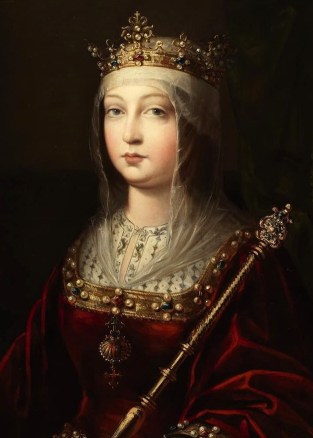 Spain Reconquista: 1113–1492. This was the first and last Crusade. By far the longest and greatest Crusade. There is a lecture series dedicated to the battles between the Europeans and the Arab Moors. The Reconquista is thought of as the greatest of the Crusades for Christian Spain, the Holy Roman Catholic Church, and for all of Europe, secured by the HRC and Queen Isabela I of Spain. Of all the Crusades, this was a big win for all of Europe. It secured the Iberian Peninsula from 1492 until the death of Muammar Muhammad Abu Minyar al-Gaddafi of Libya in 2011. Setting off what he predicted would be a great flood of immigration into Europe from Africa. The citizenry was against such a flood. Some groups called for a new Reconquista, but the governments in the now European Union were weak, and compromised by outside forces, but like the 1920s, Europe fell into decay, again.
The Rise and Fall of the Ottoman Empire, Anatolia
Ottoman and Habsburg Wars were fought from the 16th through the 18th Century. The Ottoman Empire vs Spanish Habsburg Monarchy.
Habsburgs supported by the Holy Roman Empire, The Kingdom of Hungary, and The Polish–Lithuanian Commonwealth. Most of the battles and conflicts took place in Hungary, Romania, Croatia, and Serbia.
The Ottoman Empire existed between 1259-1922. The Empire began with Osman I. He was a Turkish Muslim Prince from Bithynia, the northwest part of Anatolia, in the 1300s. He came to power by conquering the Seljūq Dynasty; which is now what we would consider the Near East. The Ottomans first invaded Europe in 1345, sweeping all the way through the Balkans.
Mehmed II, the Conqueror, defeated the tribes in Timur, Central Asia. In 1402, he subsequently destroyed the Byzantine Empire in Anatolia, capturing the capital, Constantinople. After securing control, he blocked all trade routes from Europe to India and China. By this time, most European Kingdoms had built a substantial navy and were making its way around the Cape of Africa, establishing new trade routs to India and China.
1492 saw the expulsion of the Moors from Spain. Under Isabela I, the Western parts of Europe were secured.
In 1512, Caliph Selim I , took control of Persia, most of Arabia, and large sections of Hungary and the Balkans. This did not sit well with Ferdinand I, Holy Roman Emperor, King of Bohemia, Hungry, Croatia, and Hereditary landowner of the Habsburgs. Ferdinand I regarded the Ottoman Empire as the Turkish Menace. There was piracy and kidnapping from the Turks and Barbary Pirates all around the Mediterranean Sea. Kidnapping, ransom, and white slavery were commonly practiced by the Ottomans. Kidnappings took place as far north as Great Britain and Ireland. A series of conflicts and wars continued to break out, not just along the Southern and Eastern borders, but within Europe itself. This was also the time of the Protestant Reformation, religious wars raged in different parts of Europe. During the reign of Ferdinand I, the Counsel of Trent finally came to an end. The legacy of Ferdinand I and all he was able to accomplish was miraculous, considering the lack of resources available to him. His legacy, especially for the arts, economics and political powers, was astounding. He was well-loved and admired. There is a lecture that focuses on his legacy in March.
By the 16th century, the Ottoman Mamlūk Dynasty added Syria and Egypt, then he seized control of the entire Barbary Coast. However, by the late 1600s, the Ottoman Empire’s power declined rapidly. Several attempts to seize control of Vienna failed, rampant corruption was everywhere, infighting, and decadence undermined the government from every angle. By 1683, the Ottomans lay in defeat of Europe, this was the beginning of the end of their Empire. With the fall of Hungary in 1699, any foothold they had in Europe greatly diminished.
In the late 17th and 18th centuries, wars with Russia, Austria, and Poland further weakened the Ottoman Empire, all conflicts in Europe ended in the 19th century with the loss of the Balkans. After WWI, when the Ottomans sided with Germany, the Treaty of Versailles dissolved the Empire entirely. In 1922, Sultanate Mustafa Kemal Atatürk renamed what was left of their lands to the Republic of Turkey, the last whispers of the Crusades were over. More information on the history and Lectures of the 17th century will be presented in March and April.
Lecture Schedule
Friday Week 1 Lecture Hall – Crusades History. Overview.
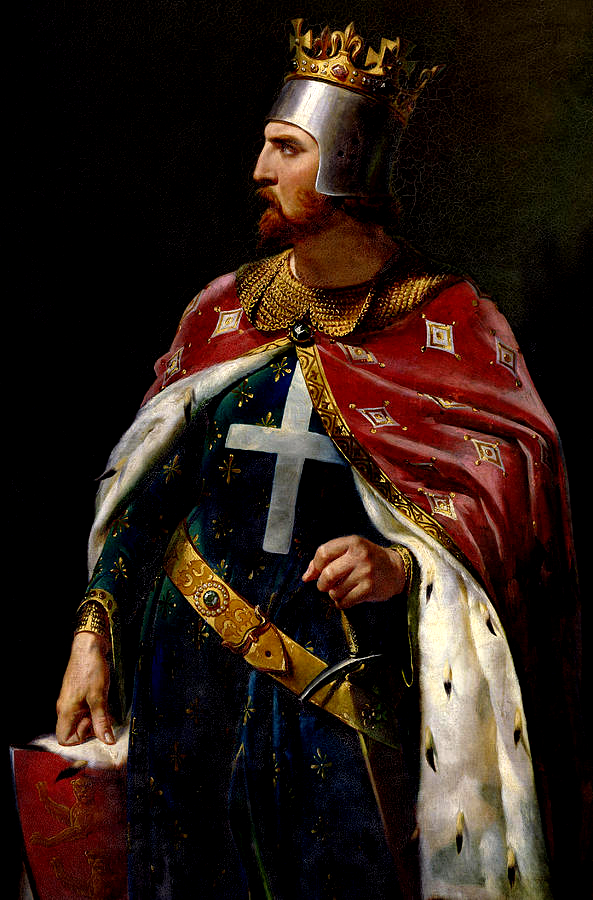
Friday Week 2 Lecture Hall – Hall – Biography – Richard The Lionhearted.
Friday Week 3 Lecture Hall – Overview Oberufer & Reading – The Sacred Flame, by Selma Lagerlof
Check Calendar for updates.
.
Check the Calendar for scheduled lectures and a list of reading materials for a list of in-depth knowledge. Each month in the History and Lecture series, a particular time period will be covered, along with a biography of a central character of that time and a related festival. These lectures are every Friday from 7PM until 10PM. There maybe some extensions on the topic on Saturday afternoons at 4PM.
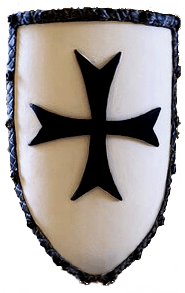
 The Northern Crusades, 1197 – 1300.
✙ Teutonic Order 1190
⚔︎ Richard The Lionhearted 1157-1190
♰ The Fall Of Byzantium Empire – Psalm 79
In 1453, Constantinople was besieged by the Ottoman Empire under Sultan Mehmed II. The Ottoman forces, armed with powerful new cannons and overwhelming numbers, breached the once-impenetrable Theodosian Walls. Within two months, on May 29, the Byzantine Empire was finally brought to an end. This momentous event also marked the fall of the Roman Empire, a legacy that had spanned over a thousand years. The Ottoman victory set the stage for the empire’s expansion and dramatically reshaped history, disrupting military strategies and global trade routes to Asia. In the aftermath, many refugees fled westward, carrying with them precious documents and books. These texts would soon find their way to Rome, where the advent of the printing press helped ignite the Renaissance, a cultural and intellectual rebirth that would reshape Europe
Isabella I Castile 1474-1504
.
.
.

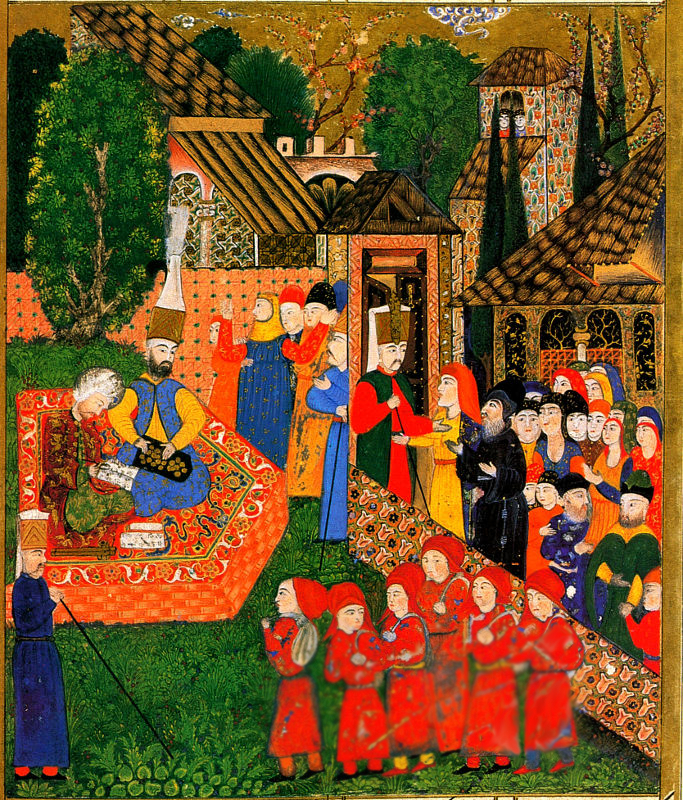 Devşirme
The Devşirme primarily targeted Christian populations in the Balkans, including regions of Greece, Albania, Bosnia, Serbia, Bulgaria, and Wallachia. Villages were often small, rural, and tightly knit; families lived under the constant awareness of Ottoman authority and occasional raids.
The Accosting of Children – Ottoman officials (sometimes with local collaborators) would arrive in villages every 3–5 years to collect boys, typically ages 8–18, most commonly 12–14. The taken children were forcibly separated from their families. This often caused deep grief and trauma, as parents could do little to resist without risking punishment or death. Some historical accounts describe weeping mothers, pleading fathers, and siblings left behind. The psychological toll was enormous — a child ripped from the familiar, forced into a foreign religion, and sent to distant cities like Edirne or Constantinople.
Training and Education – The children were converted to Islam, given new names, and forbidden to speak their native languages. They underwent rigorous physical and military training if destined to become Janissaries: swordsmanship, archery, riding, and discipline in combat formations. Others were trained for administration and bureaucracy, learning Turkish, Arabic script, law, and governance. Education was strict and hierarchical, and obedience to the Sultan was paramount.
Treatment and Opportunities – While initially traumatic, many of the children were well-fed, clothed, and received high-quality training. The system created a meritocratic pathway: some boys rose to positions of influence as military commanders, provincial governors, or high-ranking administrators. Return to their families was rare. Once raised in the system, the children were fully integrated into the Ottoman elite, and returning home would have been both religiously and socially impossible.
Attempts at Rescue – Occasionally, foreign powers or the Church tried to intervene. For example: A 12-year-old boy from Chios, Paulos Omeros (1646), was petitioned for by the Catholic Gymnasion of Rome to rescue him from Devşirme. Such cases were extremely rare and mostly symbolic. Resistance by families at the village level was generally unsuccessful due to the power imbalance.
Decline and End – The Devşirme system was gradually weakened in the 17th century, as Janissaries became hereditary and lost their initial loyalty and discipline. Official abolition occurred in 1826, when Sultan Mahmud II destroyed the Janissary corps in the “Auspicious Incident,” ending centuries of forced recruitment.
Human and Cultural Impact – The Devşirme was both oppression and opportunity. Families lost children, yet some of those children achieved positions of immense power within the empire. It illustrates the Ottoman strategy of empire-building, using human capital to secure loyalty and efficiency. The system left lasting scars on Balkan communities, a tension between forced assimilation and admiration for those who rose through the ranks..
The Ottoman Child Levy – 1370s–1826
Devşirme (Child Levy / Blood Tax) – Start: late 14th century under Sultan Murad I (~1360s–70s). End: officially abolished in the early 18th century, though it had declined by the mid-1600s
Region Affected- Mostly the Balkans (modern Greece, Albania, Serbia, Bulgaria, Bosnia, Croatia, Romania). Never applied to Muslims, Jews, or Armenians—only Christian boys.
Method – Every 3–5 years, Ottoman officials went village to village, levying boys (usually 8–18 years old, ideal age ~10–14). Families could not resist. Sons were taken, converted to Islam, and trained for state service.
Purpose – To create a loyal, elite corps of soldiers and administrators with no ties to local aristocracy.
The most famous product –Janissaries (infantry corps). Others rose to become viziers, governors, or administrators in the Ottoman bureaucracy.
Rulers Associated – Murad I (r. 1362–1389): Initiated it after his victories in the Balkans. Mehmed II (the Conqueror, r. 1444–1446, 1451–1481): Expanded the system after taking Constantinople (1453). Suleiman the Magnificent (r. 1520–1566): The Devşirme was at its peak—producing generals, governors, and admirals (like Sokollu Mehmed Pasha, originally Serbian). By the 1600s, Janissaries became hereditary and corrupt, undermining the system.
How It Was Viewed By the Ottomans – Seen as a meritocratic path. Many boys, if talented, could rise from peasant origins to wield enormous power. Some Balkan families wanted their sons taken, as it meant opportunity, wealth, and prestige—though officially forbidden to volunteer.
How It Was Viewed By Christians – Traumatic. It meant loss of children, forced Islamization, and cultural uprooting. Folk songs and Christian chronicles describe it as enslavement. Yet paradoxically, Christian communities also acknowledged that “their boys” could become powerful in the empire.
Timeline – Began c. 1365 under Murad I. Major impact through 1400s–1500s (especially after 1453 with Constantinople). Declines 1600s, as Janissaries began passing positions to their sons. Ends officially ~1705, though the Janissaries lingered until abolished by Sultan Mahmud II in 1826.
.
Lament
Be damned, O Emperor, be thrice damned
For the evil you have done and the evil you do.
You catch and shackle the old and the archpriests
In order to take the children as Janissaries.
Their parents weep and their sisters and brothers too And I cry until it pains me;
As long as I live I shall cry,
For last year it was my son and this year my brother.
— Anonymous song protesting the collecting of young boys to be made slaves of the Ottoman Empire,
.
.
.
.
.
.
.
.

.
.
.
.
.
.
.
.
.
Living Pan-European and American Cultural and Heritage Community Center

.
EMAIL: peachcommunity yahoo.com
.
.
.
.
.
.
.
.
.
.
.
.
.
quicklink
 PEACH COMMUNITY